
Environment
The great turning
Another reckoning is coming with climate change. How do we deal with our mental health — and ultimately find hope?
- 3646 words
- 15 minutes
People & Culture
In an intimate Q&A, two young leaders from Tuktoyaktuk connect with globally renowned Inuk activist Siila Watt-Cloutier to reflect on Inuit knowledge, cultural strength and what it means to lead in this time of climate change
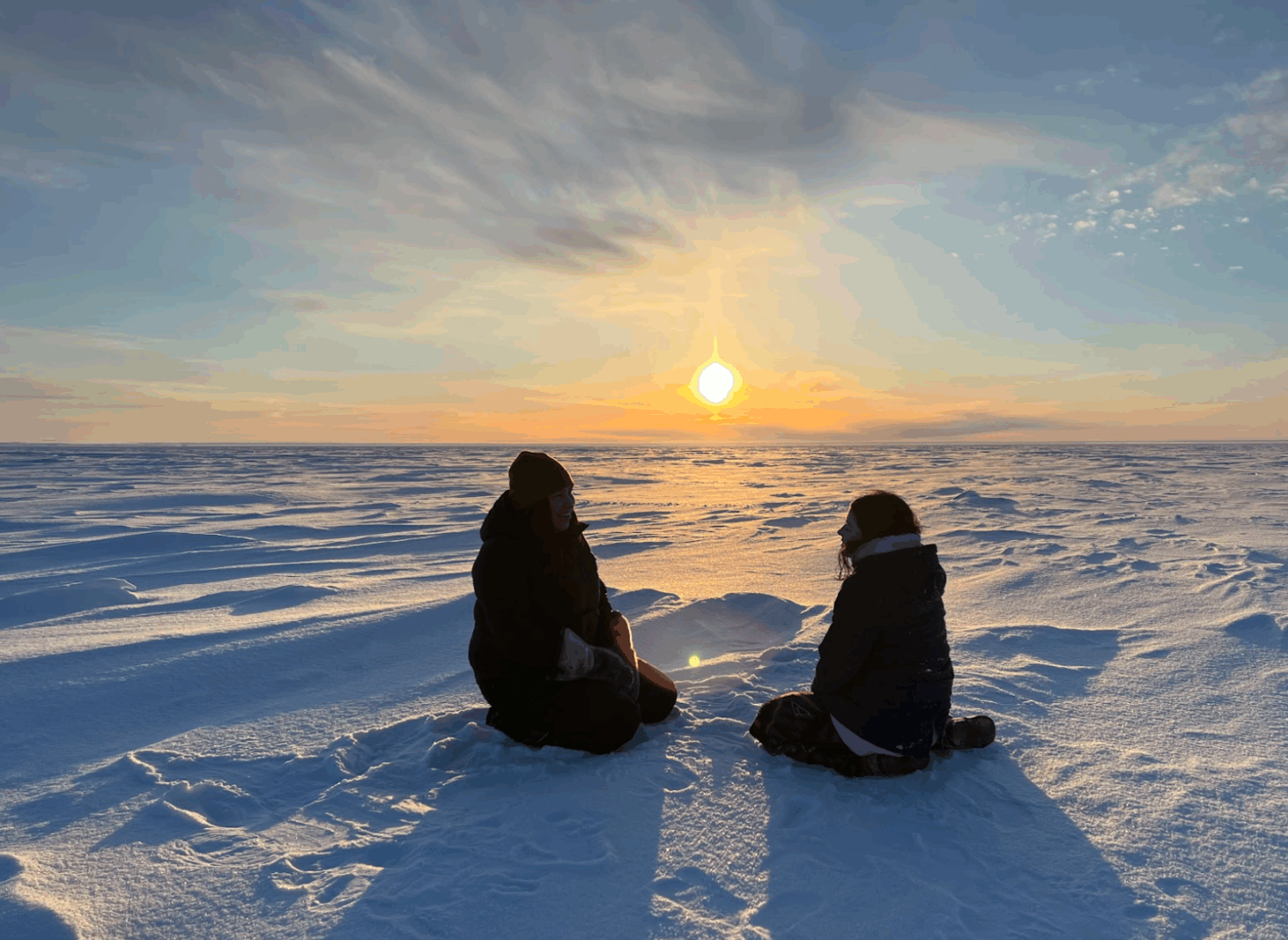
By 2050, it is estimated that upwards of 200 million people will be displaced from their homes and need to relocate due to the impacts of the climate crisis.
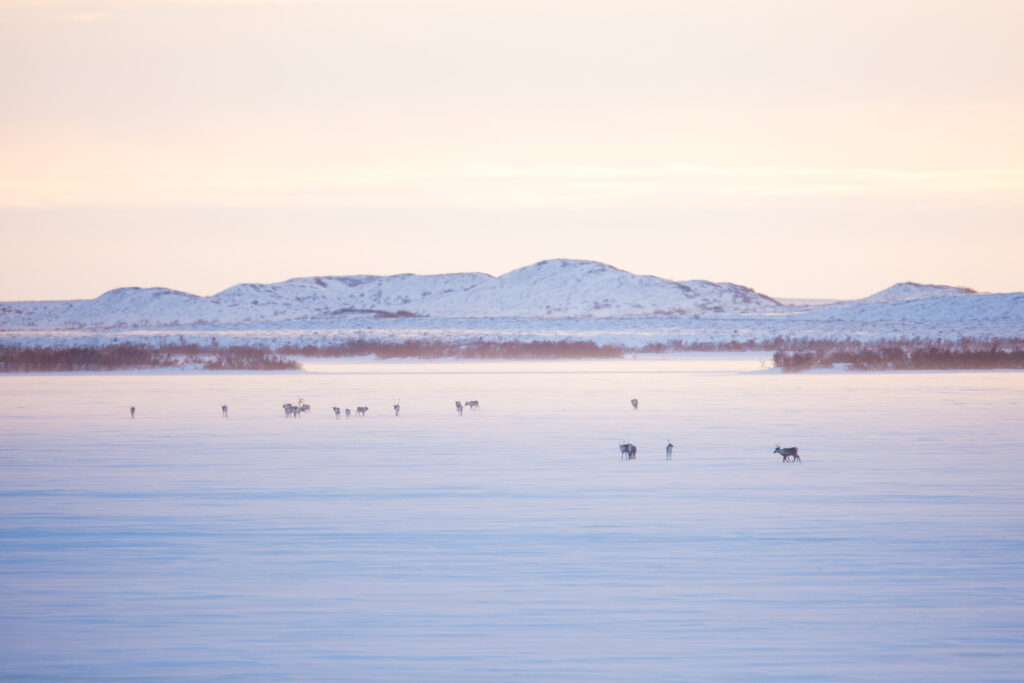
In Tuktuuyaqtuuq (Tuktoyaktuk), which means “place resembling a caribou,” houses are already being washed away as a result of storm waves and erosion, forcing families out of their homes. And this is just the beginning.
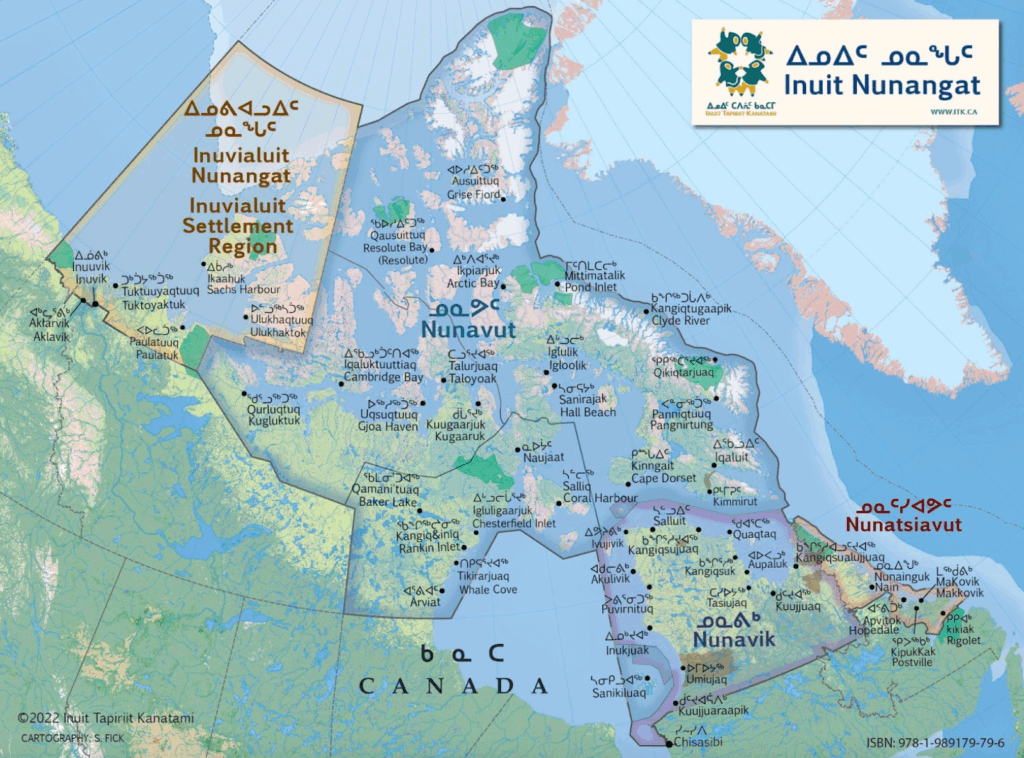
Tuktoyaktuk is an Inuvialuit community in the Northwest Territories, located in ᐃᓄᐃᑦ ᓄᓇᖓᑦ, Inuit Nunangat. Due to its location on the shores of the Arctic Ocean, this small hamlet of approximately 1,000 people may be the first Canadian community forced to relocate. But as the climate crisis impacts their culture, traditions and way of life, young leaders from Inuvialuit are speaking up, fighting to raise awareness and educate communities on the implications of the climate crisis.
Carving out Climate Testimony is a research project funded by the Canada-Inuit Nunangat-United Kingdom Arctic Research Programme (CINUK). As part of the project, young leaders have produced films, community murals, nail art, children’s storybooks and story maps. They have shared their communities’ stories and voiced their concerns at national press conferences, international conferences, and presented their work to the UN.
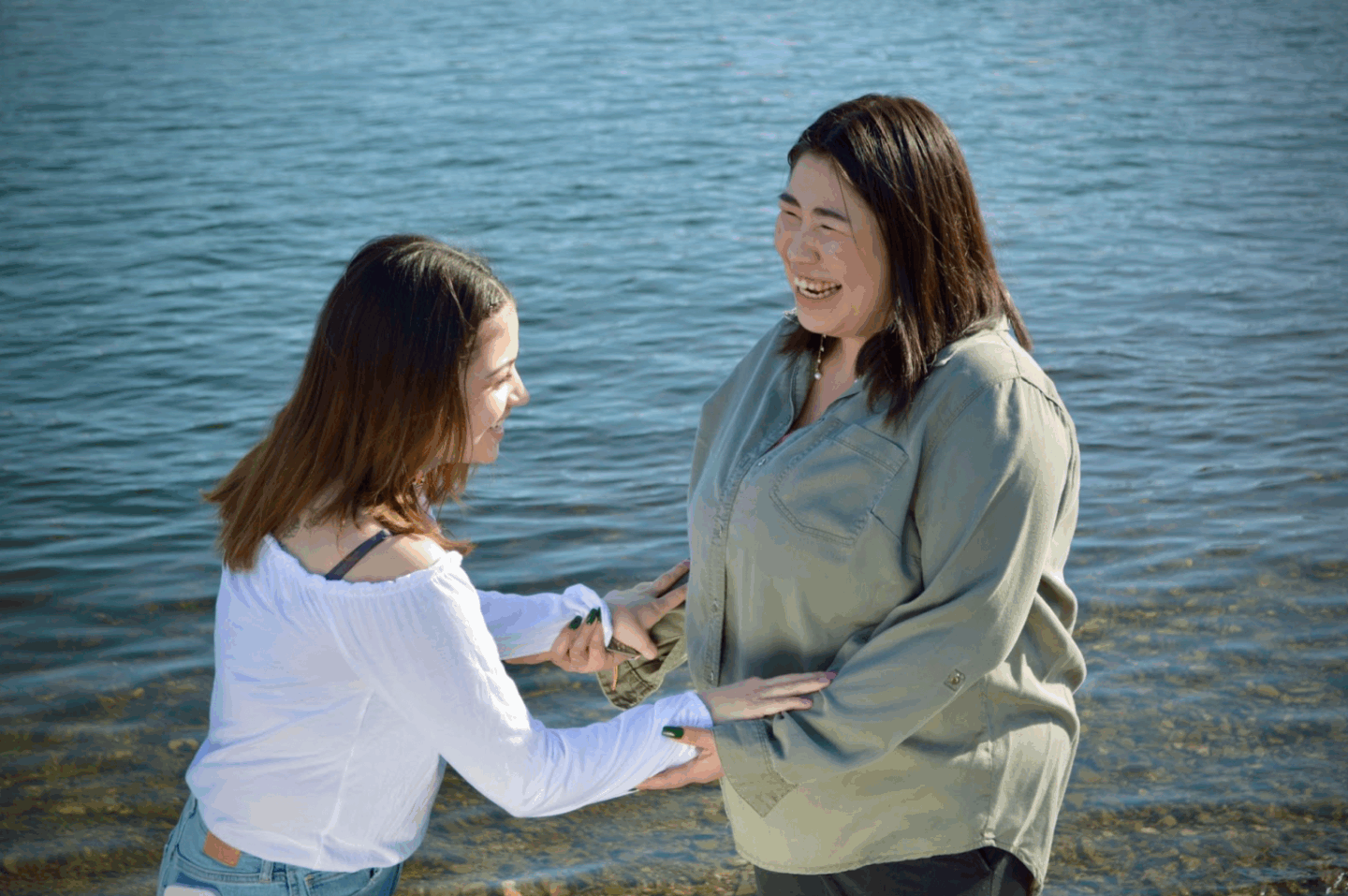
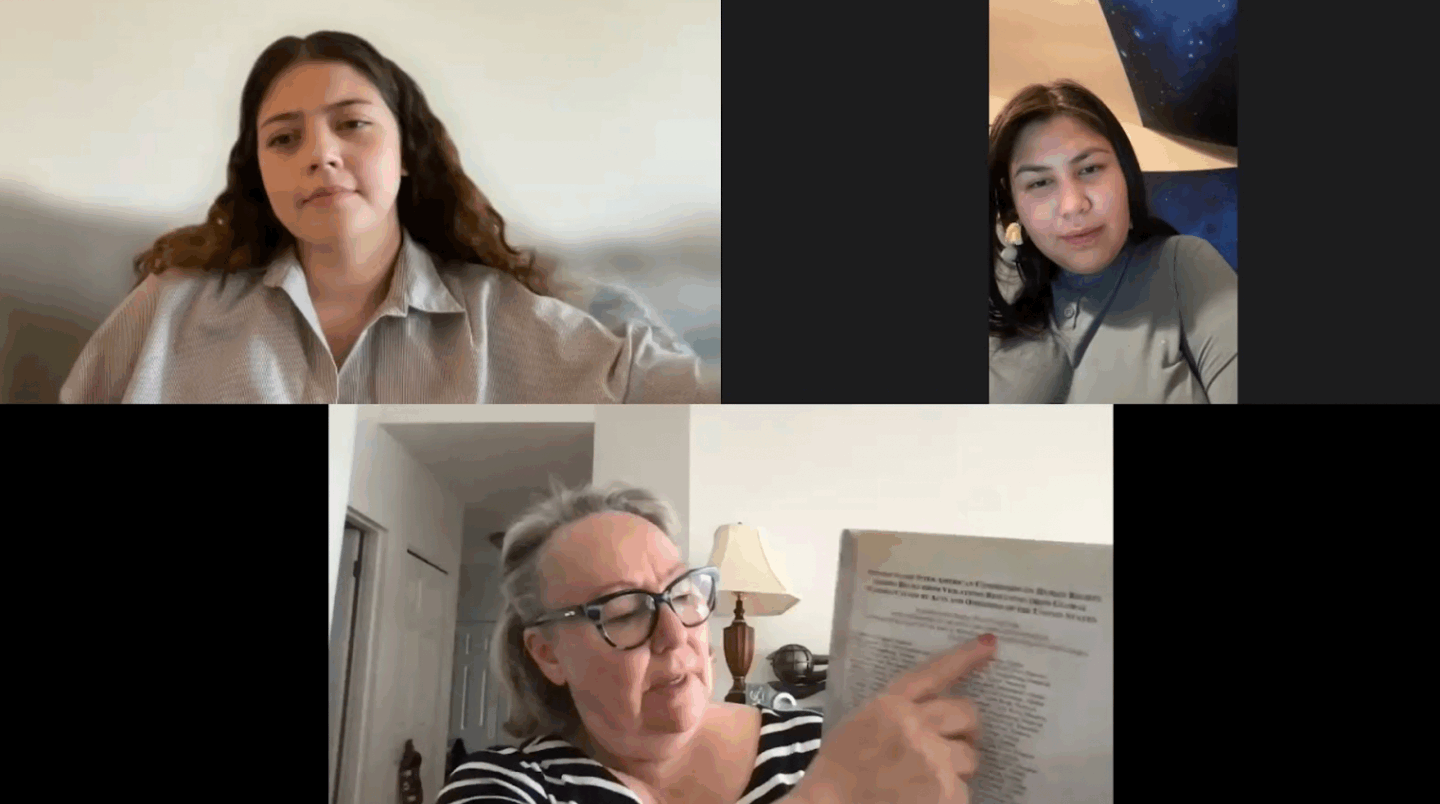
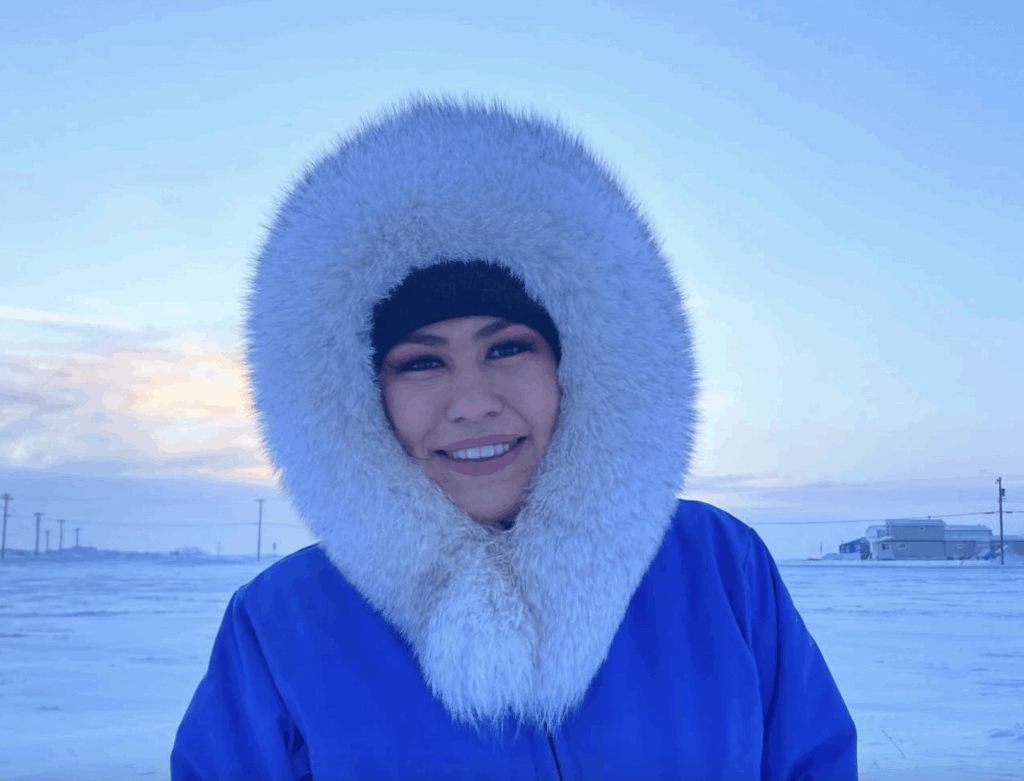
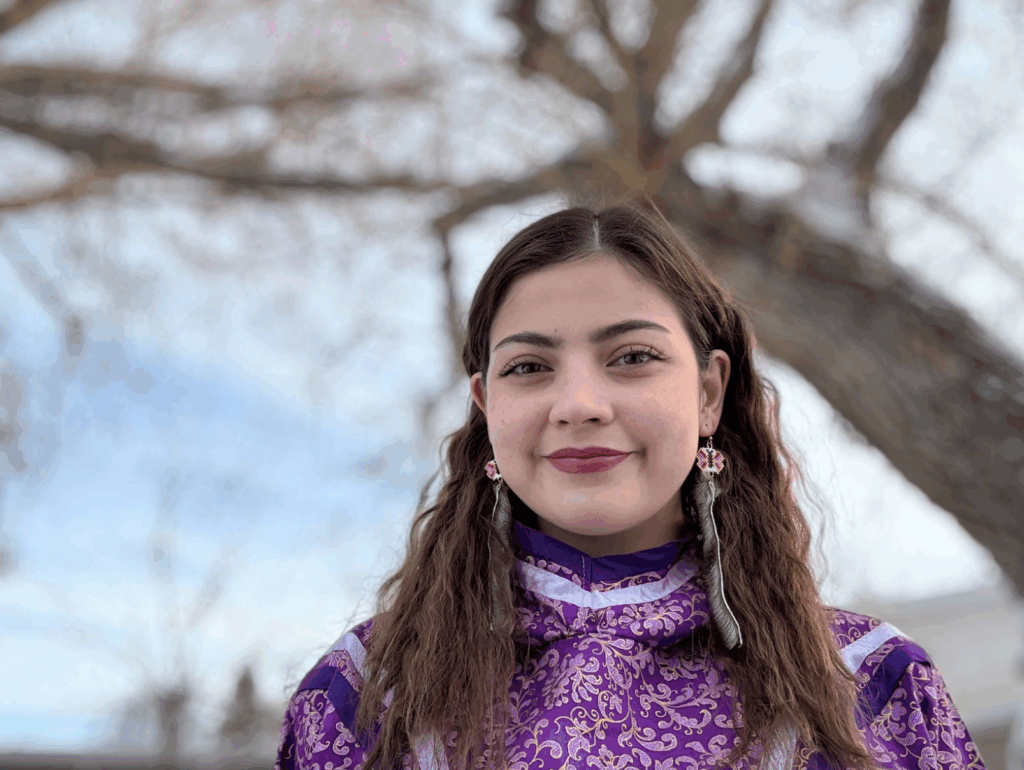
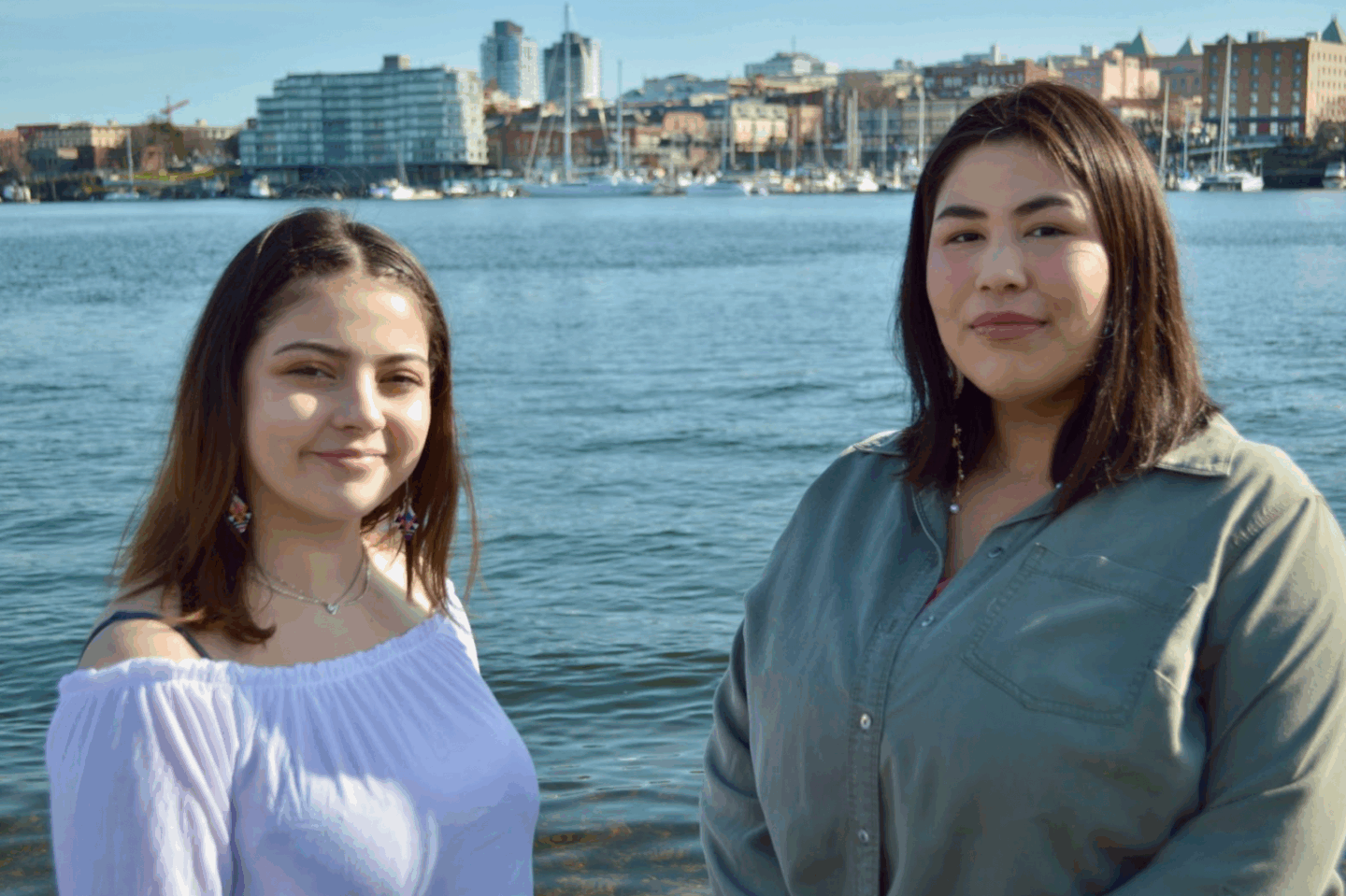
In June 2025, as part of the culmination of the three-year project, a transformative dialogue unfolded featuring the renowned Inuit leader, artist, and Nobel Peace Prize nominee Siila Watt-Cloutier. This discussion, facilitated by Eriel Lugt and Carmen Kuptana, both Inuvialuit from Tuktoyaktuk, showcased their roles as leaders deeply rooted in their cultural heritage and passionate about preserving Inuit wisdom.
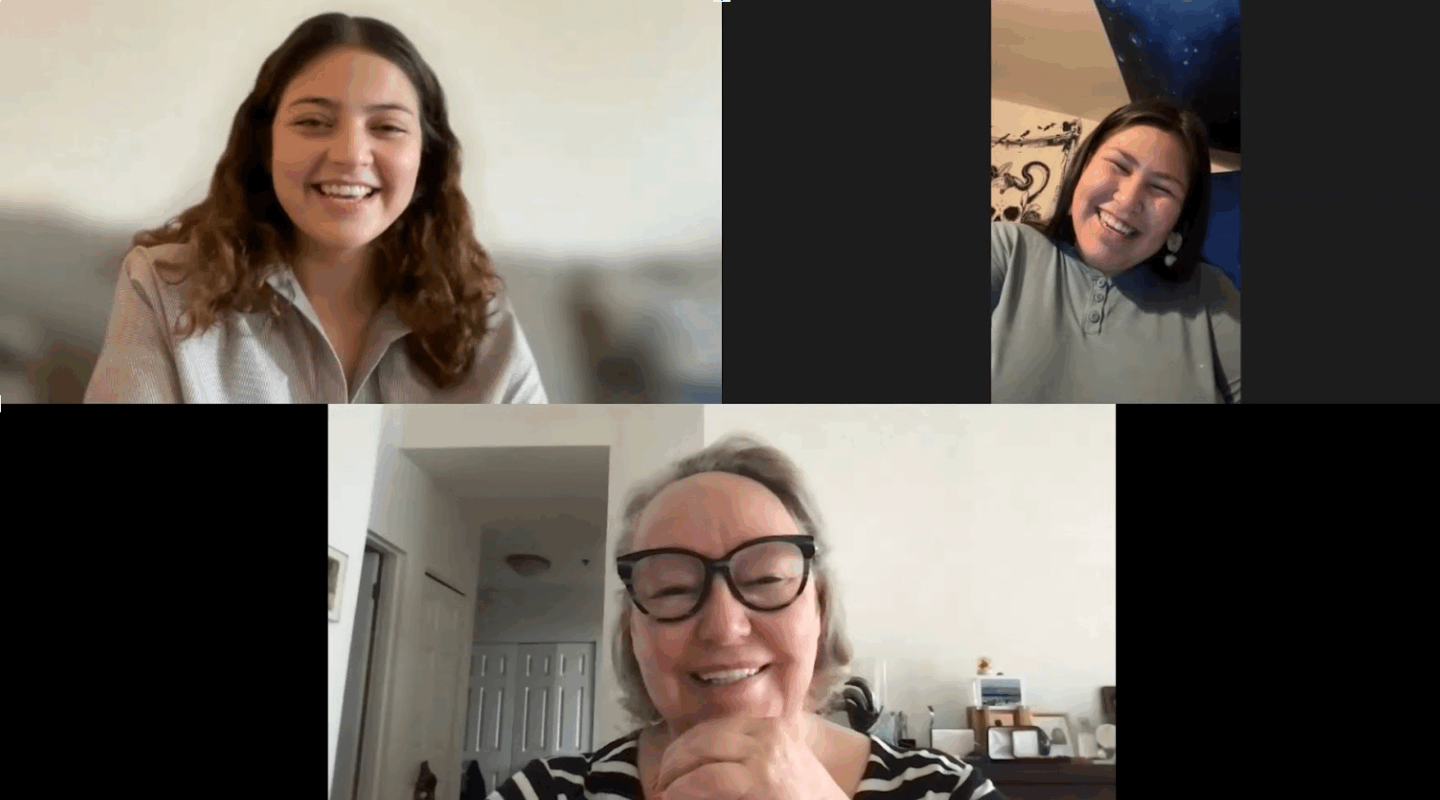
Siila Watt-Cloutier’s pioneering advocacy merges human rights with climate action, reshaping global policies and perspectives. Her journey, deeply influenced by Inuit culture and upbringing, resonates through her storytelling and leadership. Lugt and Kuptana, committed storytellers, embody the spirit of their community, using their voices to amplify the urgency of climate justice.
In their conversation, adapted below, Watt-Cloutier, Lugt and Kuptana explore the role of Inuit knowledge, personal healing, community strength and the spirit of silatuniq (Inuit wisdom), in shaping bold, grounded leadership for climate justice.
Eriel: Siila, you’ve been a strong voice for Inuit rights and climate action. How has your personal journey influenced your commitment to climate activism?
Siila: My grounding force always comes from my culture and upbringing. That has been my real strength in moving forward on the issues I’ve worked on for so long. It is my way of giving back to a remarkable culture that has brought me into these spaces. As a child, I was sent away at age 10. I had to survive and navigate that, but my cultural heritage helped me heal by keeping me spiritually and emotionally grounded. I honour the culture I came from: travelling only by dog team during the first 10 years of my life, speaking only Inuktitut until I started school. Being sent away at 10 meant I lost my language and had to regain it in later years. But the values and principles of my family and community have kept me centred. That’s the grounding force behind what I do. Protecting a way of life is how I give back for what I was given as a child. I see the value of our hunting culture as a way for the younger generation to reconnect with those solid foundations (culture, language, values, and principles) and lead from there.
Carmen: That’s beautiful. It feels so heartwarming to hear your story. You’ve worked so hard for Inuit around the world. I’m learning more about my culture, and I’m going to be out at my camp in Tuktoyaktuk soon. I look forward to preparing fish and just being on the land.
Siila: That’s wonderful. Our approach to teaching our young people is very holistic. In institutional schooling, things are separated: technical knowledge from character-building and life skills. But in our Indigenous ways, those teachings happen together. When you’re at camp, you’re not just learning how to clean or dry fish; you’re building your confidence, self-worth, identity, patience, and determination. You’re also learning how to be wise, what we call in our language silatuniq. That wisdom, developed in real-life experiences, helps you navigate both traditional and modern worlds. And that’s the hallmark of our teaching. So that when you become wise, you carry that built-in capacity to deal with stressors. You really are more grounded. Take it all in when you’re on the land.
Carmen: In our Inuit communities, storytelling plays a vital role in sharing knowledge and environmental changes. How do you see storytelling evolving as a tool for advocacy in the climate crisis?
Siila: Storytelling is critical, especially now. In formal spaces like UN conferences or the Arctic Council, things were once too diplomatic and sterile, with no space for human stories. But that is starting to change. The most effective impact on changing people’s minds is first changing their hearts. And storytelling plays an important part in that.
Of course, it’s not just storytelling for the sake of it. And it’s not just the stories themselves. Storytelling is also about getting people to understand: What does it mean for us as Inuit? What does it mean for the world? If I can make that kind of connection with the storytelling, that is success. It’s about trying to get people to understand the context of why climate change impacts us and our world.
I always give the context because many people have not understood that. They only see the immediate problems and challenges we face in terms of health and social issues, like the suicides, the addictions, the violence, the poverty. For me, the storytelling starts right from the beginning. I provide the context about the historical traumas and the colonial past from which we’re coming. How we’ve been treated through residential schools. Animal rights movements. I address the colonial approaches to the institutions that all suppress and oppress who we really are as Inuit. It’s important to walk them through that, so that they understand the context.
Our culture is not just medicine for us. It is medicine for the world. It is what sustainability is all about. And Indigenous peoples can offer those teachings better than anyone else. Better than any political or economic reports or policies. If you humanize the issues, people get that. They understand that much better than big, lofty political policies.
Eriel: As young Inuvialuit leaders navigating climate impacts firsthand, how can youth better engage with policymakers to influence climate policy?
Siila: I was fortunate to enter leadership roles early, through the Inuit Circumpolar Council. That gave me access to the global stage. But if you’re not in those positions, talk to those who are in those positions, and work with them. Make sure that you’re at the table with them. Attend side events at COP meetings. Be present. Speak your truth. That said, those big conferences can be political and heartless. So for me, I felt that I was not fighting the right battles in those more formal spaces. That’s why I shifted my focus to civil society, addressing health, education, business, law, where there’s more space for real change and more hope. Be open to what finds you, and what calls you in to do the work that you’re meant to do. You’re already leading. But if you feel called to formal leadership, go for it. Create a platform for your voice. Stand in your convictions. Sometimes, leadership finds you.
Carmen: Your advocacy has reached from local to global. What advice do you have for young leaders in our communities?
Siila: Never lead in isolation. Always bring your community with you. That’s where your strength lies. If you’ve got the community backing you, it’s so important. Our Inuit world is just as fraught with politics as any other system. You may have experienced that already. So be aware of the obstacles that you may face. Be aware, some leaders won’t want to share power. Politics can be challenging. But be confident in your purpose. I found that women have a tougher time breaking those kinds of barriers. You know, it seems like some of our guys can have that ‘teflon effect,’ where they can do no wrong, but the minute a woman does something, they’re out. So, I suggest that you be very vigilant, strong, and confident in what you feel you need to do.
When I led the petition connecting climate change to human rights, I made sure Elders and hunters were part of it. It is 167 pages with 700 footnotes, with all the names of the supporters — the hunters and Elders, including those from Inuvialuit. In the end, ICC didn’t sign onto the legal petition, but 62 Elders, women and hunters did. That was my strength. And I wept that night in my living room when I saw all this support, because I knew then I had more strength to carry this forth with or without the formal and express support of the ICC. Even though our petition didn’t move forward then, it inspired a landmark win in Switzerland 20 years later. I received an email from those leading this victory, and they told me that the language and work we put into our petition helped guide their movement.
Your efforts now may not have immediate results, but done with integrity and patience, they’ll resonate far beyond today. Remember, even if you don’t have organizational or institutional support, if you have the community behind you, you are strengthened to do what you feel you need to do and address these issues.
Eriel: What about education pathways for youth interested in environmental advocacy?
Siila: I think it really helps to get an education if that’s the path that you want to be on. Still, universities can also be very disconnected and can adopt a very colonial approach to addressing issues from an Indigenous lens and Indigenous perspectives. I’ve never been to university. I’ve taught at two universities, mind you, and I know what that can be like in terms of how very narrow the lenses can be. There are, however, some that are very open. You should ask: Are you going to be working with universities that are closed-minded and still very overly structured in how they deal with Indigenous issues and climate change? Or are you going to be working with people who are expanding your horizons and letting you voice yourself in bigger ways than you could have done by yourself?
Our culture is not just medicine for us. It is medicine for the world. It is what sustainability is all about.
Carmen: We’ve seen impactful art projects, such as films and murals, that highlight the impacts of climate change. How can artistic expressions amplify climate messages and mobilize action?
Siila: Art is spirit in motion. It comes from the heart, whether music, dance, fashion or storytelling. We’ve got North of North now. We have these young people who are now modelling on the runways of New York and Paris, using seal skin and traditional ways of creating beautiful works. At 17, my own daughter was involved in bringing throat singing back into our community. All those ways open the eyes and hearts of people around the world to who we are. It shows that we’re not just victims of globalization, commercialization and climate change.
But at the same time, there’s a parallel process happening here with these healing arts. And eventually, you know, we will get to those places where we can address the addiction issues, suicides and the violence, because those are the historical traumas that we’ve not addressed properly.
We must ensure that the programs we develop in our communities to uplift and heal us are on-the-land programs. The land, the ice and the snow, that’s our university. What would happen in the South if all your universities started to crumble? The land is our place of learning. This is all the more important in the face of climate change, so that we don’t lose what we’re reaching for: our medicine.
Eriel: You’ve worked in this space for so long. Have you faced challenges?
Siila: Many. That’s why I wrote The Right to Be Cold, to share what it takes to lead with heart and remain centred. I want to share these words from American poet Louise Bogan, whom I met 30 years ago. She’s no longer around, but I have permission to use them: “In a time lacking in truth and certainty and filled with anguish and despair, no woman should be shamefaced in attempting to give back to the world through her work a portion of its lost heart.” It’s just a remarkable piece that keeps me going. I often turn to quotes, books and teaching from others to help ground me and keep me going.
Another quote I keep close is by Marianne Williamson, who says, “The revolution that will save the world is ultimately a personal one.” I believe that. When people learn about Inuit struggles and ask how to help, I say: don’t try to save us. That mindset created the problem. Change starts with personal transformation. Personally transform your own views, approaches, and attitudes towards Indigenous peoples and towards Indigenous challenges that we face in our communities.
Carmen: Thank you for everything you’ve done—not just for us, but for all Indigenous peoples. Are these lessons for climate science as well?
Siila: Even science needs heart. Scientists can feel very compelled to do the right thing about climate change, but sometimes they, too, lack that humanity, that the human touch and the human face provide to these heartfelt issues. I once addressed 1,200 scientists and quoted Gus Speth, who said: “The top environmental problems are selfishness, greed, and apathy. To address those, we need spiritual and cultural transformation. And we scientists don’t know how to do that.” That resonated deeply. You don’t have to speak perfectly; your energy will speak first. Always ask for guidance. And you know, it can be Buddha. It can be God, it can be the universe, it can be our ancestors. Whatever way you do your spiritual work. Ask for the guidance, ask for the right words.
Let your spirit lead.
Environment
Another reckoning is coming with climate change. How do we deal with our mental health — and ultimately find hope?

People & Culture
The items given to Syrian refugees — warm clothing, DVDs, the Charter of Rights and Freedoms — represent more than just practical considerations; they're the building blocks of a shared Canadian identity
People & Culture
For generations, hunting, and the deep connection to the land it creates, has been a mainstay of Inuit culture. As the coastline changes rapidly—reshaping the marine landscape and jeopardizing the hunt—Inuit youth are charting ways to preserve the hunt, and their identity.
People & Culture
Natan Obed, president of Inuit Tapiriit Kanatami, on the idea of a Inuit-Crown relationship, Canada’s Inuit homelands and the role of Inuit in the world