
Science & Tech
Canadian molecular biologist honoured at 2019 Rolex Awards for Enterprise
25-year-old entrepreneur Miranda Wang recognized for her work on developing a system to recycle previously unrecyclable plastic
- 750 words
- 3 minutes
People & Culture
The globally-renowned photographer discusses leaving behind the familiar world of ocean storytelling to document the Amazon’s fragile freshwater ecosystems as part of the Rolex and National Geographic Perpetual Planet Amazon Expedition
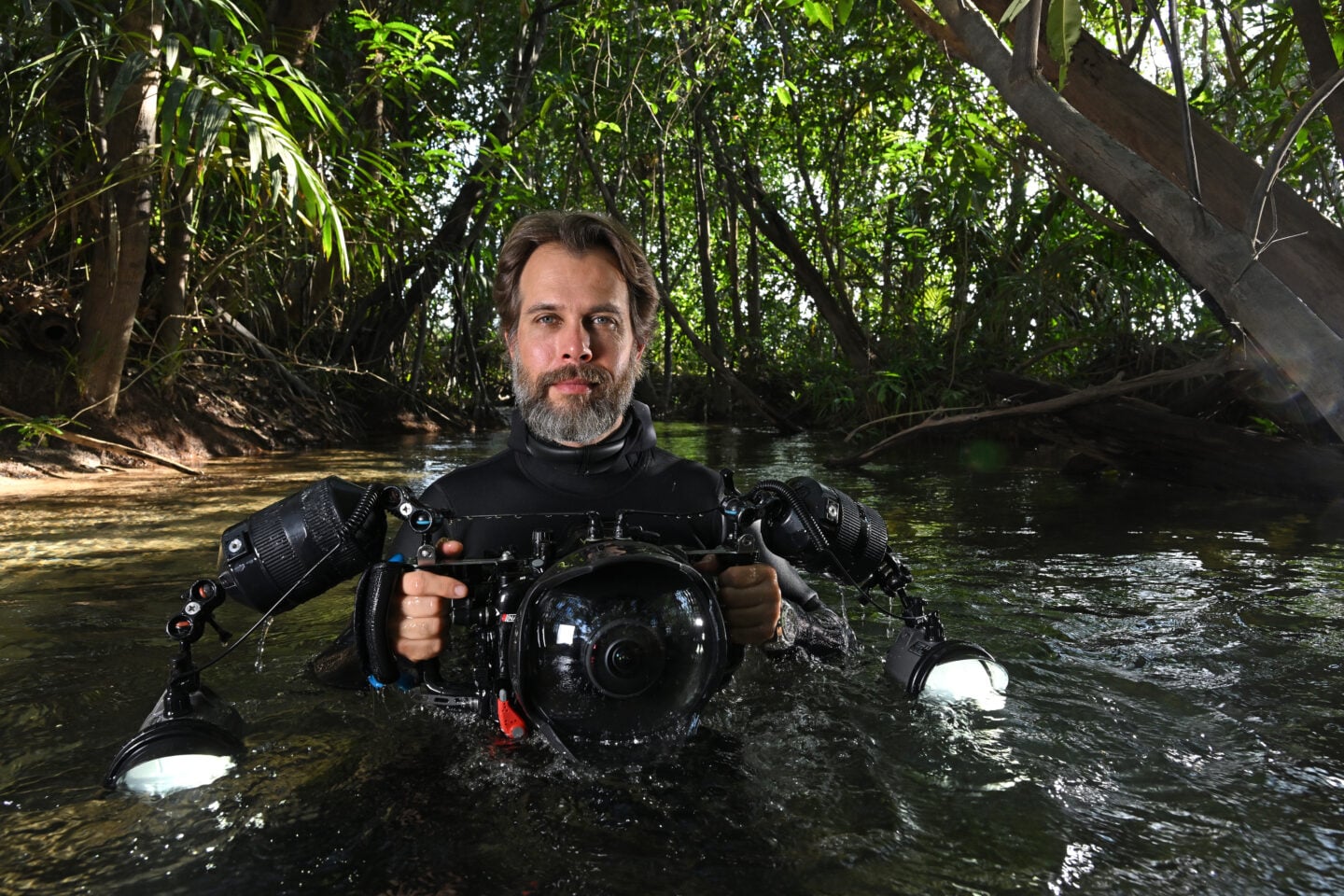
Thomas Peschak always knew he wanted to be an ocean explorer.
At the age of nine, he started snorkelling, fuelling his fascination with the “alien-like” underwater world just steps from his home in South Africa. As a pre-teen, he hid under bedcovers, studying Latin fish names and reading about coral reefs late into the night. At 13, he learned to scuba dive, launching himself into the world of marine biology and ocean conservation. What followed was a decades-long career studying and exploring some of the Earth’s last wild places, first as a scientist and later as a visual storyteller.
Peschak’s path to becoming one of the world’s most renowned ocean photographers began with abalone — sea snails highly regarded as a seafood delicacy. In 1999, while pursuing his Ph.D in marine biology, Peschak became heavily involved in documenting the impact of illegal abalone poaching in South Africa. For months, he had observed the species’ behaviour, diet, and movement patterns, but he quickly learned that the science and statistics he had worked tirelessly to collect did not elicit the same reaction from the public as images did. So he made the shift to photojournalism.
From being face-to-face with great white sharks (without a cage) to being swarmed by sweat bees in the middle of the Amazon rainforest, Peschak has gone to the ends of the Earth — literally and figuratively — to document the planet’s most vulnerable ecosystems and the people fighting to protect them.
Peschak has produced more than 20 feature stories for National Geographic, won 18 Wildlife Photographer of the Year awards and seven World Press Photo Awards. In 2024, he was selected to receive the National Geographic Society’s Eliza Scidmore Award for Outstanding Storytelling.
Beyond his editorial work, Peschak has authored multiple books that combine conservation science with visual storytelling, including Wild Seas, Secret Shores of Africa, Sharks & People, and Lost World. But after decades spent documenting the oceans, Peschak found himself seeking a new challenge, a multi-year project that would take him to one of the last wild places on the planet: the Amazon.
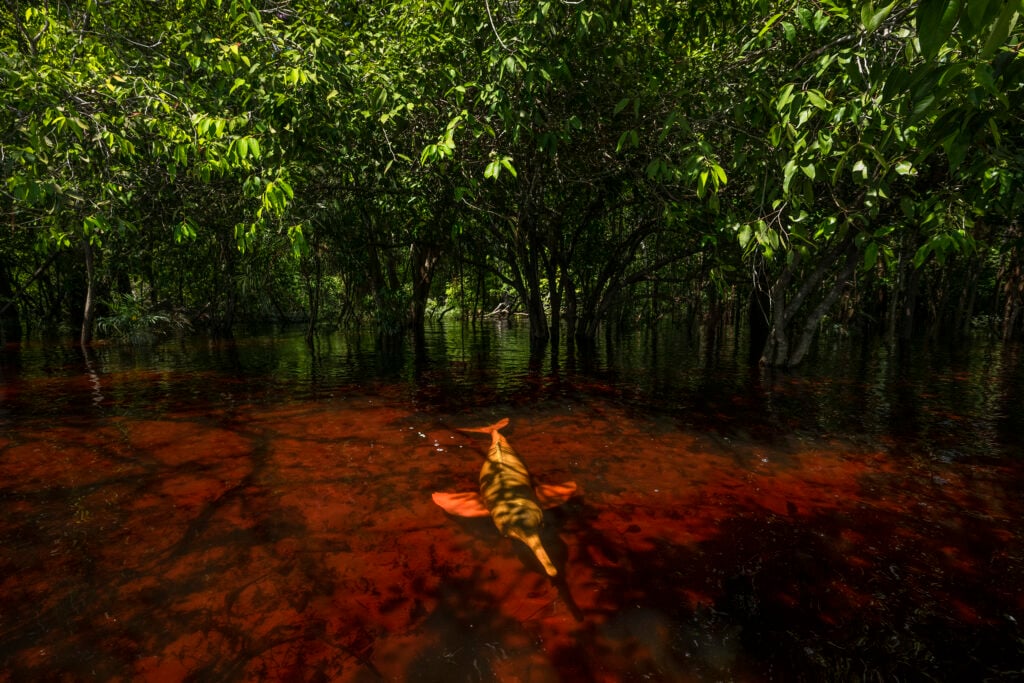
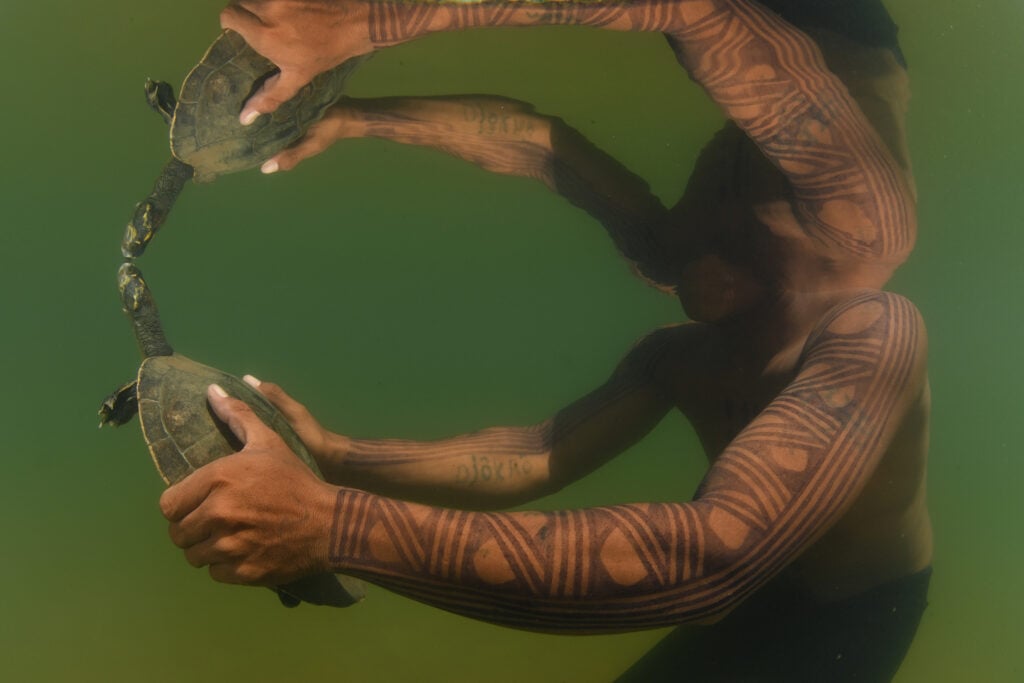
As part of the Rolex and National Geographic Society Perpetual Planet Amazon Expedition (supported through Rolex’s Perpetual Planet initiative, which funds scientific research and conservation efforts in critical ecosystems), Peschak spent 396 days documenting the Amazon River Basin alongside a multidisciplinary team of scientists, explorers, and storytellers. The goal: to study the impacts of climate and environmental change on the region’s freshwater systems.
For Peschak, the journey began more than 5,000 metres above sea level in the Peruvian Andes and ended at the Atlantic Ocean in Brazil. Covering approximately 6,400 kilometres, Peschak produced nearly half a million photographs while navigating flooded forests, muddy rivers, extreme humidity, relentless insects, and unfamiliar terrain. By the end of the expedition, Peschak and his team had also endured 102 bee and wasp stings.
The project resulted in both the photography book Amazon: A River’s Journey From the Andes to the Atlantic and a special October 2024 issue of National Geographic dedicated entirely to the Amazon. With the issue, Peschak became only the second photographer in the magazine’s history to shoot an entire edition solo.
Canadian Geographic sat down with Peschak to discuss his career trajectory from marine biologist to conservation photographer, the power of visual storytelling, and why he believes conservation work must balance both beauty and urgency.
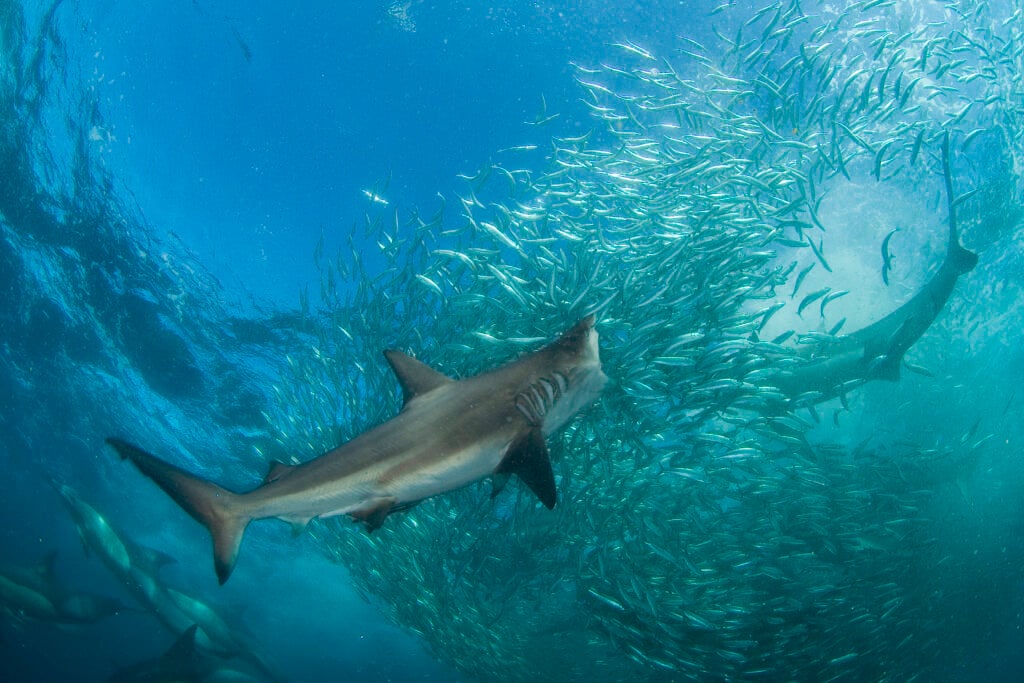
Photography is basically a dopamine hit. You’ve got these goals in mind, and every time you make a frame, you feel really good. It’s addictive in a way. Even though I never wanted to be a photographer, once I decided to be one, I realized pretty quickly that it was my calling. I didn’t have to force myself to become one. It was pretty effortless once I figured out it was a better way to get engaged with the conservation side of things. Do I miss the science? I do, occasionally. I certainly miss the decade-long investment in a single topic. But I also don’t miss the decade-long investment in a single topic. It’s a double-edged sword.
I like white sharks because they challenge you — you can’t get away with anything with them. They’re on all the time. You look at them the wrong way, you make the wrong move… They’re very calculating, so it’s challenging, and they keep you on your toes. They’re also super interactive. So you can actually interact, which doesn’t happen often with other species. But it’s also exhausting. After an hour in the water with whites, you’re finished. Because you can’t switch off your brain, you’re constantly on. You’re basically playing chess with a great white because you’re thinking six moves ahead. Beyond an hour, it actually gets unsafe, because you start becoming complacent.
The other sharks I like are tigers, because they’re just fun. They’re much more dopey — they can still take you out, but they’re much more forgiving. With tiger sharks, you can get away with things; you can’t get away with anything with a great white.
Science still underpins everything I do. But we used to be taught to communicate in a very niche and jargon-heavy way. We almost made it impossible for non-researchers to understand what we’re talking about. And I always found that the stories behind the science, the stories hidden in the data, are fascinating. They are extraordinary. Yet, we gatekeep and hide them with all this technical stuff. I love data; I find that way of reading, speaking, and communicating incredibly fascinating, but I quickly learned that not everybody cares as much as I do about statistical tests, bar charts, graphs or multivariate analysis.
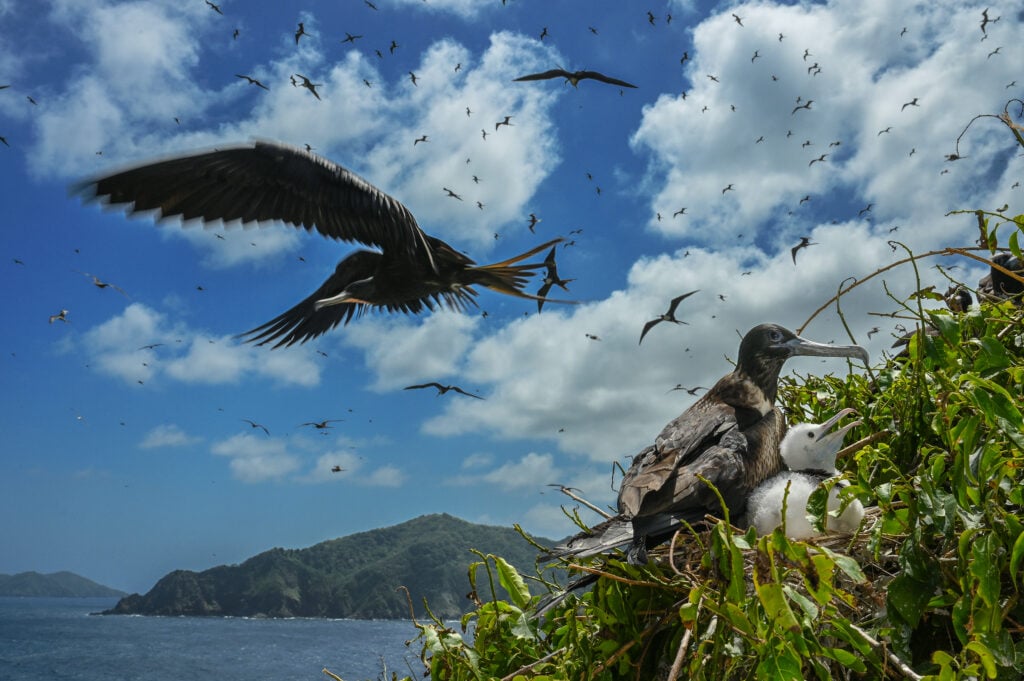
I never wanted to be a photographer. That was never on the cards for me. Photography was a sideline, it was a hobby. No matter how many Nat Geo articles I looked at, it was never about wanting to be the photographer who made the images. It was always about wanting to be the marine biologist who was in the photographs. It was a complete 180 in that regard.
With the abalone, I realized that no matter how many scientific presentations I gave, no matter how many papers I wrote or government fisheries meetings I attended, no one’s going to make a difference because of the data. I thought it was crystal clear: abalone are in trouble, you’re going to do something about this, right? [But] there was no spark, no impetus, no real sense of urgency. That was when I started to experiment [with photography].
After doing ocean stories for so long… it became a little bit predictable and — dare I say, without being crucified — boring. I pride myself on always pioneering. I really like pushing boundaries, doing new things, and making the first images of something. And after that many ocean expeditions and stories and books, it was just getting harder and harder to find new ways to do stuff. I make my best work when I’m right at the edge of the impossible, when I’m a little bit out of my depth, when I’m not 100 per cent certain that I can actually do what I set out to do. It was kind of like I needed a new challenge and to become a rank beginner again — how can I get the same buzz I got when I didn’t know what I was doing in the ocean?
[With the Amazon], it was the right timing, right everything. It just clicked. It’s all new. I had no idea what I was doing, like zero. No idea how to survive in the rainforest, that’s cool. I can be underwater, also cool. And there’s this real conservation impetus behind it. So it was like, here I have the trifecta.
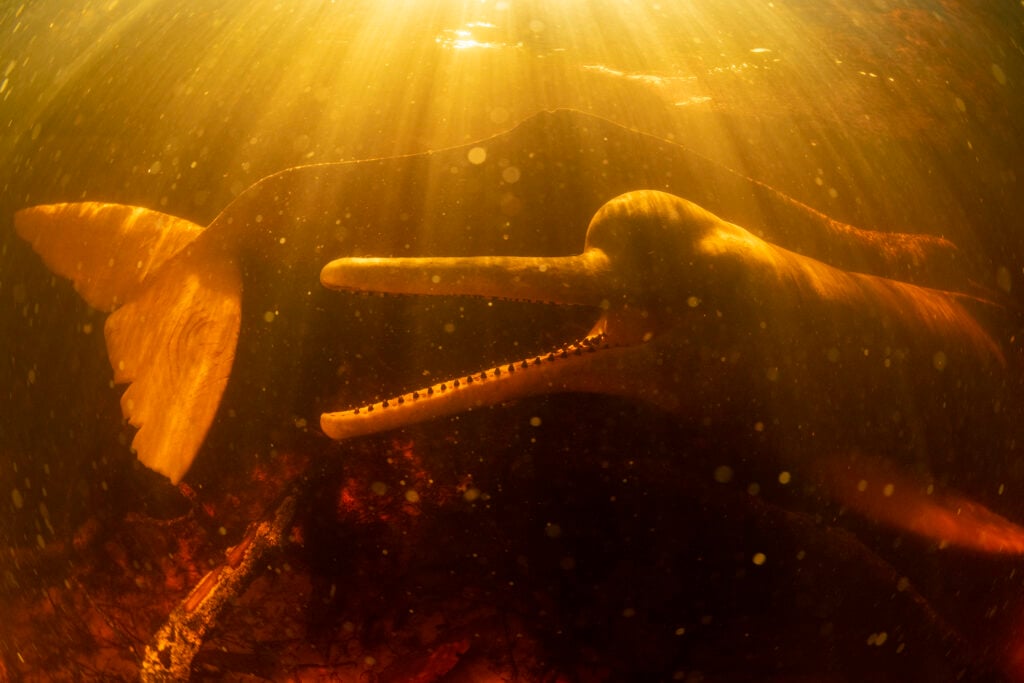
I call what I do the “carrot-and-stick” approach to conservation. It’s something I’ve been wrestling with for decades. Because on one hand, if you only show the wow stuff — pristine places, incredible populations [of wildlife], charismatic animals — people are certainly inspired by those images, but I think it can also make people complacent.
On the other hand, if you spend all your time doing environmental war photography, as I like to call it, where everything is decapitated or dying, or has a plastic noose around its neck or is missing a flipper, it’s certainly truthful and elicits a strong reaction. But if you do that too often, I think people give up.
There’s this really powerful middle way, where I go, here’s this kickass ecosystem, an incredible pristine place, look at how amazing it is. And then I show them the dark stuff. Then you have to go and turn things around and introduce them to people and initiatives that are actually working to make a difference. You need to show them that there are people out there who care, and who have dedicated their lives to trying to save what I’ve made them fall in love with. And then right at the end, to bring it full circle, you have to provide your audience with actionable steps they can take so that they feel empowered to do something.
With conservation photography, the photography itself is less than five per cent of the job. Putting the camera to your face and going click: yes, that’s a lone-wolf activity. But the build-up to it… Anybody who tells you that they did it themselves, that’s not accurate.
I do everything in my power to become well-versed in the topic that I’m working on. But there are limits to that. I rely heavily on collaborating with researchers, scientists, conservationists, and others to help me make these images. Without that expertise, most of my images would simply not be possible. It’s all about collaboration. I bring up the names of a lot of people I work with, and most people will go, why bother? Because at the end of the day, you need to be clear about the fact that you didn’t do this by yourself. This was not a lone-wolf endeavour, and I think it’s too often portrayed that way. It’s critical to acknowledge those who have made the work possible.
Science & Tech
25-year-old entrepreneur Miranda Wang recognized for her work on developing a system to recycle previously unrecyclable plastic
Exploration
From studying a highly productive Arctic basin alongside Inuit to mapping mangrove forests in The Gambia, the Rolex National Geographic Perpetual Planet Ocean Expeditions aim to accelerate knowledge of the ocean, “from seashore to seafloor, pole to pole”

Exploration
Meet Neha Acharya-Patel, the first Canadian recipient of the prestigious Rolex scholarship from the Our World Underwater Scholarship Society
Wildlife
Wildlife photographers on the thrill of the chase — and the importance of setting ethical guidelines