
Science & Tech
Canadian molecular biologist honoured at 2019 Rolex Awards for Enterprise
25-year-old entrepreneur Miranda Wang recognized for her work on developing a system to recycle previously unrecyclable plastic
- 750 words
- 3 minutes
Exploration
From studying a highly productive Arctic basin alongside Inuit to mapping mangrove forests in The Gambia, the Rolex National Geographic Perpetual Planet Ocean Expeditions aim to accelerate knowledge of the ocean, “from seashore to seafloor, pole to pole”
Why are the seals here so fat?
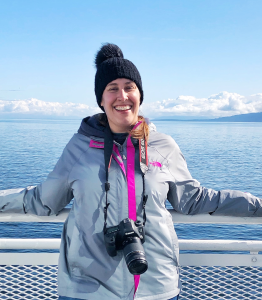
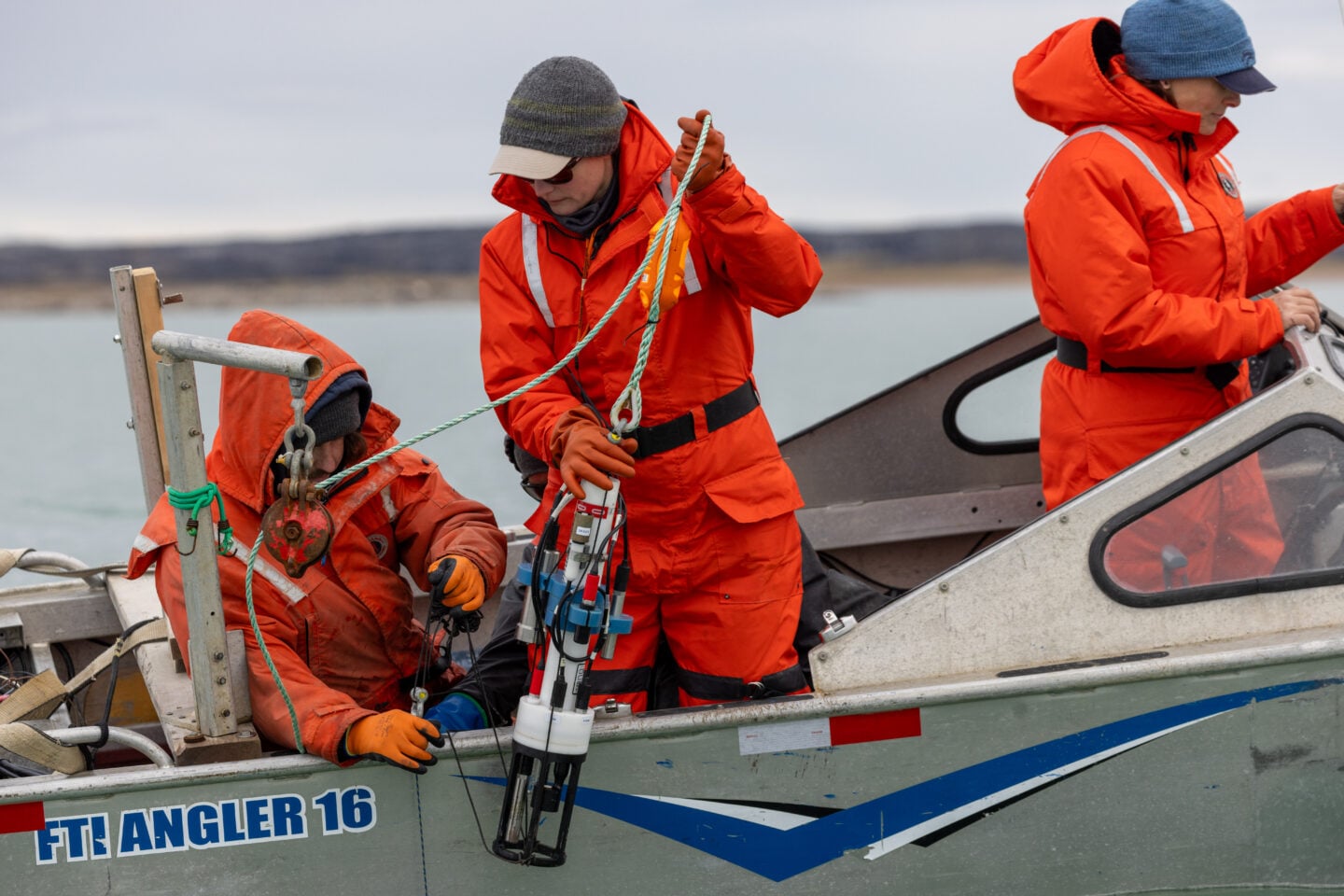
That was just one of many questions Inuit youth from the High Arctic community of Gjoa Haven posed to Kristina Brown when she met with them aboard the research vessel Martin Bergmann in Aimmatquttak, Sherman Basin, a sheltered bay on the Nunavut mainland south of King William Island. It was the summer of 2022, and Brown, an oceanographer, National Geographic Explorer and assistant professor at the University of Manitoba, was conducting fieldwork in the region when she was invited to connect with a youth-Elder knowledge exchange camp taking place on the bay.
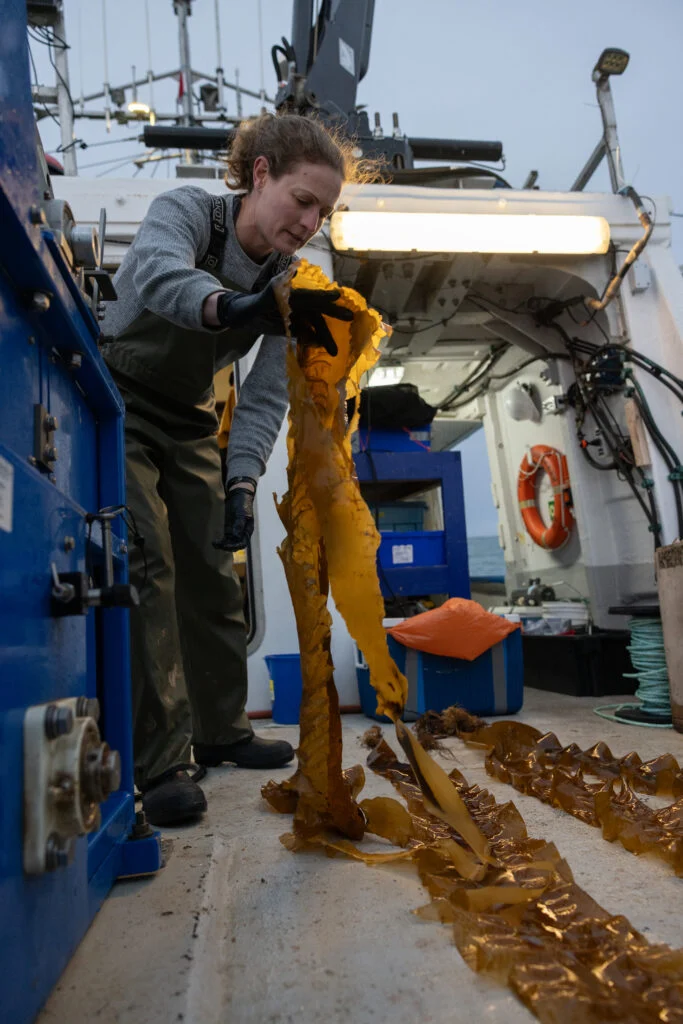
Brown and her colleagues showed the youth the various tools they use for sampling and observation, and the youth shared what Elders had taught them about Sherman Basin, an important hunting and fishing ground known for its abundance of caribou, muskox, char and whitefish — and its notably rotund bearded seals. Out of those conversations arose several questions about what makes the Sherman Basin marine ecosystem so productive and how it might be affected by climate change — questions that Brown and her youth co-leads have been investigating as part of the Rolex National Geographic Perpetual Planet Ocean Expeditions.
Inuit Qaujimajatuqangit — knowledge acquired through centuries of lived experience on the land and handed down generation after generation — has been a critical piece of the Sherman Basin project from the very beginning, says Brown. “We’re trying to integrate some of the types of ocean observing that we do as scientists, but also the deep breadth of knowledge that the community has about how this ecosystem works and also how they’ve been observing it changing.”
Brown’s project is one of six being supported by Rolex and the National Geographic Society to accelerate knowledge of the global ocean “from seashore to seafloor, pole to pole.” The goal of the Perpetual Planet initiative, established in 2019, is to reveal Earth’s life-support systems, measure how they are changing, and drive solutions for sustainability. Previous expeditions focused on mountains and the Amazon River basin saw teams install weather stations on some of the highest peaks on Earth, including Everest, and conduct multiple studies on the hydrological cycle of the Amazon and its importance to communities and wildlife. The Perpetual Planet Ocean Expeditions will investigate critical processes in five ocean basins, from methane seeps in the Southern Ocean to the protective effects of mangrove forests in The Gambia, and field-test new technologies for data collection at depths below 200 metres.
“I think that it’s really overdue to spend a lot of time trying to figure out the state of the ocean,” says Brown, who is one of at least 20 National Geographic Explorers involved in the expeditions. “It’s a really incredible community of scientists who all have a passion for the ocean and are all doing really amazing work to … protect it and move towards a more sustainable ocean future.”
Several of the explorers shared insights into their projects and future plans at National Geographic’s Explorers Festival in Washington, D.C. this past June. Here are some of the highlights.
If the planet is a bicycle wheel, the Southern Ocean is the hub, says Andrew Thurber, an associate professor at the University of California, Santa Barbara. In late December 2024, Thurber led an expedition to the Southern Ocean in partnership with the Schmidt Ocean Institute that resulted in a number of firsts, as well as exciting and surprising discoveries.
“A bicycle wheel with a hub that doesn’t work isn’t a functioning wheel, and so one of the things this expedition really was aiming to do is advance our understanding of how the Southern Ocean works from the sea surface to the sea floor,” says Thurber. Using the Schmidt Ocean Institute’s powerful remotely operated underwater vehicle, SuBastian, which can dive down to 4,500 metres, the team was able to “peer into these icy, dark depths, in many cases for the first time.”
The team recorded the first live sighting of Gonatus antarcticus, an Antarctic squid previously only known to scientists through dead specimens caught by fishers or found in the bellies of larger animals; discovered the first methane seep in the Southern Ocean; obtained the deepest marine transect in the Southern Ocean; and spotted a pregnant krill hanging out by a “black smoker” hydrothermal vent at a depth of 1,000 metres. That last discovery was particularly exciting for Thurber and collaborator Kim Bernard, who studies polar zooplankton.
“Krill … are the cornerstone of the Antarctic ecosystem,” says Thurber. “They feed the whales, they feed the seals, they feed penguins, and all of a sudden there’s this link, potentially, between chemical energy from the sea floor and some of the most iconic organisms of the Southern Ocean.”
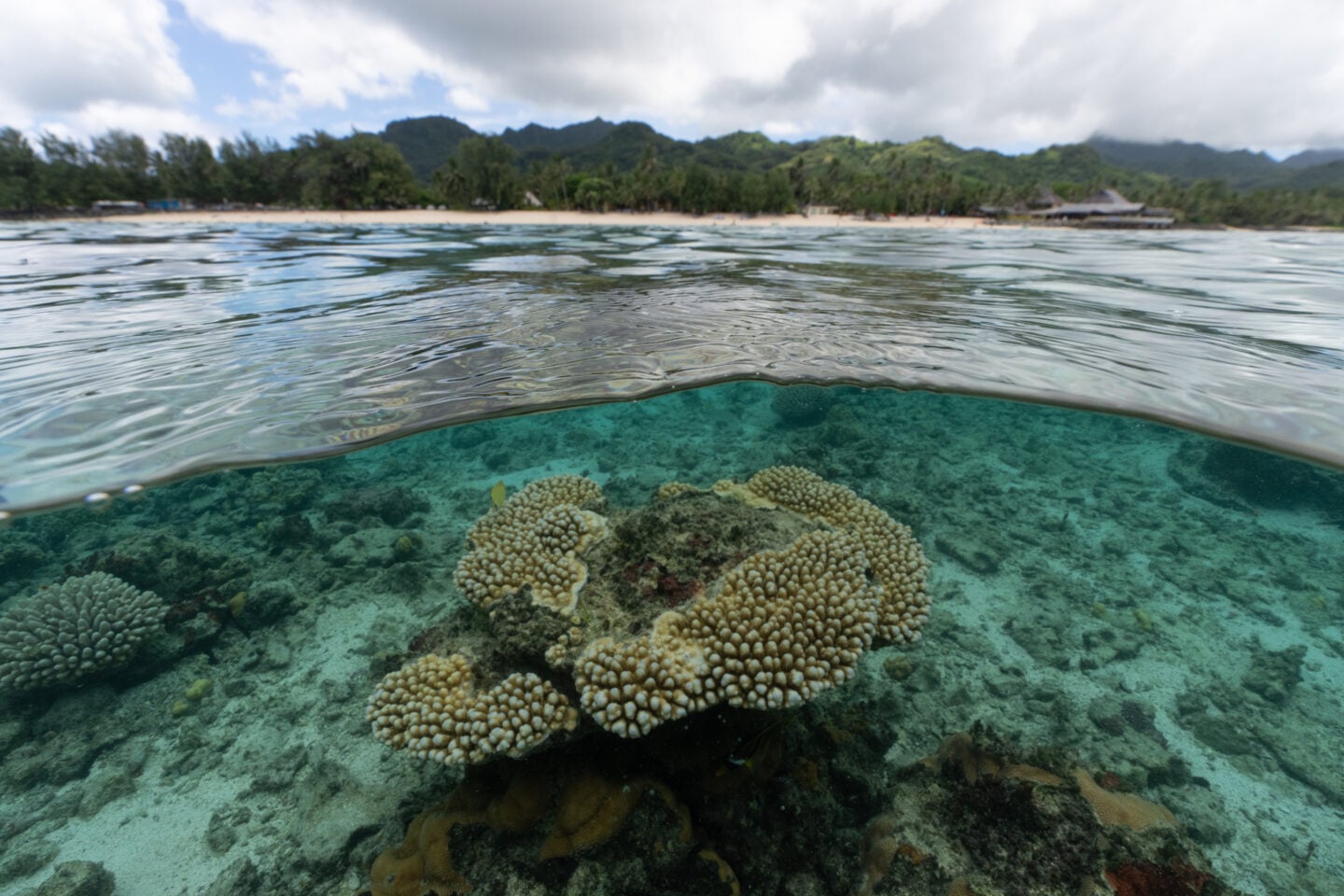
Coral reef ecosystems may be small in size, but they play host to an incredible amount of marine biodiversity — and they’re struggling globally. From February 2023 to April 2024, the world’s coral reefs experienced a mass bleaching event, the result of unusually high water temperatures that caused corals throughout the tropics to expel the symbiotic microalgae living in their tissues — a sign of stress. While bleaching is not always fatal, bleached corals are more vulnerable to starvation and disease.
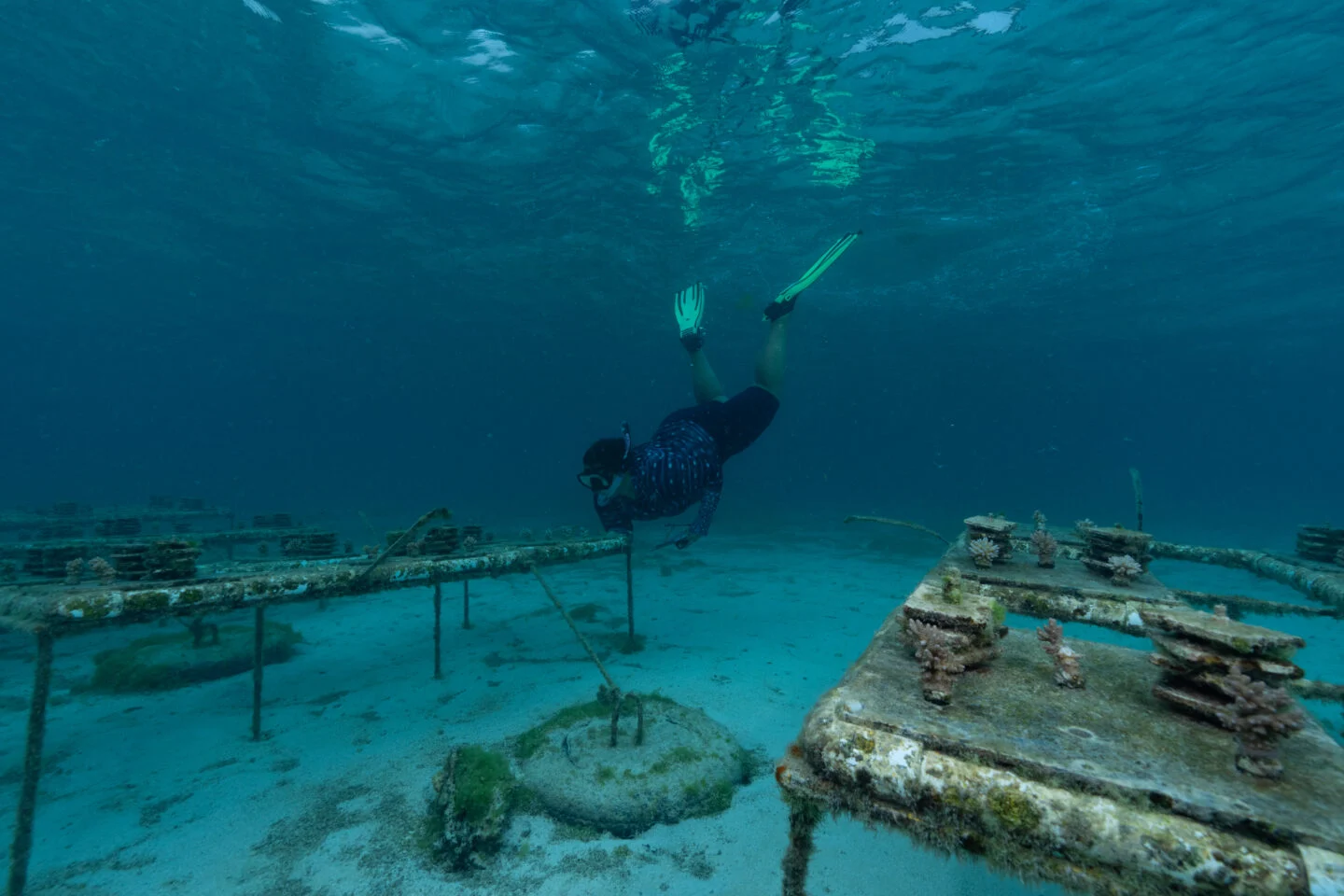
Young corals in marine biologist Anya Brown’s experimental coral nursery in Rarotonga, Cook Islands, were not immune to the bleaching event, but some appeared to resist it, and 80 per cent of the nursery’s corals made a full recovery. The question is, why?
Brown, an assistant professor at the University of California, Davis, has been working closely with evolutionary biologist Rachael Bay and local Indigenous partners in the Cook Islands to assess heat resistance in corals and whether it can be harnessed to assist with reef restoration.
“We’re trying to understand what is it about those corals that did not bleach,” explains Brown. “Is it partially the DNA associated with the host? Is it the microbes [within the coral’s tissues], which includes bacteria as well as microalgae? Or is it the combination between the host and those microbes that is preventing bleaching?”
Whatever the answer, Brown is hopeful that their observations mean the future outlook for corals in a warming ocean is not so bleak.
“Seeing that there is variation in the world … and seeing recovery, that gives me hope,” she says.
Under a worst-case scenario for rising sea levels, the tiny west African nation of The Gambia will lose all or most of its capital, Banjul, by 2100. For marine scientist Maiyai Hocheimy, hope lies in the mangrove forests of Bintang Bolong, the largest tributary of the Gambia River. Mangroves sequester carbon, help prevent erosion, shield coastal communities from flooding and serve as nurseries for commercially important fish species, but demand for food and natural resources has put pressure on The Gambia’s wetlands.
Hocheimy’s Perpetual Planet project will focus on mapping the country’s mangrove forests and communicating their importance to the public. “We really want to get the communities to understand the value of conserving the mangrove forest so that we can protect our capital,” she says.
Hocheimy and her team will also perform what could be some of the first hydrodynamic and bathymetric mapping in The Gambia, working with university students to train a new generation of scientists.
“I always say Gambia is like a blank canvas when it comes to research and we get to paint this canvas and make it as beautiful as we want it to be,” says Hocheimy.
Sixty-six per cent of the entire planet is deep ocean (below 200 metres), and yet less than 0.001 per cent of it has ever been seen with human eyes. That was the remarkable finding of a study by deep-sea explorer Katy Croff Bell, published earlier this year, that aggregated data from some 44,000 deep-sea dives conducted since 1958. Bell’s study also showed that our current understanding of the deep ocean is incredibly biased, with 97 per cent of those dives carried out by just five wealthy countries — the United States, Japan, New Zealand, France and Germany — and limited largely to their surrounding waters.
When it comes to managing the ocean and the many things we demand of it, this narrow perspective is problematic, says Bell, who founded the Ocean Discovery League (ODL) to make deep-sea science more accessible. “We’re making a lot of assumptions about the rest of the ocean that we haven’t seen yet, but also we’re not including the perspectives and questions of so many other people around the world.”
It would take “about a million years and a quadrillion dollars” to see the entire deep ocean, says Bell, so the ODL is taking a more strategic approach, identifying 10,000 sites to be visited within the next decade in order to provide a less biased and more representative understanding of the deep sea. At the same time, the Rhode Island-based non-profit is developing low-cost, easy-to-use tools for data collection and analysis, including DORIS, the Deep Ocean Research and Imaging System, a camera that can reach depths of 6,000 metres and costs less than $10,000 per unit.
Kristina Brown used another ODL innovation, the Maka Niu (“coconut eye”) compact camera system, to capture images at the bottom of Sherman Basin, hopefully answering another of the Gjoa Haven community’s questions: what’s down there?
While the data collection phase of her project is now over, Brown is excited to continue working with the community to interpret their findings through both a western scientific and Inuit lens. “I can’t underscore enough how much of this program has been like a constant evolving conversation with the community, which has made it really unique and really interesting,” she says. “We still have so many samples and data to go through that we really are just at the beginning of trying to figure out what it is that we’ve been able to uncover.”
Science & Tech
25-year-old entrepreneur Miranda Wang recognized for her work on developing a system to recycle previously unrecyclable plastic
Environment
Ten years after the release of her seminal book Sea Sick, Alanna Mitchell again plumbs the depths of the latest research on the health of the world’s oceans — and comes up gasping

Exploration
Meet Neha Acharya-Patel, the first Canadian recipient of the prestigious Rolex scholarship from the Our World Underwater Scholarship Society
People & Culture
The globally-renowned photographer discusses leaving behind the familiar world of ocean storytelling to document the Amazon’s fragile freshwater ecosystems as part of the Rolex and National Geographic Perpetual Planet Amazon Expedition