People & Culture
Pitewey and cookies: a Mi’kmaw auntie’s fight to revitalize her language
Katrina Clair is teaching Mi’kmaw to ensure kids like her children always have access to the language
- 884 words
- 4 minutes
People & Culture
Mi’kmaw contributed to the design of the modern hockey stick, designing versions from ash, birch and alder trees
In November, or Keptekewiku’s in Mi’kmaw, when the brooks froze over, Gerald Gloade and the children of Millbrook First Nation, N.S., took to the ice to play hockey. They skated on the brook day and night. Community teams faced off using boots for goal posts. Players cross-checked each other into alder trees lining the banks, as Gerald and his brother Vernon flew across the ice. “It was the coolest thing in the world,” Vernon says.
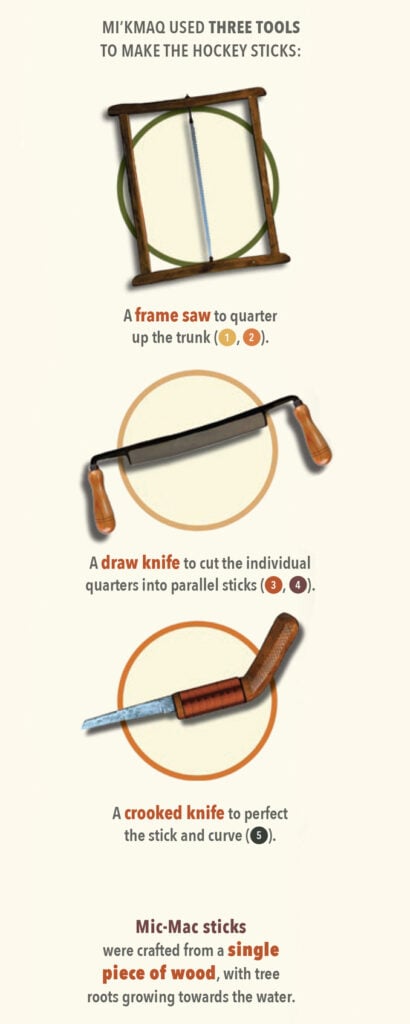
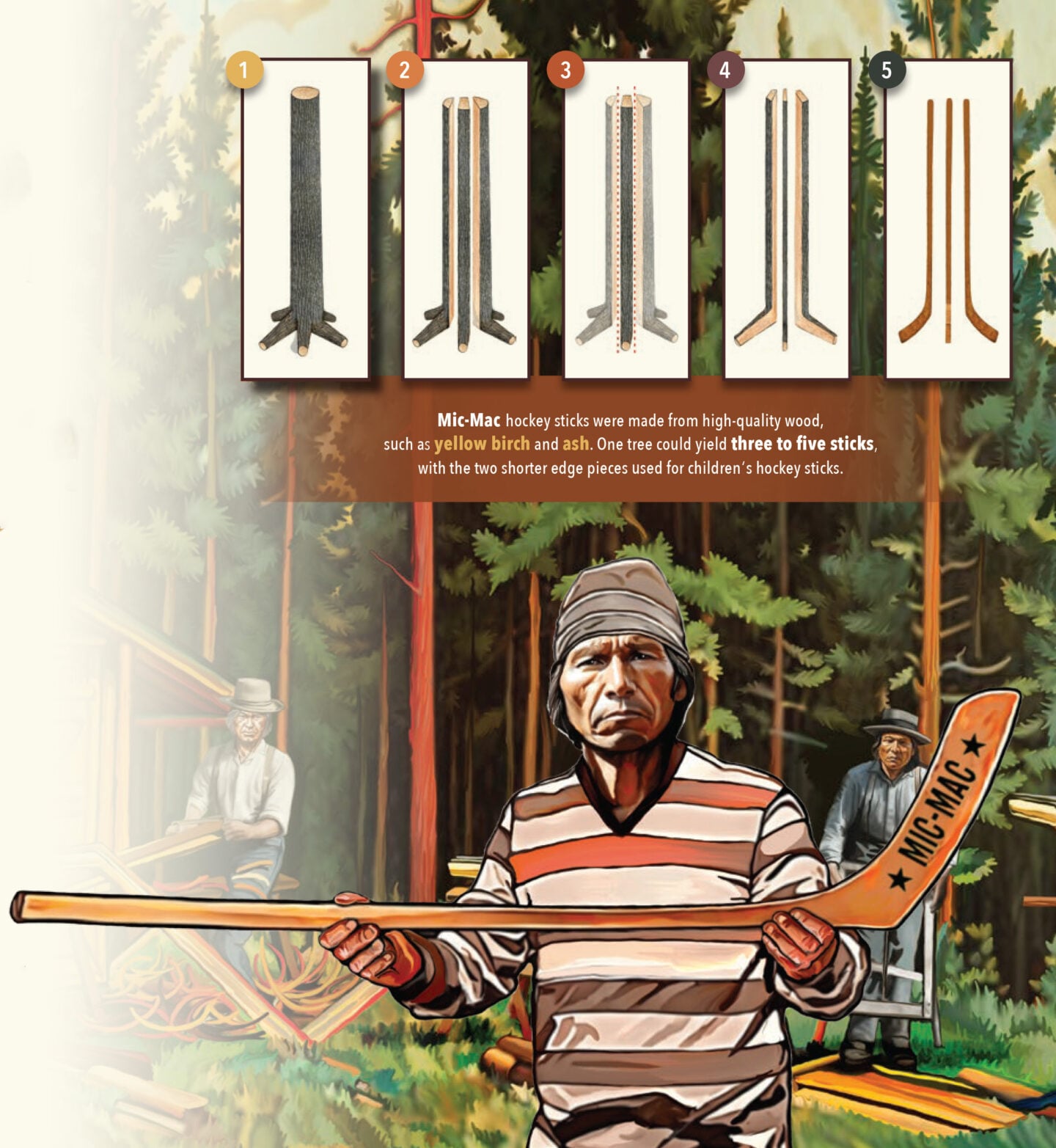
In most players’ hands was a homemade hockey stick, cut from those same alder trees. The Gloades had been using the same sticks for three generations when Gerald first got his hands on one in the 1970s. His father looked for trees whose roots stretched toward a water source. He used the trunk as the handle of the stick and, as the roots ran downhill to water, they naturally crooked. He used this part for the blade. “That was a different time back then, and that is what we did,” says Gerald, an artist, educator, storyteller and naturalist. “Everybody had homemade hockey sticks.”
The alder sticks were prone to breaking, because the wood was soft, weakened by the water the tree sought in life. When his stick broke, Gerald chucked it aside, picked up a new one and returned to the ice.
In spring, after the brook thawed, Gerald and his family went fishing, the riverbank scattered with broken hockey sticks. They used the discarded sticks for eel fishing, he says.
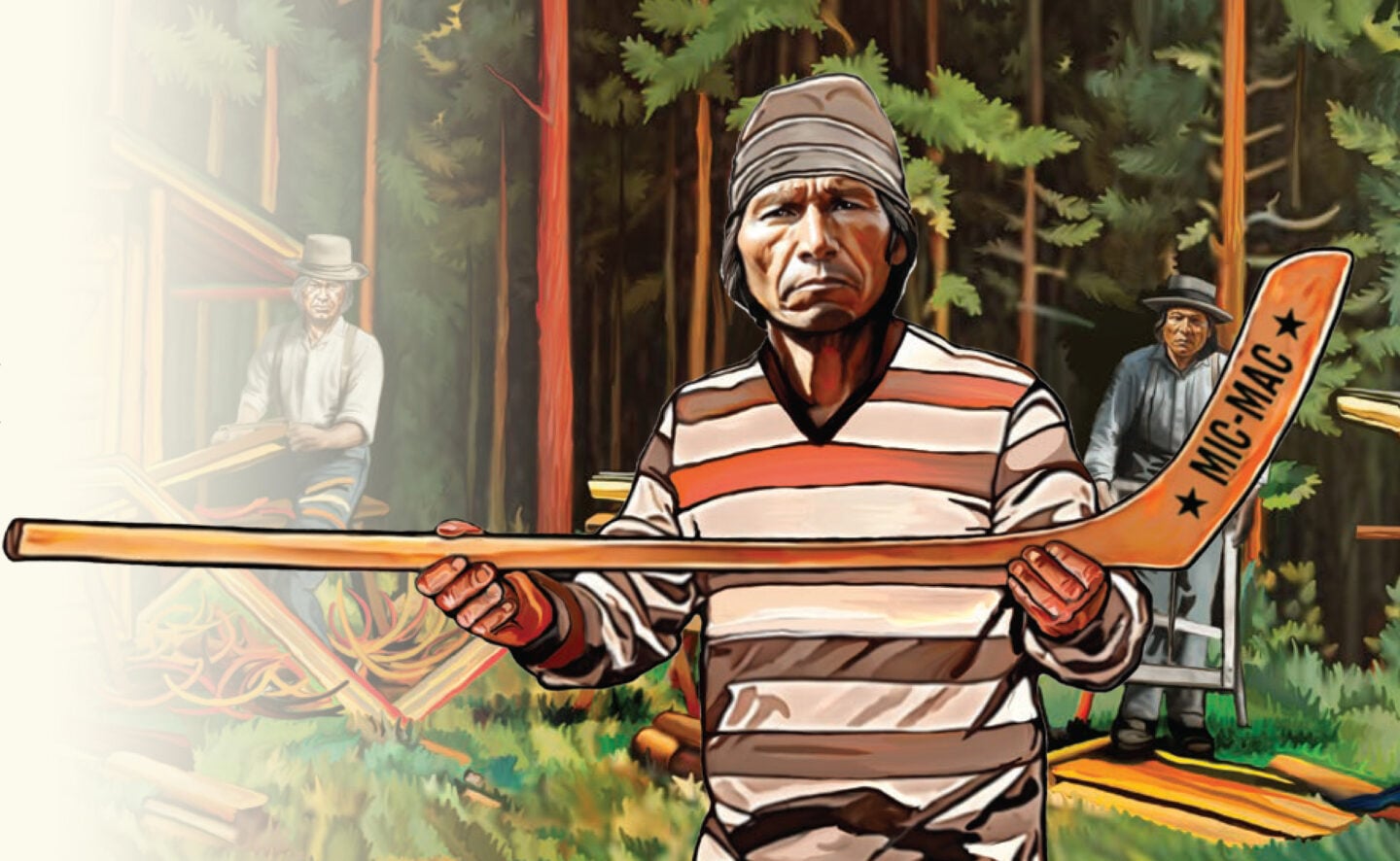
But the Mi’kmaw tradition of making hockey sticks goes far beyond those used by children on the Millbrook Reserve. Mi’kmaq across Mi’kma’ki were known for crafting high-quality sticks from ash or birch, and used them in a game against British soldiers in the early 19th century. The British began trading for the Mi’kmaw sticks, and eventually the soldiers transferred to other places, carrying the sticks with them. For a while, if you wanted a Mic-Mac stick, as they came to be known, says Vernon, it had to be made authentically by a Mi’kmaw. “It was the crème de la crème at the time,” Vernon says.
Starr Manufacturing Company was the first to adapt the Mic-Mac stick, after buying them in bulk from Mi’kmaw artisans. The company’s version was a replica of the Mic-Mac stick down to the size, shape and blade. Mic-Mac sticks were mass-produced by the 1930s and eventually evolved into the composite versions used today — a long way from those homemade sticks carved from an alder tree.

This story is from the July/August 2026 Issue
People & Culture
Katrina Clair is teaching Mi’kmaw to ensure kids like her children always have access to the language
Travel
A pilgrimage to Kejimkujik reveals centuries-old connections between descendants of Nova Scotia’s first Scottish settlers and the Mi’kmaq who saved them
People & Culture
Hockey is more than just a game in Montreal; it’s a window to Quebec culture whether you’re a hockey fan or not

People & Culture
The Canadian author, who’s covered both Parliament and the puck, highlights why 2025 feels like a turning point for Canada