Environment
Inside the fight to protect the Arctic’s “Water Heart”
How the Sahtuto’ine Dene of Délı̨nę created the Tsá Tué Biosphere Reserve, the world’s first such UNESCO site managed by an Indigenous community
- 1663 words
- 7 minutes
People & Culture
Katrina Clair is teaching Mi’kmaw to ensure kids like her children always have access to the language
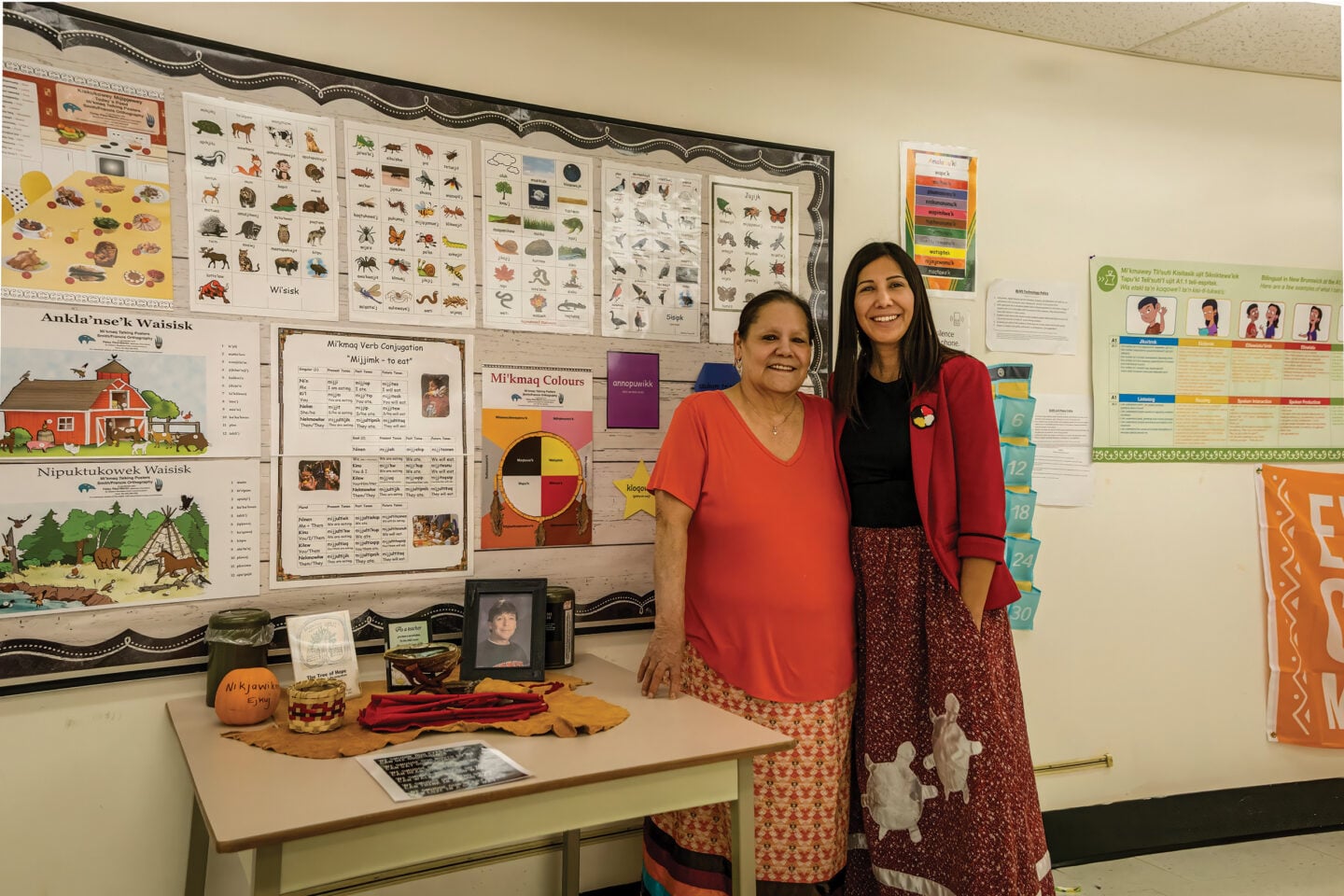
In Serena Sock’s home, in Elsipogtog First Nation, aromas of orange pekoe pitewey (tea) and molasses cookies fill the air. Seated at the table alongside Sock is her niece, Katrina Clair, listening to her auntie speak Mi’kmaw.
Clair teaches Mi’kmaw at Bonar Law Memorial school, in nearby Rexton, N.B. The 39-year-old wants children from her community to always have access to the language. “It’s like medicine for the people, and the kids have comfort with it,” says Clair. “You can feel the connection as you’re teaching, speaking and sharing the language with the kids. And the kids have a safe space to share it too.”
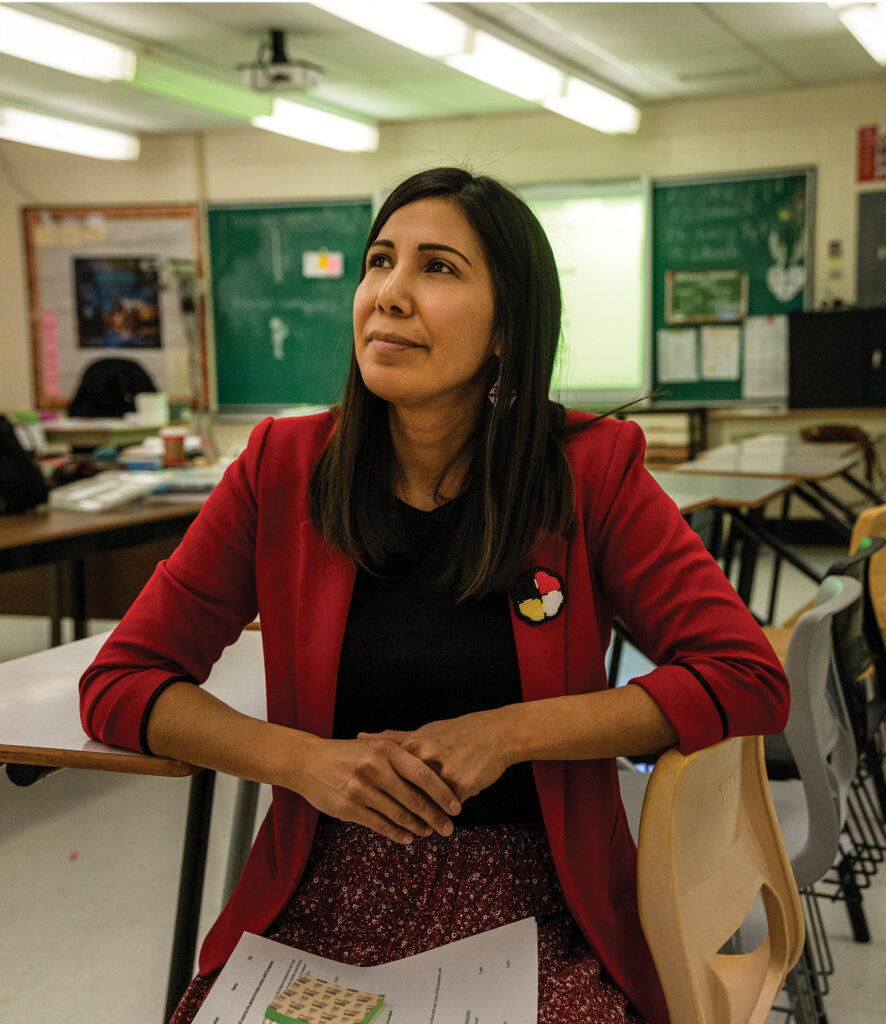
Clair isn’t a fluent speaker and often turns to her sogi, aunt, for language advice. She’s spent the last decade learning the language. As she learns, she’s also teaching her two daughters, Jovia, 13, and Miliko, 2, who already understand more of the language than Clair did at their age, something she takes a lot of pride in. “Jovia gets it, so it’s kind of cool that she’s able to interact a little bit with it and have that sense of that language,” says Clair.
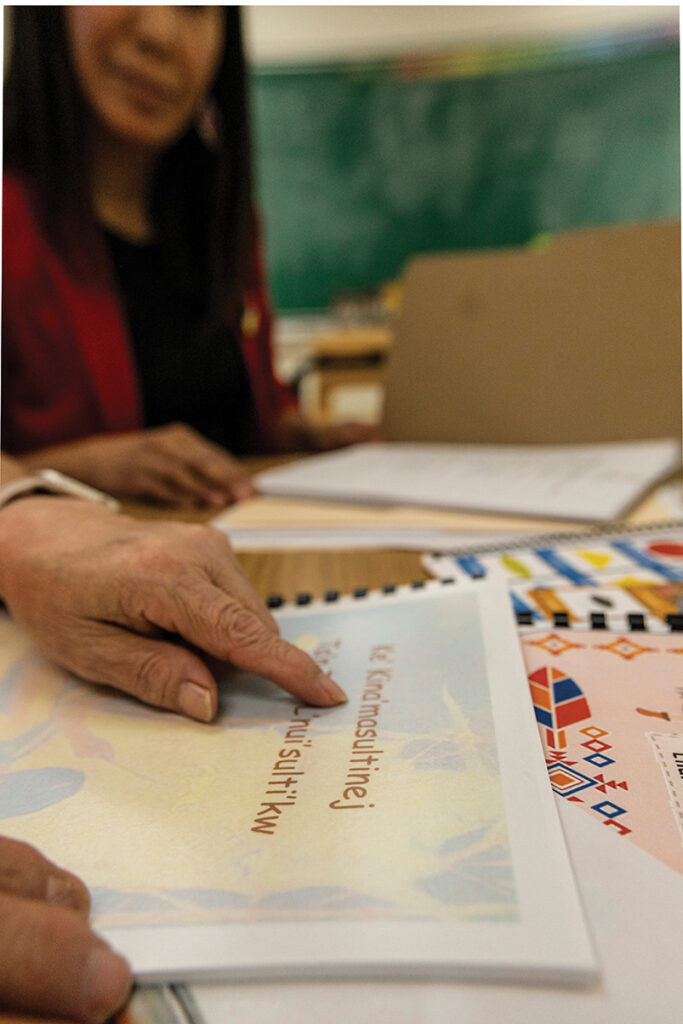
Growing up, Clair was encouraged to learn Mi’kmaw phrases to speak to her grandmother, Charlotte Sock, who spoke only Mi’kmaw. Through their relationship, she learned simple phrases like asking for an apple, menuwekey wenju’su’n, but mostly the language she heard at home was used to scold her or tell her to go to bed, ajimpa. Now, with her aunt’s help, she’s building phrases for everyday tasks to match the master-apprentice program helmed by the First People’s Cultural Council in B.C. The program helps create fluent Indigenous language speakers by pairing a learner with a fluent speaker.
Clair was reminded of the program when Lorna Williams, the University of Victoria professor who brought it to B.C., gave a presentation on it in Fredericton. She raced home inspired and turned to her sogi Serena Sock for help. “I asked my sogi to translate all the activities that they suggested in the handbook, and she provided it,” says Clair. “It’s amazing, so we’re using that in the classroom now.”
Statistics Canada reported in 2021 that Mi’kmaw language speakers have increased by 5.9 per cent in Atlantic Canada since 2016, making Mi’kmaw the most commonly spoken Indigenous language among First Nations people in Atlantic Canada. Of the 3,665 registered members of Elsipogtog First Nation in 2025, Sock figures around 20 per cent are fluent in the language now. But Sock wants to increase the number of fluent speakers and help preserve some of the unique dialects in Elsipogtog.
The 66-year-old has spent countless hours translating Mi’kmaw books and building Mi’kmaw language flash cards and Mi’kmaw language posters, among many other things to revitalize the language. “I would love to see all our children speak Mi’kmaw to each other,” says Sock. But the road to implementing Mi’kmaw language immersion in Elsipogtog has been a hard one. Mi’kmaw had always been an oral language and a formalized written system wasn’t developed until 1875. “Orthographies” are defined as “correct writing” and represent the sound of a language in written symbols. Since 1875, four other orthographies have been created. These differences in writing systems were Sock’s first big hurdle. Many fluent speakers in Elsipogtog were raised with the Pacifique Orthography, which was developed in 1894, but the Francis- Smith Orthography, developed in 1974, is now the official orthography of the Mi’kmaw Nation and easier to use for Sock’s translation work. Around 2002, during a Mi’kmaw immersion class, she found that, because she was using the Francis-Smith system, parents couldn’t support their children, and interest in the immersion program slowly waned. She was later hired to support children learning Mi’kmaw, but it was less intense than immersion and sectioned into a block learning cycle — once students circled back to her block, they had forgotten it all. “I would like to see younger people start learning the language and keep it going,” she says. “They’re the ones that are good with technology, and I find it would be easier to preserve it with all the technologies.”
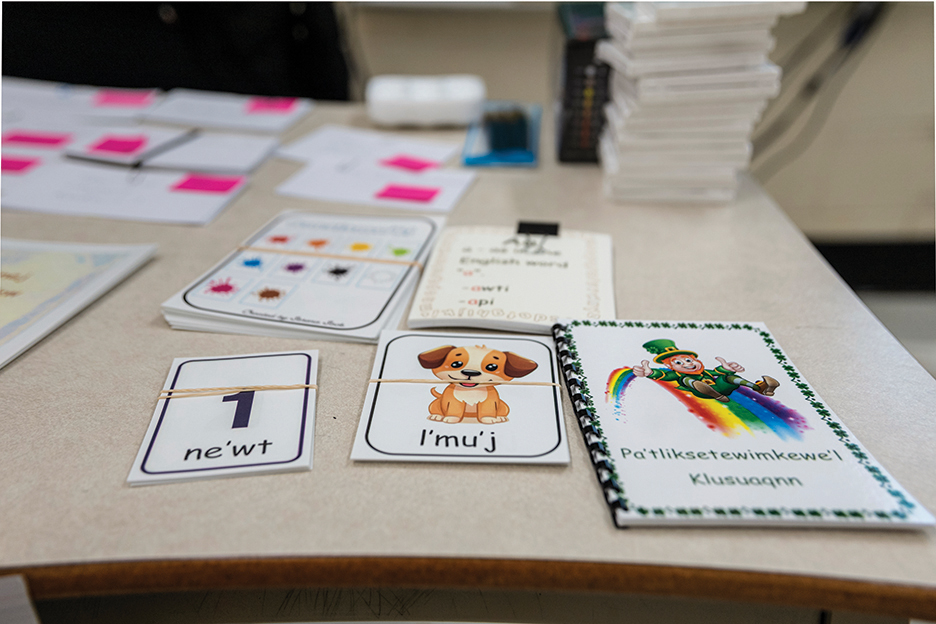
Sock hopes a language advocate (like Mi’kmaw Kina’matnewey, in Nova Scotia) is developed in Elsipogtog to help secure funding and resources for Mi’kmaw language revitalization. Mi’kmaw Kina’matnewey, which works in 12 Mi’kmaw communities, partnered with Apple in 2023 to develop a Mi’kmaw keyboard.
In the past, says Sock, some parents in Elsipogtog upheld a false belief that the only way their children could be smart was to learn English and French. These sentiments stem from Canadian assimilation institutions like the Residential School system and the Indian Day Schools that discouraged Indigenous children from speaking their languages and practising their culture. In Elsipogtog, children attended the Big Cove Federal Day School, run by the Roman Catholic Church from 1897 until 1985. Clair says attitudes have changed too, and she hopes to continue teaching and learning so one day she can be in on some of the private Elder discussions. “A lot of times you hear Mi’kmaw people joking, and I have no clue what they’re saying. I’m like, ‘okay, should I chuckle along?’” says Clair, with a bright smile. “I kind of want to be in on the joke too.”
This story is from the January/February 2026 Issue
Environment
How the Sahtuto’ine Dene of Délı̨nę created the Tsá Tué Biosphere Reserve, the world’s first such UNESCO site managed by an Indigenous community
People & Culture
The story of how a critically endangered Indigenous language can be saved
People & Culture
Plains Indian Sign Language was used by generations of Indigenous Peoples to communicate across languages and landscapes. Now, it’s being reclaimed.
Travel
A pilgrimage to Kejimkujik reveals centuries-old connections between descendants of Nova Scotia’s first Scottish settlers and the Mi’kmaq who saved them