Fisher remains fascinated by the area. He did his doctoral work in the national wildlife area abutting the sanctuary, focused on the threatened Sprague’s pipit, which nests on the ground. The tiny bird’s breathy whistle of a song is a calling card for the prairies.
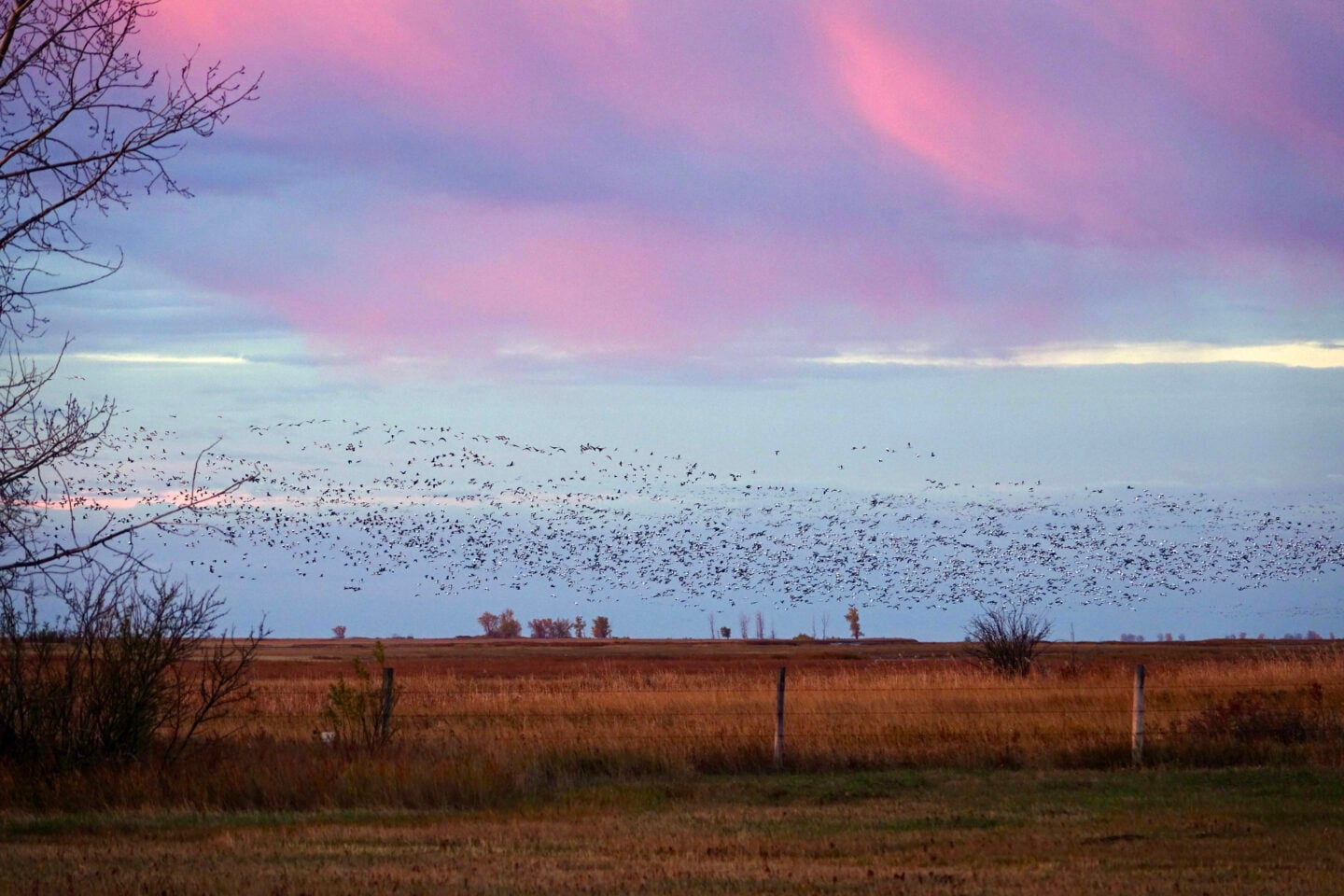
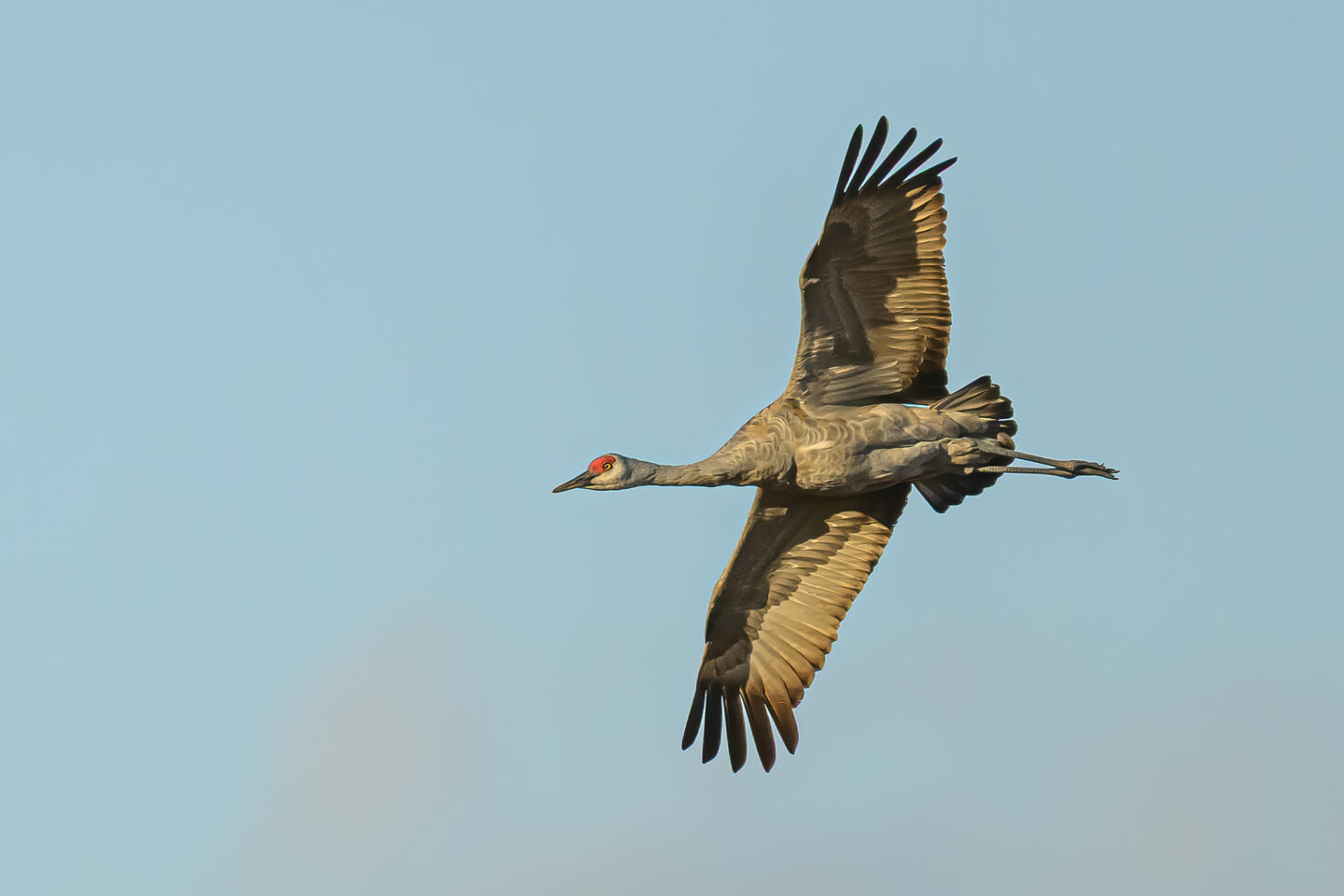
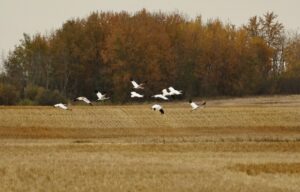
By fall, just as the trees start to lose their leaves, the sanctuary comes alive again. The birds, en route back south, are not as rushed. They linger, and their songs fill the skies, Rustad says. Early in the morning, the cranes start to take off from the wetlands, calling as they mount. Flocks of honking snow geese follow.
As in spring, in fall Rustad catches and bands birds at the Last Mountain Bird Observatory, located in the regional park next to the sanctuary. It’s a means of tracking their movements. Most are small, weighing less than a loonie, and she marvels at how frail they seem when she holds them in her hands.
But then she lets them go, and they return to their great migration, the ritual that keeps them alive and, next spring, will bring them back to Last Mountain Lake once again.
This story was created in partnership with Environment and Climate Change Canada.