
People & Culture
The biggest year in Canadian birds
A tale of joy and persistence: Logging Bruce Di Labio’s birding “big years” almost 50 years apart
- 4123 words
- 17 minutes
Wildlife
In search of piping plover chicks along Canada’s Atlantic coast, a birder meets the next generation of birdwatchers and the conservationists working to protect the endangered species

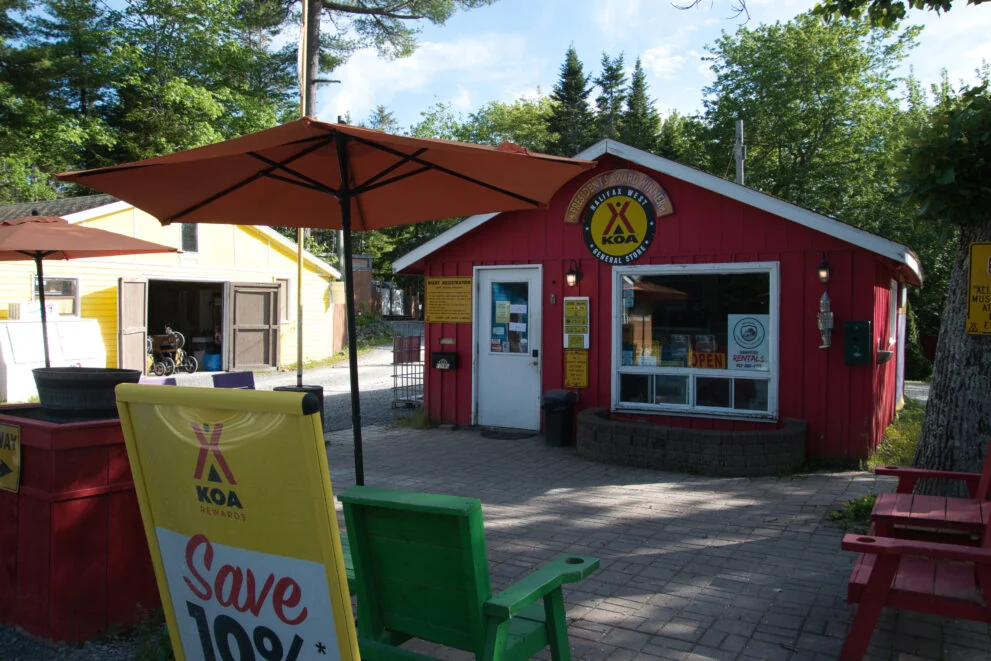
Cold, rainy, and foggy — my first morning in Nova Scotia wasn’t the emerald forest glow and sunny blue skies I had imagined. I grabbed my camera gear from my home away from home, a comfy deluxe cabin at the Halifax West KOA, where I woke up to the sounds of goldfinches and grackles. I was in the province to go birding — warblers, raptors, shorebirds — Nova Scotia has it all.
“Have you stopped by Uniacke Estate Museum Park?” asked Joseph Idy, the KOA co-owner at check-in. “It’s a beautiful place for birds.” I added it to my ever-growing list of places to go birding while I was there.
Despite travelling all over Canada, this was my first time in Nova Scotia. I’d looked up birding hotspots on eBird and made a plan. My ultimate mission: find piping plover chicks.
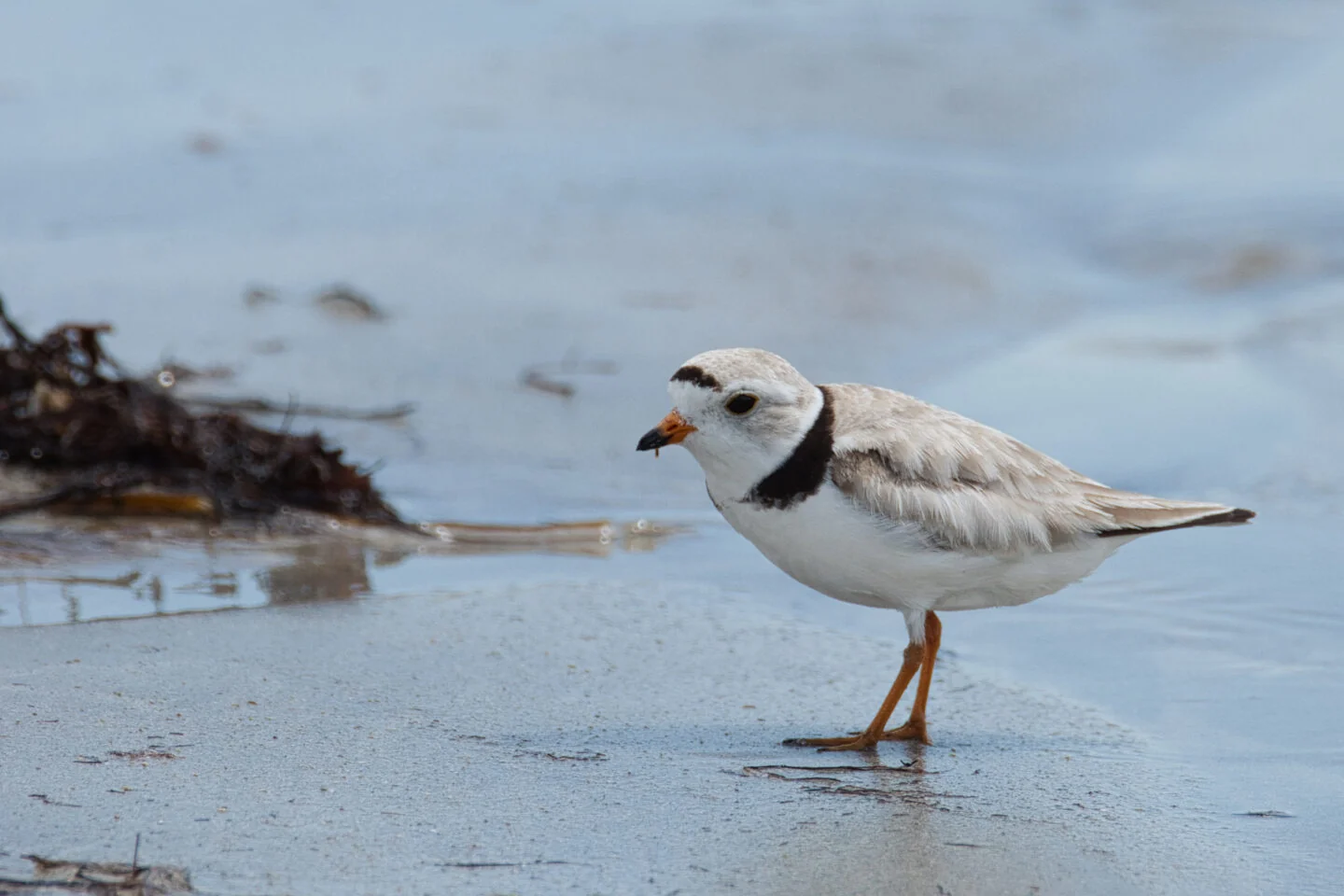
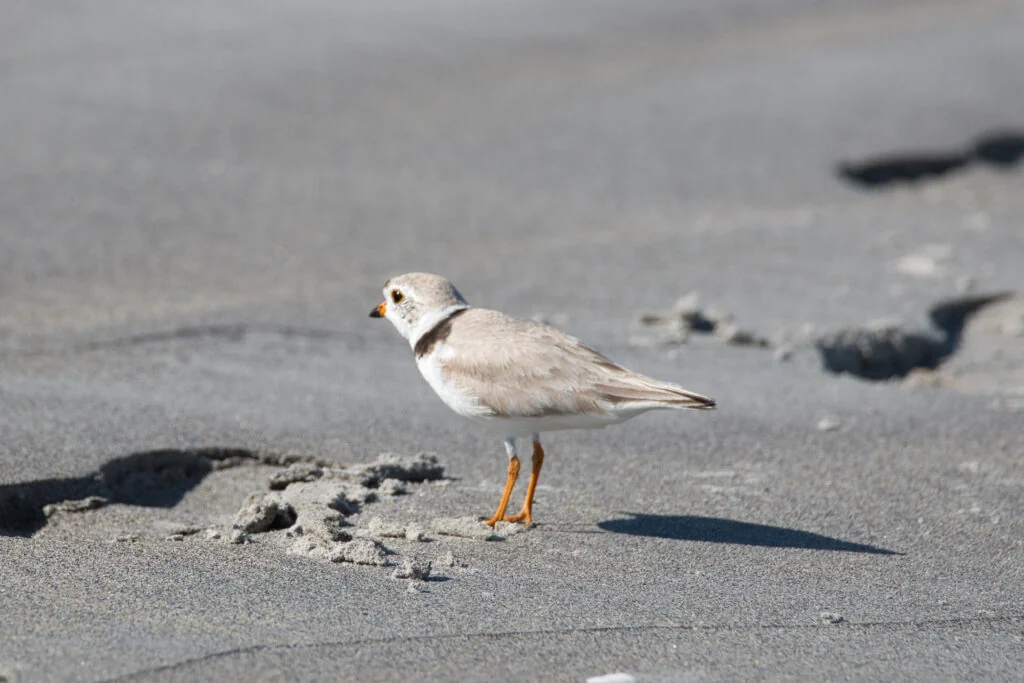
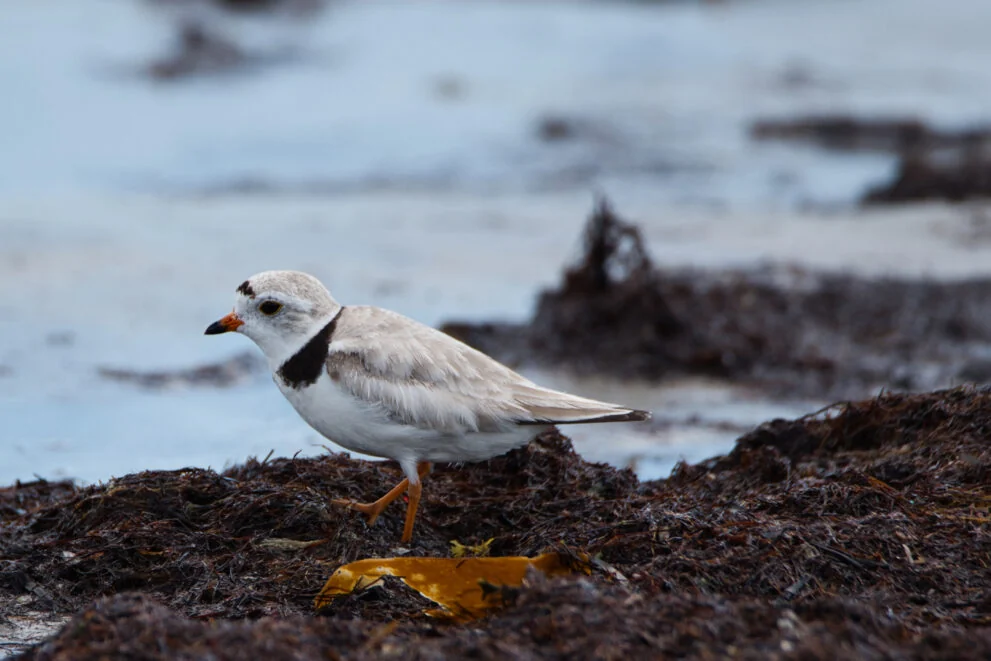
Piping plovers are unbelievably tiny as chicks, like fluffy marshmallows, lightly toasted on one side and white on the other, stuck firmly on skinny orange twigs. They are the definition of a “birb”— a bird so adorable that you don’t so much see it as feel it in your heart.
According to Sarah Saunders, senior manager of quantitative science at the National Audubon Society, three distinct piping plover populations exist: the Atlantic Coast, Great Plains, and the Great Lakes.
Plovers are globally listed as near threatened, although their conservation status varies by region. Piping plover numbers in the 1980s were bleak everywhere. In the Great Lakes, where the population was listed as endangered in 1986 with only 15 breeding pairs, conservation efforts have helped increase that number to 80. Before being listed as endangered in Nova Scotia in 1985, piping plovers were already in steep decline in the province. One study noted that in 1983 estimates were 66 to 71 pairs — a number that dropped to 48 to 54 pairs by 1987, a decline of 12 to 23 pairs in just four years primarily due to human disturbance.
“Our recovery goal to be delisted is 150 breeding pairs for five consecutive years,” said Saunders over a Zoom call, “with at least 50 of those pairs outside of Michigan, because Michigan is the stronghold.” An endangered species in Nova Scotia, the bird’s population is rising thanks to a recovery breeding program.
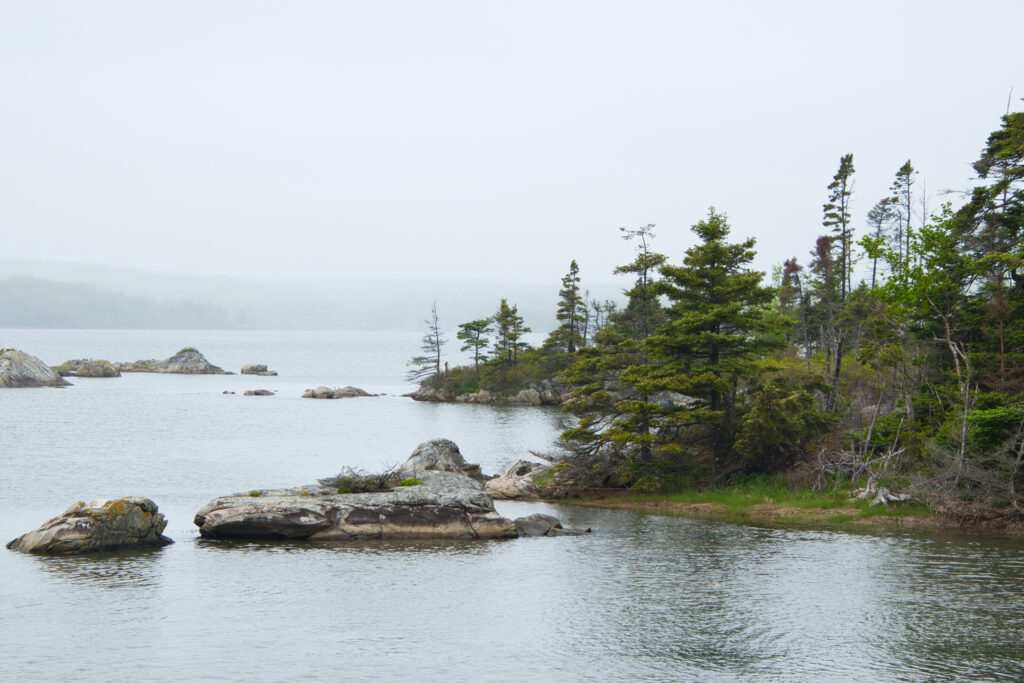
My first stop was Salt Marsh Trail, a flat section of the Trans Canada Trail that winds through a mix of evergreens and coastal marshlands along rocky shores.
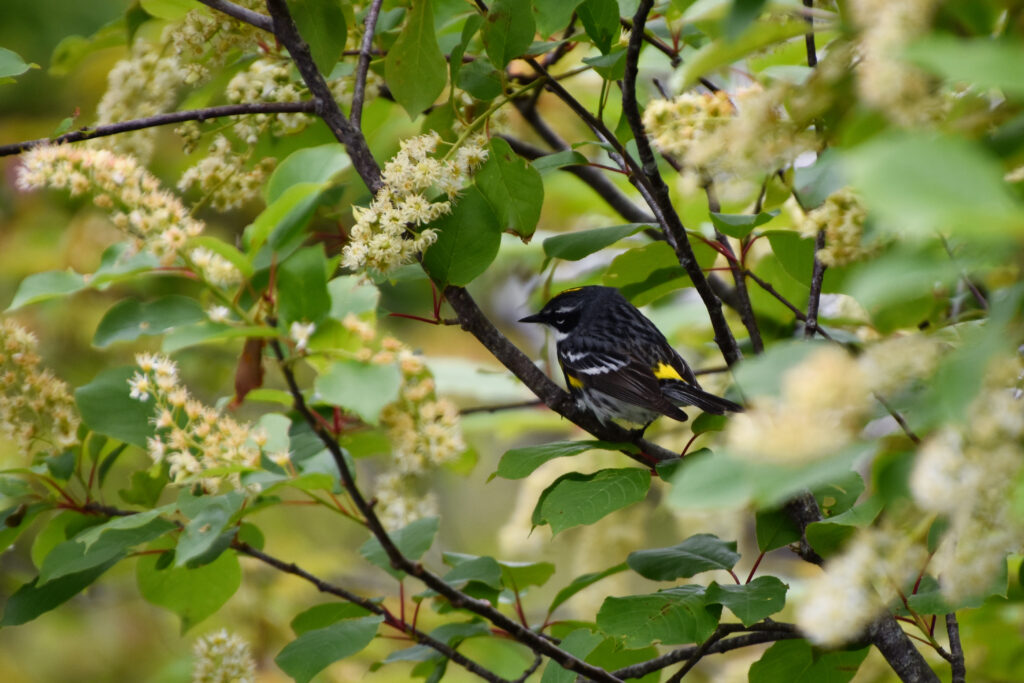
I heard a northern parula before it vanished into the forest. A black-and-white warbler and a yellow-rumped warbler were less coy, hopping around in nearby shrubs. I turned to find another birder eyeing the warblers, dressed stylishly in a chocolate brown leather coat with a black jacket underneath. Otto Zhu, a student at Dalhousie University in Halifax, is treasurer of the Dalhousie Birding Society. Since they usually miss spring migration because of the school calendar, they focused on warblers this summer.

“Halifax HRM is a great spot,” they told me when I asked for birding recommendations. “There are so many park green spaces, and they are pushing to be a bird-friendly city.” Halifax’s Bird Week, they said, took place the last week of May. “Birder numbers are definitely increasing,” they added.
Birding appears to be growing in popularity among younger generations. According to 2026 research from the Royal Society for the Protection of Birds, three-quarters of a million Gen Zers (ages 16 to 29) in the U.K. are birders, a tenfold increase since 2018. Among millennials, participation increased by 216 per cent. While comparable age-based data isn’t available in Canada, interest in birding has also grown, alongside the use of apps like Merlin and participation in events like the Great Backyard Bird Count (GBBC). According to Cornell Lab, Canada ranked third in the number of eBird checklist submissions during GBBC in 2026, and Merlin app use increased by 83 per cent. Nova Scotia ranked closely with Ontario in the number of reported species (131/146). According to Cornell Lab, “Ontario, Alberta, Nova Scotia, Saskatchewan, New Brunswick, Newfoundland and Labrador, Prince Edward Island, and Northwest Territories all had 100 per cent or more growth in Merlin Bird ID observations.”
Among this new generation of birders is the Nashville-based musician and birder Bonner Black, who has gained an international following through her birding advocacy on Instagram. She once described her musical style as “Driven Singer-Songwriter Dunked in Glitter.” Black discovered birding on a whim, after a breakup sparked what she described over Zoom as a “quarter-life crisis.” Then, a Carolina wren showed up. “This little brown bird landed on a fence in front of me,” she recalled, and she thought, “I need a hobby.”
When she started posting comedic bird posts on social media, the posts “went way more viral than any of my songs,” Black said with a laugh, “which kind of annoyed me at first, but then I accepted it.”
She says the assumption is that her generation is “obsessed” with phones, when in reality, they can be a source of anxiety. She describes birding as “just weirdly like this little rebellious act in a way.”
But birding isn’t just attracting the younger generation. In May, Black emceed “Birder Prom ” at The Biggest Week in American Birding, an Ohio festival celebrating migrating warblers that attracts tens of thousands of people each year. Everyone from young children to couples in their 80s danced together to celebrate their shared love of birds.
In Nova Scotia, kids are discovering birds in the Nova Scotia Young Naturalists Club.
The group was started to fill a gap in the educational system, said Marina McBride, the club’s 25-year-old provincial coordinator, over Zoom. McBride took a birding course in college and recalled thinking, ”Oh, I’m gonna hate this course.” But learning bird calls got her hooked.
McBride spoke about Nature Guardians, a chapter for tweens in the club. Two of these Guardians, Bryson Gollop and Julian Togni, both 11, participate in beach cleanups and plant bird-friendly native gardens. Togni recalled stickers they put in the library window. “They have dots,” he recalled excitedly. “You could see out, it’s just so the birds would see the dots in the windows and they wouldn’t hit the window.”
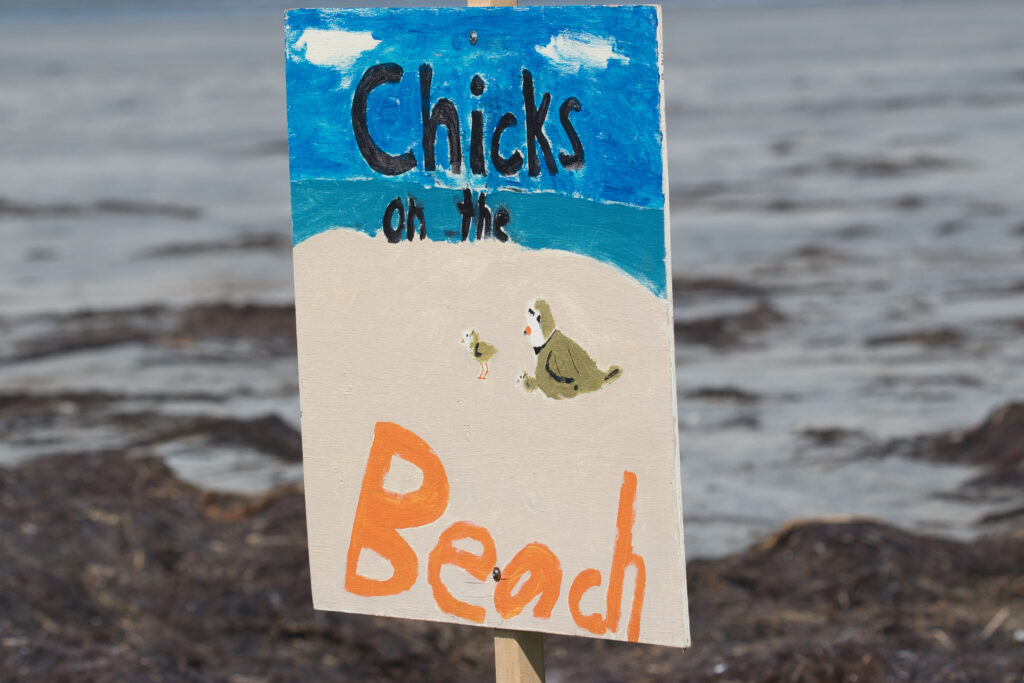
Gollop logs birds he sees using stickers. A robin’s nest caught his attention first.
“We got to watch them grow and fly too,” he said. He’s also part of Ocean Defenders and has seen plovers running around during cleanups. Gollop said kids like birding because it’s fun, relaxing, and doesn’t cost much. “It’s also good for mindfulness,” he added.
Togni agreed. “It’s very relaxing, too, and calming.” He first got into birding through a homeschool co-op at an urban ecology center in the U.S. For him, it’s the variety of colours and songs that makes birding so appealing.
This generational shift is crucial. Nearly three billion birds have disappeared in North America since 1970, according to a Cornell Lab of Ornithology study. If birds like the piping plover are to survive, they’ll need the next generations of fledgling birders to have their back.
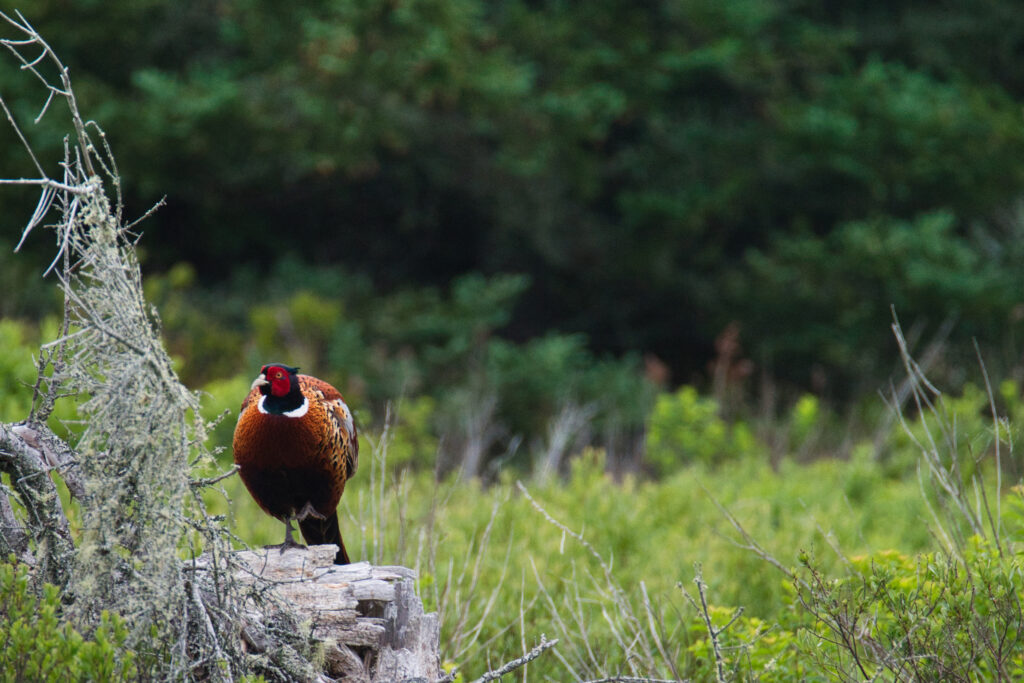
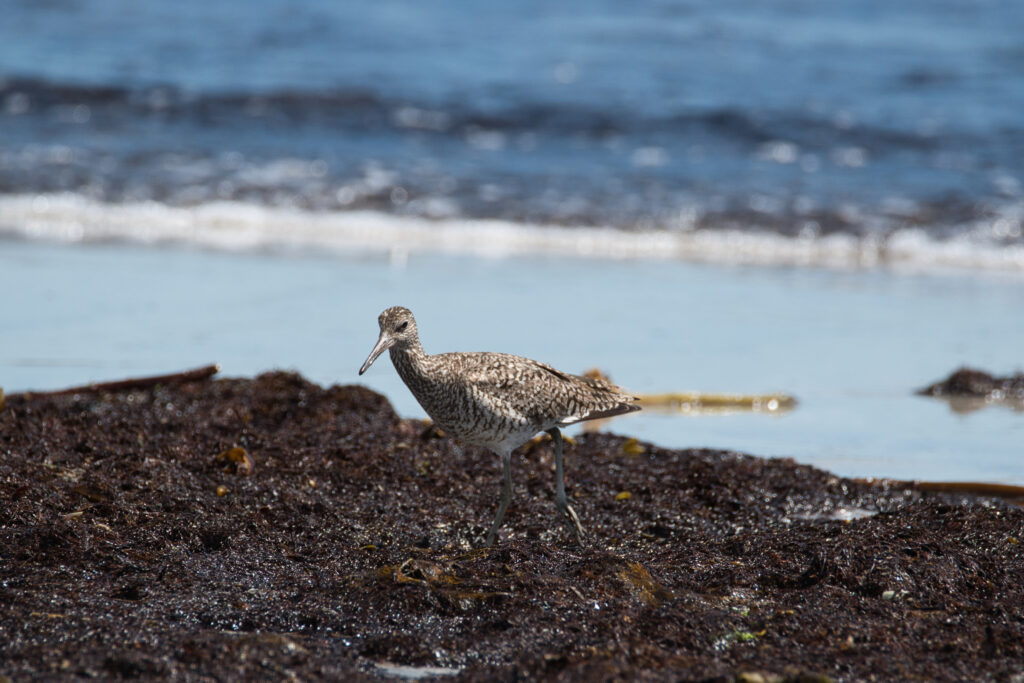
Back at Salt Marsh Trail, I left Zhu looking for warblers and headed to Rainbow Haven Beach Provincial Park about 3 km away. I searched the rocks for a plover nest, though I was unlikely to find one. The beach was shrouded in dense fog, but the road around it was clearer.
An older couple stopped to point out a little blue heron. When I mentioned I wasn’t from Nova Scotia, they apologized for the unwelcoming weather.
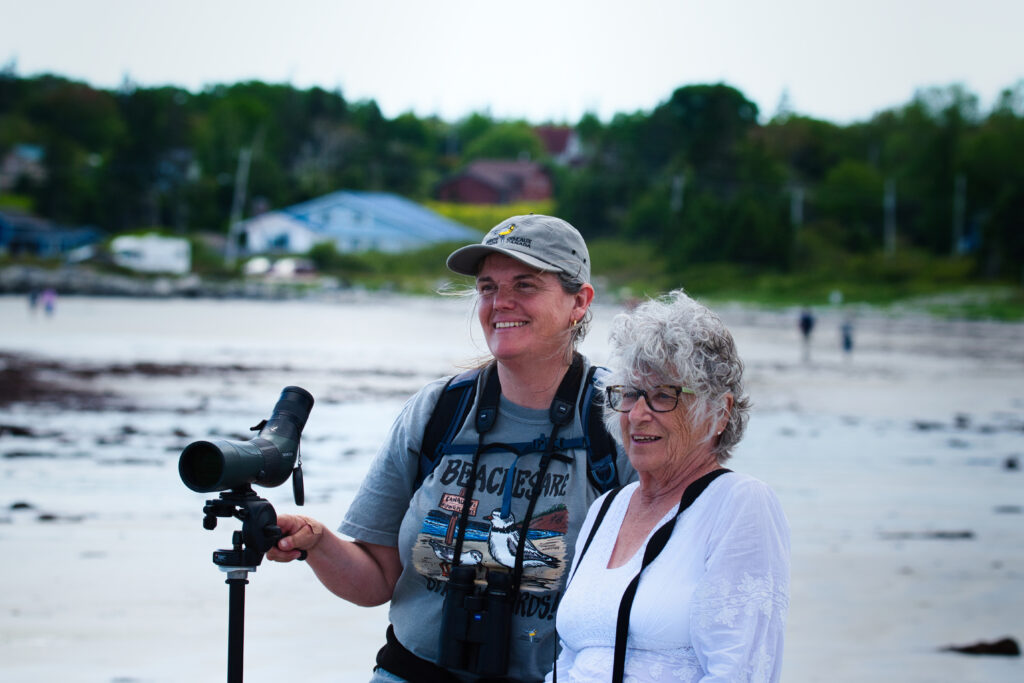
Another man asked if I was looking for the Nelson’s sparrows reported on eBird. I helped him look until he had to leave. The birds appeared two minutes later. “Well, that’s birding for you,” I mumbled.
On my way back to KOA for the night, I stopped by Uniacke Estate Museum Park as suggested. It didn’t disappoint; masses of American goldfinches filled the trees.
Not spotting plovers on day one wasn’t surprising, but I had a secret weapon for day two.
The next day I got up early. The sun was out, as were the greens and blues I had expected. I met up with Sue Abbott, associate director for Birds Canada’s Québec and Atlantic region. She oversees the regional piping plover conservation program and graciously agreed to go road-tripping in search of plover nests.
“It doesn’t look good,” said Abbott shortly after we arrived at Beach Meadows, where a GPS-marked nest had disappeared. “Nest failure.”
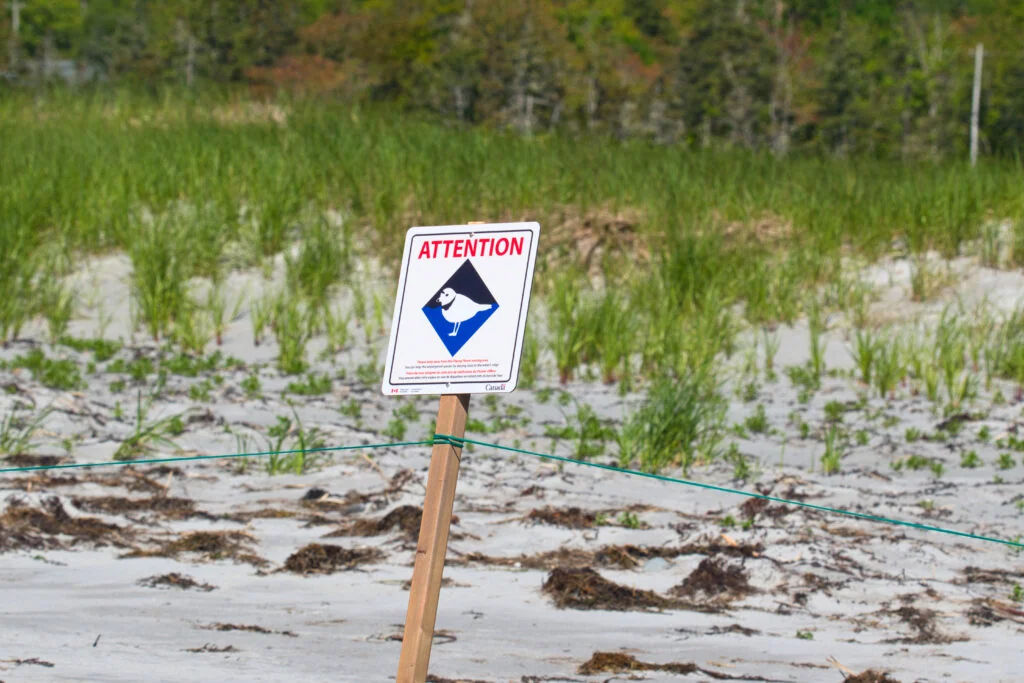
Her team had roped off the area and put up signs to prevent off-roaders and people with dogs from accidentally trampling the nests, but she suspected a predator was responsible, and it was probably another bird, since there were no tracks from dogs or coyotes.
We moved the roped posts back from the tide. “We can’t give up,” she said, “because we need to be thinking about recovery…making sure sites remain suitable for them.”
Abbott told me that while there’s still a long way to go regionally, Nova Scotia is expected to exceed its population recovery objective. According to the Birds Canada 2024-2025 Annual Impact Report, Nova Scotia had 69 piping plover pairs and 115 chicks fledged. Abbott attributed this success to consistent annual funding from Canada’s Nature Legacy, which has allowed the organization to retain experienced staff and run species-monitoring programs.
This year, however, funding was delayed and, when renewed, fell short of previous levels. The uncertainty comes amid broader federal conservation funding reductions, largely driven by the expiration of the five-year Enhanced Nature Legacy initiative. According to Environment and Climate Change Canada’s 2026 to 2027 departmental plan, federal spending on nature conservation is expected to fall to approximately $366 million, compared with $952 million allocated the previous year.
In September, the federal government announced $2.6 million in funding for Birds Canada over five years, supporting bird monitoring, conservation programs and research across the country. While the organization also receives funding through other grants and donors, the changes have created uncertainty around the long-term stability of its conservation programs.
At Carter’s Beach Provincial Park, we planned to cross a creek to observe a known nesting pair, but heavy rains made it significantly deeper than expected, so we moved on.
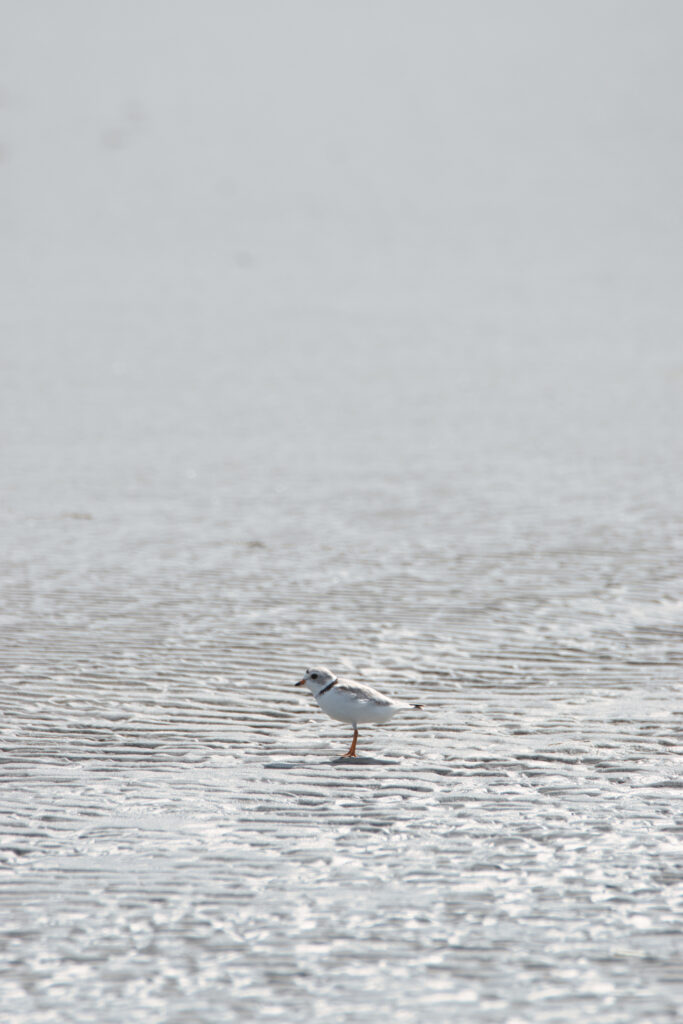
At Summerville Beach Provincial Park, just nine kilometres away, we found well-camouflaged plovers nesting in the distance, but still no chicks.
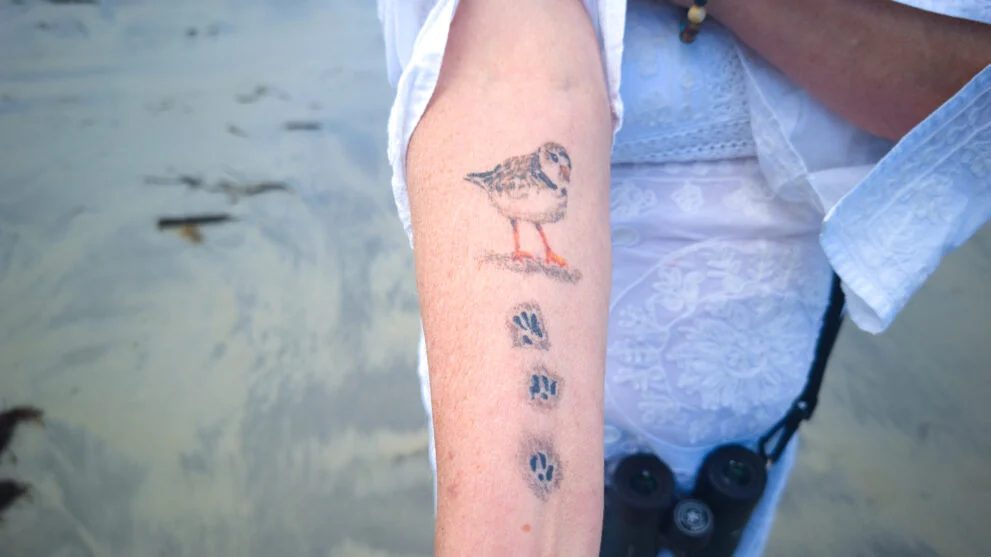
At Crescent Beach, we met plover volunteers who walk beaches looking for nests and documenting their locations, with one proudly flashing her plover arm tattoo; nesting pairs ran along the beach looking for food, but no one saw a chick.
The day was going fast.

At Louis Head Beach, we met up with Melissa Labrador, an Indigenous land and water guardian leading The Pemsɨk Vision and a senior L’nu climate and conservation advisor at Oceans North. Pemsɨk is “a coordinated and collaborative conservation mosaic” in the district of Kespukwitk, within traditional Mi’kmaq territory.
Labrador is a force of nature. Drawing on Indigenous knowledge, she describes a “holistic” approach to conservation that considers the “landscape, seascape, and a cultural landscape.” She said this helps conservationists understand the impacts of climate change on wildlife and shifts in their species’ ranges, informing conservation planning for a proposed National Marine Conservation Area that would help protect species like piping plovers.
“Plovers are part of our story on the shoreline,” said Labrador, “and they always have been…growing up, we used to do a lot of clam digging in the area…there were plovers everywhere.”
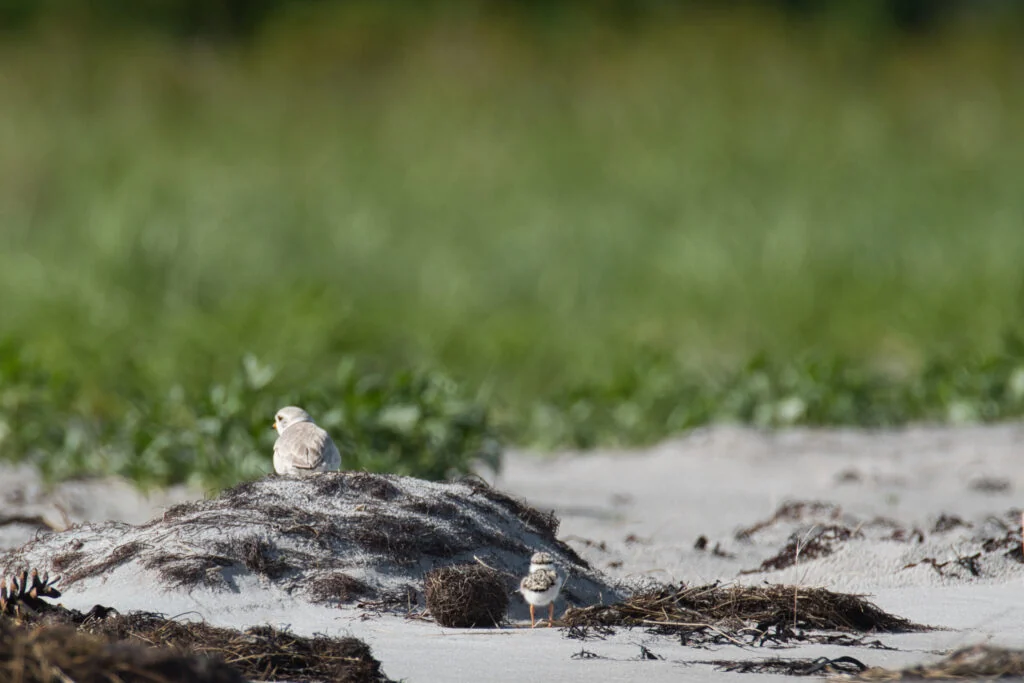
Those plovers were definitely harder to spot now. I was wondering if I would finally get to see those chicks, and then Abbot came to the rescue.
“Three plover chicks!” I heard Abbott call from behind her scope. We hurried to get a view, but were still too far away to see the tiny chicks well.
“This is where getting low on your knees and kind of inching a little closer will probably help,” Abbott told me. She didn’t want to frighten the birds. We dug our knees into the wet beach and slowly made our way closer, pausing every few feet.
A fluffy chick scurried across the beach behind the roped-off area, exploring while its mother kept an eye on it. I was transfixed by this fragile but adventurous and curious little birb. They had only been in the world for a matter of days, but they were ready to see it all. The chick eventually disappeared behind some rocks, exploring beyond my camera’s reach, and I said my goodbyes.
That night, I crashed in my comfy bed at the KOA, happy to have finally accomplished my mission.
The next morning — my final day in Nova Scotia — I looked for shorebirds around Peggy’s Cove, but mostly found song sparrows and a guy playing an alphorn next to the cove’s iconic lighthouse. On the trail to nearby Polly’s Cove (a hidden gem), I heard another yellow-rumped warbler in the dense shrubs. I hiked through an expanse of boulders and sat down for a snack on the coast, enjoying my last view of the crashing waves.
Seeing those tiny fluffball plover chicks was incredibly satisfying, but it was also concerning to see how obviously vulnerable they are. They need people like the young Nature Guardians, college students, musician birders, Indigenous Guardians, and conservationists like Sue Abbott to protect them.


People & Culture
A tale of joy and persistence: Logging Bruce Di Labio’s birding “big years” almost 50 years apart

Places
The 2022 designation of Big Glace Bay Lake as a national wildlife area is a key step in a decades-long effort to help piping plovers recover and thrive. It also protects crucial fall migration habitat for many species of waterfowl.

Wildlife
Plus: the stolen 200-kilo polar bear, the bat that leapfrogs its way home, and the weird ancient tree straight out of The Lorax
Travel
Spread your wings with birdwatching’s elite guard in south Texas