Wildlife
Study finds reef sharks ‘functionally extinct’ from 20 per cent of the world’s reefs
Lead author Aaron MacNeil discusses what this means for coral ecosystems and what Canadians can do to help
- 1375 words
- 6 minutes
Travel
On Nukubati Island, a small, sustainably run resort in Fiji, PADI celebrates six decades of diving while helping shape the future of shark and ray conservation

As a child, I was terrified to enter the deep end of a swimming pool. I was convinced that somewhere below the surface, a shark was waiting to grab me and drag me to my death. Never mind that I was swimming in a chlorinated pool thousands of kilometres from the ocean. Thanks to Jaws and Hollywood’s portrayal of sharks as man-eating monsters, my imagination had convinced me that dangerous creatures lurked in the deeps.
Much of the world’s media has always sensationalized the risks posed by sharks, painting them as dead-eyed killers intent on destroying anything in their path. “Tourist killed by ‘dinosaur-sized’ shark off South Africa beach” reads a 2010 article from The Guardian. Another, published a year earlier, warns of “Jaws” panic following three shark encounters along the Australian coast within 24 hours.
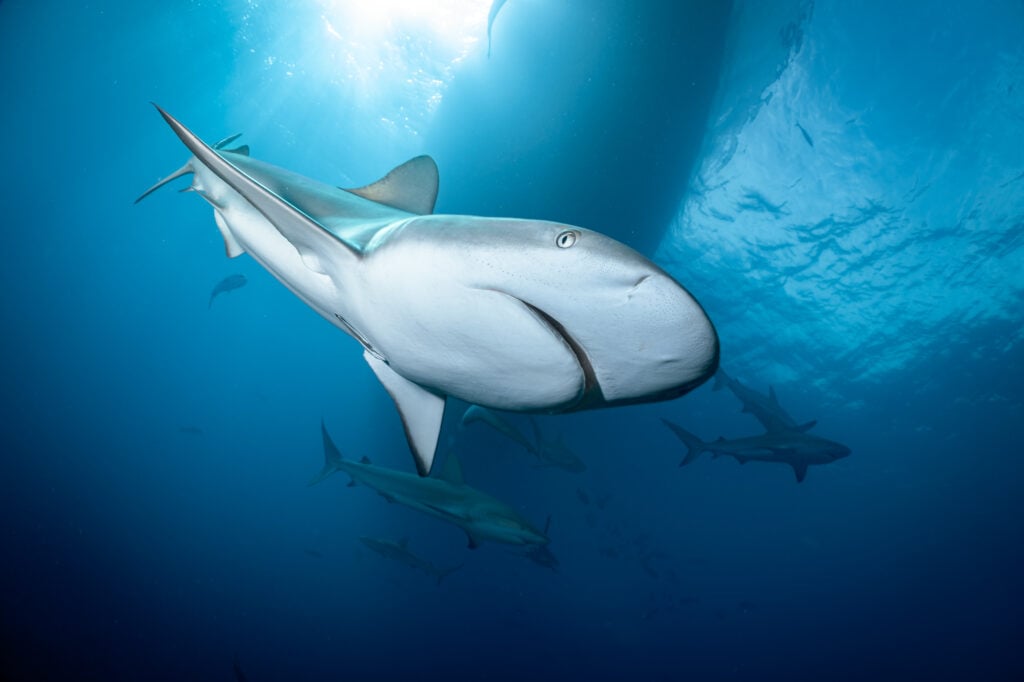
For decades, news stories have magnified the misconception of the shark as a vengeful predator, reinforcing the public’s already widespread fear. At the same time, journalists have devoted relatively few column inches to publicizing the many man-made threats to these cartilaginous fish. The villainization of sharks has made it difficult to generate public support for their conservation even as many shark species hover on the brink of extinction.
I consider myself lucky that a real-life encounter with a shark provided me with the opportunity to overcome my fears and view sharks from an entirely new perspective.
In 2016, I received my PADI (Professional Association of Diving Instructors) Open Water Diver certification in Ontario. Despite my fear of sharks, I loved the ocean and wanted to explore it. Before my first ocean dive a few months later in Turks and Caicos, I asked the divemaster if we were likely to encounter sharks. When he cheerfully replied that a sighting was almost guaranteed, I almost backed out.
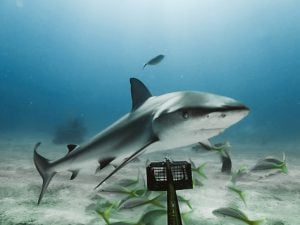
Sure enough, within minutes of our descent a curious reef shark approached. But rather than displaying the aggressive behaviour I had seen on television, it moved gracefully, slowly investigated us, then swam away. On that day, I surfaced with all my limbs intact and a newfound curiosity about an animal I had previously been convinced would surely kill me.
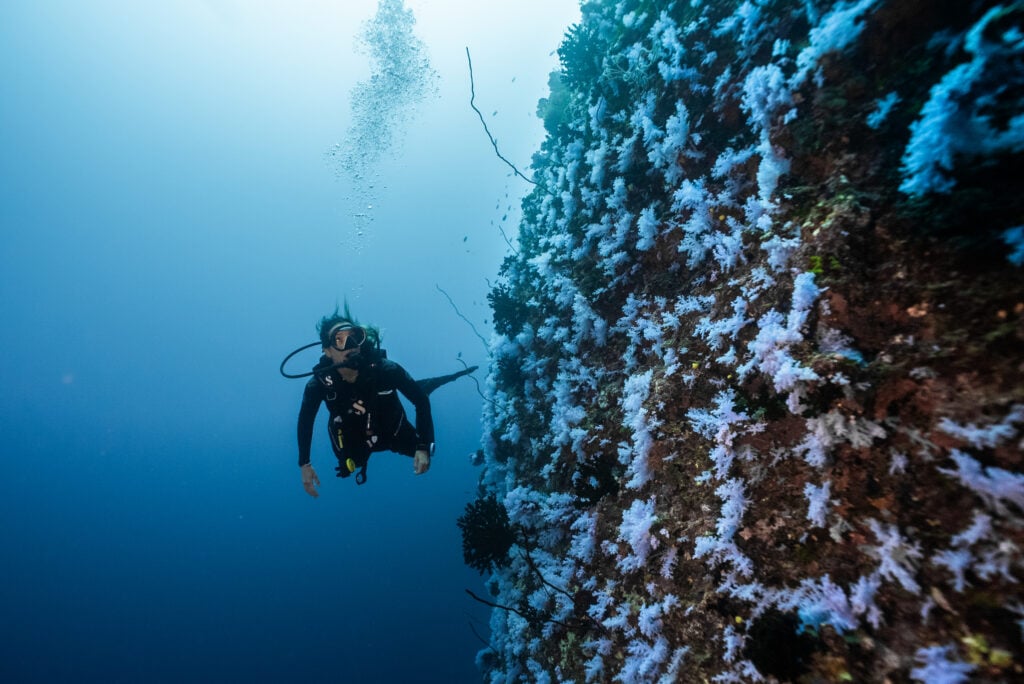
Nearly one-third of all shark and ray species are threatened with extinction, according to the PADI AWARE Foundation, a global non-profit environmental organization dedicated to marine conservation.
Overfishing, marine habitat loss, pollution, and the climate crisis are just a few of the threats to shark and ray populations, along with bycatch and hunting for their fins, oil, skin, gills, and teeth. A 2021 study published in Nature reported that oceanic shark populations have declined by 71 per cent since 1970, while PADI AWARE has estimated that nearly two-thirds of coral reef shark species are threatened with extinction.
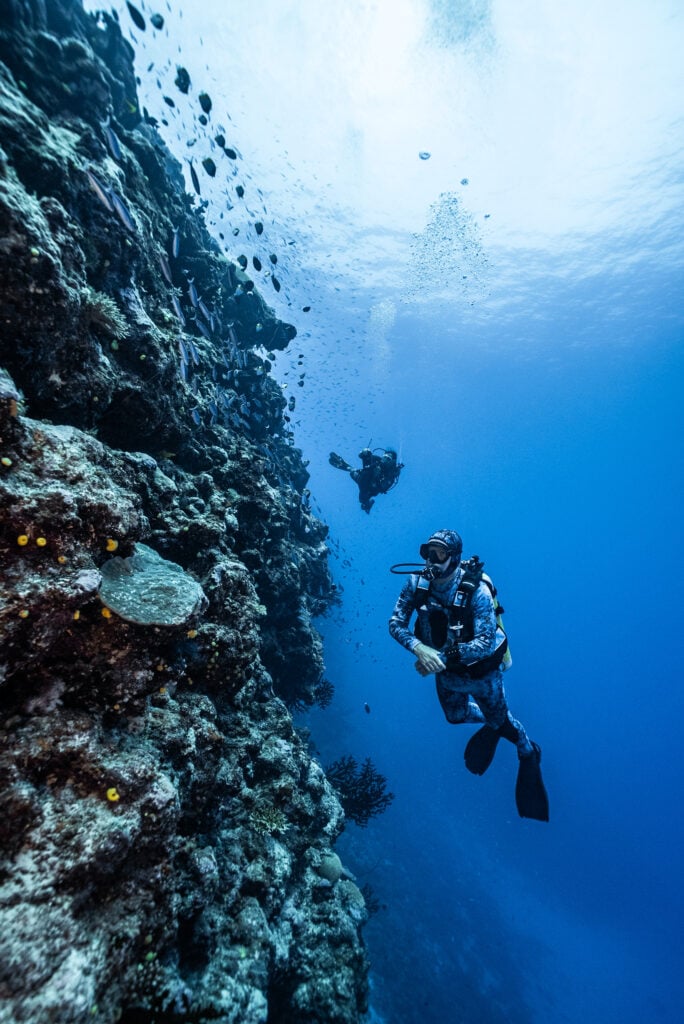
It doesn’t help that sharks and rays reproduce much more slowly than other fish species, with some giving birth to one or two pups at a time after pregnancies that can last more than a year. With up to 100 million sharks and rays caught annually across the globe, populations cannot reproduce quickly enough to replace themselves.
“When we talk about balance between humans and nature, that balance includes apex predators, and that’s why we need to protect them,” says Kristin Valette-Wirth, chief brand and membership officer for PADI.
She notes that sharks and rays play a critical role in maintaining healthy marine ecosystems — reducing the number of apex predators in any ecosystem can lead to its collapse. “Sharks are, indeed, the top predator in the marine ecosystem, and if you start to reduce the number of sharks, then everything below that starts to change and the entire ecosystem that we all as human beings rely on gets disrupted.”
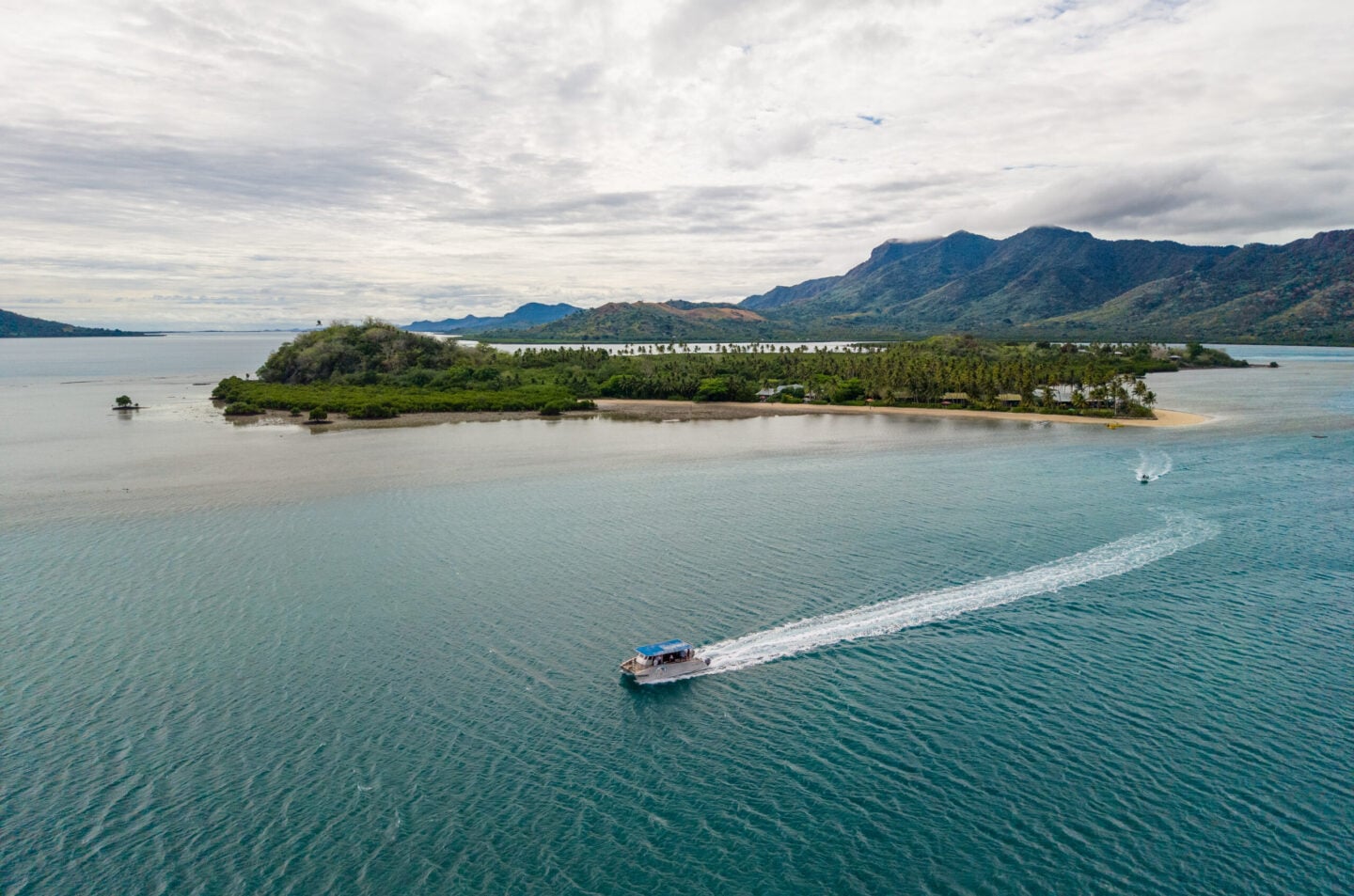
I am sitting with Valette-Wirth, along with PADI CEO Drew Richardson, at the Nukubati Island Resort, an eco-resort located on a small, family-run island off the northern coast of Vanua Levu in Fiji. We’re here to celebrate PADI’s 60th anniversary, complete PADI’s Shark and Ray Conservation Specialty course, and contribute to the new Global Shark & Ray Census, a citizen science initiative aimed at collecting critical data to help protect these vulnerable marine animals.
“You can’t sanctify sharks and rays,” says Richardson, “but you can maybe show and elevate more deeply why they are important. And that’s what we have to do.”
It’s been more than a decade since my first shark encounter in Turks and Caicos, and since then, I’ve encountered numerous species on dives around the world. From Galapagos hammerheads to bull sharks and from nurse sharks to Caribbean reef sharks, I’ve swum with them all and can report that I’m still very much alive to tell the tale.
Over the years, my curiosity about sharks has evolved into admiration and, ultimately, frustration with humans for the harm we’ve caused and the misconceptions we’ve perpetuated about them. And while strides have been made to raise awareness and strengthen protections for sharks and rays, we need to do so much more if we are to ensure their survival.

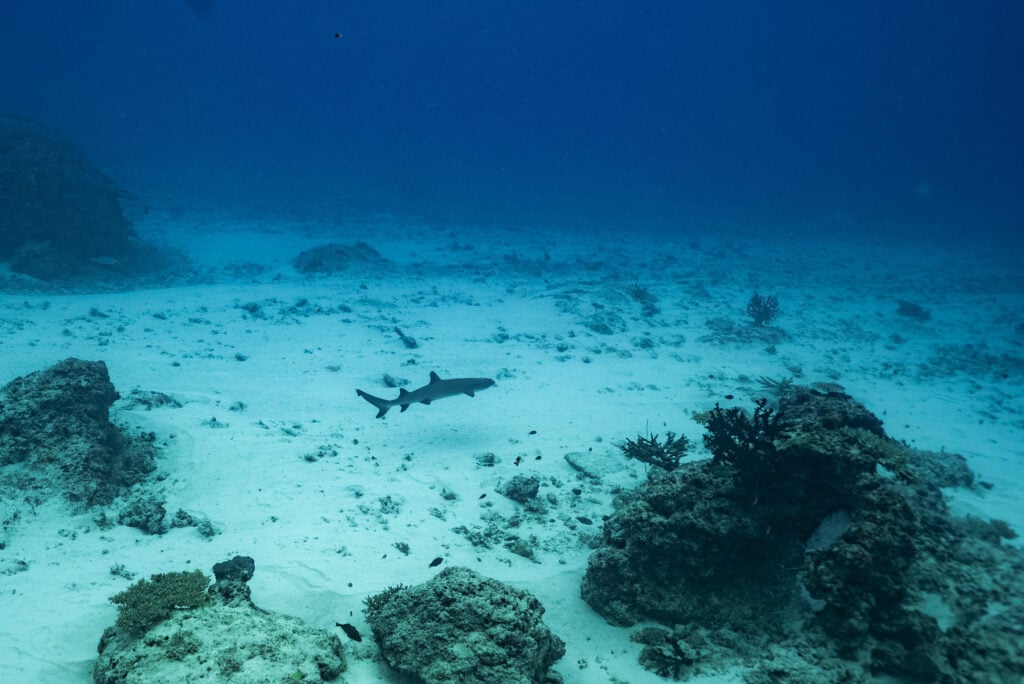
As the world’s largest diving organization, PADI launched its Shark and Ray Conservation Specialty course and Global Shark & Ray Census in 2026, giving divers opportunities to contribute to marine conservation through education, citizen science, and advocacy.
“The right time would have been 20 years ago, just like planting a forest, but the next right time is now, so we need to get started,” says Richardson when I ask why PADI has chosen to launch the course now. “The issues that are threatening these species have existed for a while, and they are perhaps intensifying.”
The course teaches divers how to identify different species and submit data about them to a global database held at James Cook University in Australia. These observations will help researchers to better understand shark and ray populations around the globe and inform future conservation efforts. “People can now leave a constructive thumbprint on the issue,” says Richardson.
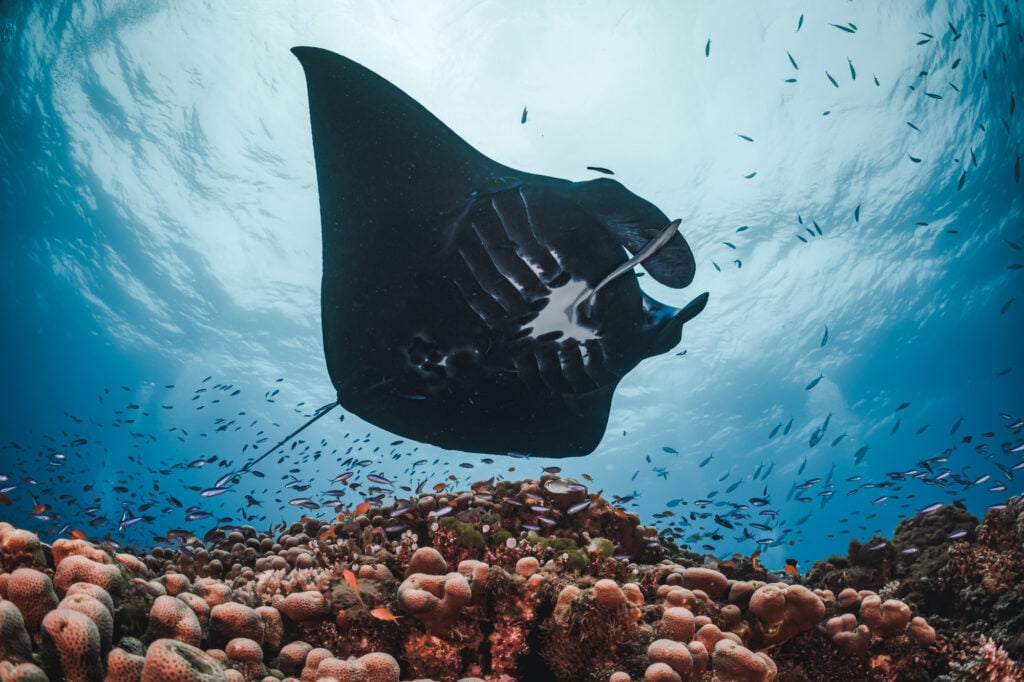
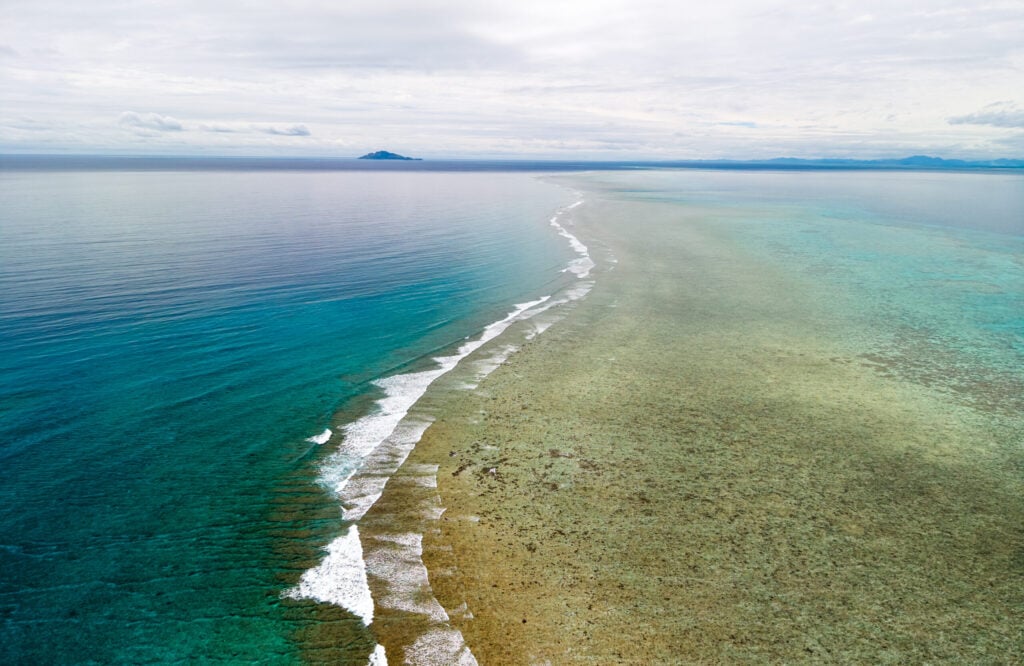
“Leopard shark!” I yell after dunking my face beneath the surface to see what marine life lies below our dive group, some of whom are still making their way off the boat. It’s our second day of diving with Great Sea Reef Divers, and we’re geared up for another dive in the Great Sea Reef, the world’s third-largest barrier reef system.
“Go, go go!” yells Leone Vokai, owner and founder of Great Sea Reef Divers, as we descend for a closer look at the shark — an uncommon species in this area.
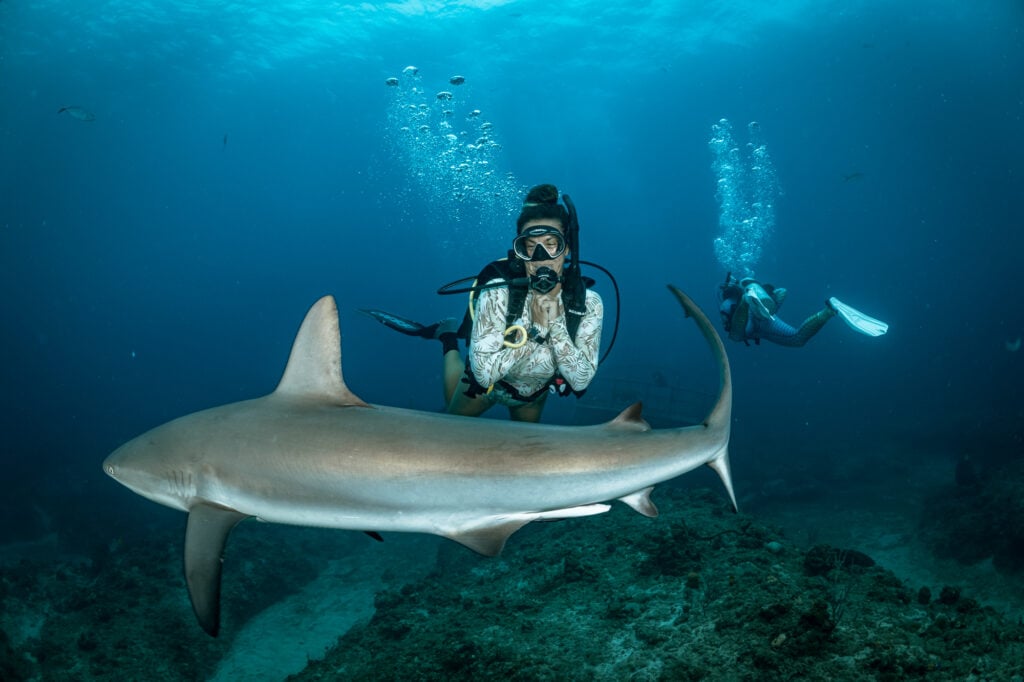
Over our 45-minute dive, we spot many more species, including blacktip reef sharks, whitetip reef sharks, grey reef sharks, and, for the grand finale, a bull shark.
I notice the remora first — also called sharksuckers and suckerfish, remoras are known for attaching themselves to larger marine animals so can be a good indication that a shark is nearby. Our dive was coming to an end, and Vokai had just signalled for our three-minute safety stop about 15 feet below the surface. Eyes wide, I continue scanning the blue through my mask, hoping to catch a glimpse of something before we ascend. Then the bull shark appears.
Maybe it’s just me, but there’s something remarkably calming about encountering a large shark in its natural habitat. There’s no Jaws theme music, no flashing teeth or sudden movements. The shark does not seem interested in us. It simply moves through the water, unbothered by our presence, while I hover almost motionless, mesmerized by the sight.
Back on the dive boat, I’m literally jumping with joy and ask Vokai how big he thinks the bull was.
“Maybe three metres?” he responds.
Beyond the joy of seeing this shark, our encounter has a deeper purpose: now that we have somewhere to log this sighting, we can contribute to a larger scientific effort to understand and protect these animals. For most of my diving life, an encounter like this would have ended with a good story and a photograph if I was lucky. But this time, I feel like I am a part of something much larger.

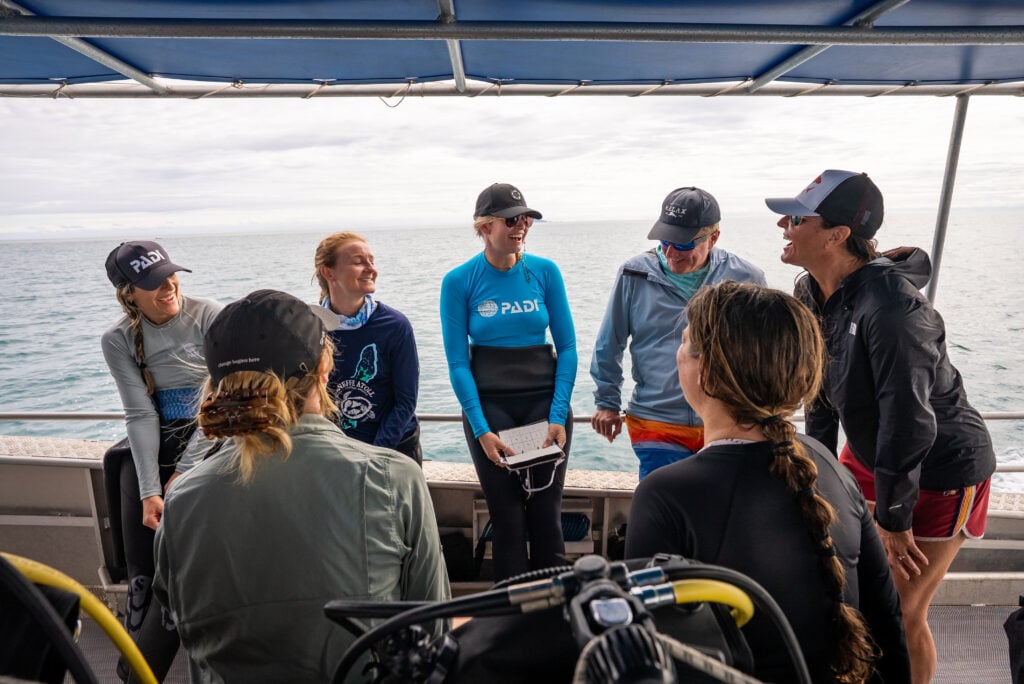
Later, sitting around the dining table at Nukubati, our group enters the day’s sightings into the PADI AWARE app — inputting the species we’ve encountered, where and when we saw them, and other measurements such as water temperature and depth.
It’s a straightforward process, but one that could help address a significant gap in marine research. Monitoring shark and ray populations across the world’s oceans is an enormous undertaking, making it almost impossible for a limited number of scientists to collect data on a large scale.
By encouraging recreational divers to record their sightings, PADI hopes to build a global database that can help researchers better understand shark and ray distribution and identify areas where more conservation research or greater protections may be needed.
In other words, a mountain of individual observations can contribute to meaningful change. “I love to dive, I saw things, I told other people about it, and now they can put that information to good use,” Richardson says.
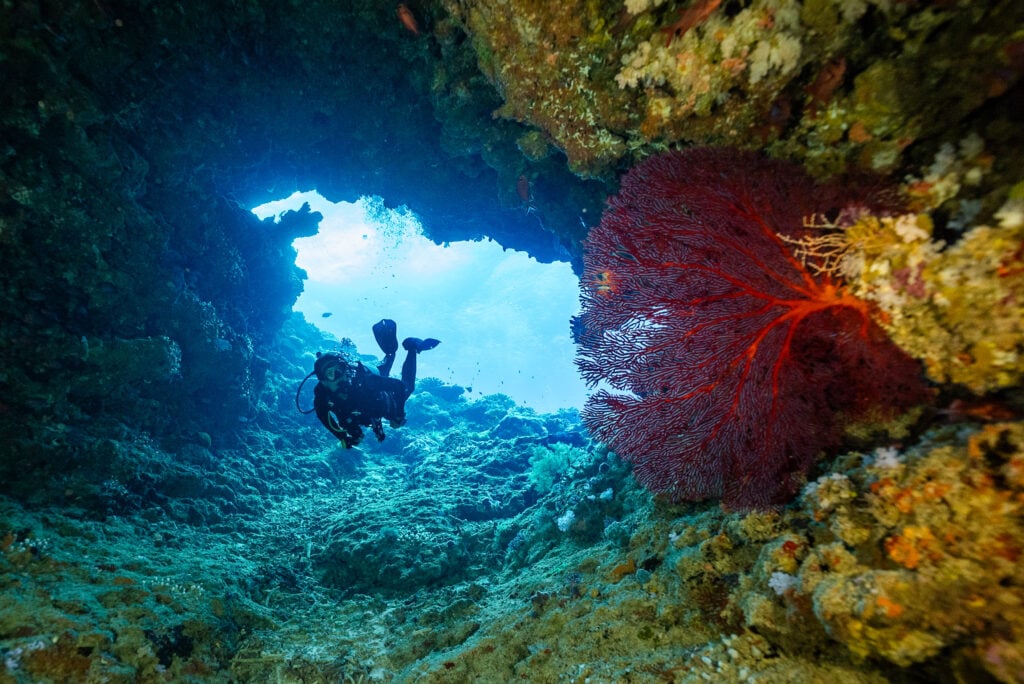
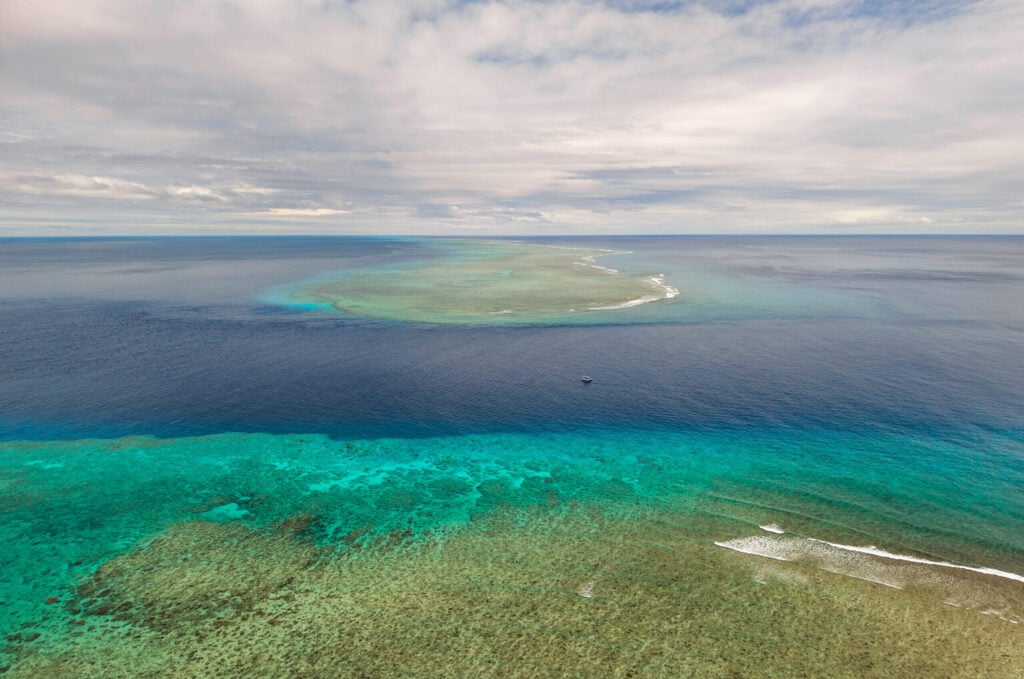
“Onosagavulu!” we each yell (muffled by the respirators in our mouths), as we jump off the dive boat.
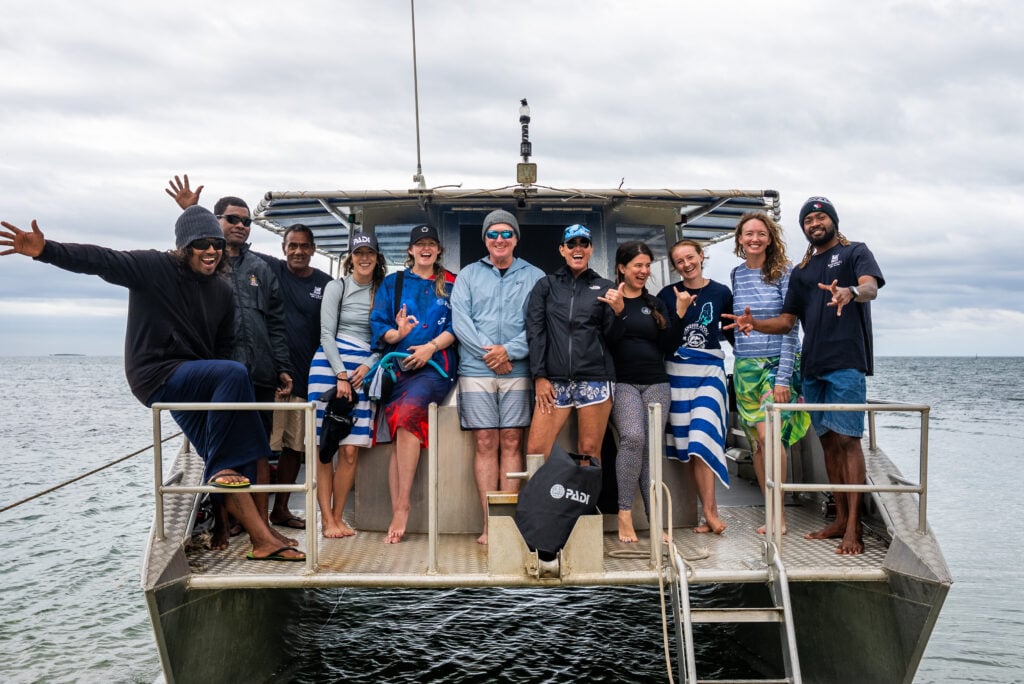
Translating to “60” in Fijian, Onosagavulu is the name Great Sea Reef Divers have just bestowed on the reef we are about to dive — PADI Onosagavulu, to be specific.
Before our dive, this portion of the Great Sea Reef had never been dived. So, the reef has been named in honour of PADI’s 60th anniversary.

“First fins is a big deal!” says Richardson, referring to the opportunity to be the first divers to explore an area — much like getting “first tracks” in fresh powder for skiers. “It’s a discovery — pushing the edge of exploration.”
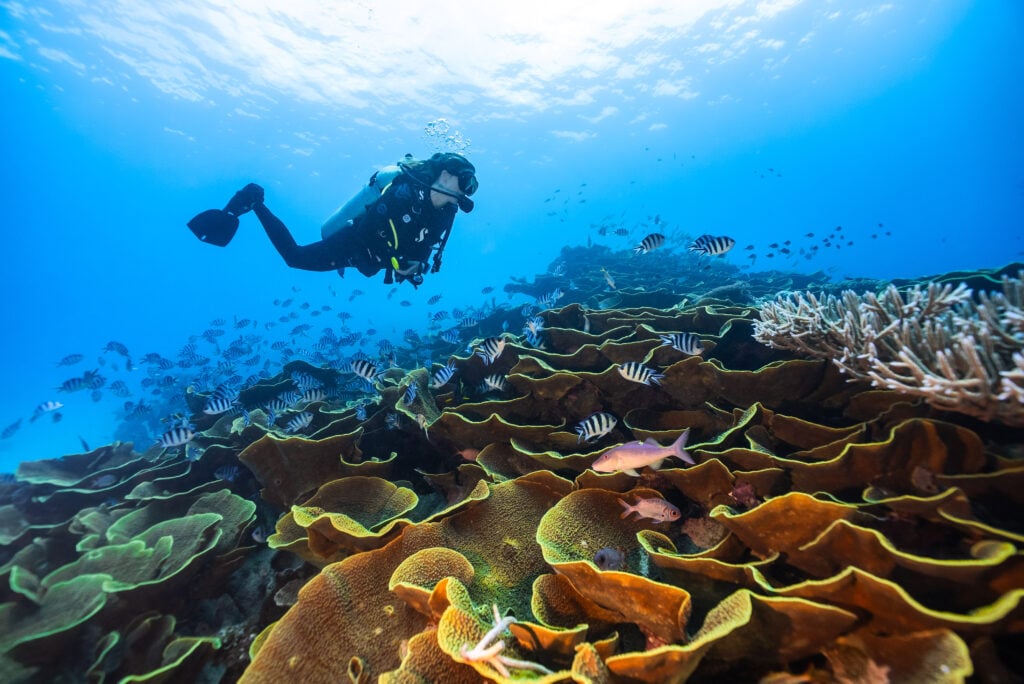
As we descend, we are quickly immersed in a thriving underwater world — schools of fish and vibrant corals compete for our attention. The water is crystal clear; no signs of garbage or coral bleaching. Despite being the world’s third-largest reef system, the Great Sea Reef has only one dive operator, Great Sea Reef Divers from Nukubati Island.
“My passions are in environment and climate change,” says Lara Vokai, a resort manager at Nukubati. “I realized Nukubati was a place that I could actually make a change.”
In 2018, she took over the resort from her parents, Peter and Jenny Bourke, who purchased the island in 1990, the year Lara was born. A pioneer in sustainable tourism, Nukubati was the first resort in the South Pacific to run on solar, with enough power left over to support parts of a local school.
“I have to run Nukubati like a small town,” says Peter Bourke on a tour of the 28-hectare island. “It’s completely self-sustaining. We’ve got food in the sea, electricity, weather… We’ve got everything.”
From the get-go, Bourke knew he wanted the island to run on solar power. “I didn’t want to run a generator 24/7,” he says. “You have to make a commitment to be sustainable.” Nukubati can host a maximum of just 14 guests, and there are no plans to expand.
“We just hope that we can be an example to other resorts,” says Lara. “Even the resorts that are full-on, mass tourism. We can be the hope and show you can make changes. No greenwashing. Just really try to make an effort so we can protect our environment and culture. It’s so important, because why come to Fiji?”
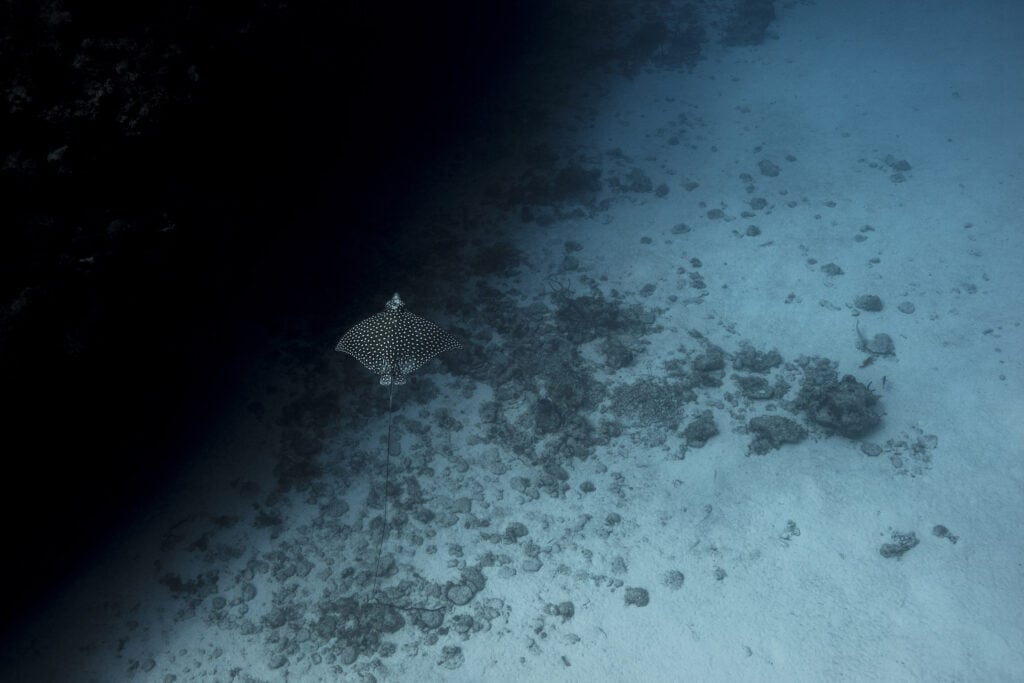
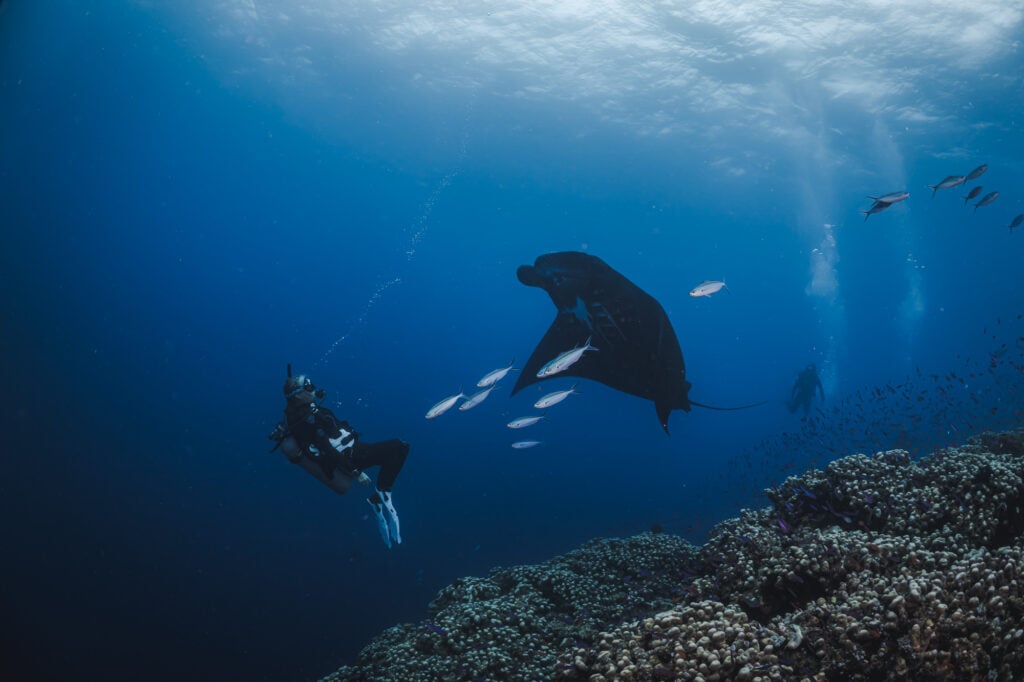
On my final morning on Nukubati, I decide to walk around the island, which takes about 20 minutes. Barefoot, I follow the hand-painted signs directing me to the trail and make my way through the mangroves. I am surrounded by undisturbed nature — just trees, then ocean as far as the eye can see.
“Nukubati is not about growing the business in monetary value, but about growing the community and taking care of the environment, because that’s our product,” says Lara.
As cheesy as it sounds, seeing really is believing. It is truly inspiring to experience a place like Nukubati firsthand, seeing what a healthy marine environment can look like and learning from a community so deeply invested in living with nature rather than profiting from it.
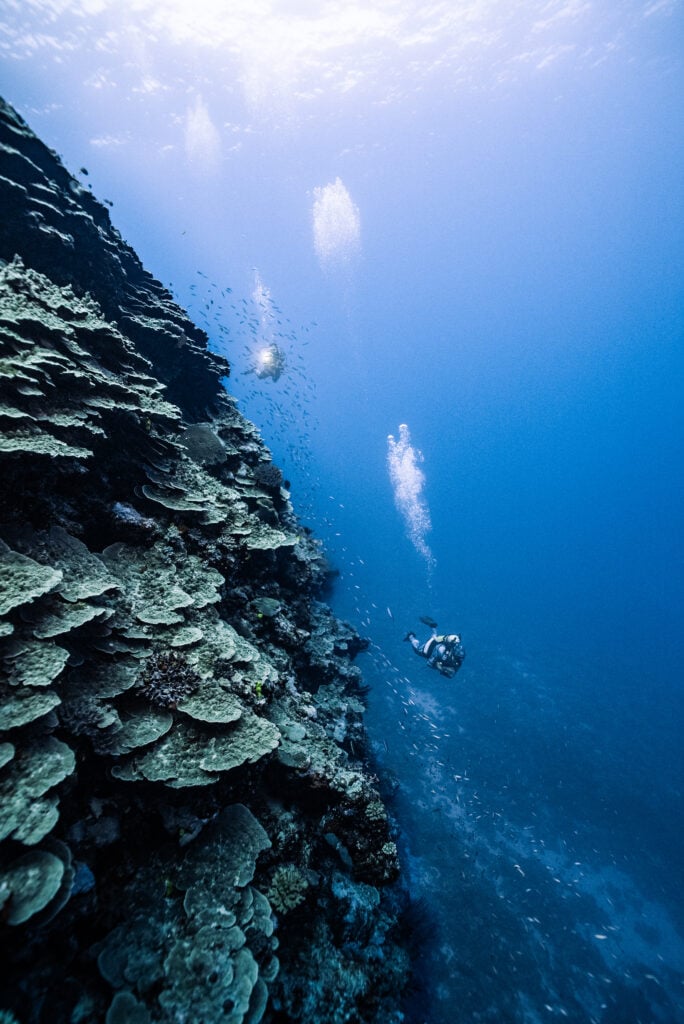
“This space recognizes the sweet spot of humanity working with nature in a constructive, sustainable way,” says Richardson. “This place shows that you can find that balance.”
As a recently designated PADI Eco Center, Great Sea Reef Divers on Nukubati is a living example of PADI’s ethos: that exploring the underwater world should go hand in hand with protecting it.
The launch of PADI’s Global Shark & Ray Census provides another way for divers to take action and give back.
“We believe the best days of diving are ahead of us,” says Valette-Wirth. “Because diving, in its early days, was more consumptive — that’s really changing now because we’re giving people a new perspective to think about diving as a way to be a steward on the leading edge of ocean conservation.”
Before I learned about sharks and had the opportunity to encounter them in the wild, I was terrified of them. Now, given the opportunity, I’ll jump into the water with them without hesitation. Not because I’ve forgotten that they’re wild animals, but because I’ve come to understand their importance to the health of our oceans and how much more they have to fear from us than we do from them.
And perhaps that’s where meaningful conservation begins: with the opportunity to see something for yourself, challenge what you thought you knew, and decide that it’s worth protecting.
“Make the decision to do something and then join with other like-minded people do similar good work — that can scale,” says Richardson. “What keeps me hopeful is giving people the opportunity to engage in a constructive way.”
For PADI, the hope is that millions of divers around the world will turning their encounters with sharks and rays into observations that contribute to a growing body of scientific data. That information could be the key to ensuring that future generations will have the opportunity to encounter these magnificent predators gliding gracefully through the seas.
Wildlife
Lead author Aaron MacNeil discusses what this means for coral ecosystems and what Canadians can do to help

Wildlife
As white sharks make their presence known off the coast of Atlantic Canada, researchers and locals want to know: should people be worried?

Travel
Discovering beauty and resilience on the world’s second-largest barrier reef
Exploration
How research on little-known “marine animal forests” could shine a light on ocean hope spots — and why they need protecting