On making it as an artist
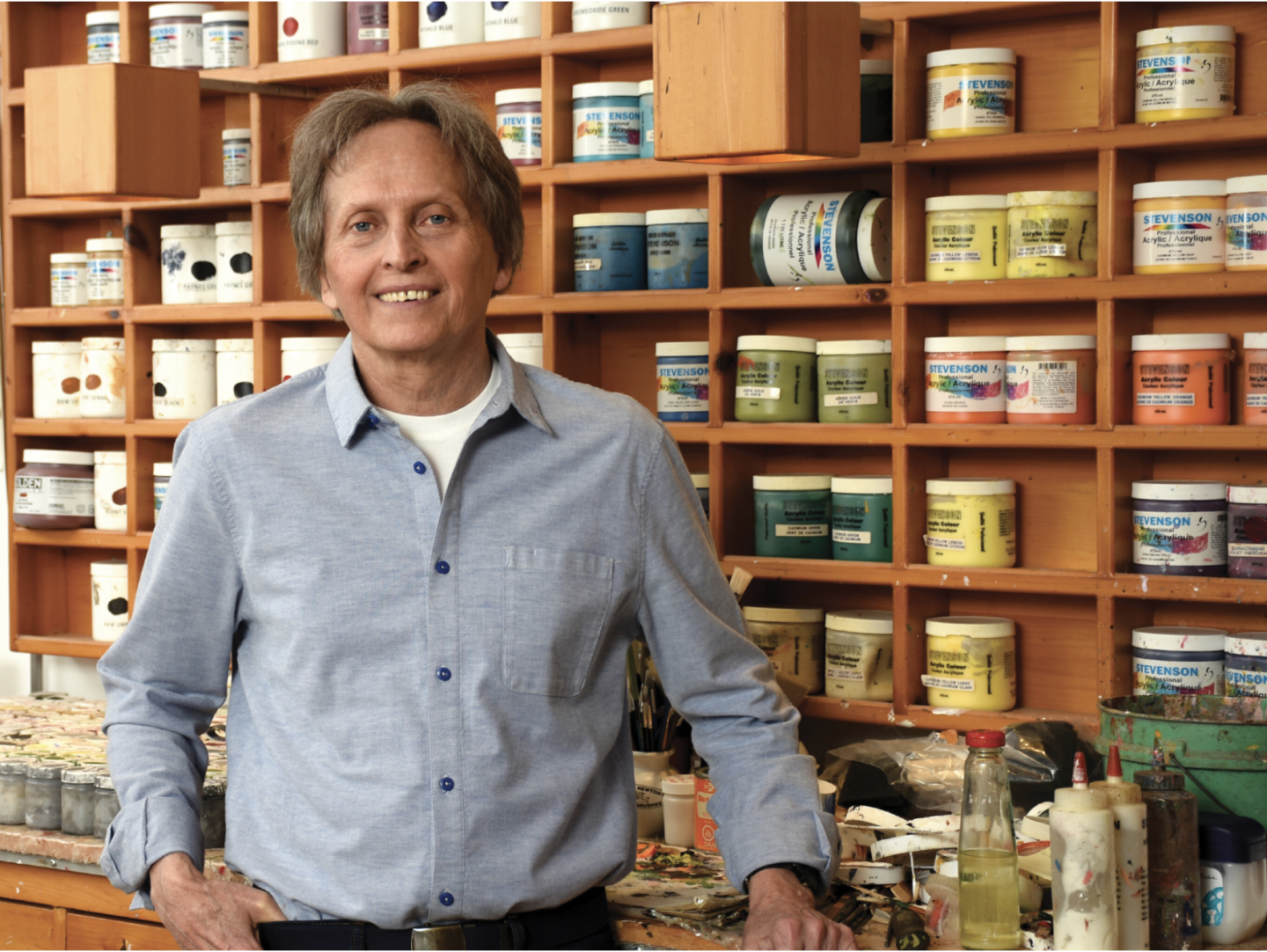
I paid my way through art college by doing commissioned portraits. Then, when I got through college, I decided I was going to paint from nine to five, at least five days a week, and do anything before nine o’clock or after five o’clock to make money. I knew about a shopping mall in Scarborough called Cliffside Plaza that had a ton of empty office space. My brother-in-law told me the management was having difficulty finding superintendents, so I said, “Look, I’ll be the superintendent if you give me this big studio space for free.” They went for it, and for 15 years, I was a plaza superintendent and had this huge studio on the second floor.
On painting real life
I dabbled in abstraction for a while. In the late ’60s and early ’70s, there were all these “isms” that were kind of exploding on the scene, and the art world was fragmenting in a radical way. People like [American art critic] Clement Greenberg were claiming that any serious artist had to be painting abstractions, that figurative art was gone and dead, but I didn’t believe that. The whole history of painting has really been about not just the human figure but recognizable objects, and I just didn’t want to give up on that. I didn’t want to have my artistic practice isolated from my life. I wanted to use my real life and my wife and kids and friends as models for my art-making.
On his process
The first thing I do with any subject is interview them to get to know them: their background, their history, but also what they think about themselves, what they think about their life. Once you start to get an impression of what their personality is like, then the basic questions come up: do you want to be depicted indoors or outdoors? What do you want to be wearing? How do you want to be posed? The lighting is crucial. When I painted [former Ontario premier] Bob Rae, he gave me a book to read called From Protest to Power that he’d written back in the 1990s. In it, he talks about how his dad and two of his siblings had this singing group called The Three Little Raes of Sunshine. So I thought, “well, I’ve got to have Bob sitting in a ray of sunshine.”
On telling a story
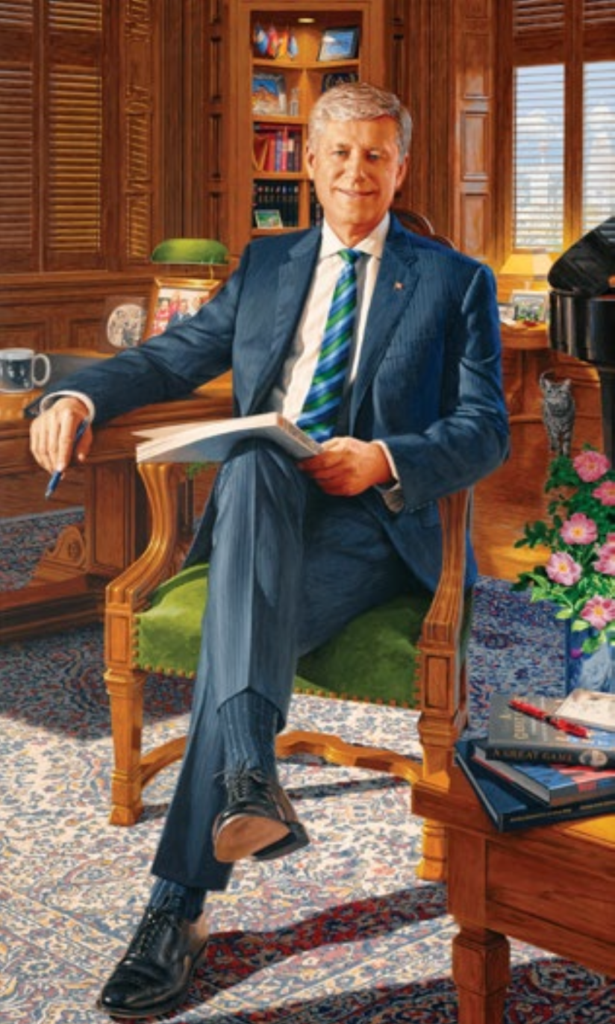
At most, the figure [in a portrait] takes up maybe 60 per cent of the space; you’ve got that other half of the canvas to fill. Really early on, I decided that all of the objects in the background were going to be significant and say something about the sitter themselves. With Stephen Harper’s portrait, there’s a lot of stuff in it, but I still think it comes across as a natural office setting because even in the prime minister’s office, there’s going to be stuff on the table, stuff on the bookshelves, stuff on the desk. You get the opportunity to make all that stuff significant and create this kind of narrative of their whole life. It’s like creating a visual biography in one shot.
On paintings as time machines
I think the magic of art is that if it’s a really good piece — if it is completely resolved and well-balanced — it’s like a time machine. When people look at the Mona Lisa now, they don’t think, “Oh, that’s what people looked like in 1503”; they think, “Wow, that’s a really nice painting.” It comes right into the present, into their life. You can almost feel Leonardo producing this thing with these tiny brushstrokes on the face of Mona Lisa. The only form of time travel that exists in our world, I think, is being able to look at an artwork that was made hundreds or even thousands of years ago and take yourself back to the moment of creation.