People & Culture

After oil: Founded for the purpose of oil and gas extraction, these Alberta towns are now contemplating a future without it

Built to fuel Canada’s petroleum industry, communities like Swan Hills and Fox Creek are balancing today’s livelihoods with the uncertainty of tomorrow.

This story has been fact checked

(Photo: Kyler Zeleny)
Expand Image
Advertisement
Advertisement

THE TOWN of Swan Hills, Alta., was designed with an expiration date. In 1957, after oil was discovered in a Devonian-era reef deep below the boreal forest, about 200 kilometres northwest of Edmonton, an initial base camp was established outside today’s townsite. Planners estimated it would take 25 years to service the surrounding oil fields — and the townsite was swiftly developed by both the provincial government and the oil companies operating in the area. Incorporated in 1959, Swan Hills became one of Alberta’s first government-planned resource towns. 

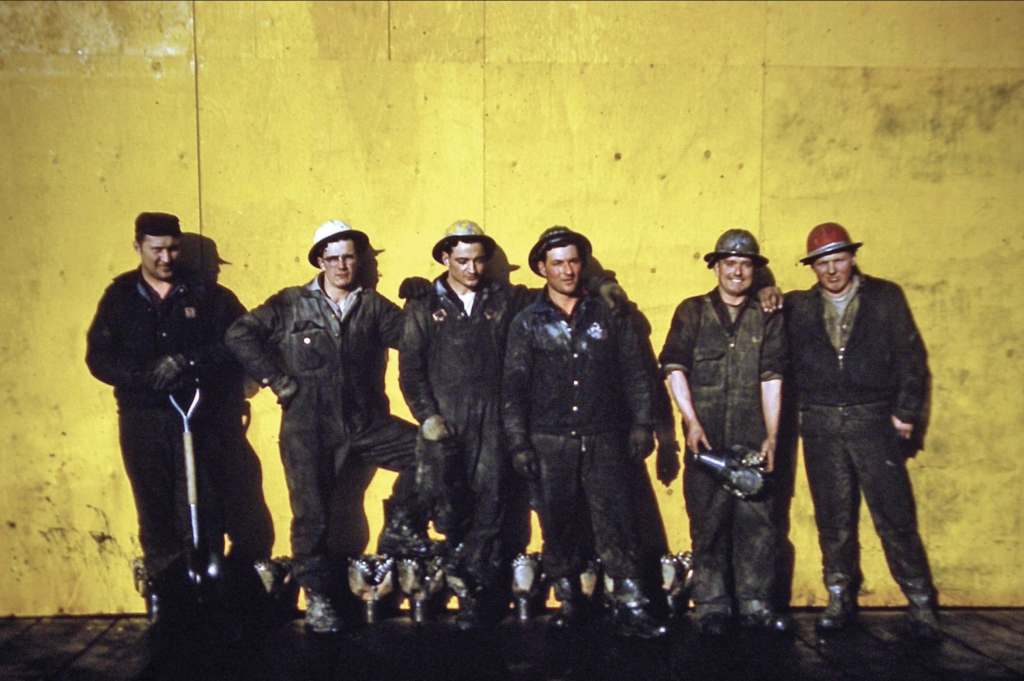
The expectation that oilfield workers would also live in Swan Hills created a high degree of cohesion in the community. (Photo courtesy Dora Anderson)
Expand Image

Housing was company-owned. Employment and residency were linked. If you worked at Swan Hills, the oil companies mandated that you live there. The arrangement created a stable, tightly knit community whose success was inextricably linked to the productivity of the field. It was a place designed to function efficiently, with no ambitions beyond the resources it was built to serve. 

Swan Hills’ population peaked in the 1981 census, when it reached 2,473. It has declined in every census since, though provincial data suggest modest growth in recent years. Swan Hills councillors Liz Krawiec and Jeff Goebel link the town’s population decline to what they describe as a change in “philosophy” during the 1980s. Simply put, the major oil players got out of the housing business, and workers were no longer required to live in the town. Around the same time, the highway from Swan Hills to nearby Whitecourt was paved, something Krawiec calls “the worst thing that ever happened to Swan Hills.” It allowed people to live in Whitecourt — a town more than double the size — while still working the Swan Hills oil fields. Oil production around Swan Hills continued, but the reciprocal relationship that bound industry and town began to erode. An estimated 59 million barrels of oil remain in the field out of an original three billion. But most of the seasoned wells no longer need much in terms of maintenance, so there’s little work to be done. 

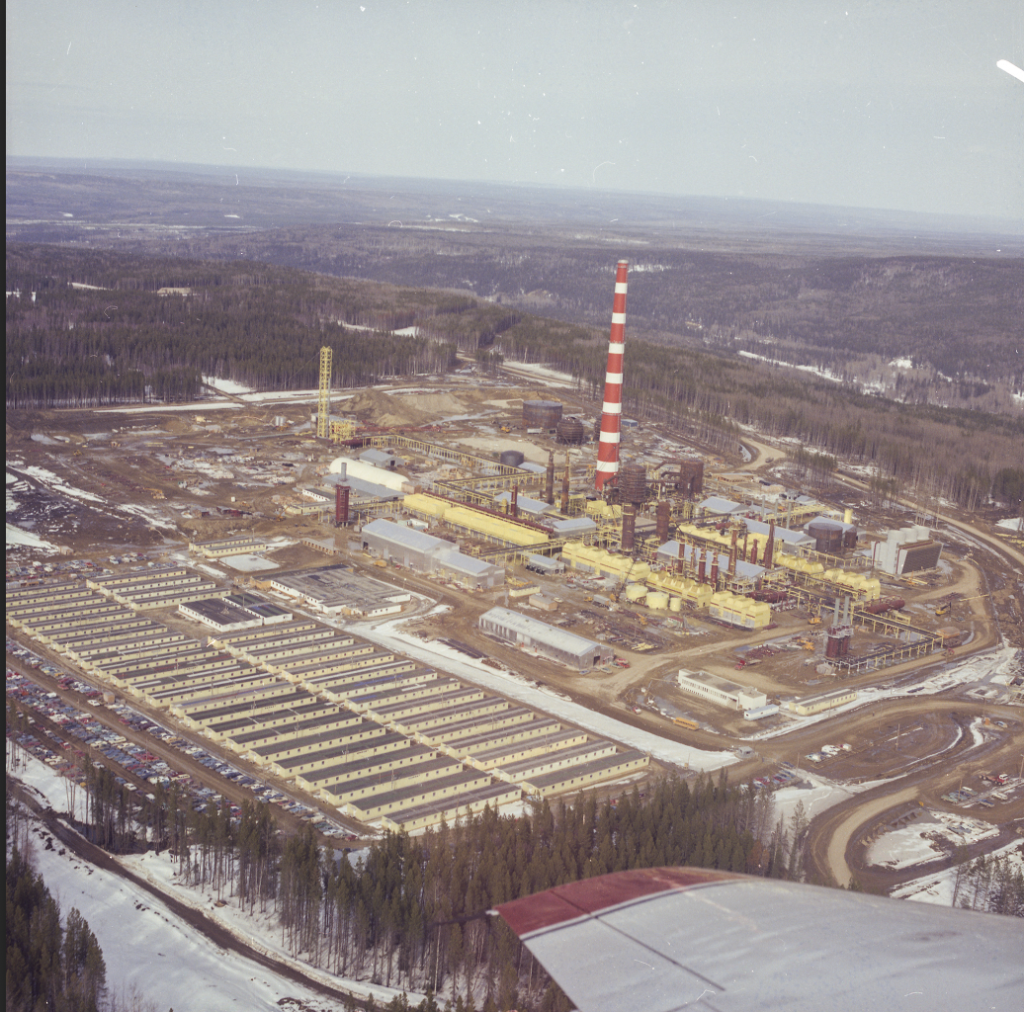
The oilfield around what would become the towns of Swan Hills and Fox Creek remains a cornerstone of Canada’s energy industry. (Photo: Provincial Archives of Alberta, PA8456.3.)
Expand Image

The situation in Swan Hills is playing out — at different stages — in several other communities in the region that are quietly absorbing the pressures of boom and bust, growth and decline, extraction and abandonment. They are communities that remain largely invisible in the national conversation around oil and gas, places we tend to hear about only when something goes wrong, like a major pipeline rupture near Fox Creek in 2022 that released 3.7 million cubic metres of natural sweet gas, or evacuation orders during increasingly severe wildfire seasons. 

Yet it was these communities that helped fuel Canada’s petroleum present, and now they are grappling with what a viable future might look like. The challenge for towns like Swan Hills, built around resource extraction, is to find a balance between present survival and future viability; between local, provincial and federal desires; between the need to feed one’s family and the long-term health of the land; between the economy and the community itself. 

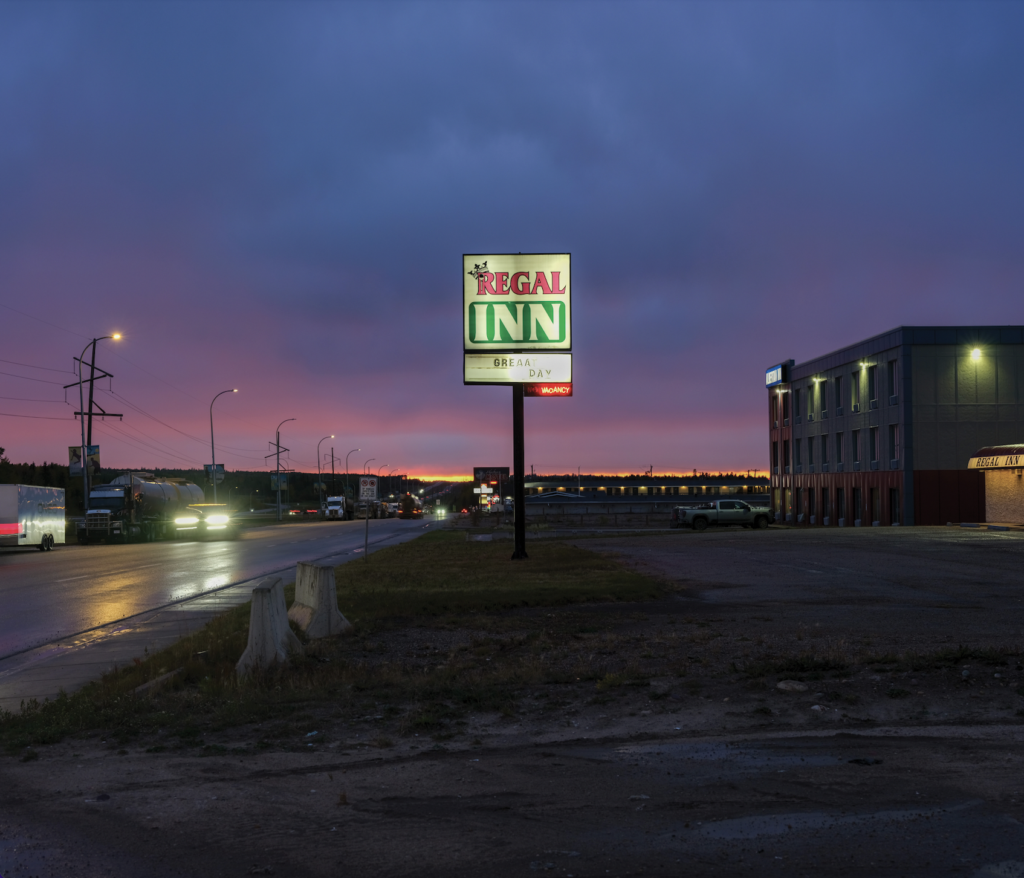
The town of Fox Creek, Alta., was built to service the oil and gas industry. (Photo: Kyler Zeleny)
Expand Image
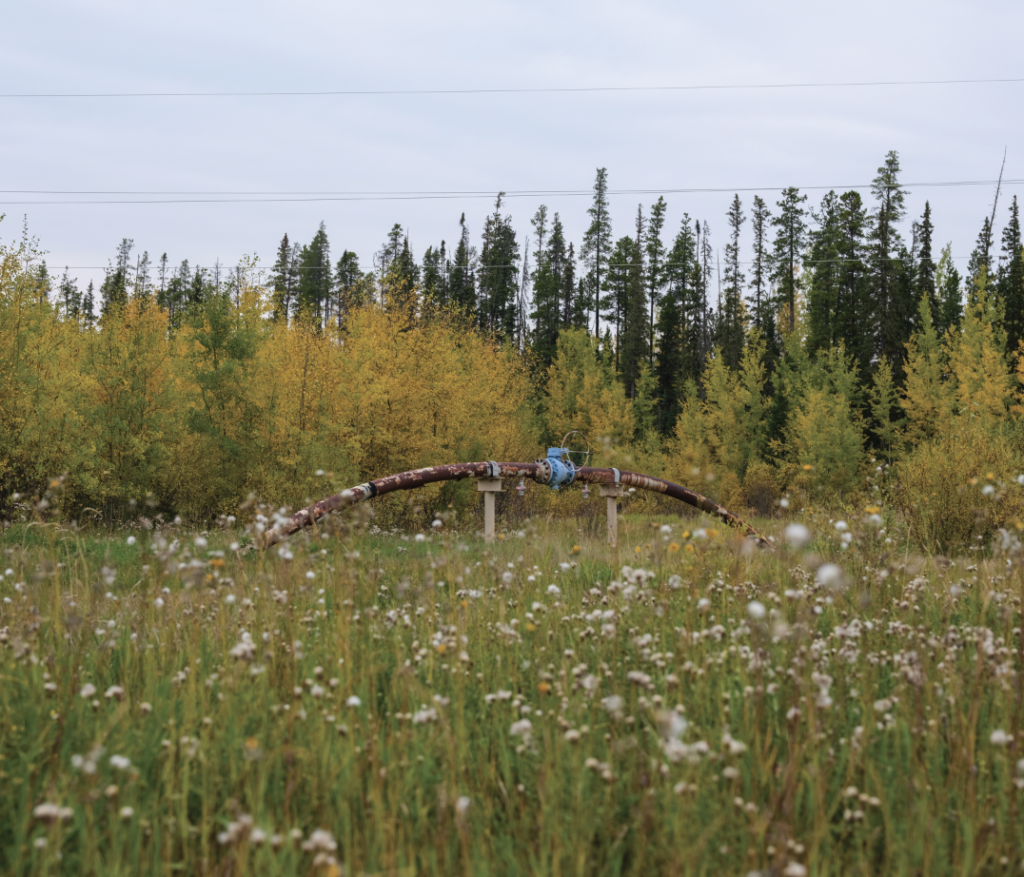
Pipelines and valve assemblies are woven into the boreal forest around Fox Creek. (Photo: Kyler Zeleny)
Expand Image

ROUGHLY 380 MILLION YEARS AGO, most of Alberta lay beneath a shallow, mineral-rich sea. Reef-building organisms, such as the sponge-like stromatoporoids, algae and other prehistoric creatures with calcareous shells, formed vast carbonate structures on the sea floor. When the sea receded, those reefs were buried under layers of mud, sand and silt, sealed in place. Over immense spans of time, heat and pressure transformed this organic material into hydrocarbons. 

The land that eventually replaced the sea was not easily settled. Around Fox Creek and Swan Hills, the terrain is gently folded, shaped by glacial deposits, poor drainage and damp mats of peat. Muskeg wetlands and forests of black spruce and tamarack dominate the low ground, dense enough to swallow sound. 

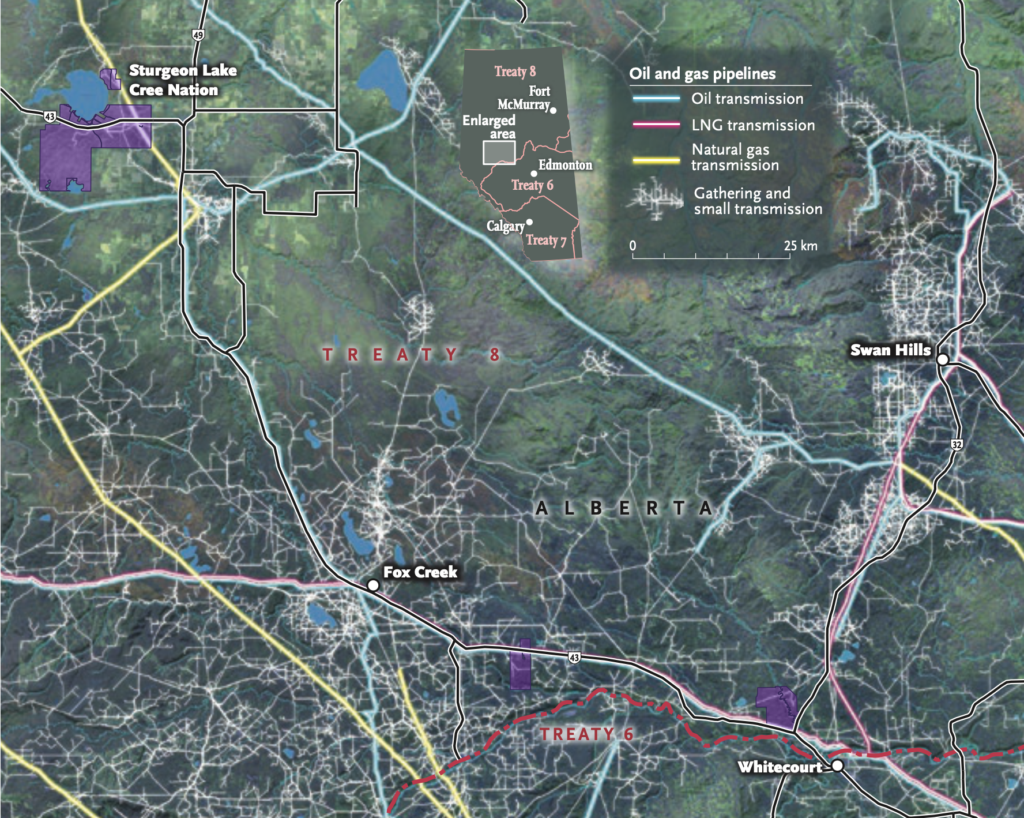
(Map: Chris Brackley/Can Geo; pipeline data: Pipeline Network: ArcGIS.com/Alberta Pipelines. Pipeline classification: Based on Canadian Association of Petroleum Producers Giant Floor Map, Canadian Geographic, 2018.)
Expand Image

On higher ground, jack pines are widely spaced, their thin trunks often blackened by old burns. In the summer, mosquitoes move in clouds while moose step through the wetlands with ease, feeding along the margins of bogs and lakes. In winter, movement becomes easier, the land firmed by sub-zero temperatures. 

It’s a land that discourages permanence, except for those who really know it, such as the Cree and Dene. Even the pools of oil and gas, where they were found, seemed to resist coherence. Drill a few metres too far to the side, and a site that looked promising on paper could come up dry. But where the reefs and the rock allowed hydrocarbons to form, steel, towns and labour followed. 

Crude oil was finally discovered at Leduc in 1947, after 133 wells came up dry. The Pembina discovery followed in 1953. Then, in 1957, oil was discovered near what would become the towns of Swan Hills and Fox Creek. By 1962, Leduc, Pembina and the area known collectively as the Swan Hills field were a cornerstone of Canada’s petroleum industry. 

While pipelines and valve assemblies are woven into the boreal forest around Fox Creek, the residential areas and motels have a distinctly liminal feel. (Photo: Kyler Zeleny)
Expand Image

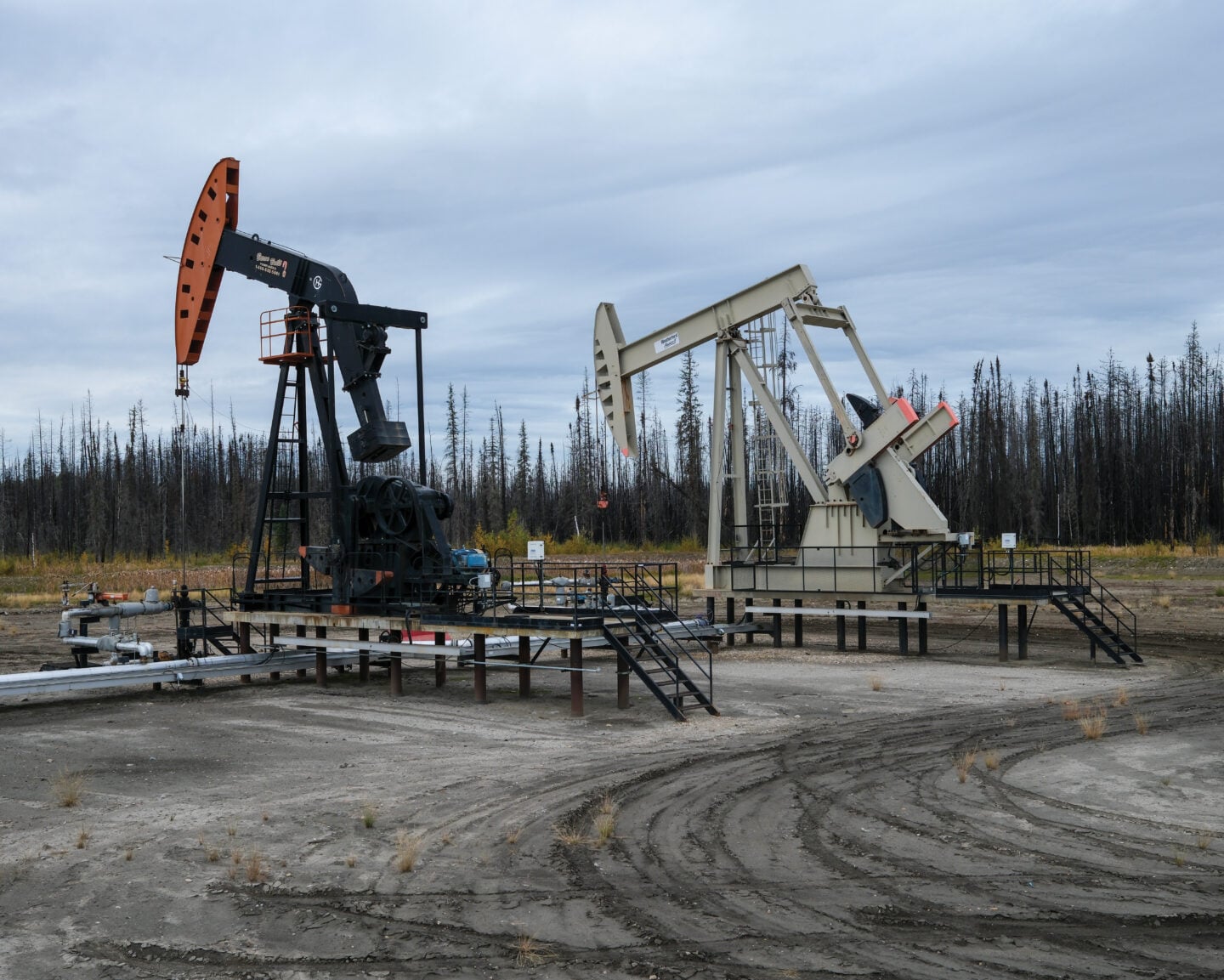
Today, the landscape is marked by what lay beneath it. Take nearly any road out of Fox Creek or Swan Hills, and you’ll quickly encounter mainline block valves along the shoulder, or gravel turnouts into the trees. Follow one and you’ll find a small clearing often containing an unmanned steel shed, laminated inspection sheets pinned inside, a pipe rising from the ground nearby or warnings bolted to wood posts on the perimeter indicating buried pipe. 

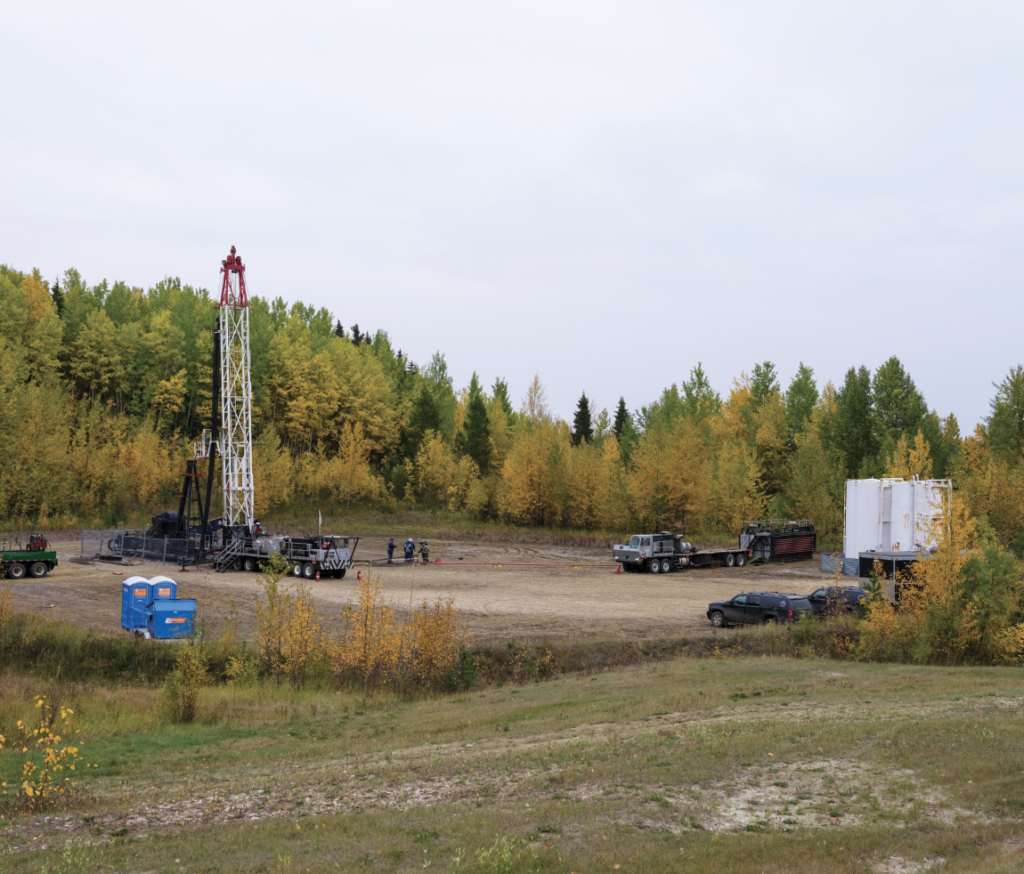
Elsewhere, you’ll find drilling rigs and derricks rising above the spruce and pine, angular noses diving repeatedly into muddy ground or pushing gas or oil through steel. None of it is chained off. No people are present. It simply recurs, again and again, un- til the equipment feels as if it were part of the wilderness itself.

That impression is deceptive, though. These are temporary structures, tapping into finite resource, built by communities that hope to be anything but.

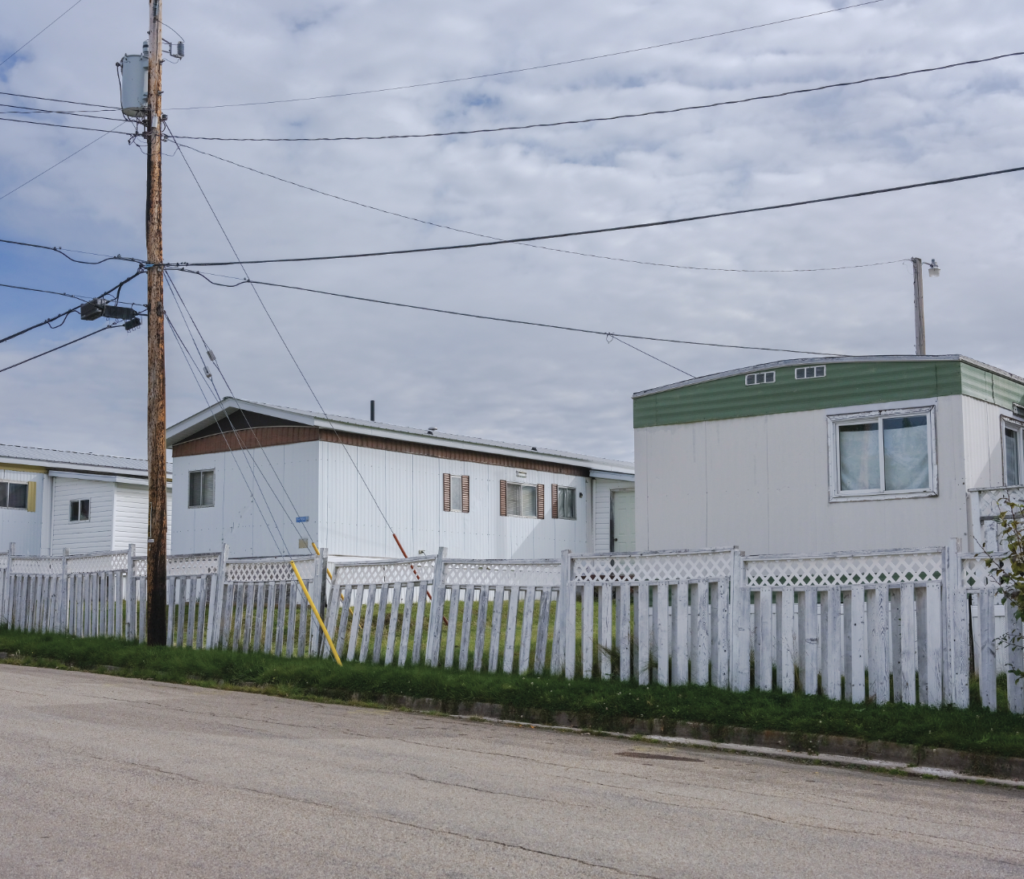
Drive through Fox Creek, and it feels like a town built for industry rather than settlement. From Highway 43, the town appears as a strip of faded motels, nondescript restaurants, and neutraltoned warehouses. The residential area is its own distinct suburb, not visible from the highway, separated from the business area by a recently built recreation centre. To reach this area, you pass a mobile home district named Ferrari Estates with a distinctly temporary vibe. 

Trailers line a residential street in Fox Creek. (Photo: Kyler Zeleny)
Expand Image

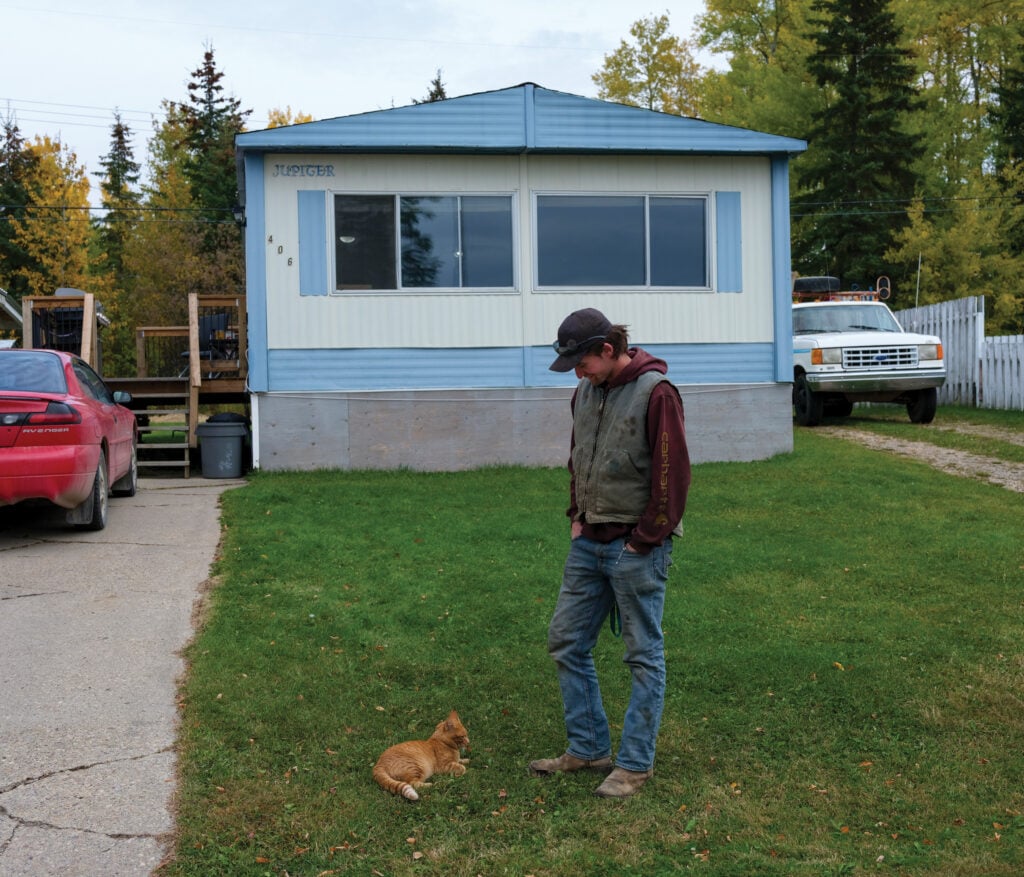
Asked how Fox Creek distinguishes itself from places like Swan Hills or Valleyview, a young worker named Leland sums it up bluntly: “That’s all this town is. Oil patch.” Talk of diversification circulates, he says, but it’s hard to imagine what that would look like. Most people take things day by day, he says. If the work left, so would he. 

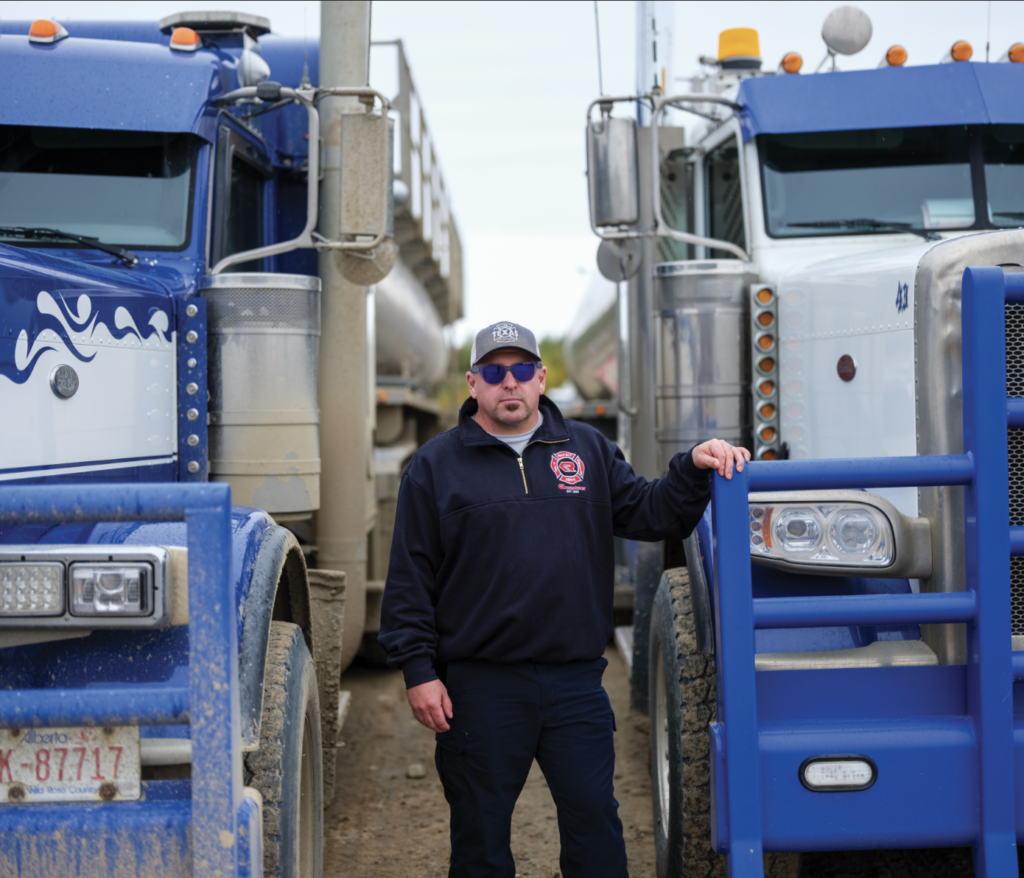
Chris McKennitt, on the other hand, has lived in Fox Creek long enough to see plenty of residents come and go. He owns an oil and gas trucking company and serves as the town’s deputy fire chief. “That’s the thing about being in Fox Creek,” he says. “You have to wear multiple hats.” If people don’t step in and support the community they live in, “nothing’s going to happen.”

McKennitt believes the town’s survival depends on whether industry workers choose to become community stewards rather than temporary occupants. He arrived in 1997 with a high school diploma, a work ethic and a hockey bag. 

“Through playing hockey, you make your contacts, and away you go,” he says. What he’s really describing is a particular kind of place that is now under threat, one where showing up was enough to get started, where the barriers to belonging were low and the rewards for staying were real.

Local business owner Chris McKennitt says people need to think longer-term. (Photo: Kyler Zeleny)
Expand Image

Amenities like the recreation centre, built in 2019, help, he says, but also reveal the tension between the town’s present reality and its vision for the future. McKennitt recalls “a big uproar” after one resident complained about the multiplex, saying if his taxes went up, he would move, because he didn’t plan to use the facility. Today, McKennitt says he sees that same person there every Saturday, playing pickleball.

In this way, Fox Creek is following Swan Hills’ trajectory, struggling to balance present prosperity with long-term investment. “There’s a lifecycle,” McKennitt says. “By the time Fox Creek was booming, Swan Hills had already been booming for 30 years.”

For Sturgeon Lake Cree Nation, the stakes are different. Their relationship to the land predates the energy industry entirely. Chief Sheldon Sunshine has a steady, serious voice as he describes how development used to proceed on their territory: companies applied for permits through the Aboriginal Consultation Office, the nation was notified, and permits were approved regardless of any concerns. “We learned about projects through press releases,” he says.

Chief Sunshine is changing that model. As president of Sturgeon Lake Resources, the nation’s own oil and gas company, he helped turn what he once called a “social program” into a profitable business employing more than 130 people.
Oil patch worker Leland, at home with his cat, sees little reason to stay. (Photo: Kyler Zeleny)
Expand Image

He’s clear that he’s not opposed to development; he’s opposed to exclusion. When TC Energy proposed abandoning a decommissioned Nova Gas Transmission Line beneath their land — standard practice is to cut the line and leave it buried — the nation refused, demanding its full removal. 

“When all those facilities have come and gone,” Sunshine says, “our people are still going to be here.” 

This assumption — that the community is permanent while the infrastructure is temporary — fundamentally alters how development is approached. While economic growth is important, Sunshine believes long-term stewardship and participation by his nation matter more. 

In late 2025, the federal and provincial governments signed a memorandum of understanding intended to accelerate projects of “national interest” in Alberta, including an AI data centre, “one or more” pipelines, a carbon capture project and improved transmission interties linking power grids in Saskatchewan and British Columbia. This was an extension of Bill C-5, enacted as the One Canadian Economy Act, which allows the expediting of major infrastructure projects. Under the legislation, once cabinet declares a project to be of national interest, all regulatory findings and determinations are considered complete. 

A drilling rig near Swan Hills, Alta. (Phot: Kyler Zeleny)
Expand Image

The framework is supposed to reduce delays and streamline approvals. It also raises questions that echo across communities like Swan Hills, Fox Creek and Sturgeon Lake. If projects designated as being of national interest can bypass certain forms of local process, how does the already tenuous balance between government, industry and community hold up? 

McKennitt is blunt when asked how the town of Fox Creek can plan 20 years ahead. “You can’t,” he says. Not without stable support from the government. “Without it, long-term planning becomes guesswork.” 

For Chief Sunshine, who met with Prime Minister Mark Carney to discuss Bill C-5, the concern is structural. Fast-tracked projects may reduce red tape, but they also risk returning to a model where projects are again discovered through press releases. 

The tension exposed by the memorandum of understanding is not just between economic development and environmental protection but also between speed and inclusion. These communities rely on the energy industry to put food on their table today. However, they also have to grapple with how to exist tomorrow, because the oil will eventually run dry and the infrastructure will be dismantled. 

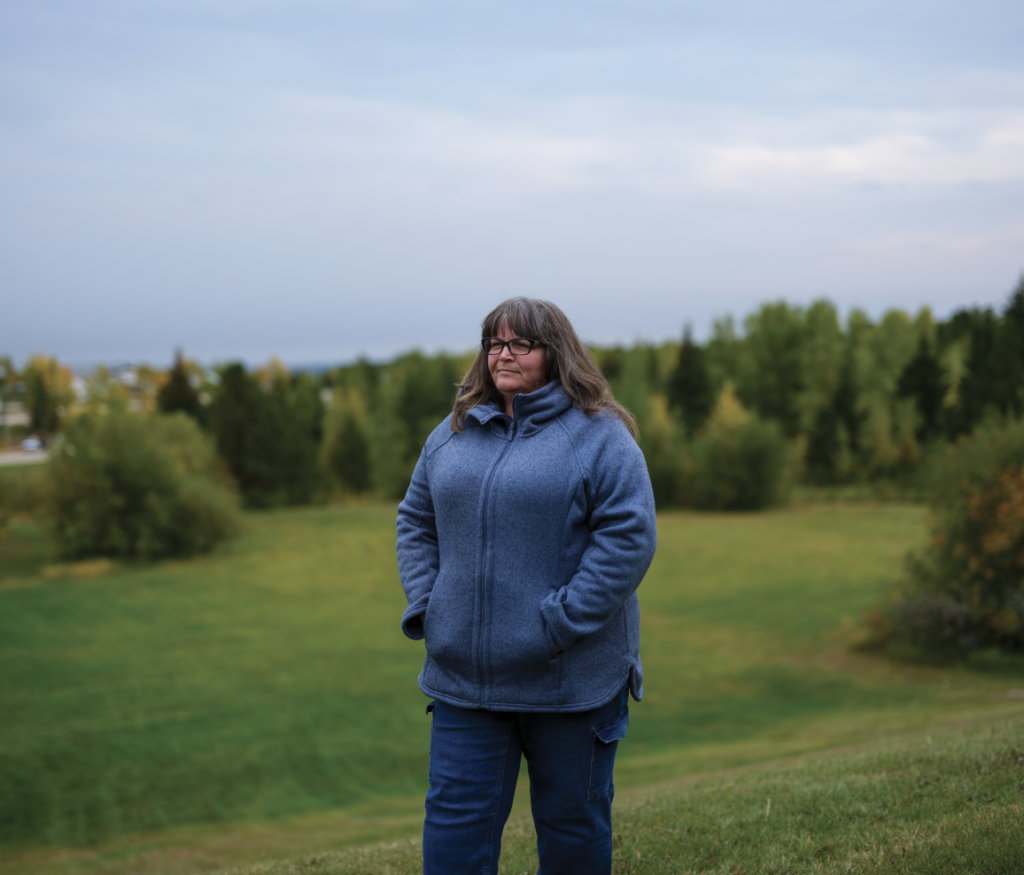
Local councillor Liz Krawiec liken the town to “a family.” (Photo: Kyler Zeleny)
Expand Image
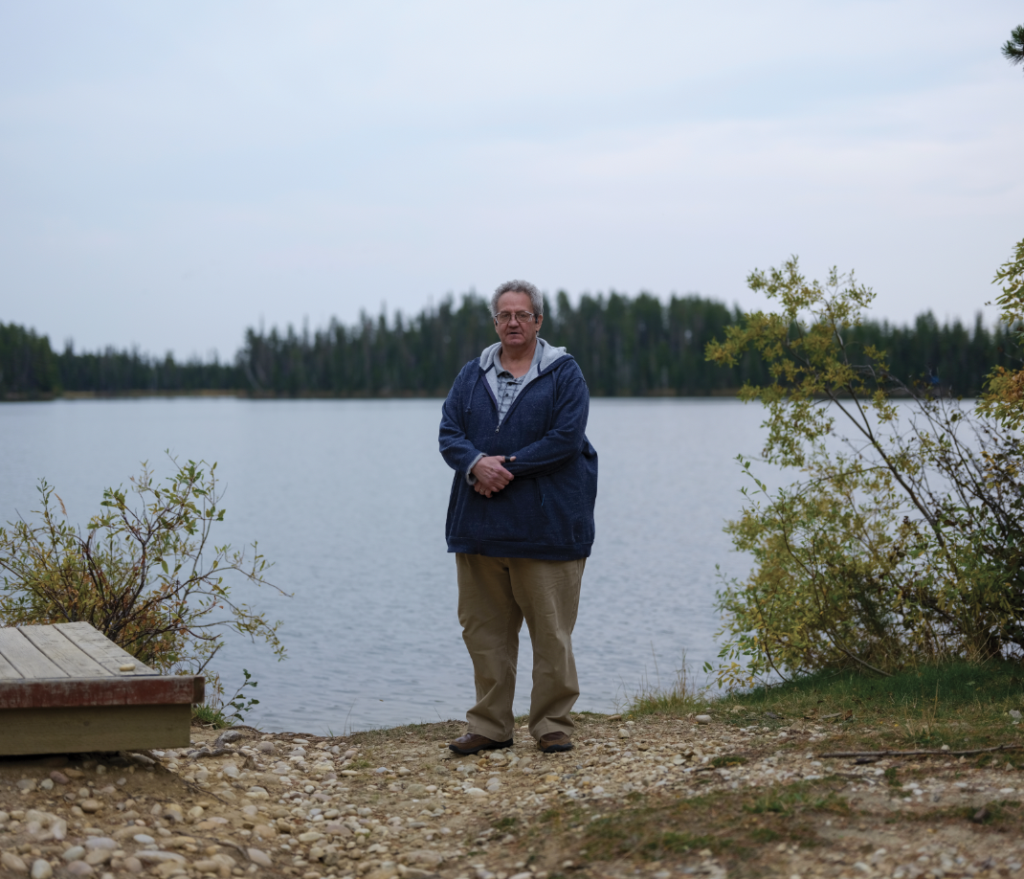
Local councillor Jeff Goebel also likens the town to “a family.” (Photo: Kyler Zeleny)
Expand Image

TODAY, THE POPULATION of Swan Hills has stabilized, with councillors Krawiec and Goebel noting that the library still has its full funding. With a population of 1,201 in the 2021 census, it meets the provincial funding threshold by a single head.

Asked how the town survived beyond its projected lifespan, the councillors point not to industry but to community. Krawiec shares a story from the early 2000s, when her brother passed away. Her family owned an oil and gas trucking company, and on the day he died, their direct competition offered to answer their phones for 24 hours. It was a small, human gesture, but a revealing one. As the big players withdrew, the informal networks of local businesses, bolstered by a strong community, stepped in to fill in the gaps.

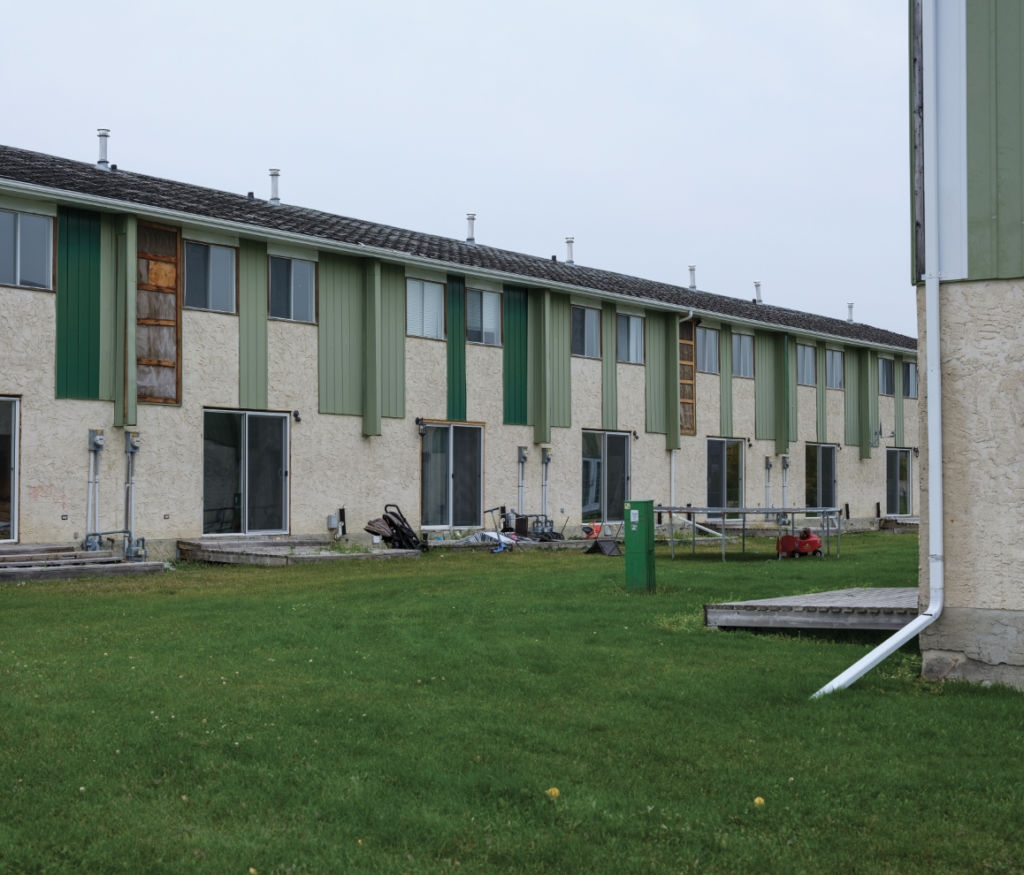
Largely unoccupied housing speaks to Swan Hills’ decline. (Photo: Kyler Zeleny)
Expand Image

“Swan Hills is a family,” Krawiec says proudly. Goebel agrees, describing a town where trust is the real currency, where you can forget your wallet at the gas station and nobody bats an eye. 

Swan Hills no longer describes itself as an “oil and gas town.” “Energy” is the preferred term. The Swan Hills Treatment Centre, which destroys polychlorinated biphenyls, better known as PCBs, is still one of the town’s largest employers. 

That plant is slated to close this year in step with federal legislation requiring high-concentration PCBs to be fully phased out, but wind power is discussed as a possible future industry to replace the treatment centre. 

When asked what advice they would offer other energy-rich communities, the councillors are careful. “The future won’t look like the present,” Goebel says.

The irony is difficult to miss. Swan Hills was planned as a temporary place and has spent the decades since its expiry date trying to become a permanent one. That it has succeeded — however partially, however precariously — is less a triumph of industry or government than a result of the people who came for a job and never left, who continue to infuse it with fresh ideas of what it means to be of this place.

Advertisement

Help us tell Canada’s story

You can support Canadian Geographic in 3 ways:

This story is from the July/August 2026 Issue

Related Content

People & Culture

The cowboy exclaims: The ballad of an ageing vaquero and his troubled horse, Bunny

The ultimate goal of vaquero horsemanship is to produce a “finished” horse: an exceptionally responsive animal that is a true partner to its rider

  • 2524 words
  • 11 minutes
a silhouetted carbon capture industrial plant against a white mountain background as the sun rises, casting a warm glow over the landscape

Environment

The truth about carbon capture

Carbon capture is big business, but its challenges fly in the face of the need to lower emissions. Can we square the circle on this technological Wild West?

  • 5042 words
  • 21 minutes
Limnocorrals intalled in ELA Lake 260 for the BOREAL study.

Environment

Why we spilled oil for science

As the federal government considers the fate of proposed pipelines, a unique science experiment aims to understand the consequences of an oil spill in a freshwater lake

  • 1805 words
  • 8 minutes

Wildlife

Caribou people: The story of conserving the Porcupine caribou herd is a story about working together

Amid oil and gas threats to the ancient calving grounds of the Porcupine caribou herd and startling population declines, people on both sides of the border are coming together to protect them

  • 3940 words
  • 16 minutes
Advertisement
Advertisement