History
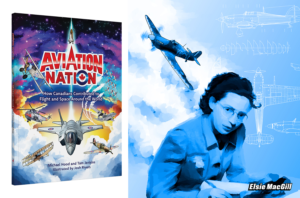
Aviation Nation: The past, present and future of the Royal Canadian Air Force
A new children’s book from the RCAF Foundation hopes to inspire the next generation of aviators
- 759 words
- 4 minutes
History
In the Yukon and NWT, unexpected arrivals and a major hijacking scare brought the terror attacks closer to home


When you fly into into Whitehorse, the small territorial capital of the Yukon, the city’s compact core spreads out immediately below you as your plane is about to touch down. Unlike many Canadian airports, Erik Nielsen Whitehorse International Airport is embedded in the city centre: the runway follows the long line of a clay plateau that parallels the Alaska Highway and defines the furthest edge of downtown.
If they choose to, visitors who’ve packed light enough can hike down a long flight of outdoor stairs from the airport to their riverfront hotels. Runners and walkers train their lungs and legs on those same stairs, and at the top, a paved walking path wraps around the barbed-wire airport fence, shadowing the runway. It’s possible to see — or at least hear — the planes coming and going from almost anywhere in central Whitehorse; some locals time their airport pickups by watching their visitor’s plane pass over their house.
Twenty-five years ago, that casual daily intimacy with the city’s airspace turned sinister. On September 11, 2001, as the Whitehorse Star headline from that day shouted in large letters, “terror touched Whitehorse.”

The nature of the 9/11 attacks — using hijacked passenger jets as weapons of mass destruction, instead of as bargaining chips — was unprecedented. So too was the rapid clearing of North American airspace that came in response, a drawdown unheard of in the modern aviation era. In Ottawa, as news of the attacks broke, a picket line outside Transport Canada’s headquarters dissolved and striking workers hurried inside. The ongoing labour dispute, one employee recalled, suddenly “seemed inconsequential.” The department’s Situation Centre, an emergency communications and response hub, was activated, and colleagues from other agencies, including National Defence, NAV Canada, the RCMP and CSIS, soon arrived.
With the closure of U.S. airspace, Canada suddenly had hundreds of redirected inbound flights on its hands. “One to two planes entering Canadian airspace every minute,” recalled John Read, who was the Acting Assistant Deputy Minister for Safety and Security that day. “We had to decide what to do with those planes.” Every inbound trans-Atlantic or trans-Pacific flight with enough fuel to turn back was instructed to pull a U-turn and head for land; the rest were told they would be landing in one of more than a dozen Canadian cities and towns.
That was the beginning of what became known as Operation Yellow Ribbon, which ultimately managed to land well over 200 planes and more than 30,000 passengers safely. But hanging over the entire operation was the fear that any one — or more than one — of those planes might have another team of hijackers already on board, biding their time.
The trouble started just after 10:30 a.m. Yukon time, nearly five hours after the first plane slammed into the World Trade Center towers in New York City. Korean Air flight 085, a Boeing 747 that was also bound for New York, was one of the hundreds of planes that had to be rerouted to Canadian airspace. It was still flying over Alaska, where it had been scheduled to land and refuel in the city of Anchorage, when it issued what’s known in the aviation world as a squawk code. Squawk codes are numeric, non-verbal codes that pilots can send out even when their radios are down, to indicate various states of emergency on board; they are also a discreet way to let the authorities know that you have been hijacked.

Anchorage closed its courthouse and its main government building. U.S. fighter jets soared up to intercept the 747 and bracketed the plane on its route to Canada, where it had been assigned to land in Whitehorse. At the glacier-covered Alaska-Yukon border, a pair of Canadian CF-18s sent up from the south took over the escort.
Al Lucier, then a corporal with the Yukon RCMP, had been in his Whitehorse office since 7 a.m. — he’d started his day early after waking up to news of the attacks. The Mounties and other first responders in Whitehorse were already gearing up to receive an influx of foreign passengers and planes. “When we knew that plane was coming to us … we just ramped up the response,” says Lucier. While the fighter jets had been able to roar out to join in the escort, everyone who could be deployed to respond on the ground was already working. If the plane was under a terror cell’s control, the local detachment’s emergency response team would have to confront whatever happened next.
Word of the threat traveled across the continent and back again. It was someone from the binational North American Aerospace Defense Command (NORAD) who called into the Whitehorse control tower with the warning. Earlier that morning, air traffic control specialist Dave White had watched gut-churning news footage from New York and pondered just how far away the event seemed from life in the Yukon. Now, at work, he was being told that one of the inbound planes might be hijacked too.
Downtown, Mark Kelly, an outreach worker with a mental health non-profit, was having coffee with a friend ahead of his 11 a.m. shift, when he saw the Yukon News photographer sprinting to his car. Kelly had been woken up earlier that morning by his roommate kicking his bed and announcing that “the world’s ending,” but now, the photographer told him, there was yet another hijacked plane — and it was about to land in Whitehorse. The journalist was heading to the airport; Kelly hurried to the office, where he and his team would be placed on standby to provide mental health support in the event of a mass casualty.
Up at the airport, members of the RCMP’s emergency response team readied themselves on the tarmac. Snipers were placed on the small terminal’s roof. In Ottawa, Prime Minister Jean Chrétien had quietly granted permission for the military jets to shoot the Korean Air plane down if necessary. Cpl. Lucier explained the worst-case scenario to the Yukon media later that day: “The fear was that the plane would not make a successful landing,” he said, “and that it would end up in the downtown area.”
Schools were rapidly evacuated, with the city’s fleet of public transit buses put to work helping the school bus drivers to try to get more than 4,000 students to safely. Some children gathered at designated muster points while their panicked parents phoned around trying to find out where to locate their kids; radio broadcasts had announced that the schools were being emptied, but the broadcasters did not have the list of muster points at hand. The RCMP issued a blanket announcement suggesting that downtown businesses and stores close up and send their staff and customers home – Mounties also went in person to the larger office buildings, recommending evacuations. Traffic was soon snarled. “I can’t believe we’re right in the middle of this thing,” a bewildered woman told the Whitehorse Star.

One territory to the east, the city of Yellowknife also received an unexpected aircraft that day. A United Airlines flight had been en route from Tokyo to Seattle when the order came to clear the skies. Many transoceanic flights trace a high curve, swinging north towards the Arctic Circle and then arcing south again, and so the United plane was assigned a new destination in the sub-Arctic.
United flight 876, a Boeing 777 with 143 passengers and 17 crew on board, landed at the eerily quiet Yellowknife airport around 1 p.m. Mountain Time. Gordon Van Tighem, then the mayor of Yellowknife, remembered the new arrivals as being “just on the edge of panic.”
“It was a very delicate situation,” Van Tighem told the Yellowknifer newspaper a decade later, in 2011. “When you addressed the group, you had to be very careful what you said.” In a time before in-flight wi-fi and smart phones, most passengers only learned of the attacks when they disembarked in their unplanned destinations, and flight crews barely knew much more. 9/11 was disorienting enough for people watching the news safely from their own homes; processing the event in a strange place, where you’d never expected to be, must have been surreal.

Allan Thrasher, a local radio journalist who reported on the flight’s arrival, remembered officials scrambling to organize the small city’s sushi restaurants for help, assuming that a plane originating in Tokyo must be full of Japanese citizens. But it turned out, Thrasher told Cabin Radio on the twentieth anniversary of 9/11, “that virtually all of those on board were American cattlemen.” In Thrasher’s recollection, the local Dairy Queen was then solicited for hamburgers instead.
A Department of National Defence hangar was used to process the flight’s entire cohort through customs, after which, Van Tighem said, “they had the run of the city.” Some of the passengers were housed at the military’s forward operating location; the Yellowknife Association for Community brought over food, blankets, and toys for the visitors. (The welcome was warm enough that the United flight’s pilot, Ron Geer, later returned to Yellowknife for vacation on more than one occasion.)
A few days after the attacks, Yellowknifers held a public memorial service for all those killed in New York, Pennsylvania and the D.C. area. As the event’s last prayer was being read, mourners looked up to see the United jet pass overhead on its way back home.

As the Korean Air passenger jet with the suspicious transponder signal approached Whitehorse to land, some Yukoners gathered on rooftops and other vantage points to watch. A second Korean Air plane — a cargo plane in matching sky-blue livery — was also redirected to Whitehorse, although it wasn’t under suspicion of being hijacked. Mark Kelly and his colleagues had a clear view from the office balcony, downtown, as the two 747s, far larger than the usual small jets and propeller planes that visit the Whitehorse airport, lumbered into view with their escort of armed fighters.
The suspicious plane landed without incident, and Kelly went back inside several times to check for more news. Inevitably, like many people, he spent the day watching the live coverage from New York as it played: fire and death, over and over. Up at the airport, the Korean Air crew members were directed by the Mounties to emerge first, one at a time; the men were ordered to deplane with their shirts open and their hands in the air. Eventually the passengers followed in groups of 50 at a time. No hijackers were found on board, and the possible hijacking code may have been an attempt to indicate that, since the closure of U.S. airspace had cancelled its refuelling stop, the 747’s fuel was dangerously low. It took several hours before Whitehorse received a definitive all-clear.
While Yukoners had been bracing for an attack, most passengers on the long-haul flight were ignorant of events in New York and Washington. They had been told only that they would not be making the refuelling stop in Anchorage, and they weren’t aware of the fighter jets hovering just out of their view. It was only when the plane landed, and was met by fire trucks, ambulances, and armed men in uniform, that they realized something was amiss. One passenger remembered seeing the captain of the flight deplane “with his hands up in the air, like he was surrendering.” She told the Whitehorse Star that she spent about two hours on the plane before being allowed to disembark, where she was “greeted and handled by a very courteous SWAT team” — the Yukon RCMP’s emergency response unit.
After an inauspicious arrival, once they’d been cleared of suspicion and processed through customs, the passengers and crew were given the same warm welcome that grounded flights had famously received across Canada. With the Yukon’s Emergency Measures Organization taking the lead, Korean, Mandarin, Cantonese, Japanese, Hindi and Tagalog interpreters were rustled up. The new arrivals, most not dressed for Whitehorse in September, were supplied with food, blankets, baby formula, toys, diapers, tampons, medical supplies for the diabetics on board and, eventually, hotel rooms and donated clothing.
On September 12, the City of Whitehorse organized a bus tour for the group, taking in the Miles Canyon suspension bridge, the fish ladder at the Whitehorse dam, and the MacBride Museum. The following afternoon, the passengers were able to reboard their plane and fly out. By Friday September 14, flights in Canada were moving again. 9/11 had been bumped off the Star’s front page: in the Yukon, where small aircraft are far more common than jumbo jets, there was already a new plane crash to report.

Al Lucier, now retired from the RCMP, still lives in Whitehorse. “There was lots of criticism around the evacuation of downtown or the closure of the Alaska Highway, the proximity of people to what could have been a crash site, the separation of families by geography and the nature of our city,” he remembers. “But at the end of the day, if you err on the side of the least likely [scenario], then there is some sort of, I don’t know, some sort of defense of the action that we took.
“There were things that could have been done better, but it was pretty unprecedented. Nobody had experienced that level of required response, and so to get it right in every respect, and in all eyes, would have been a pretty tough feat.”
He remembers arriving back to the detachment after a long and very stressful day. While he’d been trying to keep the media and residents informed about the nature of the threat and the police measures in reaction, the closure of the highway around the airport — part of that same response — had meant that his wife was unable to reach their young son at daycare. “I guess the job prepares you for what is otherwise the bizarre,” he says. “But… you probably don’t have an experience like that more than once in your career.”
Mark Kelly didn’t think a lot about that day for the past twenty-five years. It was a story he’d tell from time to time — everyone, it seems, has their 9/11 story, and his was unusual enough to make pretty compelling dinner party fare. But, he says, he put the emotions of the day “in a drawer,” compartmentalizing as mental health professionals are trained to do. He has since left counselling and become a professional photographer; it wasn’t until this fall, taking photos of a local youth production of Come From Away, that the drawer popped open. Seeing the musical about tiny Gander, Newfoundland, welcoming thousands of stranded passengers moved him to unexpected tears behind his viewfinder. “I had to stop shooting for a few minutes and wipe my eyes,” he says. The Korean Air incident ultimately amounted to a few hours of intense anxiety in Whitehorse, but the big-picture changes to the world since 9/11 are much more enduring. “Trust has been eroded. Conspiracy theories abound,” Kelly says. “That part makes me sad. And it’s just gotten worse.”
The Canadian experience of 9/11 has always been brutally bittersweet: acts of generosity and welcome set against the backdrop of a bloody day and the bloodier wars that followed. But right now, at a fraught moment for Canada-U.S. relations, the twenty-fifth anniversary feels especially strange. In Whitehorse and Yellowknife, memories of the day seem to encapsulate that tension: terror and grief, leavened with kindness and cooperation.
History
A new children’s book from the RCAF Foundation hopes to inspire the next generation of aviators
Travel
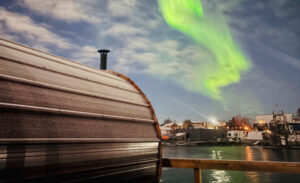
Spotting the northern lights may be hit-or-miss, but the city’s culture, characters and hands-on experiences offer far more reliable rewards

People & Culture
Canada’s mission as part of Operation Caribbe? Choke off the flow of cocaine and other drugs across the eastern Pacific.

Travel
With solar activity expected to peak in 2024, there’s never been a better time to see the northern lights. Here’s how to do it in the “aurora capital of North America.”