Travel

The ancient mysteries of Göbekli Tepe

More than 11,000 years after its construction, an archaeological site in southeastern Türkiye continues to reshape our understanding of early human civilization

  • Nov 24, 2026
  • 1,501 words
  • 7 minutes
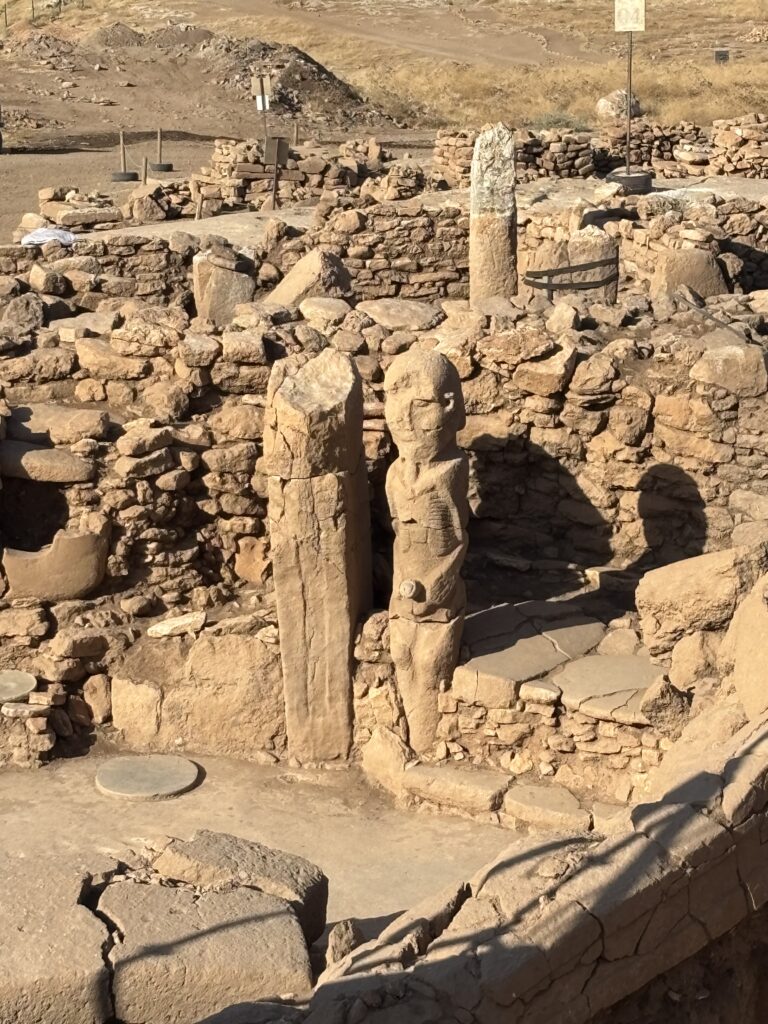
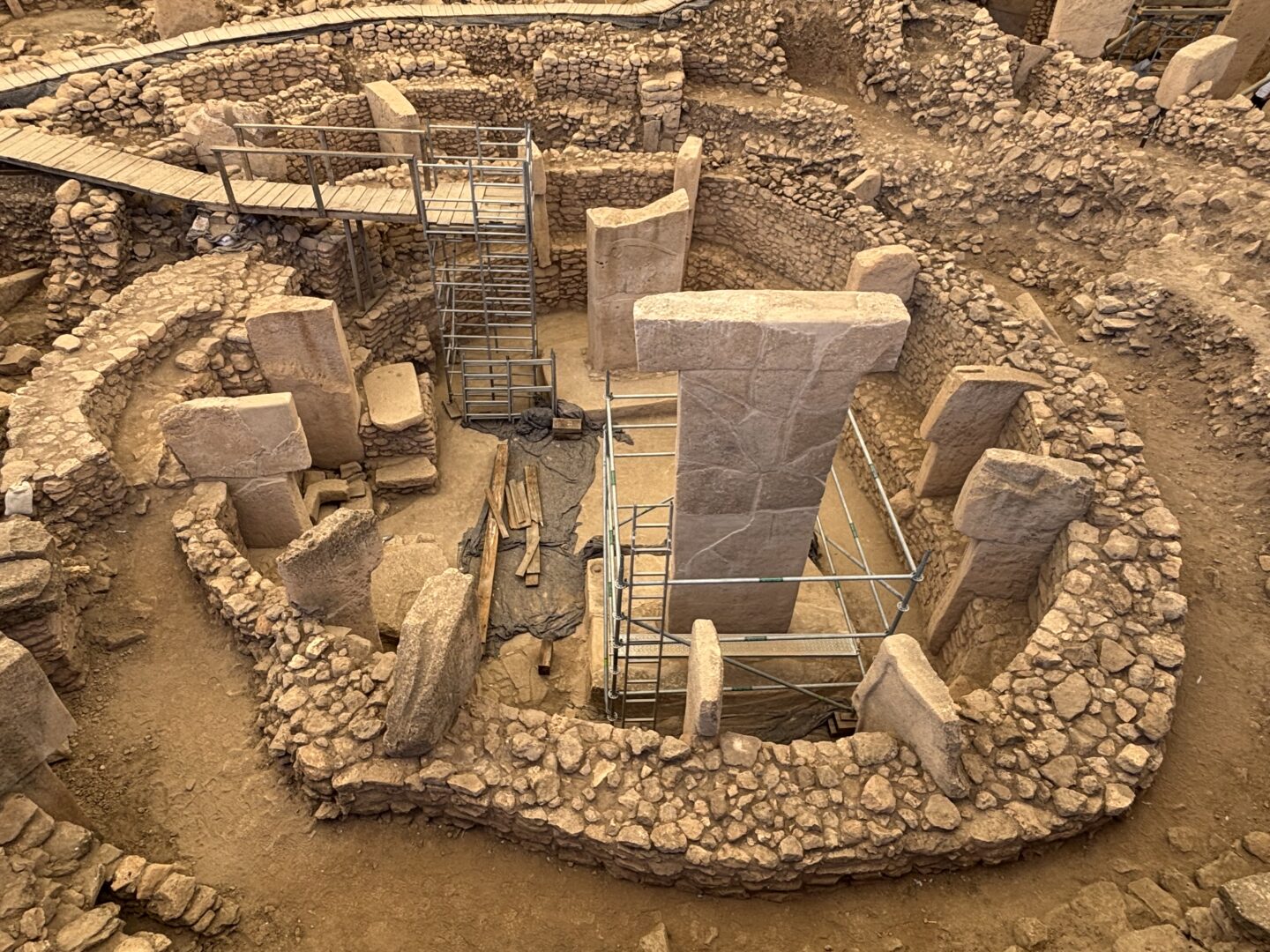
Türkiye’s Göbekli Tepe features a 15-metre-high settlement in the country’s southeast, which predates Stonehenge and the Pyramids of Egypt. (Photo: Marina Jimenez)
Expand Image
Advertisement
Advertisement

The scorching sun beats down as I make my way up a dusty hill in southeastern Türkiye. Ahead, sheltered beneath a giant circular canopy, stand the ancient limestone pillars of Göbekli Tepe, an archaeological site dating back more than 11,000 years. 

I am entranced by the four circular enclosures, some measuring up to 30 metres across, and the towering T-shaped pillars rising from within them. As I get closer, I can make out intricate carvings of snakes, foxes, boars, birds, and scorpions. Some pillars appear to represent human figures, with arms and folded hands carved into the massive stone.

Discovered in 2021 in a village about 20 km southwest of Şanlıurfa, the Sayburc archaeological site is part of the Stone Mounts Project. (Photo: Marina Jimenez)
Expand Image

New Agers and pseudo-scientists have postulated that Göbekli Tepe was the work of aliens or even a lost civilization.

But researchers say the site may be one of the world’s earliest religious sanctuaries — an archaeological treasure that has reshaped our understanding of the origins of civilization.

“We consider this site the starting point of architecture where the first principles of construction and structural ideas emerged,” says Moritz Kinzel, director of the German Archaeological Institute in Istanbul, who works at the site.

“This site has been buried three times, so everything we find here is unexpected. The story of each building is completely different. It is like a giant jigsaw puzzle.”

Predating Stonehenge and the pyramids of Egypt, Göbekli Tepe dates back to the Neolithic period. Its discovery in the mid-1990s by German archaeologist Klaus Schmidt prompted scientists to reconsider the timeline of human civilization.

I am visiting Göbekli Tepe as part of a group of travel writers invited to explore this UNESCO World Heritage Site, located about 18 kilometres northeast of Şanlıurfa. It’s part of the Taş Tepeler (Stone Mounds) Project, a collection of 12 archaeological sites scattered across the region’s arid plains and rolling hills. Excavations are ongoing as researchers from around the world work to decode the meaning behind the ancient structures and their symbols, and seek to understand why the Neolithic builders buried them after 1,500 years of use.

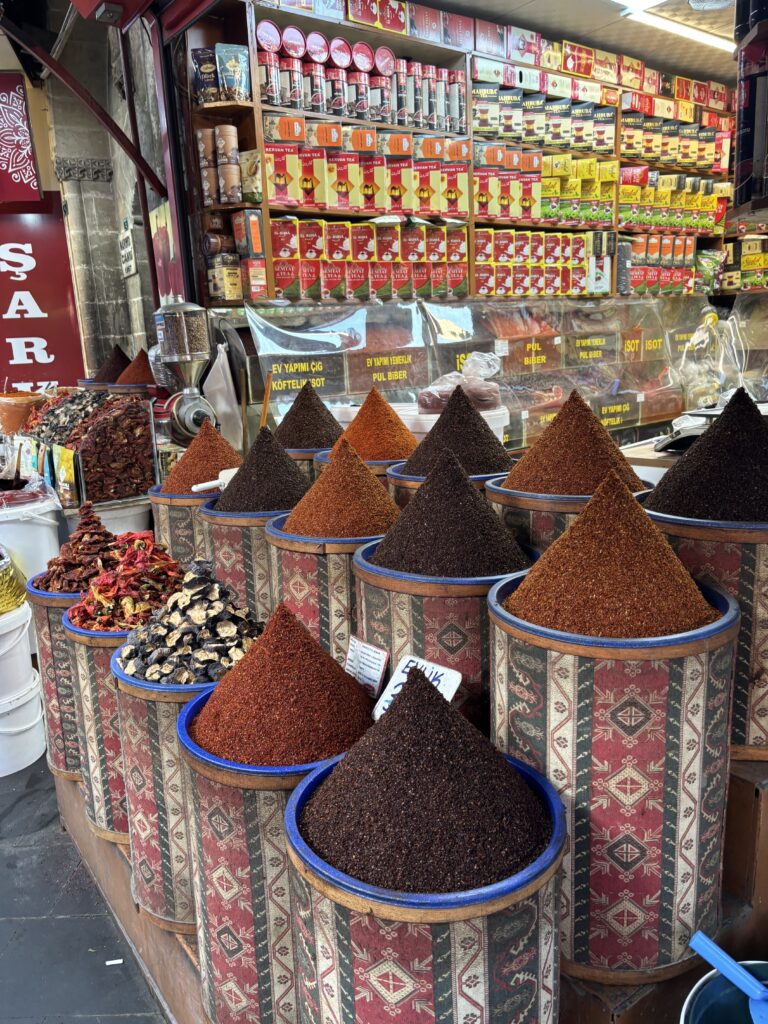
The covered stalls of Şanlıurfa’s bustling historic market are known for their wide selection of spices and herbs, including isot pepper, sumac, red pepper flakes, cumin, dried mint, sesame, oregano and za’atar, all sold by weight. (Photo: Marina Jimenez)
Expand Image

Also known as Urfa, Şanlıurfa is an easy two-hour flight from Istanbul, near the Syrian border. Once an important crossroads along ancient trade routes, today the city is home to large communities of Kurds and Syrians.

Many locals travel here to see Göbekli Tepe and other pilgrimage sites. But for Western travellers, the windswept Mesopotamian plain feels delightfully off the beaten track. 

In late September, I see few Western tourists in Şanlıurfa’s covered bazaar, which teems with merchants selling tea, spices, dried eggplant, okra, watermelon, and jars of pepper paste. Local men sit on low stools in the street eating flavourful minced lamb kebabs, while women in headscarves and dark robes admire gold jewellery in the shops and browse colourful silk scarves and fabric. Nearby, the rhythmic hammering of coppersmiths echoes from tiny workshops. Beyond the bustling market stalls, narrow passageways lead to courtyards where shoppers sip tea and play dominoes.

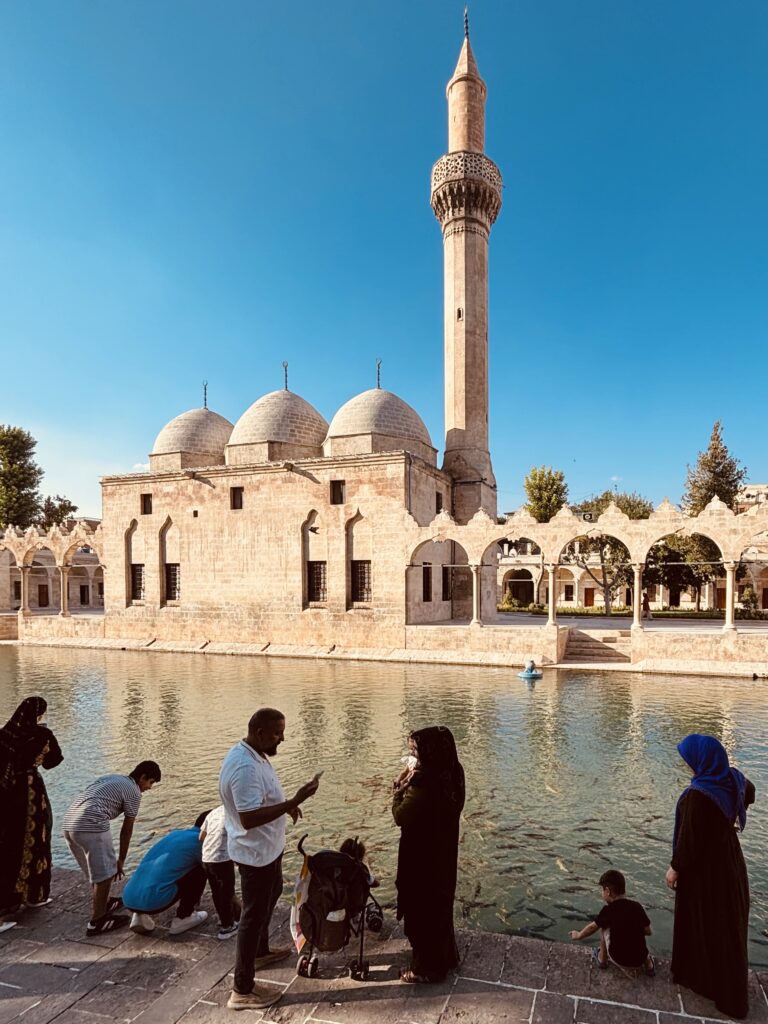
Close by is the Pool of Abraham, also known as the Pool of Sacred Fish, where pilgrims, tourists and children gather to feed the sacred carp. According to local tradition, King Nimrod ordered the Prophet Abraham to be thrown into a fire, but God intervened, turning the flames into water and the burning logs into fish, says our guide Oznar Doksoz.

In Şanlıurfa, the Pool of Abraham, also known as the Pool of Sacred Fish, attracts pilgrims, tourists and locals who come to feed its sacred carp. (Photo: Marina Jimenez)
Expand Image
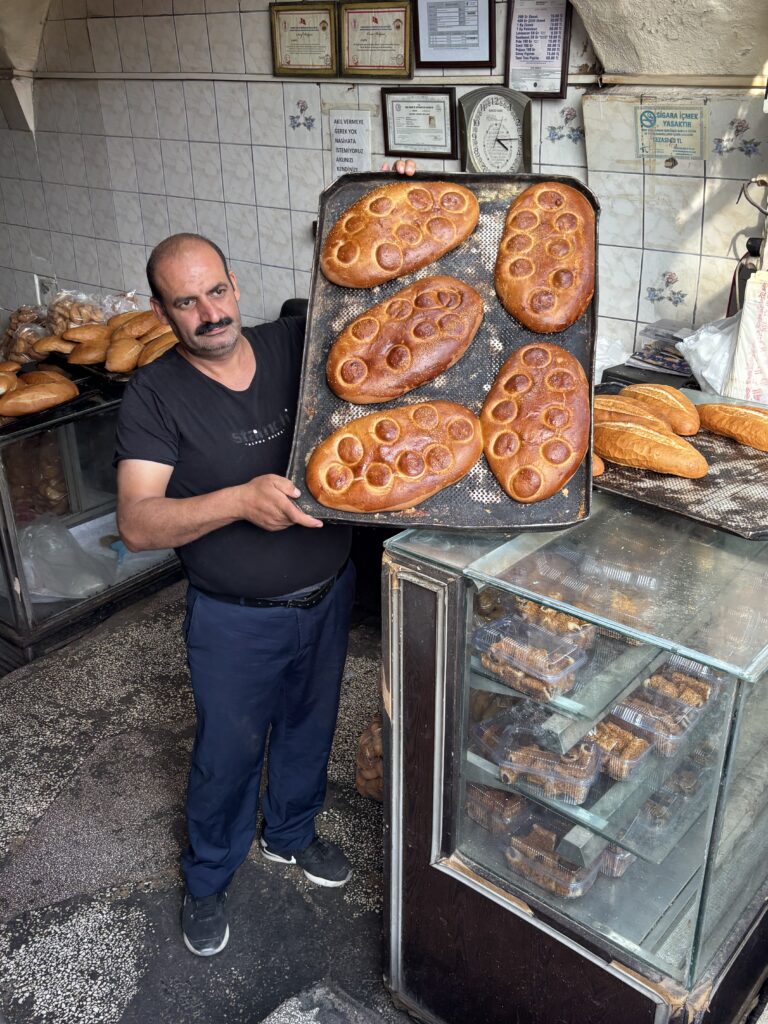
A baker shows off his produce in Mardin, an ancient city about two and a half hours from Şanlıurfa. (Photo: Marina Jimenez)
Expand Image

Far removed from the polished image of Türkiye familiar to many travellers, Şanlıurfa offers a glimpse into the region’s ancient past. For centuries, the city stood along important trade routes connecting Mesopotamia, Anatolia, and the Levant. Its proximity to the Euphrates River helped make the region a vital crossroads for trade, with caravans carrying goods and ideas between East and West. Today, traces of this history remain woven into the city’s streets, and the surroundings feel connected to distant ancestors and the mysteries of their beliefs and daily lives.

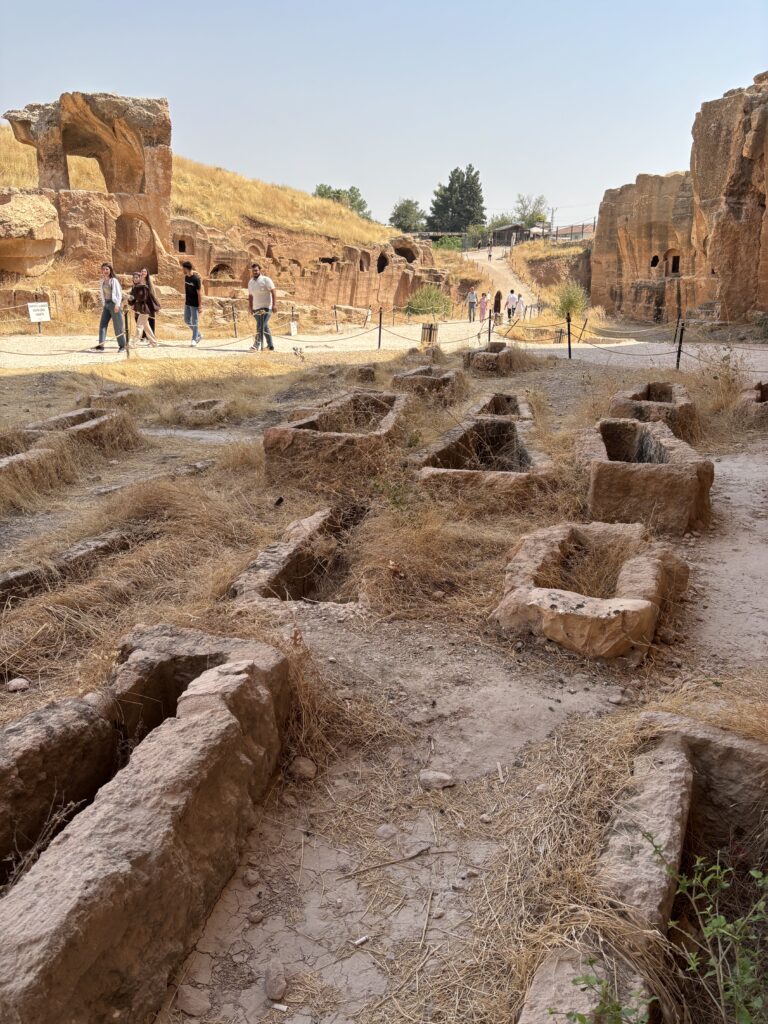
The rock-cut cemetery and catacombs of Dara, an ancient Eastern Roman fortress city near Mardin in southeastern Türkiye. (Photo: Marina Jimenez)
Expand Image

At Göbekli Tepe, I am awestruck by the thought that people quarried, transported and erected these monumental sites without modern machinery, metal tools or written communication.

Scholars once believed that architecture of such proportions required a sedentary domestic society that practised agriculture. But these communal settlements and the intricate artwork predate the advent of farming.

“We used to think people settled because they needed to produce food. But when our research began, we understood that hunter-gatherers first settled for other reasons and then, over time, began to produce food. The domestication of crops came later,” says Eylem Özdoğan, professor of prehistory at Istanbul University.

It is an important historical distinction, scholars say, noting the area represents a remarkable turning point in human history and the start of a major transition and a new way of life.

While Türkiye’s Ministry of Culture and Tourism oversees current excavations, Turkish researchers collaborate with international counterparts from 36 countries. “This is the history of the world, far beyond one nation,” says Özdoğan. 

We also visit Sayburç, an archaeological site discovered in 2021 in a local village, located 20 km southwest of Şanlıurfa. “We don’t know what we will find here, so it is like a giant open-air museum,” says Özdoğan.

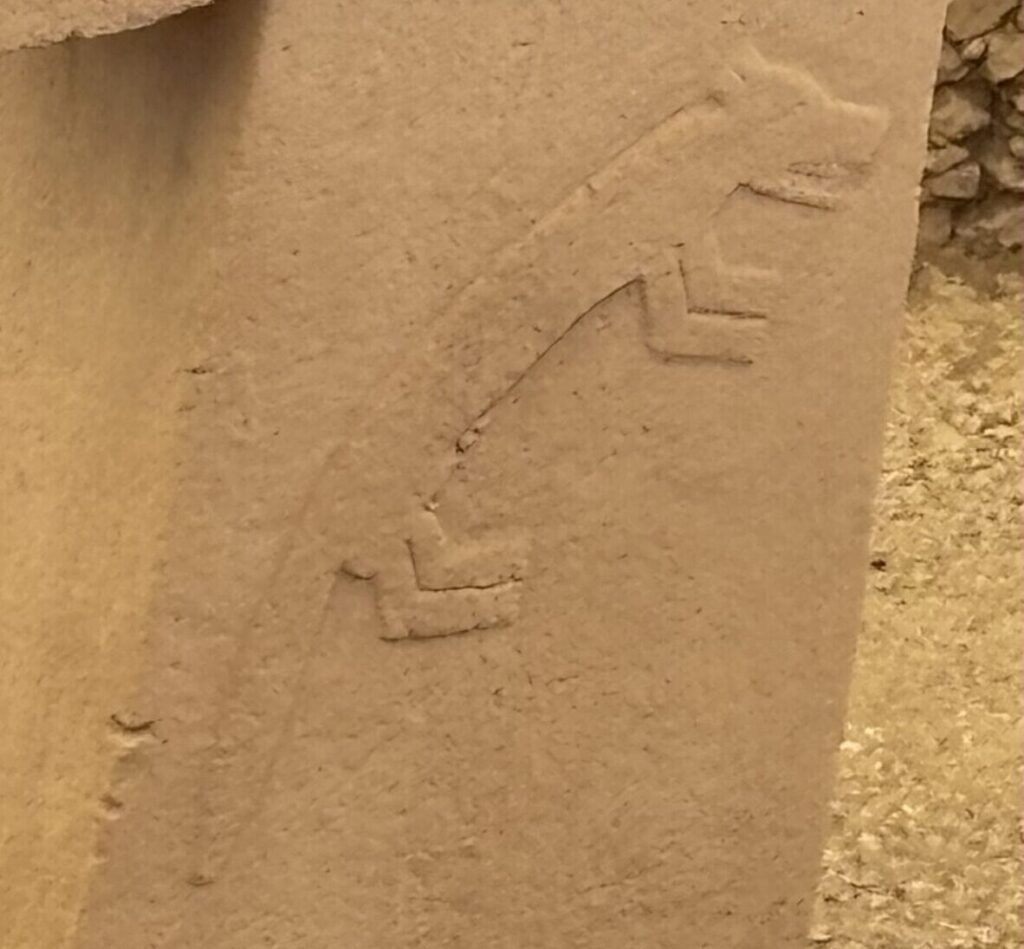
A close-up image of an animal carved into one of the structures discovered at Göbekli Tepe. (Photo: Marina Jimenez)
Expand Image

At this active excavation site, workers wear headscarves to protect themselves from the heat, crouching among ancient stone structures and using pickaxes to unearth limestone bricks, soil, pottery shards, and rubble.

They pass buckets of excavated material up to colleagues at ground level, who carry them away in wheelbarrows for careful examination and classification. 

It’s painstaking work that requires patience and dedication, with each discovery offering another piece of the puzzle of life thousands of years ago. 

Since excavation began, archaeologists have uncovered 70 Neolithic structures, revealing Sayburç was once a bustling village with living spaces, water systems and grinding stones, rather than an isolated ritual monument. Residents buried their dead beneath the homes and entered their houses through the rooftop.

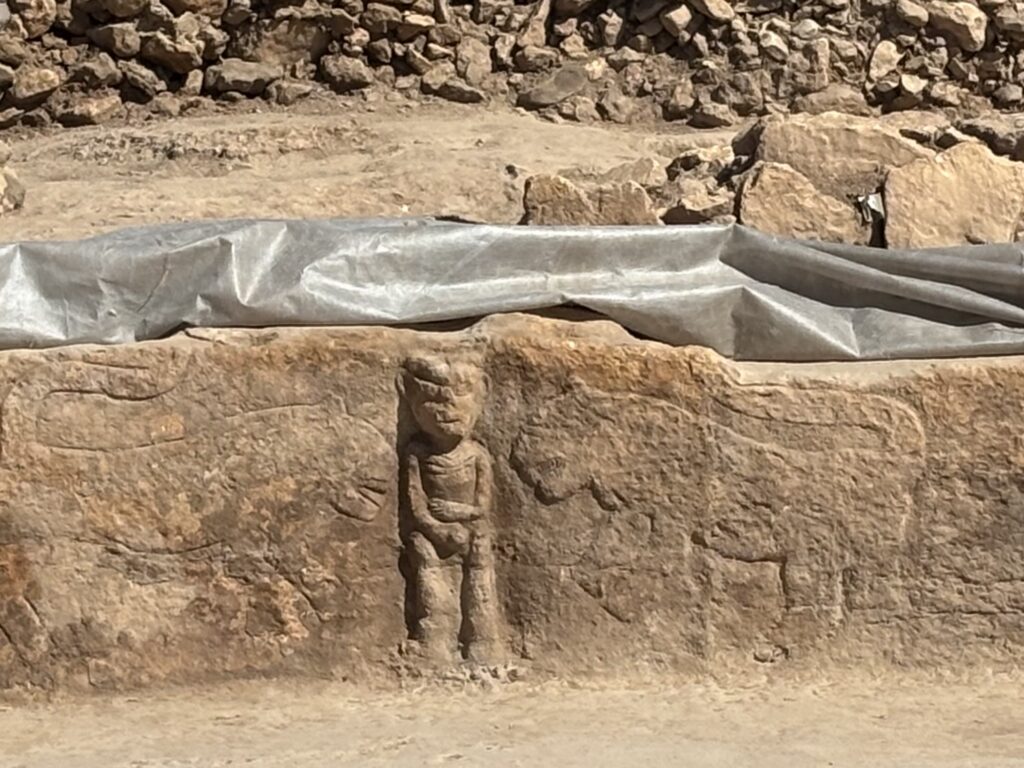
According to researchers, this carving, found on the backrest of a built-in stone wall at the Sayburc archaeological site, reveals the role of storytelling. (Photo: Marina Jimenez)
Expand Image

For Özdoğan, one of the most exciting discoveries is a carving found on the backrest of a built-in stone wall inside a communal building, suggesting that storytelling or ritual activity played an important role in the settlement. The carving depicts a human figure facing forward, flanked by two snarling, open-mouthed leopards. The figure appears to be holding its phallus, while an adjacent panel shows another human figure facing a wild bull.

“We don’t know the meaning of the story, but we know that this is public art and these people… shared their traditions through stories and narratives,” says Özdoğan.

Scholars, and Özdoğan, credit the carving as one of the world’s earliest known examples of storytelling. 

Ultimately, these ancient carvings remind us that although civilizations may disappear, the creativity, intelligence, and human spirit behind their greatest achievements can endure for thousands of years, connecting us to people whose lives existed long before our own.

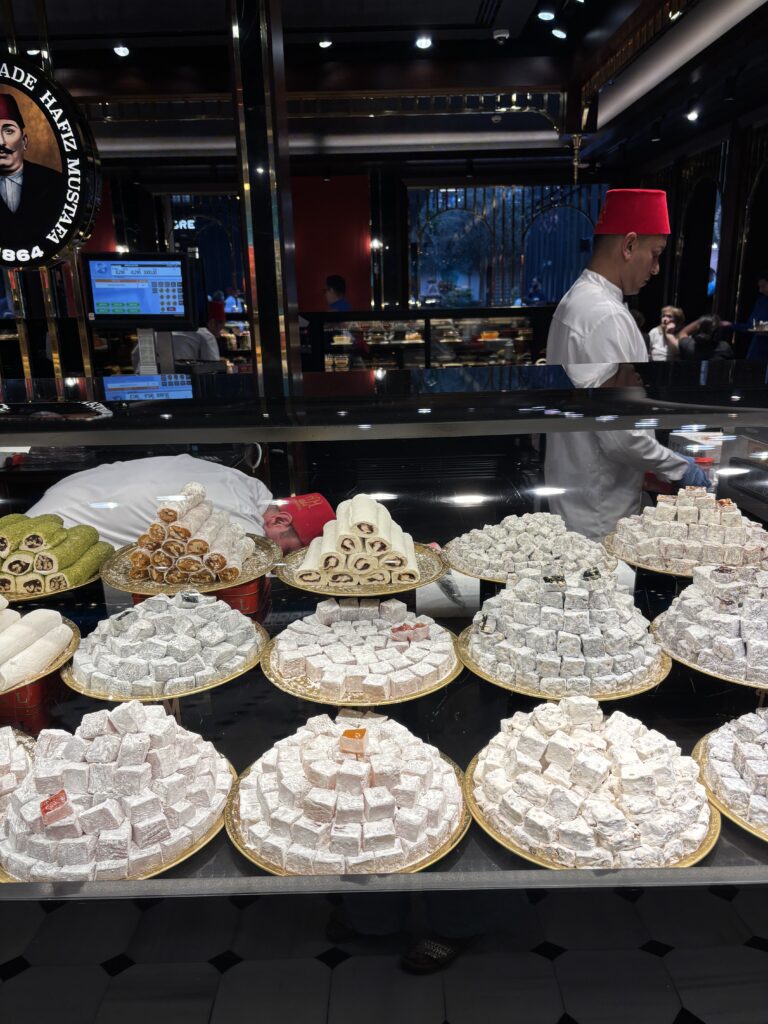
Hafız Mustafa, a landmark sweet shop in Istanbul, is famous for its Turkish delight (lokum), a traditional confection made from a soft, chewy mixture of starch and sugar, often flavoured with fruit or nuts and dusted with powdered sugar. (Photo: Marina Jimenez)
Expand Image
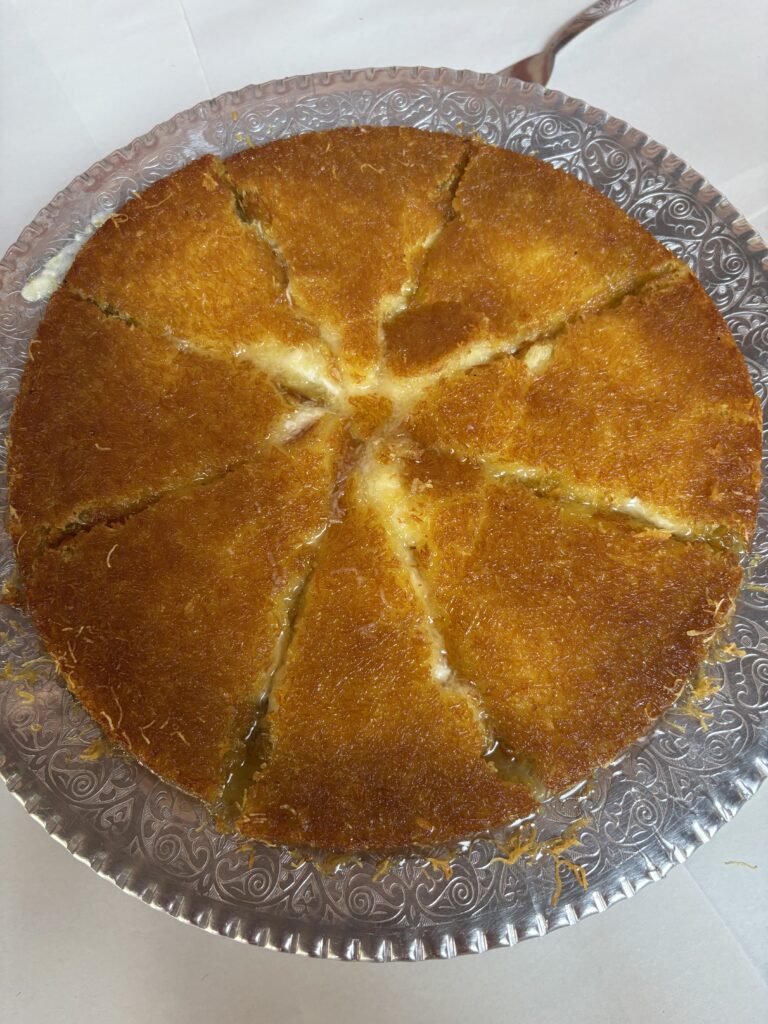
Künefe, a traditional Turkish dessert made with thin, shredded pastry layered with melted cheese, baked until golden and soaked in sweet syrup. (Photo: Marina Jimenez)
Expand Image

Don’t forget to eat!

Renowned for its gastronomy, as much as for its ancient history, Şanlıurfa is a destination for food lovers. With lamb, bulgur, clarified butter and sun-dried hot peppers featuring prominently in local dishes, the region offers plenty of opportunities to sample traditional Turkish cuisine.

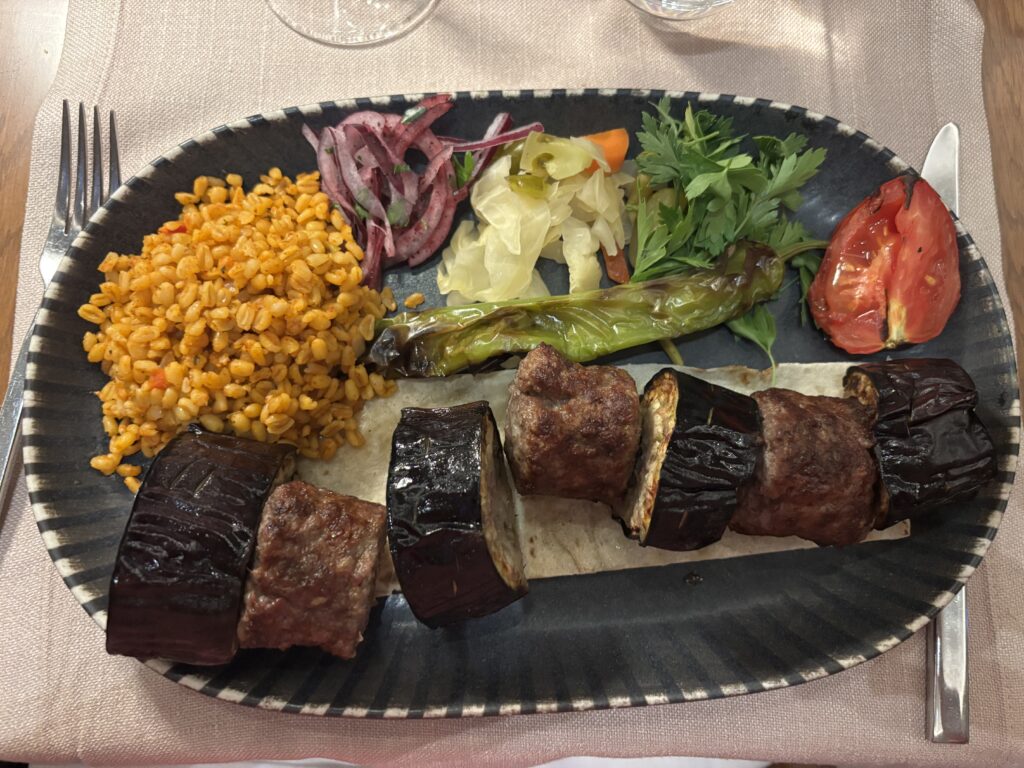
Though I profess not to eat lamb, Oznar Doksoz, our exuberant Turkish guide, declares, “You will love the kebabs.” On our first night, I try a minced lamb kebab cooked with eggplant. The meat is tender and moist, the vegetables aromatic, without a hint of the gamey flavour I usually associate with lamb. It’s a pleasant surprise.

A classic Şanlıurfa dish, eggplant kebab features thick slices of locally grown, seedless eggplant alternating with seasoned minced lamb, roasted over a charcoal fire and served with bulgur and salad. (Photo: Marina Jimenez)
Expand Image

Throughout our week, Oznar makes plenty of time to linger over frothy pistachio coffee, sample different kinds of pide (a Turkish flatbread similar to pizza), wine from Cappadocia, and an assortment of mezze, including ezme (a spicy tomato and pepper salad), haydari (thick strained yogurt with herbs), tabbouleh, and cheese-filled börek.

“I am proud of Türkiye’s hospitality,” says Oznar. “With all the worry about the global economic challenges, artificial intelligence, and following the pandemic, it is all so negative. We need something positive.”

Meals are a communal affair in Türkiye, with conversation and shared dishes at the heart of the experience. In Şanlıurfa’s bazaar, Oznar leads us to the shop of Walid Kurt, who prepares künefe, a dessert made with thin, shredded pastry layered with cheese and soaked in a sweet syrup. It may be the most delectable dessert I have ever tasted. Oznar also tracks down another market favourite: a liver kebab which she prepares with onion, parsley, mint and pepper.

Other Turkish specialties worth trying include köfte,  beef meatballs made with beef or lamb and seasoned with cumin, garlic, onion and parsley; ahbacun, a thin, crispy flatbread topped with minced meat, tomatoes, herbs and spices; and içli köfte, a crispy bulgur and semolina shell stuffed with spiced minced meat and onion and shaped into a pointed oval.

For something sweet, there’s Turkish delight, a gel-like confection made from starch and sugar, flavoured with rosewater and sometimes nuts, such as pistachios, and dusted with powdered sugar.

Travel and accommodation for this story were provided by the Turkish Tourism Board. The organization did not review or approve the article before publication.
Advertisement

Help us tell Canada’s story

You can support Canadian Geographic in 3 ways:

Related Content

Environment

À quoi ressemble l’architecture durable dans l’Arctique?

La conception traditionnelle des bâtiments dans l’Arctique est en train de changer pour refléter la diversité géographique et culturelle de la région et pour donner plus d’autonomie aux habitants du Nord

  • 774 words
  • 4 minutes

Environment

What does sustainable architecture look like in the Arctic?

The conventional thinking around building design in the Arctic is changing to reflect the region’s geographic and cultural diversity and give northerners more agency

  • 715 words
  • 3 minutes

Travel

Into the hills of Andalucía

Journey beyond the cities to discover white villages, ancient traditions and some of Spain’s most celebrated culinary experiences

  • 3081 words
  • 13 minutes

Travel

The Da Vinci Code of the Prairies

 A local historian unlocks the mysteries of Winnipeg’s Manitoba Legislature

  • 1011 words
  • 5 minutes
Advertisement
Advertisement