People & Culture
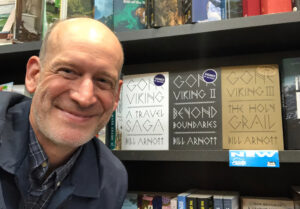
Gone Viking with Bill Arnott
Episode 83
Bestselling author Bill Arnott discusses his work as a writer tracing the voyages of Vikings around the world
- 32 minutes
Travel
Following the agave fields through Jalisco, writer Bill Arnott recounts his highland travels, with stops for tequila, mariachi and a few good stories

We talk so grandly, in capital letters, about Mornings in Mexico. All it amounts to is one little individual looking at a bit of sky and trees, then looking down at the page of his exercise book.
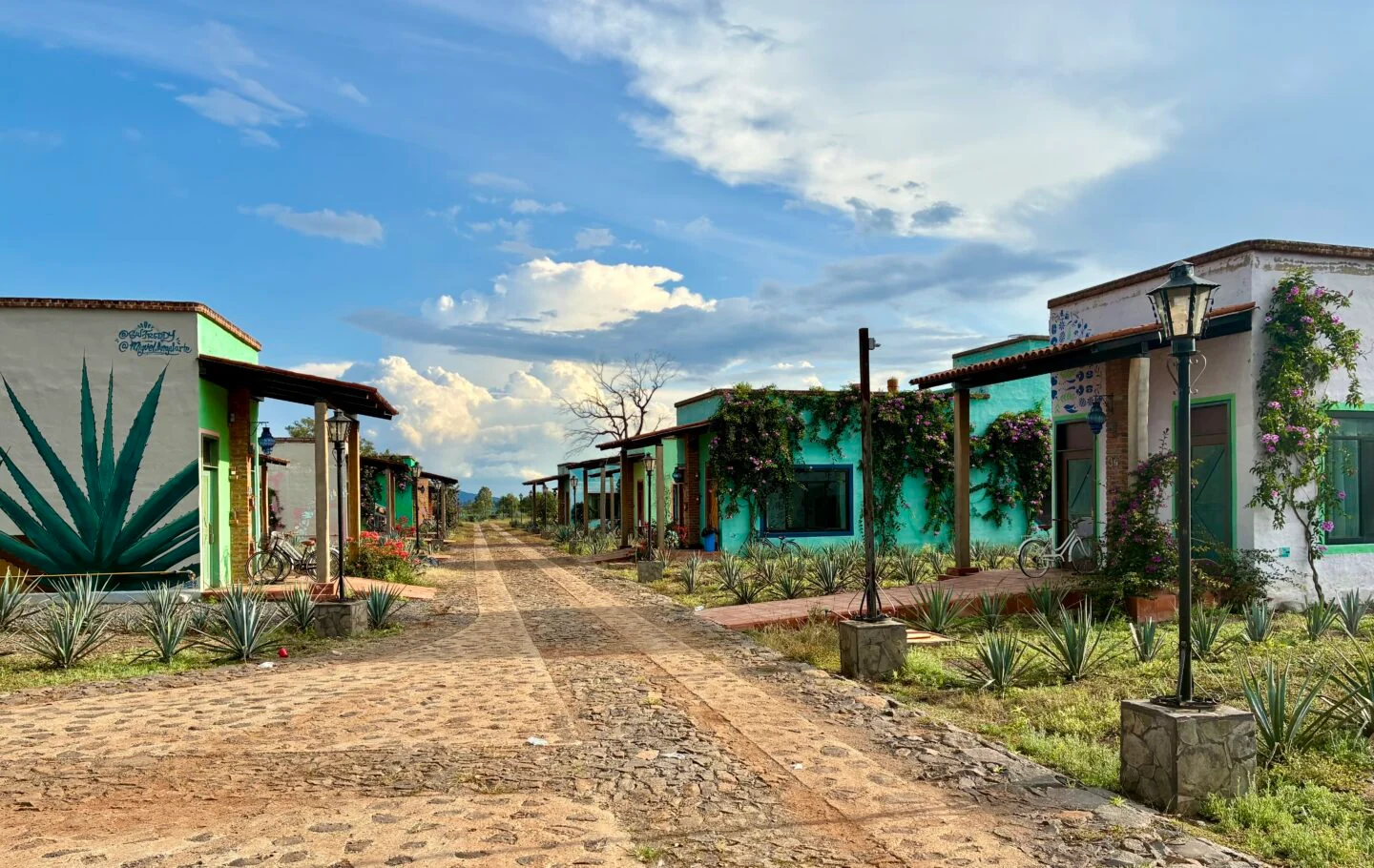
English novelist and poet D.H. Lawrence wrote this while in the country, writing Mornings in Mexico, published in 1927. The excerpt brings a smile as I do the same, 100 years later. In a field of agave, leaves spike the air, while beyond lie the forests that Lawrence described. Here in Jalisco, in west-central Mexico, hills rise in a cover of piñon and oak, mixing tropical green with arid red dirt. Above it all is the same azure sprawl as I jot in my own little journal.
I’m here as a guest of Jalisco’s Interior Municipalities and the city of Guadalajara, specifically the tourism boards, and a private, week-long itinerary has been arranged to showcase this culturally rich hub. I’ll start in the Jalisco highlands, on the east side of the state, for a few days around Arandas and Jalostotitlán, then loop back to the state capital, Guadalajara, for the rest of my stay. I’ll do some of this on my own, but I’ll spend most of the week with a translator and guide: Alejandra (aka Ale), part of an international events team. A driver and fixer, Hector, will accompany us.
Additional handlers, Lupita and Carlos, will join us for our time around Jalostotitlán. Along with these hosts, I’ll meet with tequila distillers, artisans, hoteliers, chefs and mixologists, an archaeologist, plus friendly strangers whose names I never do learn but warmly remember. For those I meet, only first names are exchanged, but amazing people stand out, having made my time in Jalisco remarkable.
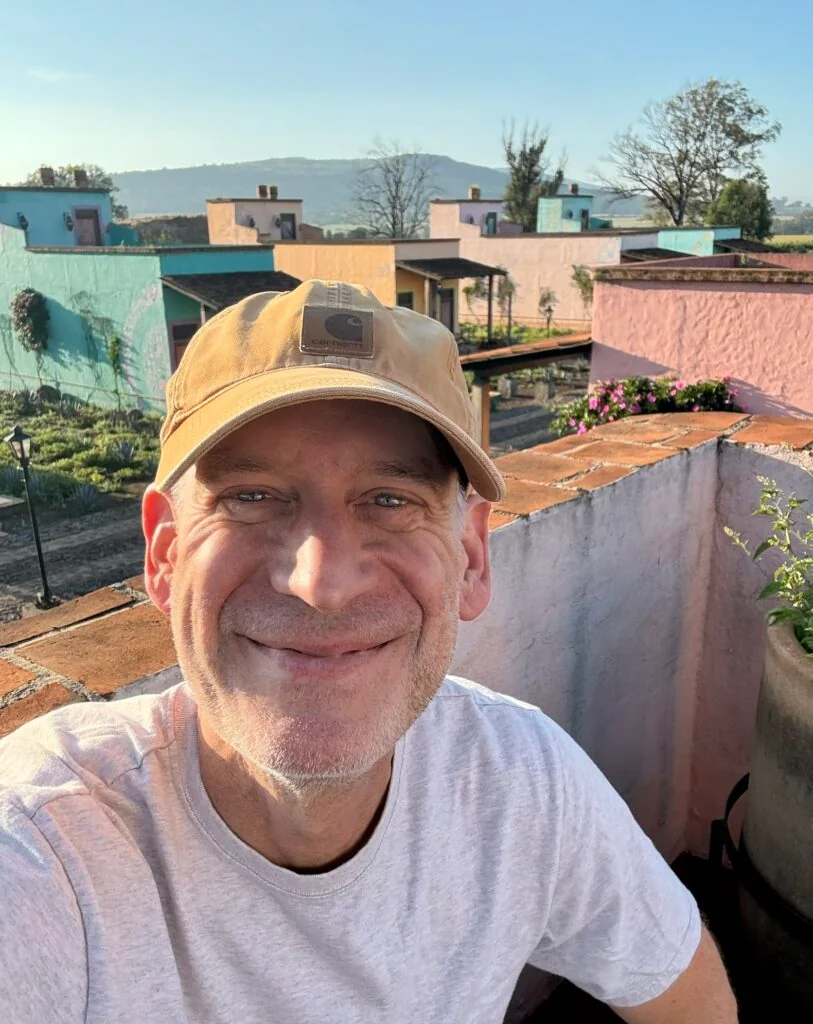
On my first morning, I sauntered from a small pink casita to a yellow food truck that sat on tires somewhat deflated and sunk in red mud. Juan Carlos, the on-site chef here at Casa Trujillo (a tequila distillery with accommodation), passes me chilaquiles: fried tortilla chips under simmering salsa, served with chicken and eggs. Paired with coffee, this becomes breakfast, but could be any meal of the day.
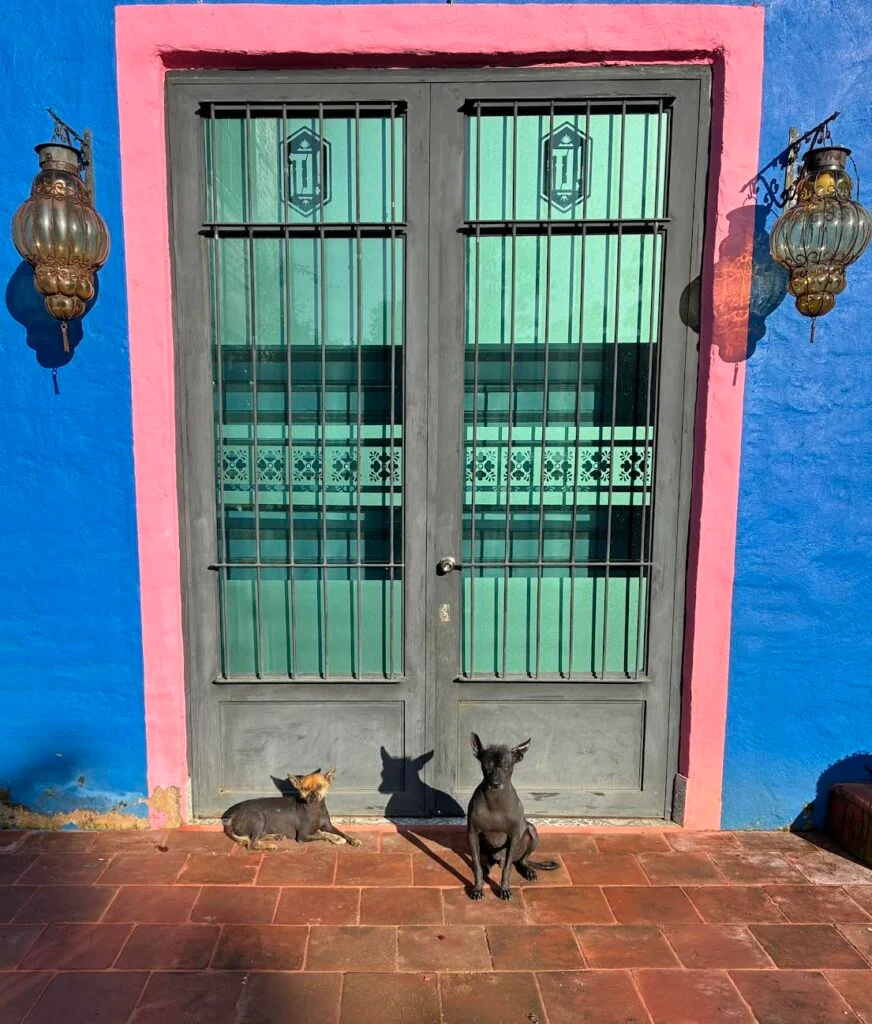
My table is in the open air, so remnants of last night’s rain or this morning’s dense dew still linger. I swipe water from a seat, which bears a surprise underneath: Piña (Pineapple), a black hairless xolo, or xoloitzcuintli, the country’s national dog. (Don’t mention this in the state of Chihuahua).
Piña’s forebears were sacred to Aztecs. Place names also echo Nahuatl, the language of the Aztecs and Toltecs. But I’m in Los Altos — Jalisco’s Highlands — where the Coca and Guachichile peoples lived before the Spanish arrived. Landscapes drew me here, where iron-rich soil supports the agave used to make some of the finest tequilas. I’m roughly 100 kilometres east of Guadalajara, the nearest town being El Crucero de Arandas (population 114).
After I finish my meal (Piña had ham), I explore Casa Trujillo before heading further afield. A drive along Jalisco State Highway 314 delivers me to La Hacienda Clase Azul, where a campus reminiscent of Frank Lloyd Wright’s Taliesin West tells the story of agave, as ingrained in the terroir as cactus and corn. Exhibits explore Mexican architecture, culture, gastronomy, and nature.
Butterflies and songbirds offer colour and sound along a leafy path as I step around split agave, mesquite, a fire pit and tools used to extract juice from the harvested hearts of the plant. The spiky leaves are long gone. What remains looks like big, leafless pineapples — also called piñas. They shred and wash these in a multistep process that involves machines and staff working by hand, feeding the raw piñas through huge rollers to extract the juice.
What comes next is unexpected. A security guard kindly but firmly asks for my phone, which gets locked in a bag, to be returned when my tour is done (this eliminates any risk of espionage). From here I enter the ceramics workshop. Artisans mould and decorate the vessels to hold this tequila. In a climate-controlled space, rows of ceramic bottles are fired in kilns and meticulously hand-painted. Before painting, the uniform lines of reddish-brown clay are dead ringers for the terracotta warriors of Xi’an, awaiting their next life of tequila fulfilment. Each new release has a custom design. I see small batches destined for New York and Tokyo, along with upcoming anniversary editions, each collection comprising no more than 300 bottles.
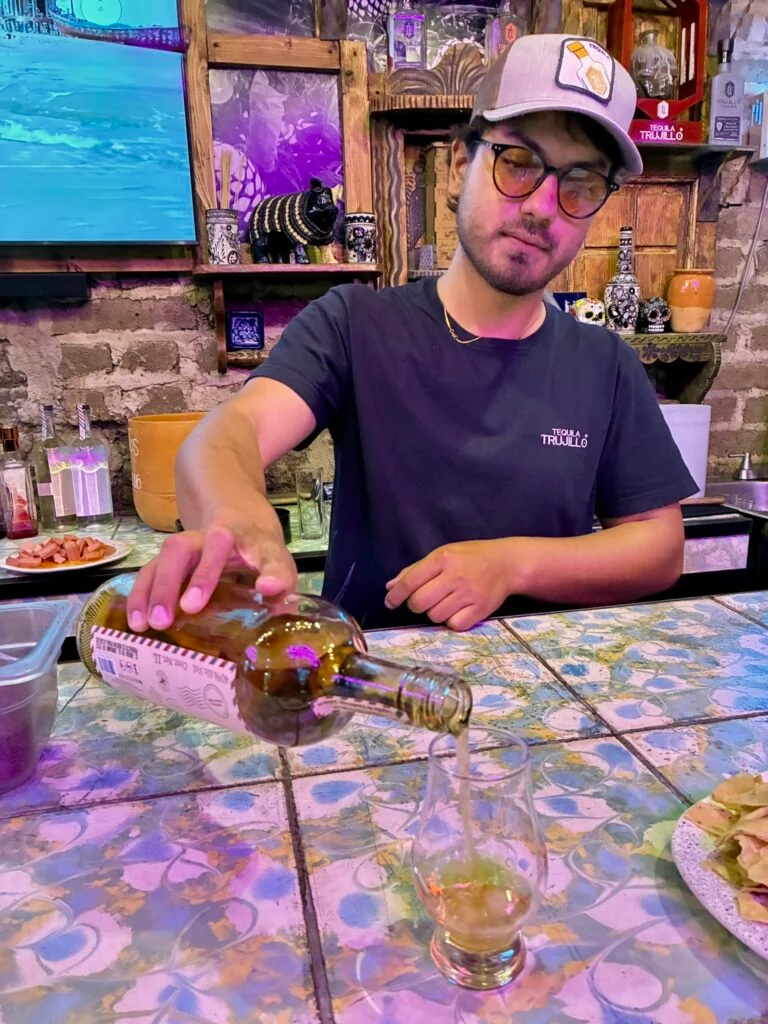
As I leave this part of the campus, my phone is returned, then four bottles are opened: joven (young tequila), reposado (rested in wood), añejo (aged in oak), and extra-aged (in whisky or sherry casks). The woods and aging times vary, but the lessons I learn feel comprehensive.
“This one is $8,600 USD,” my host Uriel says.
I can’t quite believe it, and I repeat the number out loud, to be sure of each bottle’s price.
Uriel laughs. “No, no. This next one is only $7,000 USD.”
At this point, I realize I’m out of my depth, but I persevere and drink four tequilas. Then two mezcals. Then exceptional food, I believe, because I have photos to prove it.
The nearest town to La Hacienda Clase Azul is Capilla de Guadalupe (population 15,000). I spend the night in a tiled casita, woken by thunder. Rain slashes through the seams of my window and pools on the floor. I slosh to the front door and open it, watching the storm strobe the night.
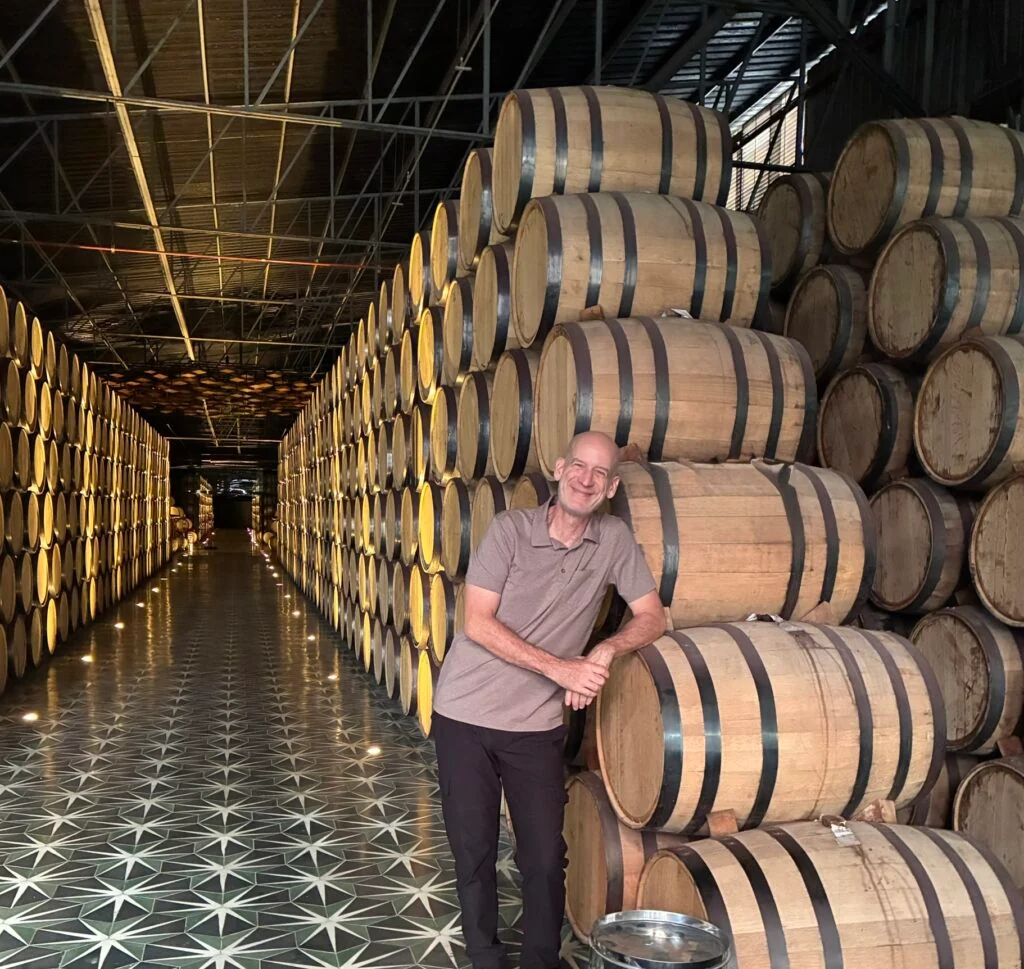
The new day, however, dawns bright, one of Lawrence’s capital-M mornings. The floor dries, and I head east toward Arandas, where Sergio at Tequila Centinela pours more Los Altos tequilas in a cellar-like setting. The power’s out — maybe the storm, maybe roadwork nearby. So we drink in the dark, the glow of two phones lighting our faces from below as though we’re sharing ghost stories at camp.
In Arandas, the lights are now on, and I join Alejandra and Hector at La Imperial, a proper saloon. This could be the heart of these highlands, maybe the whole region. Locals boast that Jalisco is Mexico. I get it: landscapes as snapshots of something greater, microcosms like Arran in Scotland. But people here insist it’s much more than agave, tequila, and forests to fuel literati. This is where mariachi began, and charrería — Mexican rodeo. It’s Thursday, rodeo night, and cowpokes canter Azteca horses with pompadour tails nearly sweeping the ground. Tonight the horses high-step to live mariachi, hooves tapping in time, a playful but disciplined display.
Travelling north, we come to Jalostotitlán, known simply as Jalos. Ale, Hector, and I meet with Lupita and Carlos, and the five of us squeeze in a truck. The engine dies, so we find a new ride and carry on.
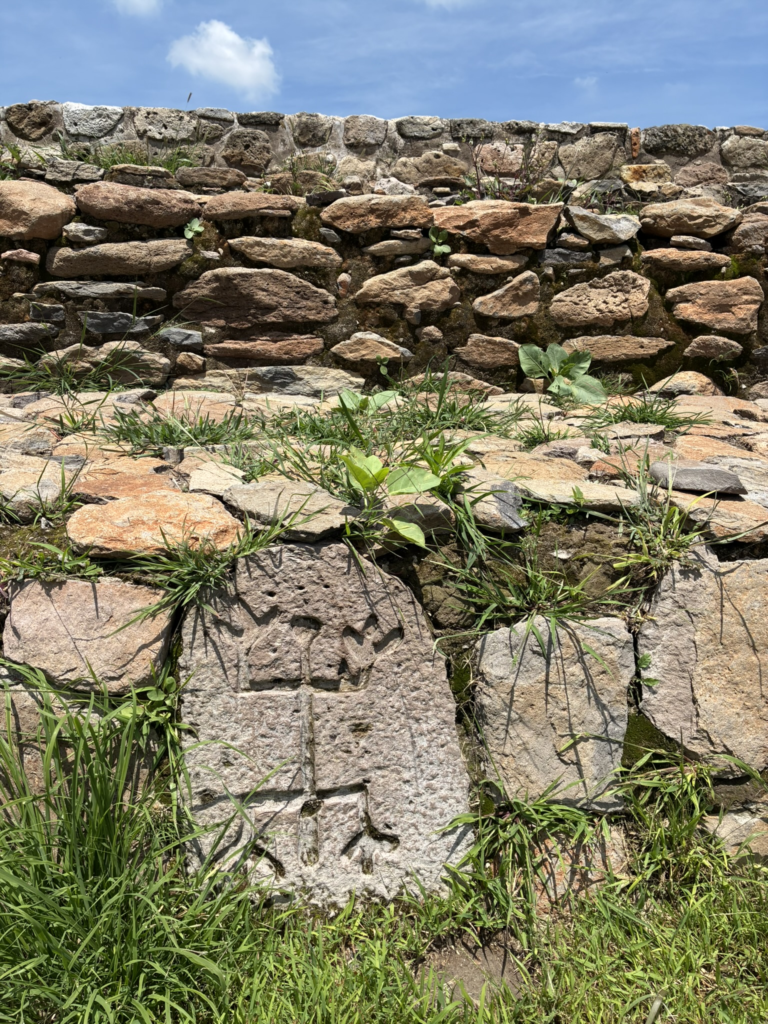
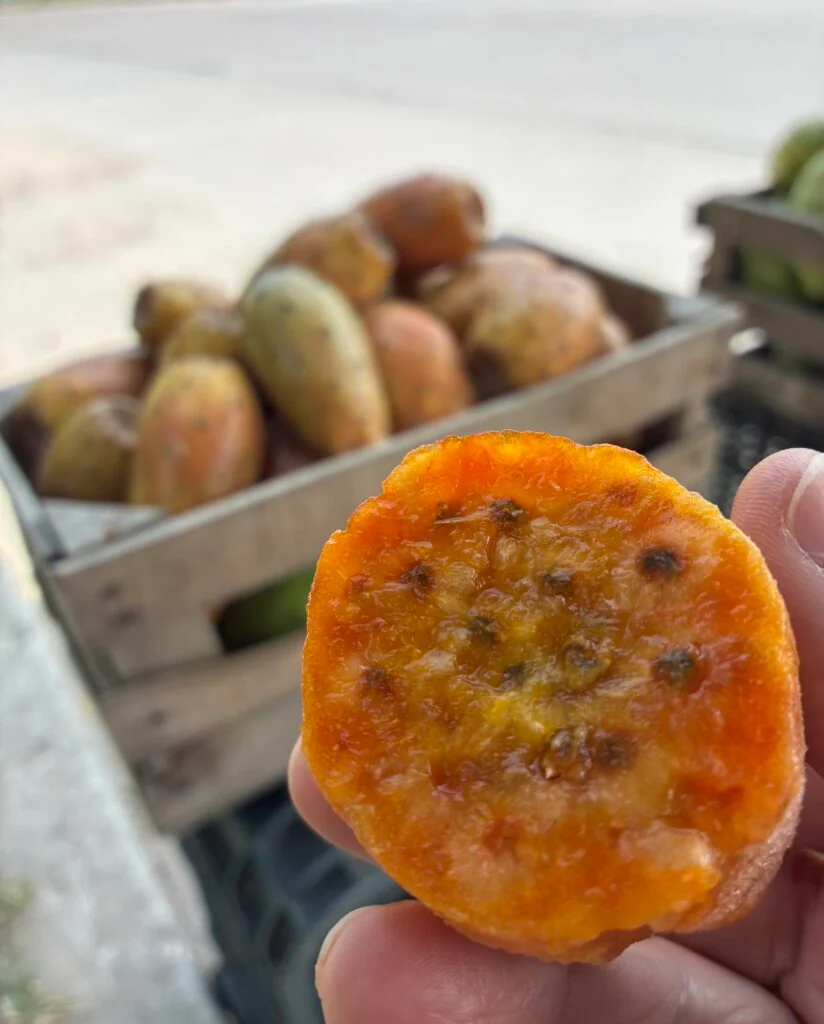
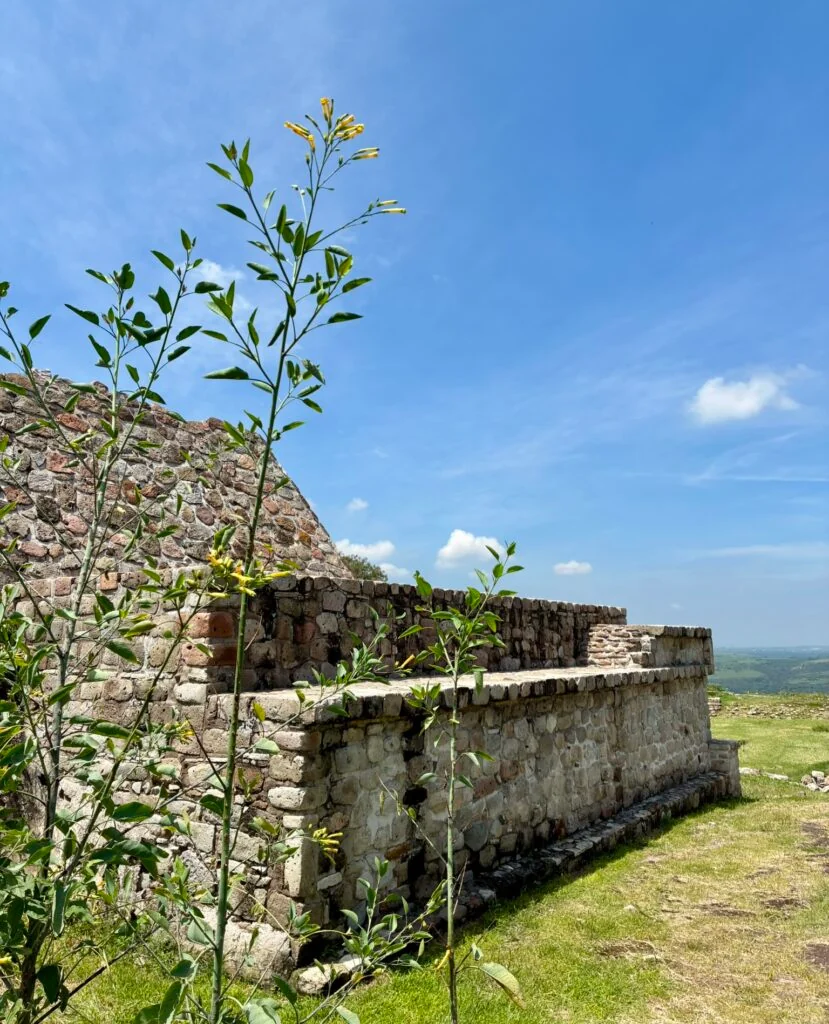
Bumping along dirt tracks, we ascend the hills of Teocaltitán, then continue on foot through coarse grass and stone steps. The climb is demanding, bringing us to an elevation of 1,800 metres. Agave and cactus rise from the red dirt in what a botanist would call xeric scrubland. Acacias stretch overhead, while prickly pear cacti bear fruit known as tuna. (When peeled, it looks like passionfruit and kiwi made a juicy orange baby.) We keep climbing to reach the Zona Arqueológica Teocaltitán, site of Teocaltitán’s temple ruins.
Many travellers know the Aztec ruins at Templo Mayor in Mexico City. But Teocaltitán precedes the Aztecs, with this site dating to 200 CE. Constructed during this pre-Columbian El Grillo archaeological phase, it was later inhabited by the Tecuexe and Caxcane peoples — those who were here when the Spanish arrived. This site isn’t open to the public, but Edwin, the resident archaeologist, has granted us special permission to explore alongside him. Facing the temple, he gives a sharp clap. A haunting echo circles back in a ricochet.
“We call that Quetzal’s Call,” says Edwin in rapid Spanish, referring to the feathered god Quetzalcoatl.
Then he points in a sweeping arc to surrounding peaks like verdant volcanoes. “Each summit was a temple,” he adds. This landscape was a pre-contact metropolis.
We return to the car, and I consider the history here; some hidden, some left to decipher. Edwin had pointed out a 1000-year-old petroglyph, indicating bodies were buried below. I suspect each of us held onto that thought as we rode back to Jalos in silence. Despite the town’s modest size (population 30,000), it’s jarring following the calm of the temple site. But a round of colas (the good stuff with real corn syrup) renews our energy, and it’s back to exploring this town.
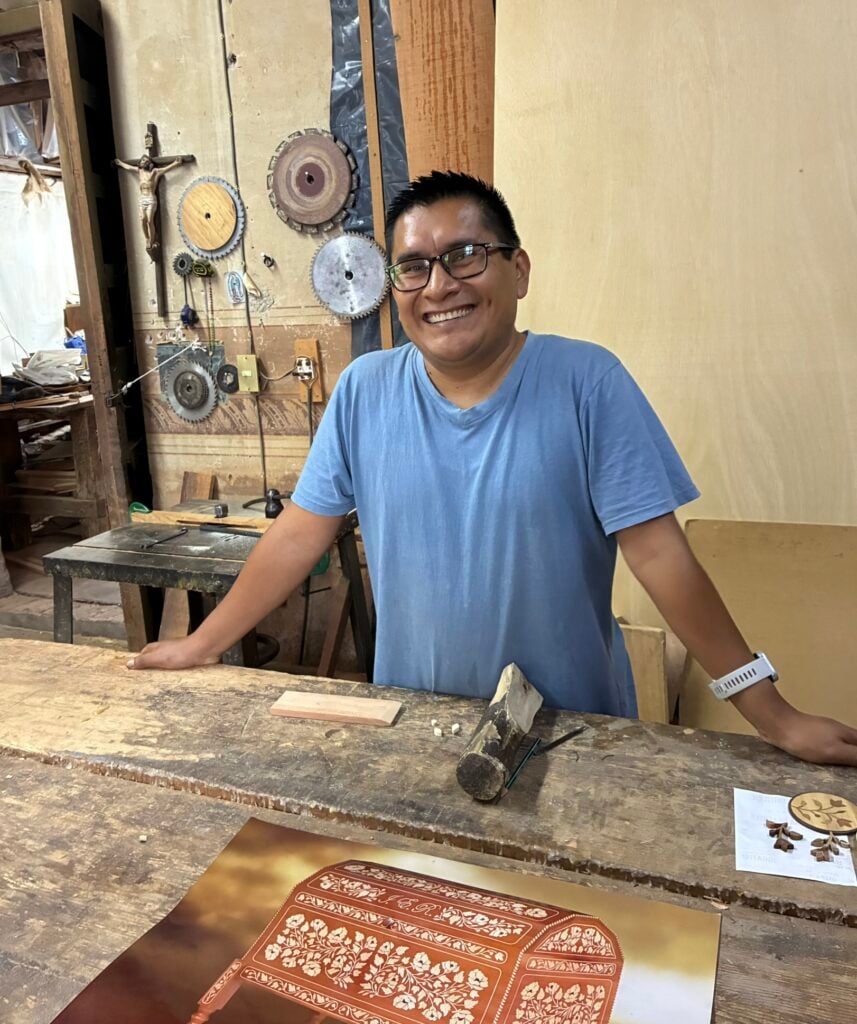
A short stroll to a small woodworking shop, where we meet Francisco Javier, a third-generation craftsman who fabricates detailed inlays on a grand scale, making intricate dressers and trunks. A traditional item can take most of a year to complete. Even his tools are handmade.
Dinner is at the Jalos home of poet-priest Alfredo R. Placencia, born in 1875. In 1924, he published El Libro de Dios (The Book of God), a collection of personal, confessional poems. His work is intensely raw; the devout Placencia unafraid to question his faith
The next day, we head west toward Guadalajara, the country’s third-largest city. I’m told it’s named after the Arabic wādī al-ḥajārah, or valley of stones. Federal Highway 80 slices through agricultural terrain. I smell ranches and hay. Across Jalisco, people sport cowboy hats in every shape and style.
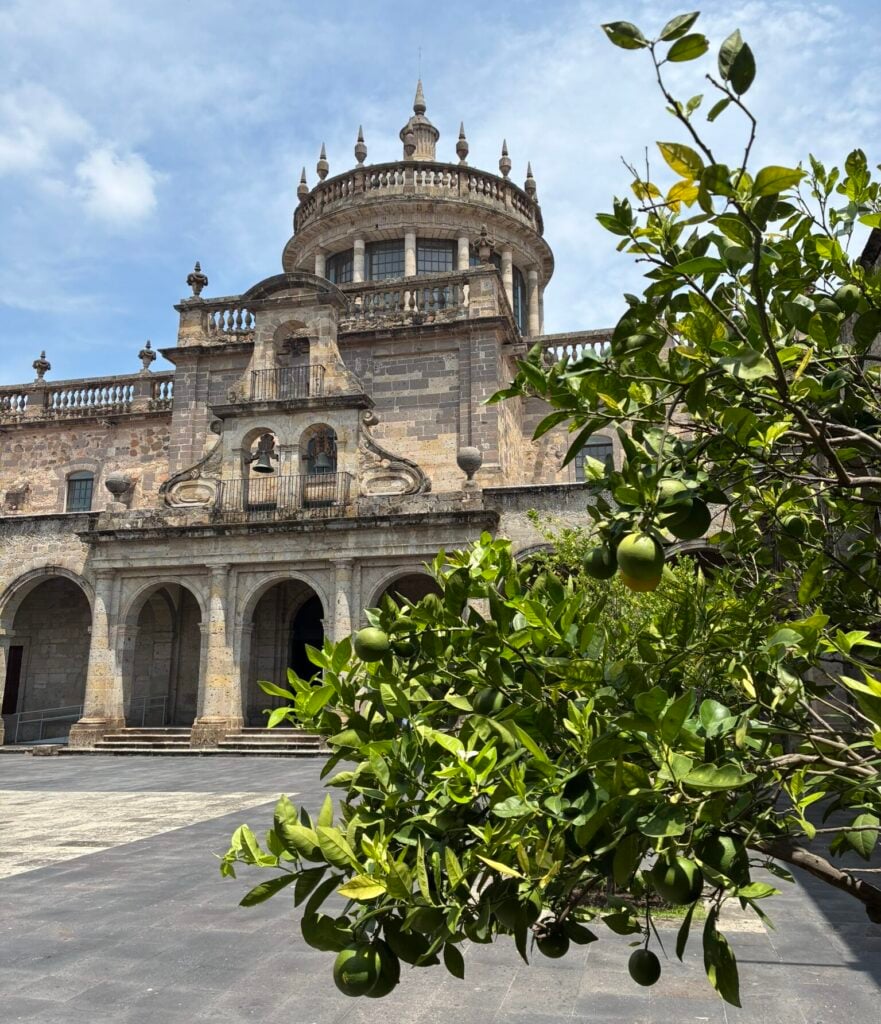
In Guadalajara, I make my way to the UNESCO Museo Cabañas to admire José Clemente Orozco’s provocative murals. The most stunning, El Hombre de Fuego (The Man on Fire), centres a vaulted ceiling. Orozco completed the mural with only one hand (he lost the other early in life). He was mostly blind too, and did this from 30-metre-high scaffolding, adding to the wonder.
Next, Ale and I head to San Pedro Tlaquepaque, known simply as Tlaquepaque. This is one of Mexico’s official pueblos mágicos, or magical towns recognized for cultural significance, much like UNESCO sites elsewhere. Across the country, you’ll find 177 of these rare locales, or roughly six towns per state, while Jalisco is home to 12 of them.
It’s almost fall equinox, the end of the wet season, and Día de la Independencia (Mexican Independence Day) happens on September 15th and 16th, one week from now. Streets and squares are in full regalia: bunting and banners in the nation’s tricolours of green, white and red.
Later, to mark the celebration, I’ll ask my hosts at Guadalajara’s Villa Ganz — Gabriel, Armando, and Chef Carolina — to create a bandera, or flag, in drink form. Three filled glasses sit in a line: lime juice, white tequila and sangrita, a spicy tomato beverage. The green, white, and red mimic the flag, thus the drink’s name: bandera. We sip in that sequence, left to right. No one does “shots”; the tequila is too special, like good whisky or fine wine.
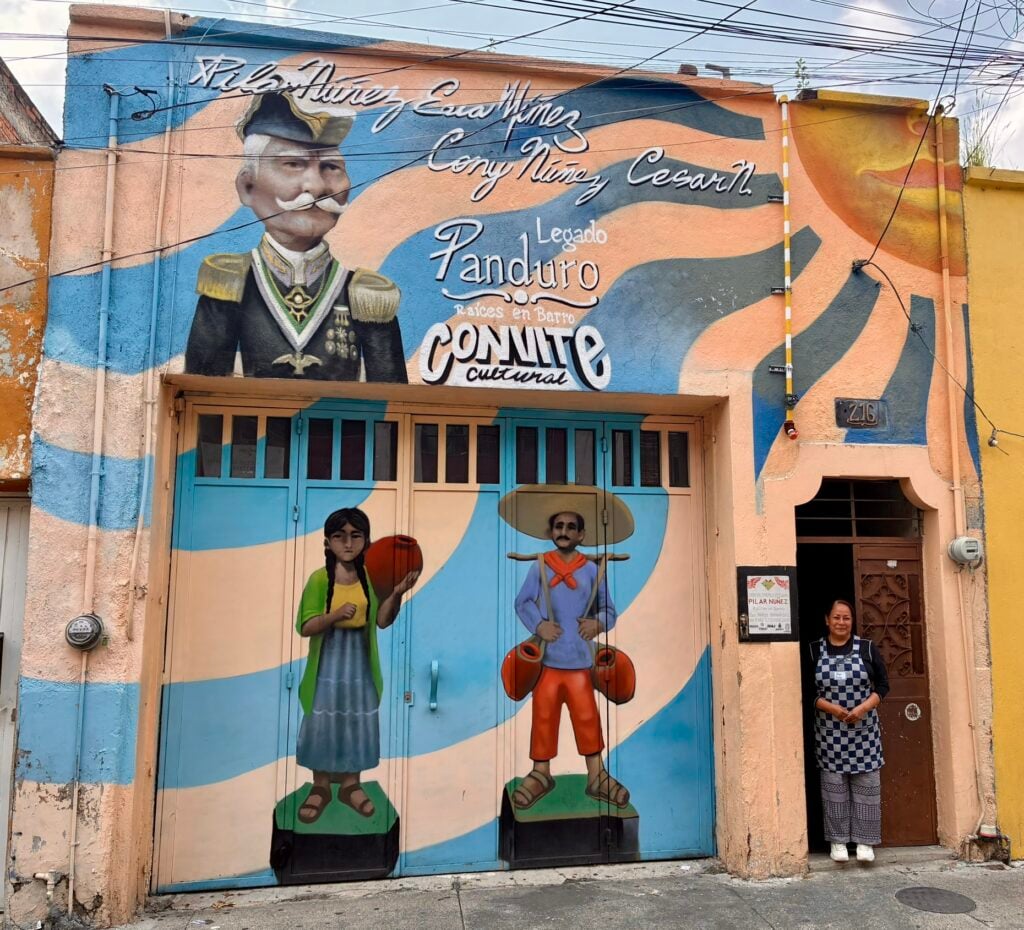
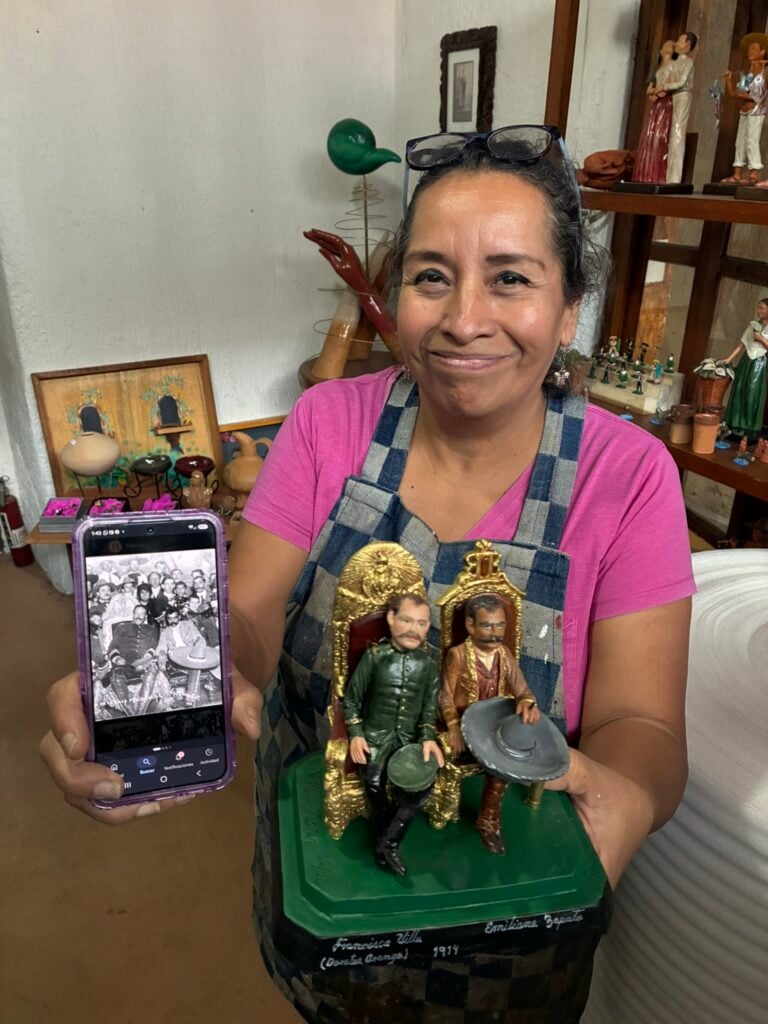
But before leaving Tlaquepaque, we visited Cony and Pilar Núñez, sisters who run their family’s five-generation artisan shop Legado Panduro. Together they sculpt, fire and hand-paint small, exquisitely lifelike clay figures of real people. They often make the likenesses from photographs now, but previously, subjects sat as they would for a portrait while a member of the Núñez family shaped the clay. Cony still makes the delicate brushes they use from squirrel tail and cat hair, each with a specific purpose. The walls around them are covered in photos and awards, but despite international acclaim, the space is relaxed and inviting.
For supper, Hector, Ale and I go to Los Alteños taqueria in Zapopan, another municipality next to Guadalajara. The place is busy, buzzing with locals. We each grab a plate and move between cooking stations, then eat at small, standing counters. Each taco station serves different fillings: al pastor (pork), beef, chorizo, head meat, tongue, along with combinations of those same ingredients (beef and chorizo, or head meat and tongue). Everything’s in Spanish. Some ingredients—body parts—are new words to me, and to explain, my companions try to pantomime them without being crude.
They fail, but we have a good laugh. I eat two heaping plates. Here’s the thing: there are no servers, no tab or bill. When you’re done, you go to the till, tell them what you ate, and pay.
“What happens if someone eats and then leaves without paying?” I ask.
My question shocks the proprietor. He shakes his head. “But…no one would do that.”
And with that, I believe I learn everything about Jalisco, the people, and the limitless landscapes that brought me here.
People & Culture
Bestselling author Bill Arnott discusses his work as a writer tracing the voyages of Vikings around the world

Travel
From rich history to natural charm, this colourful beach destination has something for everyone

Travel
Located close to cosmopolitan Cancún and charming Isla Mujeres, the new Riu Dunamar at Playa Mujeres combines opportunities for cultural discovery with the pleasures of resort life

Wildlife
North America’s monarch butterfly population has more than tripled in Mexico this winter, despite reaching dangerously low numbers in the past