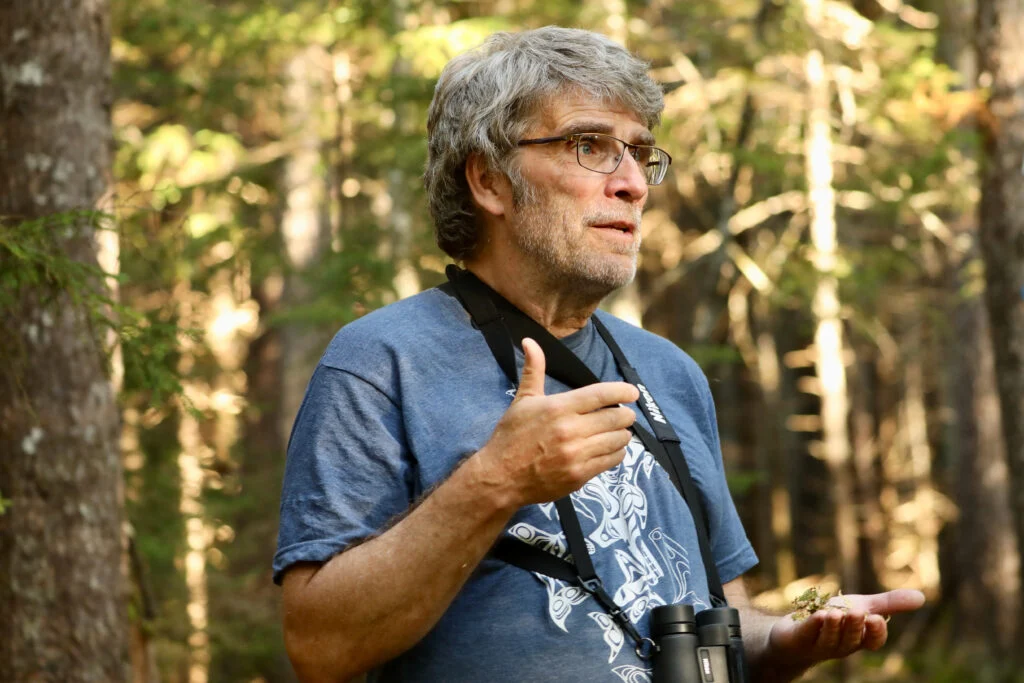
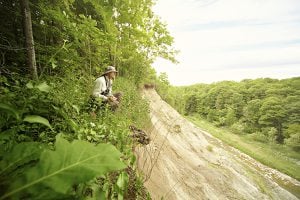
“Mount Carleton works because it still functions as a whole system. It’s multi-storey and multi-aged, so you get all these small pockets of habitat,” says avian biologist and outdoor learning specialist Roland Chiasson.
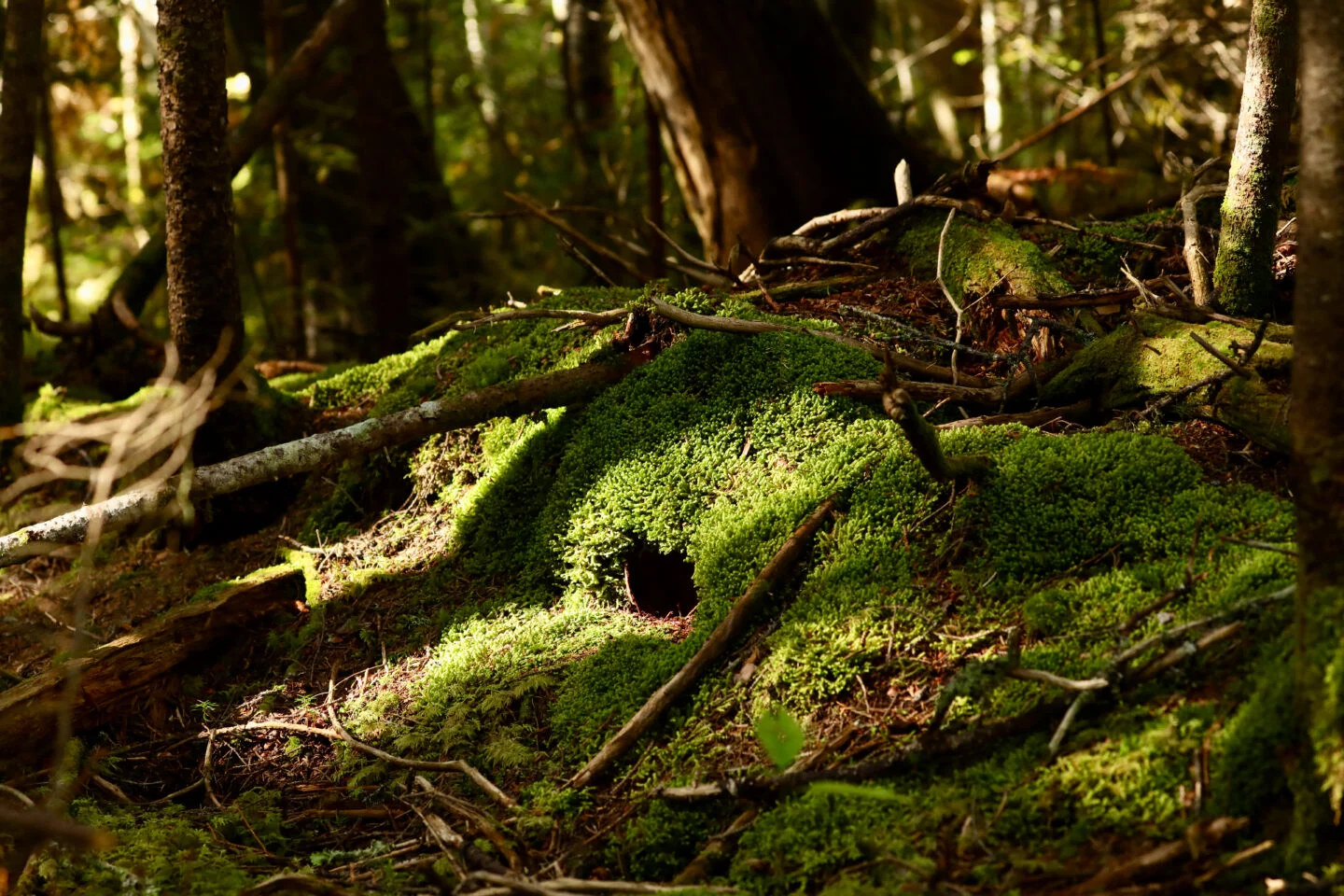
Chiasson likens trees to bookshelves, with distinct yet overlapping vertical layers. In that sense, the forest can be thought of as a library where different species inhabit their favourite shelves. On the forest floor, fungal networks digest organic debris such as fallen tree trunks, branches, leaves and dead animals. As material softens and is recycled back into soil, once-inaccessible nutrients are freed and circulated upward. What appears as decay is regeneration. Bacteria, fungi and microorganisms are the forest architects.
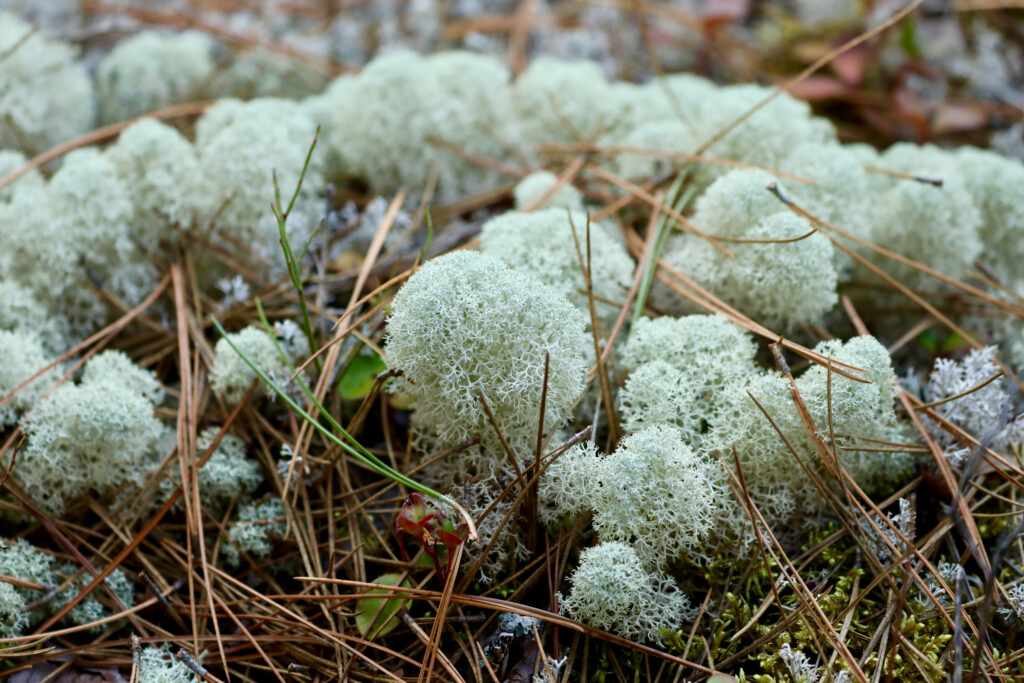
Then there are the lichens. Tufts of old man’s beard (Usnea) trail from the arms of conifers, while reindeer lichen, their delicate branches resembling tiny antlers, form vast, spongy mats across the forest floor. In hardwood and mixed-wood stands, broad, leafy lungwort clings to trunks and branches. Lichens aren’t singular organisms but rather colonies of algae or cyanobacteria living symbiotically with various fungi. They emerge where air, moisture and time meet. Millimetre by millimetre, they grow on rocks, fallen logs, bark and branches. Drawing light and gases, lichens also act as archivists, recording long-term patterns of air quality.