
Environment
Canada’s greenest prof
Vancouver might just be home to the greenest building in the world. Meet the geography professor who brought it to life.
- 2598 words
- 11 minutes
Travel
Robin Esrock visits four different resorts to discover how getaway traditions in southern Ontario continue to thrive

Resorts in southern Ontario have seen their share of ups, downs, and everything in between. When new railway lines began carrying guests from Toronto to lakeside destinations across southern Ontario, lakefront resorts boomed. Then came the Great Depression, followed by highways, motor vehicles, and a post-war economic boom.
Trends changed, and the local tourism economy dipped with the emergence of private cabins, all-inclusive sun vacations and cruise holidays. Then came 9/11, the Great Recession, online home rentals, the pandemic, a U.S. trade war, and… whatever comes next. While there aren’t nearly as many traditional resorts as there used to be, those that remain have adapted, evolved and diversified, with a value proposition as alluring as ever: escape with the family, create meaningful memories, relax, get the kids off the screen, and enjoy the outdoor beauty of central Canada.
Along with my teenage daughter, I’ve set out to explore four unique properties, representing a small sample of the 90-plus members of Resorts of Ontario, a not-for-profit association that promotes resorts, lodges, cottage resorts, and country inns across the province. It’s a diverse range of properties, and for those chasing a taste of the good life, Hockley Valley Resort is a great place to start.
Less than an hour’s drive from Toronto (if the traffic behaves), Hockley is a modern four-season destination resort with an 18-hole championship golf course, spa, fine and casual dining, event spaces, and downhill and cross-country ski runs in the winter. Wine flows throughout the year because it is produced right here, thanks to the excellent Adamo Estate Winery next door. In 1985, the Adamo family bought a run-down inn overlooking a T-bar ski hill, and proceeded to diversify the hell out of it. Among other investments, they planted thousands of vines outside the traditional Niagara Peninsula wine region in a region that gets so cold their neat rows of vines must be warmed with geothermal blankets over winter.
Taking the quick free shuttle from the resort to the winery, I taste their chardonnay, pinot noir, gamay noir and meritage over a delectable mista board, with a gorgeous sunset view of the vineyards. We can all toast the efforts of the Adamo team’s vision, hard work, and execution.
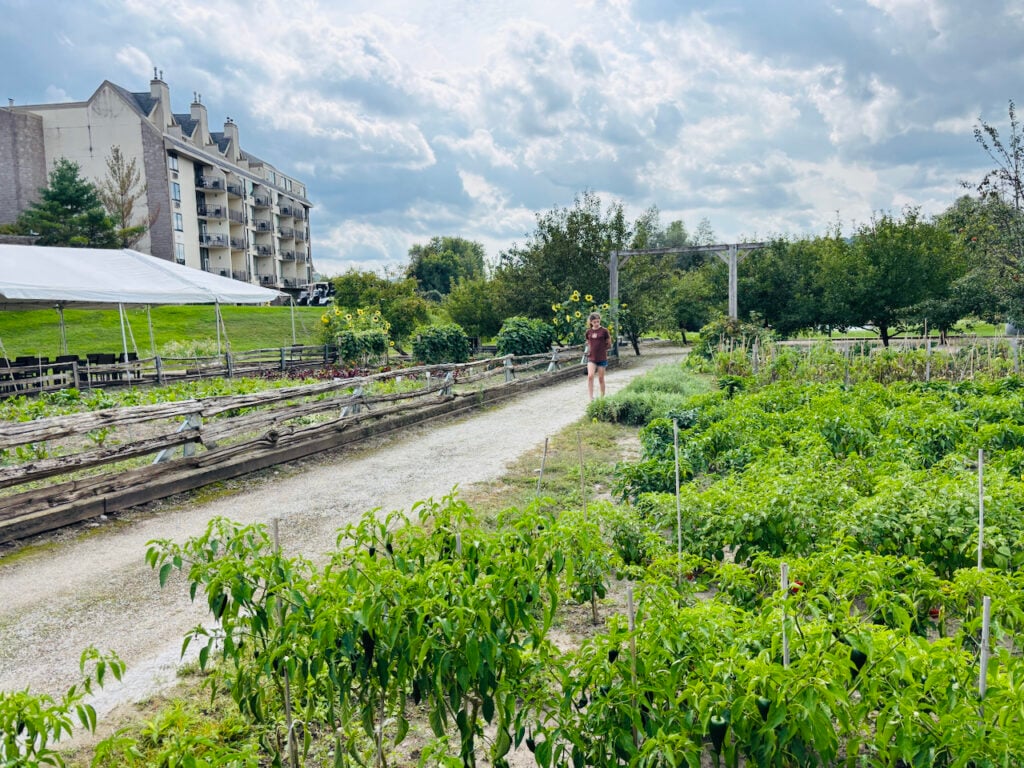
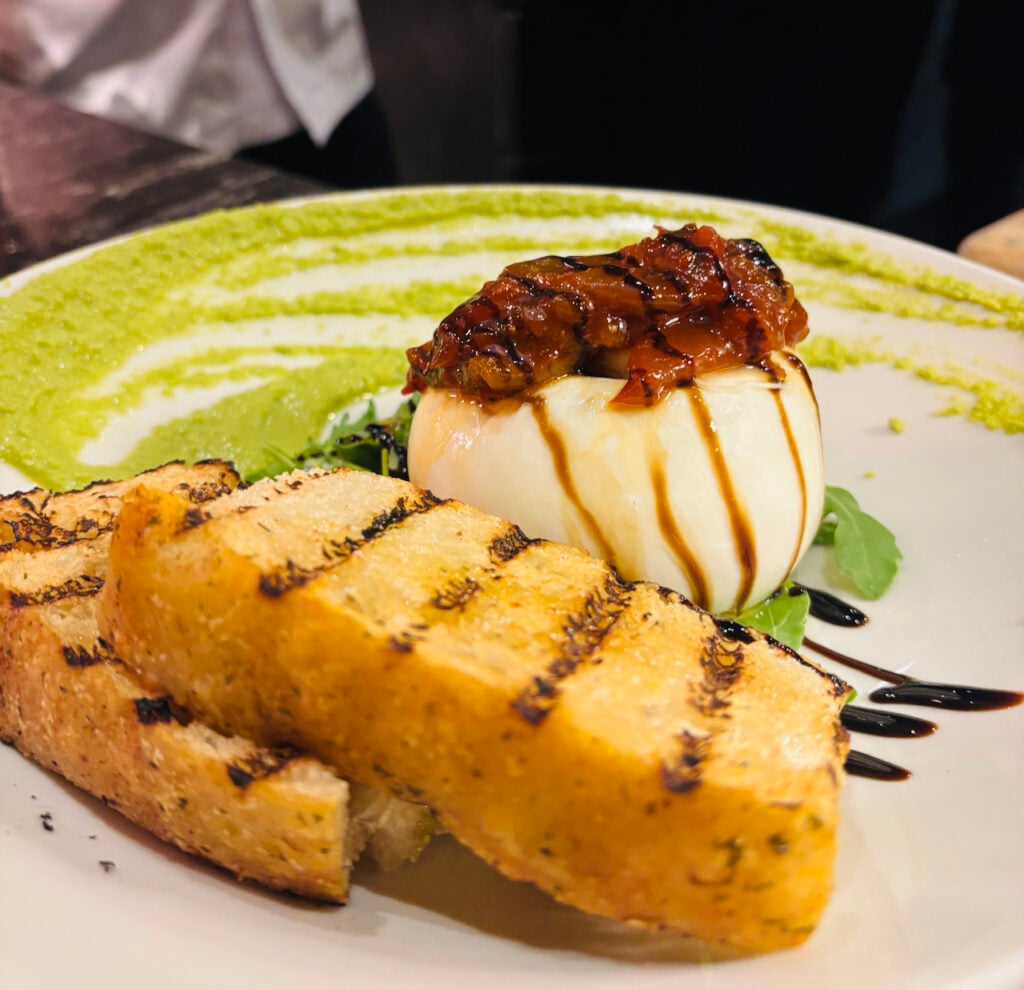
My daughter and I take a fun golf lesson with the resort’s resident golf pro, and pamper ourselves in the lovely spa. Dinner in The Cabin is at a counter with a view over the open kitchen, where we chat with enthusiastic executive chef Sunil Nandal about his impressive herb and vegetable garden. Taking a cue from the Italian roots of the Adamos, the menu is Italian, and it’s delizioso.
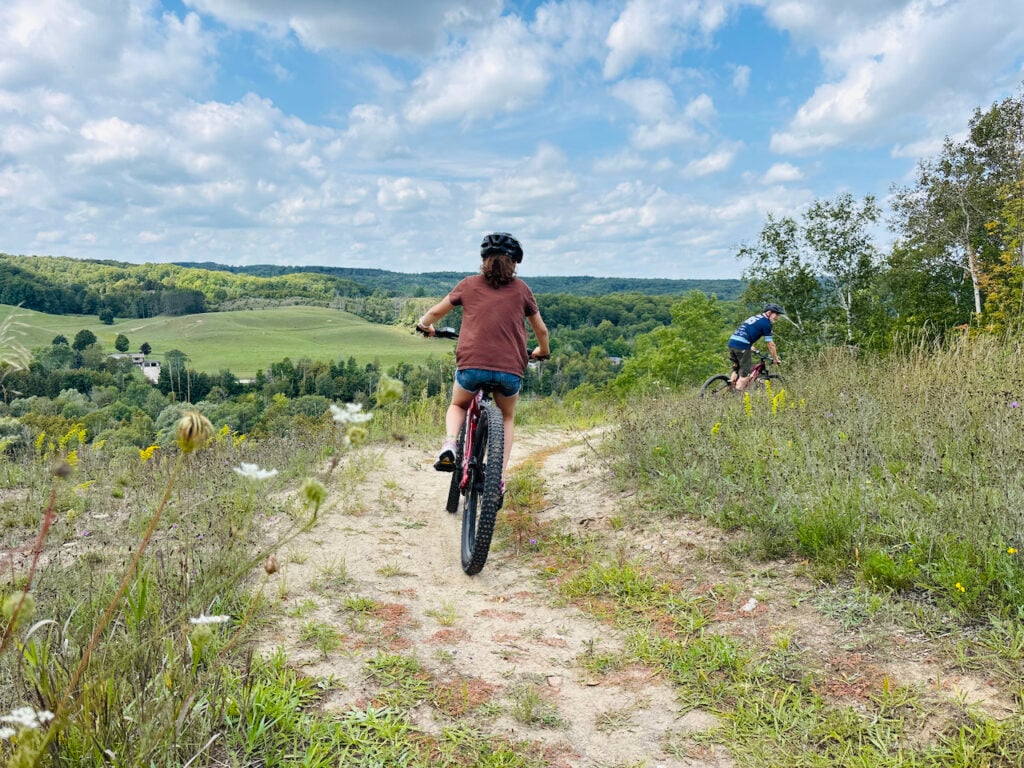
As one wedding party leaves and another arrives, we visit the recreation centre for an introductory lesson in electric-assist mountain biking. Riding up the ski hill and flying down the single-track is thrilling, and we race off for a pizza-making demonstration in the garden. The living is good at Hockley Valley Resort, especially for couples and groups, but my daughter is craving kids her own age, and I know just where to find them.
It’s a lovely drive along the rural roads towards Orillia and the most storied traditional resort around. Founded on Lake Couchiching as far back as 1895, Fern Resort feels like a living museum of the all-inclusive family lakeside resorts of yesteryear. Guests arrive, drop their bags, and the resort takes care of everything else. Fern has been in the same family for four generations, and continues to run an extensive recreational program for infants, kids, teens and adults.
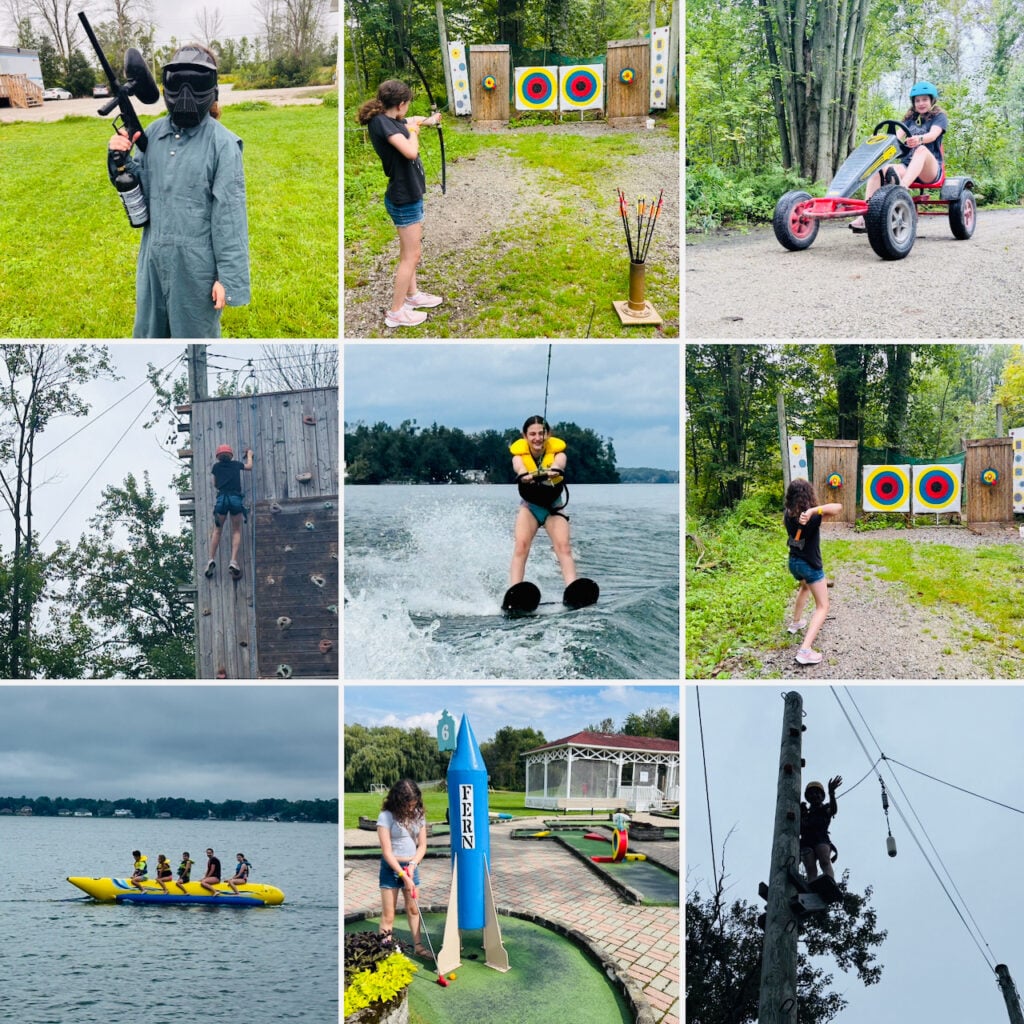
“Dad, I want to live here!” exclaims my daughter, reading the daily list of what’s on offer and circling her favourite options. Archery, axe-throwing, a vertical playground, biking, go-karting, banana-boating, pickle ball, shuffleboard, fishing, pitch-and-putt, mini-golf, paintball, trampolining, waterskiing, and a poolside barbecue (under the vigilant gaze of tanned young lifeguards armed for teenage swooning). This doesn’t include a dozen other activities, plus the games room with 80s-era arcade games, evening entertainment in the theatre, karaoke, and a waterskiing show straight out of a 1950s showreel.
Families show up religiously each year in the same week to reunite with other families; the kids cut loose and only gather at mealtimes. A buffet for the kids with the basics (pasta, pizza, grilled cheese, chicken tenders, fries) gets them in and out of the Heritage Dining Room efficiently, allowing parents to order à la carte, enjoy a glass of wine, and actually relax for half a minute. Canadian families have visited Fern for generations. When the kids grow up and start their own families, they return to repeat the cycle of fond childhood memories, including the taste of Fern’s famous peanut butter pie and butter tarts.
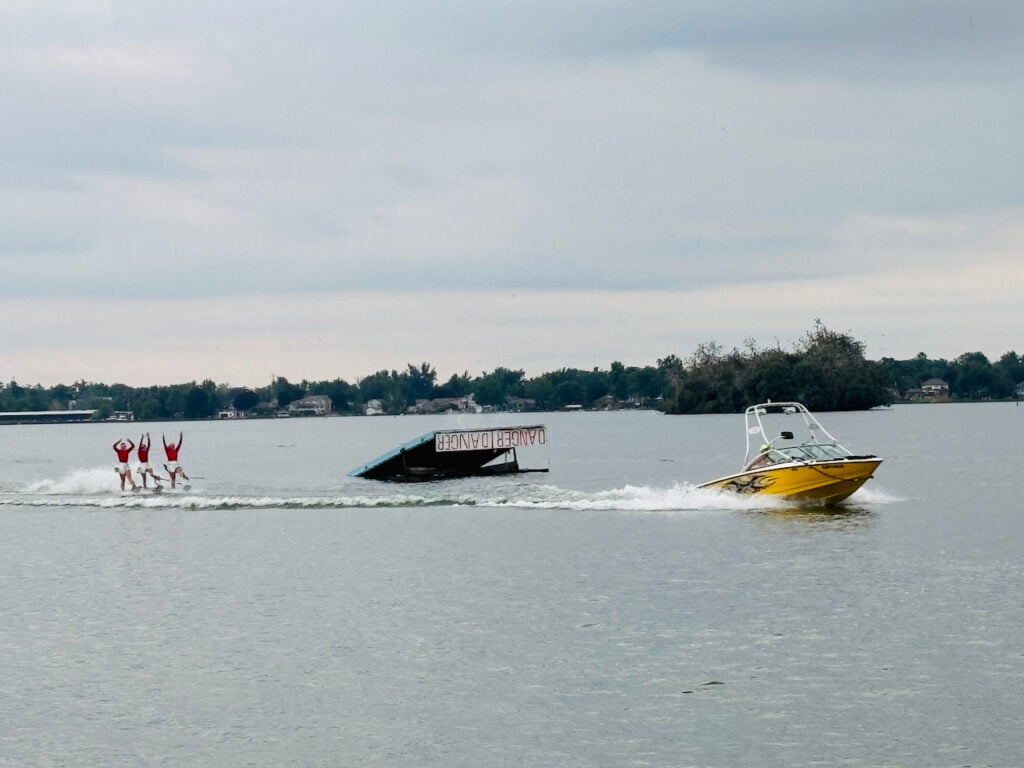
Neither luxurious, slick, nor corporate, Fern feels like the purest surviving example of a traditional lakeside Ontario resort. With rising costs for maintenance, labour, taxes, and food, this is not without its challenges.
“Sometimes guests get a bit of sticker shock when they find us online,” Scott Collens, Fern’s general manager, tells me. “But when you factor in all the stuff that’s included…your meals, the entertainment, and the friendships you make, we know guests find it’s worth every penny.”
Fern is modernizing where and when it can, like renovating rooms and the old-school theatre, and introducing robot servers to the delight of the kids. With so much going on across approximately 81 hectares and 105 guest units of various shapes and sizes, my daughter doesn’t ask for a screen once. She bounces from one activity to the next, and thanks to Fern’s encouraging dock team, water-skis for the first time in a matter of minutes. As she descends into the perpetually grumpy and unimpressed state of teenage-hood, the look of joy on her face is the balm this battered parent needs.
Making fast friends with another teen from Toronto, that evening she sings karaoke in Mary Lou’s social lounge, joins a surprisingly good magic show, and begs to stay longer.
“One day I want to work here,” she tells me as we hit the road, and you know what, one day she might. In the meantime, we’re off to Ontario’s most popular region for lakefront recreation: Muskoka.
According to Resorts of Ontario, at one point, over one hundred summer hotels operated in Muskoka. Destination resorts were sprawling, seasonal, and steeped in social interaction, with guests arriving by train, car, or steamship. Over the years, leisure demands shifted, and guest habits changed. People began to prefer private cottages, buying up cheap lakefront property, which slowly drained resorts of clientele. Visiting a summer cottage became a quintessential Canadian tradition, at least for those lucky enough to afford one.
With competitive and discounted all-inclusive holidays abroad, resorts also faced the brutal economics of upgrading to new codes and adding new attractions while maintaining properties through the long off-season. Meanwhile, labour, energy, food, compliance and construction costs continued to skyrocket, today more than ever. Many resorts have adapted by offering conference, meeting, wedding, and incentive packages, along with winter activities like ice-fishing and snow sports, themed weekends, and shorter urban getaways. Family-run resorts are also competing with large corporate owners and their deeper pockets. The Adamo family sold Hockley Valley Resort in 2019 to the fast-growing Toronto-based hospitality group Sunray. Today, an Ontario resort vacation costs about as much as an all-inclusive holiday abroad, but we’re not comparing apples to apples.
Jason Stanton is the sixth-generation Stanton to manage Bayview Wildwood Resort, a long-running and iconic resort overlooking Sparrow Lake in southern Muskoka. Founded in 1898, his family owned and operated it until 2017, when the economic headwinds grew too stiff.
“My father could see where this was going, that there would be no way to survive if we didn’t get financial help,” Jason tells me. More than 20 resorts once operated on Sparrow Lake alone. Having sold the property but continuing the family legacy in management, Bayview is one of the few thriving survivors.
Like Fern Resort, Bayview also attracts generations of repeat guests who often book the same week in the same accommodation, reconnecting with the same returning families and friends. Unlike Fern, Bayview offers stays with or without a meal package, and the resort has clearly benefitted from increased investment in upgrades and renovations. Fortunately, Bayview has maintained its personality and the core offering of a contained social family-friendly ecosystem built around water and other recreational activities.
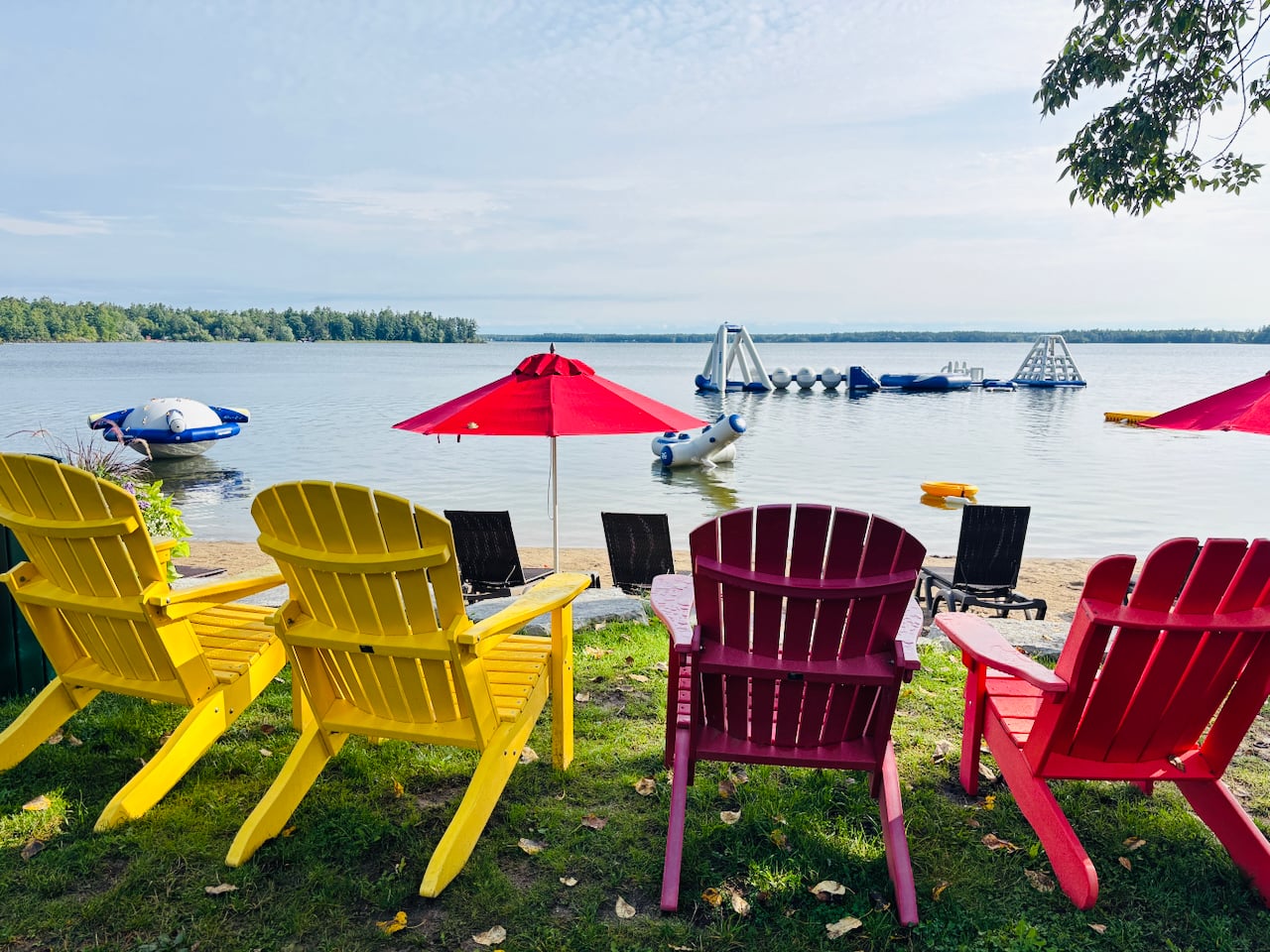
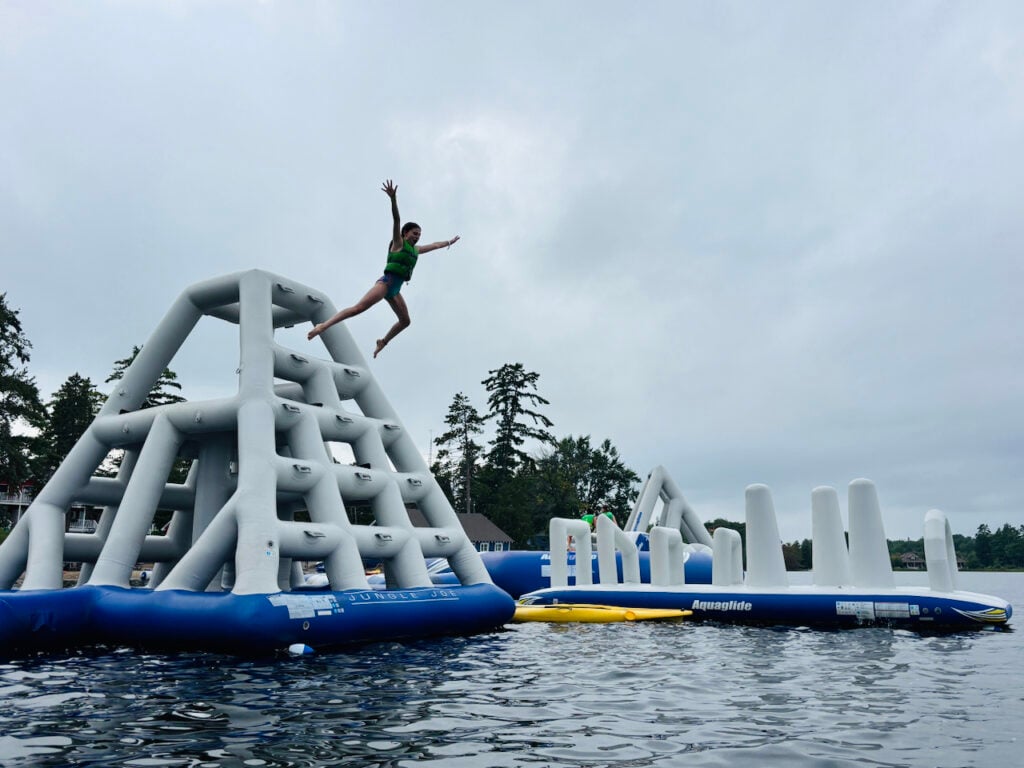
We check into a newly updated corner unit and head down to the sandy beach, where my daughter’s eyes light up at the inflatable water playground. Kids cast makeshift wooden rods for small Sunfish off the dock, splash around, kayak with a parent, swim in the adjacent pool, or bike around the property. Bayview offers hotel rooms and standalone rental cottages of various sizes, appealing to a variety of family and friend configurations. We meet families, grandparents with grandkids, large groups, and solo parents like myself.
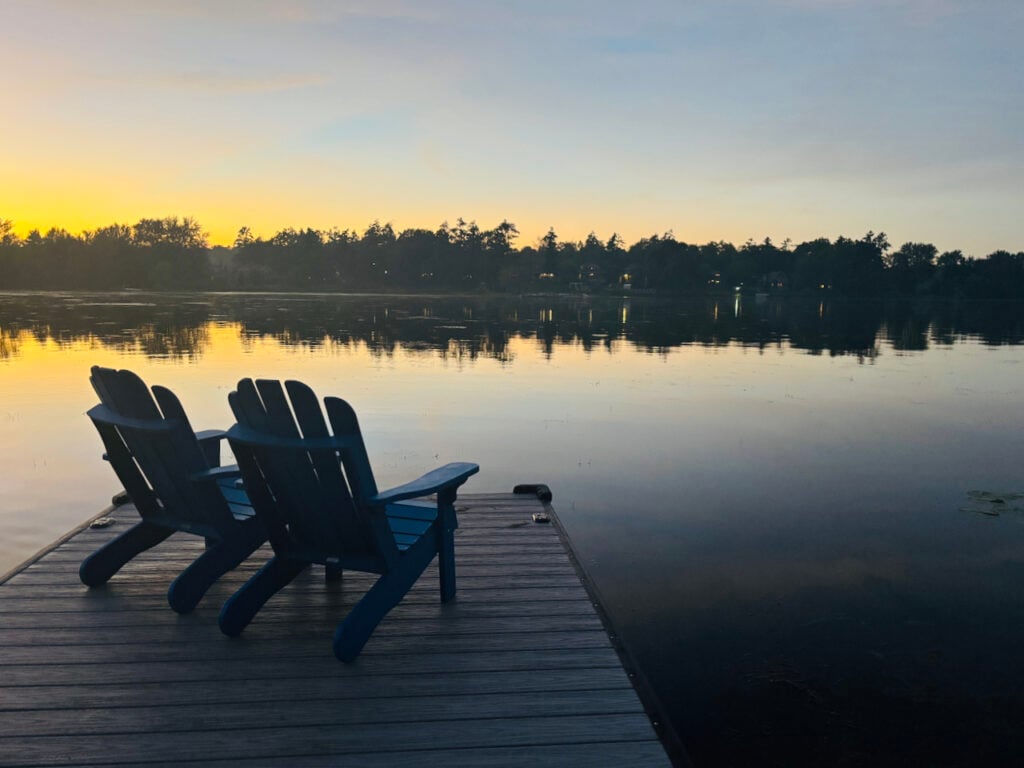
My daughter and I play Jeopardy and shuffleboard, and improve our archery and stand-up paddleboarding skills. I wisely hang back while she jumps, swings and swims on the inflatable playground. The evening’s entertainment is a juggling act that does a fantastic job engaging the kids, and I’m surprised to see the same magic act we saw at Fern in the weekly program.
“Oh, we used to play at dozens of resorts,” says Rob McIsaac, Bayview’s Recreational Director, as he guides us into his latest resort innovation, a challenging Escape Cabin. A music performer himself, McIsaac used to sing the classics on Ontario’s resort circuit, much like I imagine comedians once plied the Catskills. After moving out west, he returned to the resort during COVID-19.
“The pandemic actually brought in new guests,” he tells me. “They came out from the city, saw their kids turn off the screens, run about outdoors, and just fell in love with the place.”
Family ties everything together. McIsaac’s daughter is working at the resort, and Stanton met his wife here. “She was the pianist and then worked in recreation,” recalls Stanton. I ask him if he’s seen many other couples link up at Bayview.
“Oh, there’s been so many,” he laughs. He calls over the bartender, who met her husband at the resort. “We’ve seen kids from different families grow up together, then they partner up, have kids of their own, and show up every summer with the next generation.”
It’s a familiar, wholesome and endearing cycle, forever tied to sunshine and starlight at the lake. On our final evening, my daughter connects with a 13-year-old girl from Toronto, and the two disappear to the games room while I catch up on some work. Hours later, she bounds in elated with her new friendship. It makes me wonder why people shifted away from the social spirit of a resort towards private cottages. Admittedly, not everyone enjoys social dynamics, but for kids, a holiday’s success depends a lot on who they spend it with. For petulant teenagers, I sometimes get the impression parents need not apply.
Summer is often fully booked with returning families, but when the kids go back to school, resorts shift into a different, quieter gear. Stanton tells me the atmosphere at Bayview is totally different. In come the older guests, the couples, weddings, and increasingly corporate retreats.
“Hybrid or remote work is an opportunity for us, because we’re the perfect location for companies to bring everyone together. We can accommodate them, feed them, entertain them and make it easy,” says Jason.
To survive in today’s environment, resorts are also branching out into wellness, workshops, and themed weeks to attract like-minded guests.
With challenging resort economics, the outside investment model appears to be becoming increasingly common. It’s no accident Bayview was also sold to Sunray, which now has more than 70 properties in its hospitality portfolio. Besides funding extensive renovations, Bayview has also significantly improved its dining options. Our fourth and final resort takes that idea, along with sustainability, to the next level.
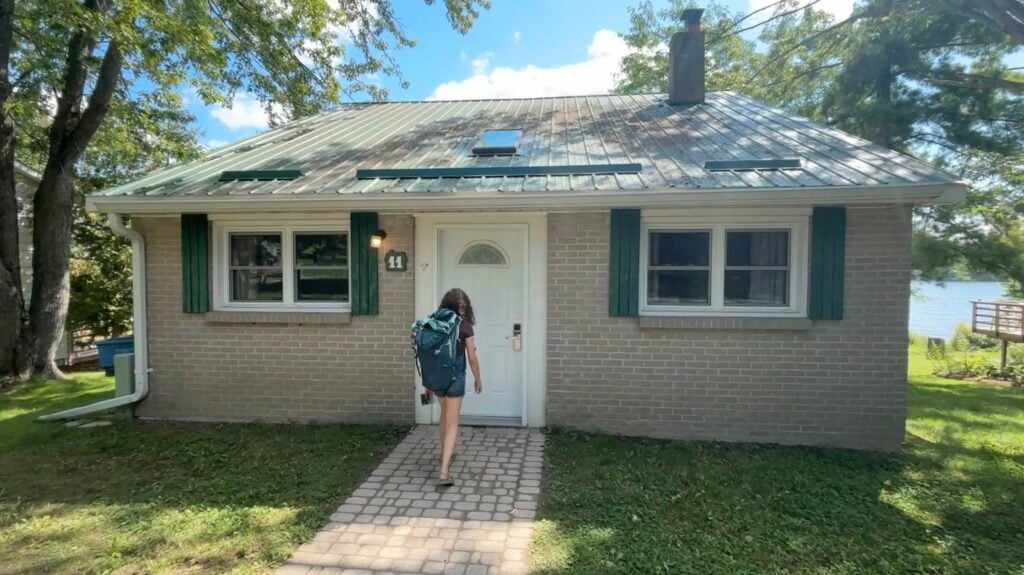
Consider Elmhirst’s Resort to be a bridge between the traditional resort and the private cottage. Guests stay in a private cabin on a lake but have access to a full-service recreational resort with water toys, activity programming, and outstanding on-site dining. Located on Rice Lake about 20 minutes’ drive from Peterborough and 90 minutes from Toronto, the approximately 97-hectare property offers 30 lakefront cottages, each with its own jetty for boats or fishing. Family-owned and operated, with roots dating back to 1818, the resort has been managed by multiple generations with a variety of skills. Elmhirst’s visionary, builder, developer, innkeeper, and innovator all create an ever-evolving family story. But we’re here for the cottage experience: a four-bedroom, two-bathroom cabin with a full kitchen, dining room, and patio with a barbecue.
A short walk away, kids gather at the jetty for complimentary tube rides on the lake. My daughter insists I join her, requests the roughest ride possible, and promptly kicks me off the damn thing. It’s the biggest laugh she’s had in a week full of laughter, and I store it in my memory bank.
Greg Elmhirst, the resort’s general manager, tells me how his great-grandfather originally offered rustic cabins to American guests coming north to fish for the summer. His grandfather Arthur, an accomplished pilot, developed an aviation and sightseeing business, while his dad Peter built Elmhirst into a four-season resort. Among other things, Elmhirst has led some truly impressive sustainability initiatives. The resort is EcoFund Verified and has achieved platinum certification with GreenStep Sustainable Tourism, generating its own heat and power from a wood-chip burner, mitigating environmental impacts, and following other initiatives. Elmhirst also developed Elmhirst’s Own, the resort’s farm-to-table dining program, with their upscale Hearthside Dining Room and casual Wild Blue Yonder Pub serving ingredients grown or raised on the property. Meanwhile, Elmhirst’s son Henry is innovating with booking systems, digital marketing, and raising the next generation on-site too. With its long history, Elmhirst’s Resort perfectly illustrates how a property organically evolves to survive.
Once reliant on American guests from across the border, Elmhirst’s has seen those numbers dwindle. I heard the same at Bayview and Fern: American guests are simply no longer visiting like they used to, even with the advantage of a stronger dollar. Fortunately, Ontario’s resorts are increasingly frequented by domestic guests, including immigrants and new Canadians discovering the joys of a Canadian lake resort experience. While my daughter stand-up paddles along the beach, I chat with one of them as his young kids kayak in shallow water.
“Getting them off the screen, outdoors, doing stuff, making friends, it’s honestly priceless,” he tells me. Another guest tells me her family enjoys the comfort of having their own cottage, and while they mostly eat in, they also take the opportunity to dine in the resort’s top-notch restaurants.
Elmhirst proudly tells me how 80 to 90 per cent of the beef served throughout the operation is raised on the property, along with all the ducks and turkeys. Beyond their own farm, they use local suppliers wherever possible, and offer an impressive Ontario-focused wine list with over sixty labels. Beyond its farming, spa, events, meetings and sustainability initiatives, Elmhirst’s ongoing success can be attributed to continuity.
“For a family business to survive, the older generation has to release enough control while leaving enough equity for the next generation to have a reason to take over,” says Elmhirst. This holds true for resorts in Ontario, and for other family businesses too.
Flying home to Vancouver, I find myself mourning the Ontario resort childhood I never had. I wish I’d had the opportunity to raise my kids with one of these annual summer escapes, connecting with familiar resort friends and communities along the way. I immediately look for comparable resorts on the West Coast, but I’m disappointed to find there simply aren’t that many options around. As for my daughter, she’d rather spend time with friends than her dad now, but that’s a natural part of growing up. She’ll always be my sky full of stars. Memories, traditions, legacy, family, food, and fun aren’t unique to Canada, but if you head into the countryside of Ontario, you’re guaranteed to find a resort that knows how to do it right.
For more information about these and other resorts in Ontario, visit resortsofontario.com
Environment
Vancouver might just be home to the greenest building in the world. Meet the geography professor who brought it to life.
Travel
Two award-winning travel journalists discuss why family travel, even the kind that pushes us outside our comfort zones, is one of the most powerful investments we can make
Travel
Canadian Geographic’s Bucket Listed columnist Robin Esrock explores domestic tourism, national pride and the evolution of Canadian travel in the third edition of his bestselling book, The Great Canadian Bucket List
Travel
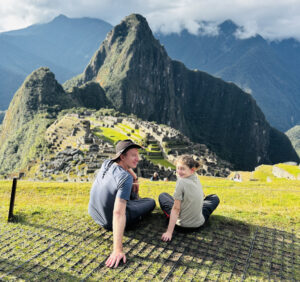
Twenty years after his first hike, Bucket List columnist Robin Esrock walks the Inca Trail again. This time, with his daughter.