
People & Culture
Biinaagami: A call to revitalize our waters
Announcing a new initiative to connect to and protect the Great Lakes-St. Lawrence watershed
- 774 words
- 4 minutes
People & Culture
How three organizations have come together to promote urban swimmability and change our relationship with water — one plaque at a time
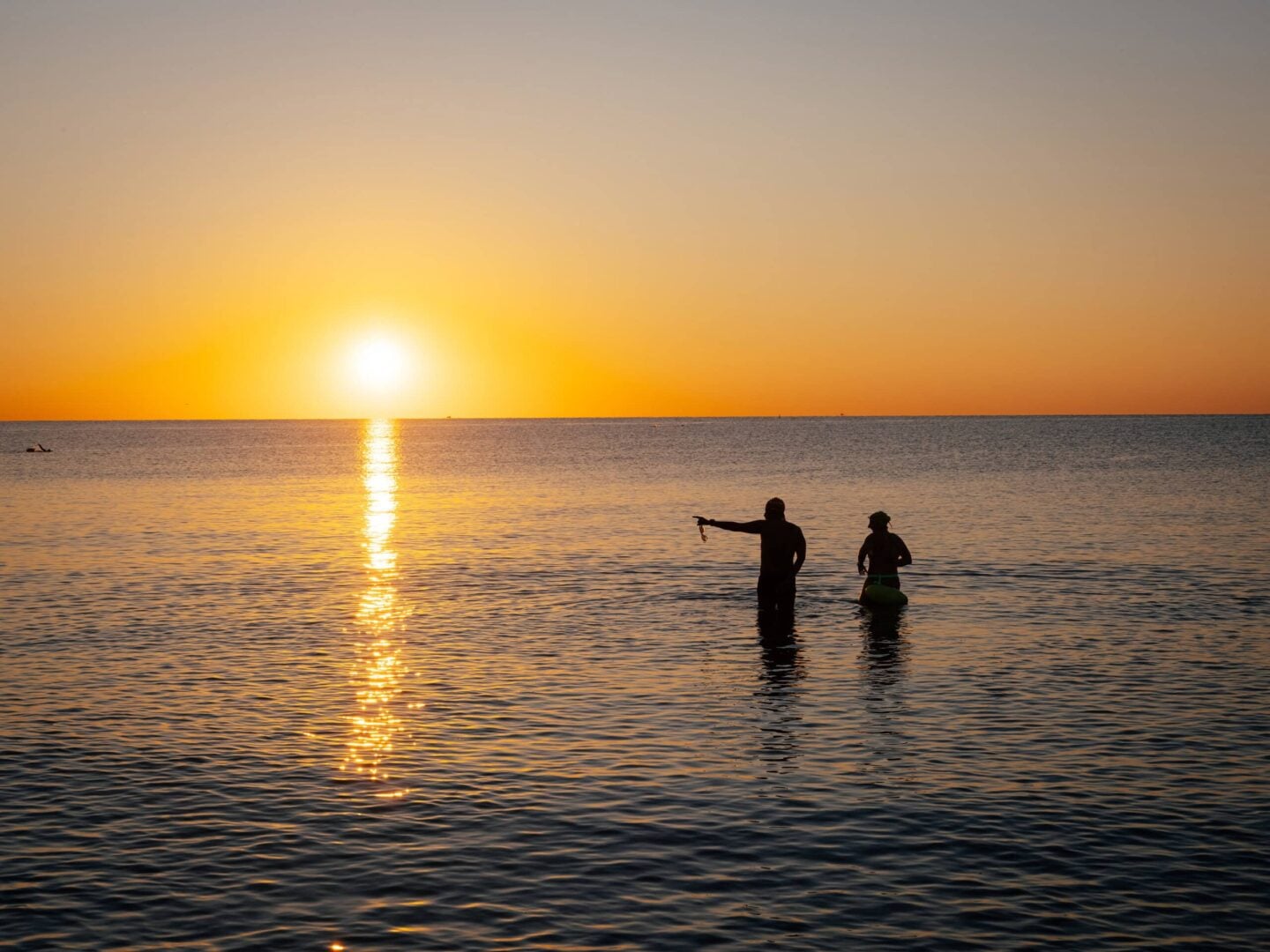
It starts with a warm day in early March. Five degrees Celsius might be cold in September, but it’s tee-shirt weather after six months of bitter cold. The warmth hits your bare skin and suddenly life outside the living room seems possible again. Turn and face the sun like a field of sunflowers that slowly move their heads from east to west each day, unable to look away. Photosynthesize until you feel human.
It’s the depth of winter that makes summer days so precious when you live in the Great Lakes-St. Lawrence watershed. The region is home to thousands of lakes and rivers that offer a cool body of water to jump into on a hot day. Whether you live in a large city like Toronto or deep in cottage country, the ability to access clean water for recreation is a gift — and yet something which isn’t always easy, especially within cities.
One of the foundational pillars of Biinaagami is to encourage people to connect with the water. It comes from the philosophy that when people connect with the water, they will love the water. They will begin to see it as a relative and, in turn, make decisions from the heart that protect the water they love.
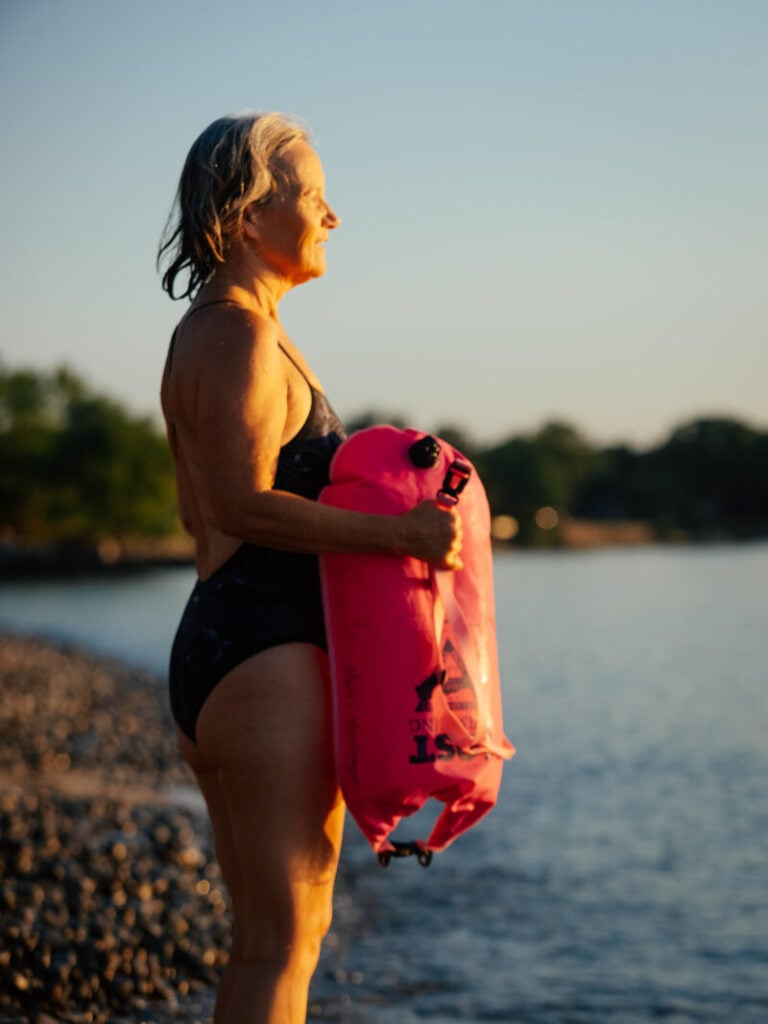
Enter Matt Sykes and his Swimmable Cities Initiative. Sykes has spent years travelling around the world promoting the need for swimmable cities and, on the eve of the Paris Olympics in 2024, officially launched the Swimmable Cities Charter. It has become a global platform with 115 cities in 37 countries signing on. The goal is simple: transform urban waterways so they’re safe and accessible.
Catherine McKenna, former Minister of Environment and Climate Change of Canada, has long been an advocate of swimmable cities. “When you make swimmable water, where people actually jump off a dock and swim, then they pay a lot more attention to water quality,” she says, adding that people want to make sure the places they swim are kept clean, not only from litter but also from harmful pollutants.
Cities that sign onto the Swimmable Cities Initiative agree to reduce sources of pollution where swimmers are regularly diving in.
In addition to advocating for regular water quality testing, the Swimmable Cities Initiative promotes the development of infrastructure like docks and piers to get people down to the water.
This effort has worked in the past, says McKenna, citing the success of cities like Copenhagen in Denmark. “Copenhagen was a shipping port Harbour — it was dirty. Then they cleaned the whole thing up and now you can swim everywhere because they just prioritized it. Copenhagen reimagined itself around water.” She says “Waterkeepers everywhere are pushing cities, provinces, and the federal government to actually step up and clean up waters and they’re getting funding for water testing.
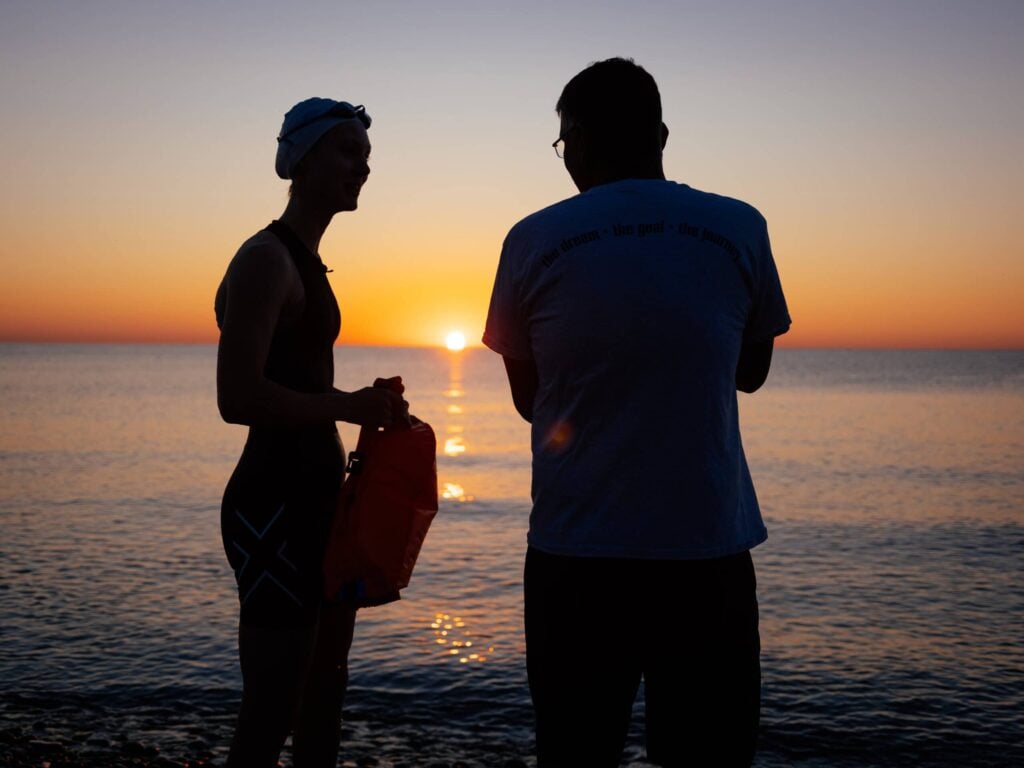
McKenna believes that as extreme heat from climate change worsens and Canadians continue to struggle through the cost-of-living crisis, more people will become reliant on swimming as a cost-effective way to keep cool in summertime. She says, “many people do not have access to air conditioning — do not have access to spaces to cool off. Public waterfronts are a great equalizer if everyone can go in the water. And what could be more amazing than water and having access to lakes or rivers or places for people to go that are free and that are in nature?”
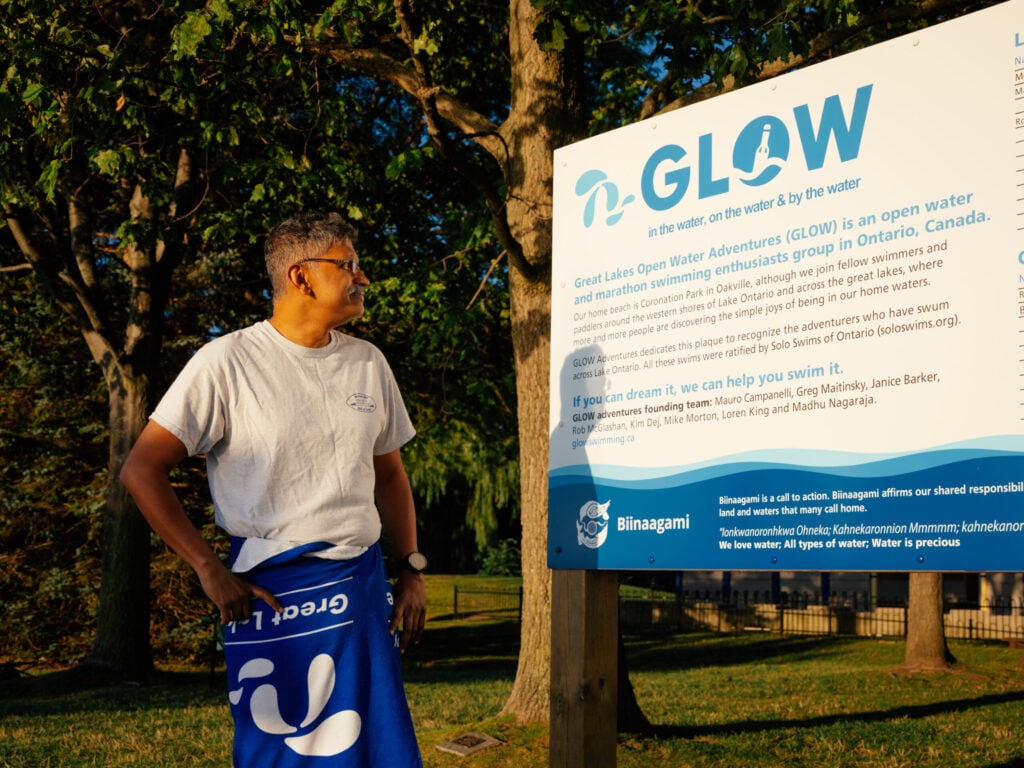
Growing up in India, Madhu Nagaraja remembers being enchanted by his mother’s photos and maps of the Great Lakes. But they couldn’t compare to the moment when he first stood on the shorelines and watched the water disappear into the horizon. Later, he “swam across Lake Ontario and saw the pristine azure blue waters in the middle of the lake. Now I help other people to experience that water,” he says. “I actually take any visitor that comes from different parts of the world to the lake to let them feel the waters of Lake Ontario. Once they’ve had that positive experience, they also want to take ownership of their arena.
Nagaraja is the founder of Great Lakes Open Water Swimming (GLOW), an Oakville, Ont.-based community group that’s signed onto the Great Lakes Cities Initiative charter. Nagaraja and the other GLOW swimmers swim in Lake Ontario every sunriseRain, shine or snow, they’ll be in the water.
When Nagaraja moved to Oakville and began swimming in Lake Ontario, he saw “so many pen caps and water bottles on the beach. People will finish and chuck the bottle and just leave it there with no conscience of taking it back from wherever they have brought it. We’ve seen a lot of garbage, cigarette butts, all kinds of plastic — people even shoot golf balls into the lake.”
Nagaraja and the GLOW swimmers believe that honouring the water means not only trying to prevent litter from sullying the lake, but also actively trying to make it better. “Once a year, we officially announce that we are doing a beach cleanup,” he says “But I noticed people would then do that regularly. The 20 people who participated developed the habit of picking up trash whenever they’re walking on the shore and then putting it in the respective bins.” It’s a small change where people are coming together with a shared responsibility to protect the water they love.
GLOW is now 100 swimmers strong. In Coronation Park, Oakville, a plaque now honours swimmers who’ve crossed Lake Ontario and those who’ve completed shoreline swims. It’s not about fame, says Nagaraja — it’s about connection.
“It’s about helping people who thought it was impossible to do something. They’ve just broken their barrier and done something cool,” says Nagaraja. “Their name gets immortalized on a plaque and they realize they’re responsible for that waterbody.”
When Biinaagami leadership — Mark Mattson and Meredith Brown — learned about the Swimmable Cities charter, they reached out to Sykes, aiming to localize the movement to the Great Lakes. This would mean using their existing relationship with the Great Lakes and St. Lawrence Cities Initiative, a coalition of mayors in the watershed.
The Great Lakes and St. Lawrence Cities Initiative has been pivoting toward a more aggressive Fresh Coast Economic Corridor strategy. Part of this strategy would include devising a new charter, formalizing the link between water health and economic resilience. This is where Biinaagami saw an opportunity to include the Swimmable Cities Initiative, which often focuses on urban planning and infrastructure. Biinaagami served as a cultural bridge, connecting Swimmable Cities and the Cities Initiative while trying to move the conversation from water as a resource to water as a relation.
Biinaagami, understanding the depth and breadth of First Nations water issues in the Great Lakes, also made it a priority to advocate for Indigenous interests. They encouraged the inclusion of a paragraph in the new charter that would ask mayors to acknowledge Indigenous Peoples.
Other key shifts in the charter include improving equity in access to water, ensuring that swimmability isn’t just for wealthy waterfront neighbourhoods but is a right for all residents. It has also seen the addition of climate adaptation — integrating nature-based solutions, like wetlands and permeable piers, into city infrastructure to manage flooding while keeping beaches open.
Sykes presented a motion titled “Advancing Swimmable Cities for Current and Future Generations” at the GLSLCI summit to invite cities to get involved with both the Biinaagami Initiative and the Swimmable Cities Initiative as parallel but distinct pathways for action. The motion was passed on May 7, 2026 in Hamilton, Ontario.
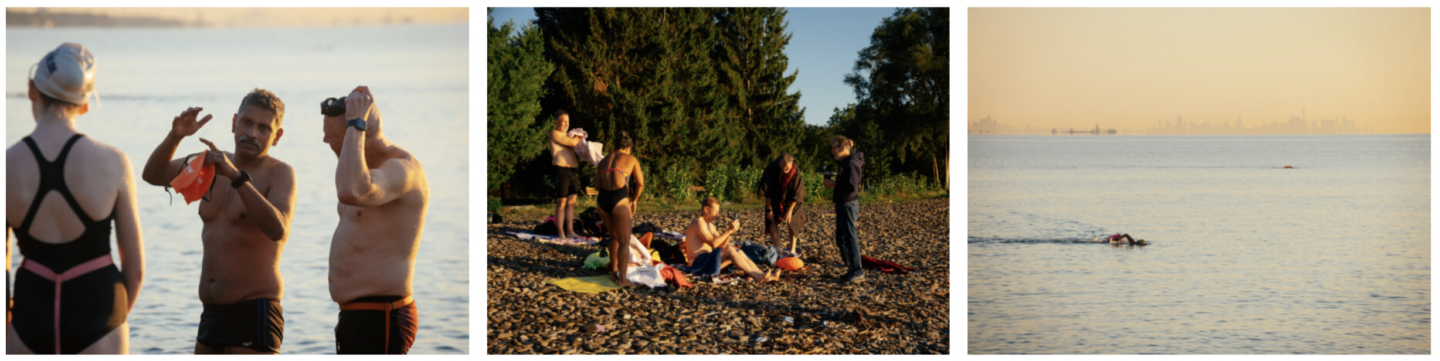
Going into this collaboration, Mattson already had experience in the development of a swimmable city in his hometown of Kingston, Ontario. “The Gord Edgar Downie Pier,” he says, “is arguably the most important proof of concept for the Swimmable Cities movement in Canada.”
It was a transformation of a former industrial area, the old Carruthers Wharf. It required a massive push to overcome liability fears — the common city excuse that deep-water swimming is too dangerous. Through the support of the Weston Family and the late Gord Downie’s advocacy, it became Canada’s first designated deep-water swimming pier.
“It changed the spacesuit mentality,” says Mattson. “For decades, people thought you needed a hazmat suit to touch Lake Ontario. The pier proved that if you provide safe, dignified access, people will return to the water. Once people swim in a lake, they become its fiercest protectors. It turns users into stewards.”
The movement is growing and hopefully will make swimmable cities the norm on our waters once again.
People & Culture
Announcing a new initiative to connect to and protect the Great Lakes-St. Lawrence watershed

Mapping
Biinaagami, a CanGeo collaborative initiative seeking to connect people with the Great Lakes-St. Lawrence watershed, has released a suite of educational materials, including a Giant Floor Map, augmented reality experiences, lesson plans and more

Science & Tech
The Vice-President of Global Business Environment and head of the Shell Scenarios team discusses the Future Cities project and how Canadian cities can be more sustainable
Environment
More than five decades on, the landmark Great Lakes Water Quality Agreement still governs important cooperative work between Canada and the United States to restore the Great Lakes to sustainability