Environment
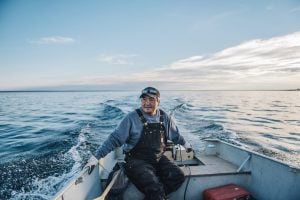
Inside the fight to protect the Arctic’s “Water Heart”
How the Sahtuto’ine Dene of Délı̨nę created the Tsá Tué Biosphere Reserve, the world’s first such UNESCO site managed by an Indigenous community
- 1663 words
- 7 minutes
Places
Five Mi’kmaq communities are leading the protection of a sacred site by creating an Indigenous Protected and Conserved Area, while also restoring connections between the lands, waters and people of Unama’ki
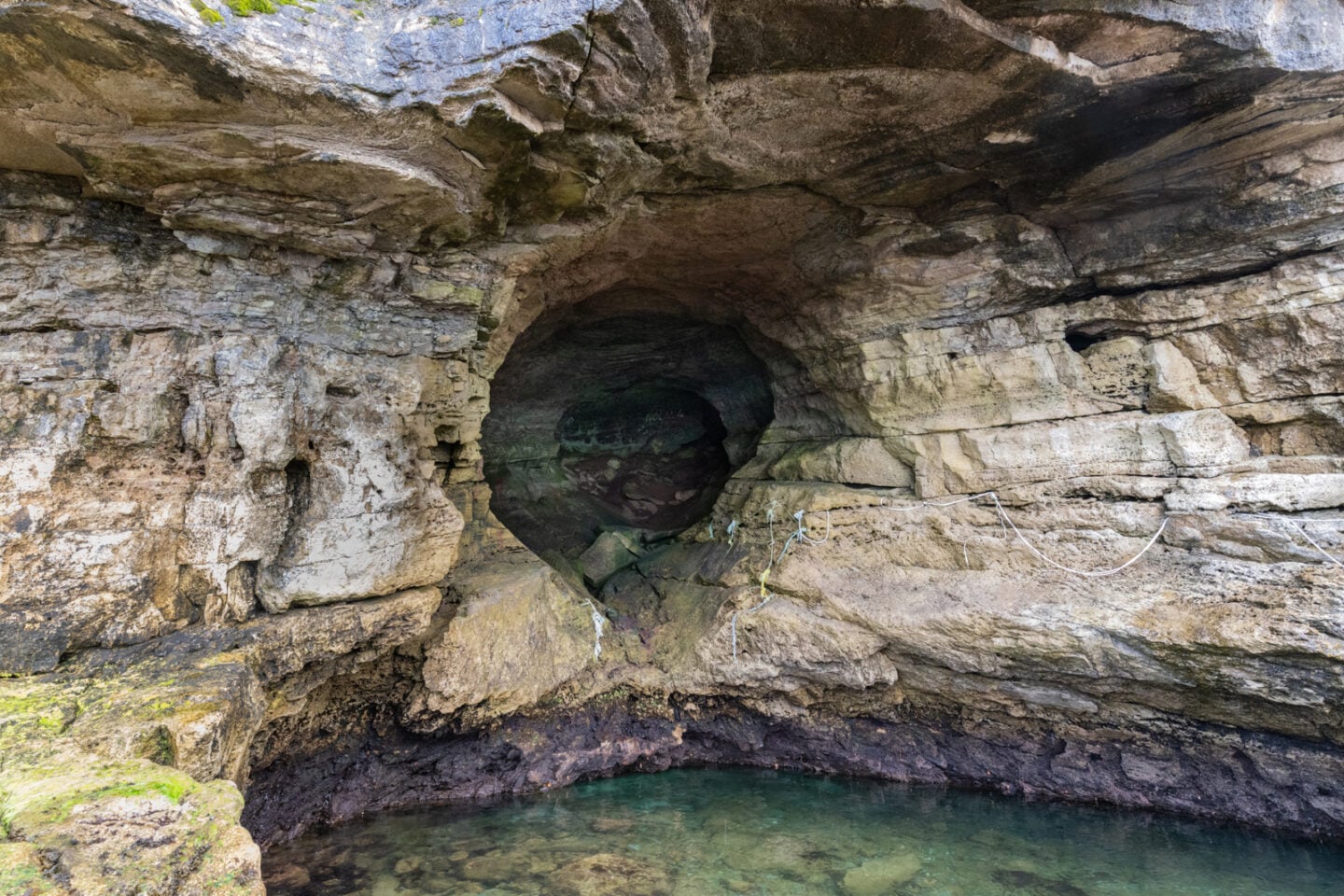
On the wild and rocky shoreline at the northern end of Unama’ki, also known as Cape Breton Island, sits the centre of the universe. At the edge of a stony beach, a cave opens onto the water, its mouth flooding with the rushing surf at high tide. This oceanside cave, known to some Mi’kmaq as the centre of the universe, is tied to the story of Kluskap, who in Mi’kmaq oral tradition created the landscape and taught the Mi’kmaq how to live in harmony with nature. This connection makes Kluskap’s Cave, or Nukmij’nawe’nuis, one of the most important places in Mi’kma’ki, the territory of the Mi’kmaq people.
Over time, the land has been threatened by resource development and the encroachment of private property. Now, a Mi’kmaq-led initiative is ensuring the sacred site, and the land around it, is protected by an Indigenous Protected and Conserved Area. Yet the approach isn’t only protecting this piece of land. Guided by Indigenous principles, the project is also restoring the connection between the lands and waters of Kluskap Mountain and the rest of Unama’ki, setting a new paradigm for conservation and restoring relationships between people and the land that have long been severed.
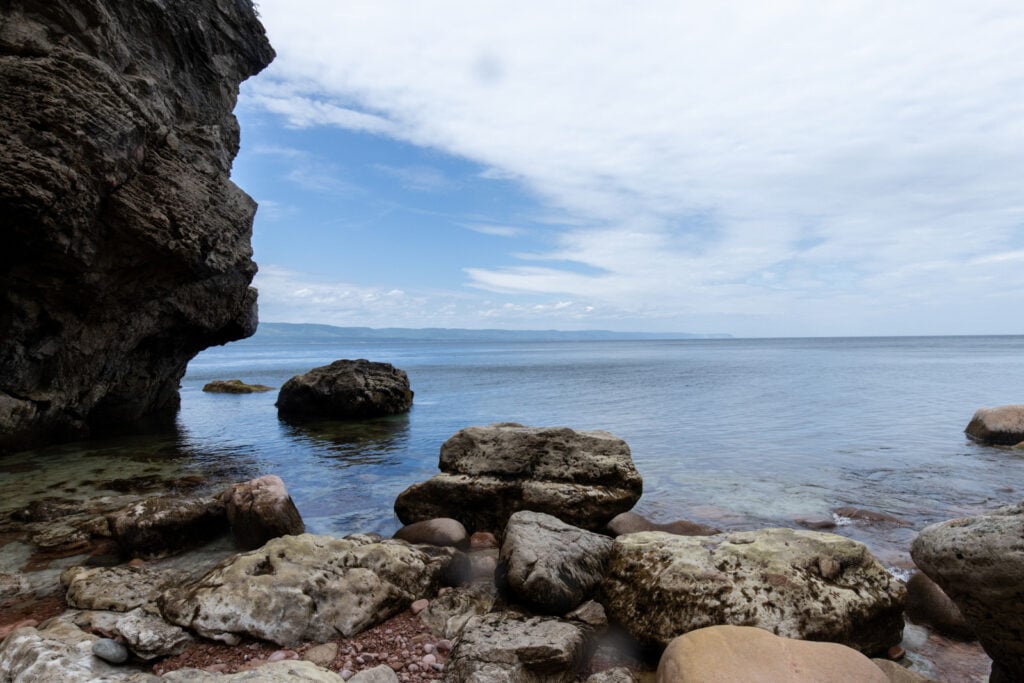
The Mi’kmaq have lived on the land now known as Nova Scotia for at least 12,000 years, and the journey to Kluskap’s Cave traces the steps taken by their ancestors for millennia.
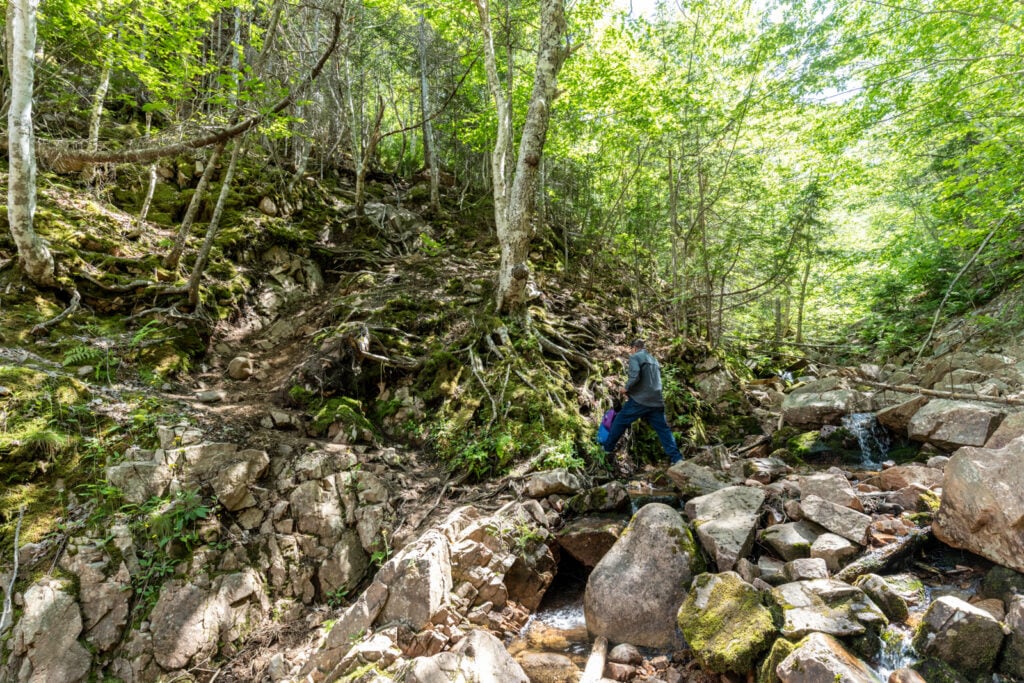
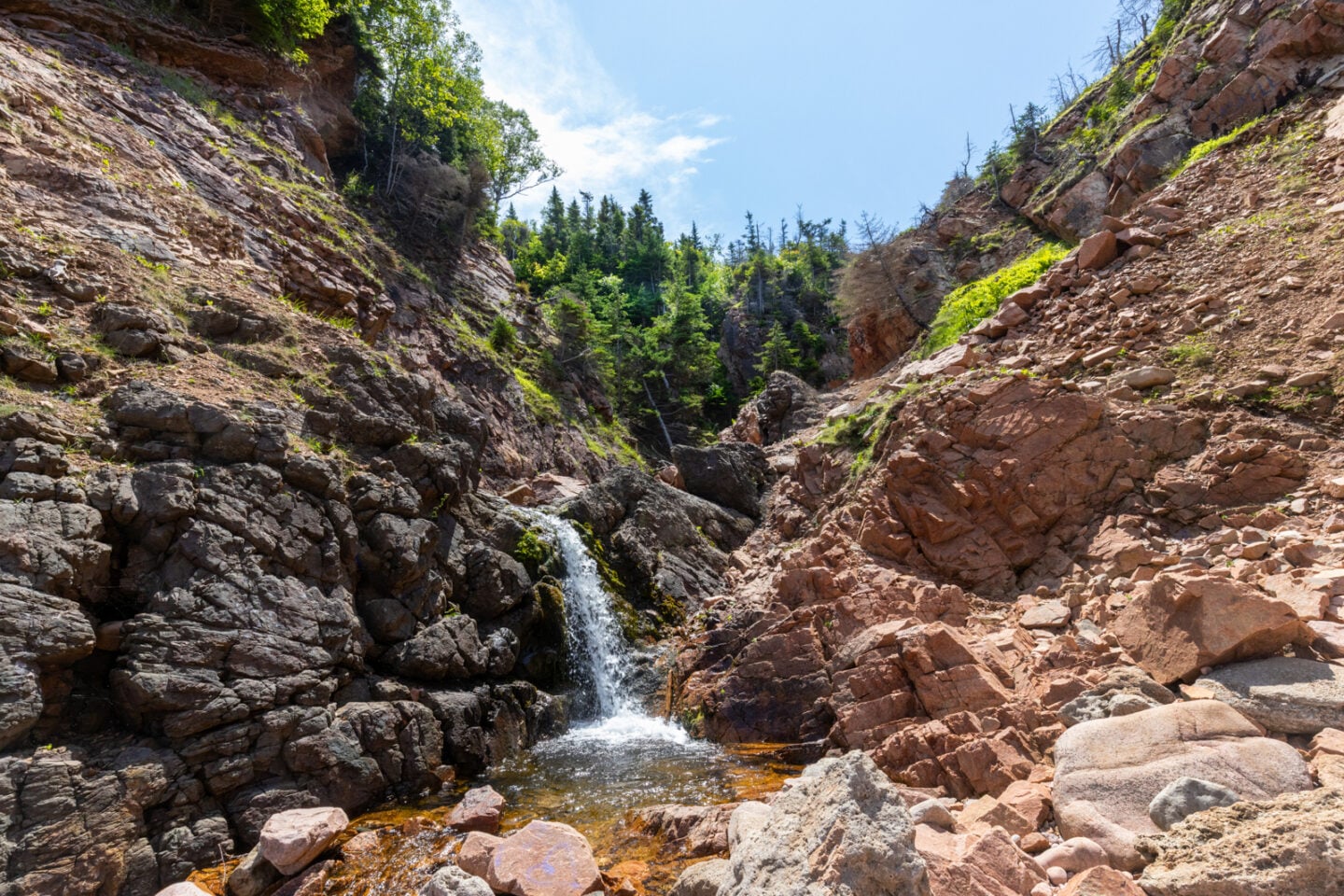
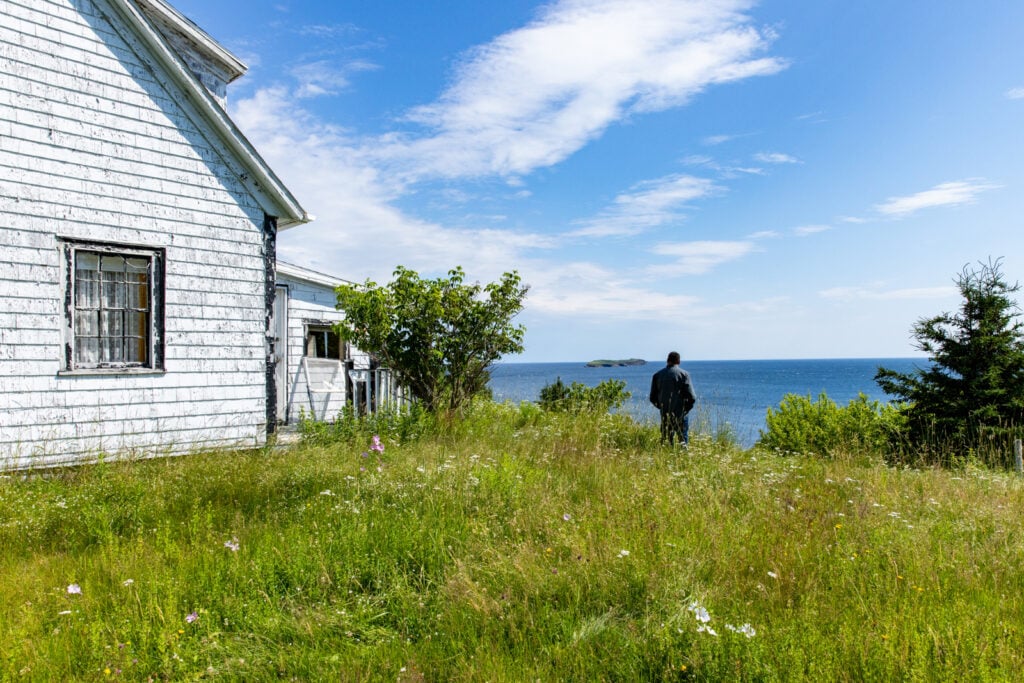
Today, from a 150-year-old cliffside homestead, the trail traces a path through a forest of birch, black spruce and balsam fir, before dropping steeply down a rocky stream bed to sea level. At the beach, an opening at the waterline leads to the cave where oral tradition states Kluskap once lived, from which he started his journey to the spirit world and to which he will eventually return.
Clifford Paul, of Membertou First Nation, regularly brings Elders, young people and other visitors to the cave, telling them the story of how Kluskap was travelling along the shoreline when two maidens standing on the shore began to tease him. Furious, Kluskap jumped on his canoe, cracking it in two — creating the Bird Islands that sit just offshore. The waves created by his leap struck the shoreline and turned the maidens into the stone cliffs that rise above the cave, their faces forever preserved on the landscape.
In recognition of its sacredness, the cave was nominated as a federal National Historic Site in 2012. In 2015, the cave and 2,800 hectares of Crown land around it, known as Kluskap Mountain, became a provincial wilderness area, affording it protection from development.
Yet protection was not complete: in 2017, the mining industry proposed a quarry on Kluskap Mountain, prompting protests from Mi’kmaw communities. Meanwhile, much of the land in the area was privately owned — including the property at the start of the trail — making it vulnerable to the whims of property owners. For the Mi’kmaq, it was clear another approach was needed.
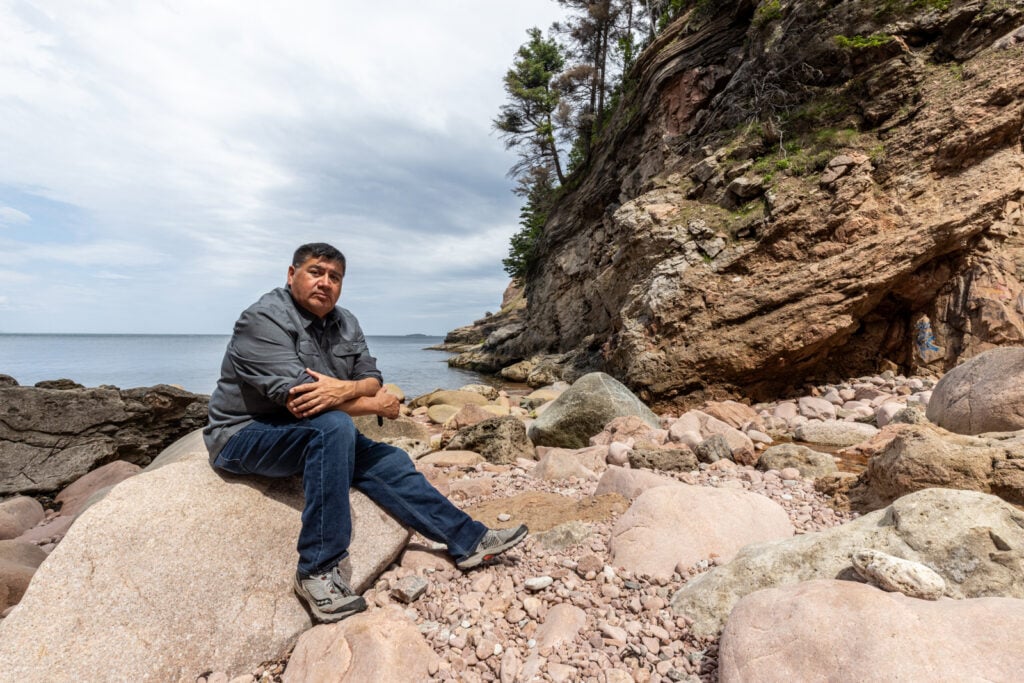
Questions about how to conserve land are not unique to Nova Scotia. As part of its biodiversity commitments, the Canadian government agreed to protect 17 per cent of its terrestrial area, and 10 per cent of its coastal and marine areas, by 2020. Yet as the deadline approached, Canada was falling well short of its targets. In response, the government turned to a circle of Indigenous experts, who released a report detailing how Indigenous communities could help the country meet its biodiversity obligations — including by establishing Indigenous Protected and Conserved Areas.
In these conservation areas, Indigenous governments would have primary responsibility for protecting and conserving ecosystems, according to Indigenous law and knowledge systems. But the recommendation wasn’t simply to create more parks; instead, experts were proposing a different form of conservation.
“We’ve been establishing protected areas for 100 years, and we’re in the middle of a biodiversity crisis, so clearly that isn’t the only or the best way to conserve biodiversity” says Robin Roth, a professor in the department of geography at the University of Guelph. “What Indigenous-led conservation offers us is a way of thinking about connection.”
In Unama’ki, the effort to come up with better ways to conserve biodiversity led to a proposed Indigenous protected and conserved area at Kluskap’s Cave, which required a unique approach. Unlike the rest of the country, much of the land in Nova Scotia is privately owned — about 65 per cent of the province’s forests and 87 per cent of its coastline are in private hands. That meant to fully protect the area around Kluskap’s Cave, the Mi’kmaq needed a way to hold private property in perpetuity. That led to the creation of a land trust called Sespite’tmnej Kmitknu (“let us protect our territory/homeland”).
Patricia Nash, former Indigenous Protected and Conserved Area program manager at the Unama’ki Institute of Natural Resources, which has been coordinating work on the area, says Elders initially questioned the idea of buying property as private property ownership runs counter to Mi’kmaq values about collective responsibility for the land. Nash assuaged those concerns by noting that the money came from the federal government, making it a form of reconciliation.
Meanwhile, in 2023, the province and the Mi’kmaq agreed to shared governance of the wilderness area, covering the Crown land portion — the first such agreement in Nova Scotia history.
While the total area has not yet been formalized with the provincial government, the Mi’kmaq now assert Kluskap’s Cave as an Indigenous Protected and Conserved Area. It has also grown beyond the original boundaries of the wilderness area, with the proposed area covering roughly 8,400 square kilometres, including marine areas, offshore islands such as the nearby Bird Islands and corridors to Cape Breton Highlands National Park to the northwest and the Bras d’Or Lake Biosphere to the south. “It’s kind of like bringing this whole quilt together, in different pieces, to make up the IPCA,” says Nash.
For the Mi’kmaq, the first priority is that lands in the Indigenous Protected and Conserved Area are given time to heal. Nash says this doesn’t rely on fortress conservation — a model of biodiversity protection in which people are separated from landscapes and kept out of ecosystems. Instead, Kluskap’s Cave offers a way to repair the human relationship to nature and connect people to nature in a better way.
This starts on the trail that leads to the cave and back. Clifford Paul says this trail, which climbs and descends along steep stream beds and winds through a forest floor made of interlocking tree roots, challenges visitors physically, emotionally, mentally and spiritually, offering lessons along the way. “It is one where you observe, you learn from nature, you appreciate nature, and you learn to respect Mother Earth and all that dwells upon it.”
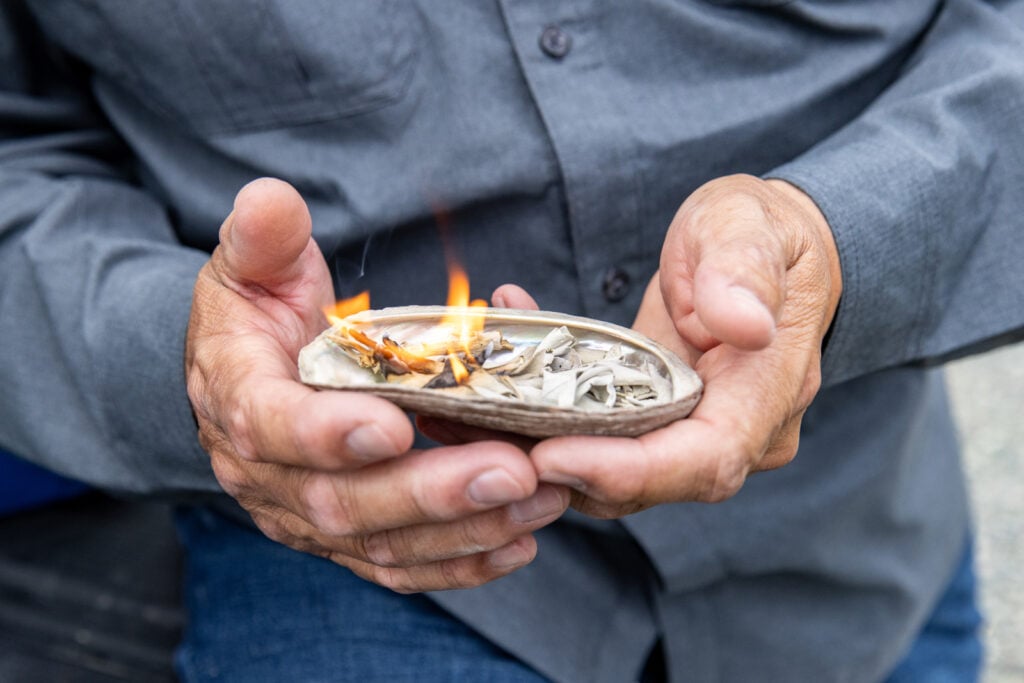
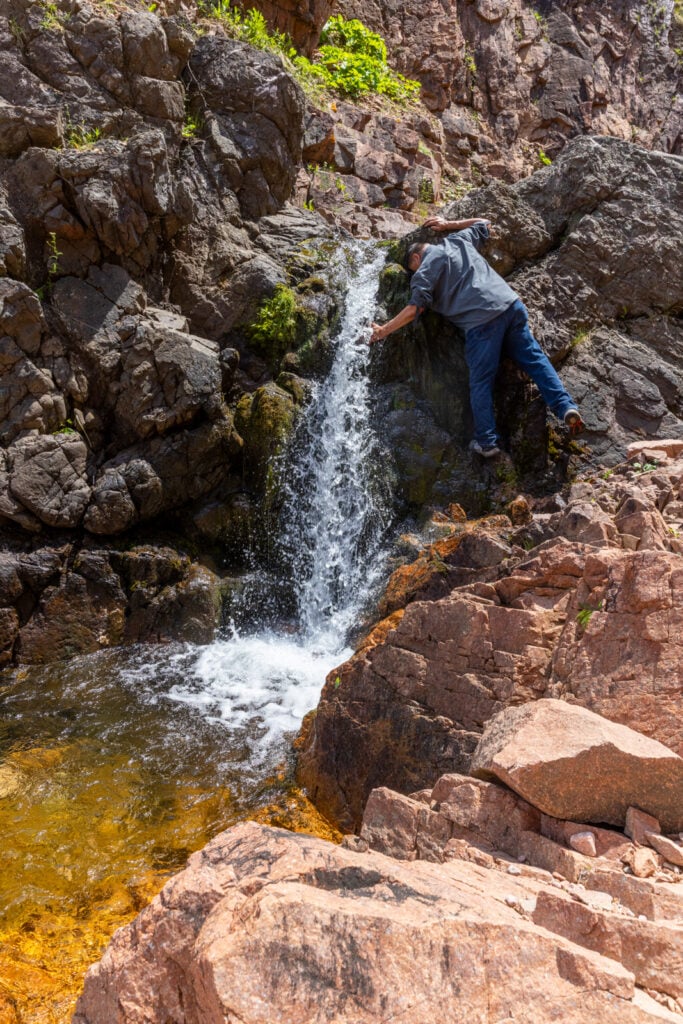
In the forest, Paul offers teachings on the way the trees support each other and speaks of the Wiklamu’jk, or little people, fairy-like beings who are believed to live in the cave and surrounding area. At the cave, Paul shows people how to rest their hands on the mossy bed of a stream that pours from the forest, to feel the heartbeat of the Earth. On walks he’s done with Mi’kmaw youth and Elders, Paul says people have come out changed. “That’s why this place is sacred, and that’s why it’s worthy of protection, because of the healing it does.”
On an overcast day in October, Paul hiked the trail, which was quiet and clean, apart from a Tim Hortons cup and a crushed water bottle. Protecting the land is not a matter of enforcement, he says — instead, protection rests on leaving people with a sense of the place’s sacredness. Going forward, Paul says the most important thing for Kluskap’s Cave is that young people bear witness to the narrative unfolding on the land and carry the stories forward, so that future generations can learn from the Earth. “It’s remarkable. It’s magical. It’s healing. So I’m glad it’s in our hands.”
By restoring Mi’kmaq self-determination, Kluskap’s Cave is advancing reconciliation. Through the federal Indian Act in 1876 and then Nova Scotia’s 1942 centralization policy, Mi’kmaq were forced from their traditional territories and compelled to move onto reserves. Giving land back via the Indigenous Protected and Conserved Area is re-establishing access and rebuilding relationships.
Central to that are Indigenous Guardians — of whom there are more than 1,000 across Canada — who help to care for the land via fieldwork and monitoring while also supporting Mi’kmaq communities in reconnecting with the land, promoting cultural revitalization. In Unama’ki, Guardians are called Earth Keepers.
Yet Indigenous protected and conserved areas like Kluskap’s Cave don’t benefit only Mi’kmaq communities. Protection for land and water is a central concern for many non-Indigenous Canadians too. In Unama’ki and elsewhere, these areas are showing what’s possible when relationships — between people and with the land — are restored.
This story is part of a series about ecological corridors produced with support from Parks Canada. Learn more by visiting the Right of Passage website.
Environment
How the Sahtuto’ine Dene of Délı̨nę created the Tsá Tué Biosphere Reserve, the world’s first such UNESCO site managed by an Indigenous community
Exploration
Caving: The ultimate underground sport
Travel
Discover the soul of the Maritimes on a three-day journey of wildlife encounters, Celtic traditions and coastal adventures
Exploration
2022 is the International Year of Caves and Karst. Here’s why you should care about the hidden worlds beneath our feet.