History
Canoe love
Canadian Canoe Museum explores the link between paddling and romance
- 1530 words
- 7 minutes
People & Culture
Scott and Grit McCreath reflect on the birthday gift that sparked a 20-year collecting journey and why they’re sharing its works with visitors to The Canadian Canoe Museum

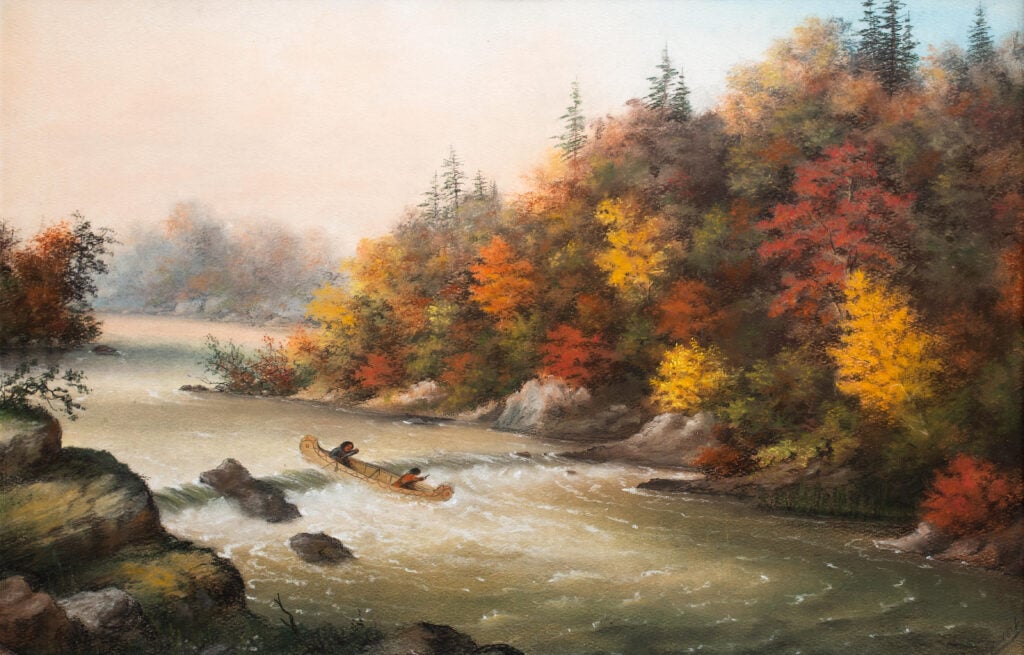
In 2006, Grit McCreath surprised her husband, Scott, with a Lucius O’Brien watercolour depicting two men in a birchbark canoe. The image reminded Grit of the years her husband had spent paddling northern Saskatchewan with his father — an experience he still describes as “glorious.”
According to prominent Canadian art dealer Rod Green (who sold Grit the painting), O’Brien was one of the great watercolourists of the 19th century. Scott was so thrilled with the gift that he instructed Green to call him if he came across “any more canoe pictures.”

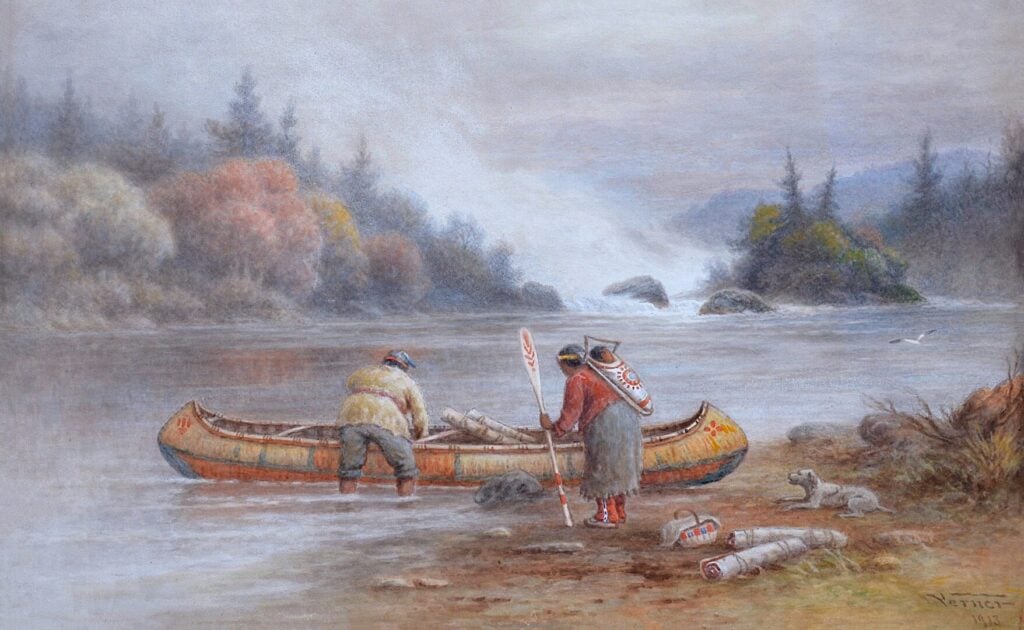
Two decades and 80 original Canadian artworks later, that birthday gift has grown into what is believed to be the largest collection of original canoe-themed art in Canada — now on display in the exhibit “Canoe Perspectives” at The Canadian Canoe Museum in Peterborough, Ont.
Raised in Saskatoon, Sask., Scott and Grit McCreath grew up in homes that, while modest, were bursting with original artworks. Given their family histories, it made sense that when the young couple first met, they would bond over a shared enthusiasm for the arts.
Scott, a retired investment advisor, and Grit, a retired high school administrator, now live in Calgary, Alta.
In this exclusive interview with Canadian Geographic, the McCreaths share their unique story and reflect on what it means to take a private collection public.
Grit: My parents were academics who emigrated from Germany to Canada when I was a baby. I grew up listening to classical music, and for my 10th birthday, I was given The Rainbow Book of Art, an art history publication for young readers.
There wasn’t much furniture in our tiny wartime home in Saskatoon, but there was always lovely art on the walls. Today, wherever Scott and I travel, we visit galleries. Art inspires us.
Scott: I had wonderful parents. Both were artistic in different ways. We didn’t have a lot of money, but if we ever travelled to Moose Jaw or Regina, my Dad would always haul us off to visit local art galleries.
My mother could knit and embroider, do anything with cloth or wool. My dad had a passion for painting. It wasn’t until he retired that he devoted serious time to his art. He did hundreds of paintings and sold them all.
Grit: I knew Scott was the one for me after our first date. I was 21. He was 23. I remember waking my mom up and saying, “I’ve met the man I plan to marry!”
My mom believed in this kind of magic, if you’re open to it. We married 10 months later. He would come up with the most creative dates, from going to winter festivals to skating. He had such positive energy.
Scott: When I met Grit, I wasn’t desperately looking for a wife. I had a very social life. But it was different with her. She was easy to fall in love with. She was joyful. It was wonderful to run into a woman who had so much spunk. That hasn’t changed. Fifty-five years later, and I’m still madly in love with my wife.
Scott: When I was 10 years old, my Dad purchased a canoe for $20 CAD, a canoe that was not capable of being in the water.
Dad was handy, so he brought it home, and we repaired it and painted it bright orange, with black gunnels and trim. From that point on, my dad and I paddled and fished together. As a young man, it was just glorious.
Grit: I didn’t go canoeing with my immigrant parents, but they were big walkers and big hikers. Canoeing is one of the greatest gifts Scott’s ever given me.
He introduced me to canoeing in Prince Albert National Park (Saskatchewan). We love the rhythm and serenity of it. We love getting away from the world, and going to places where we can listen to nature and listen to our hearts.
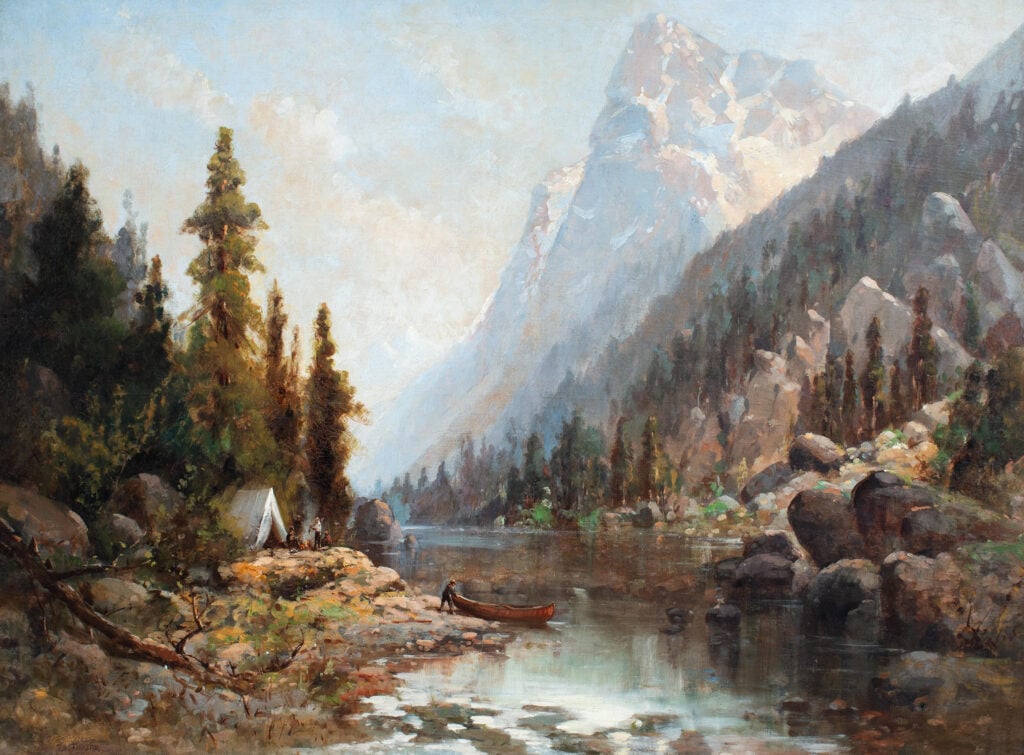
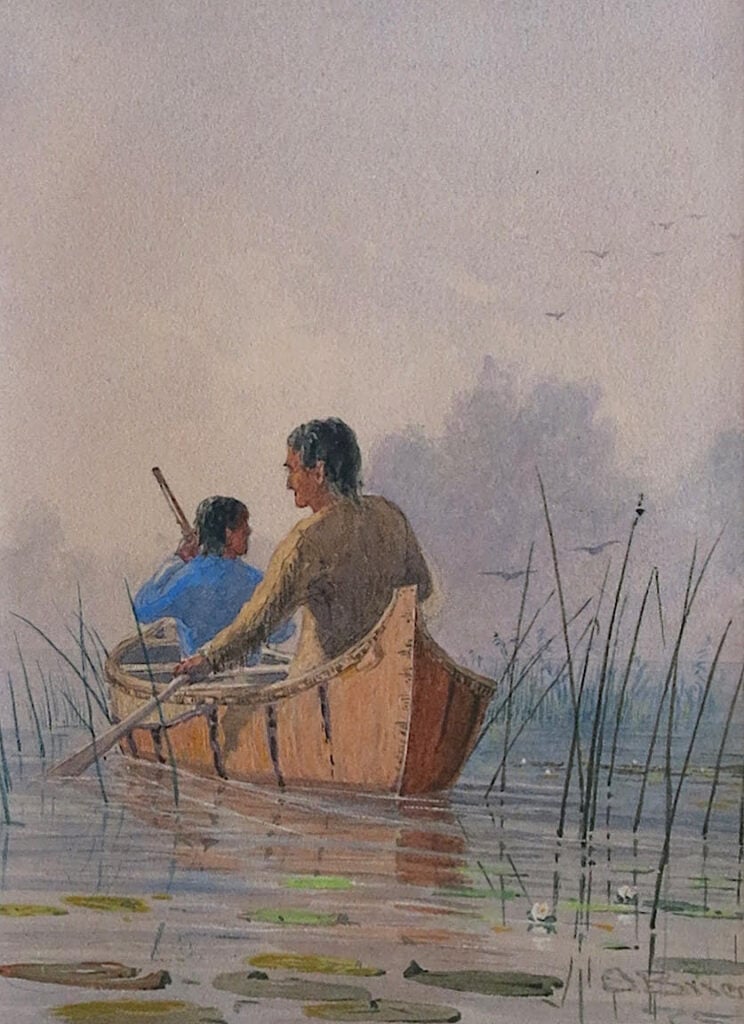
Grit: I was a teacher, so when I bought Scott our first canoe painting, it had to be small and fit my budget. When Rod showed me Lucius O’Brien’s Denizens of the Ottawa, I was so excited about it.
The fact that it featured two men in a canoe made me think of Scott and his dad. It was such a sweet, small piece; I could hardly stand it.
Honestly, we didn’t ever intend to do this. This collection was an evolution. Every single original canoe painting or artwork that we’ve purchased since this first piece has been a joy for us.
Scott: True. There was nothing intentional about it. But when these fabulous dealers bring you pieces, you look at them, and how can you not buy them? Some people have homes in Hawaii, or travel trailers. We like art.
Ninety per cent of the collection was sourced by Rod Green. He’s become a fine friend. Grit and I have got him and his wife hooked on fishing with us in Saskatchewan. We get in a float plane, hire First Nations guides, catch the fish and eat pickerel for lunch. How wonderful is that?
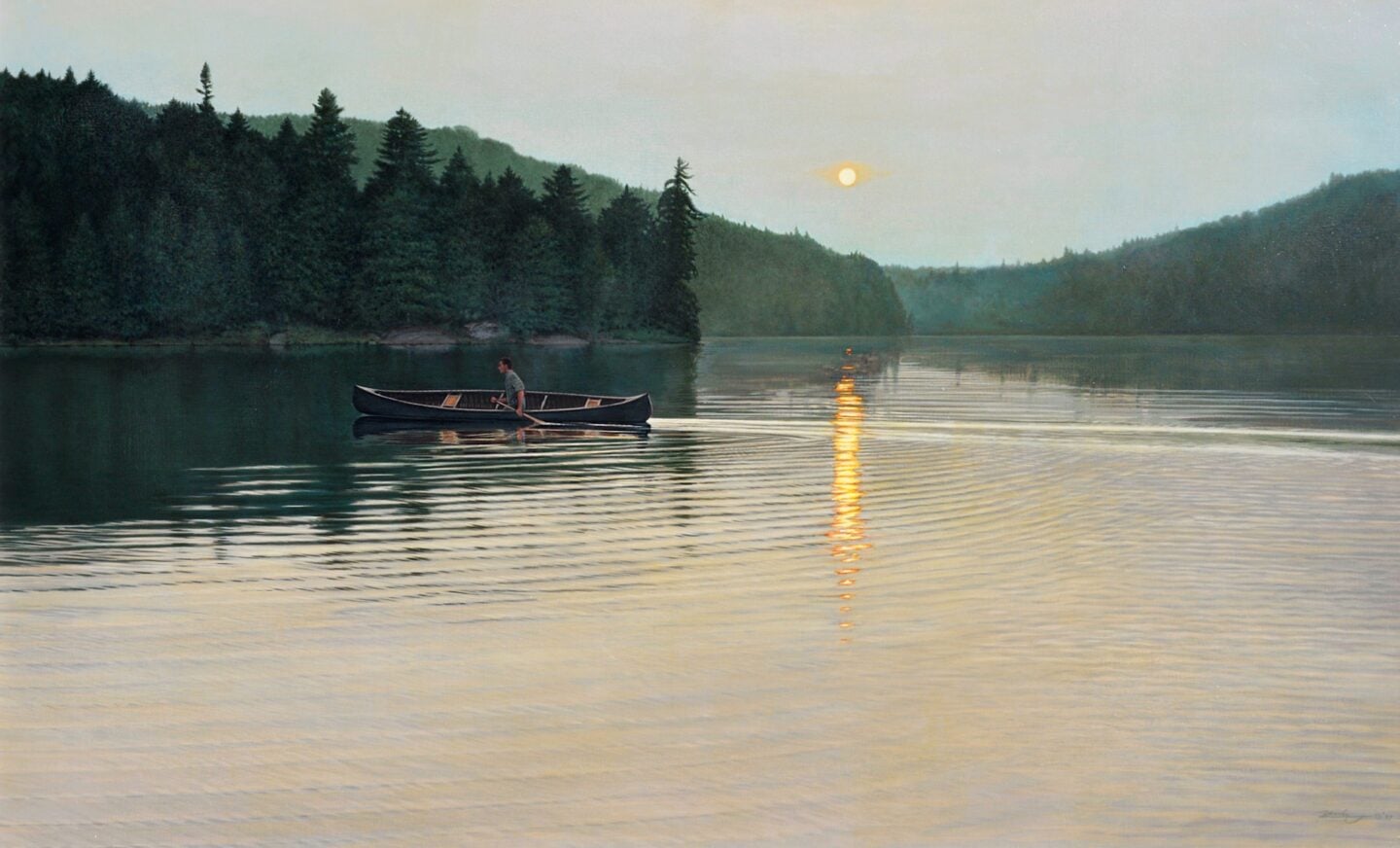
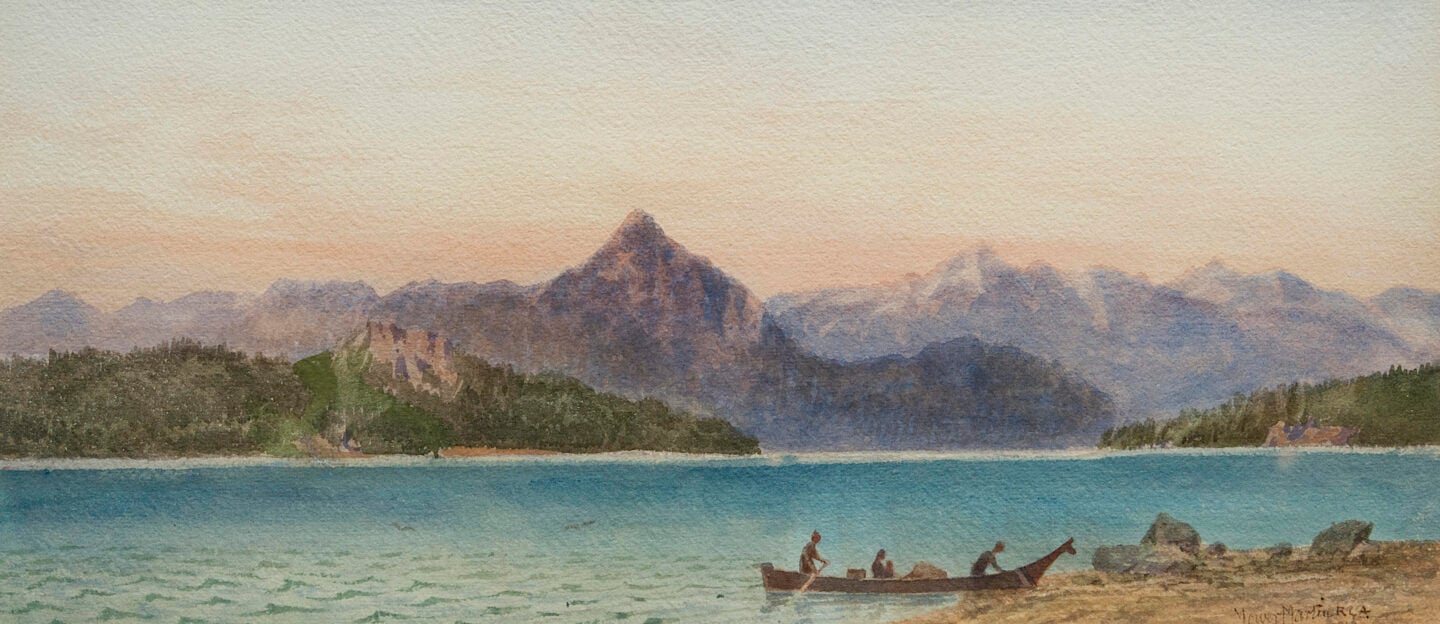
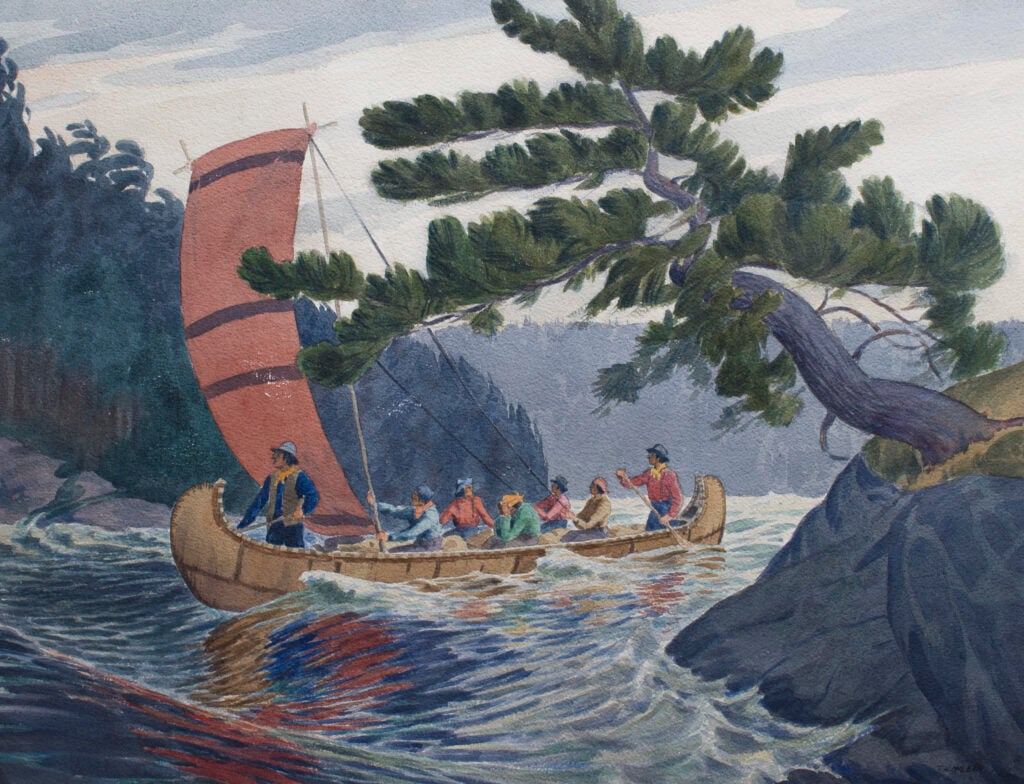
Scott: Wilf Perreault’s Sky of Hope: Stanley Mission, Saskatchewan comes to mind. It’s a national historic site and the oldest building in the province. I like that Thomas McLean’s Freighter Canoe Under Sail depicts the versatility of canoes. And I so admire Ken Danby’s Algonquin (in Homage to Tom Thomson) — an example of the high realism Danby is famous for.
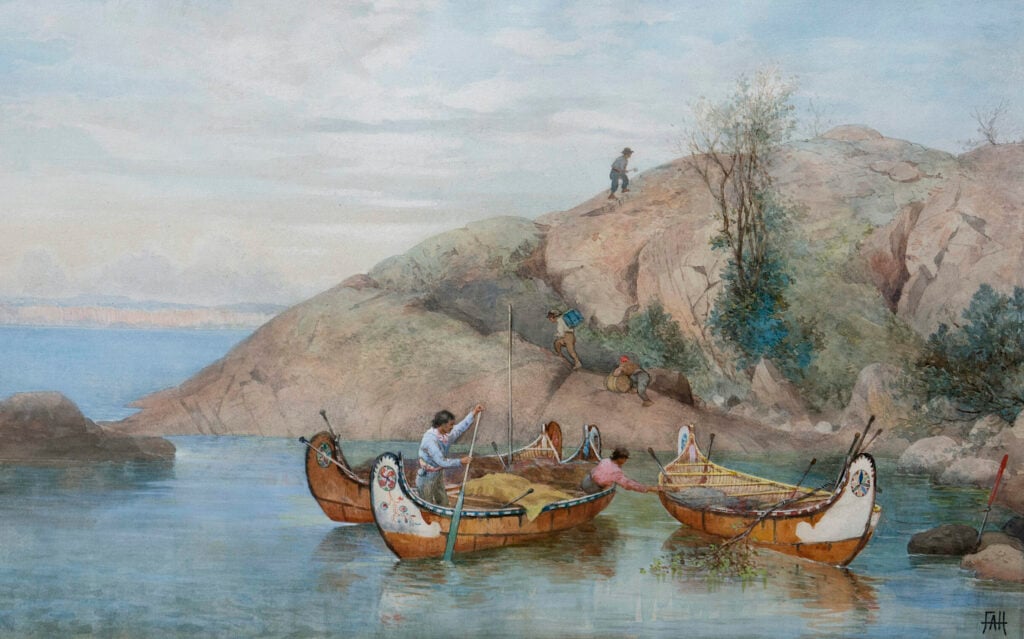
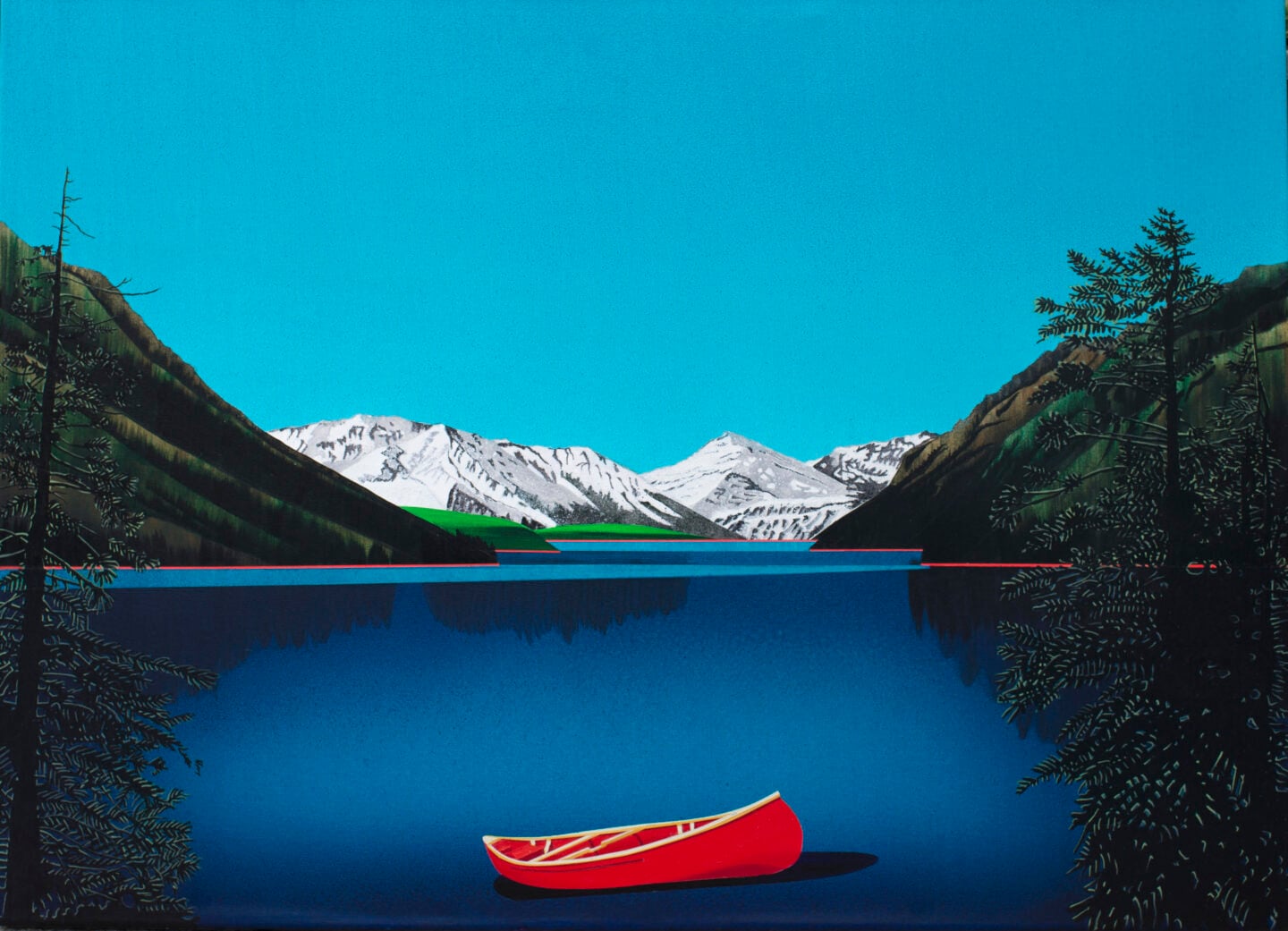
Grit: I love the David Thauberger piece, Summer Drift. The colour, the vibrancy, speaks to me. Frances Anne Hopkins’ painting “Northwest Canoes Anchoring” is historic and an honour to own. And I love Amy Dryer’s more contemporary Figures, inspired by a 1914 photo of Tom Thomson and Arthur Lismer in Algonquin Park. I could easily fill a room with Amy’s art.
The Illingworth Kerr piece, Portage, was a gift from Scott for my birthday a few years back. Before opening the gift, I apparently said, “Scott, we need another canoe painting like a hole in the head!” Of course, when I saw the painting, I declared gleefully, “Oh my gosh, an Illingworth Kerr with a canoe in it!”
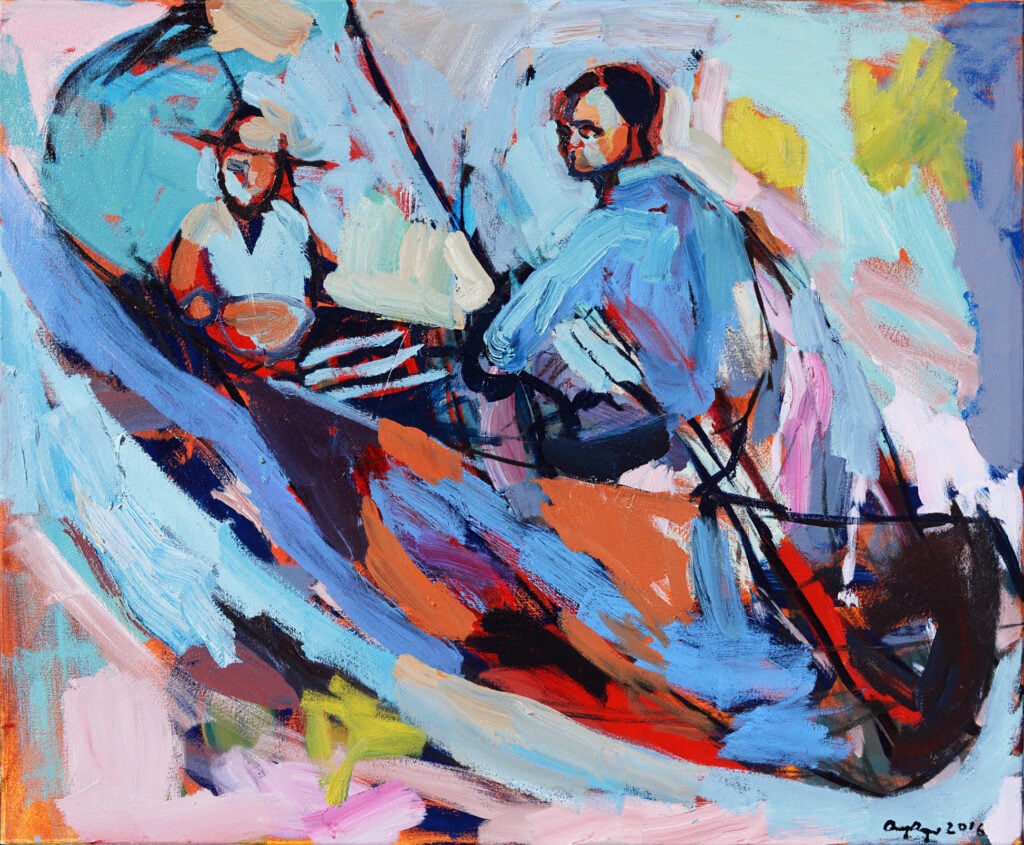
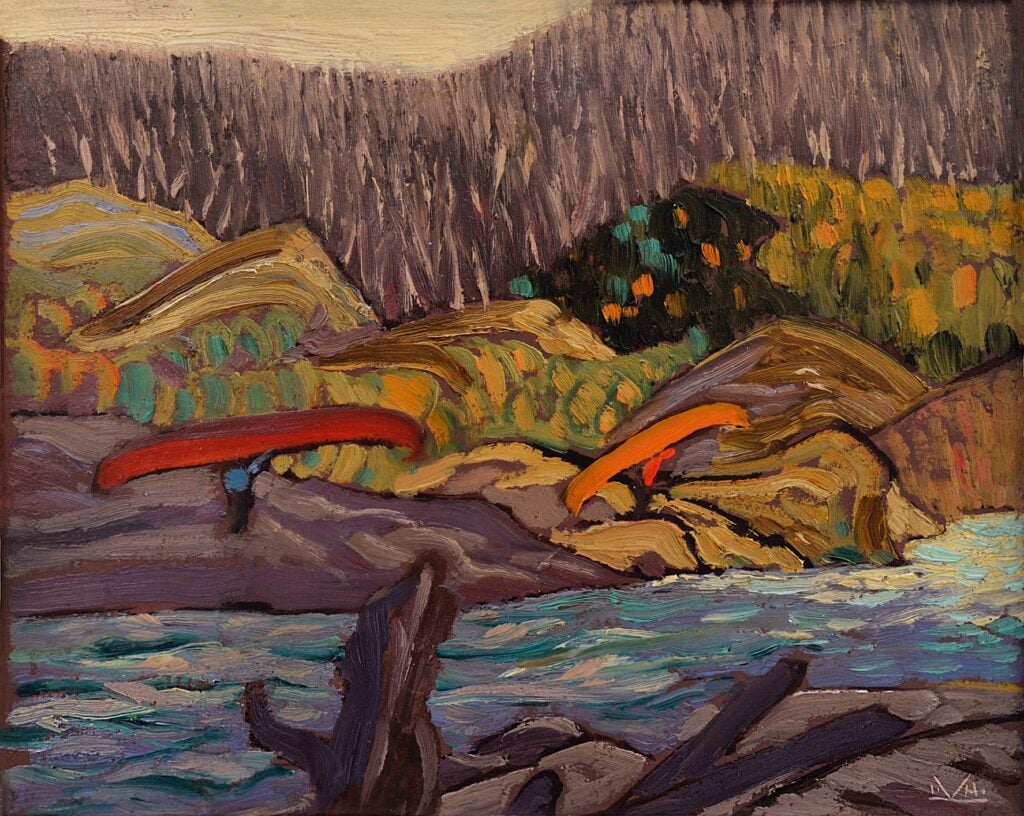
Grit: Sharing this collection has brought us an immense amount of joy, especially given that it’s at the Canadian Canoe Museum, which is just a gem.
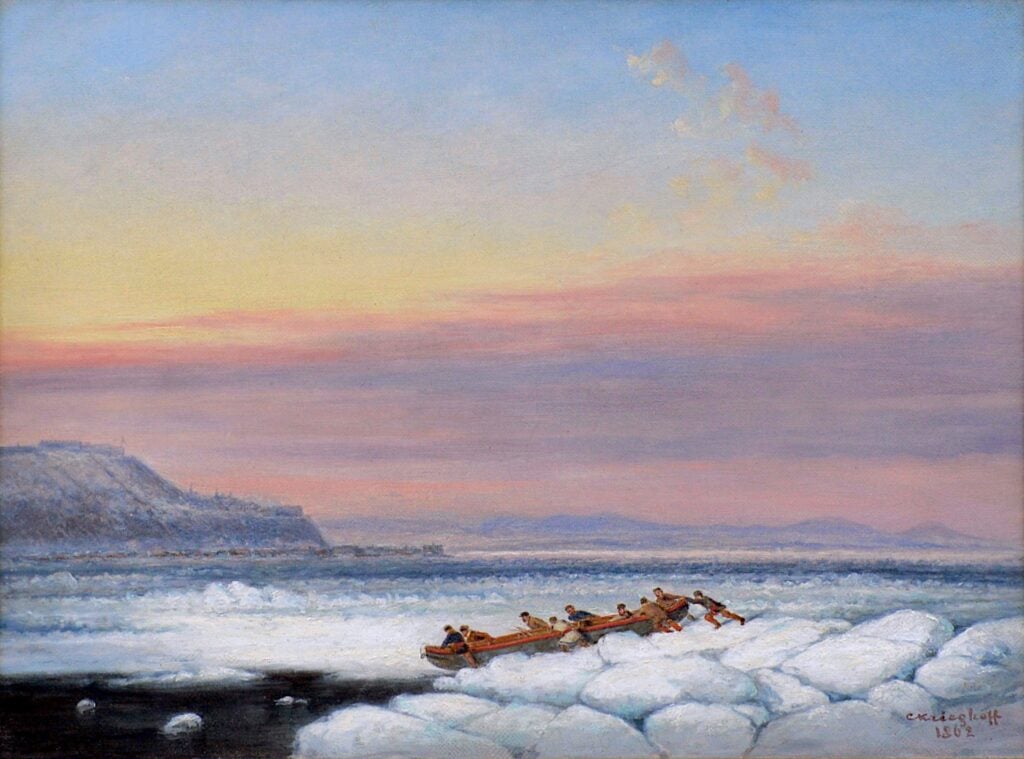
We’re very fortunate to own these pieces. Some are pretty iconic. We’re looking at 200 years of Canadian history, with the oldest piece dating back to 1820. The impact of this, the learning to be had for those who visit the exhibit, is important to me, especially having been a teacher.
Scott: I like the conversations that are being launched. I always ask other Canadians, “Do you have a canoe story?” Everyone seems to have one. They’re reminded of their own experiences with a canoe. I was at the lake, or summer camp, or I paddled on Lake Louise. The canoe is, in many respects, sacred.
If you canoe in northern Saskatchewan, you can’t help but encounter Indigenous people. I never forget that I’m on their land and that a lot of wilderness is in good condition because they’re stewards of that land.
The canoe is theirs. It belongs to them, to the forests and to the birch trees. It’s the backbone of this country. We’re happy to share this collection with museum visitors because, well, it should be shared.
Canoe: A collection of Canadian Art by Anne Ewen and Rod Green, featuring the McCreath’s collection, will be available in fall 2026. The Canadian Canoe Museum exhibit “Canoe Perspectives,” showcasing these original Canadian artworks, will run until April 2027.
Kim Gray is an award-winning travel journalist, co-founder of Canadian travel blog Toque & Canoe, and Fellow of the Royal Canadian Geographical Society.
History
Canadian Canoe Museum explores the link between paddling and romance
People & Culture
For my father and me, these journeys are both personal and political

Places
The executive director and curator talk about canoes, kayaks and a stunning new location for The Canadian Canoe Museum in Peterborough, Ont.

Travel
Connect with Canada’s past and present on this network of waterways between Peterborough, Ont. and the nation’s capital