
Environment
How breeding bottom feeders will help revolutionize fish farming
New Brunswick-bred sea cucumbers and urchins could soon be used to help clean up fish farms
- 830 words
- 4 minutes
Travel
How Vancouver chefs are marrying their own cultural heritage and culinary creativity with the traditional English afternoon tea
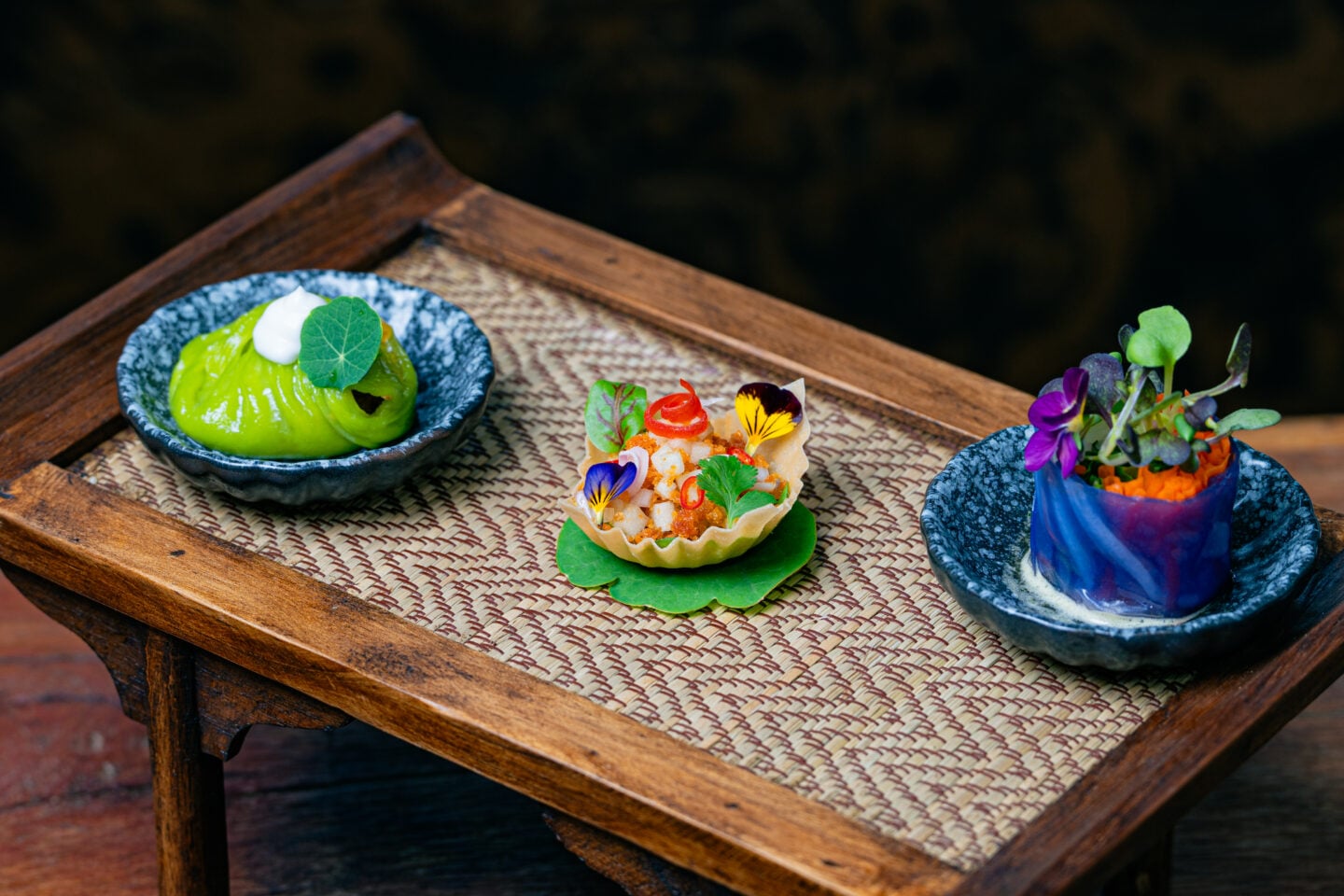
Hands in white gloves, tea sommelier Lena Pan pours steaming chiran fukamushi sencha from a handmade ceramic teapot. As this speciality tea from Japan’s Kyushu region cools, two servers set down the first of 12 plates on a traditional wooden tray: khao kriap pak mo (chicken wrapped in a rice paper dumpling), yum salmon fu (wild sockeye served in a crisp pastry basket) and kuai tiao lui suan (a salad roll coloured deep purple by butterfly pea flowers).
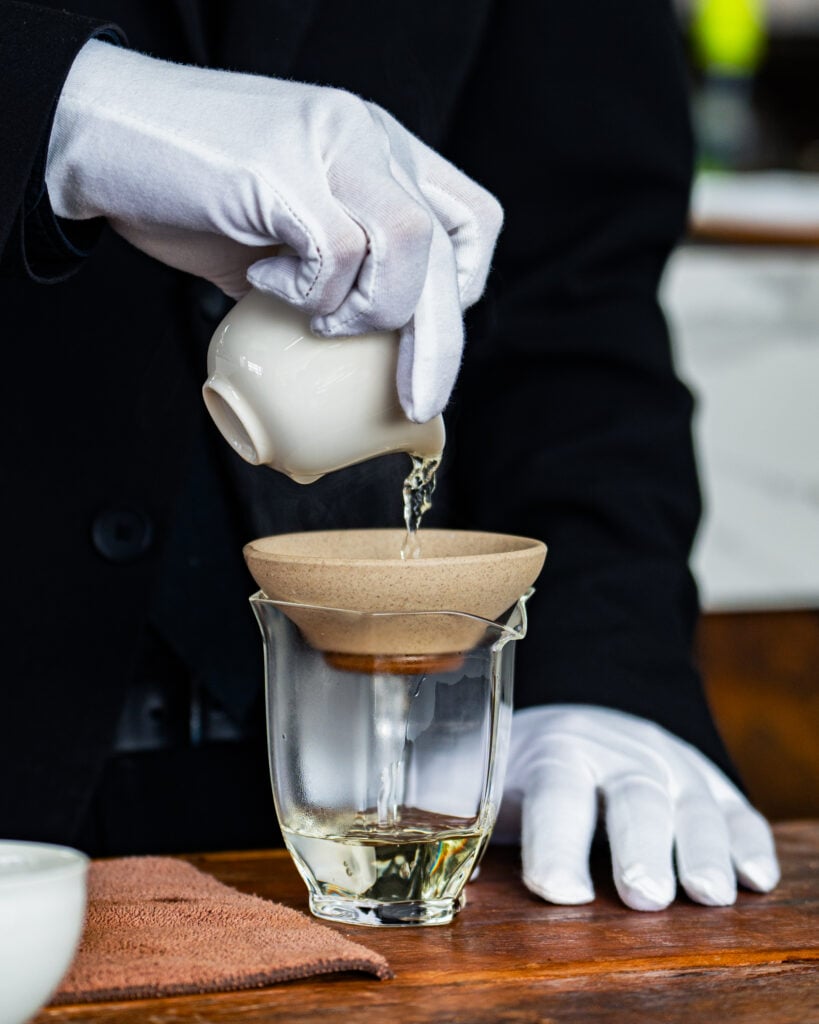
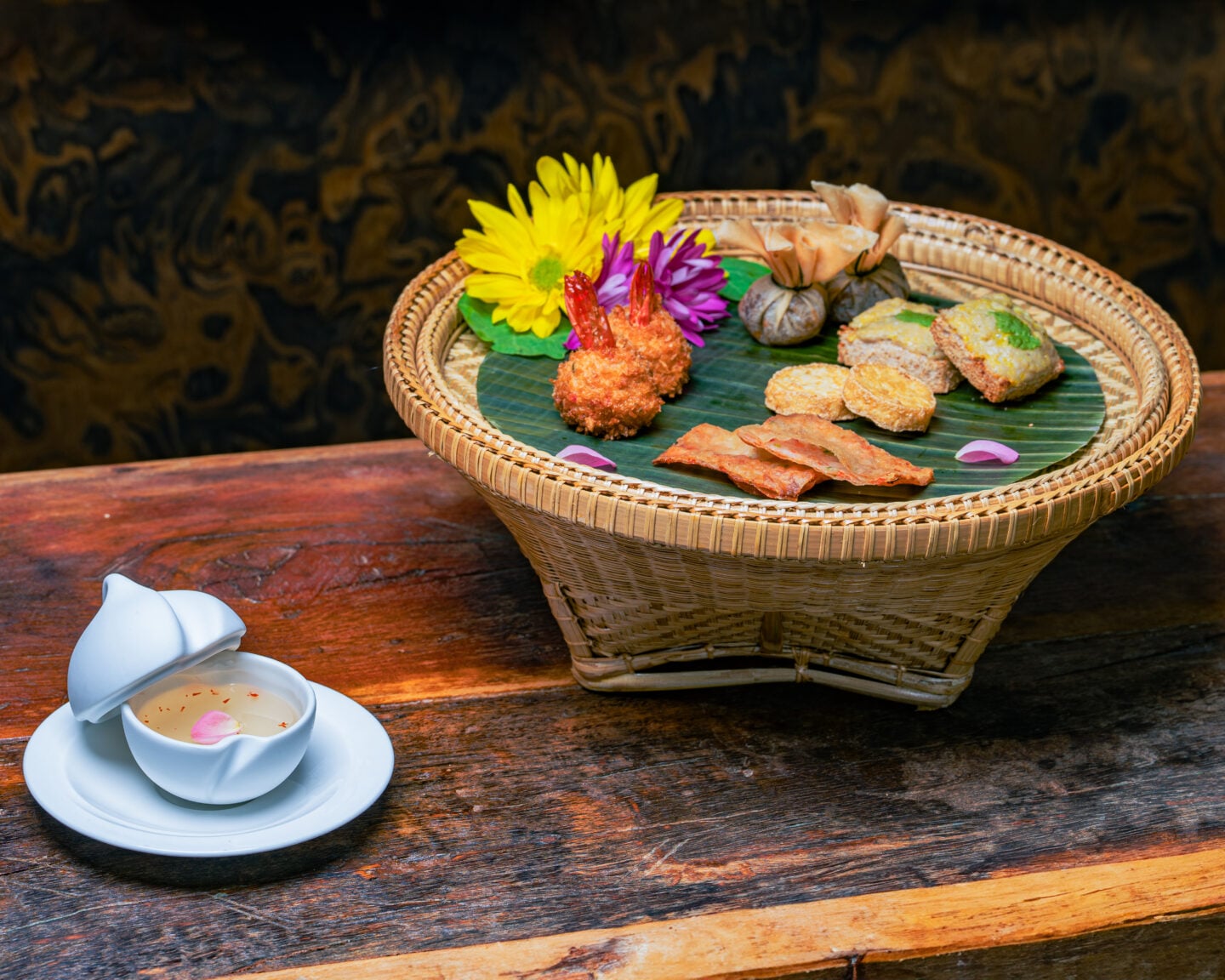
In her restaurant overlooking the Fraser River in Steveston, B.C., Nutcha Phanthoupheng, chef and owner of Baan Lao Fine Thai Cuisine, has crafted an elaborate Thai-style afternoon tea: a dozen dishes drawn from Thailand’s heritage of royal cuisine, with drink pairings by Pan, a certified tea sommelier.
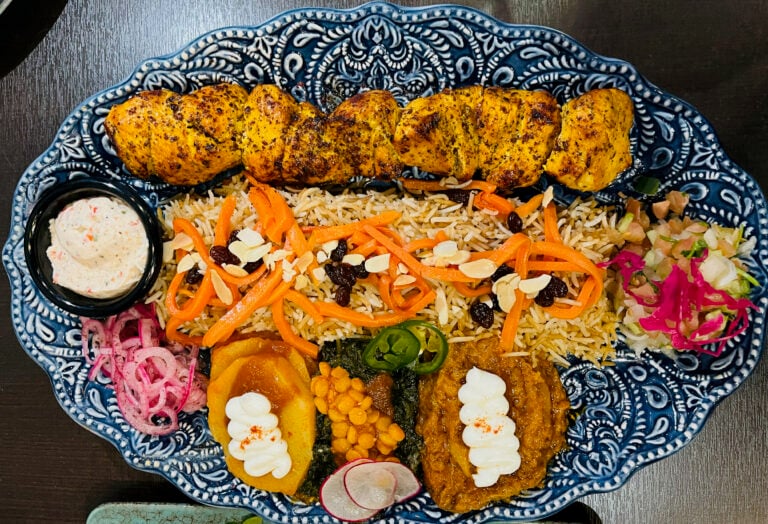
Phanthoupheng, a Thai-born medical researcher turned restaurateur, is not the only B.C. chef reimagining the traditionally British afternoon tea. Tayybeh — a restaurant, catering company, and social enterprise employing refugee and newcomer women in Vancouver’s Mount Pleasant neighbourhood — offers a Middle Eastern high tea with savory dishes, including kibbeh and cheese sambousak, and sweets ranging from pistachio maamoul to baklava. And Yandoux Patisserie, in Richmond, blends Japanese and Chinese flavours with French techniques, in a menu that can feature miso-glazed sablefish, salmon oishi and truffled mushroom crostini. Meanwhile, in the predominantly South Asian suburb of Surrey, several restaurants are pairing Indian snacks with chai during their afternoon tea service. Across Metro Vancouver, tea venues are branching out from their classic afternoon teas — and reclaiming what has long been considered an English tradition.
In many parts of the world, “people were drinking tea in their homes long before ‘afternoon tea’ was a thing,” says Susan Peters, an Ontario-based tea sommelier and historian.
According to legend, Peters says, Duchess Anna Russell of Bedford introduced afternoon tea to England around 1840. “As the story goes, she was feeling peckish and asked her maids to provide her with a pot of tea, bread and butter, and some cake,” to sustain her until the late-evening dinner hour. Inspired by the duchess, the act of taking time for tea became fashionable — eventually, especially because the high tax on tea had been reduced, ordinary people in Britain began taking tea with an afternoon snack (it is also said that afternoon tea increased working hours for labourers, as it gave them more energy to work longer hours).
British settlers in the late 1800s and early 1900s brought tea to Canada, drinking it primarily at home, and newcomers from China, India and other tea-drinking parts of the world continued their tea habits on Canada shores. However, Peters says the custom of more formal afternoon tea in Canada didn’t evolve until the early 20th century, with the country’s hotels leading the way.
Like other grand railway hotels, the Hotel Vancouver — now Fairmont Hotel Vancouver — has been serving tea since the property opened in 1939, though the service was a simpler affair compared with the lavish British-inspired teas it offers today. In 2014, the hotel began varying its tea service, introducing seasonal “themed teas,” primarily to appeal to younger customers, says Mike Reid, the property’s executive chef.
Two of these popular teas draw inspiration from parts of Asia. The annual Lunar New Year afternoon tea features dishes such as Sichuan-glazed prawn toast, Shanghai-braised pork belly and sesame miso biscuits, while the sakura afternoon tea celebrates spring and the arrival of cherry blossoms with Japanese-influenced dishes like cherry salmon aburi and Castella, a Japanese sponge cake, filled with yuzu cream.
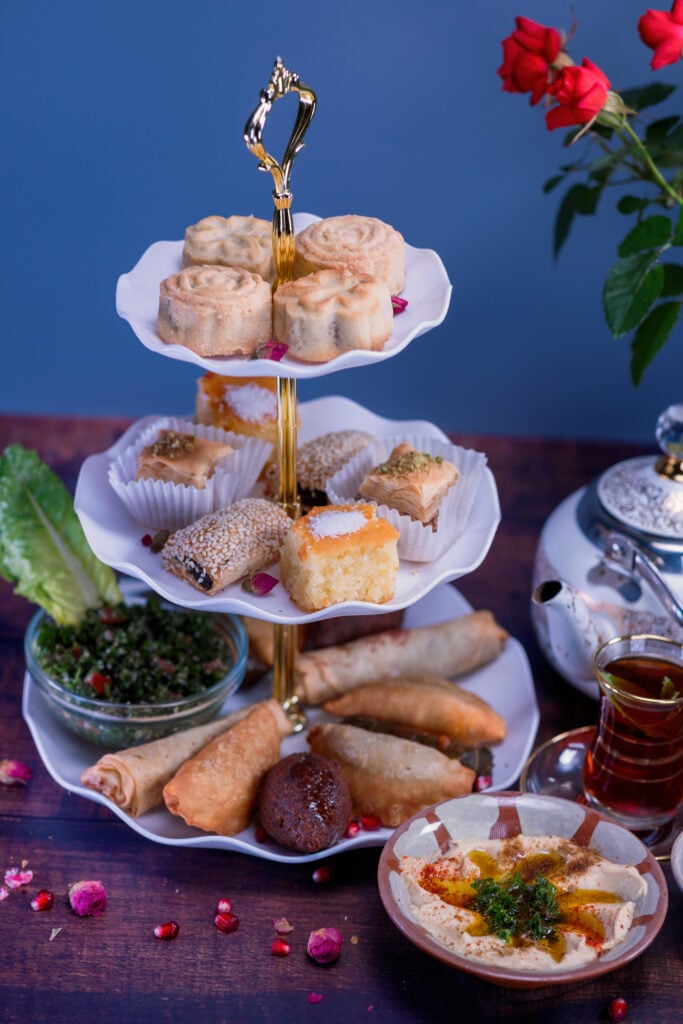
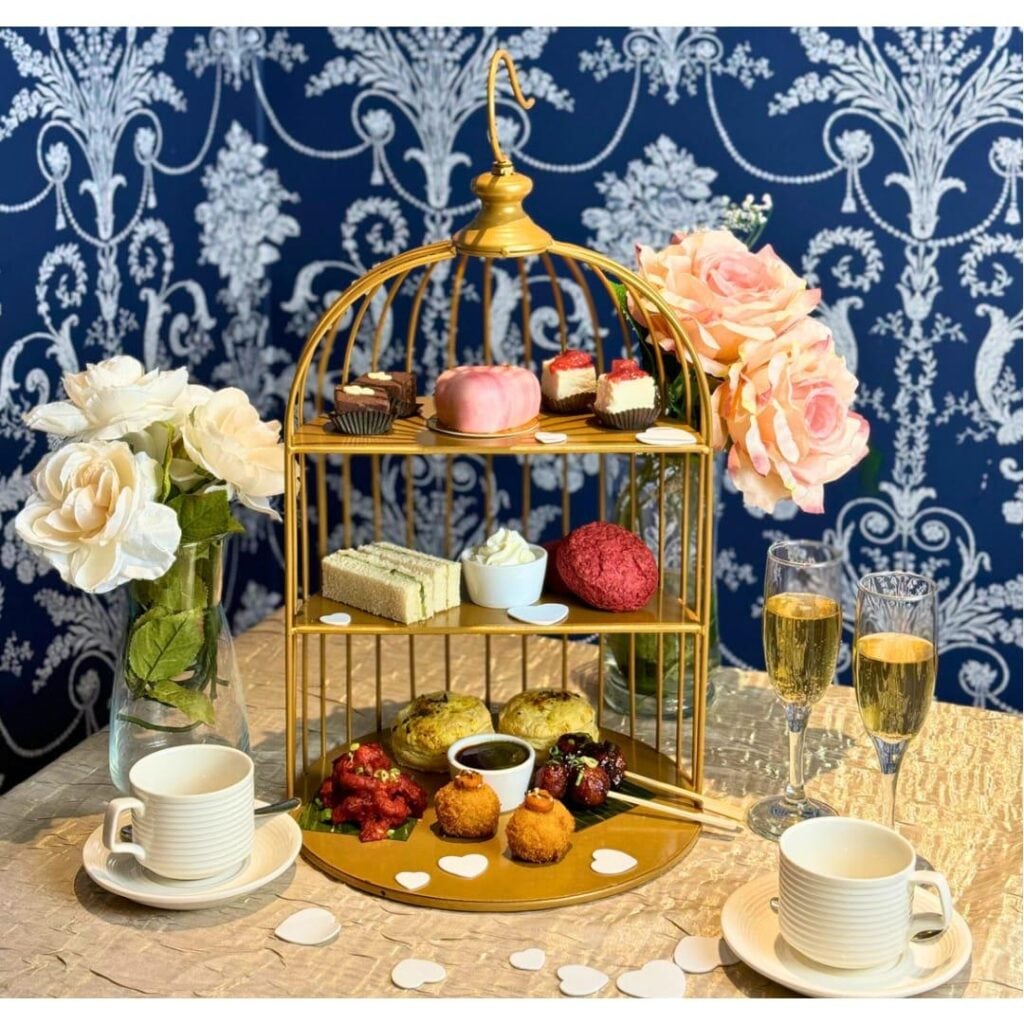
Across the Middle East, “tea and coffee are at the heart of all social interactions,” says Tayybeh company founder Nihal Elwan, who grew up in Egypt. “You drink tea or coffee during every visit to a home, at every celebration, during grief, after a meal, during business meetings.” Black tea with mint leaves and spiced Arabic-style coffee are the traditional beverages.
During Tayybeh’s daily Middle Eastern high tea, Elwan says, “our customers order our tower of savoury and sweet items and a pot of tea or coffee, and they’ll sit and talk for hours, replicating the experience that exists in the Middle East.”
Gathering over tea is a tradition that’s also part of South Asian cultures, says Maria Adnan, head baker and co-owner of Minute Bakery in Surrey. “In South Asia, tea isn’t just a beverage — it’s an everyday ritual tied to hospitality, conversation and community,” she says. “In Metro Vancouver, especially within the South Asian diaspora, tea continues to play that role. It’s shared in homes, cafés, workplaces, and social gatherings.”
Minute Bakery has adapted the traditional afternoon tea to reflect South Asian and Muslim dietary preferences. Guests can choose classic black tea or chai with milk. The restaurant also offers a slightly salty-sweet “pink chai,” which Adnan describes as “a traditional Kashmiri-style tea made with green tea leaves, milk, baking soda and slow simmering. The pink colour develops naturally through the brewing and aeration process,” so no colouring is added.
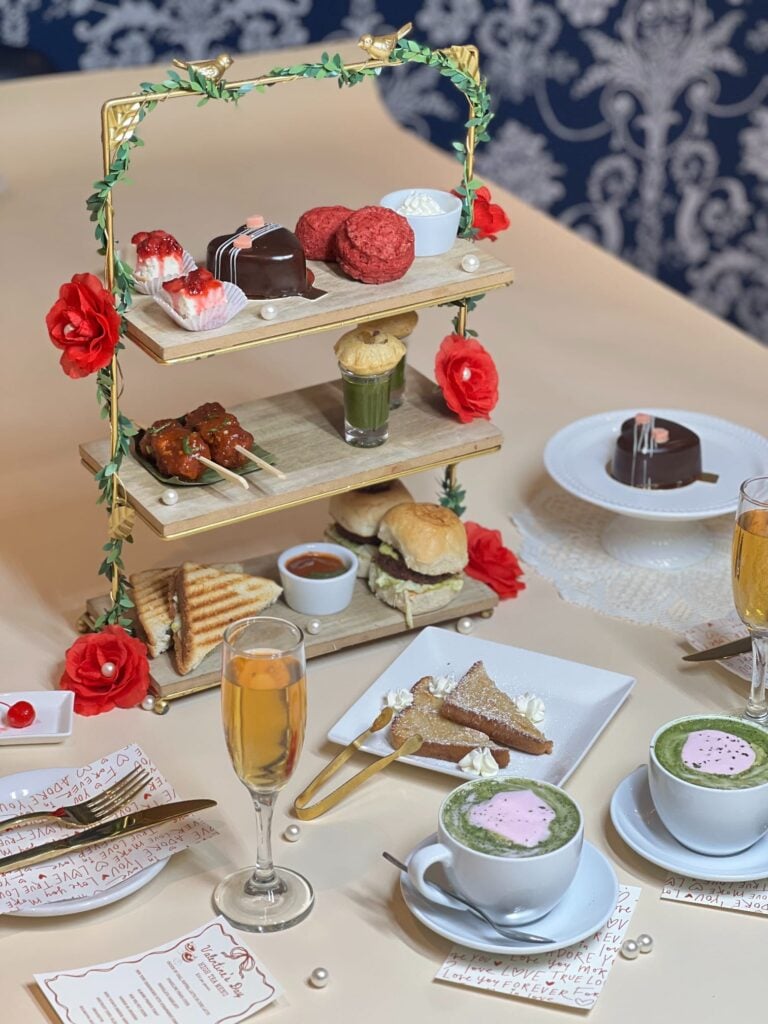
Nearby, Tokyo Mithaiwala reflects the Indian and Japanese heritage of its founders, Raji and Tomoko Sandhar. The couple first launched the business in Tokyo, wanting to bring Indian street foods and mithai (sweets) to Japan’s capital. Expanding to Canada, they now serve a vegetarian afternoon tea of Indian savory and sweet snacks, including a paneer tikka slider, aloo puff and dodha crunch (a caramel-like sweet).
Although Thais drink tea, Thailand doesn’t have a well-established tea culture, says Baan Lao chef Phanthoupheng. At her restaurant, she wanted to elevate the experience of the tea itself. She notes that even in formal tea services that offer a choice of tea, the customer doesn’t necessarily know which teas pair best with the food.
Phanthoupheng adds that in a British-style tea, there are essentially two tastes — savory and sweet — while Thai cuisine emphasizes sour, spicy and salty flavours as well. As part of her formal tea service, tea sommelier Pan works with the kitchen to match specific teas to each course of vibrant Thai flavours. She pairs a more intense pu’er tea with the savoury water buffalo “money bag” dumpling and the fried tofu with wild seaweed caviar. With the sweet-tart course of mango with coconut milk sticky rice, a taro ball served with pandan coconut custard, and intricately carved fresh fruit, she pours a delicate Taiwanese oolong.
There is political power in decolonizing and readapting the symbols of empire into other cultural expressions.
Tea may have travelled to Canada with British settlers, but the British themselves adopted the drink through trade with Asia — first from China and then from India, points out Steven Schwinghamer, a historian at the Canadian Museum of Immigration at Pier 21 in Halifax. British tea is “a completely manufactured cultural practice that was appropriated from other parts of the world,” he says.
When people leave their home countries, Schwinghamer says, “a big part of migration is dislocation,” from their family, their culture and their traditional foods. As newcomers look for ways to recreate these connections, he says, “a lot of this cultural transmission work falls to women: seeking out ingredients, passing on recipes, sharing them with their compatriots in a new place.”
Today, perhaps, this increasingly multicultural Canadian ritual of afternoon tea is more than just a leisurely midday gathering over a hot beverage and a tray of small bites. There is political power in decolonizing and readapting the symbols of empire into other cultural expressions, Schwinghamer says. The Vancouver-area chefs creating afternoon tea services that draw from their own cultural traditions are a part of this process of cultural evolution.
Despite the country’s diversity, multiculturalism can still be a difficult area for Canadians to engage in critically — except around cuisine, he points out. “We don’t give permission for certain kinds of adaptation and cultural expression as easily as we do for food, but making space for more of that conversation is really important,” he says. “If we explore the culture, the power, and the memory around it, it’s a much more fulsome encounter.”
Environment
New Brunswick-bred sea cucumbers and urchins could soon be used to help clean up fish farms
Travel
One of the fastest-growing cities in Canada is on its way to becoming a global foodie destination
Travel
The most authentic meal you can have while travelling isn’t at a restaurant but in a local’s home

People & Culture
The culinary world has historically been a male-dominated space, but these women are breaking down gender barriers and reshaping Canada’s dining culture

Environment
New Brunswick-bred sea cucumbers and urchins could soon be used to help clean up fish farms
Travel
One of the fastest-growing cities in Canada is on its way to becoming a global foodie destination