People & Culture

Walking with the herd

An immersive Yukon art installation brings caribou — and conservation — into focus

  • Jun 05, 2026
  • 1,560 words
  • 7 minutes
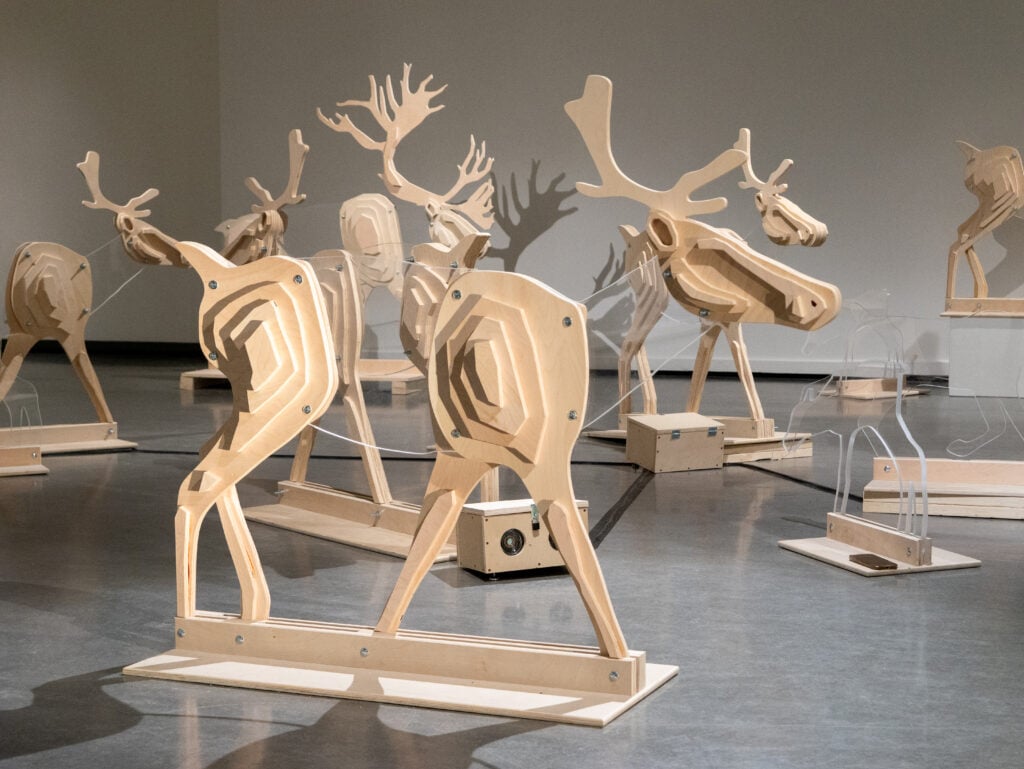
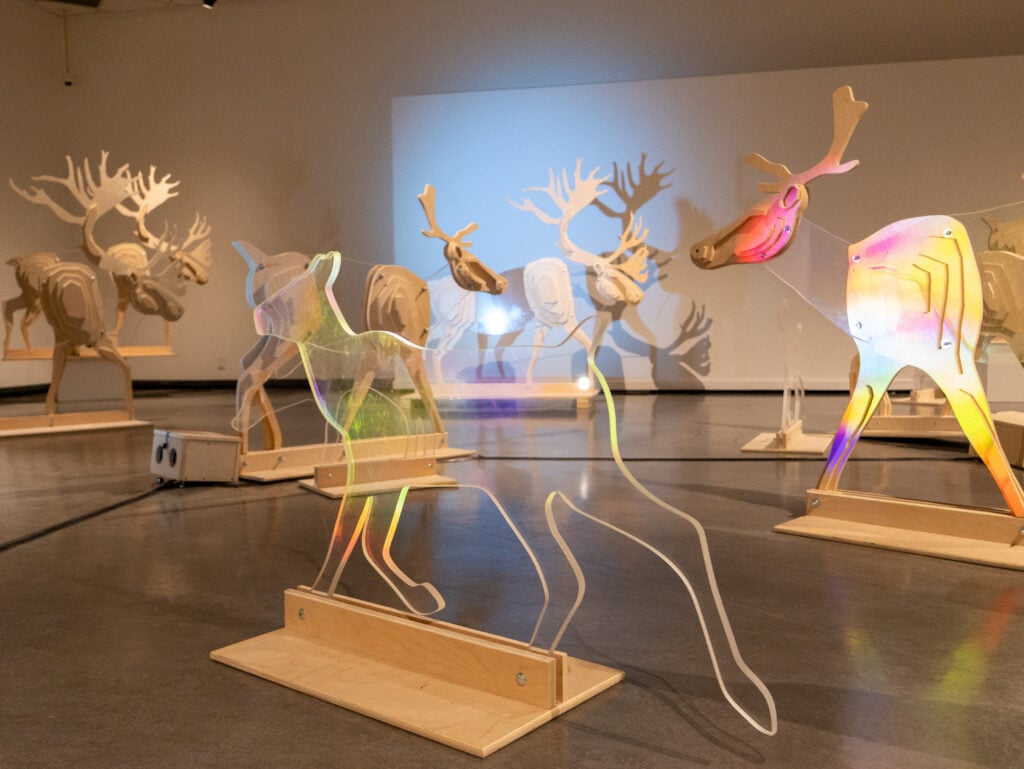
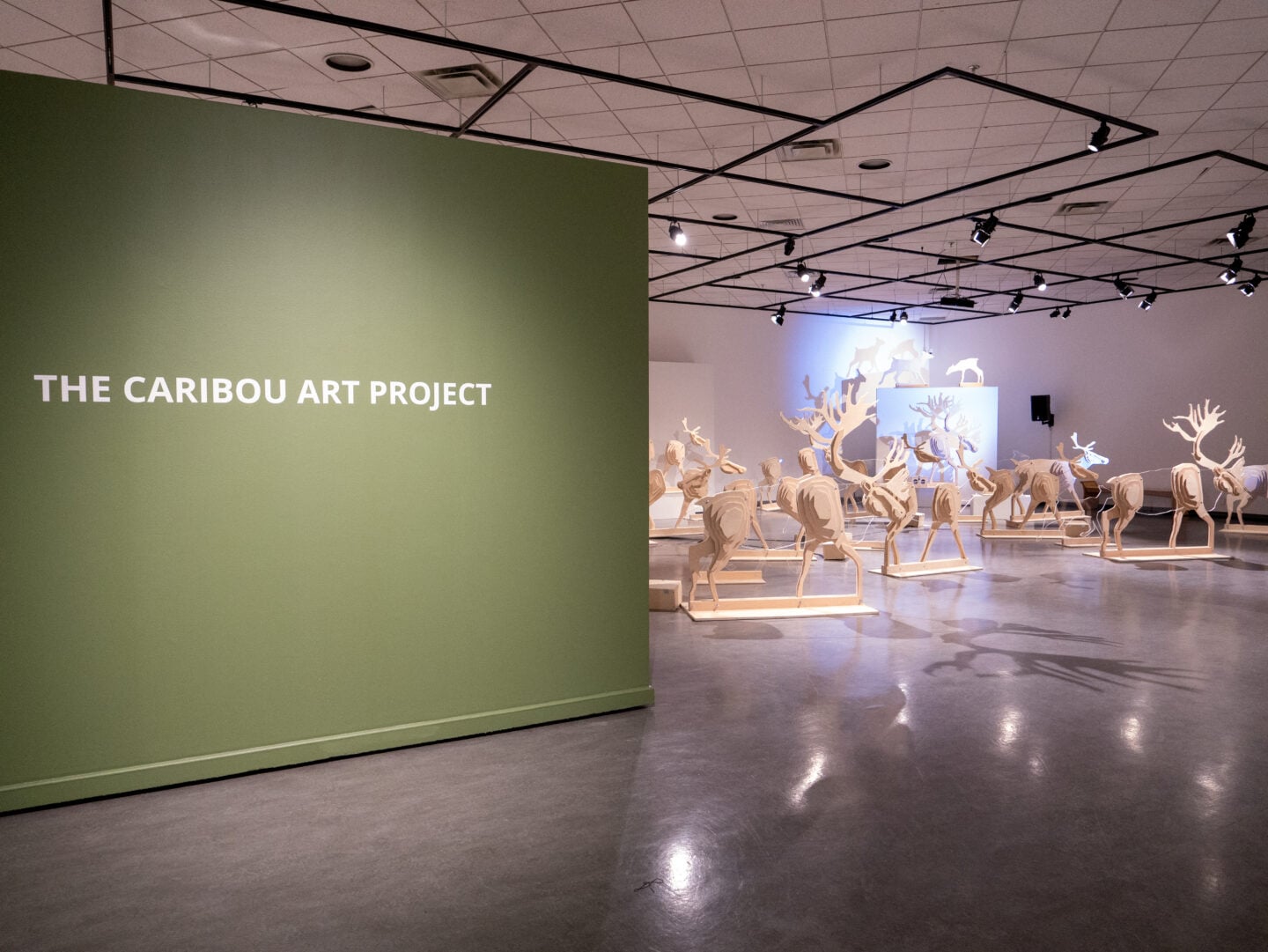
The Caribou Art Project features a herd of 34 caribou constructed with plywood and plexiglass. (Photo: Trina Moyles)
Expand Image
Advertisement
Advertisement
Live Net Zero Email Service

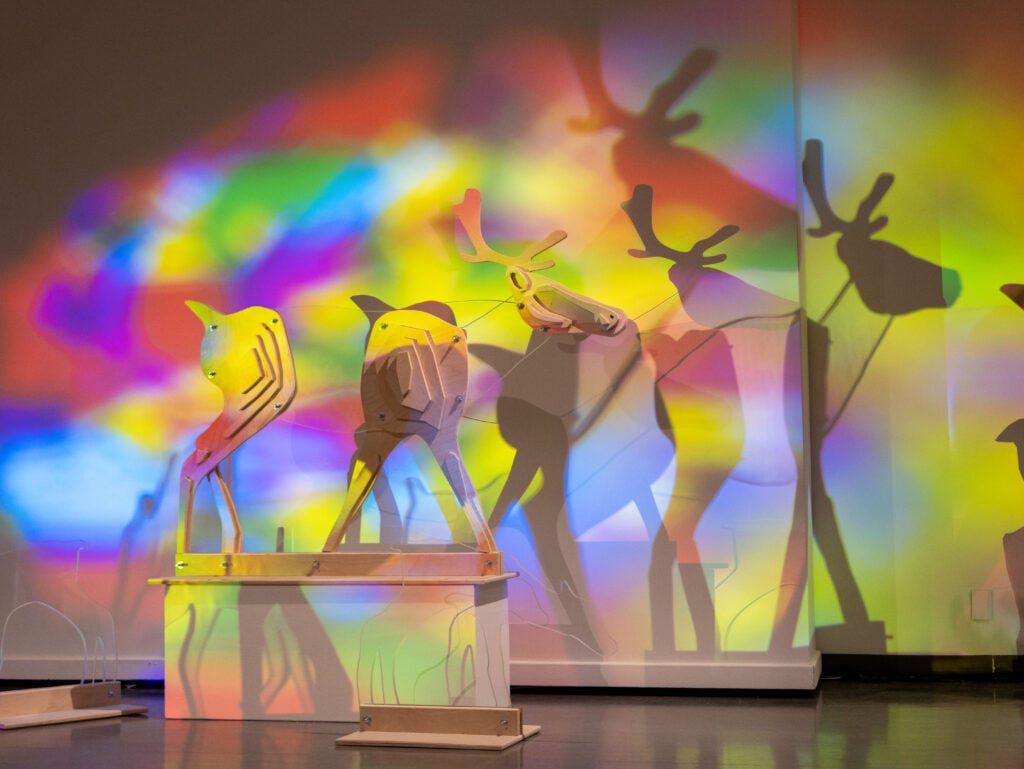
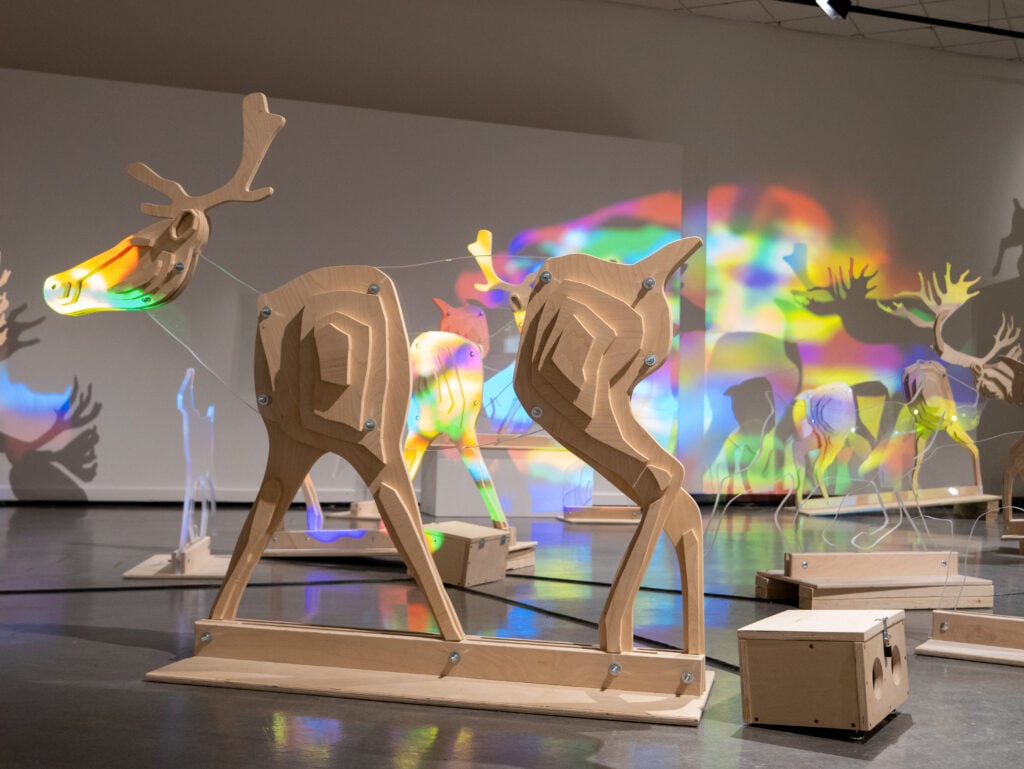
I hear the chorus of migratory birds and the sound of wind rushing across the tundra. Pale green light flickers across the gallery floor, transforming it into a carpet of lichen. I see the shapes of caribou cast onto the wall: barrel-chested bulls, slender-necked females, translucent calves. They appear larger than life, the bulls’ antlers thrusting upwards like a forest reaching for the sky. The voice of Kyla LeSage, a member of the Vuntut Gwitchin First Nation, weaves through the herd: “The caribou are eating medicine from the land…and we’re eating caribou. We’re eating the medicine that the caribou are eating.”

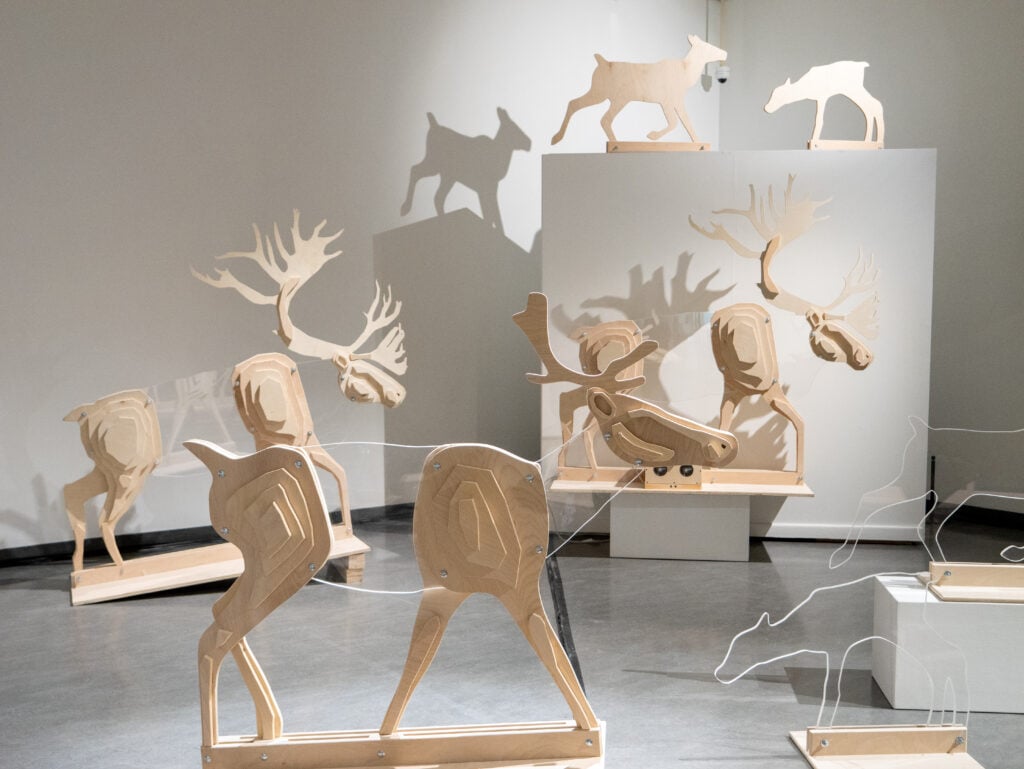
Shaped through collaborations with Indigenous artists, the project invites visitors to walk among the herd and experience caribou from a new perspective. (Photo: Trina Moyles)
Expand Image

The hairs on my arms stand on end. I’m walking with a life-sized herd of 34 caribou, constructed with plywood and plexiglass, made three-dimensional with light and shadow. The soundscape is ethereal: footsteps, breath, birds, frog song, and stories from Elders. Knives are sharpened. Meat sizzles in a pan. Eating is meaning. Eating is medicine.

Unconsciously, I step lightly, as though trying to minimize my human presence. “They always know where they’re born; they will always go back to that same place.” The words of Mary Maje, a Kaska Dena Elder, echo through the room. I am migrating with the herd towards the calving grounds.

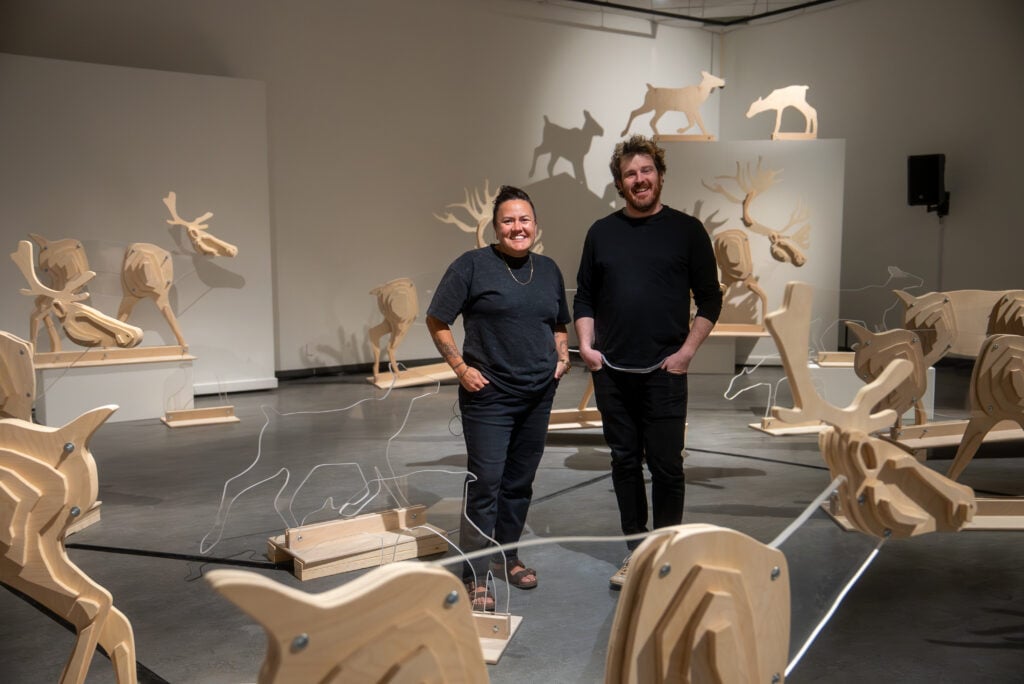
This is the immersive experience that Whitehorse-based artists Lianne Charlie and Nicolas Hyatt — co-creators of The Caribou Art Project, a recent installation at the Yukon Arts Centre — hoped to evoke. Being caribou means being invited into a relationship with the people who live most closely alongside them.

Lianne Charlie (left) and Nicolas Hyatt, the co-creators behind The Caribou Art Project. (Photo: Mike Code)
Expand Image

The concept for the installation was born five years ago when Charlie emailed Hyatt with the idea of bringing a caribou herd to life. She described what Hyatt recalls as “the dream, or vision” of caribou rising out of the landscape. Charlie wanted to create an opportunity for people without access to hunting, or land-based knowledge, to connect with caribou on a deeper level. Hyatt, a musician originally from Essex County, Ont., who’s been living in Whitehorse since 2018, was keen to collaborate.

Charlie, a member of the Wolf Clan and Tagé Cho Hudän (Northern Tutchone-speaking people of south-central Yukon), was inspired by conversations about caribou with First Nation Elders and hunters in Yukon and N.W.T. While her own family members speak more about their relationship with moose, she realized that “my people would have been caribou people, too.” As environmental changes have shifted caribou migration patterns over time — and as traditional skills have been eroded by colonization and the legacy of residential schools — many First Nations people have lost their connection to caribou, Charlie says. The installation is a story of “connection and disconnection.”

An immersive soundscape of wind, birds, stories and voices from Elders surround visitors as they move amongst the sculptures. (Photo: Trina Moyles)
Expand Image
Inspired by conversations with First Nation Elders, the project explores both connection and disconnection from caribou across generations. (Photo: Trina Moyles)
Expand Image

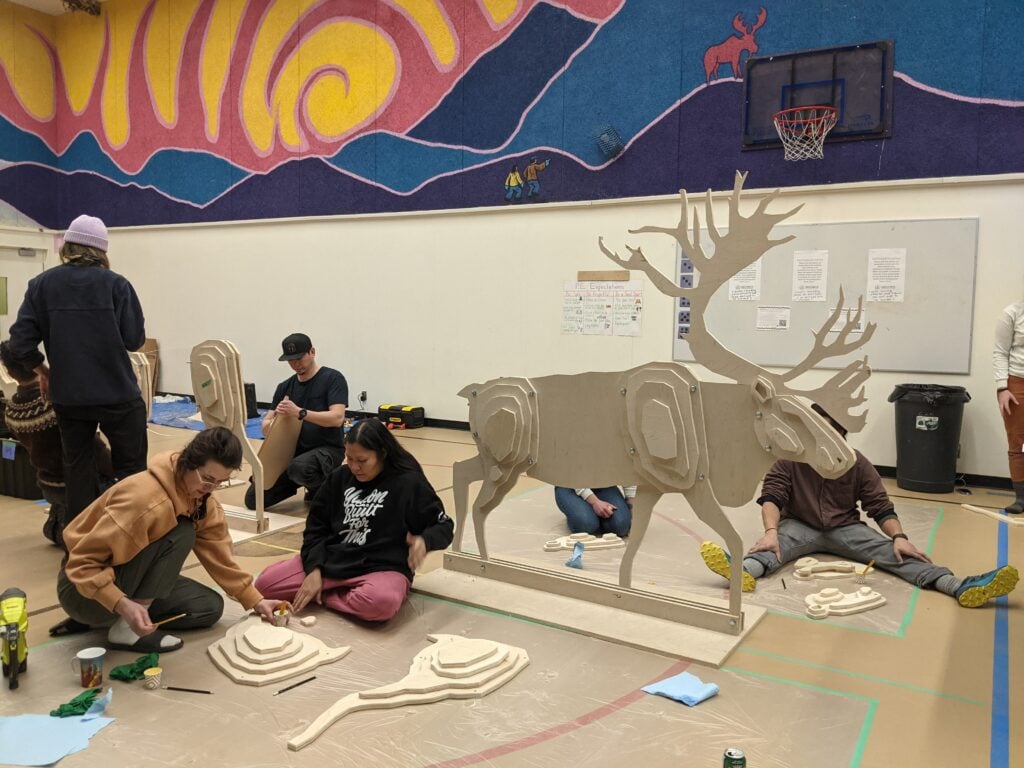
Charlie and Hyatt’s artistic vision extended beyond building a life-sized caribou herd. They imagined creating opportunities for First Nations and Inuvialuit artists to return to their communities or spend time on the land, learning about caribou and carrying those experiences back into the project. They invited eight Indigenous artists from the Yukon and N.W.T. to collaborate, to gather and contribute knowledge, or to create audio for the installation: Keira Ash, Kaitlyn Charlie, Bobbi Rose Koe, Kyla LeSage, Panigaq McDonald, Jeremy Parkin, Juniper Redvers and Amos Scott.

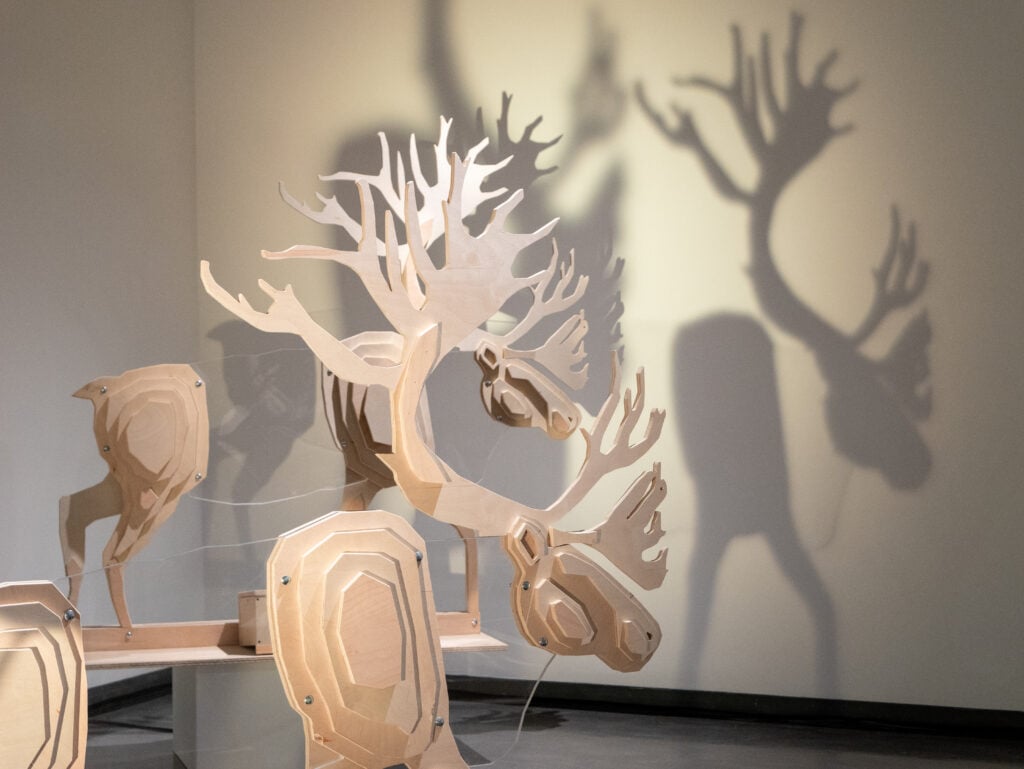
Behind every caribou is a lengthy process of cutting, sanding and assembling hundreds of pieces by hand. (Photo: Lianne Charlie)
Expand Image

Parkin travelled to Old Crow to participate in Vadzaih Choo Drin (Big Caribou Days), a festival celebrating the migration of the Porcupine herd. He interviewed his grandmother, a Gwich’in Elder. Kyla LeSage spoke about her first caribou hunt and learning the process of hide-tanning, doing the “final smoke on her first caribou hide,” says Charlie. Gwich’in artist Bobbi Rose Koe shared a story about the Gwich’in people trading half of their heart with the heart of a caribou.

Amos Scott, a Tlicho Dene filmmaker from Yellowknife, N.W.T., contributed knowledge about hunting and caribou behaviours, and influenced the positioning of the ungulate bodies in the exhibit. “The bull caribou are on the outside,” says Charlie. “The cow caribou and calves are all together, in the middle of the herd. They’re moving around, playing, eating and covering quite a bit of distance.”

Hyatt says it was fascinating to edit and layer more than 100 minutes of interviews with natural sounds from the land. Hyatt and Charlie created a 16-minute audio narrative that moves from a caribou hunt to processing the hides, cutting the meat thinly to make dry meat and “fixing,” or preparing the heads, considered a delicacy. They worked closely with sound artist Danielle Savage, who built ground-level speaker boxes, positioned throughout the herd.

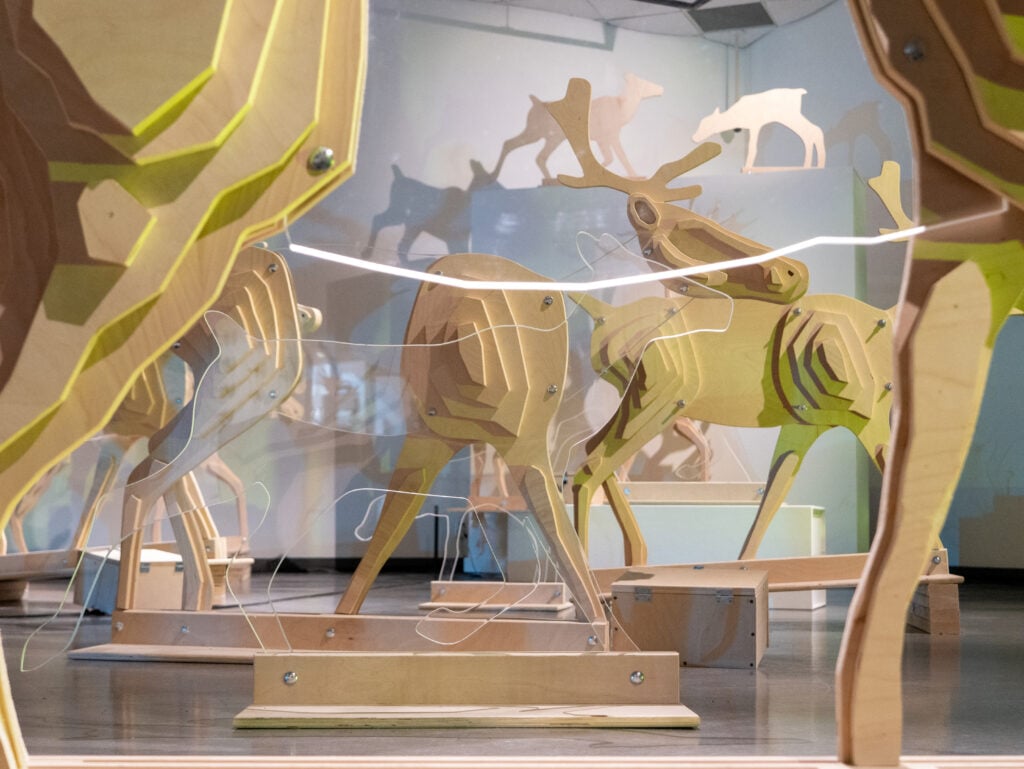
Layers of plywood and plexiglass give each caribou an ethereal, "ghost-like" presence. (Photo: Trina Moyles)
Expand Image

The sounds create a [sense of] emerging from the land,” Hyatt says.

The project is timely given the political and ecological threats facing caribou in northern Canada today. Many barren-land caribou herds have experienced rapid declines in recent years, due to climatic shifts and human pressures, including the expansion of roads and resource extraction projects. The N.W.T.’s Bathurst herd plummeted from 470,000 animals in the 1980s to less than 4000 in 2025.

Recently, First Nations communities and scientists alike have reported worrying declines in the Porcupine herd, which undertakes one of the longest land migrations on the planet, spanning thousands of kilometres across northern Alaska, Yukon, and N.W.T. A photo-census obtained in 2025 revealed that the herd dropped from 218,000 in 2017 to 143,000 in 2025.

Visitors are encouraged to slow down, listen and reflect on the role caribou have played in sustaining northern communities for millennia. (Photo: Trina Moyles)
Expand Image

Research shows that fewer calves in the Porcupine caribou herd are surviving. In the installation, the calves were intentionally cut entirely from plexiglass, made to appear like “ghosts,” says Charlie.

Natural fluctuations in barren-ground caribou herd sizes are normal. But alongside the U.S. government’s renewed push for oil and gas development in the Arctic National Wildlife Refuge — a 19.6-million-acre wilderness in northeastern Alaska where caribou calve each June — the recent downturn has Indigenous communities and scientists increasingly concerned. Despite widespread opposition and an ongoing lawsuit, the U.S. government plans to move ahead with an oil and gas lease sale on June 5, 2026.

“The Coastal Plain provides the nourishment the Porcupine caribou need to give birth and raise their calves, something that cannot be replaced,” says Harold Frost Jr., a former councillor with the Vuntut Gwitchin First Nation. “Threatening this place puts the herd and our food security at risk, especially as low salmon returns leave us increasingly dependent on imported food.”

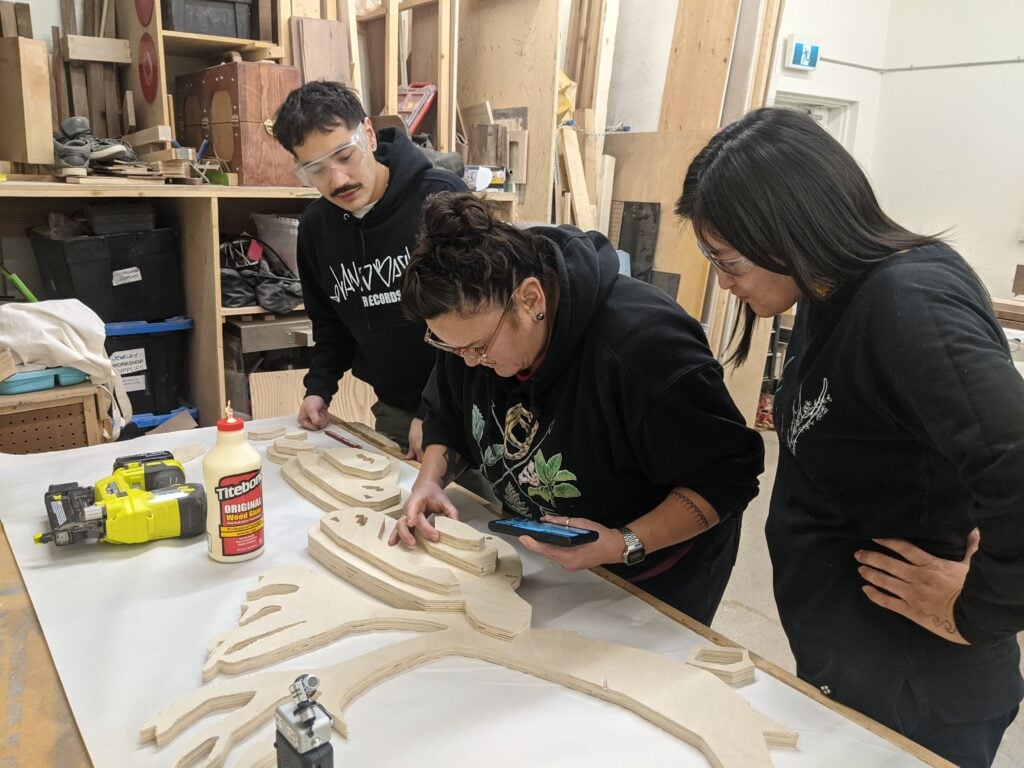
Lianne Charlie (centre) works on a caribou cutout with artists Jeremy Parkin (left) and Bobbi Rose Koe (right). (Photo courtesy Lianne Charlie)
Expand Image

Other herds are also at risk from proposed resource extraction projects, including the Finlayson herd, a mountain caribou population in southeastern Yukon. In April, the Yukon and federal governments approved the planned Kudz Ze Kayah copper, lead, and zinc mine, owned by Vancouver-based BMC Minerals, despite fierce condemnation from the Ross River Dena Council. The mine site is located 115 km south of Ross River on the traditional territory of the Kaska Dena people, who recently declared the Finlayson caribou herd to be “a living ecological person with inherent rights.”

The voice of a Kaska Dena Elder filters through the art exhibit, speaking of the proposed Kudz Ze Kayah mine. “That’s our heritage,” Dorothy Smith says of the caribou and the land. “They’re going to destroy it.”

Walking through the herd, there’s a feeling of connection, but also a recognition of the caribou’s fragility. The translucent calves are symbolic of everything that could be lost.

Each sculpture represents more than just a caribou and serves as a reminder of the stories, traditions and knowledge carried across the land. (Photo: Trina Moyles)
Expand Image
Standing within the installation offers visitors a rare opportunity to experience the scale and presence of caribou up close. (Photo: Trina Moyles)
Expand Image

“It really does feel like there’s a lot of things converging right now,” says Hyatt, although they want the public to be mindful of the fact that Indigenous communities have been in relationship with caribou — and colonial pressures on the landscape — for a long time.

“What does it mean to align ourselves with caribou? What are they teaching us?” Charlie asks. The artists are hopeful that the experience of walking with the herd, and being immersed within the stories of caribou people, might spur people to take action.

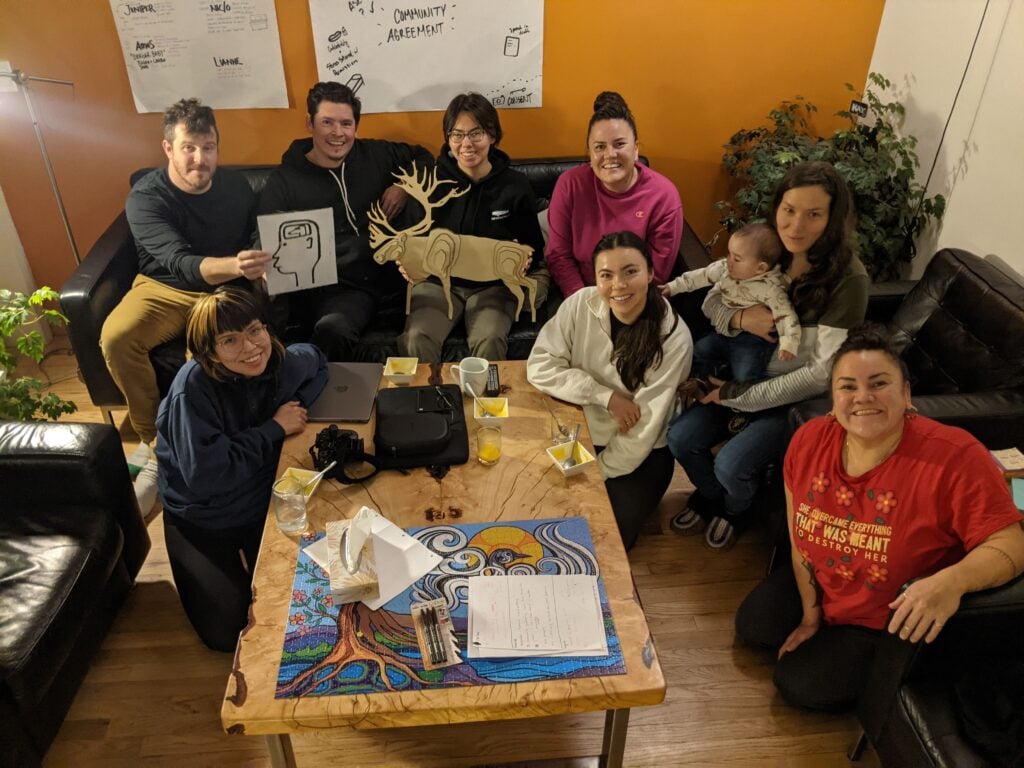
Nicholas Hyatt and Lianne Charlie meeting with some of the collaborating artists. (Photo courtesy Lianne Charlie)
Expand Image

“I think the invitation to be intimate is one of the core parts of this,” says Hyatt. “Many human beings have never been so close to a caribou.”

Hyatt, who participated in one of the hunts included in the audio narrative, describes the experience with emotion: the physical touch of the heat emanating from a freshly harvested animal, learning to finely slice dry meat, the crackling, whistling sounds of a caribou head roasting over a fire and witnessing the joy that the flavours and ritual bring out in people. The art project is meant to inspire a sense of “true reciprocity” between people and caribou, and learning from people who’ve lived with caribou for thousands of years, Hyatt says.

Where will the caribou herd migrate next?

Charlie and Hyatt created the caribou with the intention for them to be packed up into the back of a U-Haul and brought to other communities, or to show up in the streets, guerrilla art style, when needed.

“The idea around a migration was to drive from Dawson City, Yukon, all the way to Yellowknife, N.W.T., and stop along the way,” says Charlie. While there are no firm dates yet for that to occur, there are plans in the works.

The artists hope that the migrating installation will help bring Canadians closer to a species that most will never lay eyes on in the flesh — and to understand what’s at stake for the many Indigenous communities who call caribou kin.

Advertisement

Help us tell Canada’s story

You can support Canadian Geographic in 3 ways:

Live Net Zero Email Service

Related Content

Wildlife

Caribou people: The story of conserving the Porcupine caribou herd is a story about working together

Amid oil and gas threats to the ancient calving grounds of the Porcupine caribou herd and startling population declines, people on both sides of the border are coming together to protect them

  • 3940 words
  • 16 minutes
Two caribou silhouetted against a dark, rainy landscape

Wildlife

Caribou are vanishing at an alarming rate. Is it too late to save them?

After more than a million years on Earth, the caribou is under threat of global extinction. The precipitous decline of the once mighty herds is a tragedy that is hard to watch — and even harder to reverse.

  • 4559 words
  • 19 minutes

Wildlife

The (re)naming of caribou

The failure to recognize distinct species and subspecies of caribou is hampering efforts to conserve them. So, I revised their taxonomy.

  • 1540 words
  • 7 minutes
Caribou, like this one in the Northwest Territories, are increasingly threatened across the country. (Photo: Alex Elliott/Can Geo Photo Club)

Wildlife

At risk of extinction

Caribou numbers in Canada are dropping drastically — and quickly — leaving the iconic land mammal on the brink of extinction

  • 1578 words
  • 7 minutes
Advertisement
Advertisement