
People & Culture
The demise of the department store heralds a shift in downtown areas
The Bay department store in downtown Winnipeg will close in early 2021
- 1082 words
- 5 minutes
Places
Once considered too polluted for bathers, the capital’s River House and Dow’s Lake swimming areas give city swimmers new places to beat the heat

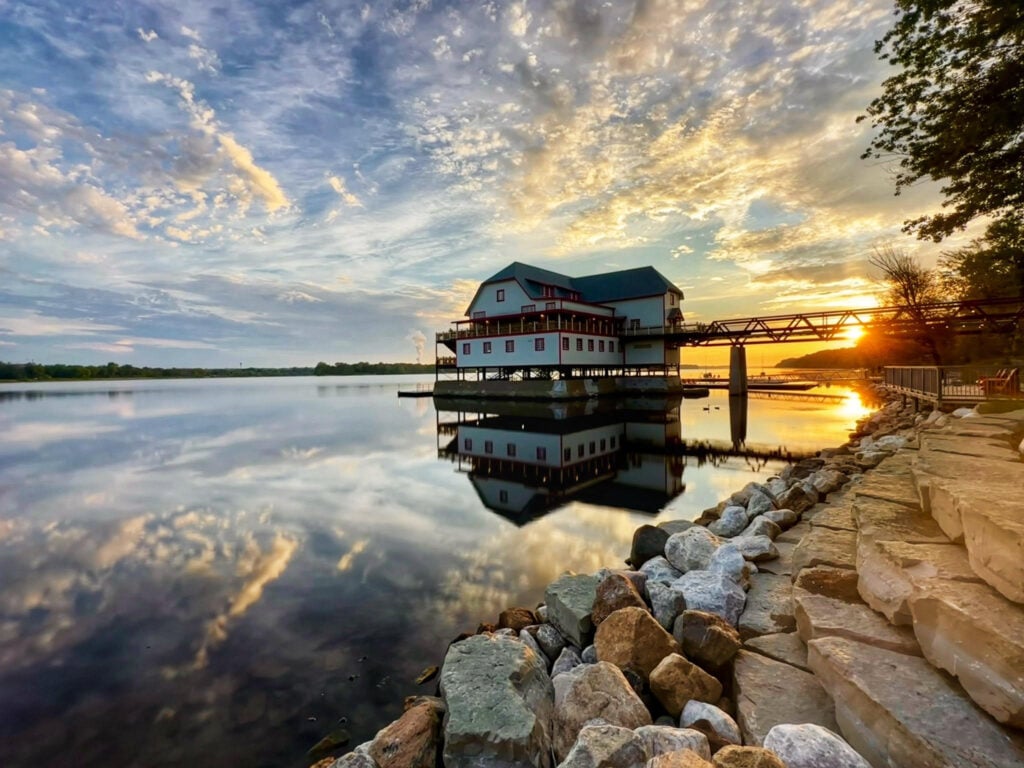
At the end of the streetcar line, through the tall white pines along the Ottawa River shoreline, women in swim dresses curl their toes over the edge of a long dock as they prepare for the 100-yard freestyle. A capacity crowd in boater hats and finger wave hairstyles watches the 1927 Canadian amateur swimming and diving championships from the two-storey deck of a steel-framed boathouse perched over the river northeast of Ottawa’s Rockcliffe Park neighbourhood.
Swimming was just one of many water activities, competitive or otherwise, the Ottawa New Edinburgh Canoe Club had planned for the Queen Anne-style building designed in 1914 by local architect C.P. Meredith on land leased from what would become the National Capital Commission, a Crown corporation. Construction paused as the Great War raged but, by 1923, it opened with a boathouse and a ballroom fit for the champagne-fuelled jazz age. And, for decades, it served as an important access point to the eastern portion of the waterway.
An Ottawa Citizen article in 1935 described the club as one that “has stood for all that is clean and wholesome in athletics and outdoor sports… that has trained thousands of boys and girls in the city in the arts of paddling, canoeing, swimming, diving and tennis.”
But, like the river, the fate of the boathouse ebbed and flowed. The building was in constant battle with the river’s freeze-thaw cycles, and concerns about water pollution began as early as the 1930s. The nail in the coffin came in March 1973, when the seasonal ice breakup took out the swimming raft, and much of the formal swimming there, seemingly for good.
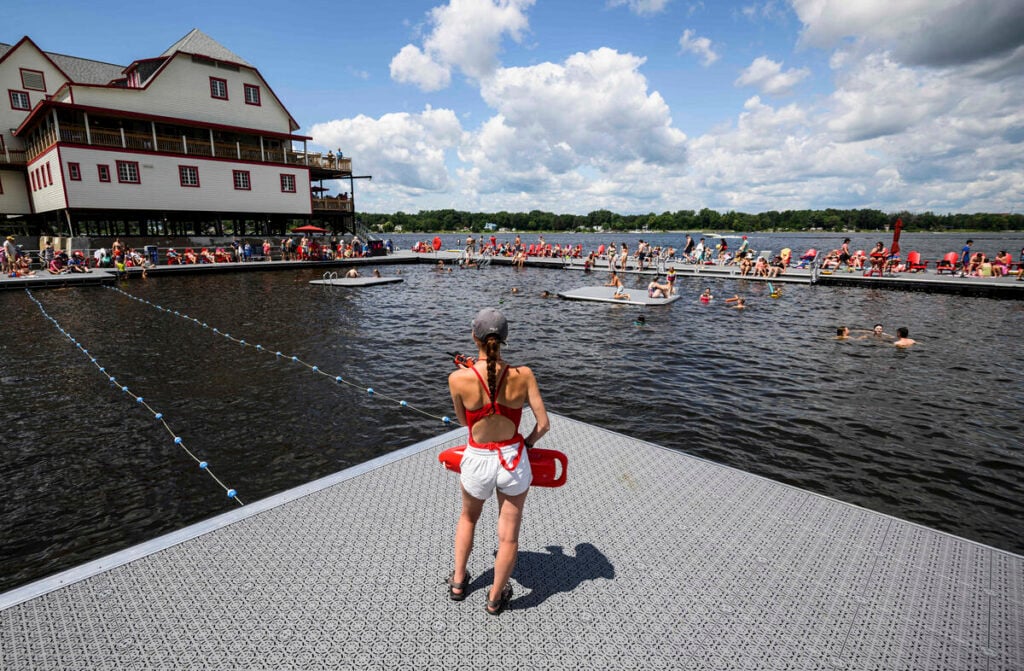
Until 2019. To preserve the boathouse’s historic value — it was recognized as a federal heritage building in 2010 — the National Capital Commission undertook a $20-million revitalization project that included shoring up its deteriorating structure, winterizing, adding a café, event space and offices for the Ottawa Riverkeeper organization and carving out a place for the building’s originators, now called the Ottawa New Edinburgh Club. Outside, the site saw extensive landscaping and restoration, while new public docks were installed to enclose a formal swimming area with two 25-metre lanes, which took careful consideration.
“Rivers are living things, and no two locations on the river are the same,” says Jennifer Halsall, a real estate advisor with the National Capital Commission, pointing to the city’s efforts to clean up its waterways in the last few decades and to the Ottawa Riverkeeper’s publicly available water quality data.
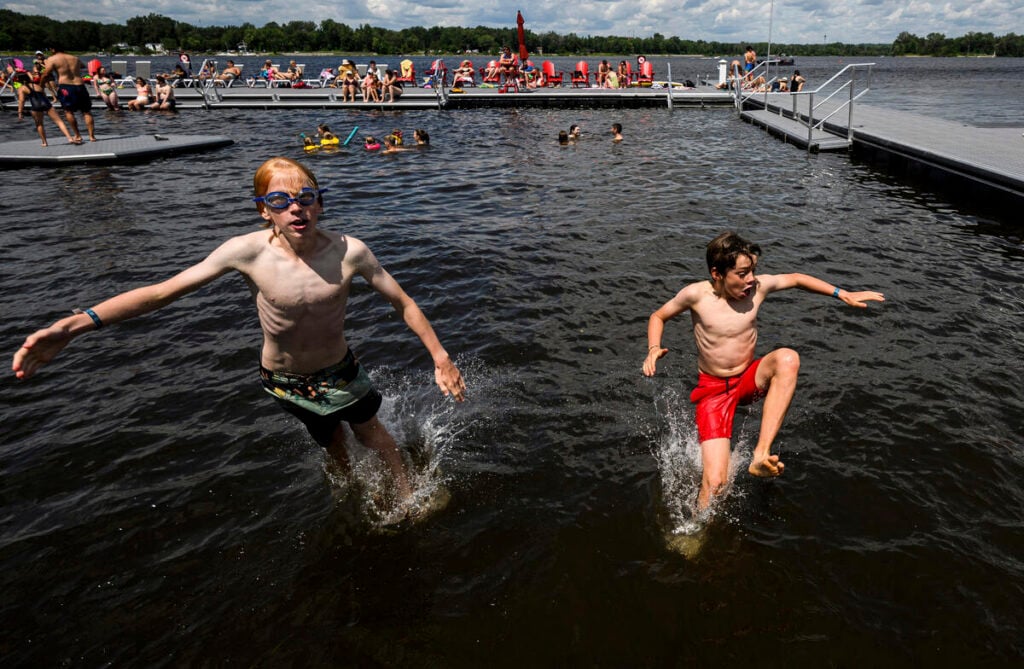
“After doing water testing and current assessments, we realized that it’s a phenomenal place to swim,” she says. “We have some of the best water in the National Capital Region at that location.… Part of that is just the river conditions in that area: it’s a big open channel, has a nice stable, gradual current; it’s got a good flush rate; it’s not near any major stormwater outlets, and it’s deep water.”
Since the newly named River House opened to the public in 2023, regulars like Alan McCullough, a member of the Ottawa New Edinburgh Club and an unofficial historian, have noticed new life breathed into the site.
“It seems to have been a great success,” says McCullough. “On a good day in the summer in the first years, there were people lined up to get in [to swim].”
“I think it’s fair to say that the NCC probably saved the building. And, God willing, it’s good now for another 100 years,” he says, noting, these days, the club focuses its efforts on tennis, rowing, sailing and canoeing.
The River House restoration is one of many such projects that the National Capital Commission has completed across the capital region to bring more public amenities to its shorelines, including renovations last year at Westboro Beach and a new swimming dock at Dow’s Lake — an endeavour that surprised many.
For years, Dow’s Lake “wasn’t thought to be viable for swimming,” says Halsall. “But when you take a closer look, you have pristine water, these thriving ecosystems with trophy fish in abundance, plenty of species at-risk, protected turtles and birds that are living quite happily and quite successfully there.”
Looking across the water from the new dock near Queen Elizabeth Driveway and Lakeside Avenue, the white pines at the Dominion Arboretum whisper the history of the waterway. What used to be a pine-dotted cedar swamp was razed and flooded during the construction of the Rideau Canal. Over its almost 200-year history as part of the canal system, Dow’s Lake has been put to work. At Commissioner’s Park, where thousands of tulips now bloom each May, was a lumber yard a century ago, with a cannery nearby. When water levels dip in the spring and fall, the shallow parts of the lake sometimes reveal sections of an old causeway that used to bisect the waterway from 1904 to 1928.
Because of that history, and the city’s sewage overflow issues, many thought the water quality in Dow’s Lake was unsuitable for swimming, says Halsall. However, testing for the bacteria E. coli, a standard marker for water quality, throughout 2023, 2024 and 2025 indicated safe levels. The National Capital Commission also assessed human health risks, searching for other water contaminants from the lake’s industrial past, such as lead and cadmium. When those turned up clean, “that really greenlit the site,” says Halsall.
Next, a team of researchers from Carleton University, the Ottawa Riverkeeper, University of Ottawa, coastal engineers and other partners came together on the project to “characterize a lake that had been misunderstood,” she says, which boasted, to her surprise, “three-foot-long” muskellunge and some 30 other fish species. The team chose to put the dock in an area with minimal algae accumulation and sufficient water depth — four metres, the deepest spot in the lake.
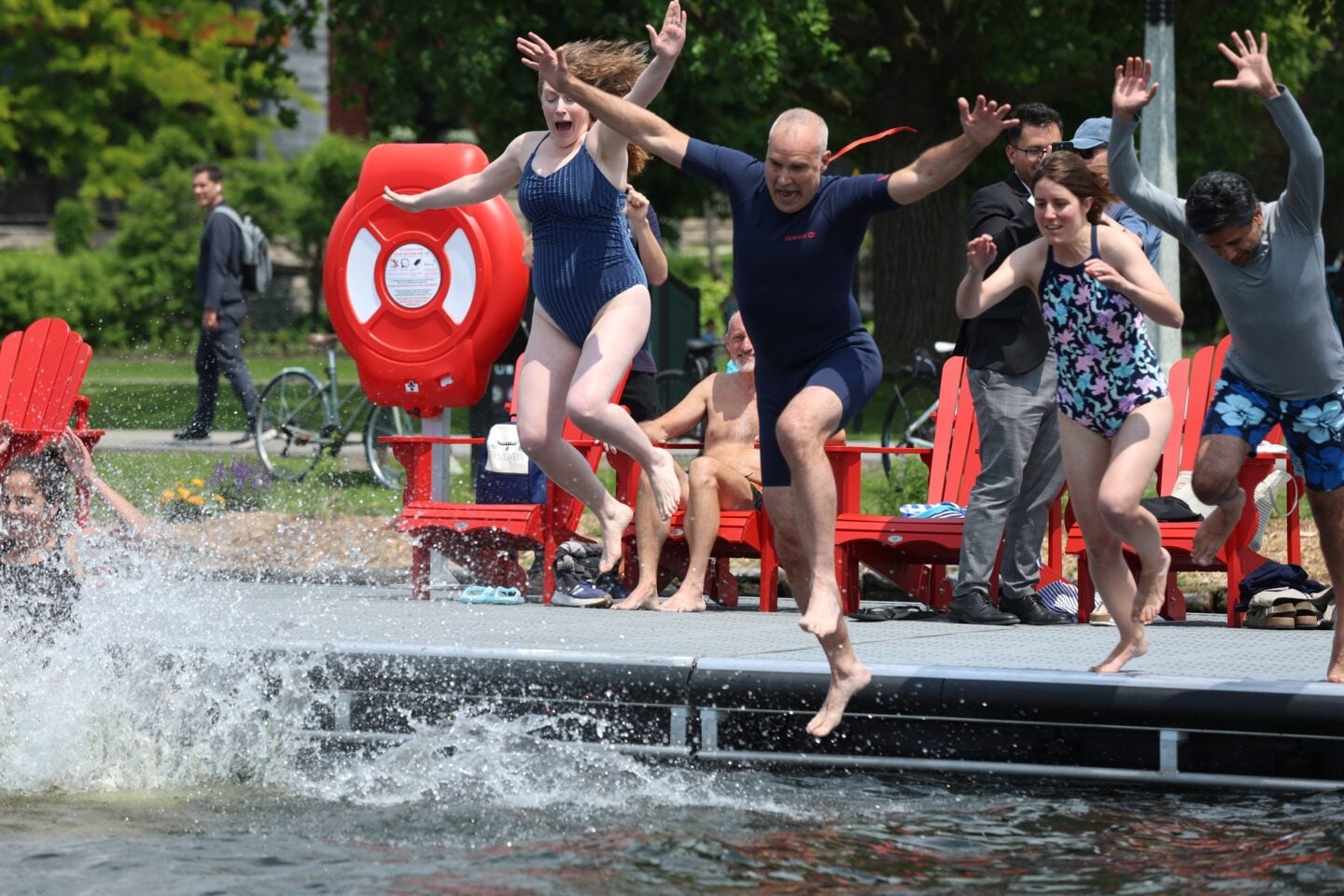
When the dock officially opened for swimming on June 12, 2025, Halsall and others from the research team were the first ones in the water.
“No one had thought swimming was possible [there]. And you had all sorts of folks chiming in, opinion pieces and comments on social media debating whether or not it could be done.”
But she says, “as the summer went on, and more and more people went in and had fun, we had more than 600 comments on our survey. They were overwhelmingly positive, and people wanted more.
“All of these swim areas are valuable,” says Halsall. “But particularly seeing swimming in a very dense urban area, with climate change and our summers getting increasingly hot, it’s nice to provide a way for people to cool off, to bond, to meet their neighbours and friends, to experience the city.”
People & Culture
The Bay department store in downtown Winnipeg will close in early 2021

Places
Celebrating urban agriculture in Canada’s national capital region

Places
L’agriculture urbaine à l’honneur dans la région de la capitale nationale du Canada

Environment
Canada's largest cities are paving the way for more eco-conscious commuting choices