Places

How Last Mountain Lake, Sask. became Canada’s first migratory bird sanctuary

Last Mountain Lake is a refuge for hundreds of thousands of migrating birds each spring

  • Apr 20, 2026
  • 802 words
  • 4 minutes
[ Disponible en français ]
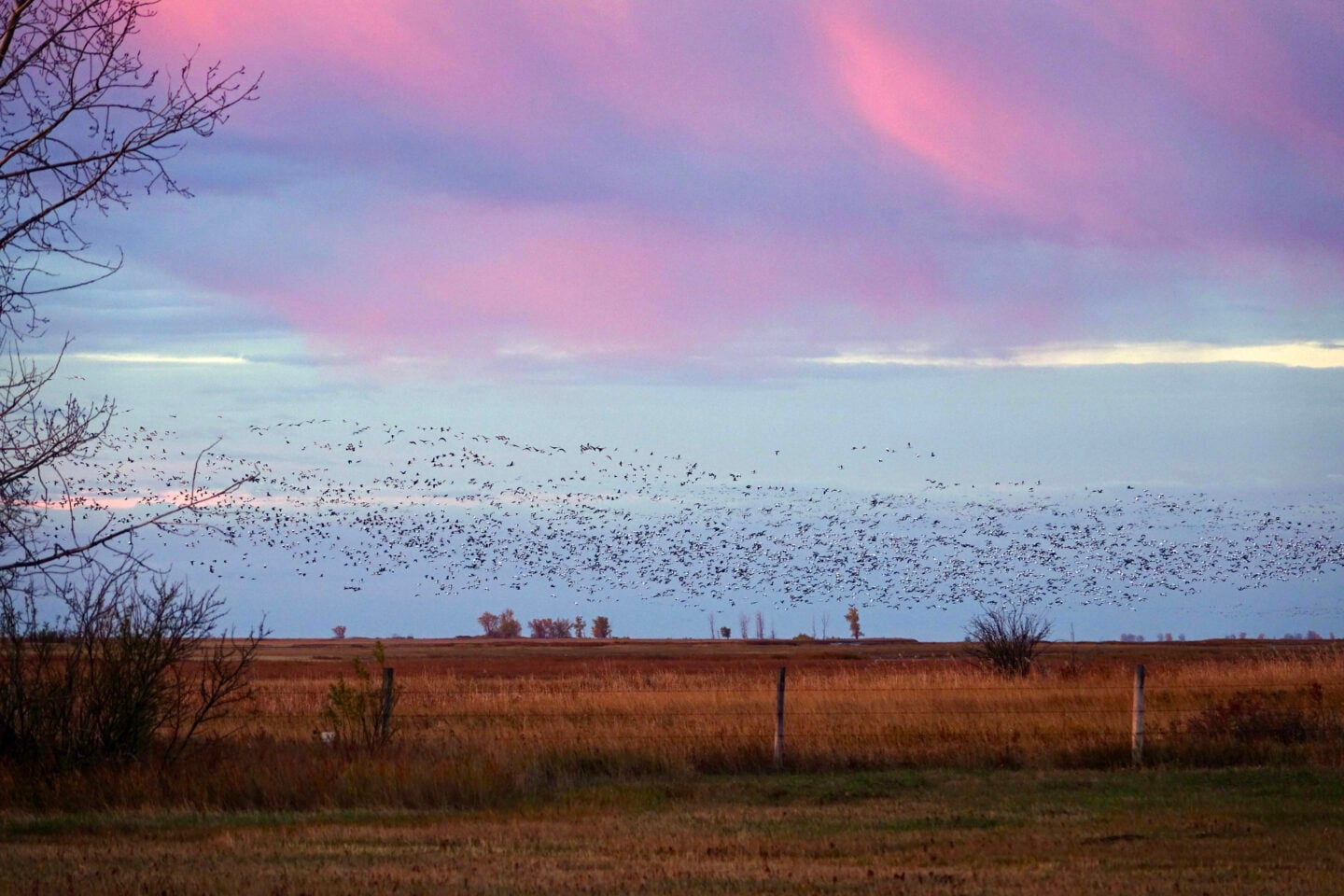
Last Mountain Lake Migratory Bird Sanctuary is one of the planet’s critical resting and refuelling places for migrating birds. About 300 species from all over the western hemisphere arrive each spring. (Photo: Carol Patterson)
Expand Image
Advertisement
Advertisement
Live Net Zero Email Service

In May, Saskatchewan’s Last Mountain Lake Migratory Bird Sanctuary is waking from its winter slumber. Prairie crocus, stubby and purple, pops up in bunches in the surrounding grasslands, a shy sign of spring. Slender spears of native prairie grass peek through the soil. Midges, the ones that don’t bite, rise in soft clouds from the ground. Claret-coloured mourning cloak butterflies with wings edged in yellow flit by, and so do red admirals. But the visitors haven’t yet arrived in big numbers. Instead, says Jordan Rustad, conservation coordinator at Nature Saskatchewan in Regina: “It’s usually just you and the birds.” 

So many birds. Last Mountain Lake, a slim stroke of water in an ocean of prairie between Regina and Saskatoon, is one of the planet’s critical resting and refuelling places for migrating birds. Rustad describes it as “a hidden gem in the prairies.” Hundreds of thousands, representing about 300 species, arrive from all over the western hemisphere each spring. More than a third of those species, including double-crested cormorants, gulls, terns and pelicans, stay to make their nests on islands in the lake.

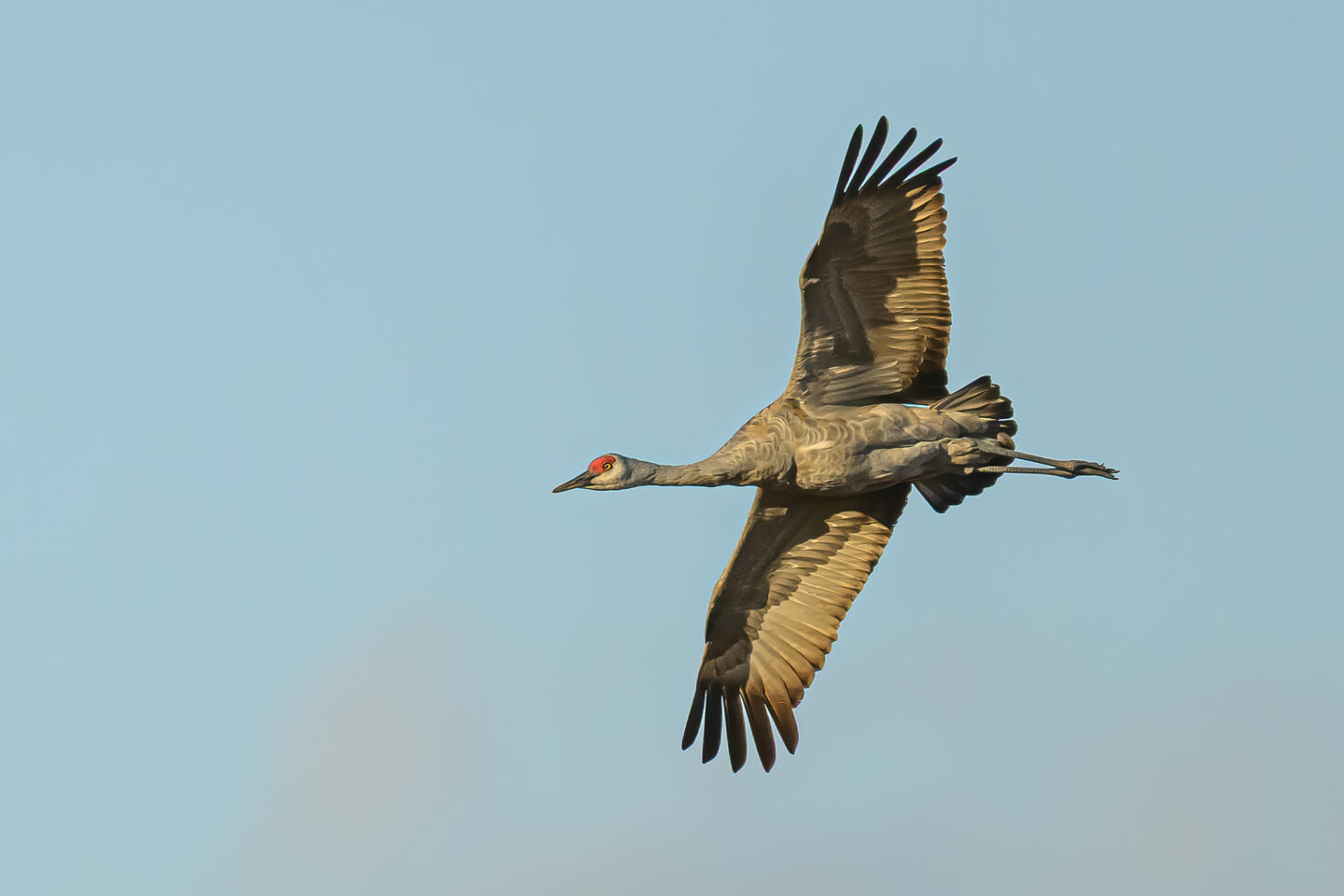
About 300 bird species pass through or nest at Last Mountain Lake Migratory Bird Sanctuary, including spectacular populations of sandhill cranes. Up to 50,000 sandhill cranes can be observed during peak migration. (Photo: Boyd Coburn)
Expand Image
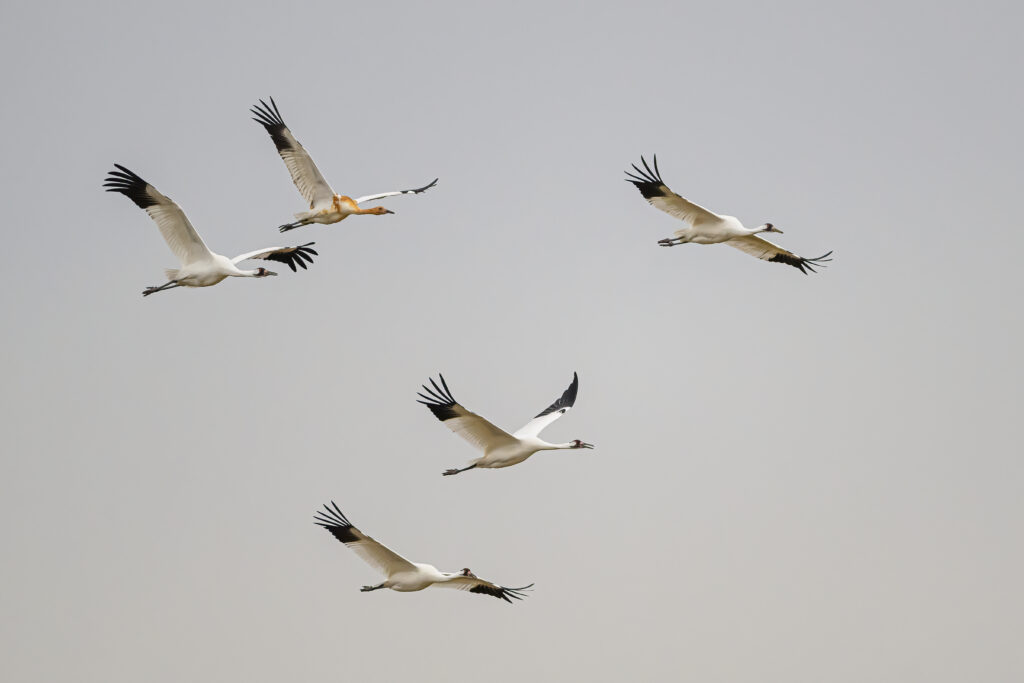
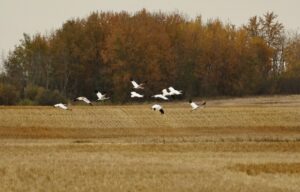
Last Mountain Lake is a critical stopover for endangered whooping cranes, which breed in Canada in the summer and winter in coastal marshes in Texas, U.S. (Photo: Boyd Coburn)
Expand Image
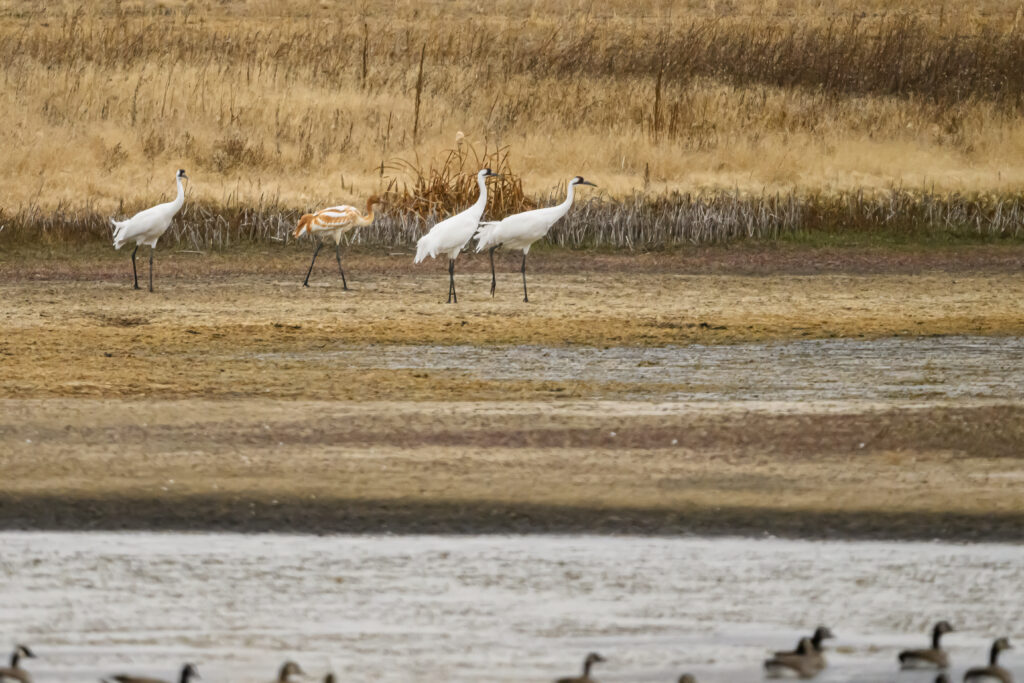
In the 1940s, the whooping crane population had plummeted to around just 20 birds. Today, conservation efforts have allowed the wild population to rebound to around 600. (Photo: Boyd Coburn)
Expand Image

Because these migrating birds have only a month or two to mate, lay their eggs, rear their young and then get back on the wing, they are in a hurry in the spring, Rustad says. But they still have time to sing. She’s particularly fond of the white-throated sparrow’s song: Oh, sweet Canada, Canada.

Cree oral history says that the Great Spirit scooped out Last Mountain Lake, also known as Long Lake, to make the last hills of creation near what is today the village of Duval, a few kilometres to the east. For generations, it was a cherished gathering place for Cree and Métis. But the lake’s spectacular spring and fall assemblies of waterfowl also caught the attention of early European settlers. In 1887, when the area was still deemed part of the North-West Territories, its lieutenant-governor, Edgar Dewdney, worried that the birds would be harmed by human settlement, persuaded the fledgling federal government to set aside about 1,000 hectares from development. Last Mountain Lake became North America’s first bird sanctuary and Canada’s first protected area.

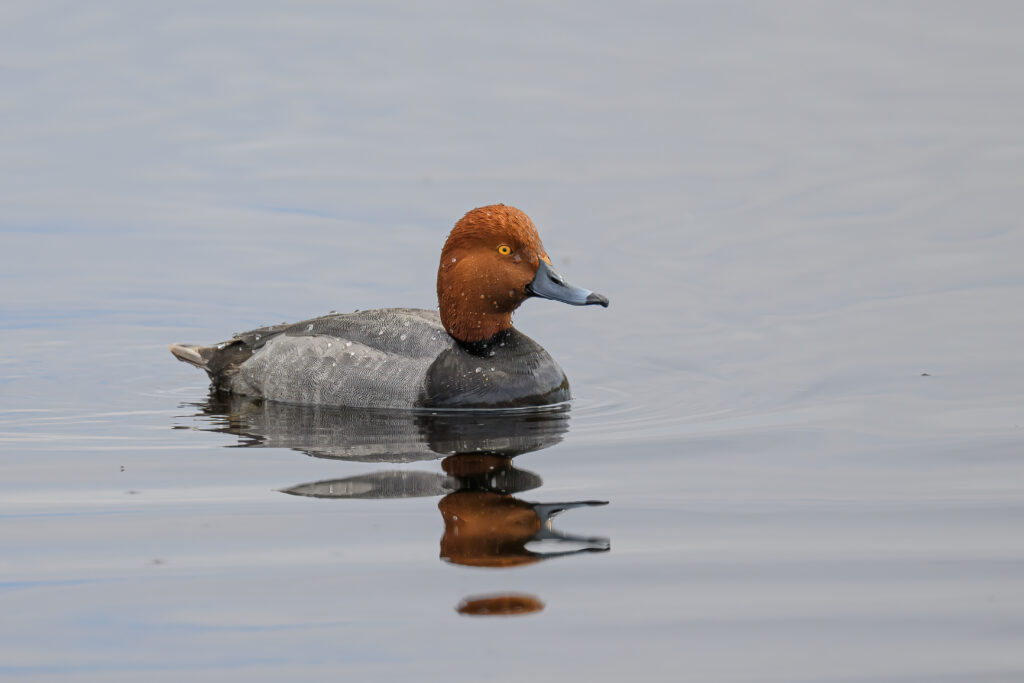
A male redhead, with its distinctive cinnamon head. These diving ducks breed in high concentrations in the prairie pothole region, which spans southern Alberta, Saskatchewan and Manitoba. (Photo: Boyd Coburn)
Expand Image

Today, the sanctuary — which is conserved by Environment and Climate Change Canada through the Canadian Wildlife Service — encompasses nearly 5,000 hectares, taking in the north part of the lake and part of the shore. It overlaps with the Last Mountain Lake National Wildlife Area and is also a national historic site.

It’s special because it’s in the middle of a central flyway for waterfowl and migrating birds as they travel through the Great Plains, says Ryan Fisher, curator of vertebrate zoology at the Royal Saskatchewan Museum in Regina. “It’s a little oasis in a larger landscape.”

Not only that, but it’s largely undisturbed by human activity.

“You get to see birds in their natural habitat, all concentrated at certain times of year, which is really, really special,” he says.

Among the migrators are the globally endangered whooping crane, shorebirds, warblers, ducks that dabble in the lake mud for food, and ducks that dive to the bottom for it. The wonder of visiting the sanctuary when he was a child helped inspire Fisher’s life’s work. “I remember as a young kid, going for a drive around the area and one day seeing hundreds of sandhill cranes in a field and then just seeing all the waterfowl. You go for a drive in the fall and you just see hundreds to thousands of ducks on the lake.” 

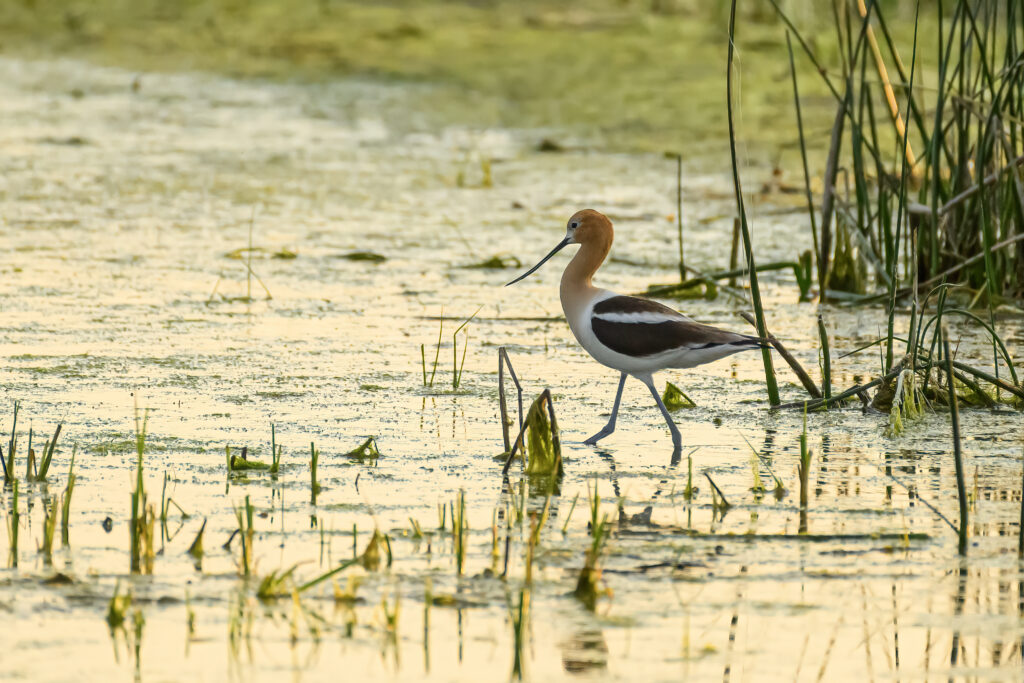
The American avocet sweeps its upturned bill from side to side to catch aquatic invertebrates. It is often spotted foraging at Last Mountain Lake, particularly along the shoreline. (Photo: Boyd Coburn)
Expand Image

Fisher remains fascinated by the area. He did his doctoral work in the national wildlife area abutting the sanctuary, focused on the threatened Sprague’s pipit, which nests on the ground. The tiny bird’s breathy whistle of a song is a calling card for the prairies.

By fall, just as the trees start to lose their leaves, the sanctuary comes alive again. The birds, en route back south, are not as rushed. They linger, and their songs fill the skies, Rustad says. Early in the morning, the cranes start to take off from the wetlands, calling as they mount. Flocks of honking snow geese follow.

As in spring, in fall Rustad catches and bands birds at the Last Mountain Bird Observatory, located in the regional park next to the sanctuary. It’s a means of tracking their movements. Most are small, weighing less than a loonie, and she marvels at how frail they seem when she holds them in her hands.

But then she lets them go, and they return to their great migration, the ritual that keeps them alive and, next spring, will bring them back to Last Mountain Lake once again.

This story was created in partnership with Environment and Climate Change Canada.

Advertisement

Help us tell Canada’s story

You can support Canadian Geographic in 3 ways:

Live Net Zero Email Service

This story is from the May/June 2026 Issue

Related Content

Mapping

For the birds! Mapping Canada’s 92 migratory bird sanctuaries

These federally protected areas are located along avian superhighways — also known as flyways — traversed by millions of birds on their annual migrations. They provide vital stopover sites and breeding grounds.

  • 1962 words
  • 8 minutes

Travel

A Saskatchewan road trip in search of whooping cranes

In the mid-20th century, the elusive birds numbered in the dozens. Thanks to decades of conservation efforts, they appear to be making a comeback. 

  • 1444 words
  • 6 minutes

Travel

Notes from the field: Saskatchewan Whooping Cranes

RCGS Travel Ambassador Carol Patterson recounts her experience observing these legendary birds on a Canadian Geographic Adventure

  • 571 words
  • 3 minutes

Wildlife

By the numbers: Protected landscapes and the birds that live there

National wildlife areas and migratory bird sanctuaries form a vast conservation network across the country. Here are a few surprising facts about these protected landscapes and the bird species that live there

  • 1087 words
  • 5 minutes
Advertisement
Advertisement