People & Culture

Before Paris, there was Toronto — where Ernest Hemingway learned to write

The renowned journalist-turned-novelist’s time in Toronto forged the discipline and voice that would eventually earn him the Nobel Prize in literature

  • Published Mar 25, 2026
  • Updated Apr 11
  • 1,123 words
  • 5 minutes
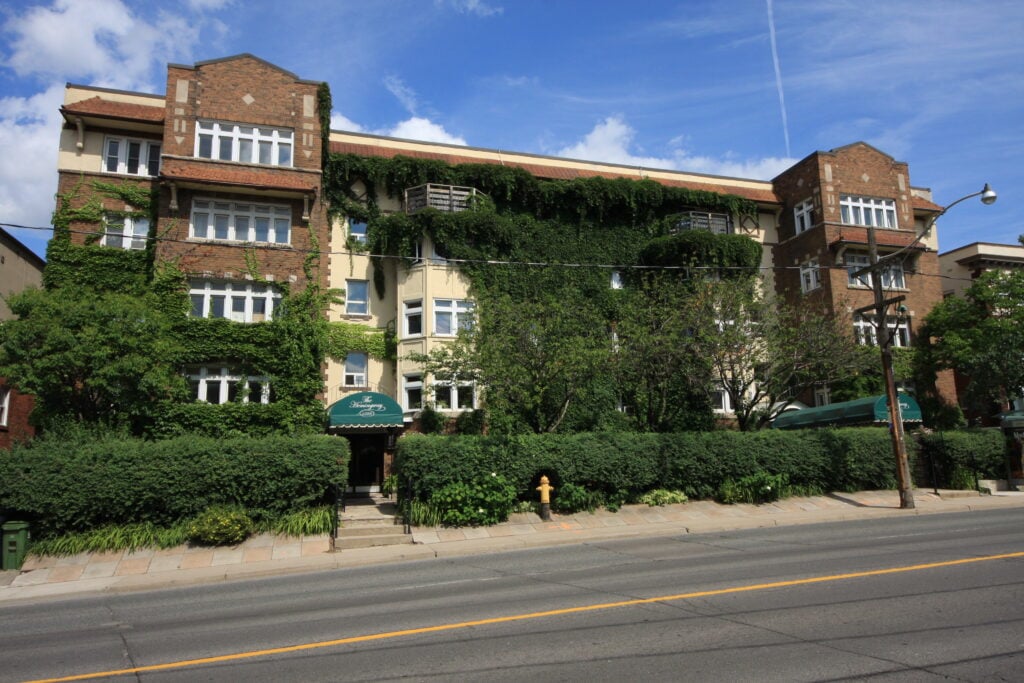
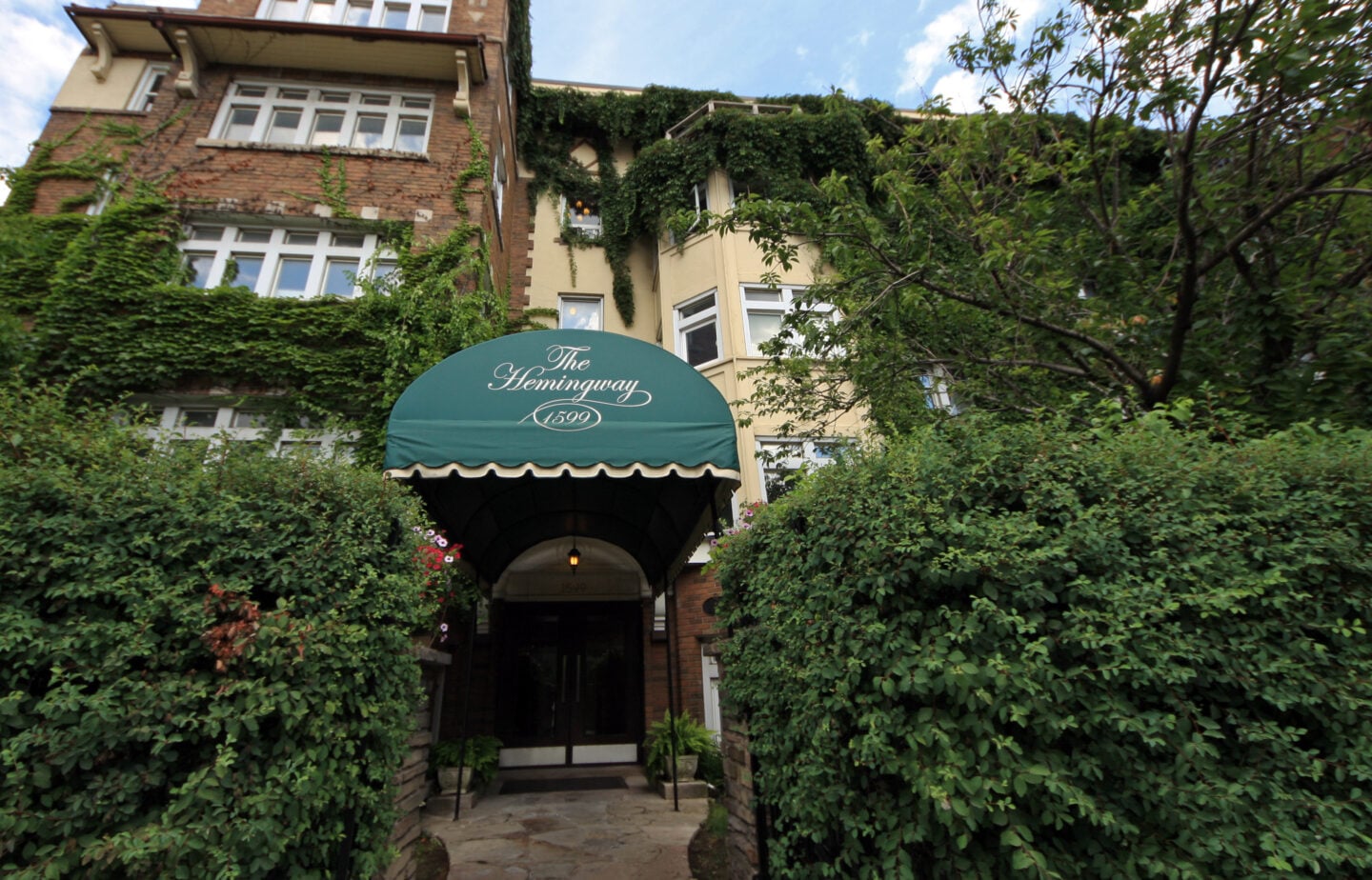
1599 Bathurst, located at the edge of Toronto's Cedarvale Ravine, was where Hemingway lived from 1923 to 1924.
Expand Image
Advertisement
Advertisement
Live Net Zero Email Service

For many, an introduction to Ernest Hemingway begins in high school, when novels like A Farewell to Arms and The Old Man and the Sea ignite a sense of adventure. His carefully rendered landscapes and spare, muscular prose have the power to captivate immediately — as they did me. 

But to truly understand a writer, or an explorer, I believe you must visit the places that shaped them. Geography, and the culture it nurtures, can significantly influence a person. Over the years, I followed Hemingway’s trail from Oak Park and Chicago to the Caribbean, Pamplona, Paris, the Basque Country, and Barcelona, the landscapes that shaped his worldview. Yet one place, often overlooked, played a decisive role in his development: Toronto, the city where Ernest Hemingway learned to write for a living.

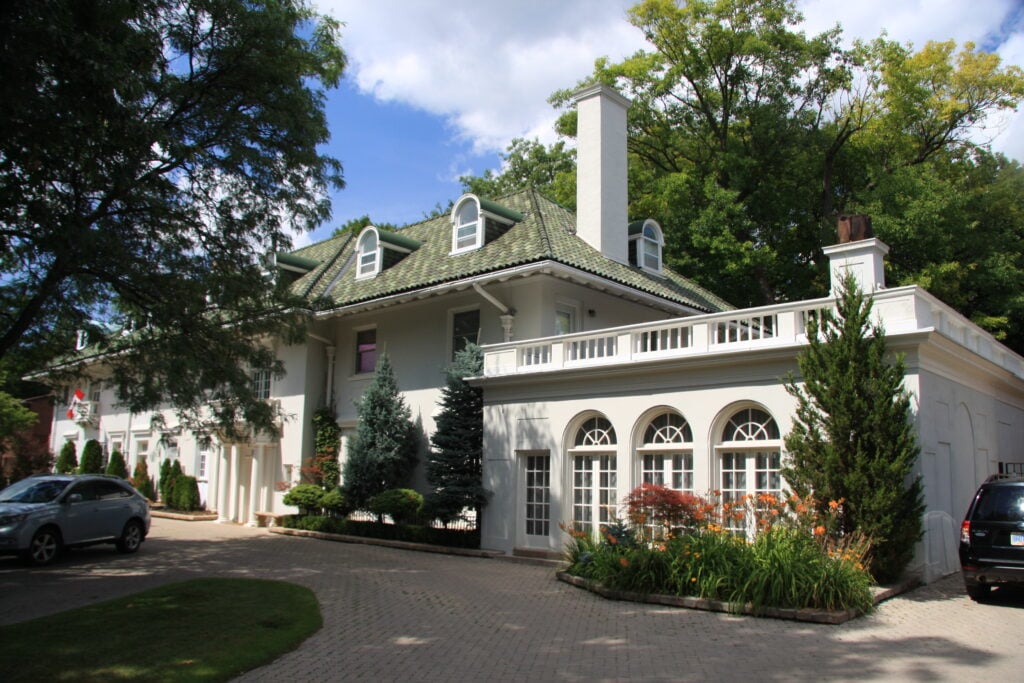
153 Lyndhurst Avenue, near Toronto's Casa Loma, was where Hemingway lived when he first arrived to the city with the Connables in January 1920.
Expand Image

I first discovered Hemingway’s Toronto connections in 1986, after purchasing Jeffrey Meyers’s Hemingway: A Biography at the Hemingway Home in Key West, Florida. To my surprise, Meyers listed three Toronto residences: 153 Lyndhurst Avenue, 592 Sherbourne Street, and 1599 Bathurst Street, all of which I later visited and found still standing. That discovery began a decades-long pursuit to trace Hemingway’s footsteps around the world, including the Toronto addresses where he developed the discipline that would later earn him a Nobel Prize.

Hemingway first arrived in Toronto in January 1920, travelling by rail through Union Station, whose Great Hall remains largely unchanged. He came at the invitation of Ralph and Harriet Connable, wealthy Americans, living at 153 Lyndhurst Avenue near Casa Loma, who had met him in Chicago and hired him as a tutor and companion for their son. The position offered room, board, spending money, and an opening that changed the trajectory of his life: writing for the Toronto Star Weekly. That winter, he produced many articles on topics ranging from the outdoors to social issues, revealing the crisp, economical style that would come to define his fiction.

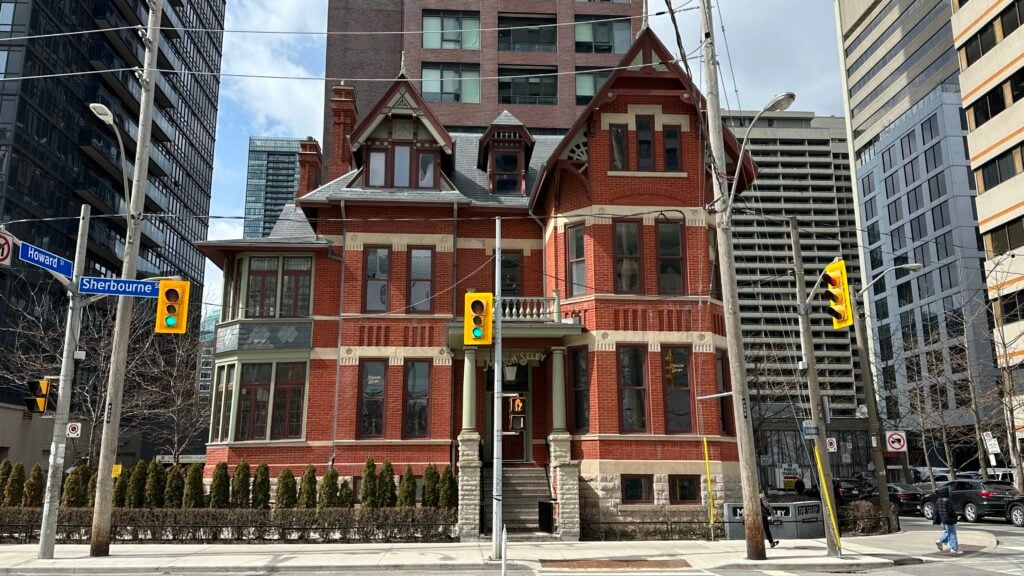
Today, the 136-year-old C.H. Gooderham House at 592 Sherbourne Street operates as a French-inspired bistro, Maison Selby.
Expand Image

By 1923, Hemingway and his wife, Hadley, were living in Paris. When Hadley became pregnant, they returned to Canada for the birth. After arriving in Quebec City and travelling once more through Union Station, they checked into the Selby Hotel at 592 Sherbourne Street — a former Gooderham mansion tied to the distilling family behind what is now the Distillery District, just east of Toronto’s downtown core. The location placed them within reach of both the Toronto Star offices and the Wellesley Hospital, where their son, John Hadley Nicanor (“Bumby”) Hemingway, was born on October 10, 1923.

Wellesley Hospital no longer stands; its site at 160 Wellesley Street East is now the Rekai Centre at Wellesley Central Place, a long-term care nursing home. In the early 1990s, I served on the board of the Hungarian Festival of the Arts alongside Kati Rekai, never imagining that her family’s centre now stands at the same Wellesley Street address where Hemingway’s son was born. The connection added an unexpected personal dimension to a story I had already spent years investigating.

Hemingway lived at 1599 Bathurst Street until 1924. At the time, he paid $85 a month.
Expand Image

Before Bumby’s birth, Hemingway had signed a lease at 1599 Bathurst Street — then known as Cedarvale Mansions — for $85 a month. The family moved in later that October, and it was here that Hemingway produced a series of Toronto-themed columns for the Toronto Star and its weekly edition, sometimes under pseudonyms such as “John Hadley” and “A Foreigner.” He wrote about hockey, restaurants, theatre, and the city’s urban life — material far removed from the bulls of Pamplona or the battlefields of Europe. Yet, these assignments sharpened the journalistic fundamentals that would define his work: precision, clarity, observation, and the ability to extract drama from ordinary life.

The Hemingways remained at 1599 Bathurst until January 1924, when Ernest, restless and eager to return to Europe, broke the lease, later worrying about the consequences. Decades later, a close friend of mine, Lynn Hartman, lived in the same building on Bathurst. Visiting the apartment, I often thought of the young Hemingway pacing those corridors, notebook in hand, shaping the descriptive and narrative skills that would shape one of the most influential literary styles of the 20th century.

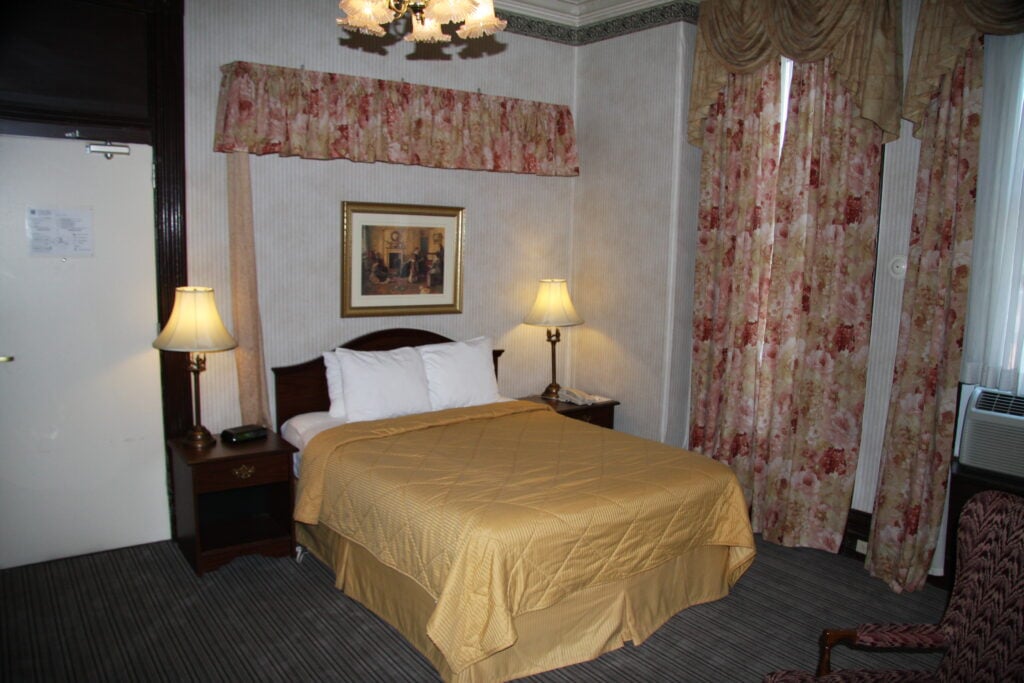
Inside 592 Sherbourne, where the Hemingways briefly resided in 1923.
Expand Image

Personal connections to Hemingway’s Toronto story continued to surface in unexpected ways. In 2013, I was working as a Public Affairs Officer with the Canadian Armed Forces, while also acting as Chair of the Fellows Committee with the RCGS. During a visit to Toronto, Michael Palin of Monty Python and I bonded over our shared love of Hemingway after I was asked to coordinate his media interviews while he was in the city. Despite Palin having written Michael Palin’s Hemingway Adventure, he was astonished when I told him that the famed writer had once lived in Toronto — I later drove Palin to Hemingway’s home at 1599 Bathurst. On the way, I joked, “What have the British ever done for us?” Without missing a beat, Palin launched into the entire Monty Python “What have the Romans ever done for us?” routine, one of my favourite moments from The Life of Brian and a perfect comic interlude in an otherwise literary pilgrimage.

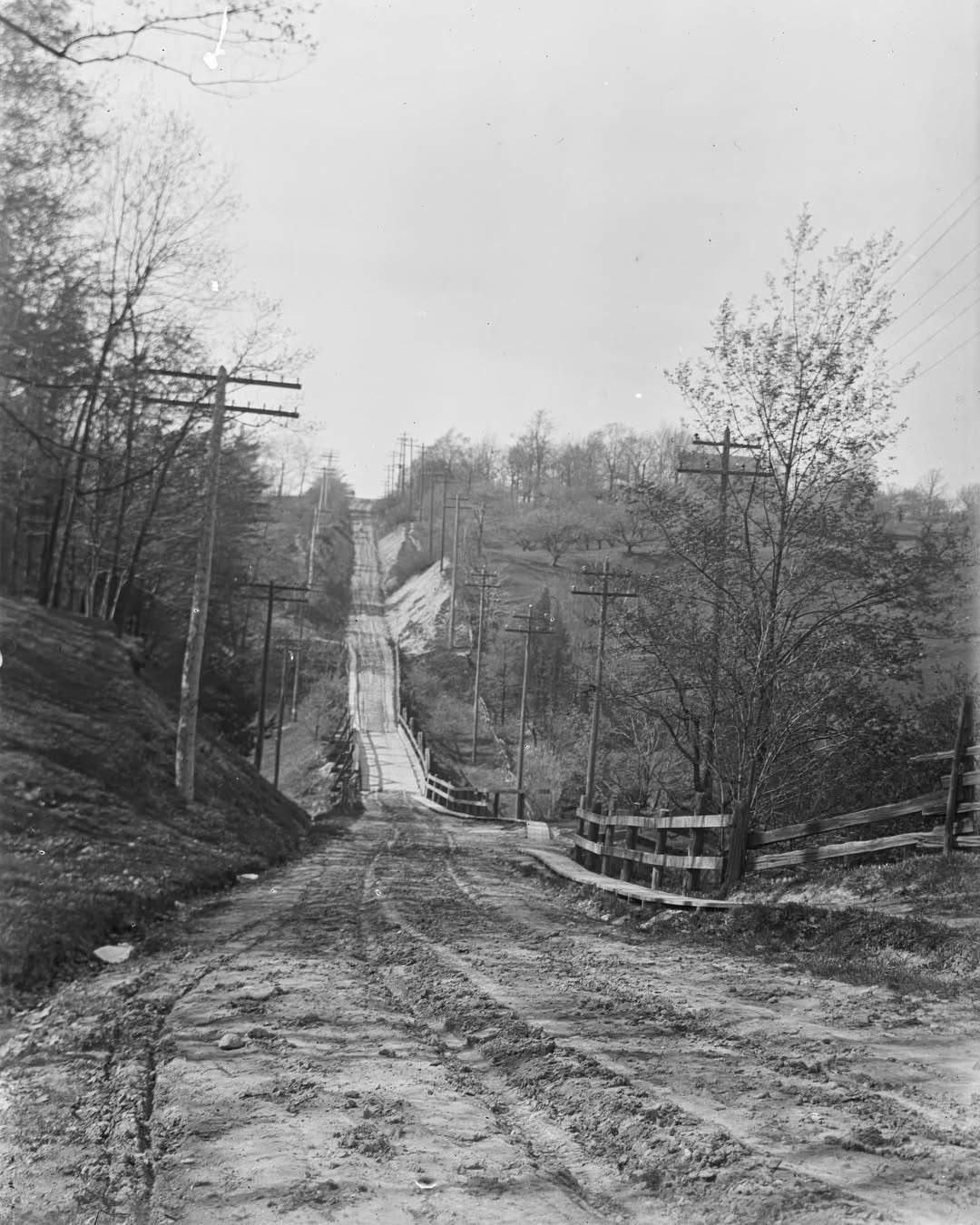
The view looking north from the intersection of Bathurst Street and Lonsmount Drive in Toronto, just north of St. Clair in 1915 where Hemingway would move into an apartment at 1599 Bathurst Street along the east side of this photo eight years following. (Photo: Toronto Public Library)
Expand Image

In 2015, I photographed all three of Hemingway‘s Toronto residences and later mailed the prints to Palin in England. Later that year, I visited 592 Sherbourne again and photographed the rooms the Hemingways had occupied. In 2025, I visited the building again and found the rooms that had since been gutted for condominium renovations. Toronto changes, but the echoes remain.

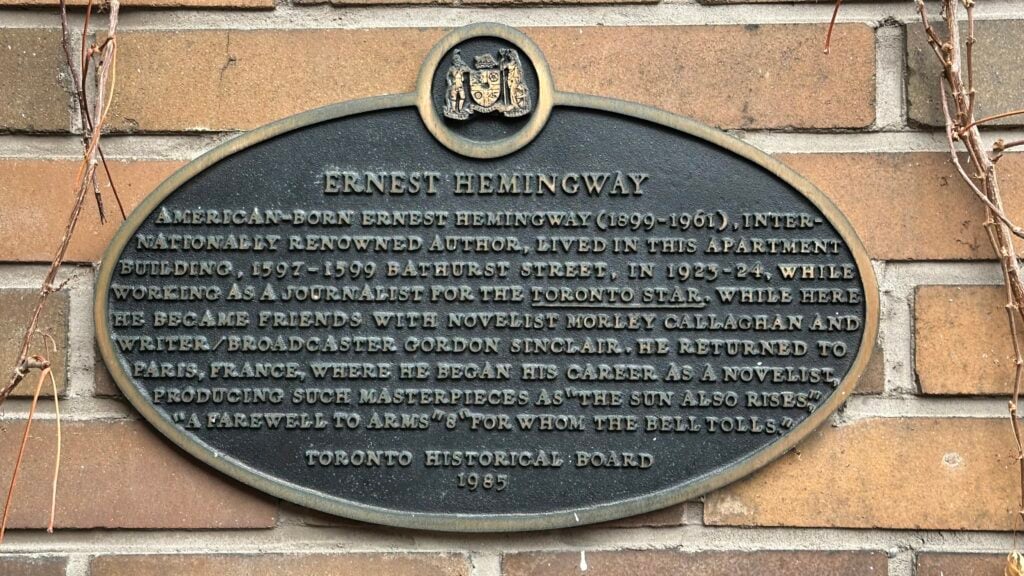
A plaque outside of 1599 Bathurst Street in Toronto where Hemingway lived from 1923 to 1924 while working as a journalist for The Toronto Star.
Expand Image

Hemingway’s time in Toronto was short-lived — several months in 1920 and again from September 1923 to January 1924 — but it left a lasting impact on his work. At the Toronto Daily Star, his editors demanded clarity, vigour, and concision: short sentences, strong nouns and verbs, and no ornamentation. They pushed him to observe closely, report honestly, and value understatement. The discipline of daily journalism shaped his voice long before Paris refined it. Though brief, Hemingway’s Toronto years were pivotal, and it was in the city that he learned the discipline of writing that shaped his later style.

Hemingway sometimes clashed with an editor Harry Hindmarsh, and complained about the city’s moral stiffness, but he forged an enduring friendship with fellow reporter Morley Callaghan, who later became one of Canada’s most respected writers. Their legendary 1925 boxing match in Paris, which Callaghan won, became a cherished literary anecdote.

Today, all three of Hemingway’s Toronto residences still stand. They remain quiet, unassuming witnesses to the years when a young reporter, hungry for adventure and wrestling with craft, was learning to find his voice. Toronto was not the most glamorous of his haunts, but it was the city where Hemingway became a writer.
Advertisement

Help us tell Canada’s story

You can support Canadian Geographic in 3 ways:

Live Net Zero Email Service

Related Content

Exploration

Wreck of Quest, famed Antarctic explorer Sir Ernest Shackleton’s last ship, found in Labrador Sea

An expedition led by the Royal Canadian Geographical Society found the vessel intact and upright at a depth of 390 metres

  • 2228 words
  • 9 minutes

Exploration

Finding Sir Ernest Shackleton’s last ship with John Geiger

Episode 85

The expedition leader and CEO of the Royal Canadian Geographical Society recounts the historic discovery of Quest, found hundreds of metres below the surface off the coast of the Labrador Sea

  • 31 minutes

Environment

The great turning

Another reckoning is coming with climate change. How do we deal with our mental health — and ultimately find hope?

  • 3646 words
  • 15 minutes
World traveller Michael Palin shares snaps with locals at the Demini airstrip while working on his latest project, Brazil.

People & Culture

Travels with Michael Palin

An exclusive Q&A with British explorer, comedian and actor Michael Palin

  • 2036 words
  • 9 minutes
Advertisement
Advertisement