
Travel
Belize from above and below — plus scuba diving with kids!
Discovering beauty and resilience on the world’s second-largest barrier reef
- 1881 words
- 8 minutes
Travel
Explore this Central American nation’s top dive sites, where visitors can witness thriving marine ecosystems and learn about sustainable reef protection
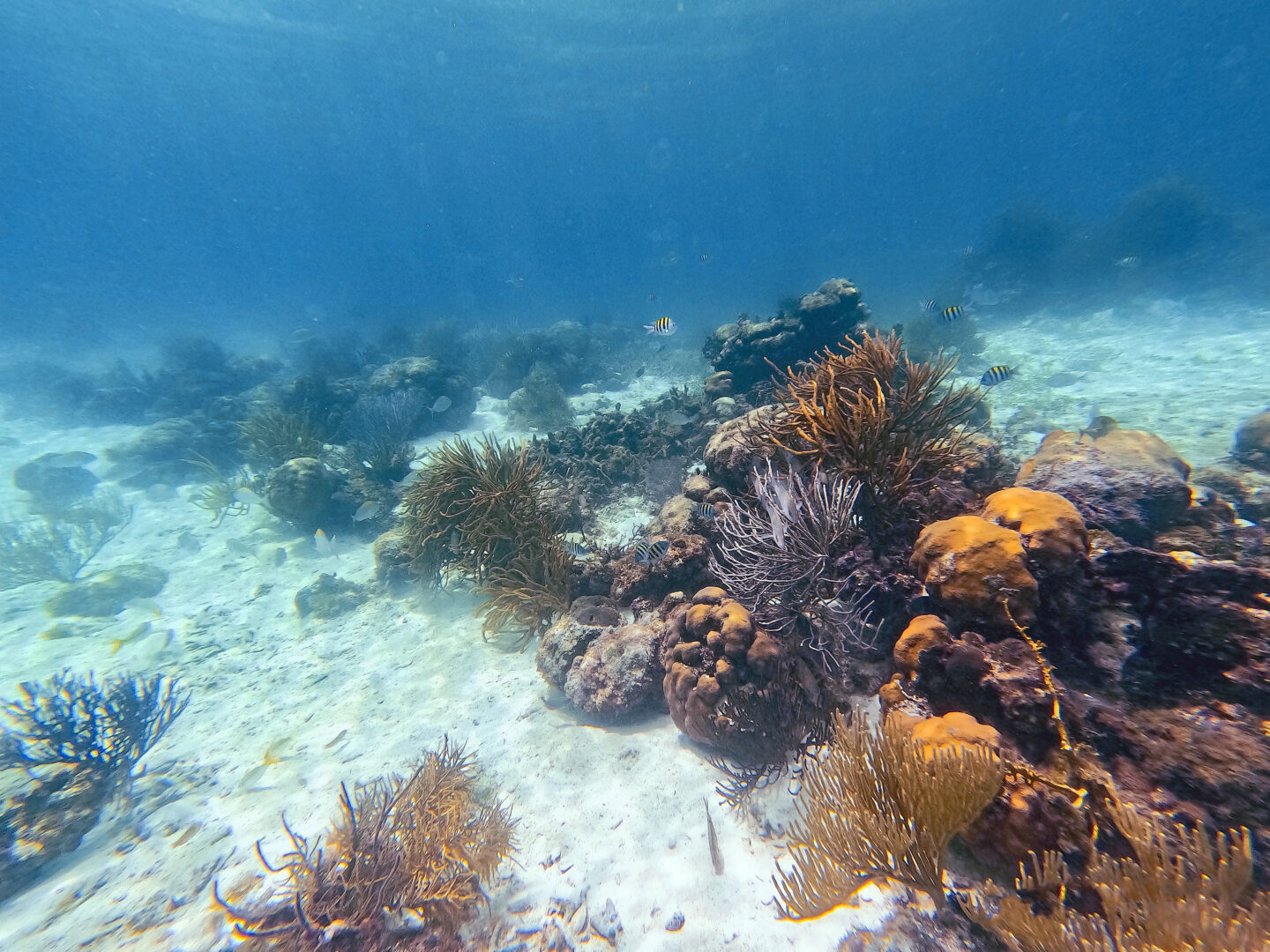
Beneath the ocean’s surface is a world that feels almost extraterrestrial — a place humans were never meant to exist, but have learned to explore. While breathing underwater inspires awe, that wonder should be accompanied by a recognition of our deeper responsibility to understand and protect the unique lifeforms hidden beneath the waves.
The world’s oceans cover about 71 per cent of the Earth’s surface, offering endless possibilities for exploration and discovery. But these vast waters are under threat. Overfishing, pollution and a rapidly warming climate are eroding marine ecosystems. Chemical toxins accumulate in wildlife, coral bleaching ravages reefs and populations of large ocean predators have declined by about 90 per cent since the 1950s. Nearly 100 million marine animals are killed by our discarded plastic waste each year and, as the ocean absorbs 30 to 40 per cent of human-produced CO2, its chemistry is shifting dramatically.
Sustaining marine ecosystems, which involves balancing environmental, social and economic needs, is complex but absolutely crucial. Around the world, a handful of countries blessed with marine tourism destinations are rising to the challenge by redefining how visitors engage with the ocean and, in the process, proving that marine tourism can be both meaningful and regenerative. Belize is one of those countries.
In 1996, the Belize Barrier Reef System — the most extensive reef complex in the Atlantic-Caribbean region — was designated a UNESCO World Heritage Site. Overseen by the Southern Environmental Association and the Forest Department of Belize, it serves as a model for successful, sustainable marine conservation, boasting an abundance of interwoven habitats supporting a vast array of marine life that encompasses everything from manatees to sea turtles and corals to fish (in the neighbourhood of 500 species). What this looks like underwater becomes clear at the following standout dive sites, which reveal why Belize has become one of the Caribbean’s most inspiring destinations for sustainable diving.
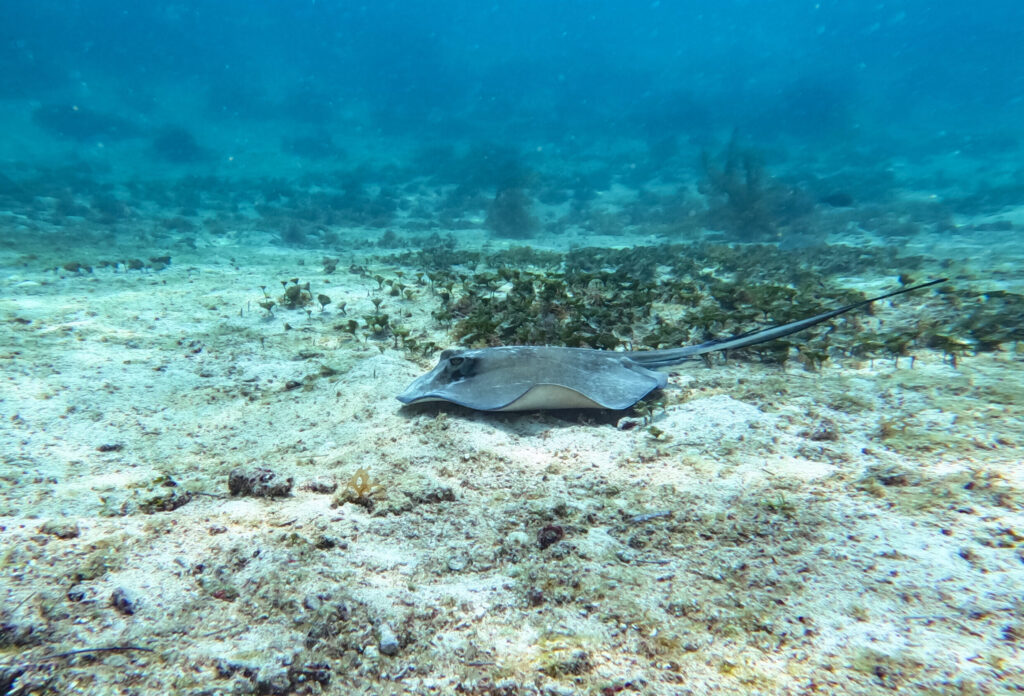
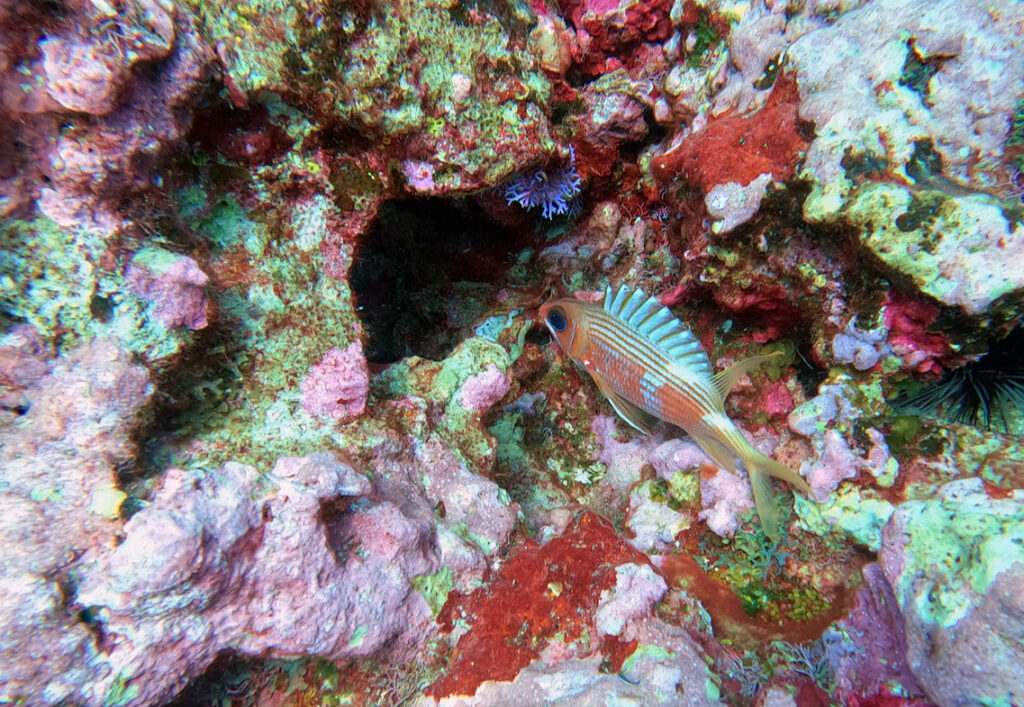
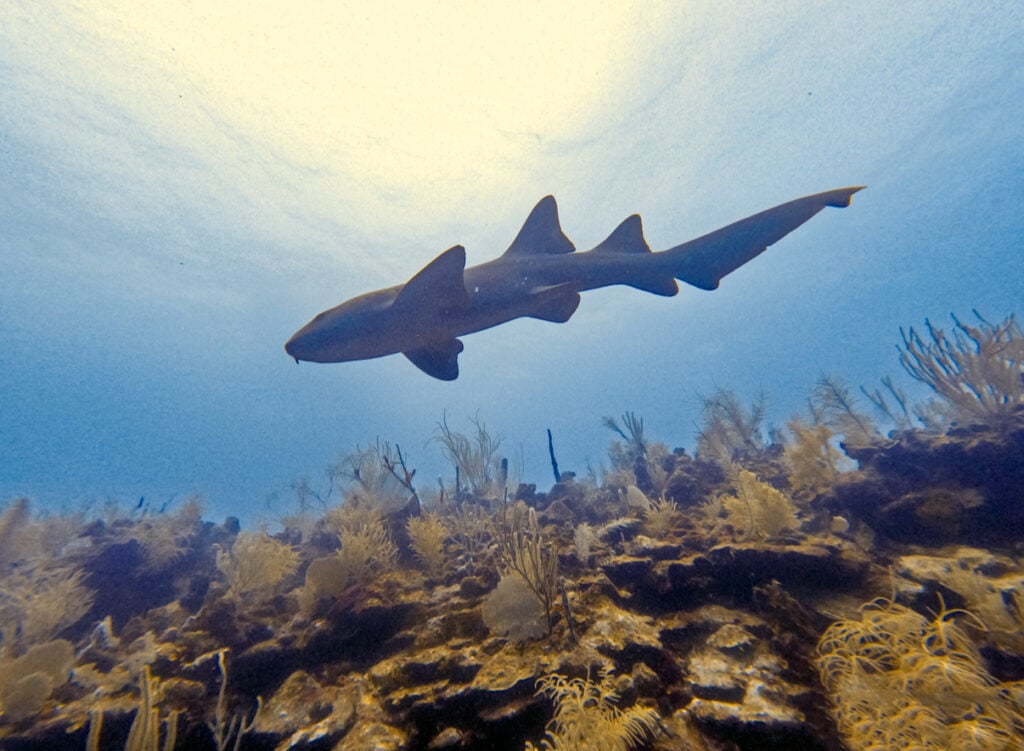
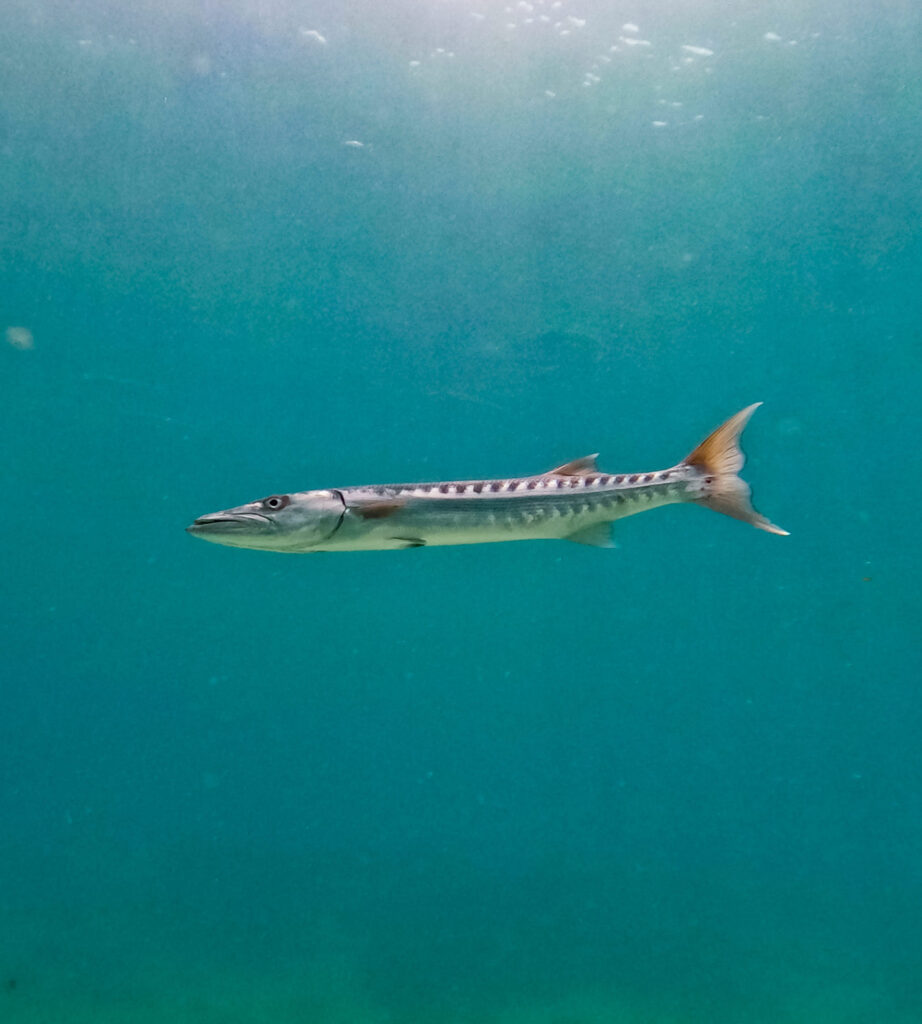
I don’t even need to turn my head for my eyes to track the plentiful aquatic life around me — a nurse shark, a southern stingray, barracuda and a myriad of other marine species parade past the lens of my goggles. Established in 1987 as Belize’s first marine reserve, Hol Chan is the epitome of sustainable dive sites in the country.
Hol Chan, whose name means “little channel” in Mayan, began as three zones (A, B, C and D), which include no-take areas that regulate and promote sustainable fishing practices. Then, in 1999, Shark Ray Alley was added as a fourth zone, increasing the area’s popularity. Part of the second-largest barrier reef in the world, Hol Chan is the destination for divers and snorkelers looking for guaranteed encounters with marine life, thanks to the reserve’s successful sustainability practices.
What began as 18,000 hectares has now expanded to 41,706 hectares, increasing the reserve’s size by about 25 times. Hol Chan now encompasses mangrove wetlands, coral reef habitats and various other marine habitats vital to endangered species. Hol Chan is leading the way in sustainable marine conservation.
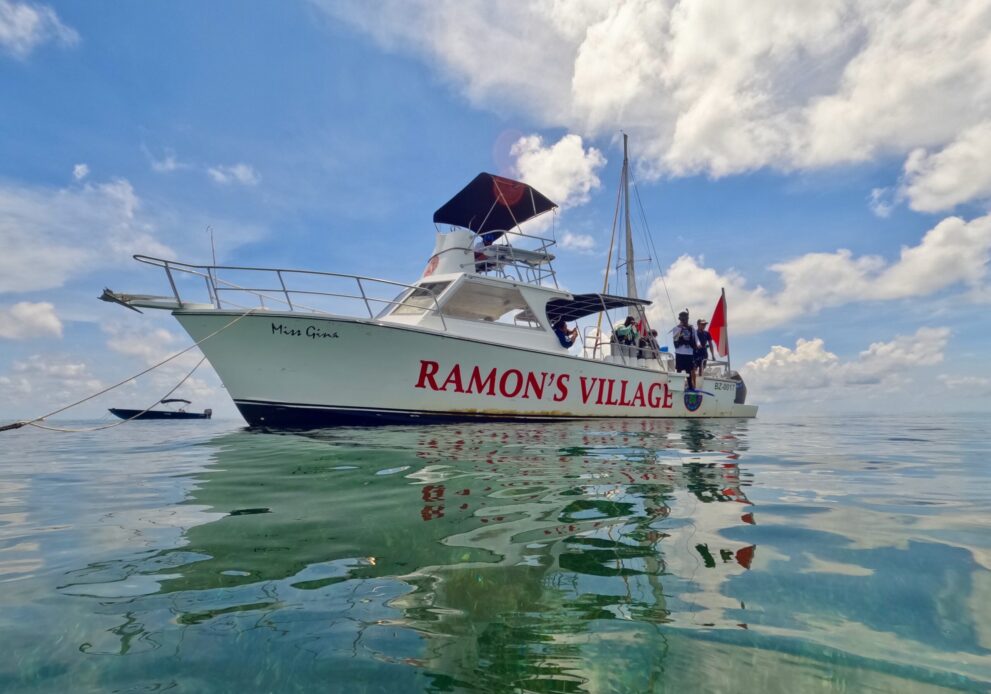
“The main focal point of the reserve is the channel,” explains Mariela Archer, Hol Chan’s public education, marketing and HR supervisor. “This is where you will find the most marine life.” The channel, about 23 metres wide and 10 metres deep, serves as a break in the reef. Divers can swim through the channel as if following a road, albeit one lined with vibrant corals. It is also quite shallow, making it accessible to snorkellers. With dive operators like Ramon’s Village Divers, the oldest dive shop in Belize, travellers can choose from a selection of dive excursions — including the opportunity to explore Hol Chan at night.
Visitors must pay an entrance fee to cover the reserve’s operating costs. It’s a small price to pay given that the reserve acts as a buffer against overfishing, allowing fish to mature in the protected areas, while also acting as a centre for scientific research and educational programs that promote a better understanding of this unique marine environment.
“We operate 365 days a year and 24 hours a day,” says Archer. “It’s up to us to regulate and ensure the populations are healthy.” Visitors (and locals) are prohibited from fishing in the area. All boats must be registered to prevent overcrowding, and collecting, touching or damaging any marine life is strictly prohibited.
“Finding balance between development and conservation can be a challenge,” says Archer. “But we are proud of our work and want visitors to enjoy the reserve as much as we do.”
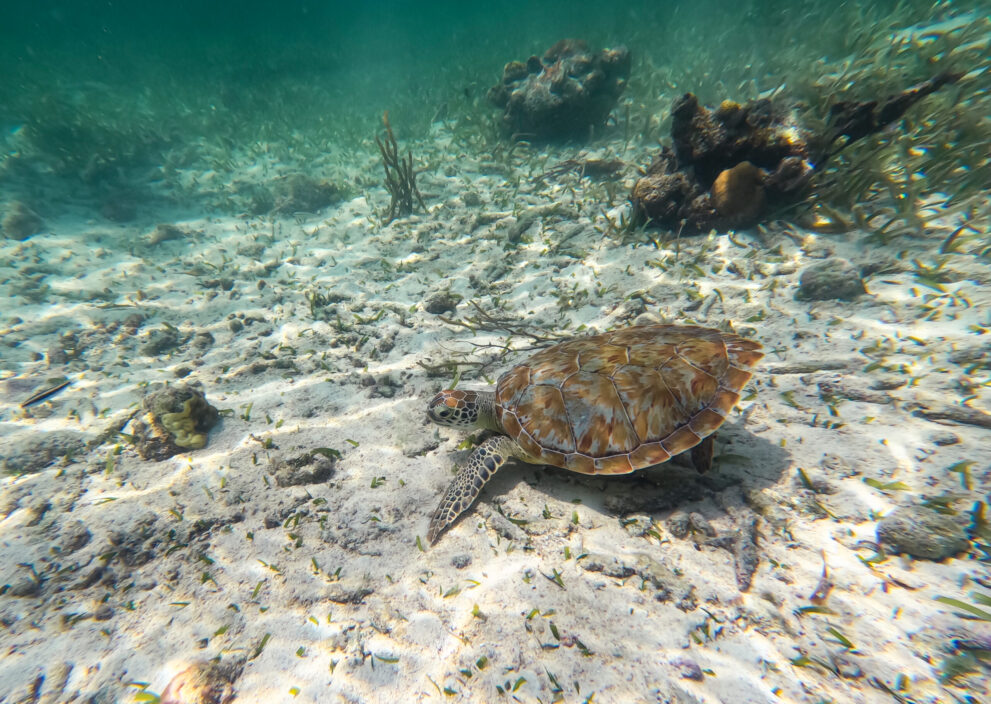
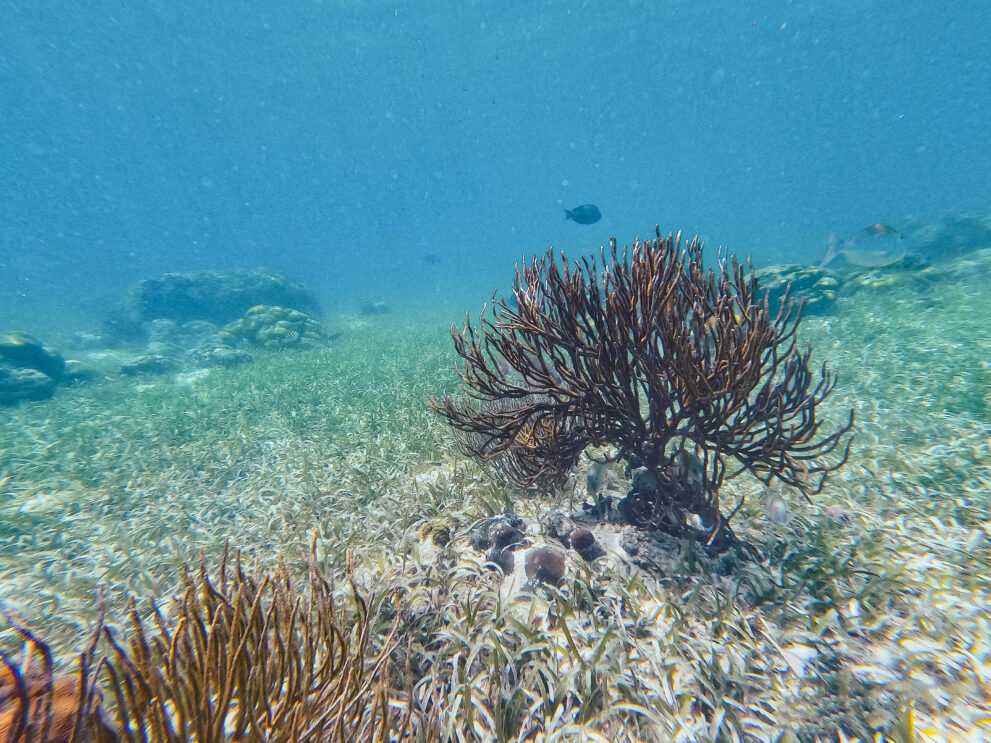
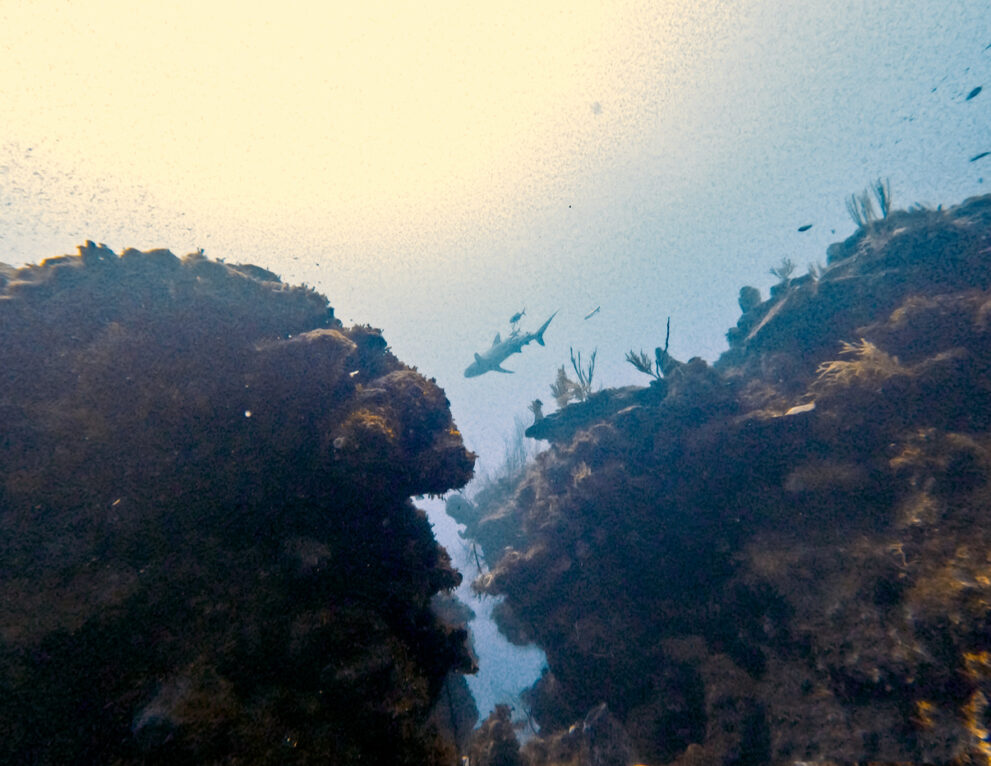
Beneath the turquoise waters of South Water Caye, marine species dart, glide and hover all around us. Rays glide through ribbons of seagrass, while schools of fish dart between mangrove roots and vibrant corals form miniature cities for spiny lobsters, red-banded coral shrimp and other crustaceans. Encompassing 47,700 hectares, the South Water Caye Marine Reserve (the second-largest in Belize) is a biodiversity hotspot within the Belize Barrier Reef System and is recognized by UNESCO for its rich seagrass meadows and oceanic mangroves.
Within minutes of descending to about 15 metres, we spot dozens of marine species in the crystal-clear waters. A barracuda nearly the size of my arm hovers a few metres away, its gaze shifting between the bubbles rising from my tank and a nurse shark below. Both are apex predators, but here they appear unbothered, well-fed by the thriving reef.
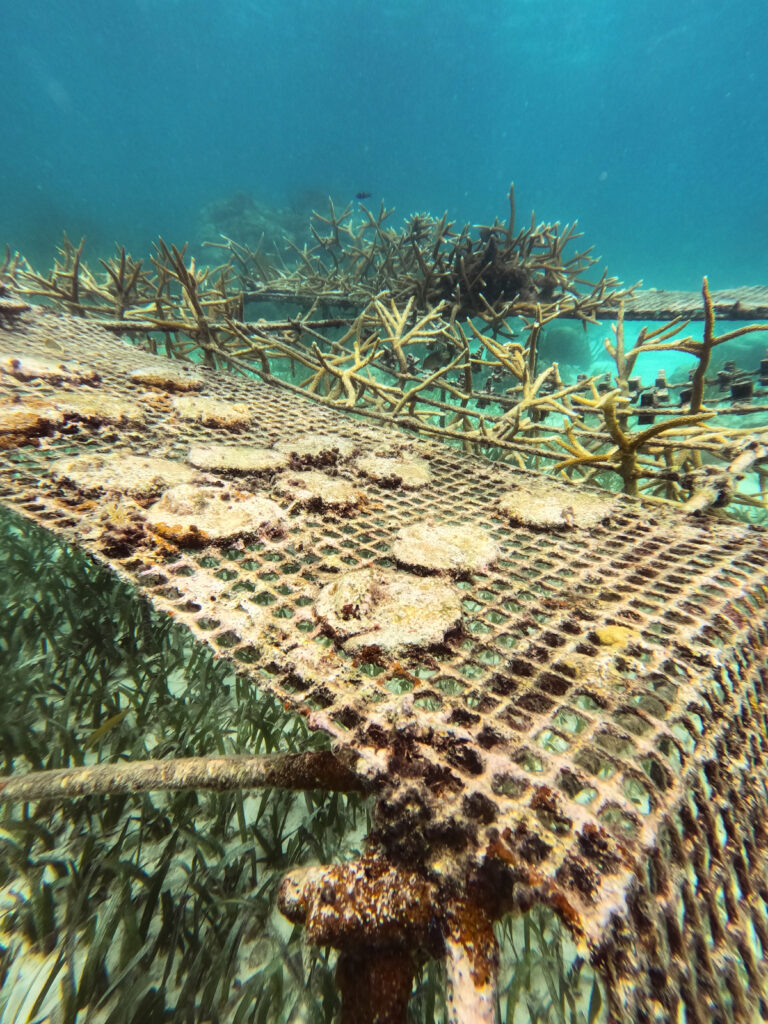
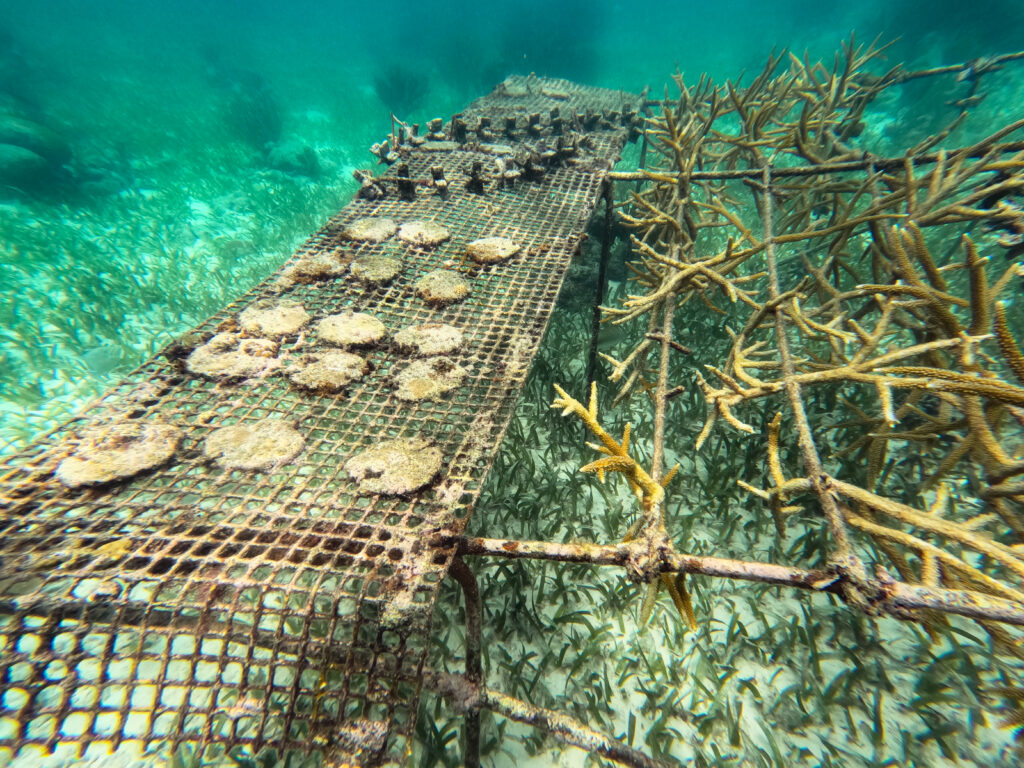
This abundance makes South Water Caye a suitable site for Fragments of Hope, a community-based nonprofit dedicated to coral reef restoration and the sustainable management of marine habitats. “We start each [coral restoration] project on nursery tables with living coral,” explains Mariko Wallen, a seaweed harvester and coral restorer with the organization. Nursery tables are a key component of coral restoration and consist of structures that are “planted” with coral. If that coral thrives, the healthy colony can restore degraded natural reefs. Fragments of Hope monitors the corals’ health and growth rates on the nursery tables, hopeful that they will one day help to restore coral populations throughout the Caribbean.
Beneath the Belizean sun, Wallen explains the difficulties of cultivating coral in warming seas, where nutrient runoff and pesticides complicate survival. “We try to use corals that are more resilient,” she says. “But most of our restoration work has died off.”
In shallow water, I snorkel over the nursery tables. Fragments of staghorn and elkhorn coral adorn the artificial frames. Around them, vast expanses of seagrass sway in the current, food for turtles and manatees. Back on shore, Wallen explains how they choose new restoration sites. “We look for signs of life, like parrotfish and long-spined urchins. Those living species show that coral can still survive there.”
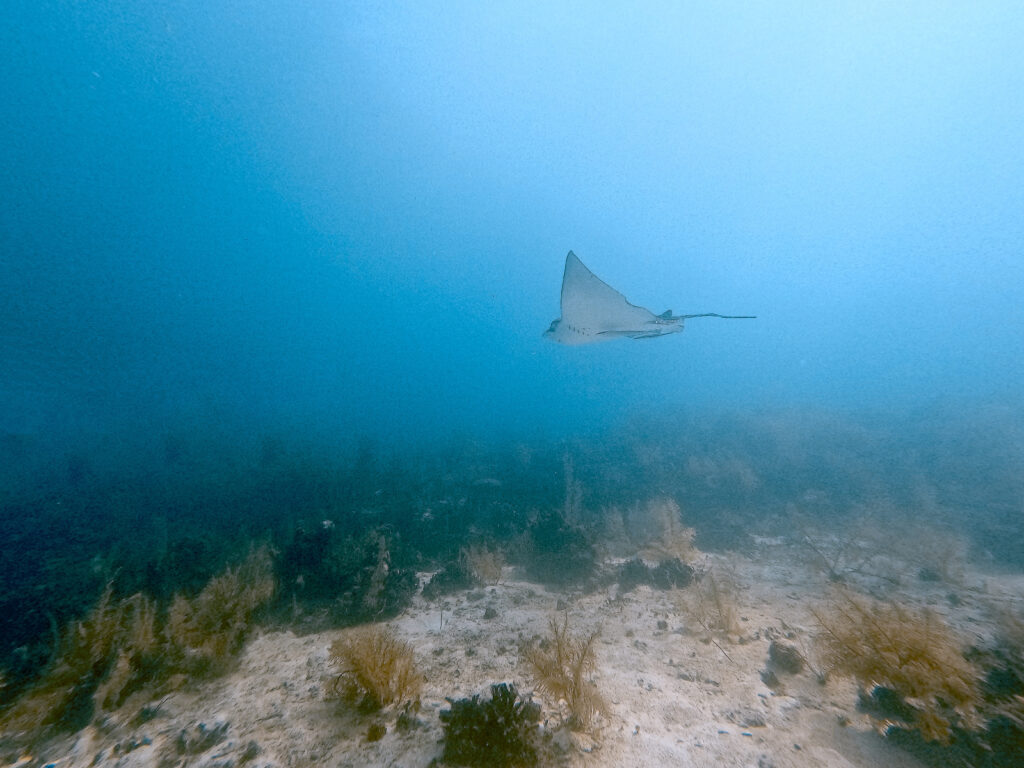
Beneath the waters of the Turneffe Atoll Marine Reserve lies a living laboratory where nature takes its course. Offering scientists and conservationists a valuable opportunity to study how artificial reefs evolve and support marine life over time, this unique dive site also acts as an eco-conscious diver’s playground, supporting sustainable tourism and attracting visitors from around the world.
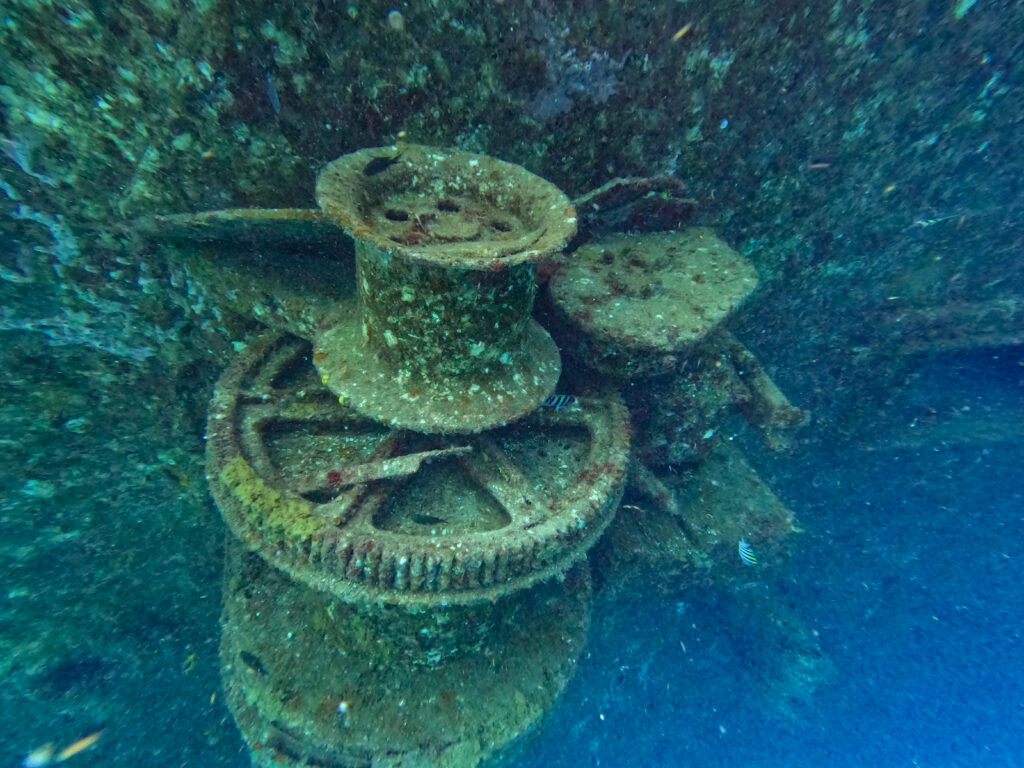
After entering the water of Turneffe Atoll (a UNESCO-protected area) in our diving gear, we swim straight for about 25 metres until a massive silhouette comes into focus — the bow of the Witconcrete (the Wit). Originally built in San Diego, California, during World War II, the Wit is a 114-metre-long concrete-hulled barge that was purposefully sunk in the Turneffe Atoll on September 20, 2021, to act as an artificial reef. In its previous life, the Wit served as a floating storage depot for decades, carrying molasses across the Caribbean until it was donated by the ASR Group (the world’s largest refiner and marketer of cane sugar) to the Turneffe Atoll Sustainability Association in August 2021.
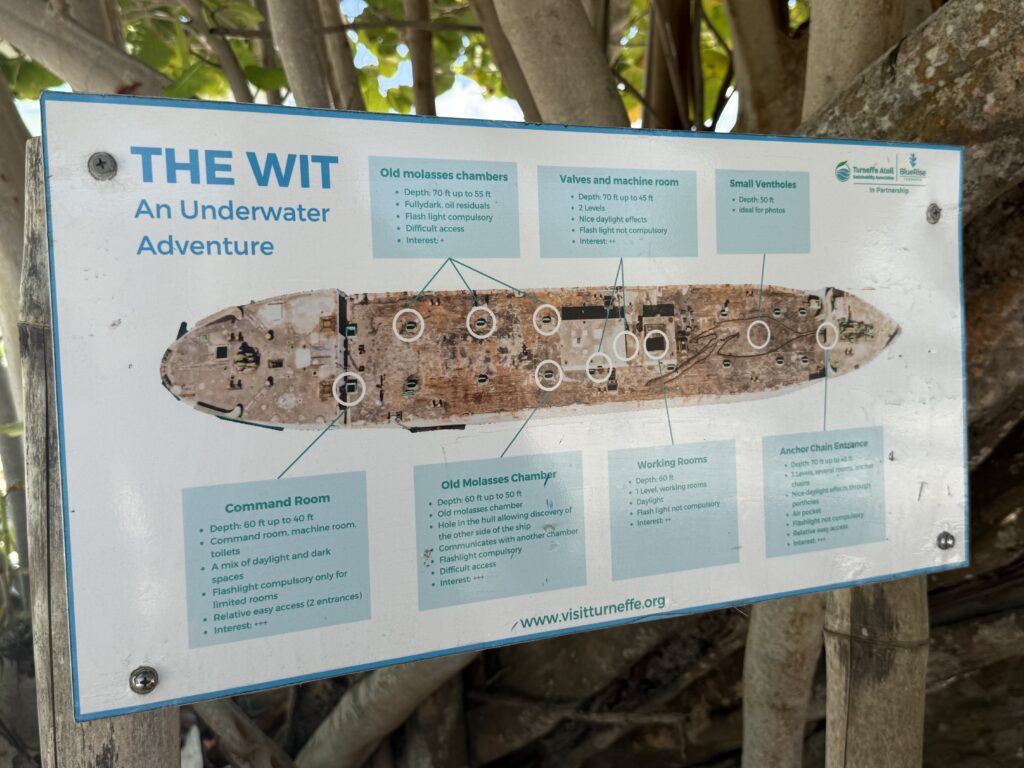
Located at depths of nine to 24 metres, the Wit is considered one of the best dive sites in Belize, a habitat renowned for its thriving marine life. “It’s full of biodiversity. It’s like if you were to put a toy in an aquarium and the fish play around in it,” says Eldon August, the Tourism Conservation Officer with Turneffe Atoll Sustainability Association. “This is very much one of a kind when it comes to wreck dives. It offers snorkelling, and open water divers can stay within the limits. Advanced divers can go to the bow and stern.”
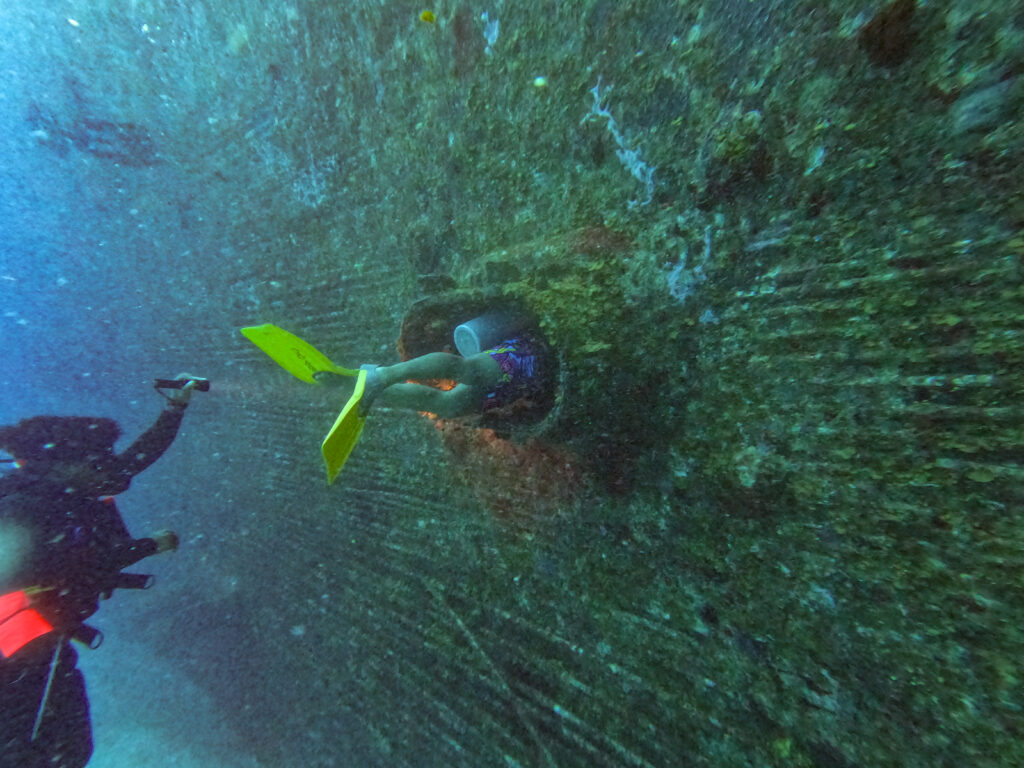
The rhythmic sound of bubbles rising from my tank is interrupted by the artificial clink of metal on metal as our dive master, Joe Vasquez of Belize Pro Divers, taps his tank to get our attention. He waves us over and points into one of the Wit’s 16 chambers. One by one, we make our way through the Wit’s interior, using our flashlights to light the way. I notice a lionfish hovering in a corner and note not to get too close. Parrotfish, barracuda, sea turtles, eels and several shark species are also common here.
As a non-profit NGO, TASA works with the Government of Belize to implement sustainable management practices, enforce conservation laws and advocate for policies to safeguard the health and life of the marine reserve.
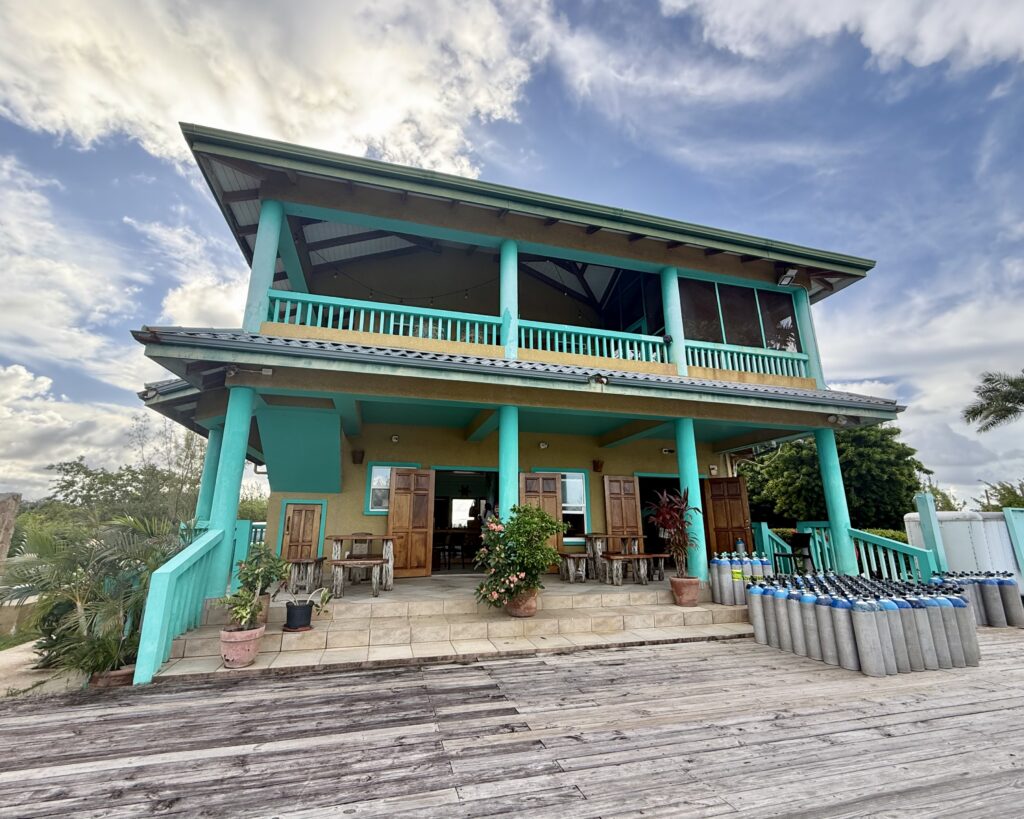
“They won’t bite you unless you bite them,” says Nedia Chaplin, our divemaster with Placencia’s Splash Dive Center. “You are going to see them,” she adds, referring to the sharks lurking beneath our boat: nurse, reef and lemon sharks being the most common species. A half-hour boat ride from the dive centre has led us to Laughing Bird Caye, our site for this evening’s Twilight Dive.
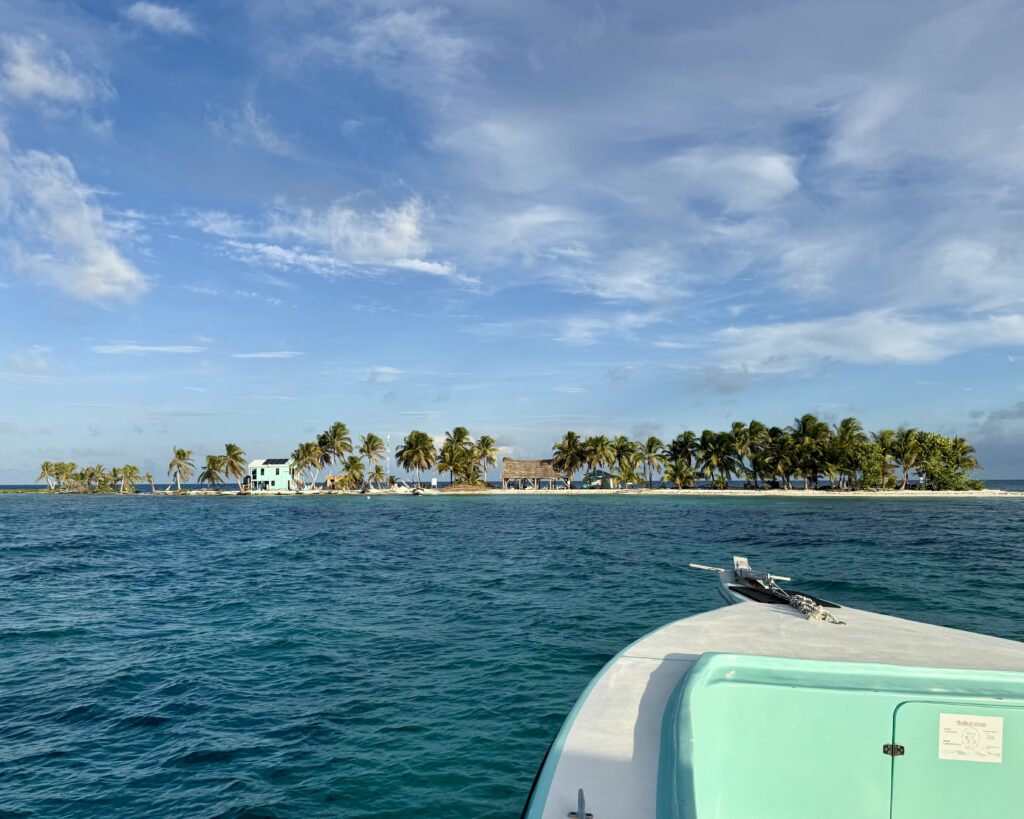
At 0.78 hectares, Laughing Bird Caye is a small island situated within the 4,047-hectare Laughing Bird Caye National Park, one of seven marine protected areas that make up the Belize Barrier Reef System. Its protected status and no-take zones (zones in which extractive activities such as fishing, mining and dredging are prohibited) have allowed the marine life in this rich environment to flourish — a diver’s paradise.
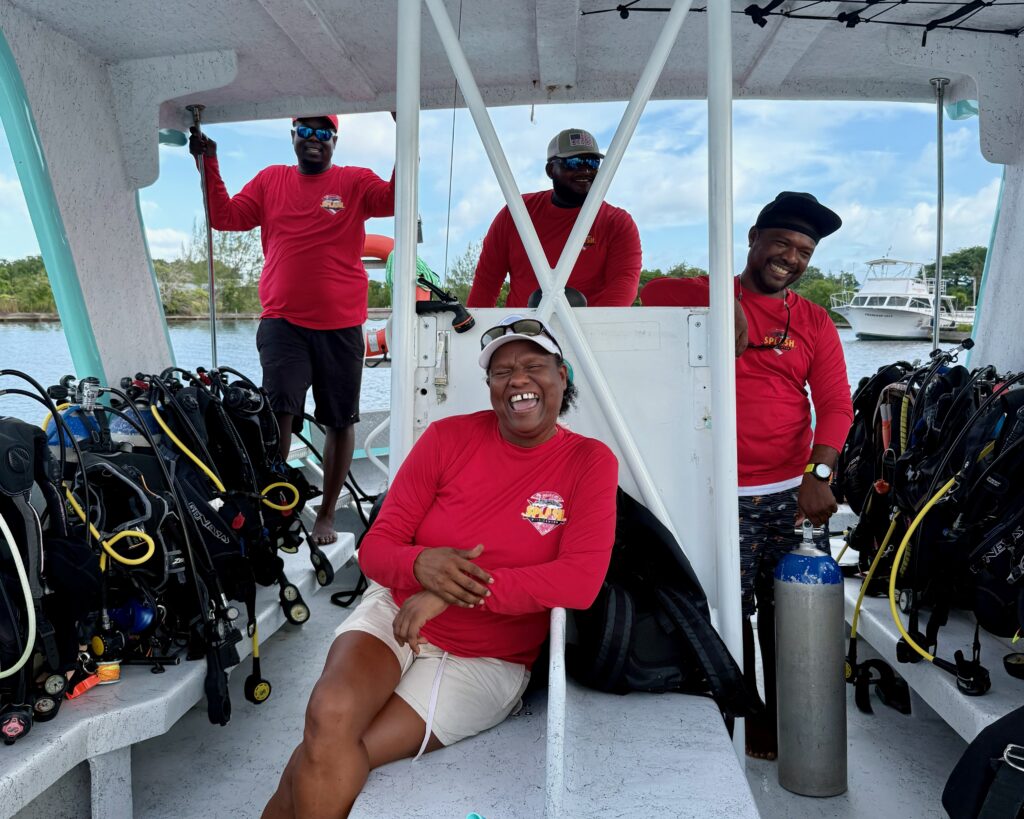
As the sun sets, we pull on our wetsuits and check our gear, ensuring masks are defogged, tank valves are open, buoyancy control devices (BCDs) are inflated and fins are on. Then Chaplin gives us our briefing: we will dive for about 50 minutes, reaching a maximum depth of approximately 18 metres, and conclude with a three-minute safety stop at about 4.5 metres.
Around us, the sky shifts from bright, clear blue to peaceful golden yellow. Chaplin explains that Laughing Bird Caye is situated on an ancient faro reef shelf, which creates the ideal environment to support a variety of marine life and diverse coral habitats. The marine park serves as both a haven and a nursery, providing rich ecosystems for conchs, tropical fish and other aquatic species that thrive, while replenishing nearby fishing grounds.
The Twilight Dive offers a rare glimpse of the reef’s transformation, when diurnal (organisms that are active during the day) fish retreat into coral crevices and nocturnal species come to life. And sure enough, within the first five minutes of the dive, a nurse shark appears from the depths, following us for the duration of the dive. Along with the puppy-like nurse shark, we enjoy visits from Nassau grouper, barracuda, parrotfish and various other tropical species.
Be part of the sustainability movement
Beyond Blue
Interested in learning more about the Belize Barrier Reef and what lies beneath the ocean’s surface? Check out Belize’s Beyond Blue Dive Summit, taking place April 22 to 25, 2026.
This four-day underwater adventure will allows curious travellers to explore world-class reefs, connect with conservation leaders and ultimately, work towards safeguarding the future of our oceans.
Travel
Discovering beauty and resilience on the world’s second-largest barrier reef
Travel
A first-person dive into Belize’s Great Blue Hole, where scale, geology and experience matter more than colour
Exploration
After years of chasing warm-water reefs abroad, learning to dive in a drysuit off B.C.’s coast reshaped how I see Canada’s seasonal underwater ecosystems
Travel
A slow, sun-soaked journey through this tropical island’s famed beaches, eclectic food scene and pristine landscapes, where luxury is understated and tranquillity is the norm