Environment
Q&A with Jane Goodall
Jane Goodall sits with John Geiger, CEO of The Royal Canadian Geographical Society, to talk about her global efforts to protect the great apes, the environment and the human community.
- 1797 words
- 8 minutes
People & Culture
Remembering the world’s most beloved primatologist, whose groundbreaking research and tireless advocacy changed the way the world understands nature
“You cannot get through a single day without having an impact on the world around you. What you do makes a difference, and you have to decide what kind of difference you want to make.”
– Dr. Jane Goodall
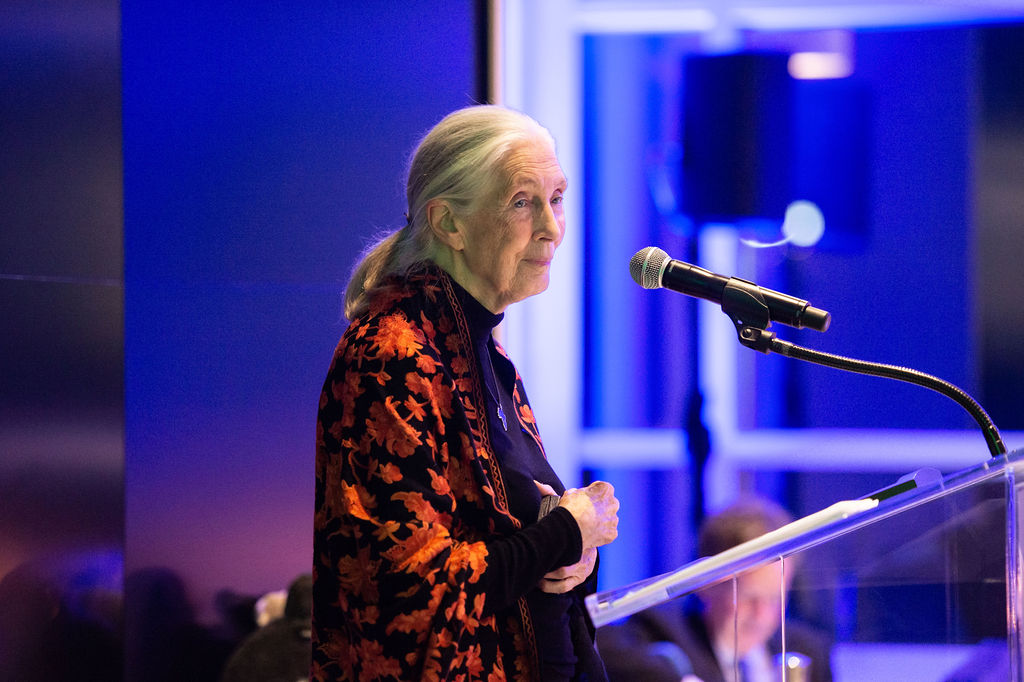
Canadian Geographic and the Royal Canadian Geographical Society (RCGS) are deeply saddened by the news that Dr. Jane Goodall DBE, UN Messenger of Peace and Founder of the Jane Goodall Institute, died this morning, Wednesday, October 1, 2025.
The Institute shared that Goodall was in California, on a leg of her U.S. speaking tour, when she passed away peacefully due to natural causes. “Dr. Goodall’s discoveries as an ethologist revolutionized science, and she was a tireless advocate for the protection and restoration of our natural world,” the Institute wrote.
Goodall’s life was defined by curiosity, courage and care. The renowned British zoologist and primatologist spent more than six decades observing wild chimpanzees in Gombe, Tanzania, reshaping humanity’s understanding of these remarkable creatures and, in turn, the world we share. Loved around the world for her calm presence and peaceful demeanour, Goodall was more than a beacon of hope; she was a voice of reason and action who inspired millions.
Born in England on April 3, 1934, Goodall was known to have had an affinity for the natural world from a young age. Growing up in London and the seaside town of Bournemouth, Goodall was raised alongside well-loved animals, including dogs, ponies, and tortoises, while absorbing texts of various species and longing to visit Africa.
Unable to afford a university education after secondary school, Goodall pursued secretarial studies to support herself until she could afford to travel. In March 1957, she arrived in Kenya aboard the Kenya Castle to visit family and friends. This voyage led her to meet famed anthropologist Louis Leakey. Impressed by Goodall’s interest in animals and observational skills, Leakey offered Goodall a job as a secretary at the Coryndon Museum (now the Nairobi National Museum) in Nairobi, Kenya. This marked the beginning of Goodall’s lifelong career in natural sciences.
By 1965, Goodall’s work had gained worldwide recognition. Her name became internationally known following the publication of her groundbreaking article, My Life Among Wild Chimpanzees, detailing her three-year observations of the primates’ use of tools, social structure, and feeding habits for National Geographic. Two years later, Goodall appeared on the cover of the iconic yellow-bordered magazine, the first of three cover stories.
To support her research on chimpanzees, protect the species and their habitats and develop community-centred conservation programs, Goodall established The Jane Goodall Foundation, which opened its doors in 1977. Today, the global non-profit wildlife and environmental conservation organization operates in more than 25 countries, continuing to advance Goodall’s vision by fostering public understanding of primates, advocating for their protection through education and policy, safeguarding habitats in collaboration with local communities, and inspiring the next generation of conservation leaders.
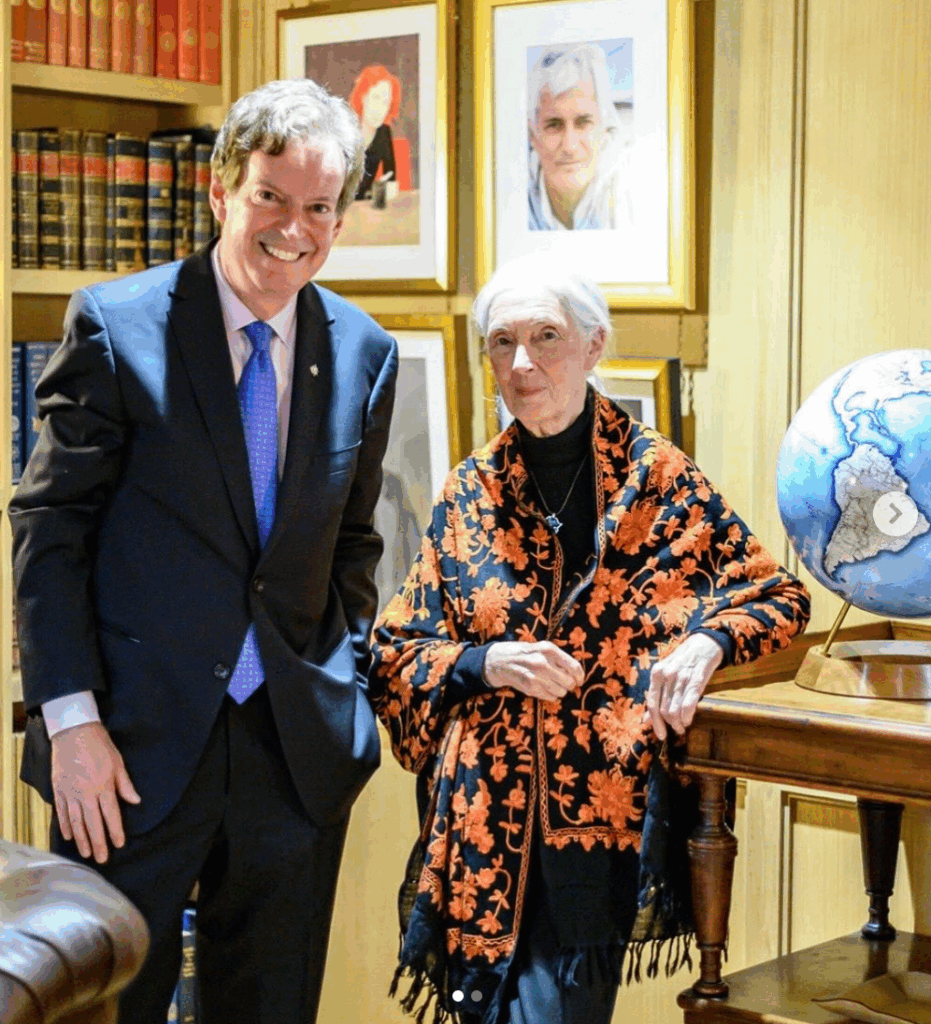
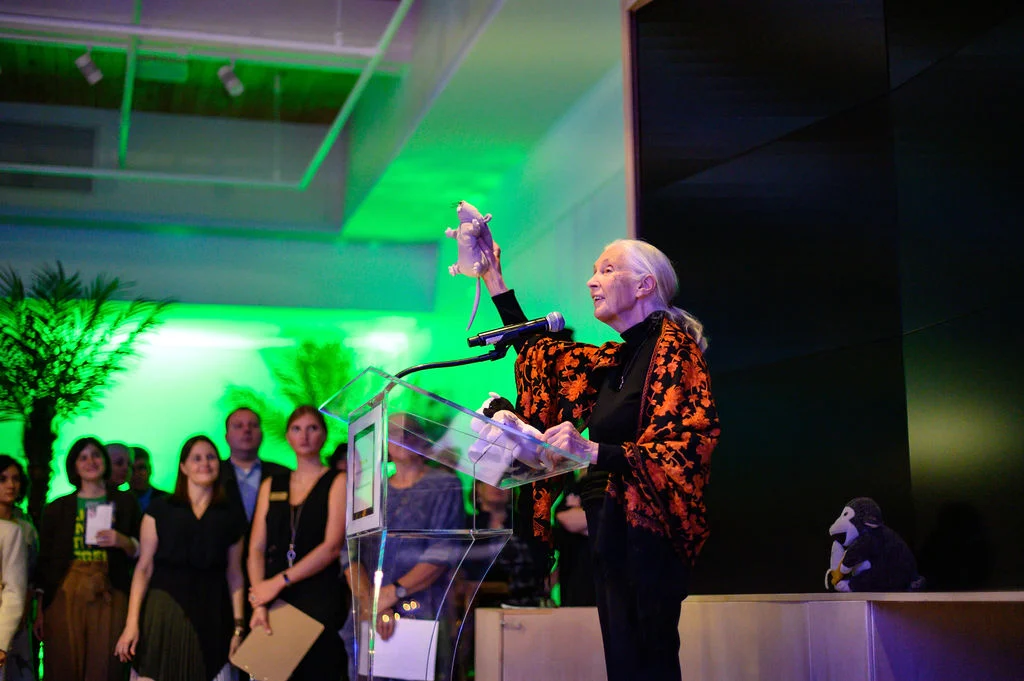
A Fellow of the RCGS, Goodall was an outspoken environmental advocate throughout her life, speaking about the climate crisis, endangered species and raising awareness for the ethical treatment of animals during ethological studies. Though her work took her across the globe, Goodall shared a special bond with Canada. In recognition of her groundbreaking research and advocacy, the RCGS honoured Goodall with the Society’s Gold Medal in 2019, presented by RCGS CEO John Geiger at a fundraiser for the Jane Goodall Institute of Canada at the Society’s headquarters at 50 Sussex Drive in Ottawa.
Canadians, like many around the world, will remember Goodall not only for her groundbreaking science but for her unwavering belief in the power of compassion to change the future.
Environment
Jane Goodall sits with John Geiger, CEO of The Royal Canadian Geographical Society, to talk about her global efforts to protect the great apes, the environment and the human community.

Environment
The pioneering primatologist talks about her time with chimpanzees, what inspired her to become an activist and what individuals can do to help the planet

People & Culture
The legendary primatologist expressed her gratitude and happiness the chimpanzee way
People & Culture
In celebration of its 90th year, the RCGS handed out awards to a diverse and star-studded roster of honourees