People & Culture
Renaming places: how Canada is reexamining the map
The history behind the Dundas name change and how Canadians are reckoning with place name changes across the country — from streets to provinces
- 4595 words
- 19 minutes
Travel
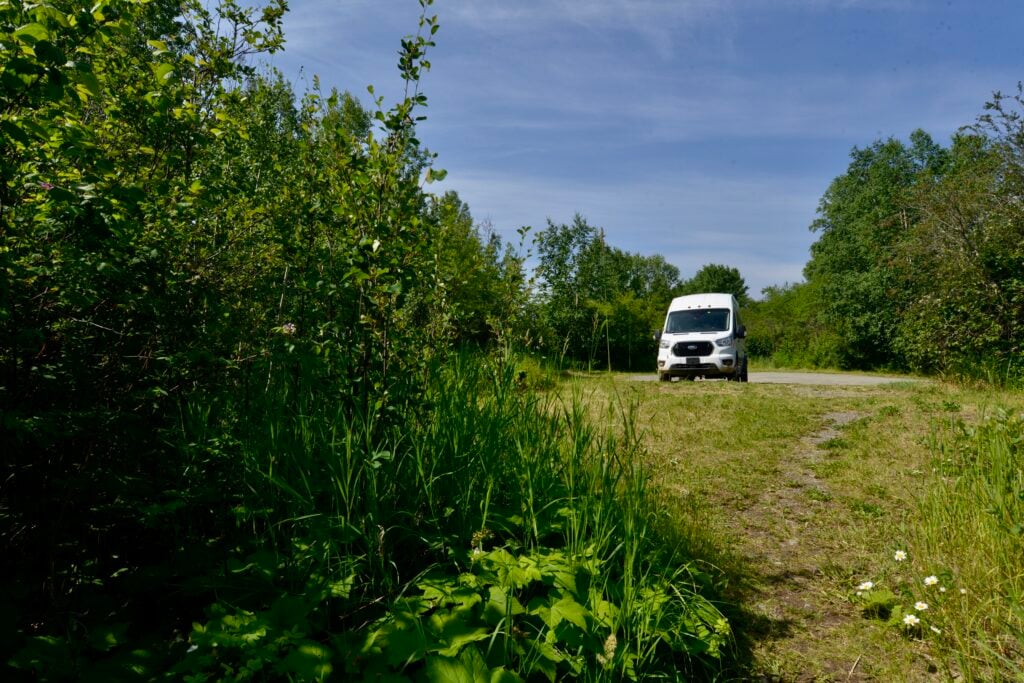
Van life: A nine-day solo road trip through Northern B.C.
I’ve never been the most confident driver. My licence has sat in my wallet for years and, thankfully, I’ve avoided accidents (knock on wood). But I’ve also never owned a car. Most of my time behind the wheel has been in borrowed compacts, my family’s Subaru, or the occasional rental. Still, the draw of “van life” has hovered in the back of my mind for years, so when the opportunity to travel solo through Northern British Columbia in CanaDream’s Deluxe Camper Van (DCV) came up, it was an immediate “yes.”
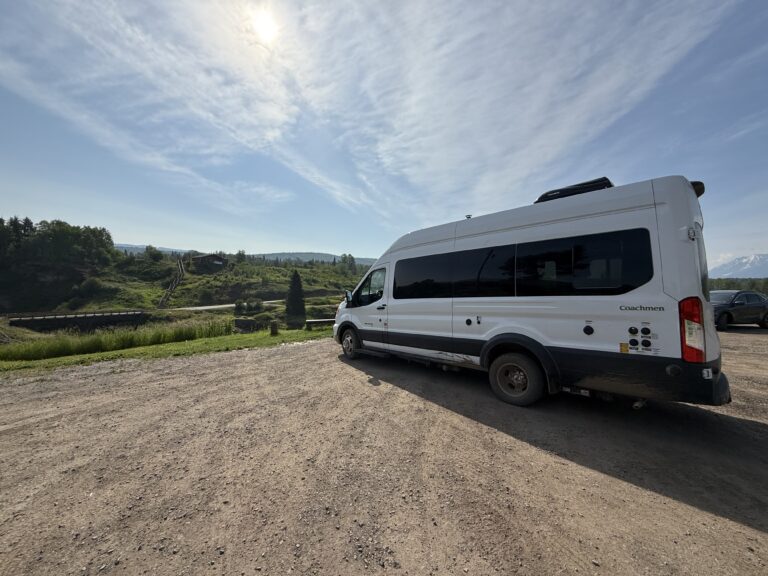
The DVC is CanaDream’s most compact unit, but still manages to feel like a tiny apartment on wheels. Perfect for two people, the DVC is equipped with a queen-sized bed, kitchenette, fridge, bathroom, shower, heating and AC. I was initially nervous about driving it, but the van handled beautifully.
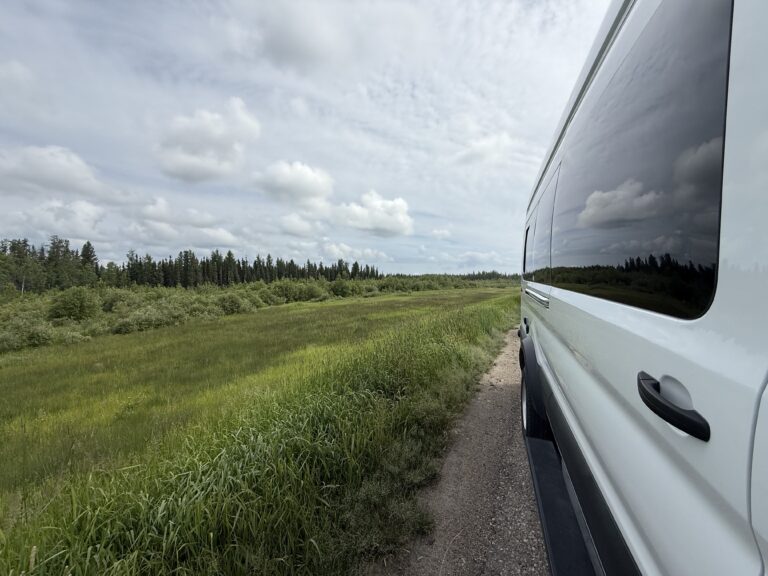
For nine days, I explored The Great Wilderness, the northernmost stretch of B.C. This vast region stretches from the Coast Mountains in the west to the Alberta border in the east and Yukon in the north.
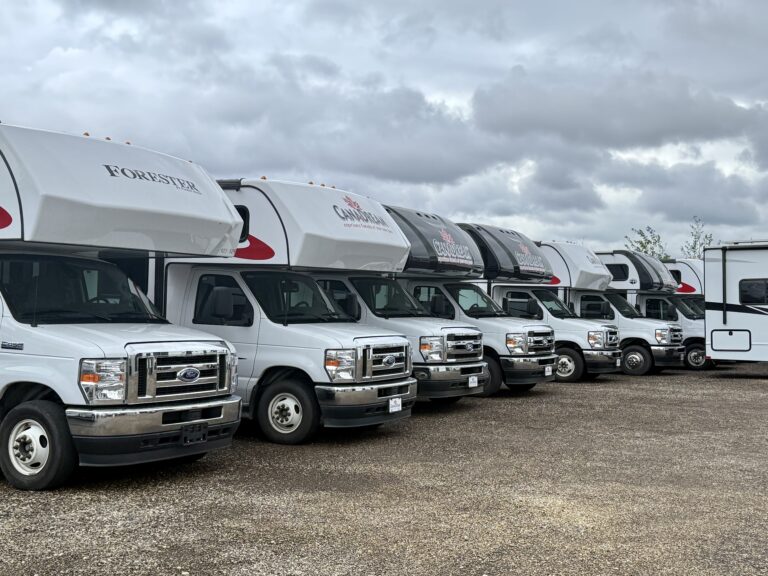
“Do you have any questions about the van?” the woman behind the CanaDream counter in Leduc, Alta. sks, handing me the keys.
I glance at the 40-page guest guide. The top sheet reads WHAT TO DO IN THE EVENT OF AN EMERGENCY. My brain short-circuits. How do I turn on the hot water? Where’s the generator? What even is a grey tank? Do I need to shut off the propane while driving?
“Nope!” I reply a little too confidently. “I think I’m good!”
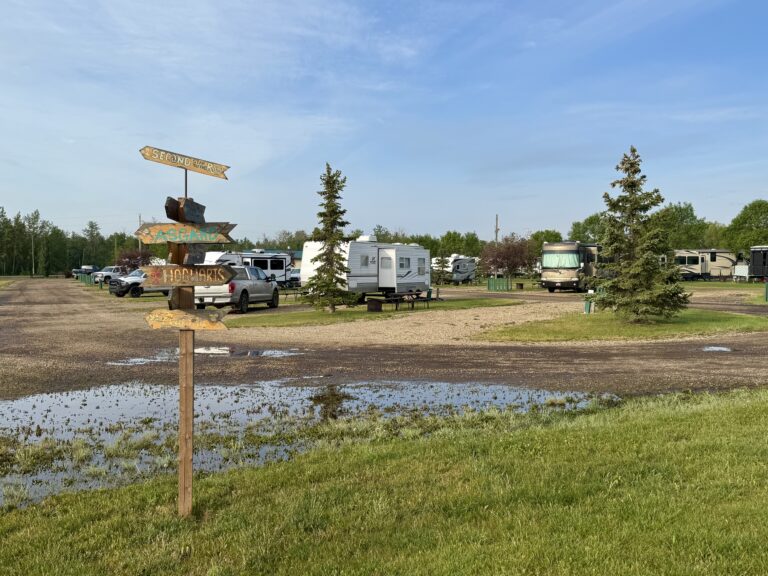
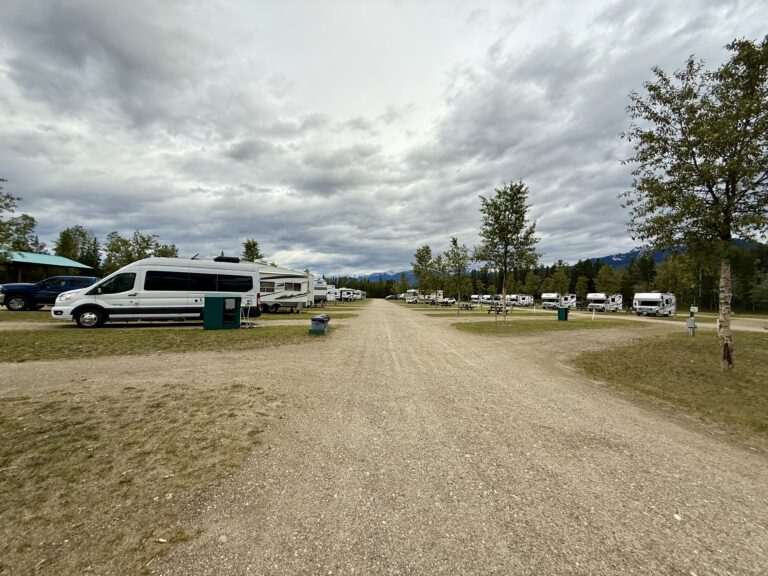
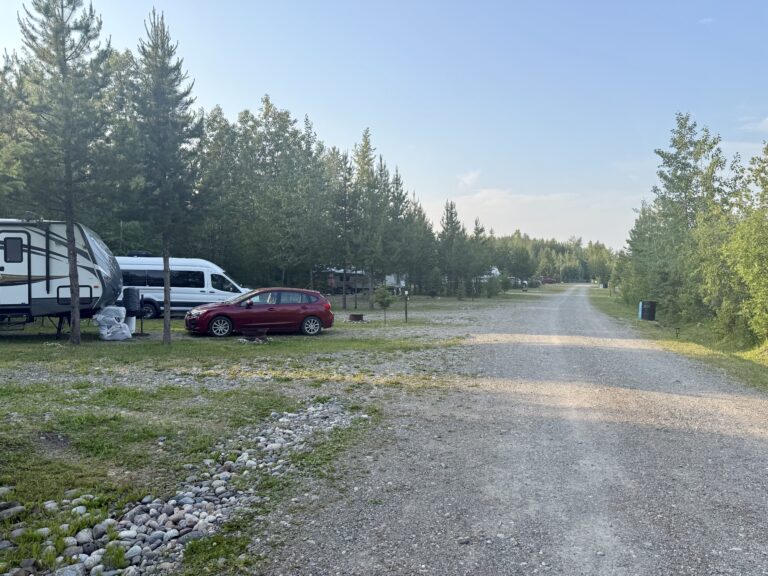
Behind the wheel, mirrors adjusted, foot hovering over the brake, I plug in directions to my first stop: Leduc Lions Campground & RV Park. The woman at the desk checks me in with a smile. “Just one night,” I say, relieved when she offers me a pull-through site. Backing up has never been my strength, and while the van drove smoothly, I wasn’t ready to test my luck just yet.
An hour later, after fumbling through cords and hoses, I finally hook everything up. “The Madivan,” a name crowd-sourced from Canadian Geographic Travel’s Instagram audience (a play on my name), sticks immediately. For the next nine days, it’s me and the Madivan.
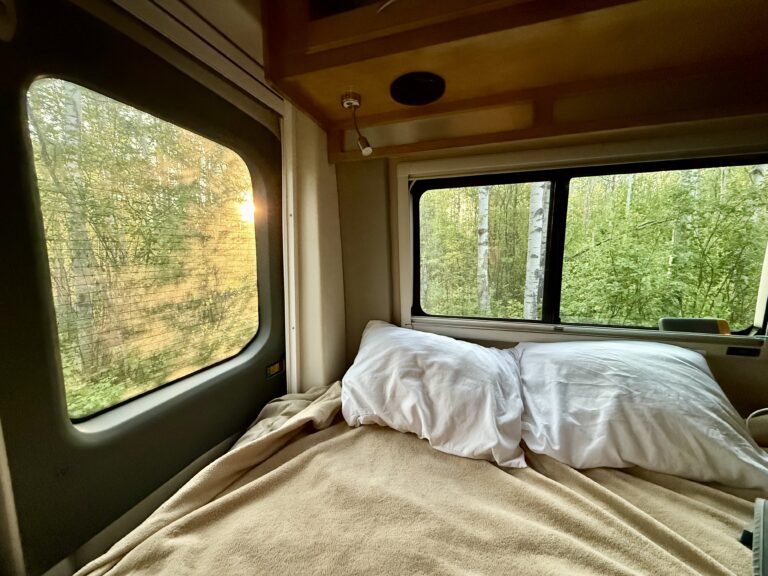
The remote-controlled fold-out was far more comfortable than I’d expected. I’ve endured my fair share of rough sleeps, shivering in tents, squeaky hostel bunks, even a mattress in a shipping container, so waking up in the back of a van, despite how it sounds, felt glorious.
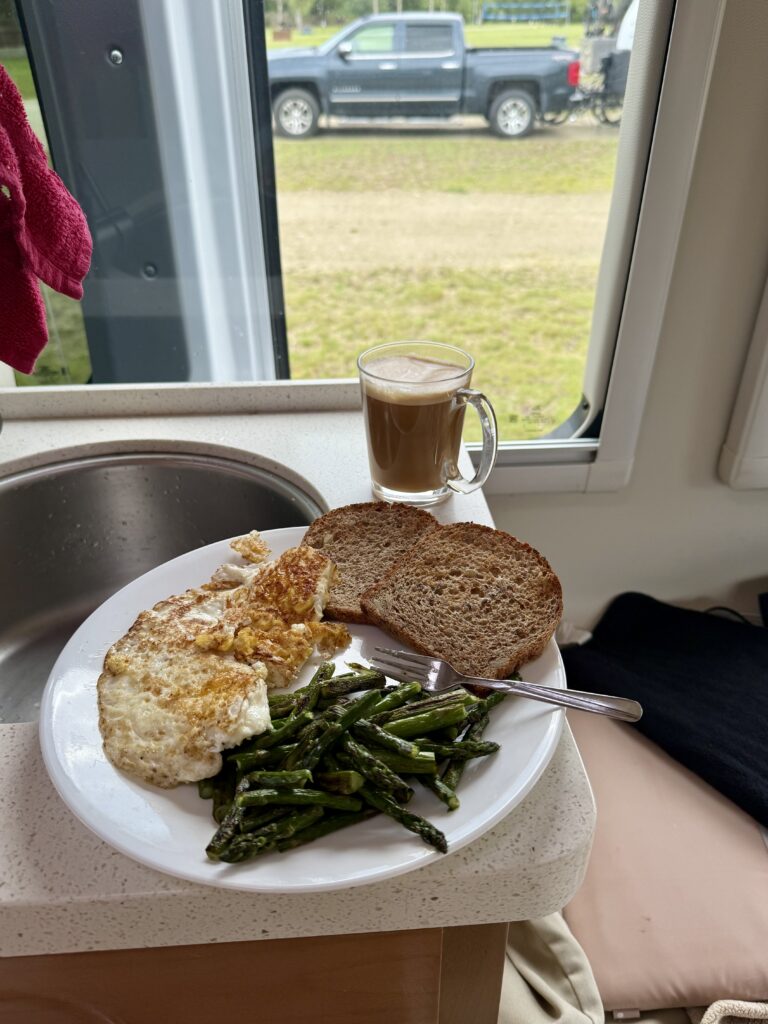
Families in larger CanaDream rentals fry bacon while kids play nearby. Drawn by the scent, I make my own hearty breakfast before packing up for a five-and-a-half-hour drive to Valemount, B.C. Eggs, toast, coffee, then I unplug, stow the hose, and quadruple-check that everything is secure.
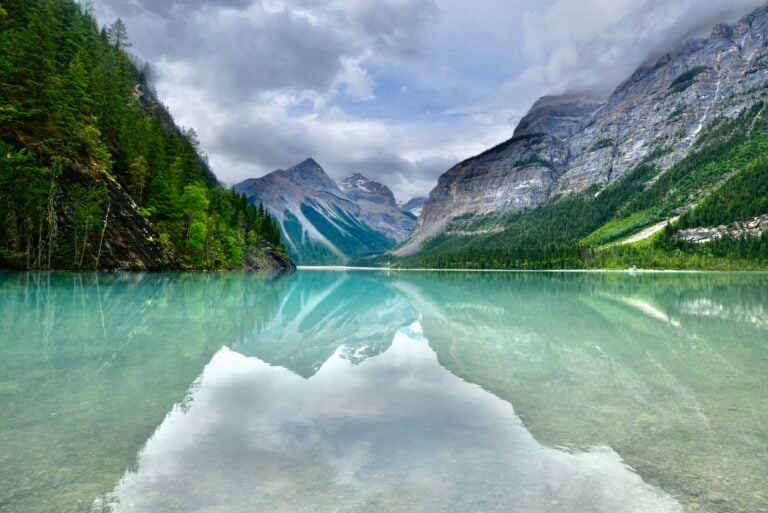
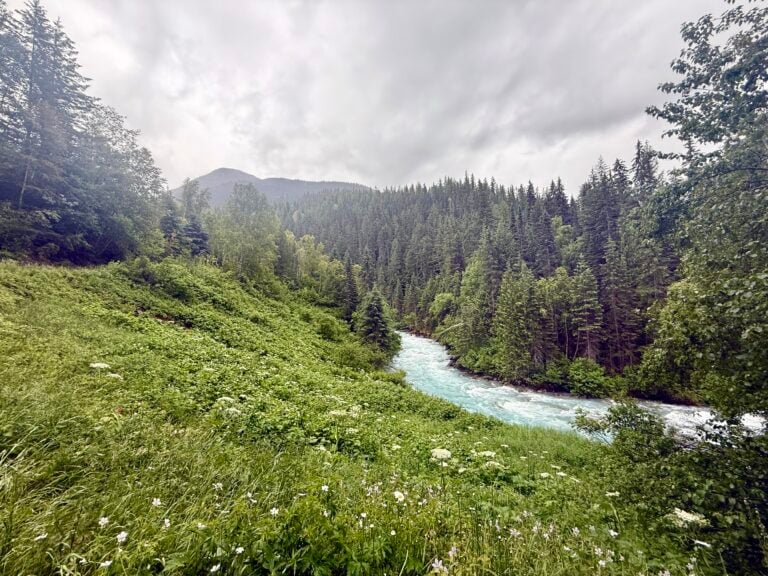
Half an hour from iRVin’s RV Park, I stop for the Kinney Lake Trail, a 10-kilometre out-and-back in Mount Robson Provincial Park. When I reach the azure-blue lake, I laugh. Lake Louise might draw crowds for a similar view, but here, I have the entire place to myself.
Each morning, I peel off the Velcro window covers, slide up the screens and unlock the van from inside. Quiet and compact, it feels surprisingly secure. Roomy enough not to feel cramped, yet cozy enough to keep me at ease.
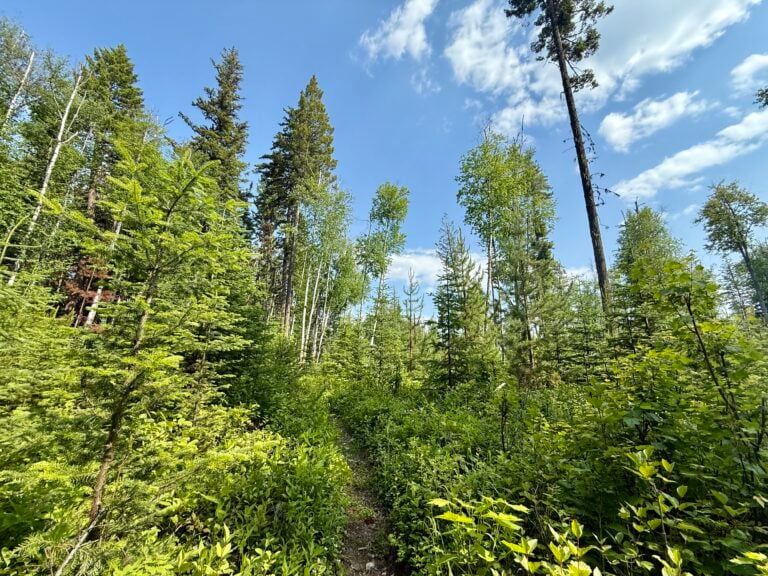
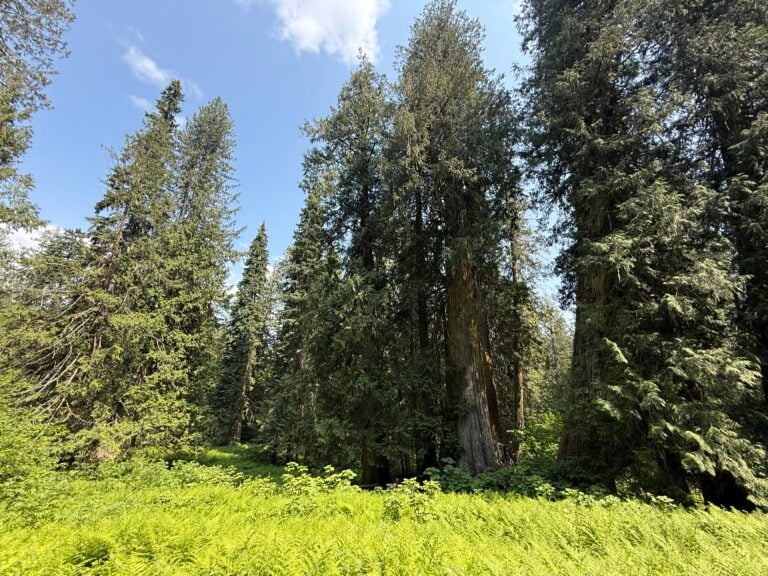
With coffee in hand, I plan the day: a two-and-a-half-hour drive to Prince George, with three hikes along the way. My first stop is the West Twin Old Growth Trail, a short 1.2-kilometre loop through towering cedar and hemlock.
“I’ve never seen anyone on this trail before,” a middle-aged man tells me, a little surprised to see me on the first trail. His young daughter clutches a Halloween bucket at his side. “It’s beautiful here,” I reply. “Not sure why it isn’t popular.”
“Enjoy your hike,” we both say simultaneously.
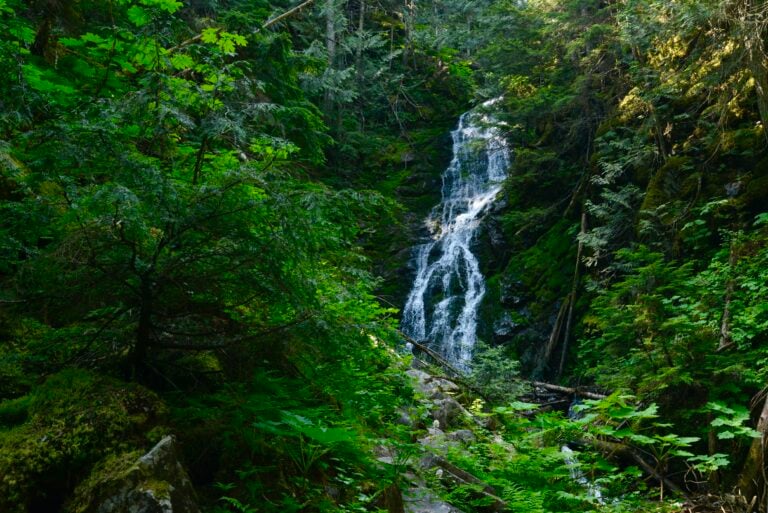
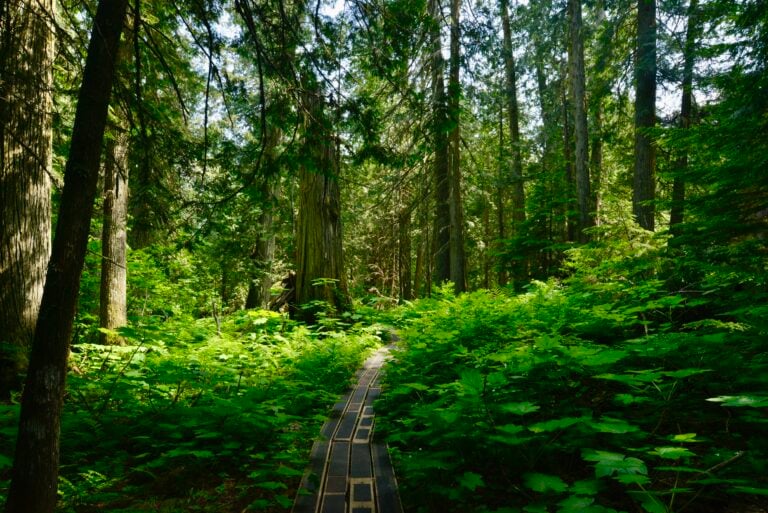
Next up is the Ancient Forest/Chun T’oh Whudujut Park, on the traditional territory of the Lheidli T’enneh. B.C.’s newest park, which protects thousand-year-old cedars, including the famed Big Tree of Life, five metres in diameter and at least a millennium old. Standing beneath its cathedral-like canopy, I can’t help but wonder how much “life” it has seen. The trail winds along a 450-metre boardwalk before opening into a 2.3-kilometre loop with waterfalls and shaded groves.
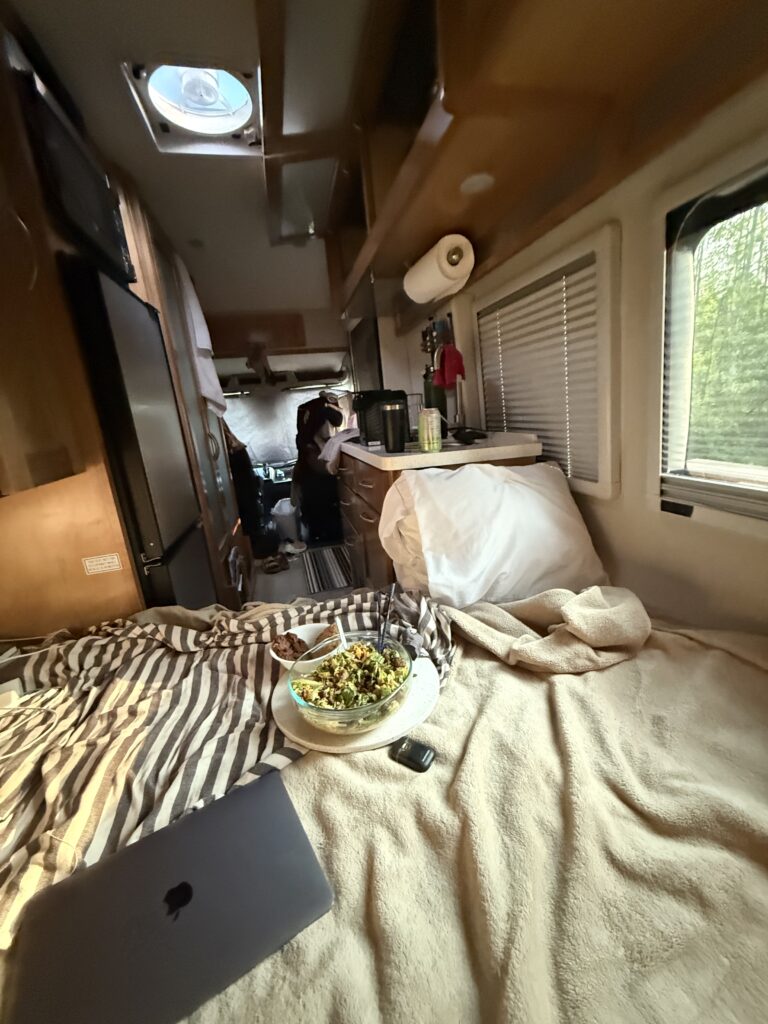
Later, I pull into West Lake Campground. Wendy South, the owner, greets me with an enthusiastic wave. “You’re in spot four,” she says, pointing me to a shady nook with full hookups. Once I’m set up, I sink into the quiet. Sunlight filters through the trees, the AC hums from the roof of the van, and I crack open my laptop to catch up on work before another packed day.
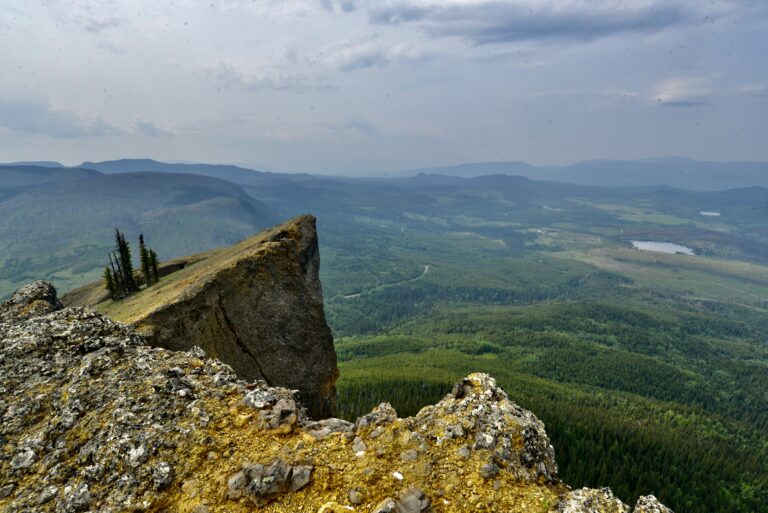
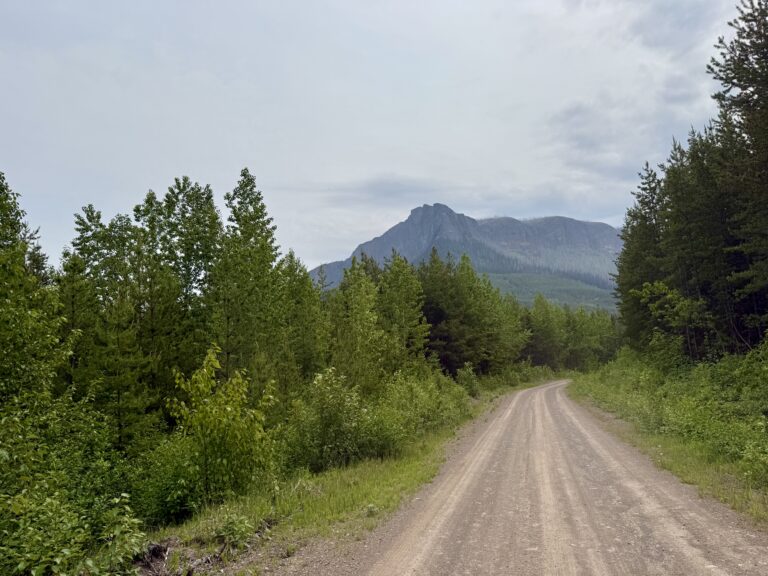
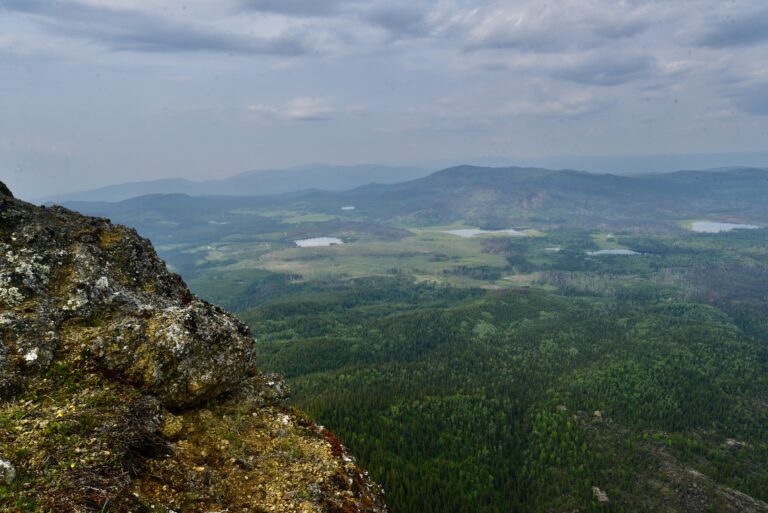
The drive from Prince George to Smithers is about four and a half hours, which I break up with an ambitious stop at China Nose Mountain. After what feels like an endless dirt road, potholes rattling the van, dishes clattering in the cupboards, and at least one glass casualty, I finally reach the trailhead. A faded sign confirms I’m in the right place.
I climb steadily, sweat and dust clinging to me, until the summit opens into a view of a 400-metre cliff. Mountain goats move effortlessly along the rock face, tails flicking as they graze. Below, charred trunks of old fire-scorched trees rise upward, giving the scene an eerie, otherworldly feel.
Exhausted and longing for a shower, I descend and spot the sterilized white of the Madivan waiting below. Half an hour later, I roll into Tyhee Lake Park in Smithers, grateful to call it a night.
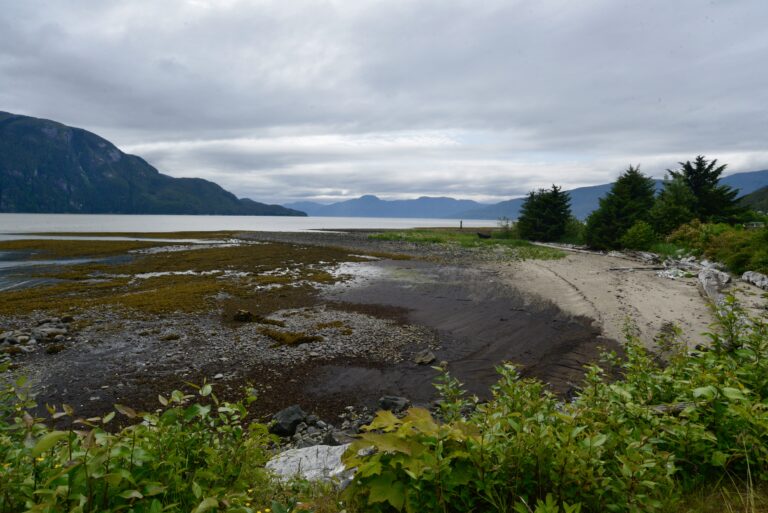
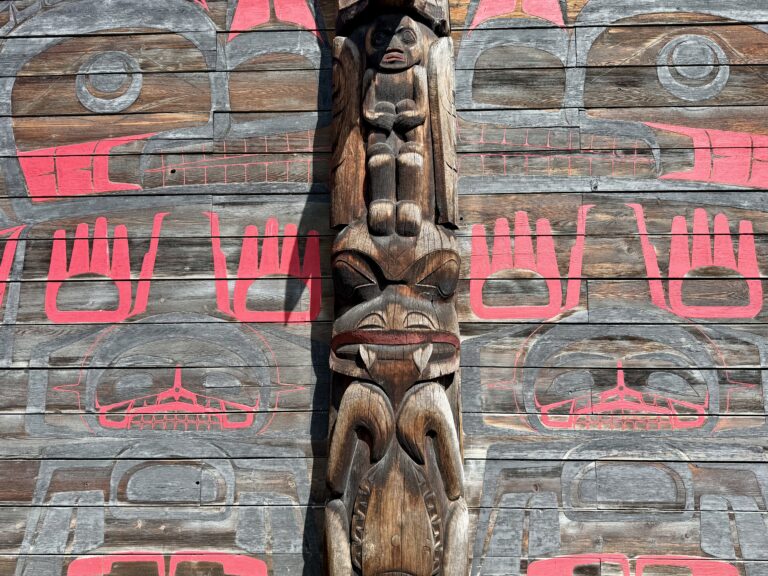
By day five, I had my Madivan rhythm down: wake with the sun, breathe in the morning air, eat breakfast outside, pack up, drive, hike, drive, hike, roll into a campground, set up, squeeze in some work, crash. And honestly? I loved every second of it. That feeling only deepened when I pulled into Anhluut’ukwsim Lax̱mihl Angwinga’asanskwhl Nisg̱a’a Park (Nisg̱a’a Memorial Lava Bed Park).
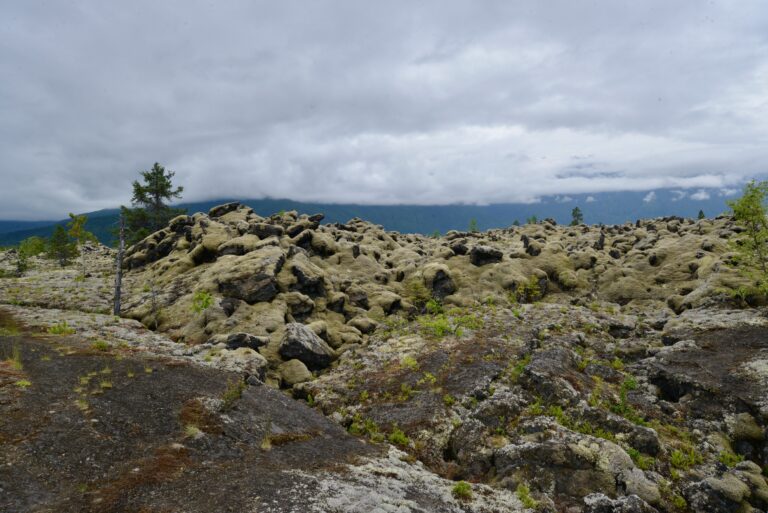
Tucked in the Nass Valley, the park is one of Canada’s best-kept secrets, and the site of the country’s most recent volcanic eruption. Almost as soon as I lose cell service, thick forest gives way to an otherworldly expanse of rock. Lava tubes, lichen-covered mounds, and sharp formations stretch endlessly. According to a plaque in the campground, when the volcano erupted in the mid-1700s, it buried Nisg̱a’a villages and took 2,000 lives. Walking across the hardened lava, you can feel that history underfoot.
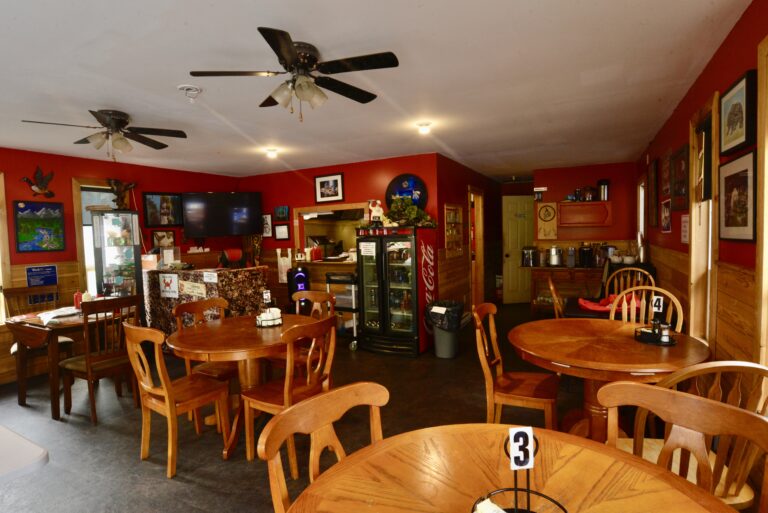
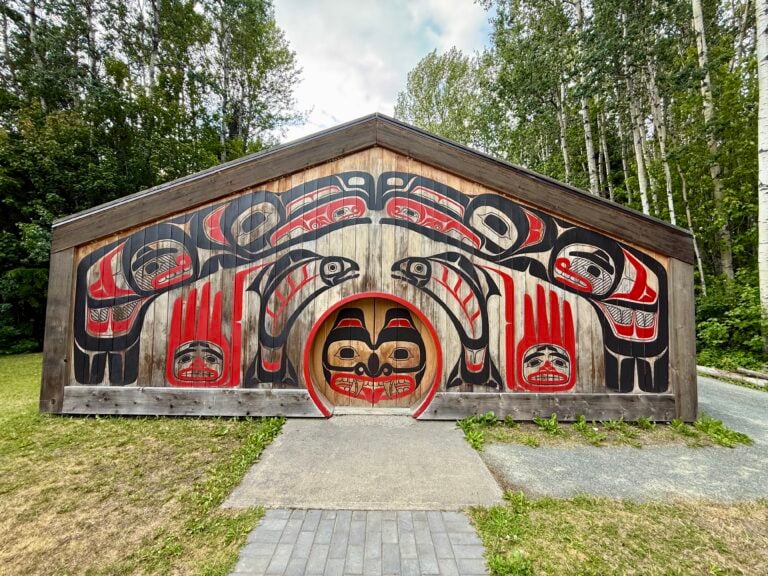
The day takes me from the Hagwilget Canyon Bridge and the ‘Ksan Historical Village and Museum to the lava fields, then eventually Gingolx, a Nisg̱a’a village on the edge of the valley. Before leaving, I stop at U See Food U Eat It, the only restaurant in the Nass Valley and legendary for its halibut. The owner, Bonnie Moore, is sitting behind the cash register when I walk in.
“Are you open?” I ask. “We can be,” she replies flatly. For a second, I wonder if I should back out, but when I mention I’ve heard her fish and chips are among the best in Canada, she lights up. Without hesitation, she’s battering halibut, dropping it in hot oil, and 15 minutes later, I’m walking out with a steaming container of deep-fried fish.
That night, I park at the Nisg̱a’a Memorial campground, no frills, just 16 sites, a mailbox for your $20, and a simple honour system. I slip my bill in, scribble the Madivan’s plate number and settle in.
NOTE: CanaDream applies a Northern Surcharge for trips beyond Kitwanga, covering the risks of remote road damage or emergencies in areas such as the Nass Valley
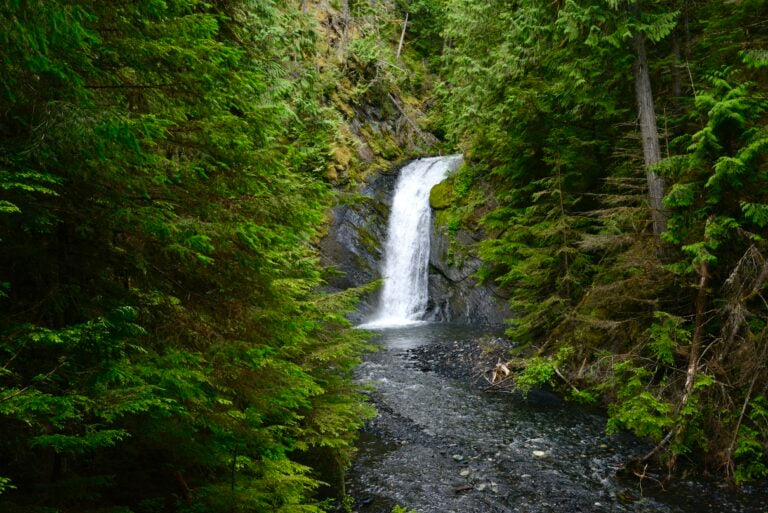
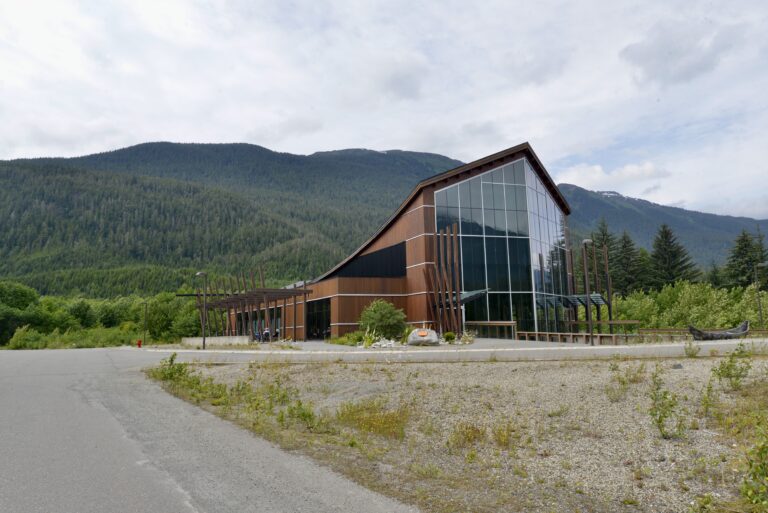
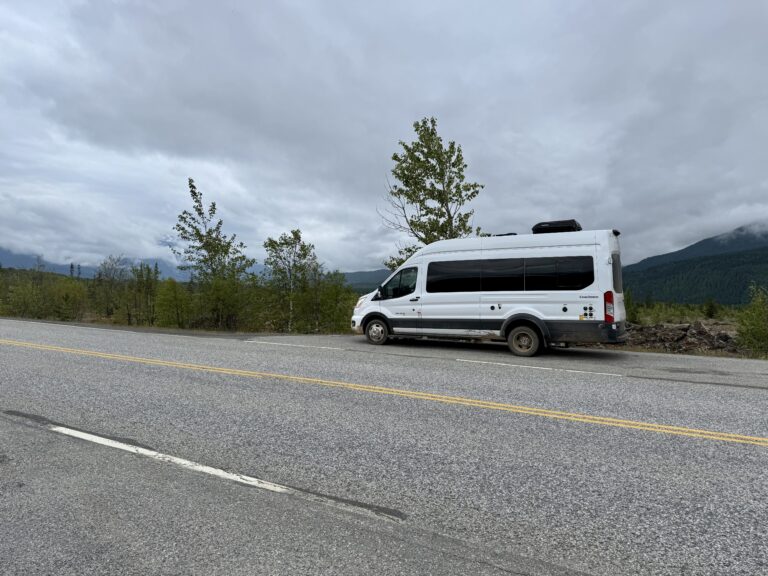
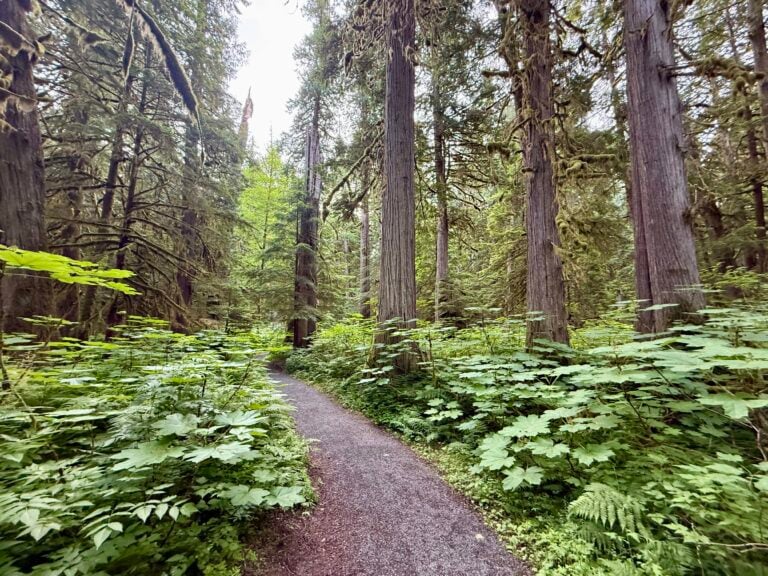
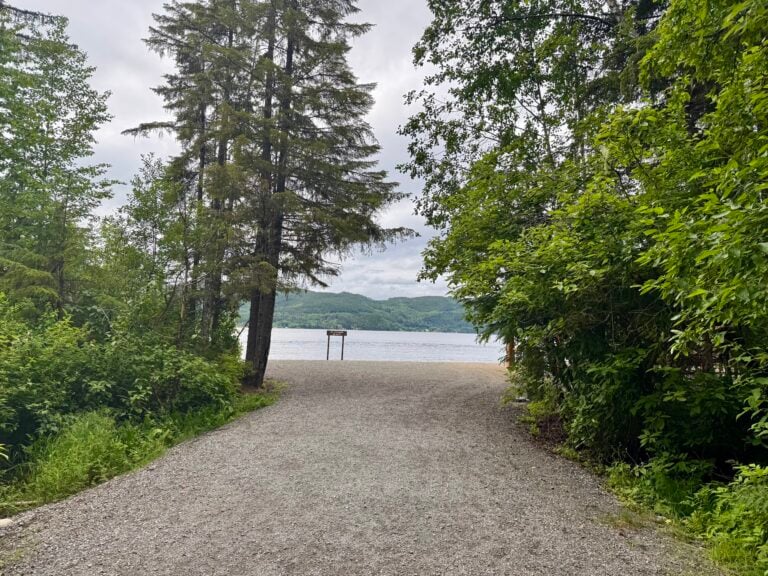
Wanting to make the most of my time in the Nass Valley, I set out early on foot to explore the lava beds. I walk nearly five kilometres down the main road, passing only one car in the two hours I’m out. On the way back, I pause in silence, still stunned by the strangeness and beauty of the landscape.
Later, I followed the Nisg̱a’a Auto Tour, a self-guided drive marked with blue-and-white signs that lead to 16 sites in total: waterfalls, hot springs, the drowned forest, a tree cast, and the Nisg̱a’a Museum. Each site is free to access, and each has its own story.
That evening, I rolled into Furlong Bay Campground in Lakelse Lake Park. After a shower, I wandered down to the waterfront and noticed an empty swing set in the children’s park. I couldn’t remember the last time I’d been on a swing, so I sat down and started pumping my legs. In the city, I’m chasing productivity, measuring my days by the tasks I accomplish. But here, this trip was teaching me to pause, to find joy in something as simple as the rhythm of a swing under the open sky.
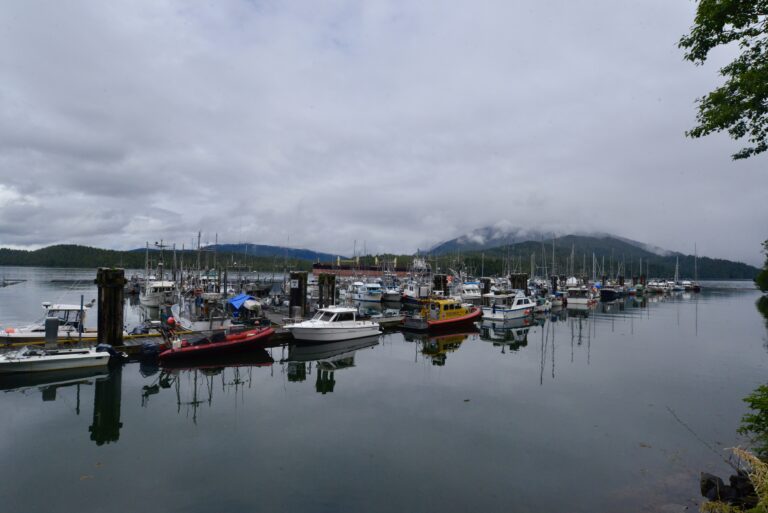
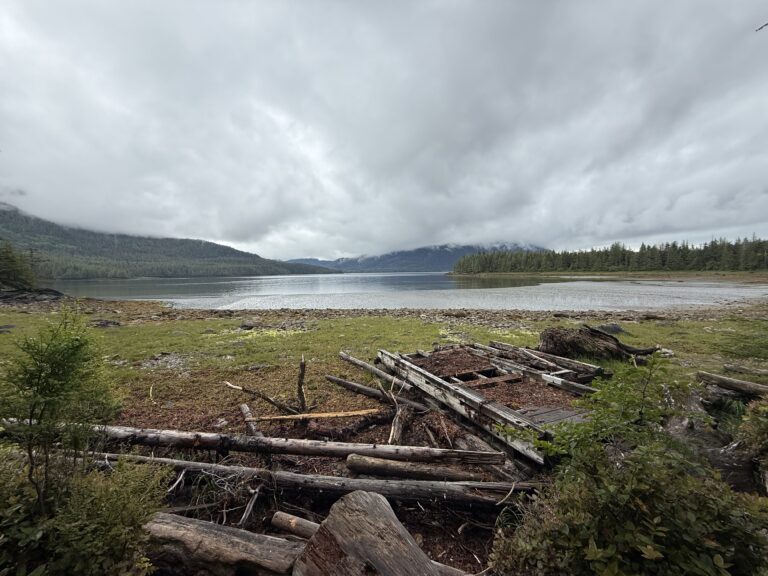
The drive from Terrace to Prince Rupert takes about an hour and a half, but I knew this coastal city deserved extra time. Nicknamed the “city of rainbows” for its rainfall, Prince Rupert had a reputation for rugged beauty and rich history, and it didn’t disappoint. But first, a hike, of course.
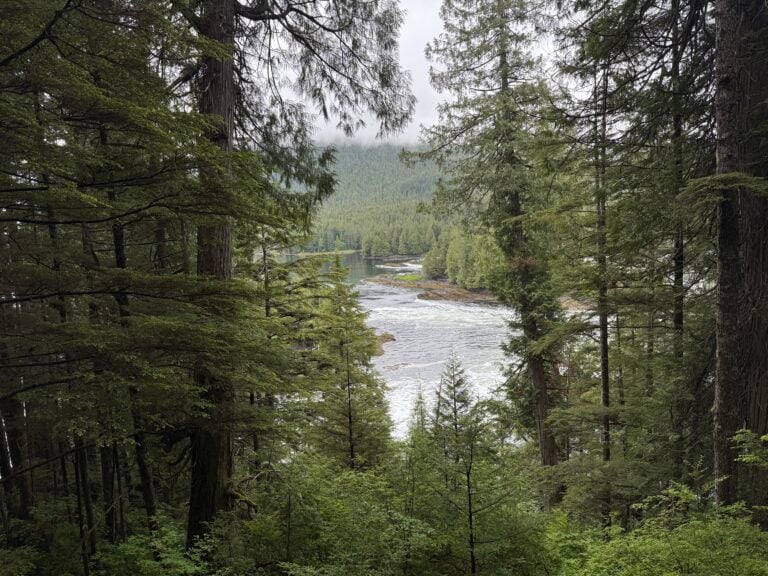
At the Butze Rapids Interpretive Trail, the skies open the moment I park. Thankfully, I’m prepared, layered head-to-toe in Arc’teryx. The 5.4-kilometre loop is lush and impossibly green, winding through old-growth and bonsai forests, bogs, and wetlands. An hour later, I’m back at the van, and thinking about how only two nights remain in the Madivan. A pang of sadness surfaces, but I push it aside as I roll into Cow Bay, Prince Rupert’s colourful waterfront district.
Boats crowd the deep natural harbour, shipping containers stack along the pier and interpretive signs detail the marine life. I wander down a wooden dock, hoping to spot a whale, but instead lock eyes with a harbour seal that bobs up just metres away. From the boat launch, I stroll the waterfront, wandering into gift shops, galleries and cafés that share the same coastal charm. Until now, I’d resisted souvenirs and “treats”, but I cave at Saltwater Bakery, leaving with a croissant, a coffee and a bag of chocolate chip cookies.
That night’s plan was Prudhomme Lake Park, 20 minutes outside of town. But when I check in, the park attendant waves me over with a laugh: “You look too young to be driving a van.” She quickly grows serious when I mention the 7:30 a.m. ferry to Port Hardy. “Then you can’t stay here,” she says, explaining that the gate stays locked until 7 a.m. With the van needing to be at the terminal 90 minutes before departure, I have no choice but to relocate. She directs me to Prince Rupert RV Campground, where thankfully, there’s space.
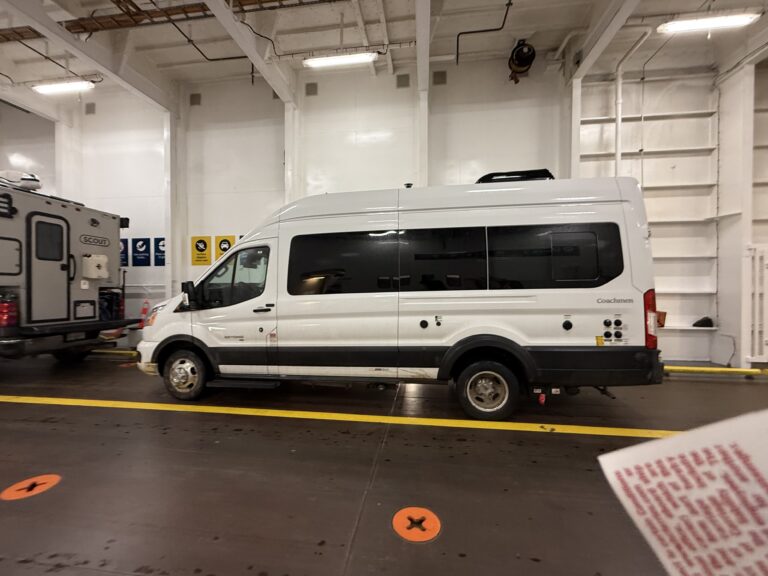
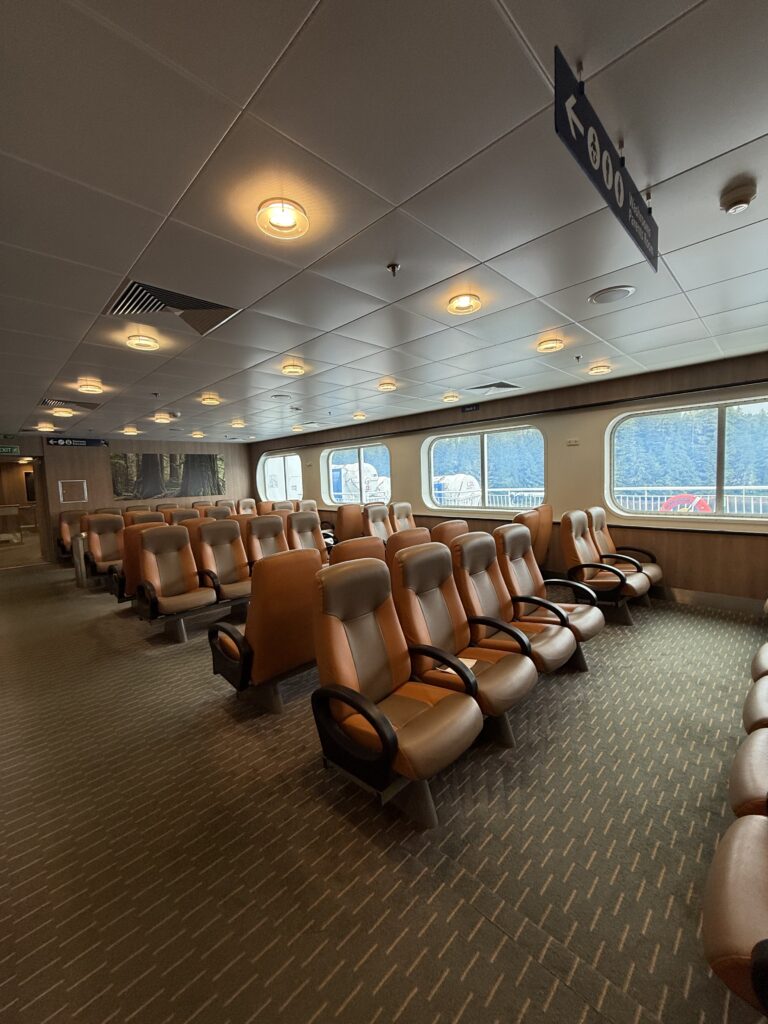
With space for 115 cars, more than 600 passengers, multiple dining areas, a gift shop, a lounge and even a kids’ play zone, the Northern Expedition, BC Ferries’ largest vessel on the Inside Passage, felt more like a small cruise than a ferry. Thankfully, I had a reserved cabin with a window. And, as I would soon learn, the single most incredible luxury of the trip: a bed. Actually, two beds.
I wandered the ship, scoping out menus at the Canoe Café, where burgers, soups and fish and chips seemed popular. When the captain announced that passengers could retrieve items from their cars, I made my way down to the vehicle deck and found the Madivan in a sea of sedans. I raided my stash and put together a dinner of hummus and vegan sausage on bread, with an apple and peanut butter for dessert.
Just after midnight, we docked in Port Hardy. It was pitch black and still raining when I pulled into Port Hardy RV & Resort. I found my name on an envelope posted on a bulletin board at the entrance, which directed me to my reserved site
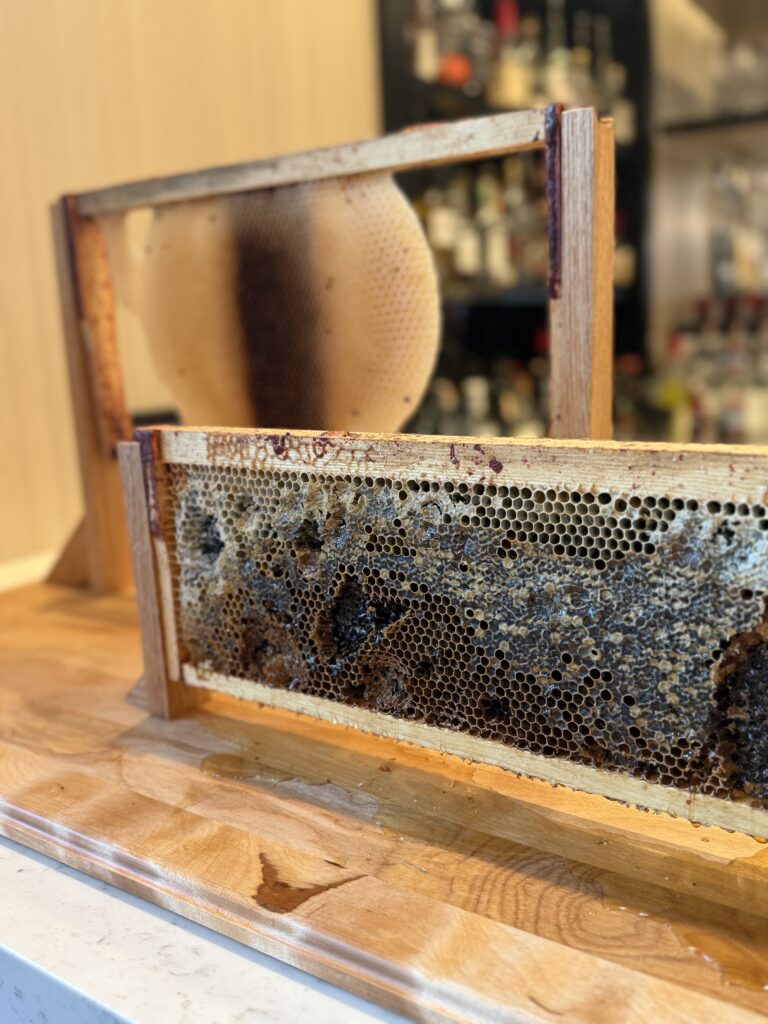
In the morning, I slide open the van door and am stunned to see a pristine pond just a few feet away, hidden until now behind a row of bushes. Cattails sway in the breeze, a family of ducks drifts lazily across the water, and a heron stands silently at the edge. It’s my first real glimpse of Vancouver Island — and it feels like a gift.
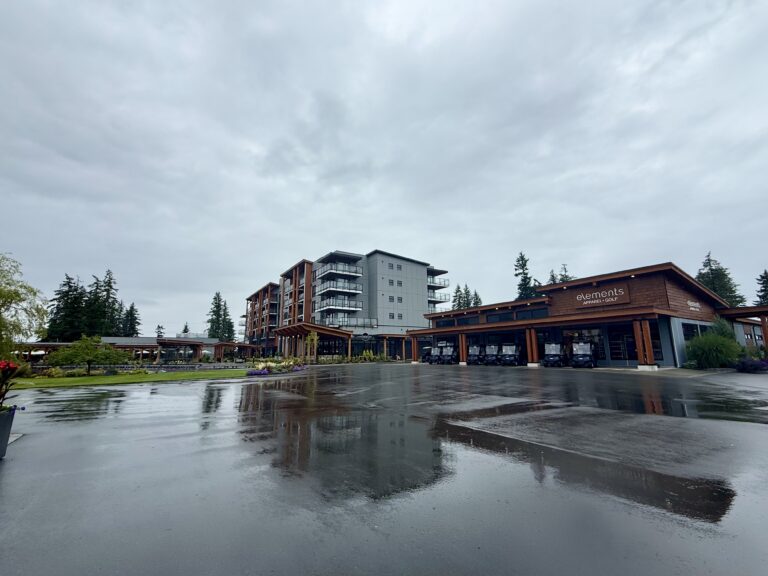
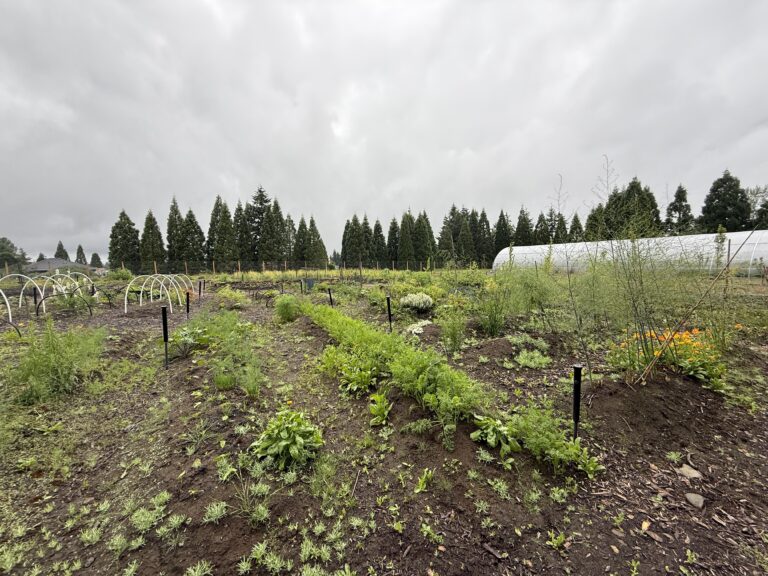
By the time I pull into Naturally Pacific Resort, the hours have disappeared. Tucked between ocean views and mountains, the boutique hotel is as polished as it is welcoming. Andre Tambosi, the director of sales and marketing, shows me around the property, which features a golf course, spa, outdoor pool, and even a greenhouse where much of the restaurant’s produce, such as tomatoes, cucumbers, and melons, is grown.
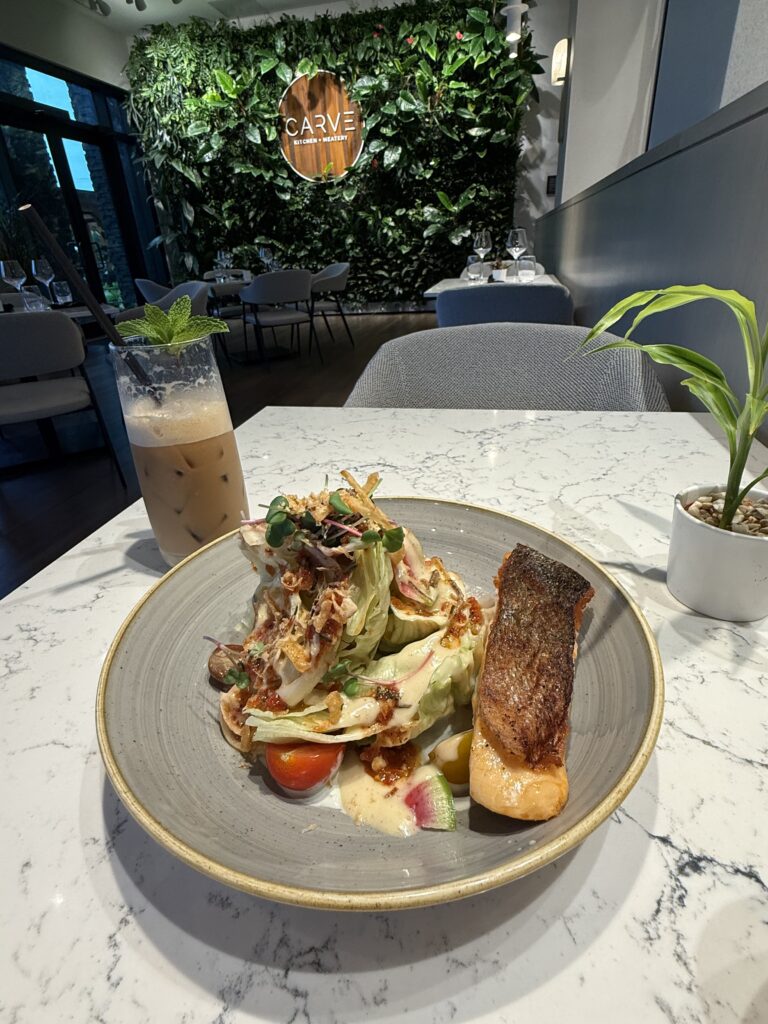
At Immersion Spa + Wellness, I trade my hiking boots for a robe and slippers and sink into the mineral pool. Magnesium, sodium, and potassium work their magic. I rinse off in the eucalyptus shower, then wander to Carve Kitchen + Meatery, where I order a wedge salad with salmon and an iced coffee. I head back to the Madivan, racing south to catch the 4 p.m. ferry. The crossing is short (an hour and 45 minutes) but long enough for me to pace the deck, scanning the waves for whales.
By the time I reach Horseshoe Bay, rush-hour traffic has swallowed Vancouver. Inch by inch, I guide the van through the city, suddenly hyper-aware of its bulk. Out on the highway, it felt like freedom; here, it feels like I’m navigating a transport truck. At last, I pull into the Fairmont Vancouver Airport, where even the valet hesitates before deciding to leave the van outside.
The next morning, I drive to Delta to return the Madivan. Handing over the keys feels heavier than expected. “How was your trip?” the woman at the counter asks.
“Amazing,” I say. “Honestly, I could live in that van full-time. Every day felt like an adventure.”
I give the van one last look with a mix of gratitude and reluctance. But I know this isn’t the end, it’s just the first of many trips back to B.C.
For three decades, CanaDream has been helping people explore Canada at their own pace. This year, they were named Business of the Year at the Canadian Tourism Awards in recognition of CanaDream’s commitment to excellence in the tourism sector.
With a fleet of 1,500 carefully maintained RVs spread across seven locations across the country, CanaDream has a rig for every kind of adventure: from compact campers for two to maxi-plus motorhomes for families or groups. Each RV is cozy and practical, with hotel-grade mattresses, full bathrooms and fully equipped kitchens.
CanaDream makes planning easy with the CanaDream Club App, Trip Planner, Festival Finder, and Iconic Experiences Finder. Guests also unlock perks and discounts at thousands of campgrounds and attractions. And for those who have fallen in love with their vehicle (like me) and want to purchase their “home on wheels,” CanaDream’s Rent Before You Buy program offers an incredible discount that deducts the value of the driver’s guest experience from the purchase price!
People & Culture
The history behind the Dundas name change and how Canadians are reckoning with place name changes across the country — from streets to provinces
Environment
An estimated 29 million mammals are killed each year on European roads
Travel
Painstakingly restored in the wake of the Great East Japan Earthquake of 2011, the Michinoku Coastal Trail offers a powerful walk through loss, resilience and hope

People & Culture
In an age of advancing technologies, the art and science of watching for wildfires from lookouts is fading away. But fire lookout Bart Vanderlinde watches on.