People & Culture

The Hudson’s Bay Company charter: “Interesting and problematic”

Episode 116

A look inside the Hudson’s Bay Company Royal Charter, now returning to public spotlight, and its enduring role in Canada’s colonial past and Indigenous displacement

  • Dec 03, 2025
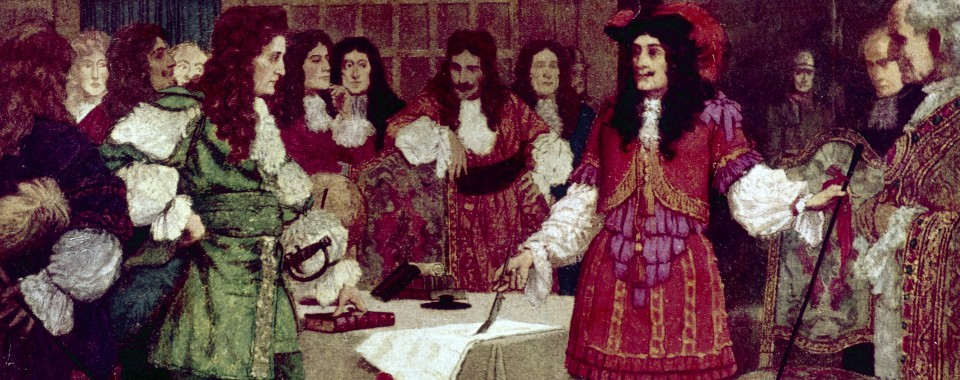
The signing of the HBC Royal Charter by Britain's King Charles II on May 2, 1670. (Image courtesy HBC Heritage)
Expand Image

Listen & Subscribe

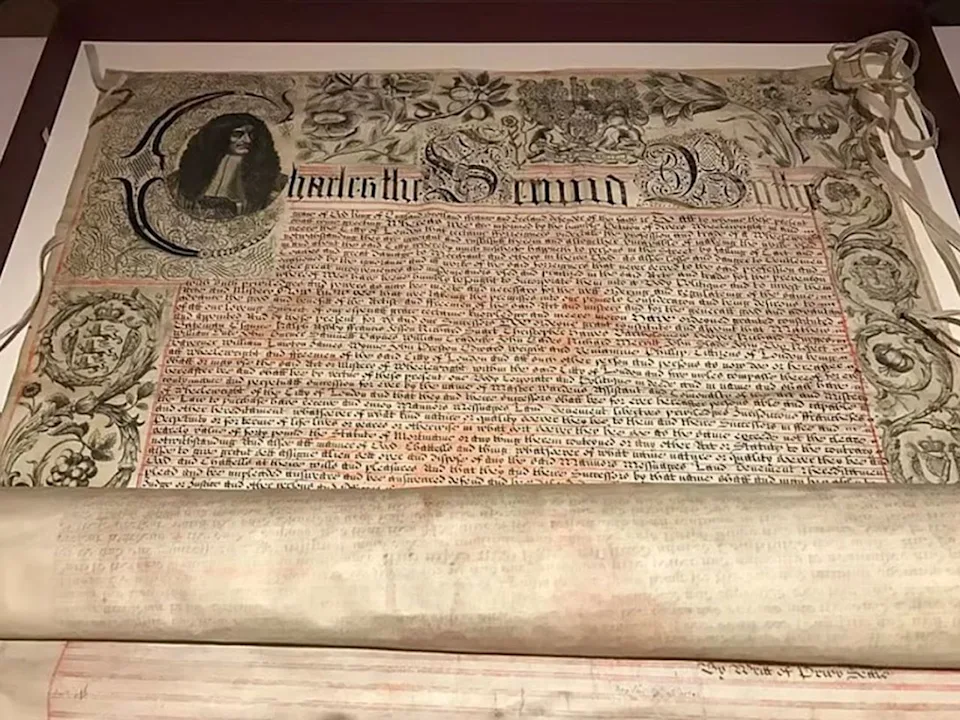
In 2020, the Hudson’s Bay Company marked its 350th anniversary. At this time, podcast host David McGuffin headed deep into the HBC vault with Amelia Fay, curator of the HBC Collection at the Manitoba Museum. Together, they unpacked the story and the symbolism of the Royal Charter granted by King Charles II in 1670, a document that established what was then known as “The Governor and Company of Adventurers of England Trading into Hudson’s Bay.”

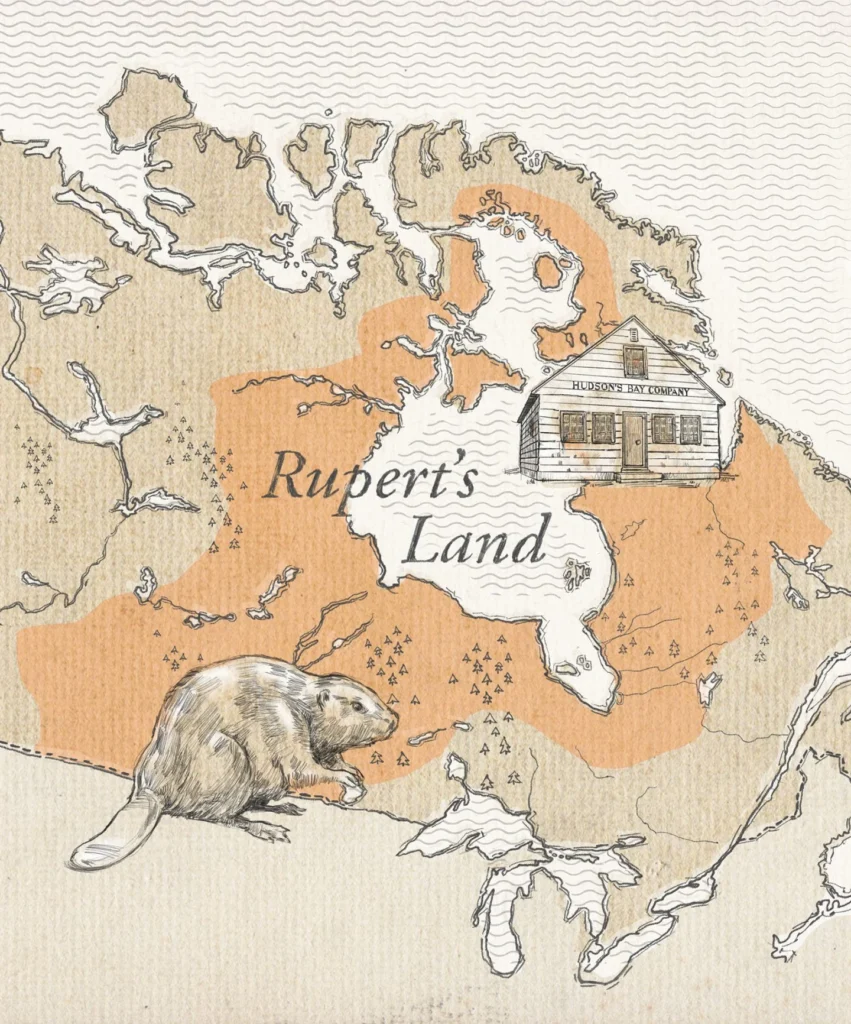
The land's granted to the HBC in the original 1670 charter. The company eventually expanded its territory to include an area that was 1/12th of the world's landmass.
Expand Image

In 2020, the Hudson’s Bay Company marked its 350th anniversary. At this time, podcast host David McGuffin headed deep into the HBC vault with Amelia Fay, curator of the HBC Collection at the Manitoba Museum. Together, they unpacked the story and the symbolism of the Royal Charter granted by King Charles II in 1670, a document that established what was then known as “The Governor and Company of Adventurers of England Trading into Hudson’s Bay.”

Fay describes the charter in vivid detail, from its shimmering vellum pages to its exceptional state of preservation, and explains how this corporate decree laid out the governance structures and sweeping territorial claims that would shape the future of northern North America. Their conversation explores the charter’s complex legacy: how it empowered the HBC to act as a government, shaped settlement and trade across a vast section of the continent and how it is inseparable from the Doctrine of Discovery and the harmful concept of terra nullius, both of which displaced and ignored the sovereignty of Indigenous nations.

With the charter now back in the public spotlight through its historic sale, this episode offers timely context on why the document remains both foundational and deeply problematic, and why understanding its legacy is essential to understanding Canada today.
“CHARLES THE SECOND, by the Grace of God, King of England, Scotland, France, and Ireland, Defender of the Faith, &c. To ALL to whom these Presents shall come, greeting.” With that opening line, a Royal Charter granted all of the land in the watershed of Hudson’s Bay to the Hudson’s Bay Company.
Expand Image
Advertisement

Help us tell Canada’s story

You can support Canadian Geographic in 3 ways:

Related Content

People & Culture

What does the fall of the Hudson’s Bay Company mean to the people of Waskaganish?

For community members in Waskaganish, Que., the place where Cree traders established first contact with company employees, it’s just a chapter in a longer history

  • 3443 words
  • 14 minutes

History

Explore presents the Hudson’s Bay Company – Part 4(1): The Royal Charter

Episode 17

Written on animal skin 350 years ago, the Royal Charter that created the Hudson’s Bay Company is both an incredible and problematic document

  • 11 minutes

History

The untold story of the Hudson’s Bay Company

A look back at the early years of the 350-year-old institution that once claimed a vast portion of the globe

  • 4473 words
  • 18 minutes

People & Culture

40th anniversary: The Canadian Charter of Rights and Freedoms

Proclaimed in 1982 by Her Majesty Queen Elizabeth II of Canada, the Canadian Charter of Rights and Freedoms is intended to ensure that all Canadians can live a life without discrimination of any kind. On the 40th anniversary of its proclamation, Mark Bourrie asks whether the goals of the Charter have been met when it comes to Indigenous people living in Canada.

  • 1330 words
  • 6 minutes