Nahanni Canyons from Virginia Falls

July 9 – 21, 2028
Join us on an incredible journey down the Nahanni River – truly the icon of Canadian wilderness rivers. The Nahanni flows through a mountainous landscape, over Virginia Falls – nearly twice the height of Niagara Falls – through Canada’s deepest river canyons, past hot springs and geological features so unique that the Nahanni River was declared the first World Heritage Site by the United Nations in 1978. The Nahanni River’s reputation as a land of mystery and romance is supported by names like Deadmen’s Valley, Headless Creek, Funeral Range, Burial Range, Hells Gate and Painted Canyon. Inhabited by moose, caribou, Dall sheep, grizzly and black bears and a host of others, the Nahanni River is also rich in human history with legends and lore that are inseparable from its physical beauty. Each of our Nahanni canoeing and rafting expeditions include Virginia Falls, the canyons and the small and isolated First Nation community of Nahanni Butte. All of our Nahanni River canoeing and rafting trips depart from Fort Simpson and include opportunities for hiking. We predict you too, will fall in love with this regal river with such a beautiful name.
Itinerary
- Day 0: Fort Simpson, N.W.T.
- Day 1: Majestic mountain and Canyon flight
- Day 2: Virginia Falls (Náįlįcho)
- Day 3: Painted Canyon
- Day 4: The Gate (Tthetaehtłu ́ah) and Pulpit Rock
- Day 5: Big Bend
- Day 6: Deadmen Valley (Dahaehtth’į)
- Day 7: Prairie Creek (Tło Dehé)
- Day 8: Into the canyon kingdom
- Day 9: Lafferty Canyon
- Day 10: Kraus’ Hotsprings (Tułetsęę)
- Day 11: Great Dene Wall and Nahanni Butte (Tthenáágó)
- Day 12: Homeward bound
Meet your RCGS Ambassador:
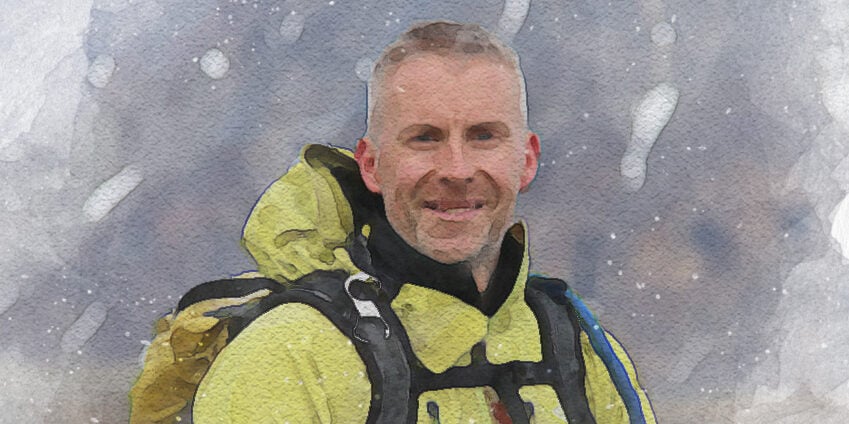
Dr. Gordon Osinski
Dr. Gordon “Oz” Osinski is a Professor in the Department of Earth Sciences at the University of Western Ontario (Western), Canada. He is also the Director of the Canadian Lunar Research Network and the founder and Chair of the Planetary Sciences Division of the Geological Association of Canada.
Dr. Osinski’s research interests are diverse and interdisciplinary in nature, motivated by understanding the evolution of the surface of the Earth and other planetary bodies as well as the origin and evolution of life. His main focus is on understanding impact cratering as a planetary geological process, on the Earth, Moon and Mars. He has conducted fieldwork on 6 continents, from Antarctica to Africa, but the Canadian Arctic is where much of his work takes place. Dr. Osinski has received numerous awards for this research, including the Barringer Medal of the Meteoritical Society (2021).
Dr. Osinski is also involved in several past and ongoing planetary exploration-related activities. From 2020 to 2022 he was the principal investigator for a Canadian Space Agency Concept Study to develop an Integrated Vision System. He is also a co-investigator on the PanCam instrument on the European ExoMars mission to Mars and in November 2022 was named as principal investigator of the Canadian Lunar Rover Mission – Canada’s first ever rover mission to the Moon. Dr. Osinski is involved in providing geology training to Canadian and US astronauts. He is also passionate about outreach and science communication. Dr. Osinski is a fellow of the Royal Canadian Geographical Society.