
Places
Our Country: Sanoa Olin on surfing the waves of Tofino, B.C.
Before heading to Paris 2024 with Team Canada, Canada’s first-ever surfer in the Olympic Games chatted coldwater surfing in her hometown with Can Geo
- 587 words
- 3 minutes
Places
A return to Clayoquot Sound traces the coastal town’s journey from logging battleground to one of Canada’s most beloved surfing and storm-watching destinations

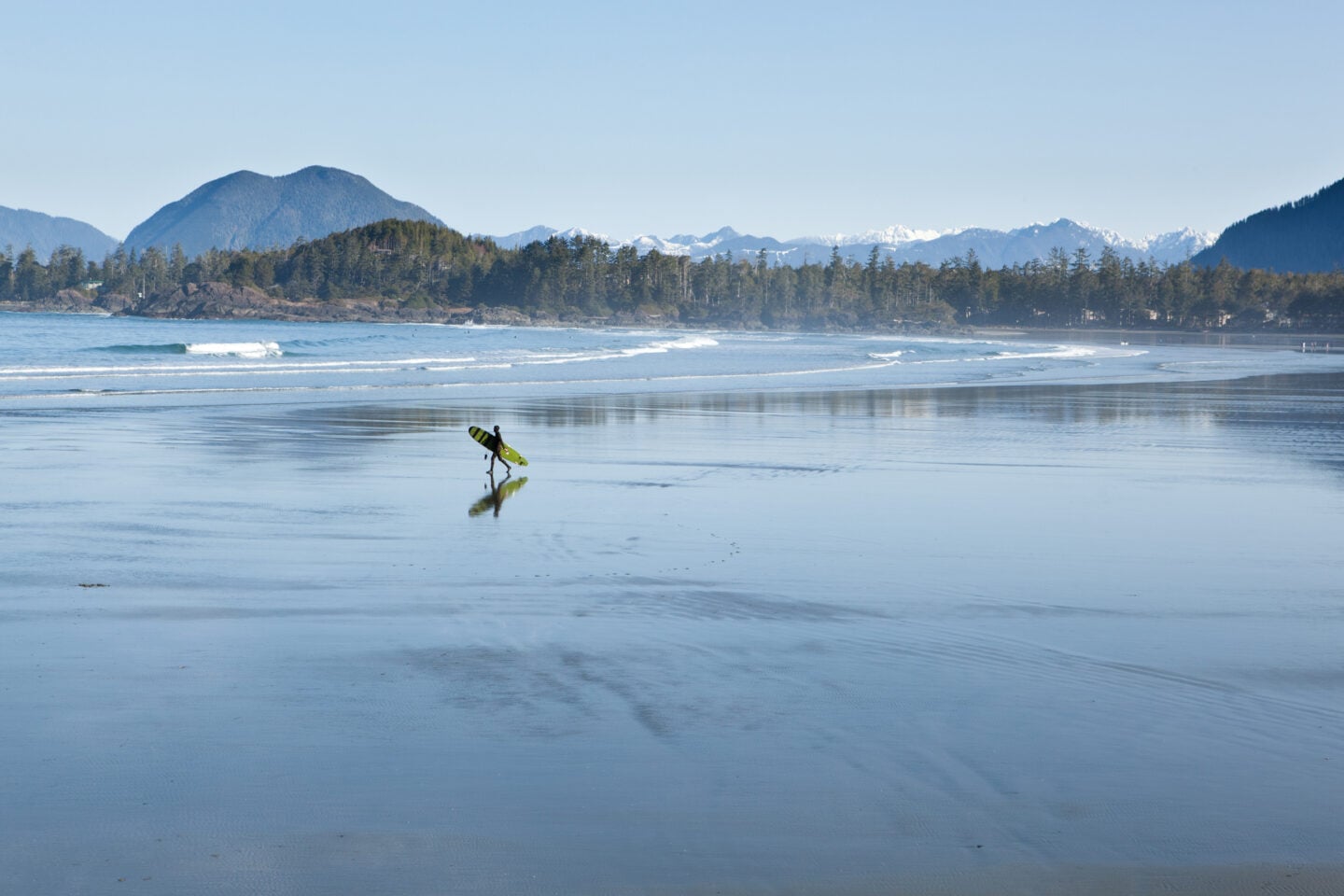
Timeless natural beauty is the biggest draw in the coastal town of Tofino, but time itself is pulling me in different directions. I feel nostalgia for the early 2000s, when I’d show up with friends for the July long weekend, camping and hiking along windswept, wave-lashed beaches. I remember pulling on a thick wetsuit to surf beneath patrolling bald eagles, joining a small but supremely dedicated surfing community. I think back to a romantic getaway with my girlfriend (now-wife), when we cozied up by a fireplace as fierce Pacific storms rolled in. From modest roots as a hippie-logger outpost on the west coast of Vancouver Island, I’ve witnessed Tofino transform into a buzzing, four-season destination, with lineups outside world-class restaurants, posh hotels, million-dollar condos, and hundreds of surfers chasing the summer swells. All seem to agree that a visit is time well spent.
For this particular visit, I saved precious time with a 40-minute flight from Vancouver to Tofino, eliminating hours of ferry waits along with a winding drive across the island’s Highway 4. The long commute to Tofino traditionally kept traffic at bay, but the region’s renowned natural beauty is an alluring draw.
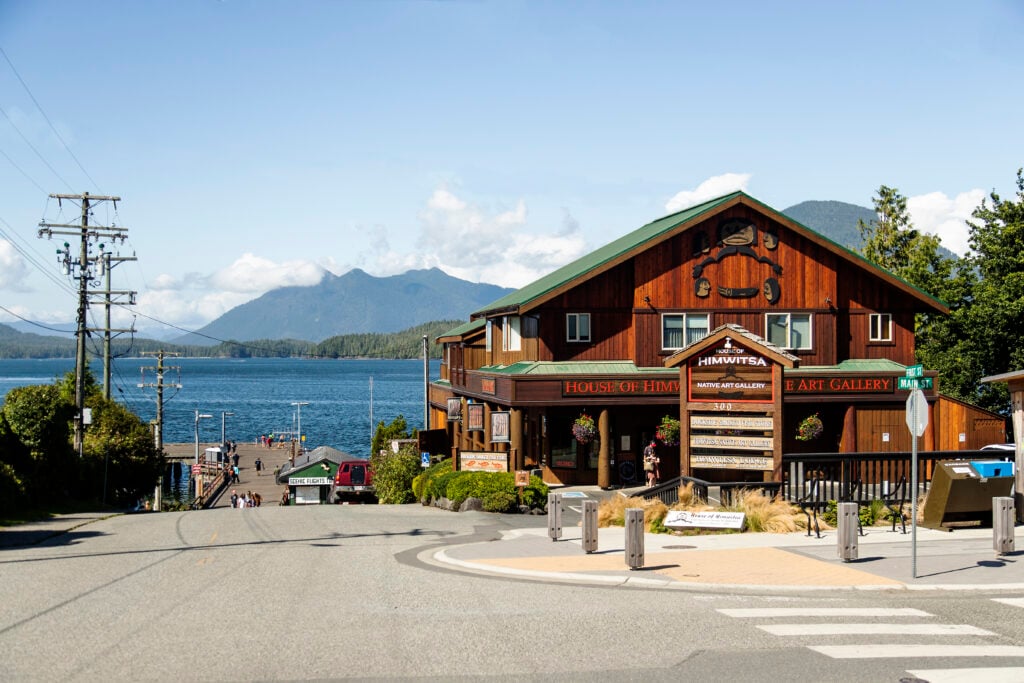
In 2024, Tofino received more than 711,000 visitors, generating $430 million for the local economy and providing more than 3000 direct jobs. With a long weekend at my disposal, I pass up on the scenic road trip to spend more time on the ground. While Tofino today is associated with a tranquil beauty, I want to learn more about its turbulent past. Elder and elected Tla-o-qui-aht First Nations Chief Moses Martin would be the perfect guide.
Tofino is located within Clayoquot Sound, a region of old-growth temperate rainforest that encompasses about 350,000 hectares of forests, fjords, and islands — making it one of the largest remaining areas of temperate rainforest anywhere in the world. In April 1993, the B.C. government announced a controversial land-use decision to allow 62 per cent of Clayoquot Sound to be logged, with plans to protect the remaining 38 per cent. Environmentalists protested, and the decision sparked massive public outrage. It triggered what was at the time the largest act of civil disobedience in Canadian history, with more than 12,000 people visiting a protest camp established to block logging trucks from entering the forest.
Local residents, Indigenous activists, students, and scientists gathered at this Peace Camp, international media tuned in, and Hollywood celebrities, including Robert Redford and Oliver Stone, spoke out against the clear-cutting. Australia’s Midnight Oil performed a makeshift concert to a crowd of thousands. This battle of ideology, wills, and ultimately lawyers became known as the War in the Woods.
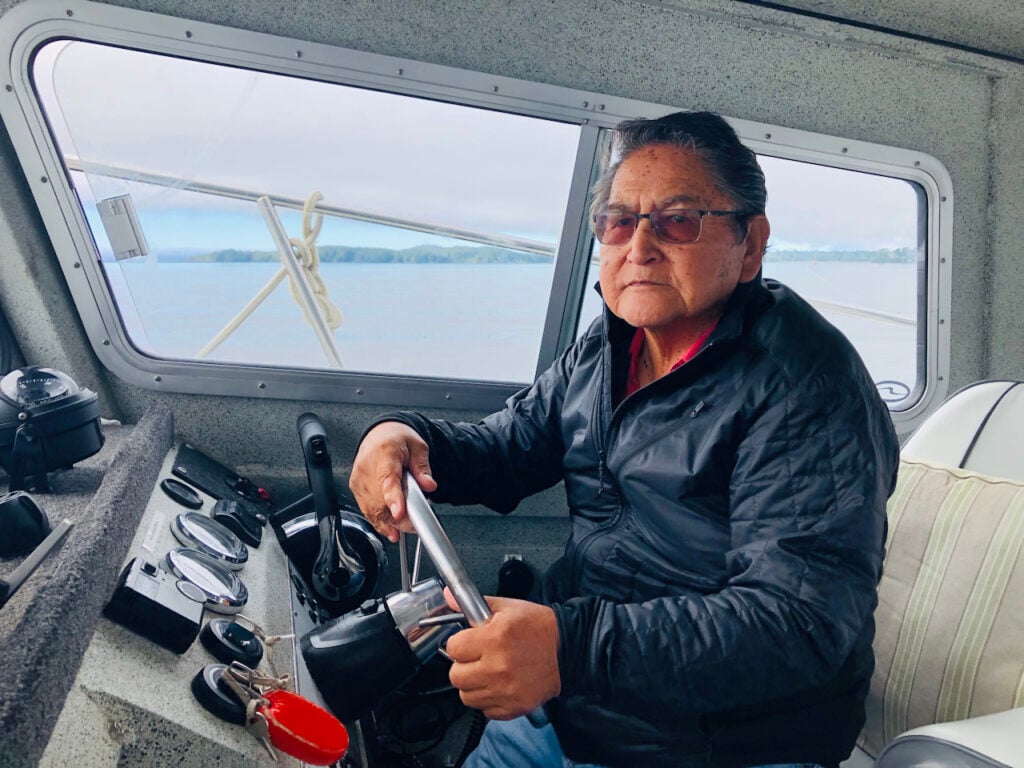
“We won the War in the Woods,” explains Moses Martin, whose nephew Joe was instrumental in rounding up international support, and whose granddaughter Gisele co-authored a booklet about the protest. Like macrame string art on the walls of Tofino’s 1970s-themed Hotel Zed, the Martin family is intricately woven into the history of Clayoquot Sound.
Motoring out of the harbour, Martin points out the residential school on Meares Island, where he was sent at age seven, separated from his family, and allowed to visit his home, just one mile away, only one day a year. He is generous with his answers and open to my questions about a protest that came to define the region. I’m struck by Martin’s calmness, knowledge and insight. Now in his eighties, Western culture would call him elderly and insist on his retirement, as if his best years have passed and he has little more to contribute. Instead, he’s an Elder, sharing wisdom and experience with generations to come. The traditions of the past and the potential of Tofino’s future swell in the ocean around us.
“Way back in 1950, my father told me if we don’t do something to protect this land, we will self-destruct. [Years later] we discovered plans to log 90 per cent of Meares Island, so we had to act,” Martin tells me, piloting his fishing boat through the inlet’s calm waters.
With the support of the provincial government of the time, multi-national logging companies initially dismissed First Nations and environmental concerns and aggressively sheared away vast stands of old-growth forest. As First Nations groups filed legal injunctions, logging continued unabated amid the court delays. Tofino residents soon joined the fight, along with NGOs like the Sierra Club and Rainforest Action Network. Thousands of protestors arrived from around the country, forming a human blockade in front of logging trucks.
In this pocket of Canada, people are passionate about protecting what remains of their forests.
Although the protest was steadfastly non-violent, it culminated in a dramatic blockade in July 1993, when more than 850 protesters were arrested. Public outrage and the tireless work of local leaders and supporters ultimately succeeded in protecting much of the natural beauty so celebrated around Tofino today.
In 2021, the Fairy Creek logging protest took place further south on Vancouver Island, eclipsing the War in the Woods in size and resulting in more than 1000 arrests. In this pocket of Canada, people are passionate about protecting what remains of their forests.
A six-kilometre-long multi-use bike path links Tofino’s sprawling beaches to the townsite, and it has an interesting and colourful detour. The pink-and-yellow-painted path diverts directly into the lobby of the Hotel Zed, with locals and guests encouraged to pedal through the world’s first bike-through lobby. It’s just one of many bold visions on display in this fun hotel: there’s a psychic den, authentic 80s arcade games, a disco room, period furniture, and a sunken lobby with green shag carpet and wood-panelled walls.
I remember enough of the 70’s to feel oddly at home with the working rotary phones, pop art and retro wall clocks, and half expect Austin Powers to emerge from the bird sanctuary out back. Inside my room, leather armchairs, unusual lamps, and funky bathroom tiles feel less like a hotel and more like the home of someone with good taste and an unusual affection for the 1970s. Joining sister properties in Victoria and Kelowna, Hotel Zed adds to Tofino’s eclectic character.
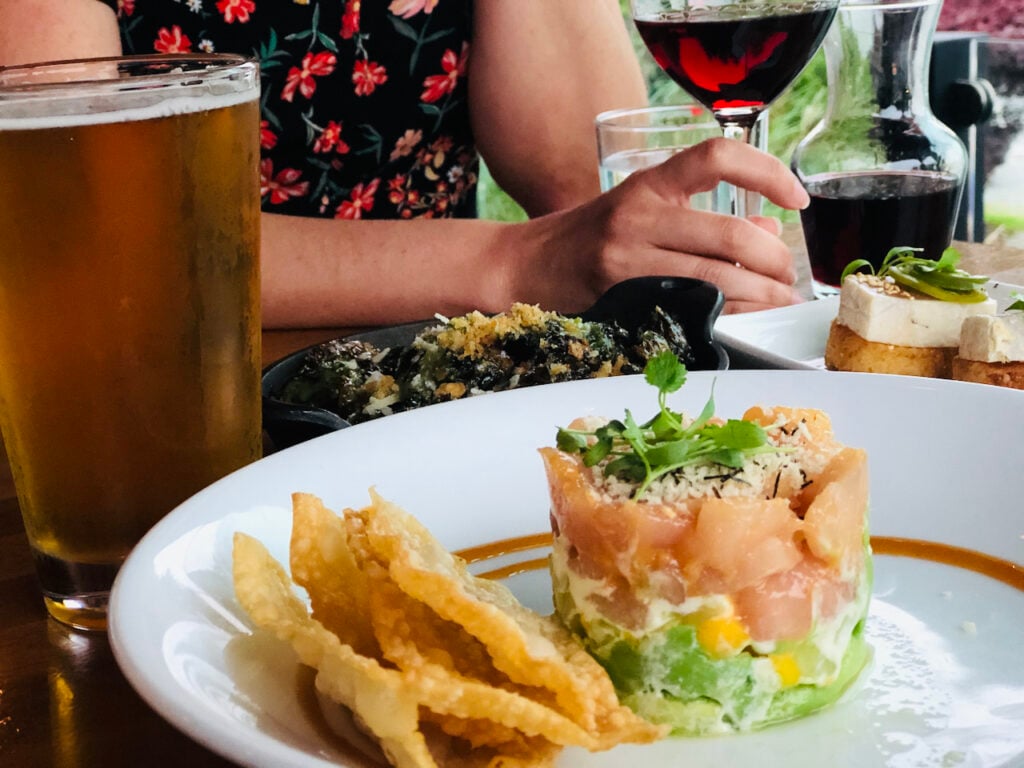
“For years, the only meals I knew in Tofino were campfire stews,” I tell my wife as she tucks into fresh albacore tuna tartare accompanied by delectable Brussels sprouts with breadcrumbs and grana padano. There’s a line-up outside Shelter, which relocated to the waterfront after a fire destroyed its original townsite location in 2022. We devour sous-vide chargrilled flat-iron steak with truffle-parmesan fries, excellent local craft beer, and a heavenly chocolate pot de crème with salted caramel. Shelter, Ombre, Shed and Wolf in the Fog are some of the acclaimed local restaurants that have redrawn the boundaries of Tofino’s culinary map.
I had earned a feast, having taken a paddle-boarding lesson with Swell Tofino, located steps away from Chesterman Beach. “The surf schools are the busiest I’ve seen them in years,” explains Swell’s owner, Emre Bosut. Gazing up from my SUP board, I notice bald eagles effortlessly circling overhead. You won’t find that scene in Hawaii.
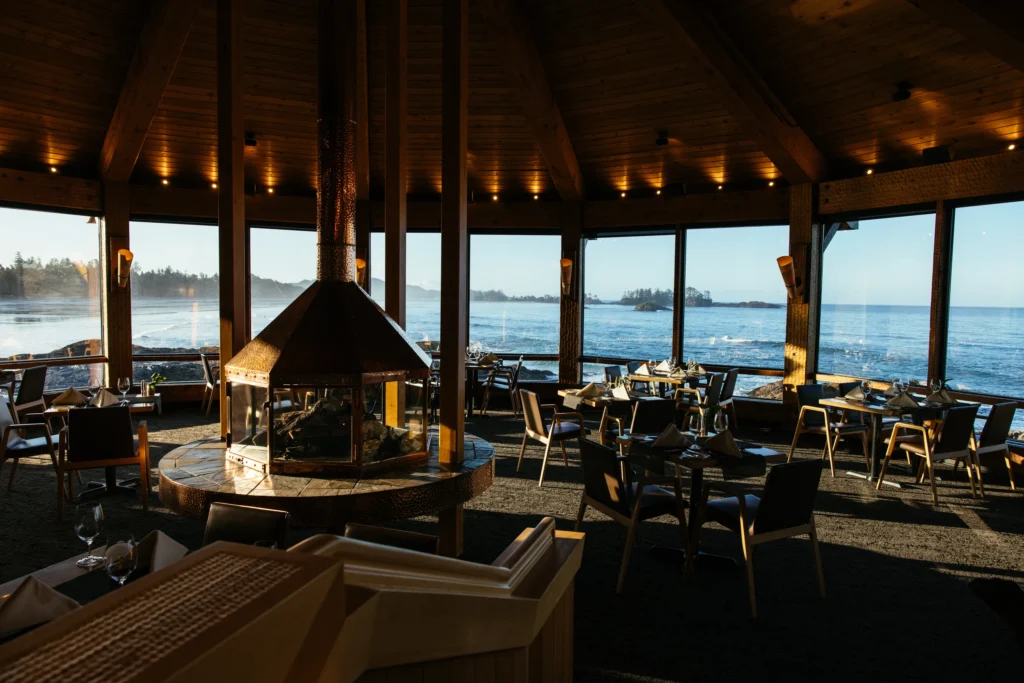
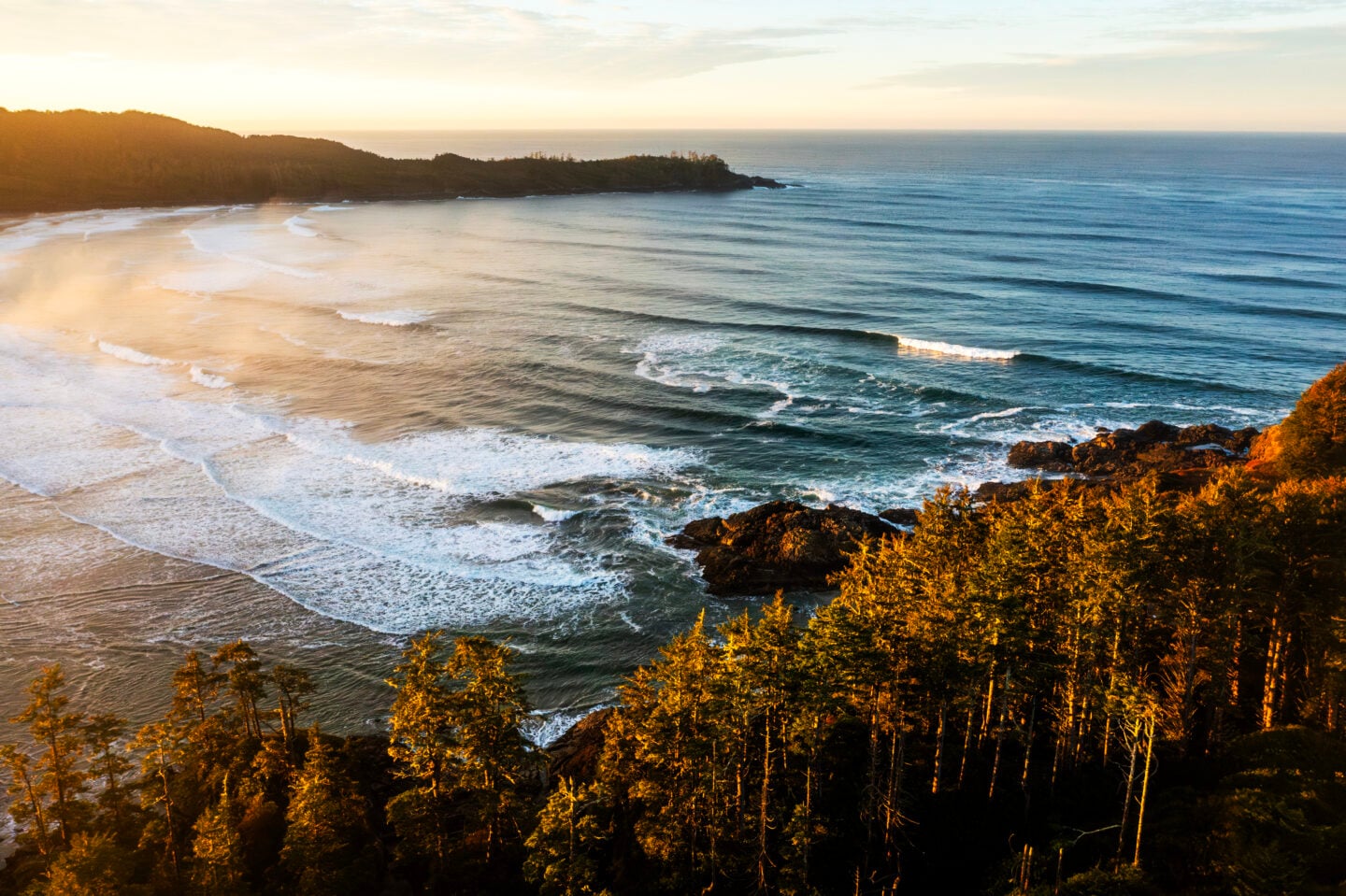
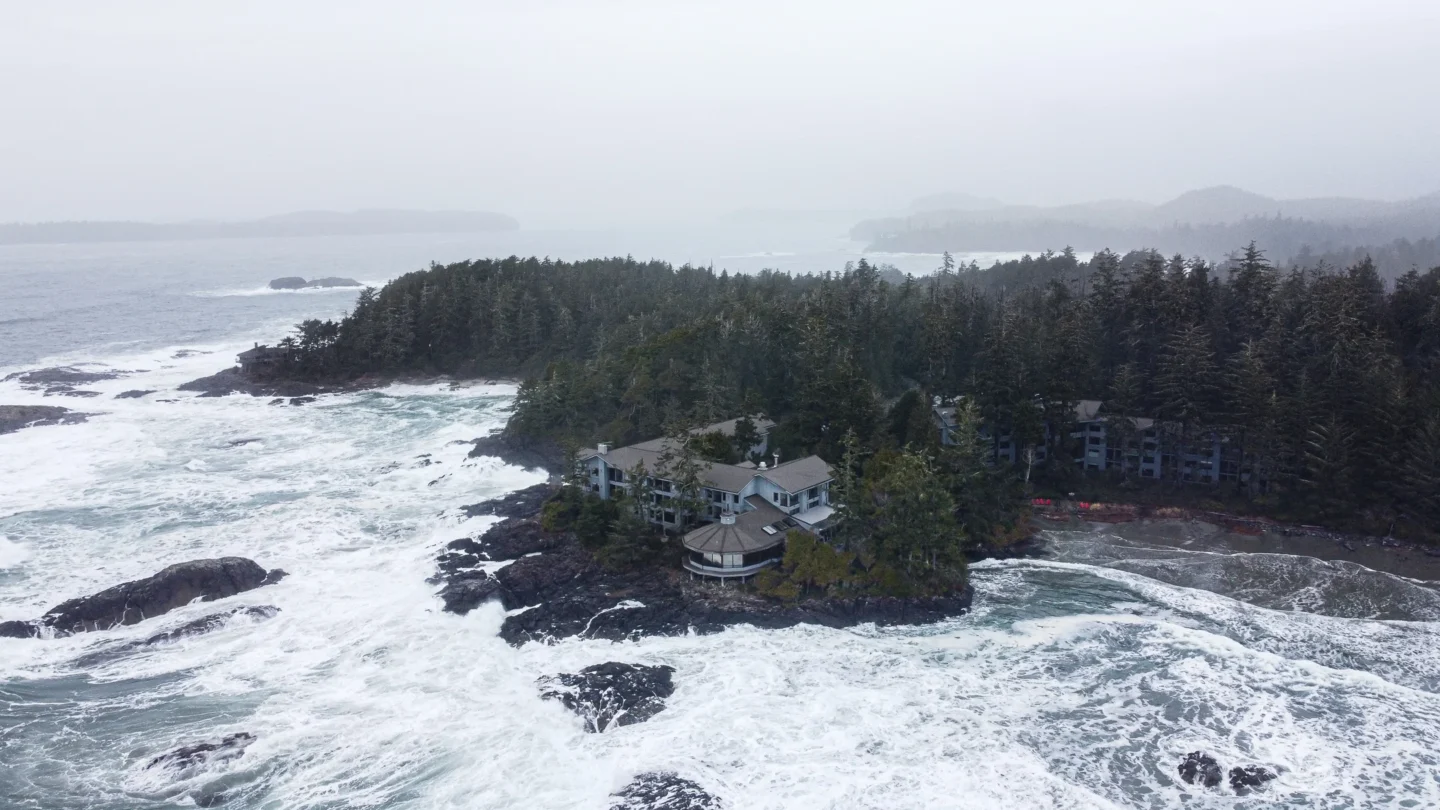
Beyond high-season summer, Tofino draws storm-watchers in the spring and fall, when powerful weather systems send massive swells crashing against rocky sea stacks and rugged driftwood-strewn beaches. Perched on a headland at Chesterman Beach with virtually nothing between it and Japan, the Wickaninnish Inn began marketing storm-watching back in the 1990s, dramatically transforming the off-season with the promise of an underrated natural spectacle.
From its dramatic floor-to-ceiling picture windows, we experience the full fury of a Pacific gale from the warmth and safety of a romantic hotel room. Two-hundred-and-forty-degree ocean views from the inn’s excellent Pointe Restaurant also provide a beautiful and dramatic backdrop for any meal in any season.
Years, days, hours. How about millennia? “My people have been living here for 10 thousand years,” explains Martin, pointing out his home village on Meares Island. I can see the island’s notorious residential school, now operating as a rehab centre and public campground. Approaching Tofino’s harbour, we spot a playful sea otter, returning to these shores in healthy numbers after being hunted almost to extinction. Commercial fishing, Martin tells me, has all but disappeared, the climate is changing, logging is restricted, and so Tofino’s future lies clearly with tourism. A future, he reminds me, that was only assured after a long fight with logging companies at great emotional and financial cost.
“It only works when everyone comes together to sit down, to talk about the issues, to find the common ground.” When it comes to exploring the long, occasionally turbulent history of beautiful Clayoquot Sound, time feels very much on our side.
Places
Before heading to Paris 2024 with Team Canada, Canada’s first-ever surfer in the Olympic Games chatted coldwater surfing in her hometown with Can Geo
Environment
Initially targeted at visitors and locals in Tofino and Ucluelet, B.C., the CoastSmart program could save lives along all Canadian coasts

Travel
World-class waves and a growing community are quickly making Canada a top surfing destination

Environment
King tides are the tipping point at which storms can become devastation — as well as a glimpse of Canada’s coastline 100 years from now. Can green infrastructure help weather the danger?