Travel
Cloud wine: heli-touring the vineyards of the South Okanagan
A couple’s guide to taking in the wine, food and unique desert scenery of Osoyoos
- 2169 words
- 9 minutes
History
In the late 19th century, skiing arrived in Revelstoke, B.C. — and put the city on the map

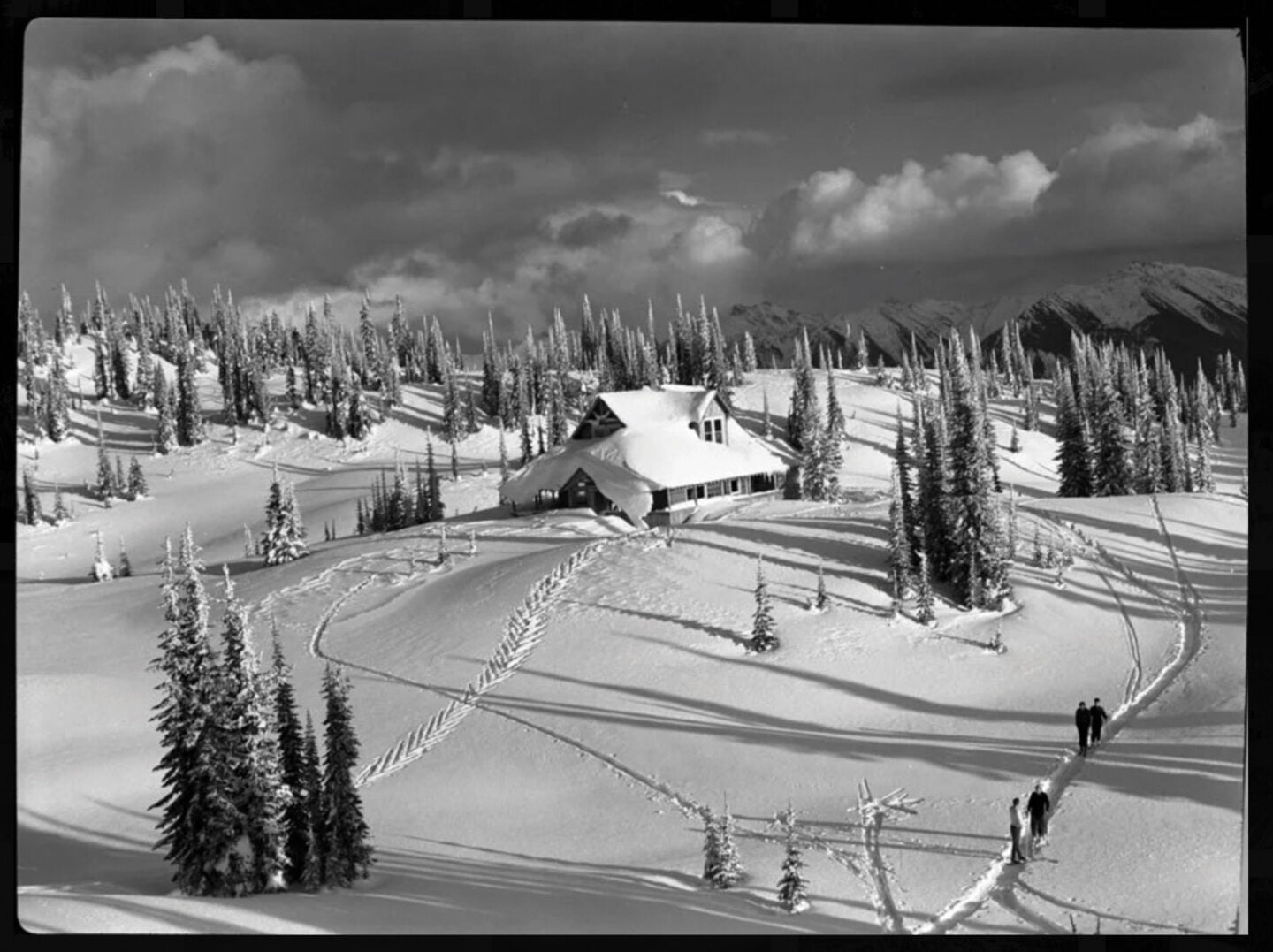
Every winter, the population of Revelstoke, B.C., nearly doubles as skiers and snowboarders from around the world converge on the city to experience the legendary “pow” and challenging terrain of the Monashee and Selkirk mountains. Unbeknownst to most, they are following in tracks first carved more than 130 years ago by Norwegian settlers.
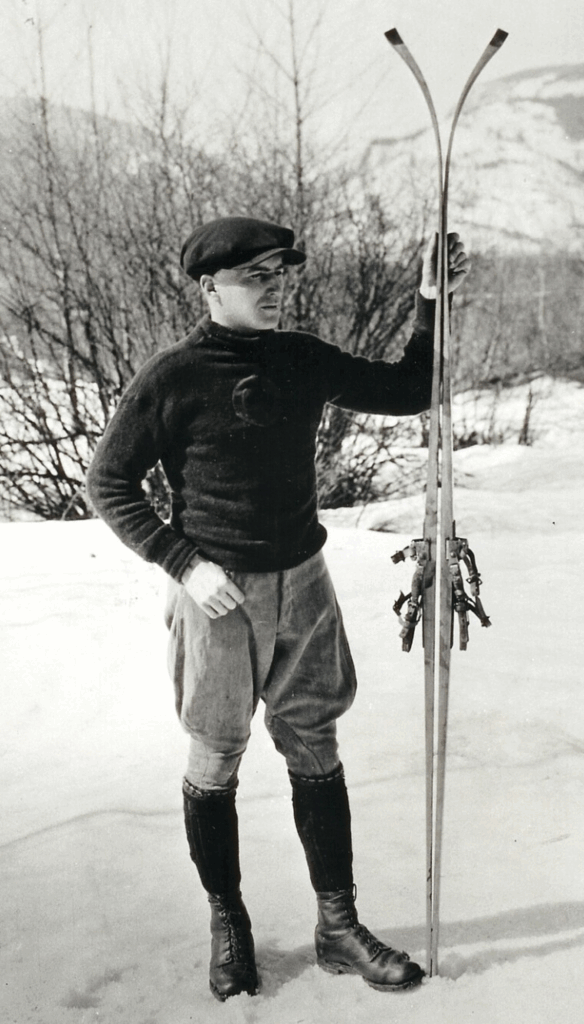
Skis first arrived in Revelstoke around 1890 strapped to the feet of Ole Sandberg, a miner with a claim in nearby Albert Canyon. The following year, the Kootenay Star dedicated several column inches to a description of “Norwegian snowshoes” after a young man was spotted using the curious “new” footwear to navigate Revelstoke’s snow-covered streets: “The snowshoes are simply thin slats of wood about three inches in width and ten feet in length, and turned up in front like the bow of a canoe.”
It wasn’t long before local merchants founded a recreational ski club and began venturing out onto the slopes around town to “drink the wine of the wind,” as one 1912 newspaper article poetically described the thrill of downhill skiing. The new sport was so intoxicating that its popularity quickly grew, and early adopters saw an opportunity to put their town on the map.
Revelstoke at the turn of the 20th century was “quite a booming town,” says Cathy English, curator of the Revelstoke Museum and Archives. The driving of the last spike of the Canadian Pacific Railway at nearby Craigellachie in 1885 connected Revelstoke to the rest of Canada, and steamboats plied the upper Columbia River from Arrowhead to northern Washington State. Then there was the snow: so much of it and so suitable for winter sports that locals nicknamed it “the beautiful.”
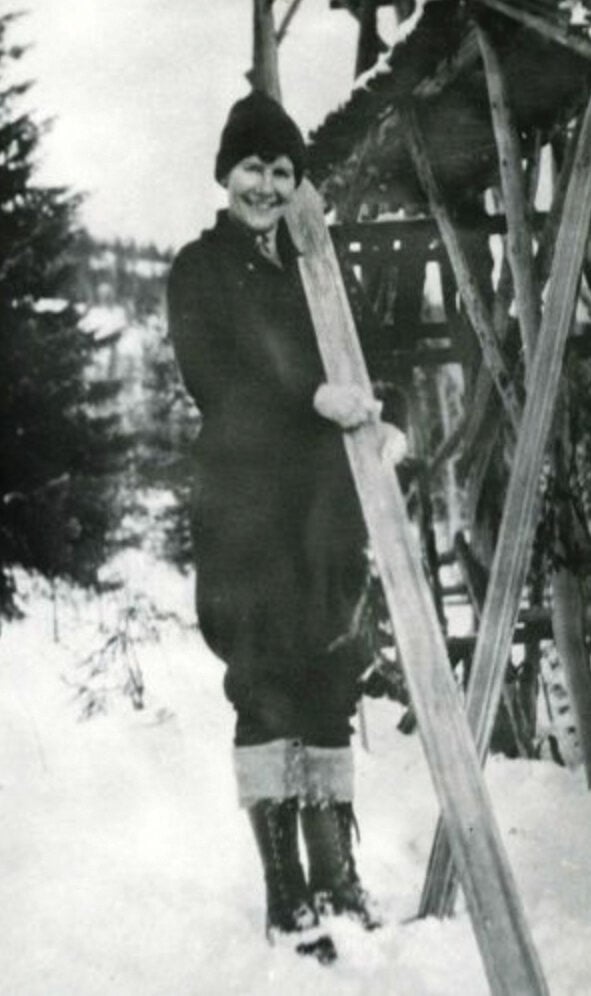
Tourism was predicted to become a big business; in 1912, the Revelstoke Progress Club considered promotional slogans such as “Revelstoke: the mountain magnet” and “the golden best of the golden west” before settling on “The capital of Canada’s Alps.” But developing the actual ski culture and infrastructure remained for many decades the province of the people who simply loved the sport. “In Revelstoke, if we want something, we do it,” says English of the can-do attitude still shared by the community’s longtime residents.
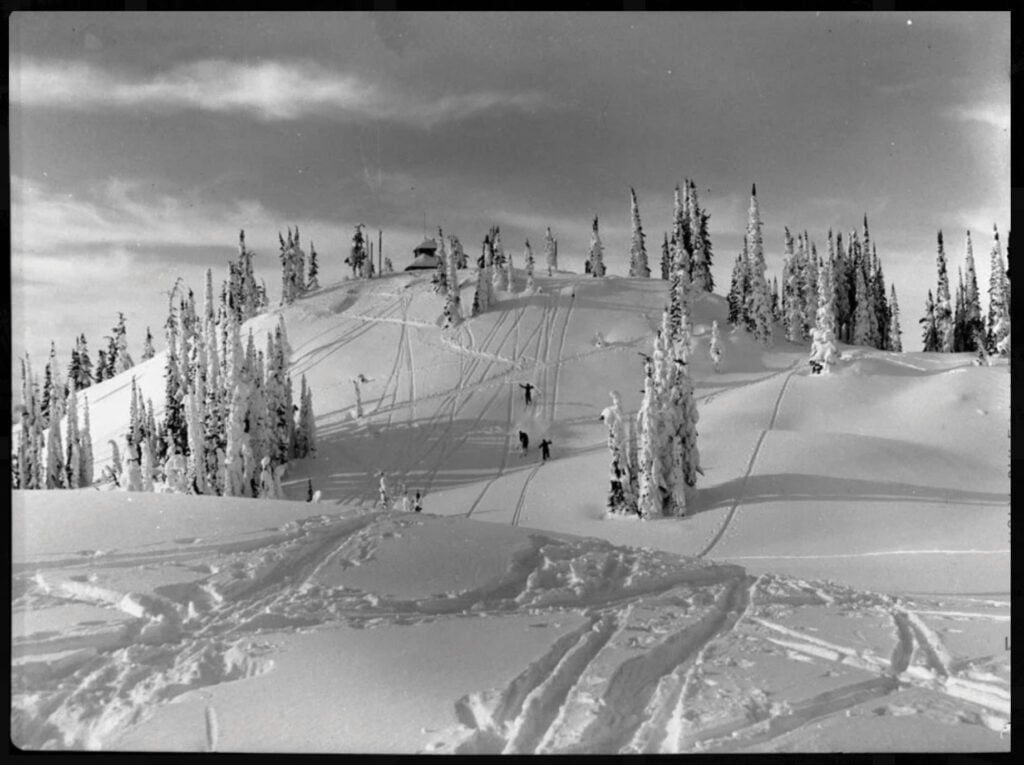
The Revelstoke Ski Club was officially formed in December 1914. Less than two months later, the club organized the town’s first competitive ski events, bringing in Thorlief Iversen, president of the National Ski Association of Canada, as a judge. Iversen was blown away by the large, enthusiastic crowds and the competitors’ daring. He declared to the local newspaper that Revelstoke could “become the hub and centre of winter sports for all of North America.”
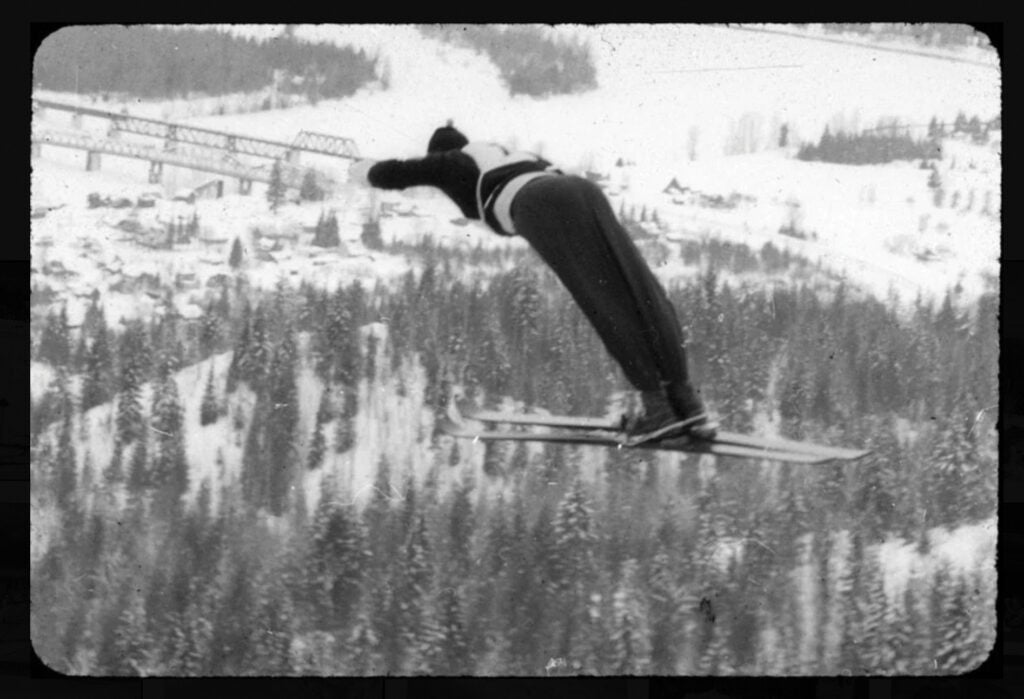
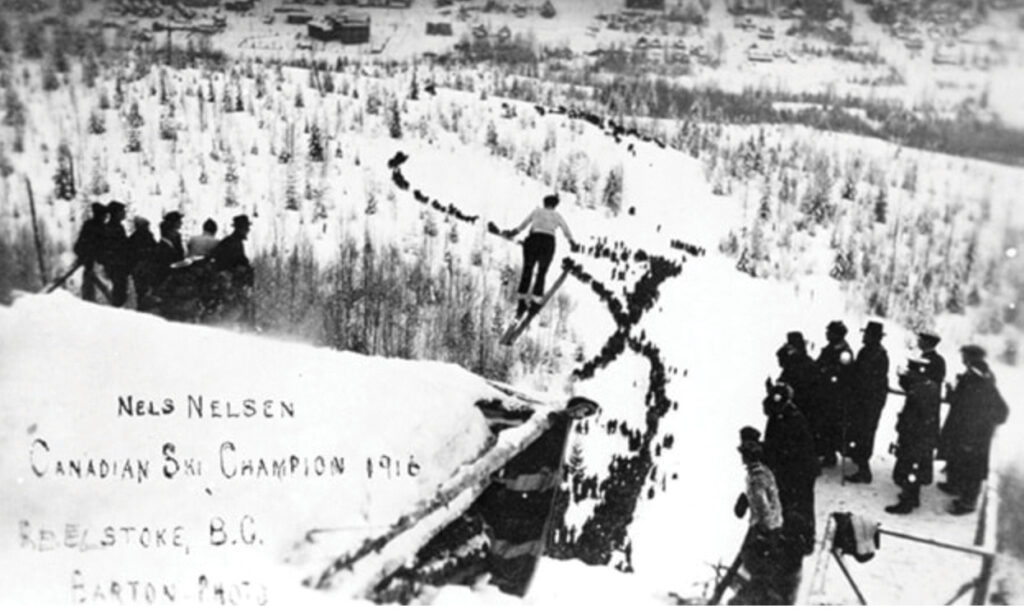
During that first winter carnival, Iversen and another young Norwegian immigrant, Nels Nelsen, identified a natural jumping site on Mount Revelstoke. At the time, ski jumping was widely regarded as a “fad … to be indulged in only by those imbecile immigrants from Norway,” Nelsen later wrote. To change people’s minds, Nelsen knew he would have to accomplish something sensational. A crew of volunteers built the jump — at the time the largest in the world — in the winter of 1915, and in 1916, Nelsen himself became the Canadian ski jumping champion.
For the next 50 years, Revelstoke reigned supreme in the realm of competitive ski jumping, turning out heroes and innovators who made international headlines, including Isabel Coursier, who in 1922 at the age of 15 set the first women’s world record in ski jumping, Nelsen, who broke his own world record four times, and Bob Lymburne, who represented Canada at the 1932 Winter Olympic Games in Lake Placid, N.Y., and, the following year, set a new world record in Revelstoke with a jump of 287 feet.
The community also successfully lobbied Parks Canada (at the time the Dominion Parks Branch) to have Mount Revelstoke designated a national park. Prince Arthur, brother of King Edward VII and governor-general of Canada at the time, visited the mountain in 1916, declaring it the finest scenery on the continent. Ski trips to Heather Lodge at the summit were a favourite weekend activity in the 1930s and ’40s, and in the absence of lifts, skiers would attach skins or knotted ropes to the bottom of their skis and trek their way up. According to local lore, one reveller, Don McCrae, made the trip three times on New Year’s Eve 1939 carrying enough food and liquor for 40 people.
By the 1970s, downhill skiing had eclipsed ski jumping in popularity, and activity had moved from Mount Revelstoke to neighbouring Mount Mackenzie, today home of Revelstoke Mountain Resort. If the crowds that line up for the first gondola ride each morning are any indication, the local thirst for the wine of the wind has never abated.
This story is from the January/February 2026 Issue
Travel
A couple’s guide to taking in the wine, food and unique desert scenery of Osoyoos

People & Culture
The world has a lot of wine. Here's part of what makes Canada's product so special

Travel
The holidays may be over, but January can still be a time of celebration by bundling up and heading to the Niagara Icewine Festival
Travel
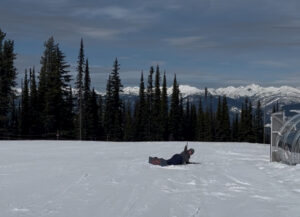
Nearing her 40th birthday, Canadian Geographic’s editor-in-chief swaps skis for a snowboard and discovers the thrill of learning later in life