Places

B.C.’s Lake O’Hara is a hard-to-reach hikers’ paradise

Restricted access to this British Columbia alpine region is both its claim to fame and its saving grace

  • Jul 21, 2026
  • 764 words
  • 4 minutes

This story has been fact checked

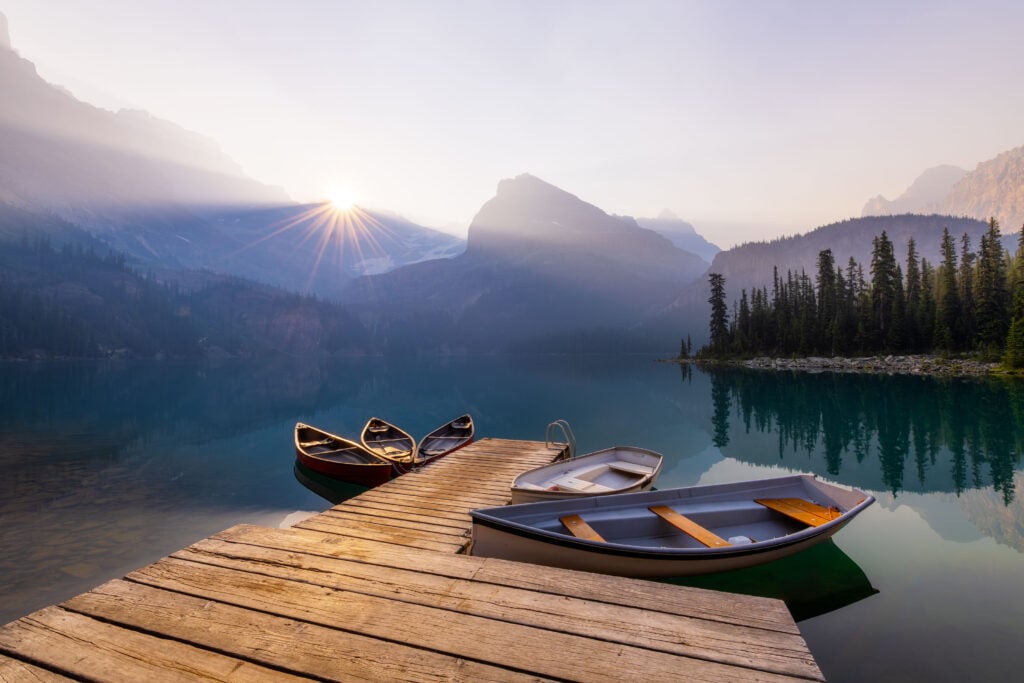
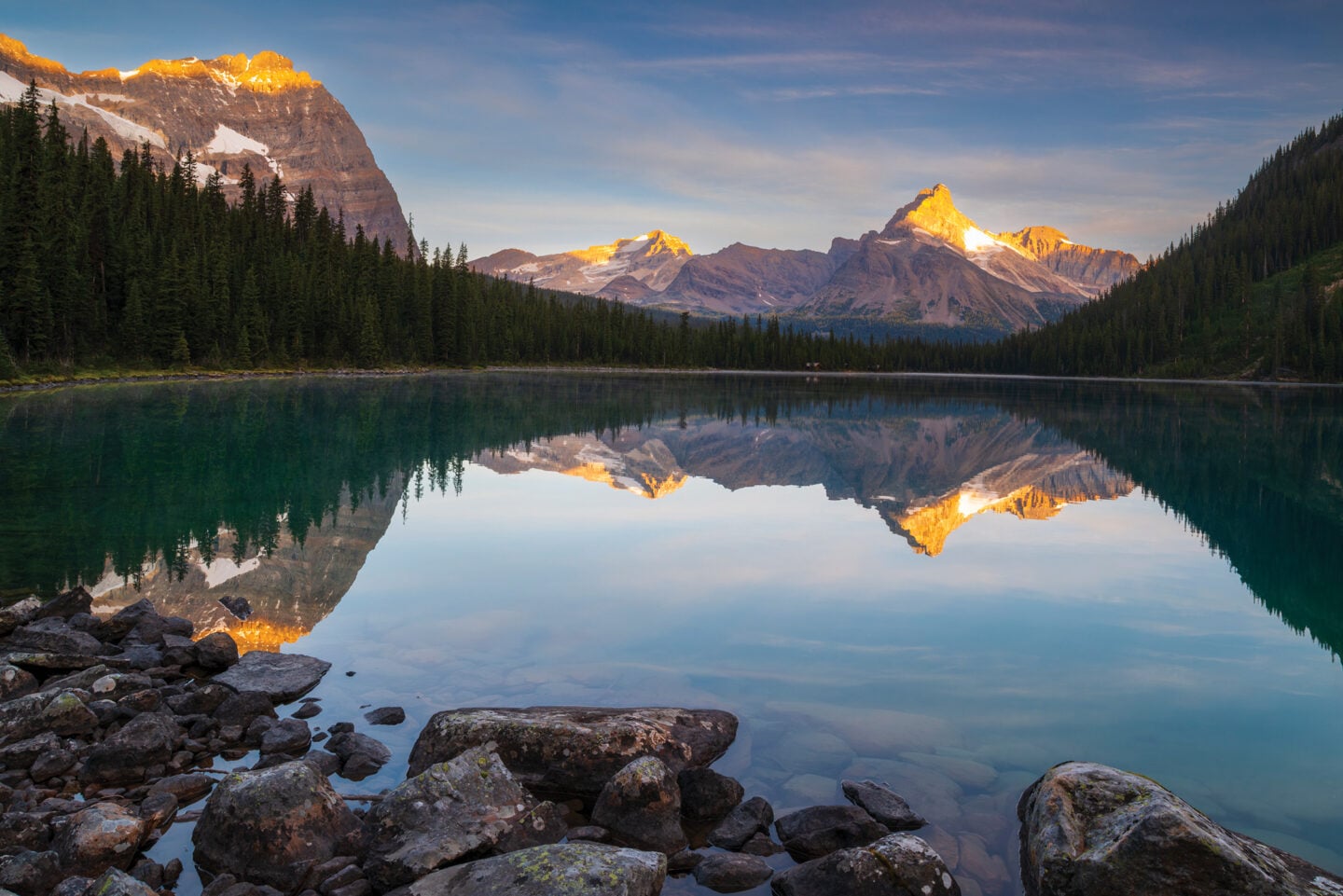
Access to Lake O’Hara is limited by Parks Canada to protect the sensitive alpine environment and provide a true wilderness experience. (Photo: Scott Forsyth)
Expand Image
Advertisement
Advertisement

IT’S A HIKER’S PARADISE and an artist’s delight, a Shangri-La of Rockies lore. Azure lakes pool on rocky plateaus and spill down-valley in the form of creeks and waterfalls — “an exquisite cascade of interlacing silvery threads,” wrote early mountaineer James Outram. Layers of limestone, quartzite and shale encircle forested valleys like fortress walls patched with glacial ice. The beauty is relentless, as are the trails that switchback, traverse and contour to link the terrain in a seamless network.

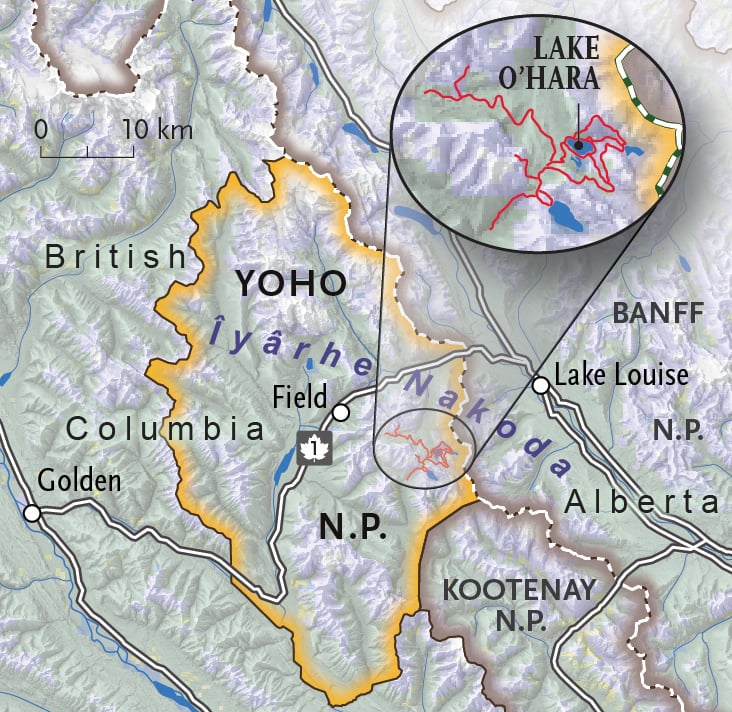
(Map: Chris Brackley)
Expand Image

“The Lake O’Hara region is simply one of the most beautiful backcountry landscapes in North America,” says Calgary-based landscape photographer Scott Forsyth. “With fewer crowds to contend with, it is a more intimate experience with the landscape.”

When someone says they are going to Lake O’Hara, they really mean a collection of lakes and trails tucked into a secluded corner of Yoho National Park, which hugs the B.C.-Alberta border. The pronouncement is usually met with a sigh of nostalgia or jealousy, for Lake O’Hara is not easily reached. Parks Canada has enforced a strict visitor quota for the region since the mid- 1970s — just 42 day users and roughly 200 overnight guests. The lucky ones snag a reservation at the 30-site camp- ground, Elizabeth Parker Hut or Lake O’Hara Lodge, which celebrates its 100th anniversary this year. Those who choose to go on foot instead of taking the park-operated shuttle (no bicycles are permitted) face an 11-kilometre hike, one way, just to reach the region’s most popular trailheads. 

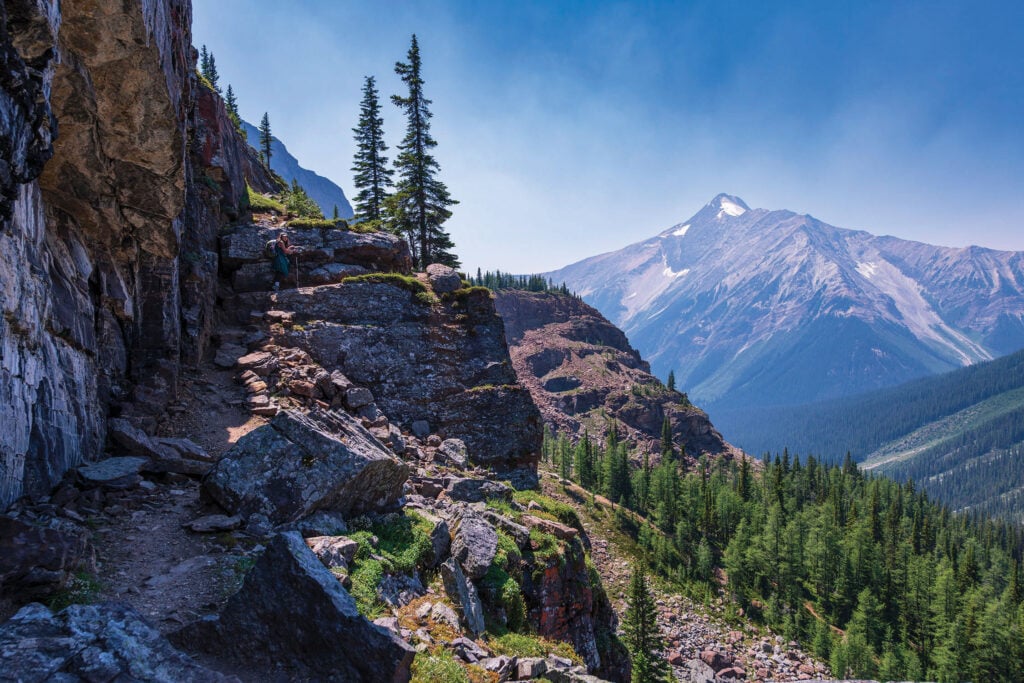
Located near the Continental Divide at present-day Kicking Horse Pass, the O’Hara region lies within the ancestral territories of various Indigenous peoples, including the Îyârhe Nakoda. (Photo: Scott Forsyth)
Expand Image

O’Hara rewards its visitors with a sense of timelessness and unparalleled landscapes. “As I step off the bus near the lake’s edge, I feel a warm sense of being ‘home’ again,” says Forsyth. “It’s a feeling of being connected to the past, while being part of its future.”

Situated near the Continental Divide at present-day Kicking Horse Pass, one of the most significant travel corridors in the Canadian Rockies, the O’Hara region lies within the ancestral territories of various Indigenous peoples, including the Îyârhe Nakoda. The Kicking Horse route has historically linked the interior plateau of what is now British Columbia with the plains to the east. O’Hara, nestled just off that corridor, is rich with cultural resources — minerals, medicines and more — and continues to be a sacred and meaningful place to Indigenous communities. Since 2024, Îyârhe Nakoda Elders have been visiting sites throughout O’Hara to perform ceremonies, reconnect with the landscape and reawaken stories embedded in names like Oesa, Yukness and Odaray.

Walking the trails at O’Hara means following in the footsteps of prominent figures in Rockies history. The lake takes its name from Lt.-Col. Robert O’Hara, one of its earliest visitors, though J.J. McArthur, a surveyor with the Dominion Land Survey, was the first non-Indigenous person to lay eyes on it in 1887. Seven years later, Samuel E.S. Allen carried out the first thorough exploration of the region with Yule Carryer, an Indigenous CP Rail worker, and named many of its peaks and features after words drawn from the Îyethka (Stoney) language.

Scott Forsyth's latest book features more than 200 images highlighting Lake O’Hara’s most iconic hiking routes and vantage points. (Photo: Scott Forsyth)
Expand Image

The Alpine Club of Canada hosted several mountaineering camps at O’Hara, beginning in 1909, and now operates the historic Elizabeth Parker Hut, first built by the Canadian Pacific Railway in 1919. One of the area’s first wardens, Lorenzo “Lawrence” Grassi, was also its most prolific trail builder, enhancing the work of the Alpine Club’s early trail planners to develop O’Hara’s remarkable trails. Future wardens would go on to include the renowned Canadian writer and poet Sid Marty.

And where there are scenes this stunning, there are artists. Among those putting paintbrush to canvas here were Walter Phillips, Peter and Catharine Whyte, and the Group of Seven’s J.E.H. MacDonald, Arthur Lismer, and Lawren Harris. Artworks created over the years not only preserve the region’s beauty but also its changes. An iconic 1924 piece by MacDonald, Lake McArthur, Yoho Park, shows remnants of glaciers that have since melted away.

O’Hara is equally inspiring through the lens. Forsyth’s latest book, O’Hara: Secluded Jewel of the Canadian Rockies, features more than 200 photographs. “Although I’ve hiked the trails of Lake O’Hara since 2007, it wasn’t until writing this book that I came to fully appreciate the interesting spirits whose lives have touched upon the O’Hara landscape,” says Forsyth.

O’Hara has always made visitors work to access it. But what awaits is a place both storied and sacred, where history is not only preserved but actively reclaimed, and where new stories are still being told.

Advertisement

Help us tell Canada’s story

You can support Canadian Geographic in 3 ways:

This story is from the July/August 2026 Issue

Related Content

People & Culture

Love affair with Lake O’Hara: On the trail of the Group of Seven’s J.E.H. MacDonald

A sweeping new exhibit at the Whyte Museum of the Canadian Rockies celebrates MacDonald’s “O’Hara Era” through paintings, diaries, letters and artifacts

  • 758 words
  • 4 minutes
a sturgeon swims down into dark waters

Wildlife

“To learn all the gifts from nmé, you have to work with him in the water”

Lake sturgeon populations have plummeted in the Great Lakes watershed. Here’s how First Nations are collaborating with scientists to save an ancient relative.

  • 5894 words
  • 24 minutes

Travel

Fifty shades of blue: Chasing paradise in The Exumas

A Bahamian archipelago of 365 sun-drenched cays offers iconic wildlife and bucket-list beaches

  • 2894 words
  • 12 minutes
Johnston Canyon hike

Travel

Ten best hikes in Alberta

Best places in Alberta to take a hike

  • 1214 words
  • 5 minutes
Advertisement
Advertisement