Travel

The good life: a walk in the park in Congo

The dense forests and peatlands of the Congo Basin are home to diverse life where tourism contributes to conservation

  • Jul 29, 2026
  • 2,505 words
  • 11 minutes

This story has been fact checked

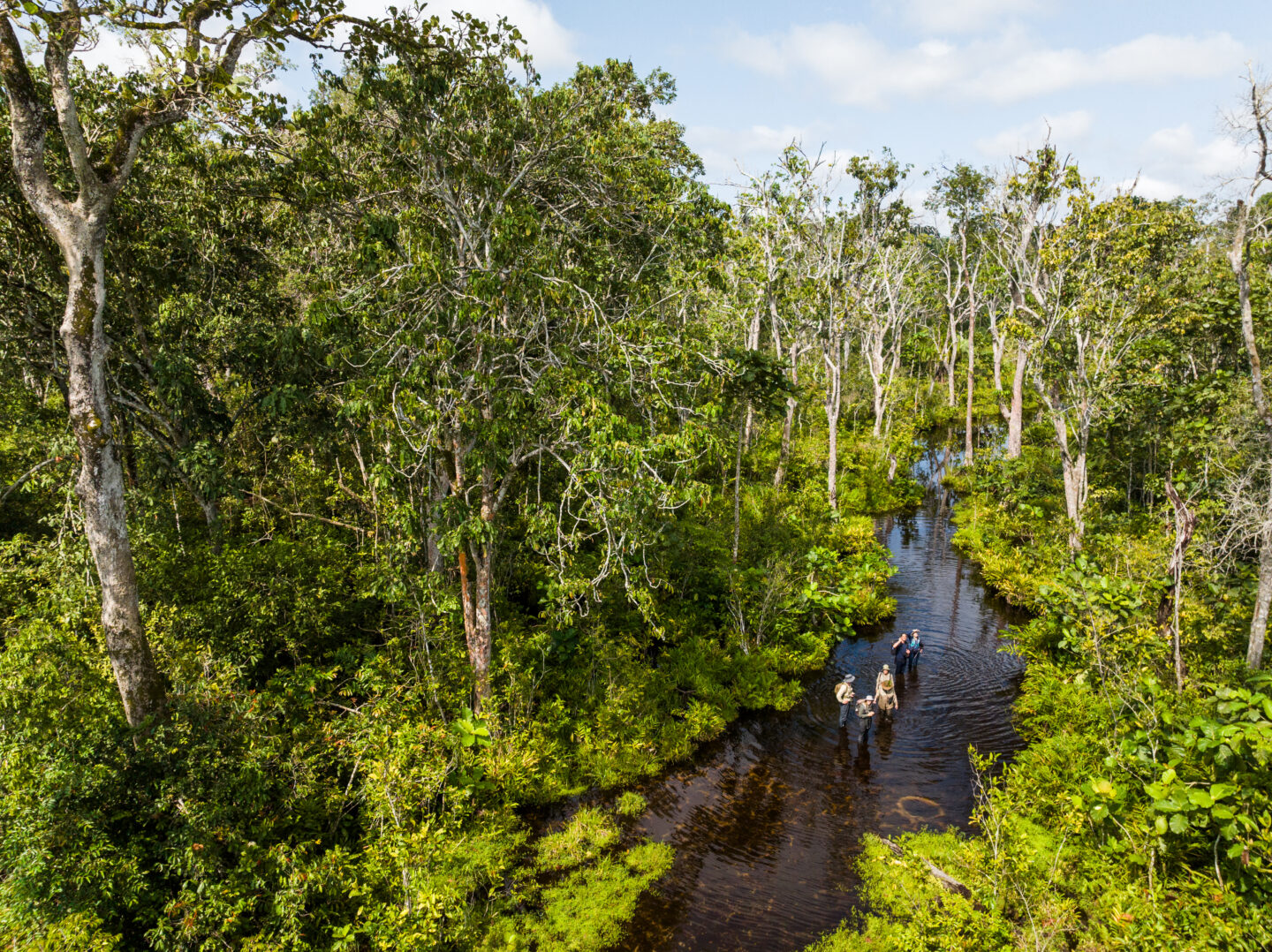
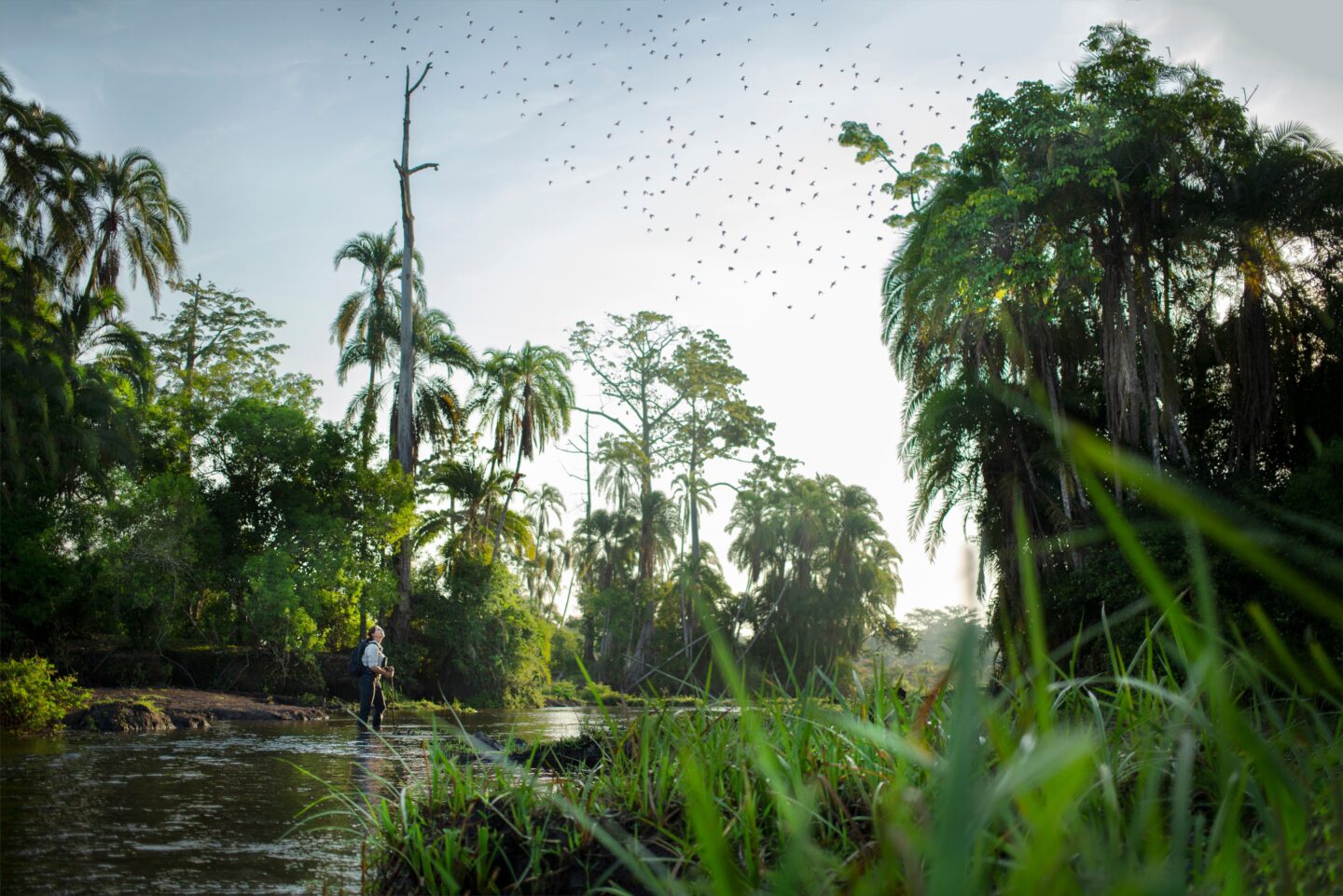
The Congo Basin is an important hotspot for both biodiversity and carbon storage. (Photo: Scott Ramsey/Kamba Africa)
Expand Image
Advertisement
Advertisement
Advertisement

“Welcome to the good life,” said safari guide Glance Eloye-Nzoutani, when we met on the Mboko airstrip in Odzala-Kokoua National Park, in northern Republic of the Congo. Everything so far had been the plush side of good — the steady flight in from Brazzaville over uninterrupted foliage, a few Primus beers in the sunshine, followed by a long drive through a primal forest to our opulent camp for the night. But over the next week of my visit, I was to realize “the good life,” as Eloye-Nzoutani saw it, encompassed just about everything in this wilderness, including watching me sink to my shoulders in the detritus-thick waters of a swamp, the baboon spider that leapt one evening into my boot and the snake in the loo.

“What kind of snake?” he asked. I described it — green back, pale belly, a darkened tail that I gave a defiant backhand to as the serpent slithered out the window. “Jameson’s green mamba,” he said, nodding. Almost as an afterthought, he said “Did it bite you?” I shook my head. “Good, good,” he said. “Completely toxic. Death in [as little as 30] minutes. But you’re still here, in the good life!”

Humans, Ralph Waldo Emerson had it, seek an “original relation to the universe.” Eloye-Nzoutani’s “good life,” I thought, was the best version of this — we could make anything positive, hopeful, joyous. That idea formed, it seemed, a crux of belief in the Congo, where nothing good was taken for granted, while everything else was simply taken for what it was. Enjoy the view; enjoy the beer; watch out in the jungle.

I keep thinking back to my first walk into the Congolese forest, a place of closeness and isolation. Ahead of me, at times shrouded by fronds of drooping marantaceae and vines twisted together like strands of DNA, walked Eloye-Nzoutani and David Iboboko, a local tracker. With his bucket hat and a pair of pruning shears in his hand, Iboboko looked rather like an intrepid gardener, snipping away at the foliage alongside the path. We were tracking gorillas, and the snip-snipping of the shears was tactical — having been used as a signal that “all is well” during the apes’ habituation process, it was now used to announce our approach.

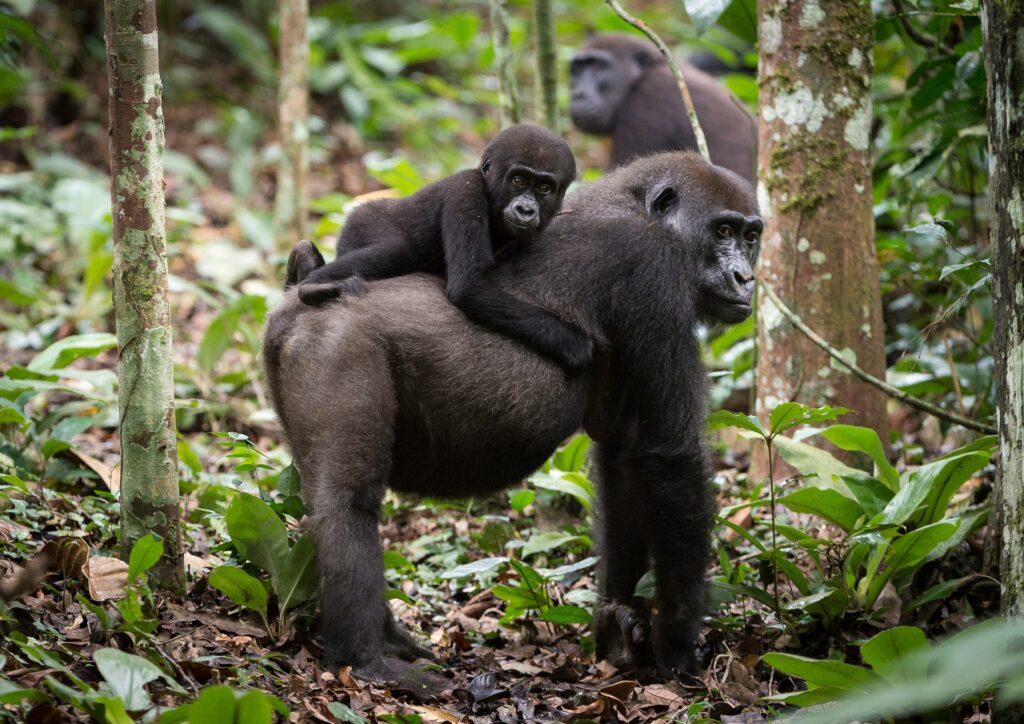
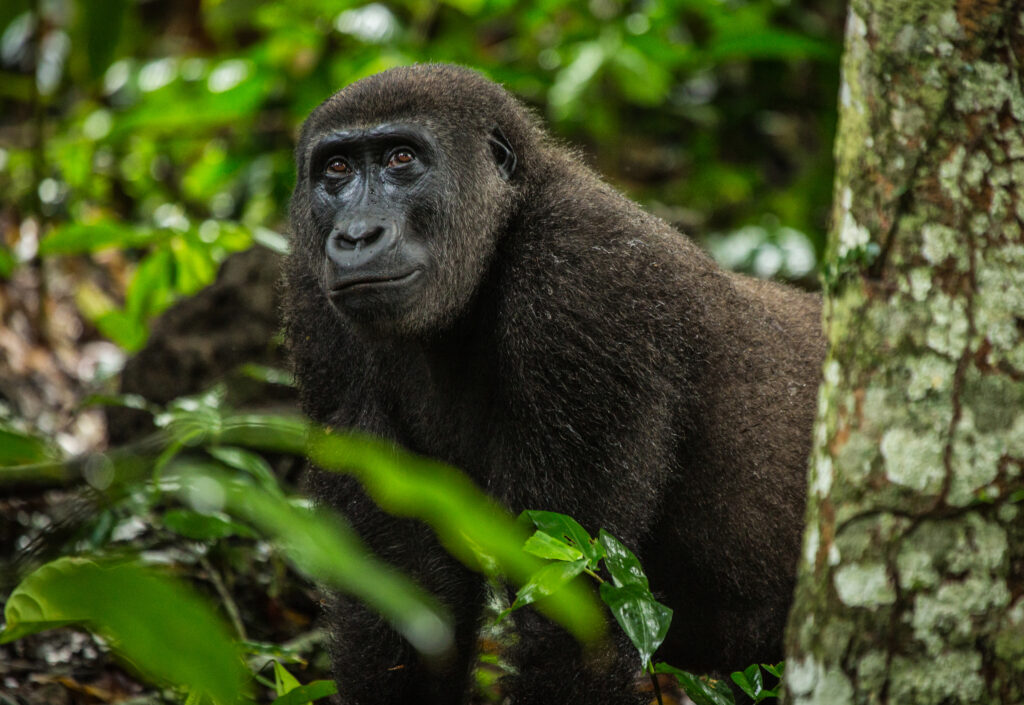
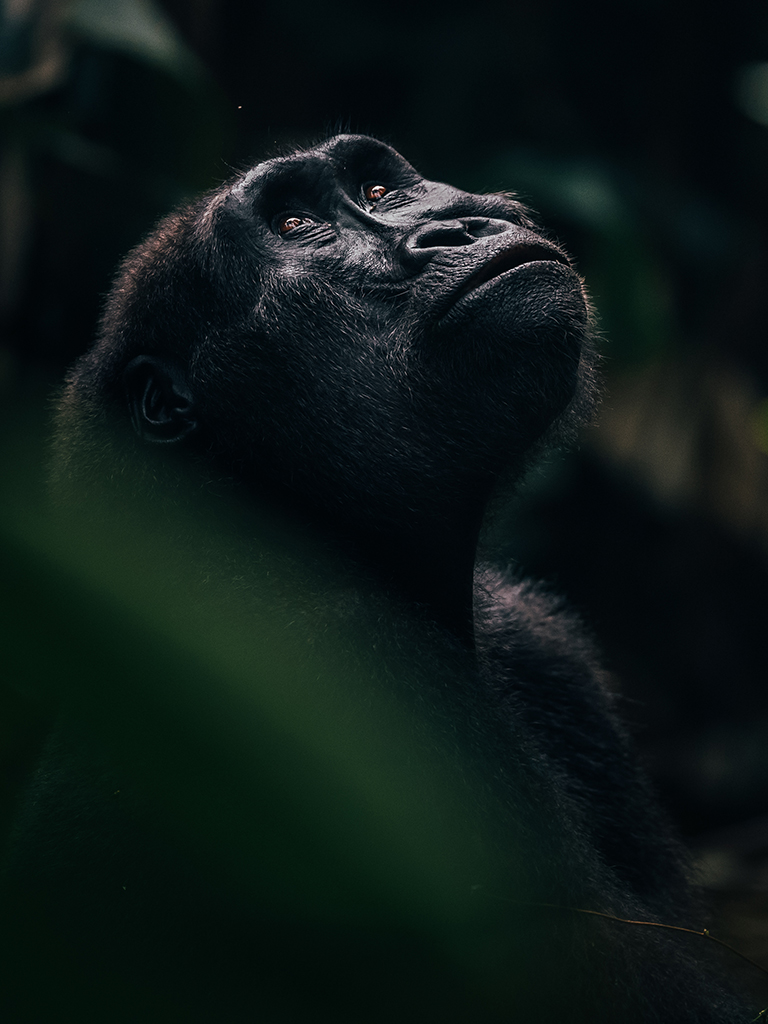
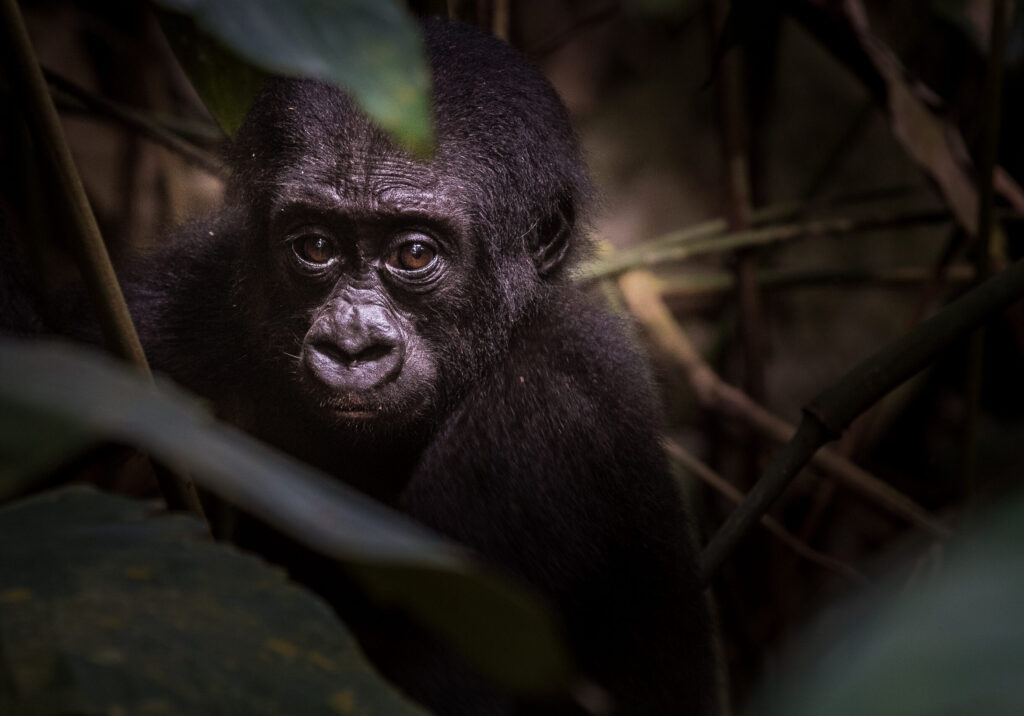
After an hour’s walk, we found them: a troop lounging in the canopy, munching on leaves.  I glassed a swoop of branch where a darkened figure lounged, her great forearms dangling loosely, her toes curled around a twiglet. Through my binoculars, I noted a look of benign disinterest on her face, a look that seemed fixed on me and through me all at once. I was put in mind of some guru on a mountaintop, ready to receive our philosophical petitions. When my metal water bottle knocked against a branch and resounded like a gong, the impression was complete.

Gorilla tracking in the Ngaga area of Odzala-Kokoua National Park. (Photo: Andrew Howard/Kamba Africa)
Expand Image
Three of four groups of gorillas in the Ngaga area can be visited in short bursts by small groups with guides. (Photo: Andrew Howard/Kamba Africa)
Expand Image

The first person to give serious study to these western lowland gorillas of the Congo was Magdalena Bermejo. In 1994, she planted herself in the jungles in and around the park, where she closely monitored the apes’ habits. These included several unique behaviours, including root mining, and an antipathy to getting wet. A habituation program was started in 2015, and today, of the 600 western lowland gorillas in the Ngaga area of the park, three groups — some 55 to 65 individuals — can be visited in short bursts by small groups.

Magdalena Bermejo was the first to habituate western lowland gorillas to the presence of humans. (Photo: Courtesy Kamba Africa)
Expand Image

Bermejo’s work eventually drew the attention of German philanthropist Sabine Plattner, who established two organizations — Sabine Plattner African Charities and Kamba African Rainforest Experiences — that together support health and education projects in villages surrounding Odzala-Kokoua and provide financial and infrastructural resources to further local primatology research and conservation. Kamba also maintains three luxury lodges in the Odzala-Kokoua region, providing employment and in-house guide training to locals (Eloye-Nzoutani was the program’s first graduate).

Bermejo retired in early 2025, and the habituation and monitoring projects now continue under British primatologist Ashley Vosper. “If you’re going to habituate gorillas,” he told me, “you have to stay with them for their lifetime because you’re endangering their lives otherwise.” The idea is that gorillas become accustomed to human presence without being able to tell between friend or foe, leaving them vulnerable to poachers. The barrier to that kind of time frame, he said, is reliable funding, something provided by Plattner’s charities (and, through their visits, Kamba’s guests).

The Congo basin is a vital global carbon sink. (Photo: Felix Studios/Kamba Africa)
Expand Image

The importance of ecological investment in the Congo Basin is reaching a zenith as the region becomes more familiar to a global audience. “This is the number one important place in the world,” Vosper said, speaking more widely of the Congo Basin’s importance in the realms of biodiversity and climate change. “We know so little, almost nothing.”

The basin is considered just as (if not more) important in terms of biodiversity and global carbon capture as the Amazon rainforest. For example, CongoPeat, a project run by professor Simon Lewis of the University of Leeds, is building on research Lewis co-authored that discovered the peatlands of the central Congo Basin are larger than England and store some 30 billion tonnes of carbon; each year the entire Congo Basin absorbs around 600 million tonnes of carbon, about the amount Canada releases over the same time. And yet the region receives a fraction of the funding seen by other parts of the world. According to The Guardian, between 2008 and 2022, the Congo Basin received only 16 per cent of the $20 billion donated by foreign investors to biodiversity protection, environmental policy and scientific research in the world’s three major rainforest areas (47 per cent went to the Amazon, while 37 per cent went to Southeast Asia). “In people’s minds,” Vosper said. “It’s a difficult place.”

With the secure funding provided through Sabine Plattner African Charities, Vosper plans to build on Bermejo’s work, expanding their 35 camera traps to 100, and establishing a monitoring program for the local chimpanzee population.

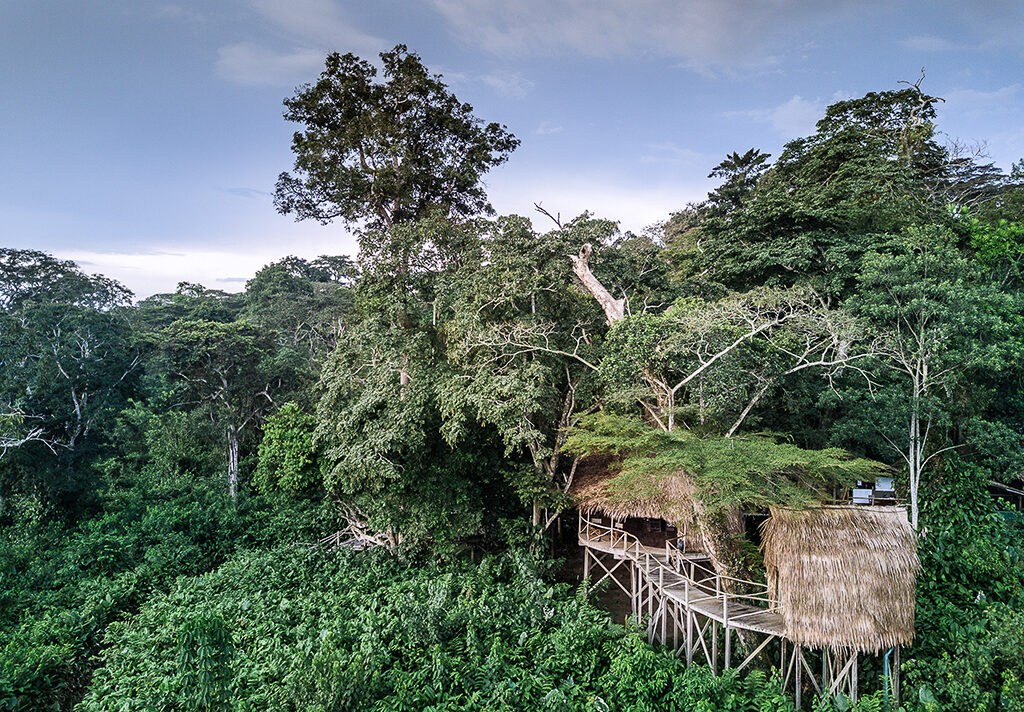
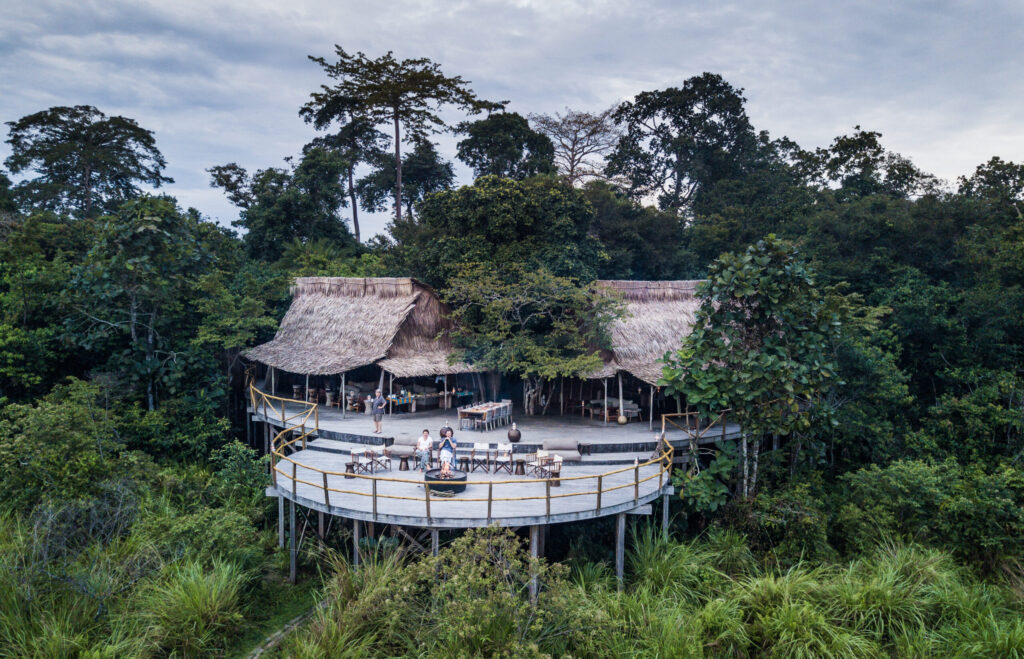
Vosper and I were speaking at Kamba’s Ngaga Lodge on the thatched-roof terrace that overlooks a glade of umbrella trees. Ngaga doubles as one of Kamba’s luxury accommodations — hot showers, napkin origami, duck confit, pillow chocolates, Argentinian red — and the headquarters for the gorilla research program. Our conversation moved from apes to the local communities, whom the habituation greatly depends upon for their tracking skills. “To answer the questions of the Congo Basin,” he said, “the best people to ask are the Congolese.”

Kamba's Ngaga Lodge is one of several luxury accommodations in the Odzala-Kokoua region. (Photo: Scott Ramsey)
Expand Image
Through their visits Kamba's guests help support primatology research and conservation projects (Photo: Scott Ramsey/Kamba Africa).
Expand Image

The day after our meeting, I visited Ombo, a small village northwest of Ngaga Lodge, on the outskirts of Odzala-Kokoua, down a red dirt road that, in the rain, turns into something resembling tomato soup. Ombo has no electricity, no cell service and no running water, but Sabine Plattner African Charities has built a school, supports a pineapple plantation and provides work opportunities.

I spoke with Idima Mardoche, who is employed as a security guard at Ngaga Lodge (a position largely concerned with protection from animals, such as elephants and bush pigs). Part of his remit is to remove snares from the forest surrounding Ngaga, which are set by subsistence farmers whose methods were established long before the advent of tourism or poaching. Mardoche told me he collects between 100 and 150 snares each time he patrols the forest. Mboko camp manager Brice Imouanga, who had come along to translate, concurred, adding that when he joined a snare-removal party in December 2024, the group disabled 350 snares in one day. The damage of these vicious little traps is striking; while gorilla trekking that same morning, Glance had pointed out a young male whose left arm bore a ropy pink scar — a souvenir of being caught in a snare.

Advertisement

“To answer the questions of the Congo Basin, the best people to ask are the Congolese.”

A complication at Odzala-Kokoua is that many of the people around the park — a population of some 12,000 — rely on the forest for their traditional practices, medicines and diet, which includes animals such as duiker, red river hog, monkey and gorilla. Since 2010, the management of Odzala-Kokoua has been overseen by the NGO African Parks, which has launched wide efforts to stymie the poaching of precious species such as elephant, pangolin and great apes, to end logging incursions and to stop the hunting of antelope, monkey and other animals that are collectively referred to as “bush meat.” An African Parks employee who declined to be identified said to me, “You go out into the unprotected countryside, and there’s nothing — it’s all been eaten.” It didn’t seem like a stretch — pass through the average Congolese village, and you’ll be offered any number of furry and feathered forms, while lumps of indiscernible chunks of flesh crackle on blackened grills.

And while local communities are allowed to continue their traditional harvesting of wild mango within a 10-kilometre-wide buffer zone inside the boundary of the park, there have been instances of conservation running hard against local interests. In 2024, it was revealed that park rangers (known locally as ecoguards) employed by African Parks had allegedly engaged in the beating, torture and sexual assault of Indigenous Baka peoples who had entered Odzala-Kokoua to hunt and forage.

Everyone’s particular relationship with wildlife is affected by how they experience the animals: through a telephoto lens, at the end of their maize crop or in their weekly soup. The presence of Kamba and Sabine Plattner African Charities, through their financial support and community outreach, has therefore been pivotal to local peoples, acting to bridge the difficulty of local lives and the hard line of conservation.

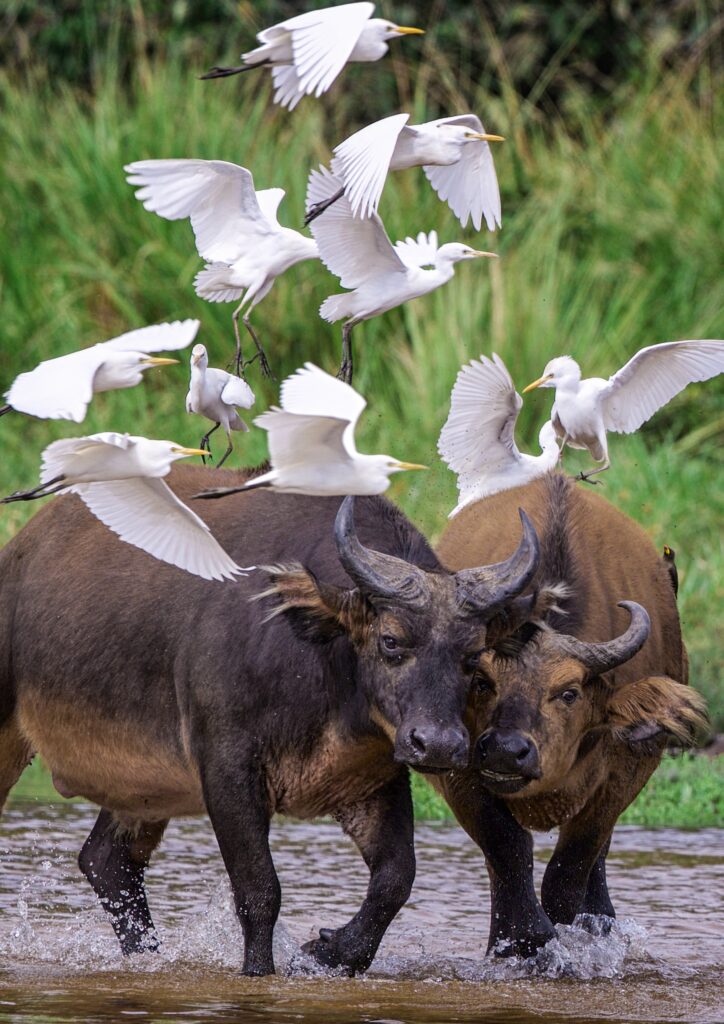
Forest buffalo in Lango Baï. (Photo: Andy Skillen/Kamba Africa)
Expand Image

There remains no shortage of wildlife at Odzala-Kokoua. Within its 13,546 square kilometres are some 1,150 (identified) species of plants, 463 of birds, at least 120 of mammals. One does not go long without seeing something: elephants, forest buffalo, gorilla and hyena (the region’s dominant predator since the last lions were hunted out in 1994). Yet one gets the feeling that, no matter how long you stayed, you would always be surprised. On a walk through the forest one day, Eloye-Nzoutani and I came across a bevy of chimpanzee nests — thick matting of leaves wadded into the crotches of trees. “The first time I’ve seen one,” he said. “You’re very lucky!” It was the same with the chameleon we spotted, after the three pottos (a sloth-like primate) we saw on a night drive, and the troop of unhabituated chimpanzees swinging on vines over the Lekoli River. “You’re a lucky, lucky fellow,” Eloye-Nzoutani said, after the last chimp had cleared the water. “You’re living the good life.”

We were on kayaks at the time, paddling with the current, keeping watch for hippo. Eloye-Nzoutani was telling me a story — how the tonguefish, a large, carp-like thing known locally as congoya sika, had become an invasive species after the actions of some experimenting Russians — when we heard a tell-tale chuckling. “Ngubu,” Eloye-Nzoutani said, using the Lingala word for hippo. It was only the one, a big male often found in the vicinity. We watched him flip his ears and disappear beneath the water before carrying on into a corona of swamp, where Eloye-Nzoutani grounded his kayak on a muddy island. “From here, we walk,” he said, returning to the water on foot. It was a piece of drama, but also for our safety. We would be entering a baï, a salt pan that splits the forest like a bare eyeball, and a habitual congregation point for elephants. The presence of elephant, buffalo, and hippo meant that, on kayaks we would be, as Eloye-Nzoutani said, “up the creek like a sitting duck.” Instead, we shlucked slowly through the warm water, rich with mud and elephant dung. Each step was a tentative gamble, our feet sinking through the substrate or finding purchase on a log; at one moment, the water was at my knees, at another my waist. At the deepest, my chest was inundated, and when I lifted with the rising swampbed, water leaked from my breast pockets.

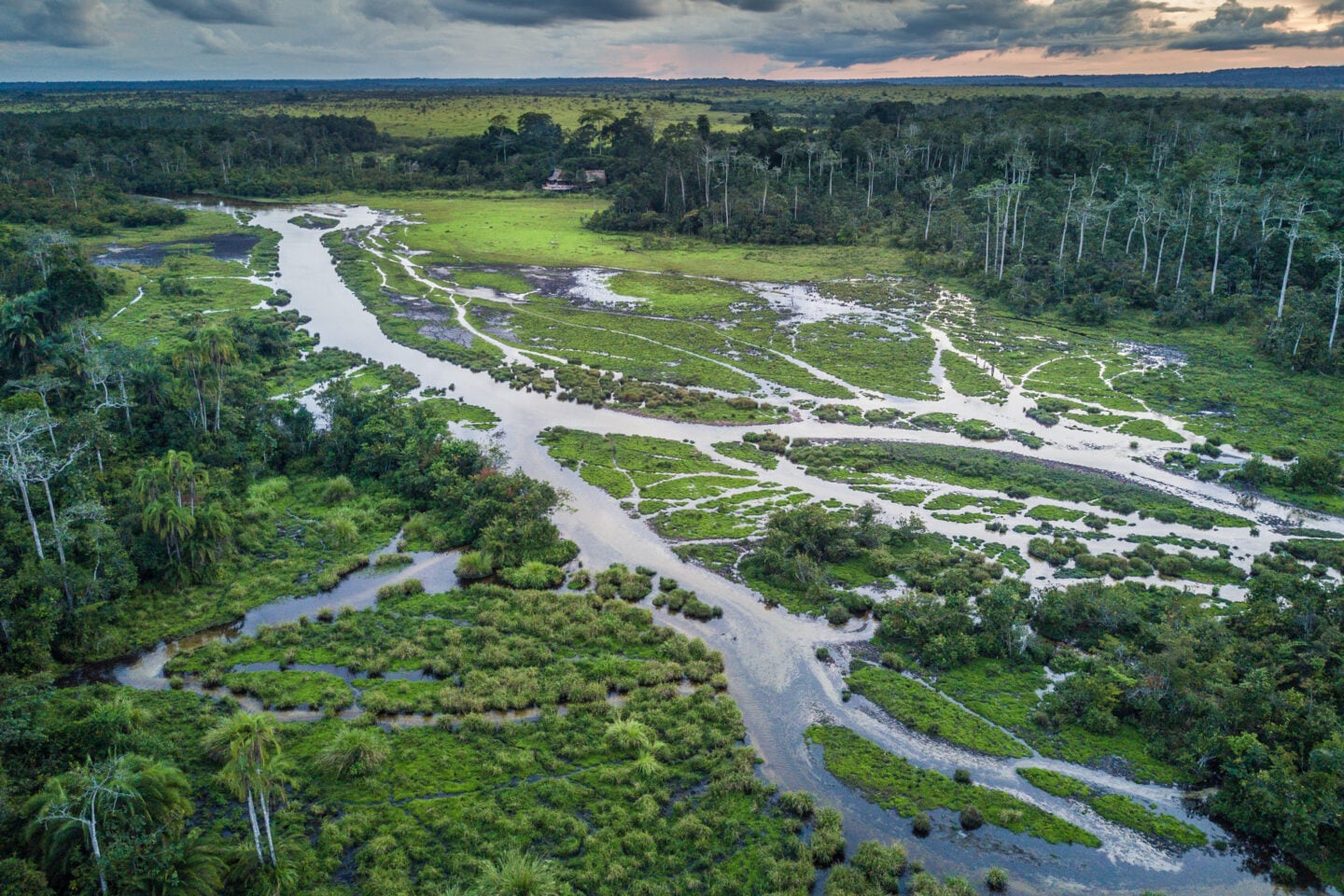
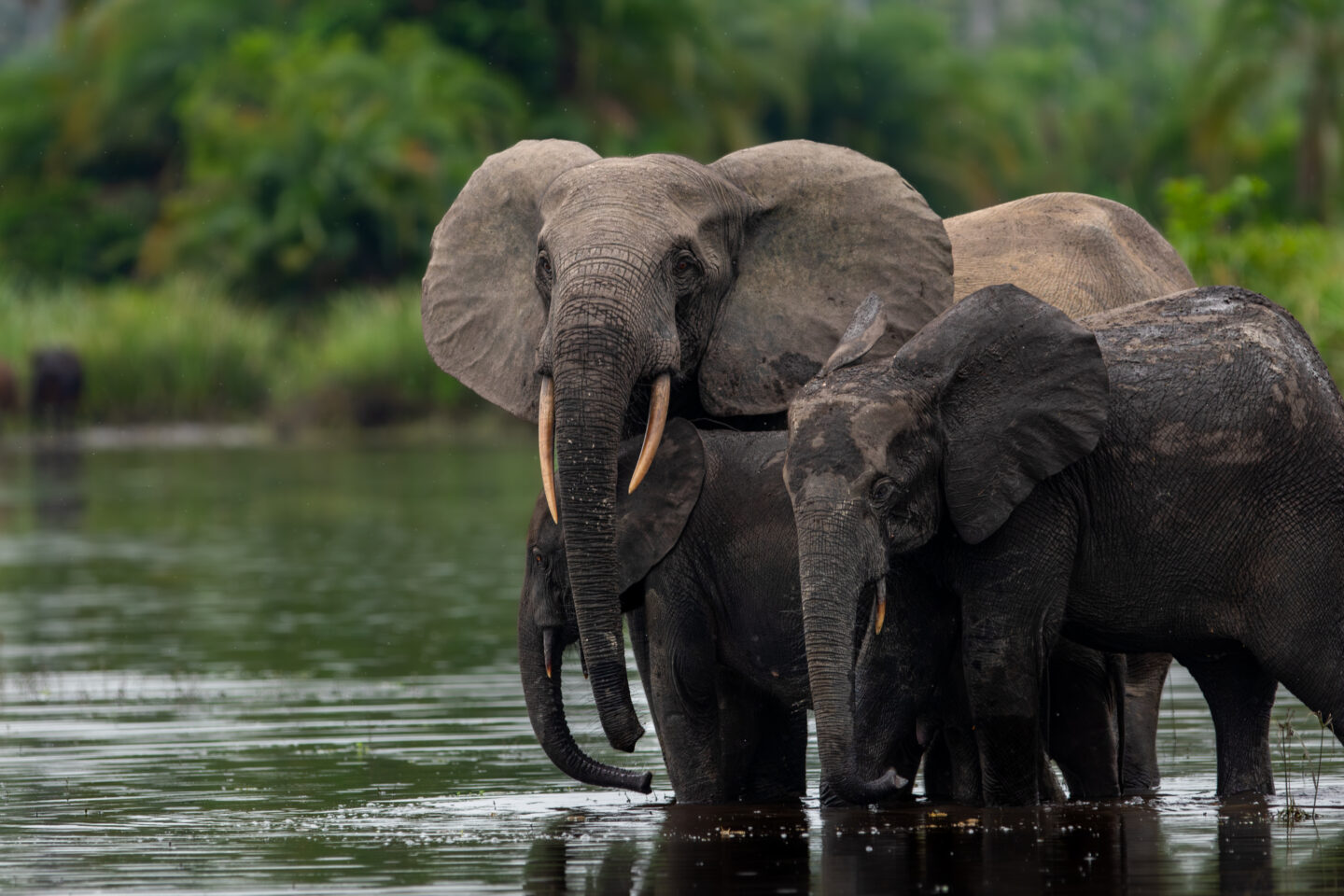
Forest elephants are ecosystem engineers in the Congo Basin. (Photo: Dylan Smith/Kamba Africa)
Expand Image

We slogged for 40 minutes this way, to the opening of Lango Baï. Across the expanse was Lango Lodge, another of Kamba’s retreats, and we made for its comfort — hot showers and gins beside the firepit — carefully skirting a herd of forest buffalo that sat chewing their cud, looking like a pile of burnt coffee beans in the spongy soil.

That night, after a grand Congolese feast — pounded and fried cassava leaves, roasted fish, peanut sauce — we looked out over a natural forest clearing known as a baï at the elephants amassing for the evening drink. Perched on stilts at the edge of the baï, Lango Lodge lets the great beasts pass unhindered into the salt pan. A cow elephant, her narrow, yellow tusks almost scraping the ground, passed underneath us, followed by her calf. Like the gorillas, these elephants “mine” the salt pans, digging deep into the mud with their tusks and trunks to dredge up mineral-rich clay. Smaller and slimmer than their savannah kin, these forest elephants are sought by poachers for their ivory, which is denser and more valuable on the black market than regular ivory. A recent study from Congo found that these forest elephants alter the Congo Basin such that, without them, the carbon stocks of the region would decrease by 7 per cent.

The elephants’ digging also brings other things to the surface: shards of pottery that haven’t yet been placed in time. On a walk along the mulchy gumbo of Lango Baï, Eloye-Nzoutani found a piece lying in the mud. Wiping the dirt from the triangular form, he put it in his pocket — another artifact to add to the collection at the lodge.

At Lango Lodge, guests can look out over the baï, which stands on stilts to let wildlife pass under it. (Photo: Scott Ramsey/Kamba Africa)
Expand Image
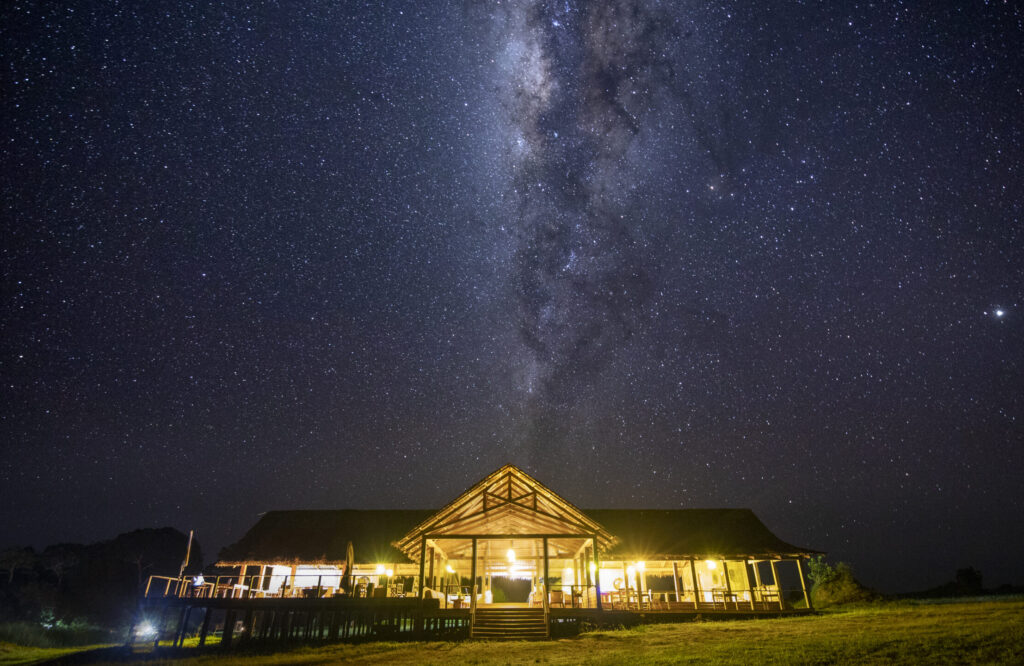
Mboko Lodge by night as the stars unfurl. (Photo: Courtesy Kamba Africa)
Expand Image
Wildlife viewing opportunities abound at Lango Baï. (Photo: Courtesy Kamba Africa)
Expand Image

The forest has not yet fully revealed its past, but the concern now is for its future. A study from Concordia University showed that between 1990 and 2020, the Congo Basin lost 8.5 per cent of its dense forest cover to mining, logging, agriculture and urban expansion. The precarity of the region is exacerbated by strong socio-economic disparity — the kind Plattner’s charities and Kamba’s initiatives assuage daily, in their mission to extend the good life to as many as possible.

That is what I felt my final evening, lying in the dark, listening to the orchestra of the forest — elephants roaring and sloshing through the waters of Lango Baï, the percussive chuk-chuk of the black crested hornbill, the multitude of squeaks and growls that blended together into a wall of sound. When I mentioned the late-night fracas to Eloye-Nzoutani the next morning, he laughed and said “Now, now, don’t let it bother you. It’s—”

“I know,” I said. “I know.” It’s the good life.

Advertisement

Help us tell Canada’s story

You can support Canadian Geographic in 3 ways:

Related Content

A crowd of tourist swarm on a lakeside beach in Banff National Park

Places

Smother Nature: The struggle to protect Banff National Park

In Banff National Park, Alberta, as in protected areas across the country, managers find it difficult to balance the desire of people to experience wilderness with an imperative to conserve it

  • 3508 words
  • 15 minutes
Andy McKinnon

Places

Canada’s first national urban park

It’s an ambitious plan: take the traditional Parks Canada wilderness concept and plunk it in the country’s largest city. But can Toronto’s Rouge National Urban Park help balance city life with wildlife?

  • 3444 words
  • 14 minutes
illegal wildlife trade, elephant foot, ivory, biodiversity

Wildlife

The illegal wildlife trade is a biodiversity apocalypse

An estimated annual $175-billion business, the illegal trade in wildlife is the world’s fourth-largest criminal enterprise. It stands to radically alter the animal kingdom.

  • 3405 words
  • 14 minutes

Wildlife

Wildlife without borders: Conservation in the time of Trump

The breakdown of binational relations and gutting of U.S. science agencies brings uncertainty to current cross-border conservation efforts

  • 2823 words
  • 12 minutes
Advertisement
Advertisement