
Travel
Is there a terroir for maple syrup?
We know weather influences the taste and quality of Canada's national condiment, but some producers say geography plays a role as well
- 696 words
- 3 minutes
People & Culture
Establishing a traditional sugar shack in the Gaspésie region of Quebec was a way for a previously landless First Nation to maintain cultural traditions

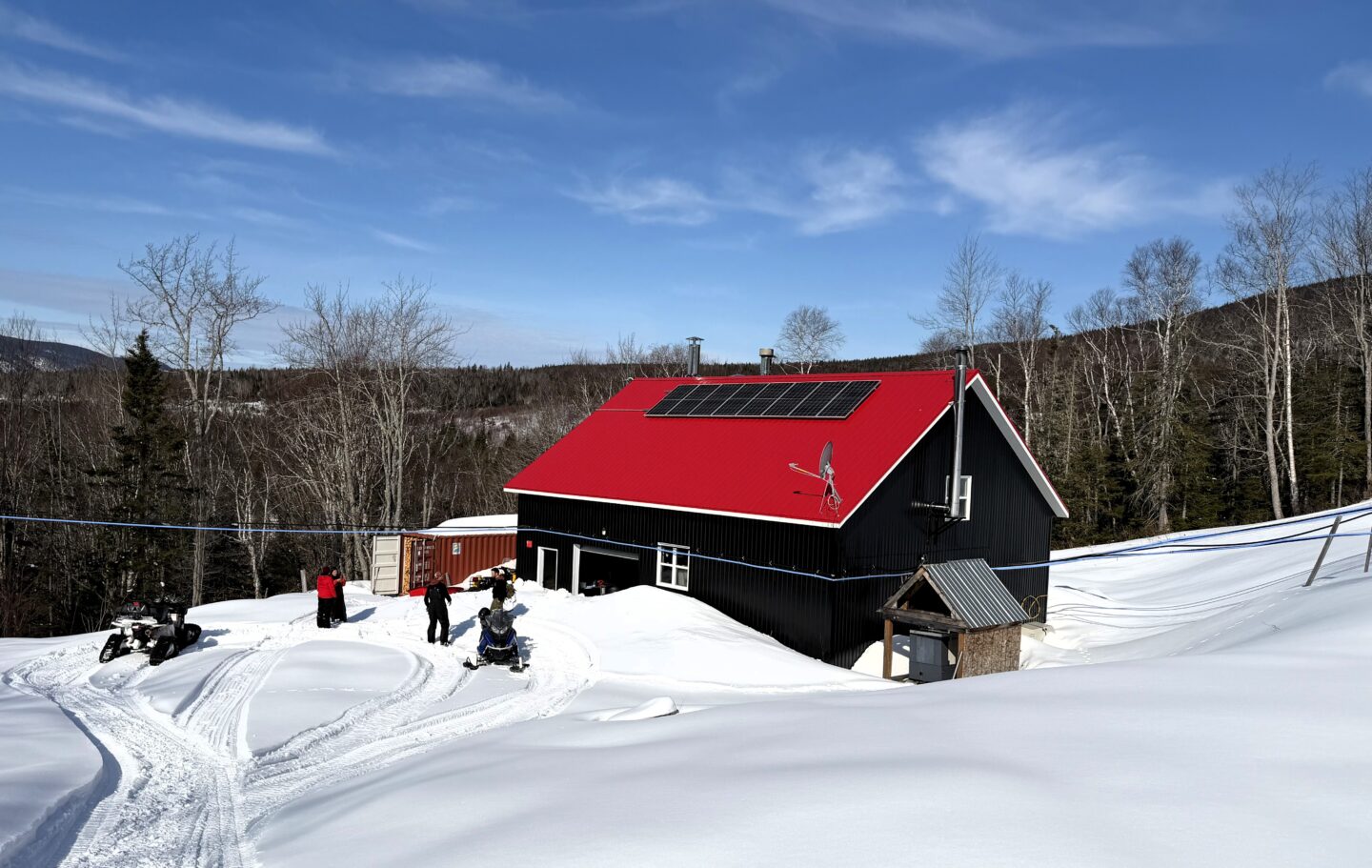
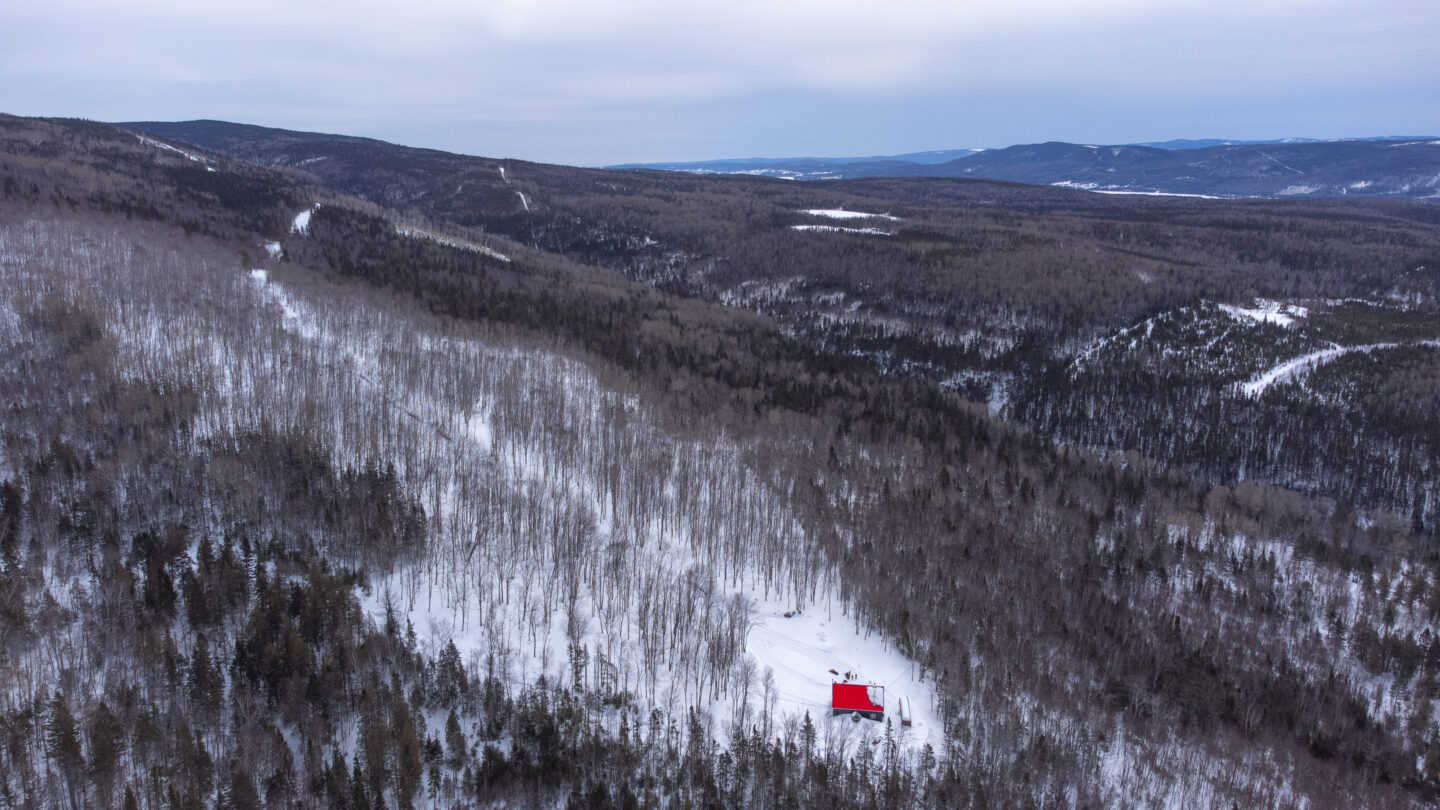
Deep in the rugged backcountry of Quebec’s Gaspésie region stands a small sugar shack tucked between forests of maple trees and rolling hills, its bright red roof stark against a sea of white snow. Reaching the sugar shack, known as Sigewigus, requires a roughly 30-minute or 12-kilometre snowmobile ride — hardly a journey designed for tourists.
But the secluded venture to Sigewigus (pronounced See-geh-wee-gus) was never intended to be a tourist attraction. Instead, the maple syrup operation was established by the Nation Micmac de Gespeg in 2021 to revive and reconnect with ancestral cultural practices.
“Harvesting maple syrup is part of our culture,” explains Kalika Sinnett, director of the Micmac Interpretation Site of Gespeg, which is also owned and operated by the Micmac Nation of Gespeg.
“Our ancestors marked the seasons by cycles of the moon. Thirteen moons, each lasting about 28 days, guided seasonal harvesting and cultural practices,” says Sinnett. “Sigewigus Tepgunset, the spring moon, was a season of renewal and celebration, the time when maple syrup was harvested and processed.”
Canada is renowned for its maple syrup, accounting for nearly 70 per cent of the global supply. Within that, Quebec produces approximately 90 per cent of the country’s total output. Production in the province is tightly regulated by the Quebec Maple Syrup Producers, and when quota space became available, the Nation Micmac de Gespeg recognized an opportunity to revive a traditional practice while building a sustainable economic enterprise.
It’s uncertain which Indigenous nation first discovered maple syrup, or exactly when that breakthrough happened, but nearly every nation in northeastern North America carries its own stories and legends explaining the origins of the practice. In Micmac tradition, one legend tells of the Sweetwater Maiden (Sismoqnapui’skwe’j), who followed her grandfather into the forest one day and found him exhausted, resting beneath a maple tree he had struck with his tomahawk. Sap was dripping from the strike into a hollow log, and the maiden boiled the sweet liquid to make a meal for her grandfather, unwittingly discovering maple syrup in the process.
The story teaches that sweet water is a gift from the Creator, meant to support the survival and well-being of the people.
After a bumpy ride on the back of a snowmobile, we finally reach the red-roofed sugar shack. I remove my helmet and heavy winter gear and follow Caudie Carignan, the maple grove coordinator at Sigewigus, into the sugar shack.
It’s April 9, and as a result of the unseasonably cool weather and heavy snowfall, the maple sap is barely flowing. “Like every agriculture project, we are at the mercy of the weather,” says Carignan as we walk further inside the sugar shack. A large silver evaporator fills most of the main room and two separate rooms branch off from that — one filled with reverse osmosis equipment and another containing collecting vats for holding maple water. Inside the collecting room, we can see maple water slowly trickling into the storage containers — enough to give hope of a harvest to come, but not enough to process yet. As workers cleaned the equipment, I noticed a sticky sweet smell.
“The weather must be warm enough for the maple sap to flow, but cool enough that the trees don’t bud out too quickly,” says Carignan. “Once the trees bud, it affects the flavour of the syrup, and we can’t harvest anymore.”
The earliest documented accounts of Indigenous Peoples sharing their knowledge of “sweet water” with Europeans come from the Gaspésie region, when French explorer Jacques Cartier arrived in the Bay of Gaspe in July 1534. Then, in 1557, the first written account of sweet water appeared when French priest, explorer, and writer André Thevet mentioned maple sugaring in his book Les Singularités de la France Antarctique (The Singularities of Antarctic France).
Taken together, Indigenous oral histories and early European accounts, including those of Thevet, Marc Lescarbot and others, confirm that the Micmac People of Gespeg have been harvesting maple syrup for centuries. While most maple syrup production in Canada is now done by non-Indigenous producers, many Indigenous communities are working to revive the practice and reconnect with traditions their ancestors carried on for generations.
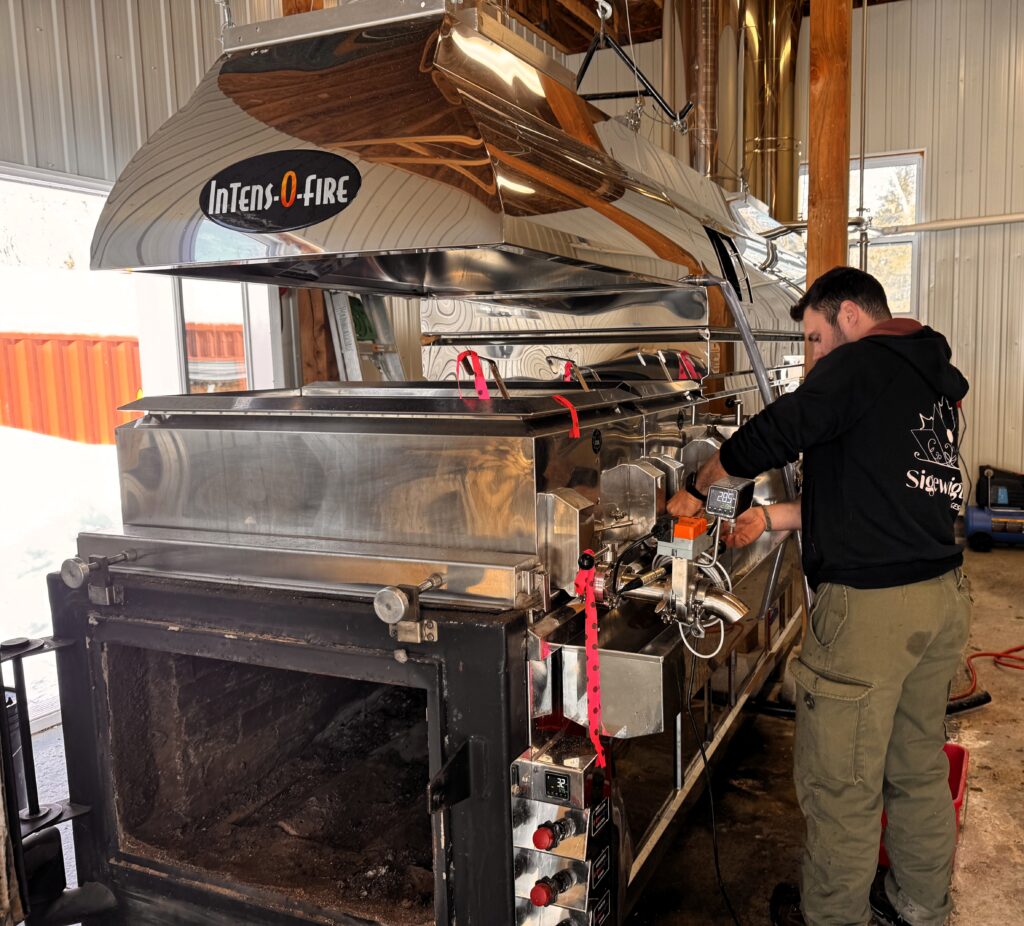
The Wolastoqiyik Nation in the same region also has a community-owned maple syrup operation, Érablière Malécite, with approximately 31,000 taps, launched in 2019. “Their business model differs significantly from ours, with the vast majority of their production being sold to the Federation,” says Carignan. “They have not yet reached the stage of developing a range of maple products, implementing a marketing strategy or expanding sales development at the Quebec or Canadian level.”
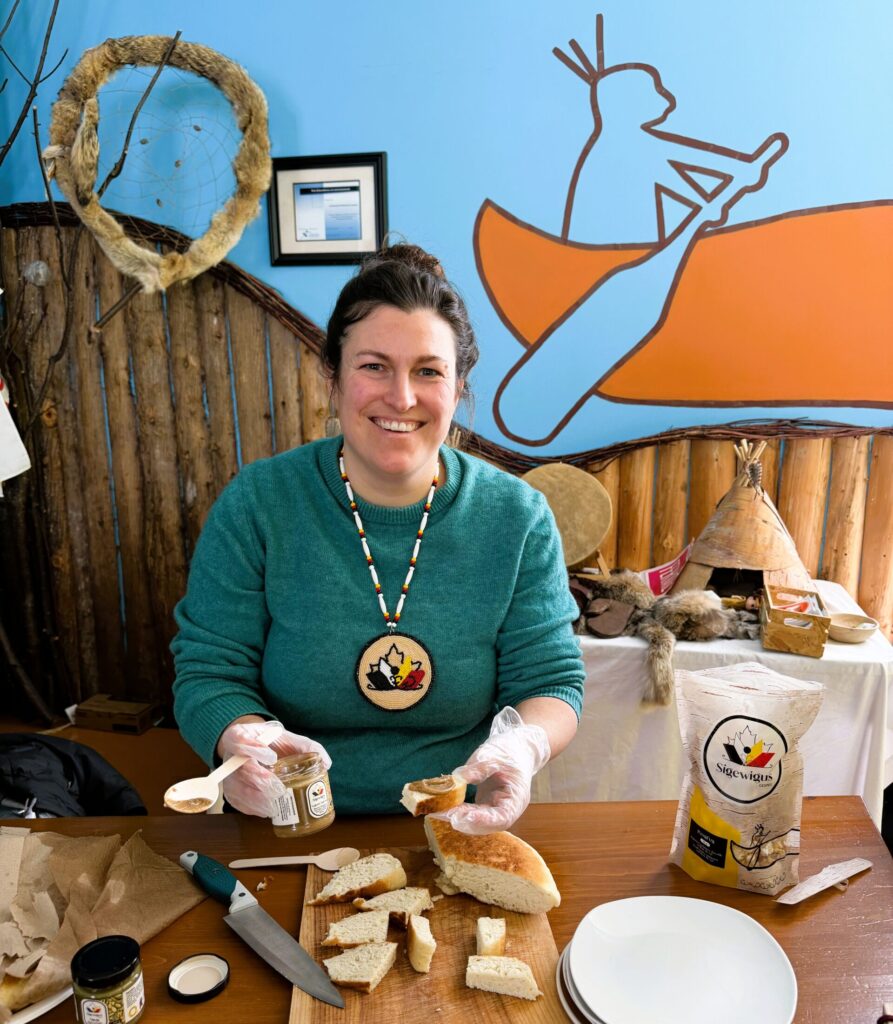
Nation Micmac de Gespeg is one of a few Indigenous communities that have established commercial operations and product development and marketing to support economic development. A wide range of products, including maple syrup, maple sugar, maple butter, popcorn, and gourmet maple butter blends, are sold online, in a variety of stores in Quebec and at the Micmac Interpretation Site of Gespeg.
These economic initiatives, however, have unfolded alongside a long-standing reality: the Nation Micmac de Gespeg was operating without a land base.
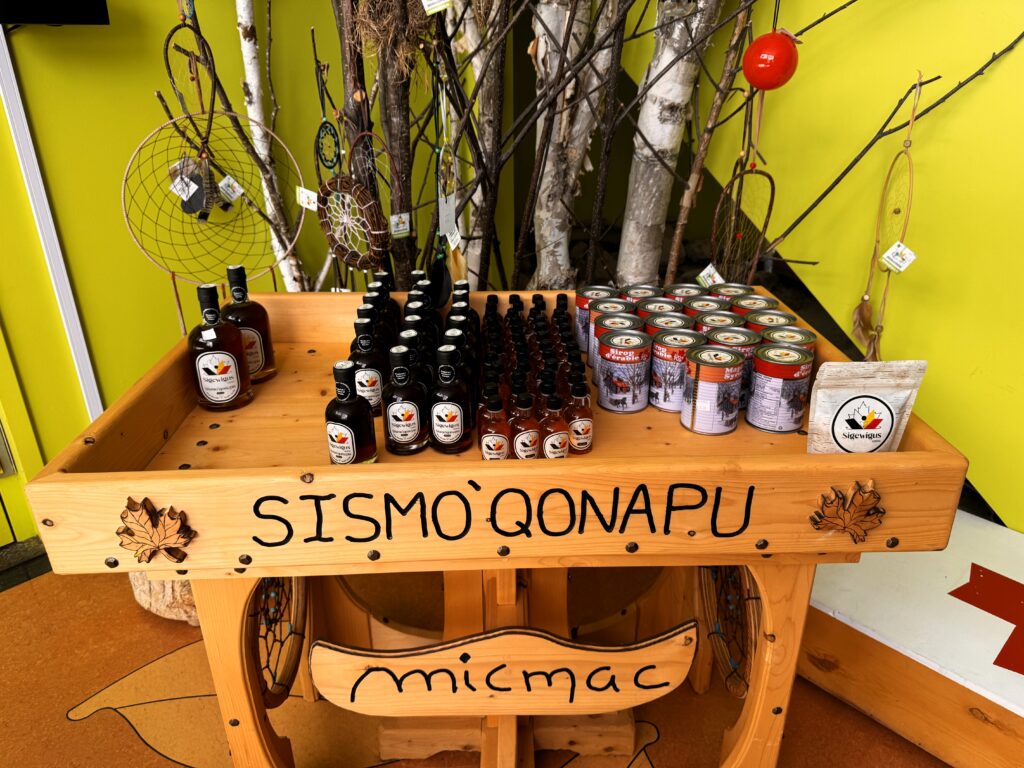
Although the Nation Micmac de Gespeg has occupied its traditional territory since time immemorial, the Government of Canada did not officially recognize the community as a First Nation until 1973. Even then, recognition came without a land base or reserve. Today, fewer than 30 of the more than 630 First Nations communities in Canada have no reserve lands, creating additional challenges in preserving culture, providing services, and developing community infrastructure.
With more than 2,000 members scattered across the region and no land base for decades, the Nation Micmac de Gespeg focused much of its economic development on initiatives centred on cultural preservation, including projects like the establishment of an interpretive centre, the Sigewigus sugar shack, and a new partnership with Forillon National Park.
Since recognition, the Nation has also been working to secure reserve lands. On December 19, 2025, Nation Micmac de Gespeg was officially granted a small parcel of reserve land — a milestone that will allow the community to access funding opportunities for infrastructure, housing, and essential services that were previously unavailable to them as a landless First Nation.
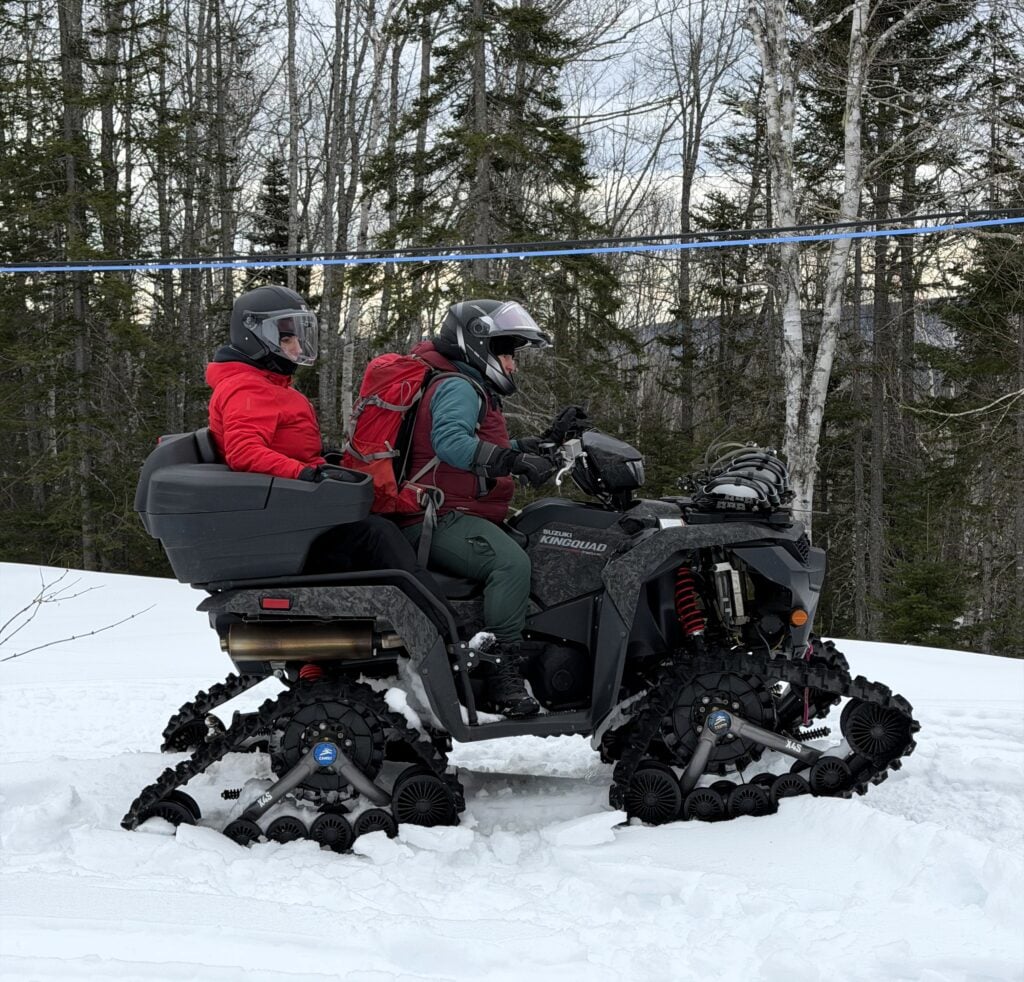
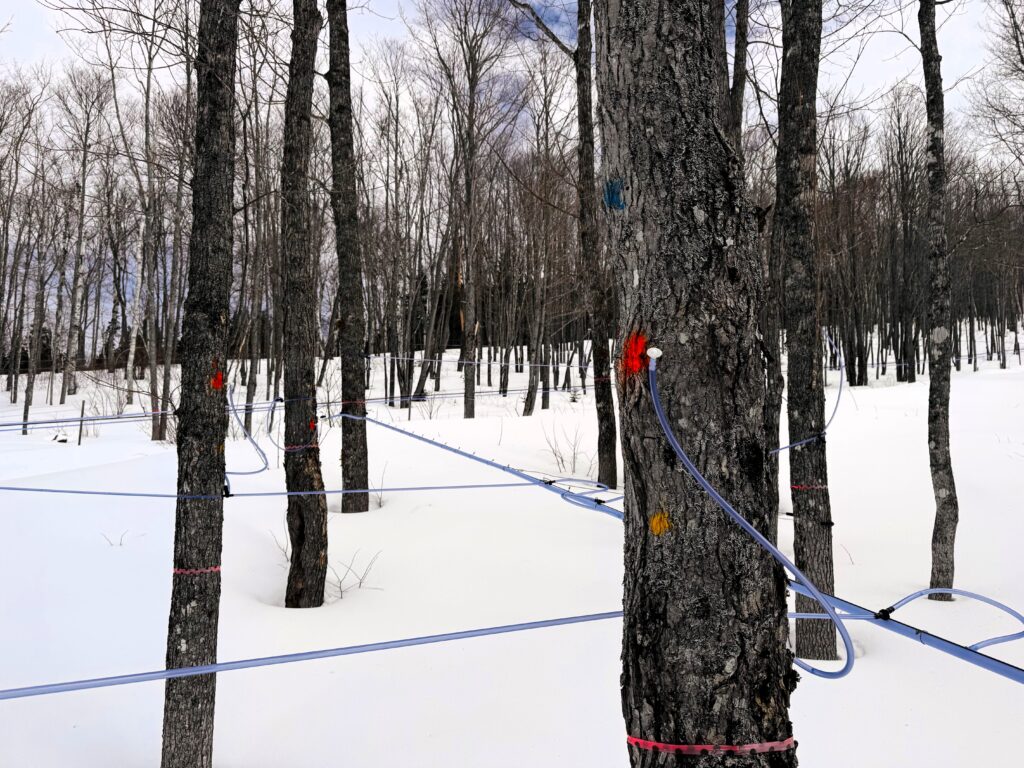
At the sugar shack, I put on snowshoes and follow Carnigan through the forest to get a closer look at the tree taps, also called spiles, and the tubing lines that transport the maple sap from the maple bush to the sugar shack. The afternoon sun has warmed the air significantly, and the sap has begun flowing through the lines and into the holding tanks inside the sugar shack. Cardigan says she hopes they will have enough sap to begin processing it with reverse osmosis and the high-temperature evaporator in the next day or two. She’s worried that the late start might mean a challenging year for the operation.
As I watch maple sap dripping into the sugar shack’s holding tanks and talk to the workers there and at the interpretive centre, it’s easy to see that Sigewigus is much more than just a maple syrup business. For the Nation Micmac de Gespeg, it represents cultural renewal, resilience, and the passing on of traditions.
“It’s interesting to see how our ancestors were able to develop the specific tools to transform maple sap into maple syrup,” says Sinnett. “They didn’t have metal pots to boil the sweet water in, but they were innovative. We learn about it through our legends.” At Sigewigus, that ingenuity and innovation live on — building a brighter future for a new generation that will no longer be landless.
Travel
We know weather influences the taste and quality of Canada's national condiment, but some producers say geography plays a role as well
People & Culture
Each spring, as the freeze-thaw cycle takes hold of parts of the country, the sap in red and sugar maple trees starts to flow, marking the start of the sugar bush season

Environment
Climate change is creating extreme weather, but it may also be having an effect on what you put on your pancakes. Researchers from Memorial University of Newfoundland have found…

Travel
A five-night, four-day adventure through Québec’s Gaspé Peninsula, full of mountain peaks, sweeping landscapes and close moose encounters