Sponsored

Environment

Redefining resilience with the Wildfire Resilience Consortium of Canada

A new collaborative group seeks to break boundaries in wildfire mitigation and response

  • Aug 14, 2025
  • 965 words
  • 4 minutes
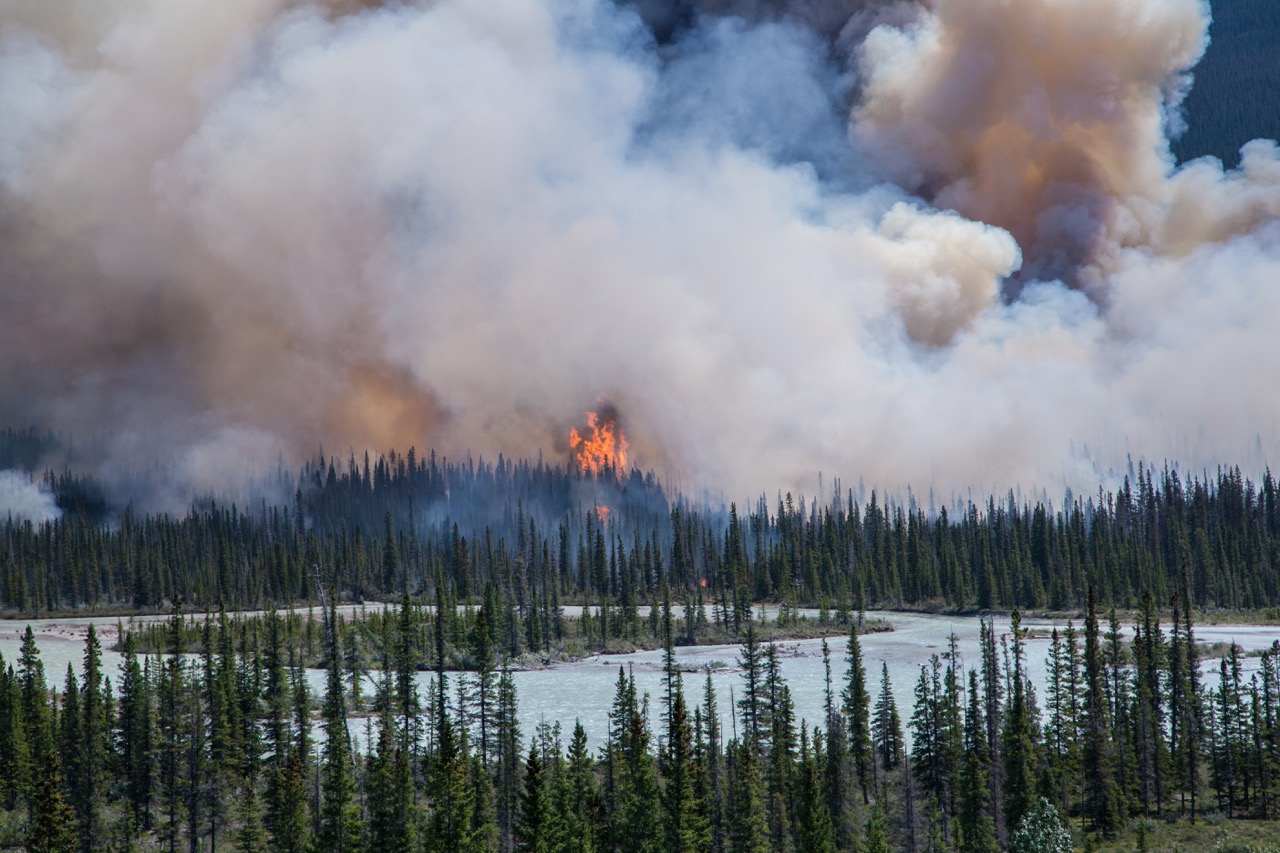
As Canada’s wildfire seasons worsen, a new national consortium aims to share resources and develop strategies to make forests more resilient. (Photo: Adobe Stock)
Expand Image
Advertisement
Advertisement
Live Net Zero Email Service
Advertisement

As of mid-August, the 2025 fire season is shaping up to be Canada’s second-worst on record, with more than 7.3 million hectares burned.

Since the spring, headlines across the country have consistently highlighted a community ordered to evacuate, a new fire sparking somewhere, or unique resource-sharing situations for fire management.

Enter the newly-created Wildfire Resilience Consortium of Canada. As a beacon of boundary-breaking hope, the WRCC aims to create a transformative approach to wildfire management, bringing together the front line, researchers, industry experts, the forest products sector, Indigenous Peoples and governments to collaboratively answer the call for solutions from Natural Resources Canada.

“It’s a purpose-built not-for-profit that was designed to transform wildfire resilience across Canada, really focusing on a ‘whole of society’ approach,” says Kelsey Winter, Executive Director of the Canadian Interagency Forest Fire Centre and Board Chair of the WRCC.

The WRCC was formed by five partners: FPInnovations (FPI), The Institute for Catastrophic Loss Reduction (ICLR), The National Indigenous Fire Safety Council (NIFSC), TRU Wildfire (TRU) and the Forest Products Association of Canada (FPAC). Each foundational partner has a board seat, with two members from NIFSC. There is also an advisory council with 10 members, including Canadian Forest Service (CFS) and Canadian Interagency Forest Fire Centre (CIFFC).

It was only about a year and a half ago when the proposal for the WRCC started to come together. The group moved quickly from ideation to fruition because, as Winter explains, the work was already in existence.

“Wildfire is such a complex problem,” says Winter. “Solutions were happening, but they weren’t happening cohesively or collaboratively. There was a ton of great stuff going on in Canada to advance our wildfire resilience, but we were missing the dot connector.

“There’s incredible organizations and groups already doing incredible things for wildfire resilience,” she adds. “It was just trying to get an organization together that could lift up the great work that’s already being done and connect it. So that’s really the ‘why’ behind the WRCC.”

As part of breaking down boundaries between the different stakeholders involved in wildfire management, the WRCC has divided the country into six zones representing the different types of forest ecosystems that experience fire. (Photo: Adobe Stock)
Expand Image

The two forest products industry members, FP Innovations and FPAC, play a critical role in mitigating wildfire damage and helping landscapes adapt to changing climate conditions.

“We’ll never get ahead of the increasing wildfire problem,” says Winter. “But for us in Canada to make meaningful change, to be proactive at the landscape level, the forest and wildfire sectors have to work in lock step with the forest industry. Integrated forest management is the future and the forest industry plays a huge role there.”

One example that comes to Winter’s mind when she thinks about the role of the forest industry is around adaptive forest management.

“There’s some really neat innovations in how we’re thinning [overgrown forest areas], in how we’re being light on the land, in how we’re making it more economical to do that kind of thinning for low value timber … and understanding that there are ways that we can adjust our harvest schedules,” she says.

According to FPAC, having the “boots on the ground” allows them to immediately recognize and respond to wildfire risk by applying a “wildfire risk lens” to forestry work. They also tap into existing connections to community and Indigenous organizations to help share information. This ties directly into WRCC’s Knowledge Exchange Strategy, which aims to promote cross-disciplinary collaboration through online tools and resource hubs to accelerate wildfire resilience.

But in addition to its unique collaborative approach to wildfire management, the WRCC is also redefining exactly what wildfire resilience means.

“One of the things we talked about in the very beginning is not being prescriptive about what resilience means, because resilience means something different to every Canadian,” says Winter.

“Resilience means something different to the air attack officer who’s involved in aviation and operations, it means something different to the land owner who’s doing thinning or is looking at adaptive forest management to make some changes at that landscape level. We don’t want to be definitive in how we define resilience; we want to help create a Canada where we can all live well with fire.”

The WRCC will be guided by three core pillars: Indigenous Fire Stewardship, Knowledge Mobilization, and Technology & Innovation. Work that organizations like FPAC were already doing to promote Indigenous-led fire response will be further supported under the WRCC as it aims to create a “greater recognition and application of Indigenous-led fire stewardship practices.”

To achieve its three pillars, the WRCC has developed a three-pronged approach: engage, connect, and accelerate.

“WRCC is not meant to do. It’s meant to amplify,” explains Winter. “We all know who we know, but we don’t often look outside those circles. We’re breaking down barriers that prevent those functional relationships.”

As part of breaking down boundaries between the different stakeholders involved in wildfire management, WRCC is also breaking down the literal borders between provinces. They’ve re-labelled the country into six zones, which represent the six different types of wildfire ecosystems across Canada: Cordillera, Taiga, Boreal Plain, Prairie, Boreal Shield and Atlantic Maritime. These zones will help places that experience wildfire in similar ways work more collaboratively together, led by regional coordinators.

“Each province and territory has its own focus and its own challenges and its own concerns,” says Winter. “I think it will be a challenge to balance the needs and the problems that each province and territory is facing … but that’s why we intentionally built WRCC the way that we did.”

WRCC received $11.7 million in federal funding over four years and forms part of the $285 million Wildfire Resilient Futures Initiative under Natural Resources Canada. One of its first priorities will be to shore up more funding so that work can continue when the grant terms are up.

Advertisement

Help us tell Canada’s story

You can support Canadian Geographic in 3 ways:

Live Net Zero Email Service

Related Content

People & Culture

Rekindling hope: Kanaka Bar’s climate evacuees

As wildfire seasons worsen, residents of British Columbia’s southern interior have been repeatedly evacuated. They may be climate evacuees, but this hasn’t stopped them finding solutions, Canadian Geographic writer David Geselbracht reports in his new book Climate Hope.

  • 6869 words
  • 28 minutes

Environment

Opinion: Environmental racism and Canada’s wildfires

Ocean Bridge Ambassadors address the burning injustice of the climate crisis on marginalized communities

  • 1036 words
  • 5 minutes

Mapping

Digital map shows Alberta wildfires in near real-time

An interactive map released by Esri Canada allows users to track wildfires and see where they are most active

  • 584 words
  • 3 minutes
Smokey forest fire

Environment

Quickfire decision: fighting wildfires

With wildfires on the rise, those who tackle them have to make choices about when to take action

  • 573 words
  • 3 minutes
Advertisement
Advertisement