Exploration
Subterranean trailblazers
Caving: The ultimate underground sport
- 5055 words
- 21 minutes
Exploration
Spanning 25,450 metres in length, British Columbia’s ARGO cave system surpasses Castleguard Cave by more than 4,000 metres
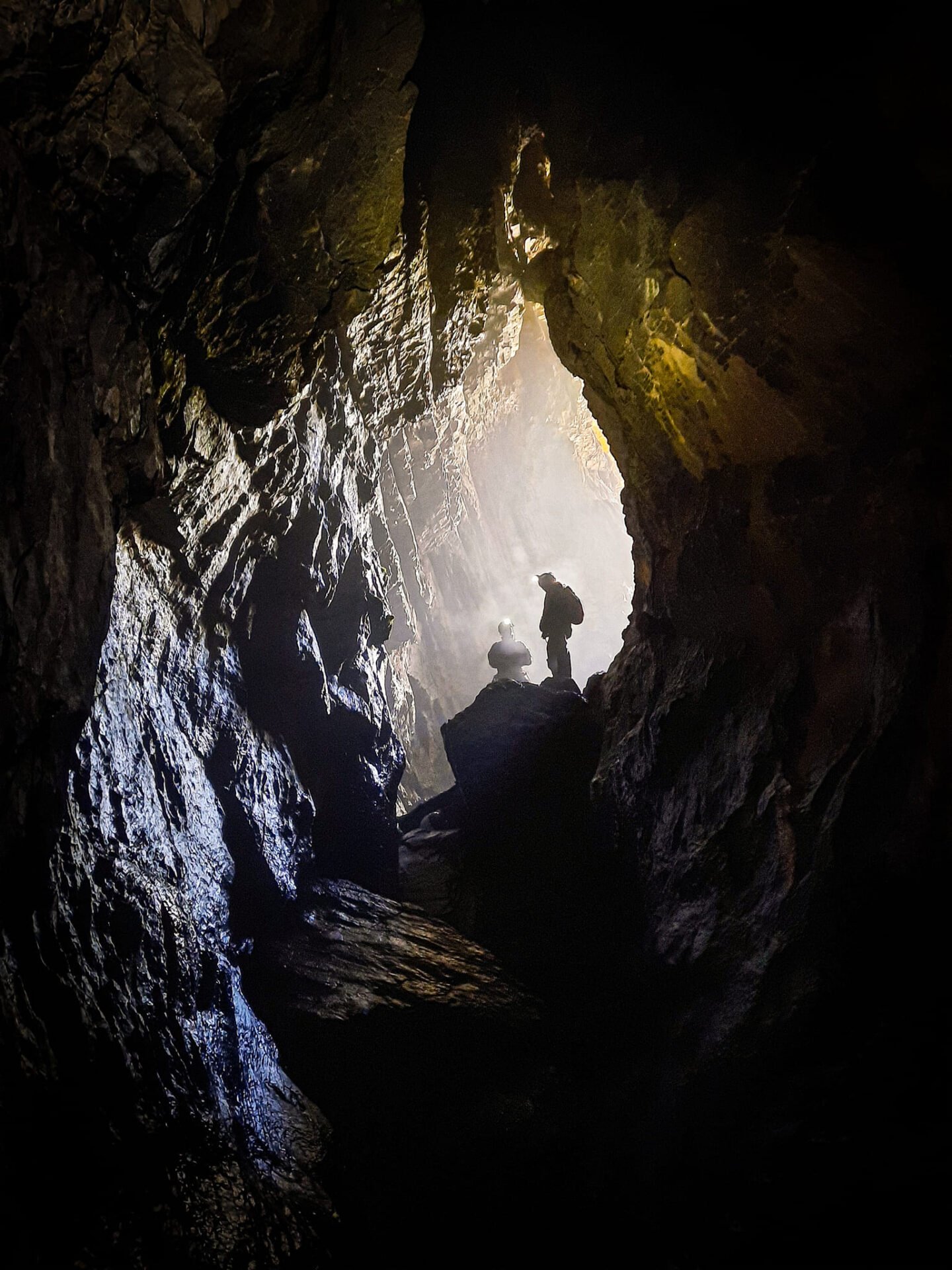
With one arm stretched out in front of her and the other behind, Erin Bartlett inches her way through the tight limestone tube – the only way she could fit through. Another caver, Franck Tuot, pushes her feet forward from behind while the rock compresses against her, bruising her ribcage. If that wasn’t bad enough, she fights against a stream of cold water channelling into her face, which causes her to sputter. But then, after much struggling, she emerges into an open chamber.
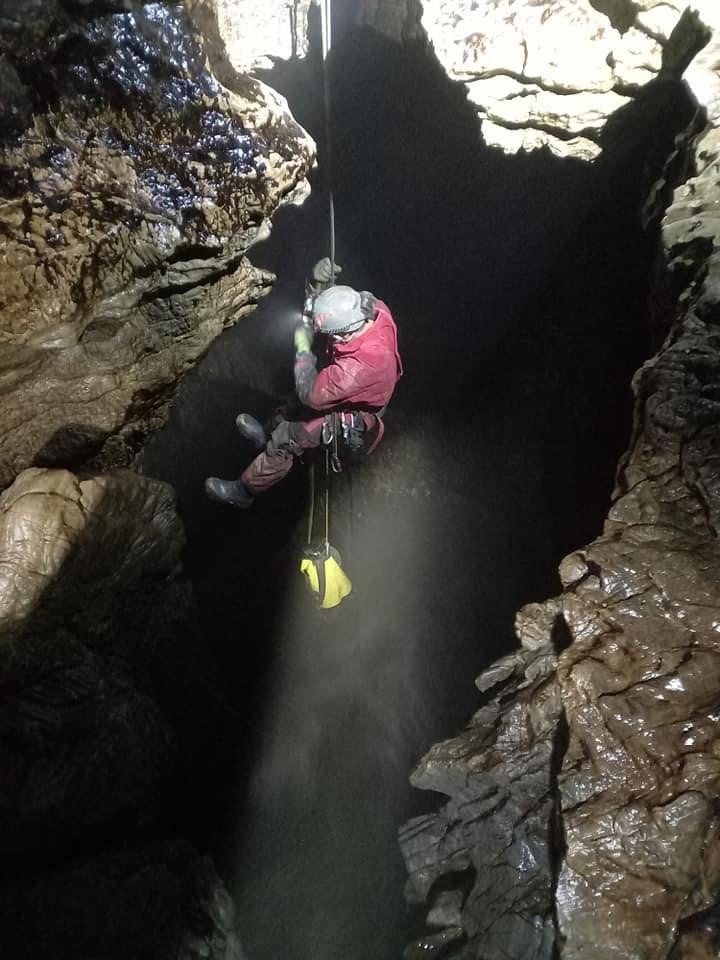
The next objective was maneuvering through another limestone tube emitting a strong draft of wind. It seemed promising, but it meant she would have to crawl through a pool of muddy, standing water. Bartlett set to work again. Due to her newness, or perhaps boldness, she was designated to check the undesirable spaces. After crawling about 25 metres, the passage started to twist in the wrong direction. Tuot called out to Bartlett to turn around. They had been exploring the cave for most of the day, and it was time to leave. The tunnel, briefly illuminated for the first time in history by Bartlett’s light, would turn dark again as she retreated.
Each metre of progress was another minuscule step, one push of the needle forward amongst thousands in the quest to find a connection between disparate cave systems on Vancouver Island. The draft is a signal in caves; temperature differences between the surface weather and the inside of the cave cause the cave to breathe. Lots of wind is a sign of open passages beyond. But this windy tube was one of around 150 unchecked leads in the cave system – junctions in the passages that cavers had seen but not yet physically entered. There were many other places to look for a connection between these caves, and this tube was turning the wrong way.
The first gaping entrance to the ARGO cave system was known as “Giants Cave” by timber cruisers since at least 1977 and was undoubtedly known by Indigenous Peoples before logging activity arrived on North Vancouver Island. Soon, other cave entrances were found nearby. In 1982, the North Island Gazette reported a “Huge new cave found near Nimpkish Lake.” Through the 1980s, four expansive caves near each other were being explored and mapped in a flurry of discovery. The system has seen multiple generations of cavers by now, who have contributed to the exploration in small teams that have come and gone. A connection between two major caves was found in 1988, and four caves were then three. In the 1990s, caver Rob Countess took the lead on much of the exploration and gathered 20 years of data on the disparate caves, publishing map plots showing the complete system at more than 10 kilometres long. As of today, just over 100 people have helped map the caves over the last 48 years. Such is the methodical, anticlimactic process of exploring caves’ darkness and being unable to see around the next corner. Numerous obstacles in ARGO – gaping pits as deep as an office tower, climbs up unstable rock, flooding in wet weather, and tight crawls – gave pause to rapid discoveries.
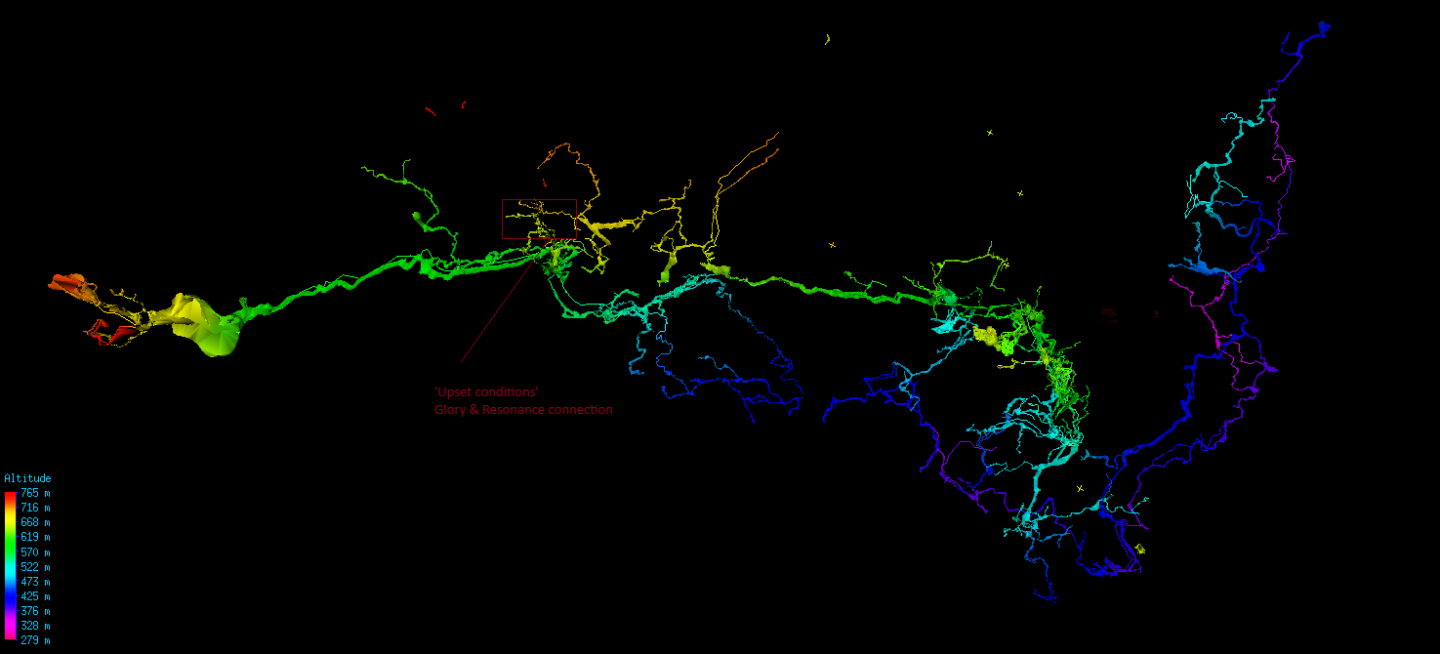
Recent exploration, however, was jump-started by another of these minuscule steps. By 2017, cave cartographer Dennis Mitchell had amalgamated 40 years of survey data. In 2019, when a short new extension was found, the maps showed it overlapping a passage in the neighbouring system. Called NoWhere Land, it was seemingly a dead end. But within it was a place where loose sediments had filled a limestone tube, remnants of the waters that carved these tunnels which had drained over the millennia. John Lay and Franck Tuot had taken up the mantle of leading the exploration effort by this time. Over several trips, their teams dug through the sediments to prove the physical connection between the systems. The connection was named “The Great Escape,” referencing its likeness to a tunnel under a prisoner-of-war camp. The combined ARGO system was now 17,101 metres long and 400 metres deep, the second-longest cave in Canada after Castleguard Cave. Three caves were now two. Furthermore, its passages overlapped and, in some cases, were quite close to its neighbour cave. A connection was sure to be there, waiting to be illuminated.
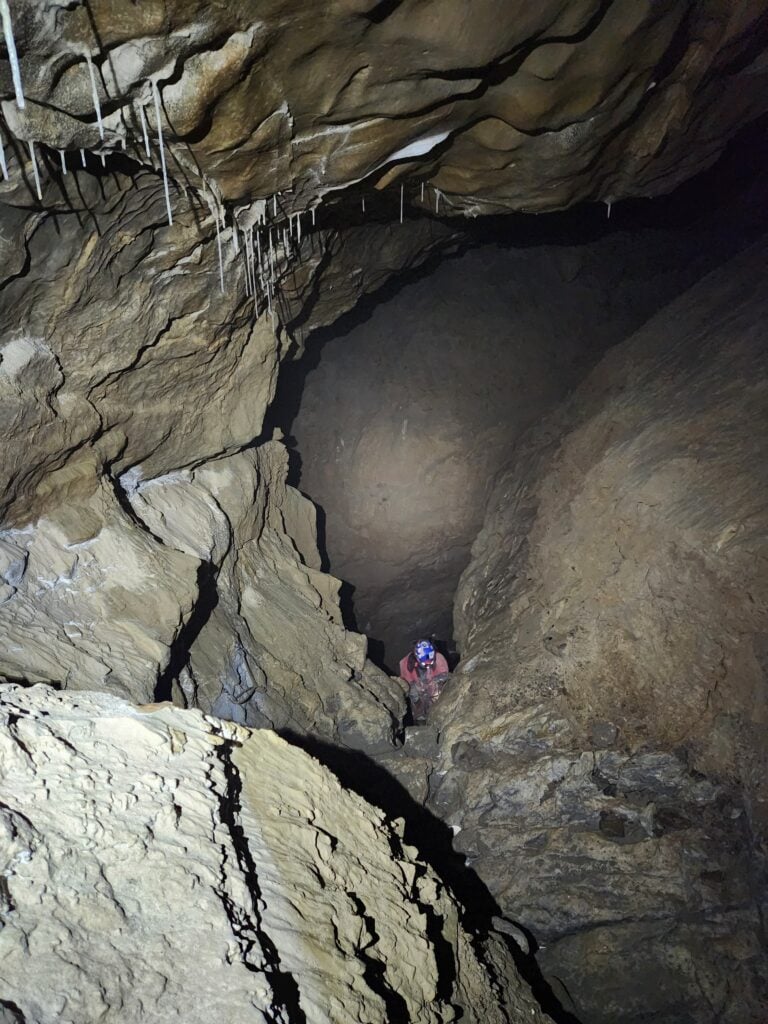
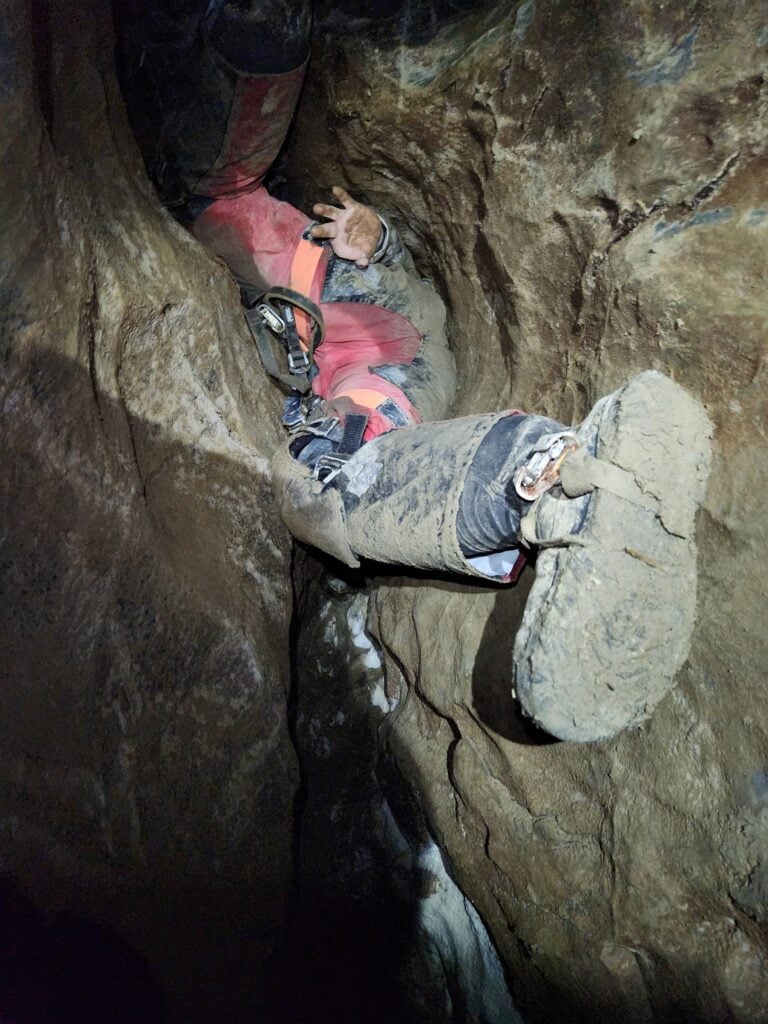
Dr. Paul Griffiths was a young caver when the various entrances to the system were discovered in the early 1980s. Now a cave and karst scientist in B.C., Griffiths has studied the area’s geology and unique elements of this incredible resource, formed within 250-million-year-old limestones of the “Quatsino formation.” Only one to two per cent of the land in the region is in karstic rocks, but the area drainage is a major part of the headwaters of B.C.’s Tsulton River. Hydrological tracing shows the significance: “The water circulating through the ARGO system is an important factor to downstream ecosystems all the way to the sea,” says Griffiths. Furthermore, the area’s caves are a habitat for diverse terrestrial and aquatic species, like the Quatsino Cave amphipod. “Every part of ARGO has life,” remarks Griffiths. The kind of troglobitic life forms in caves with no eyes are a special component of evolution. A bone pile in a well-guarded location contains 50 species, including evidence of the extinct giant short-faced bear.
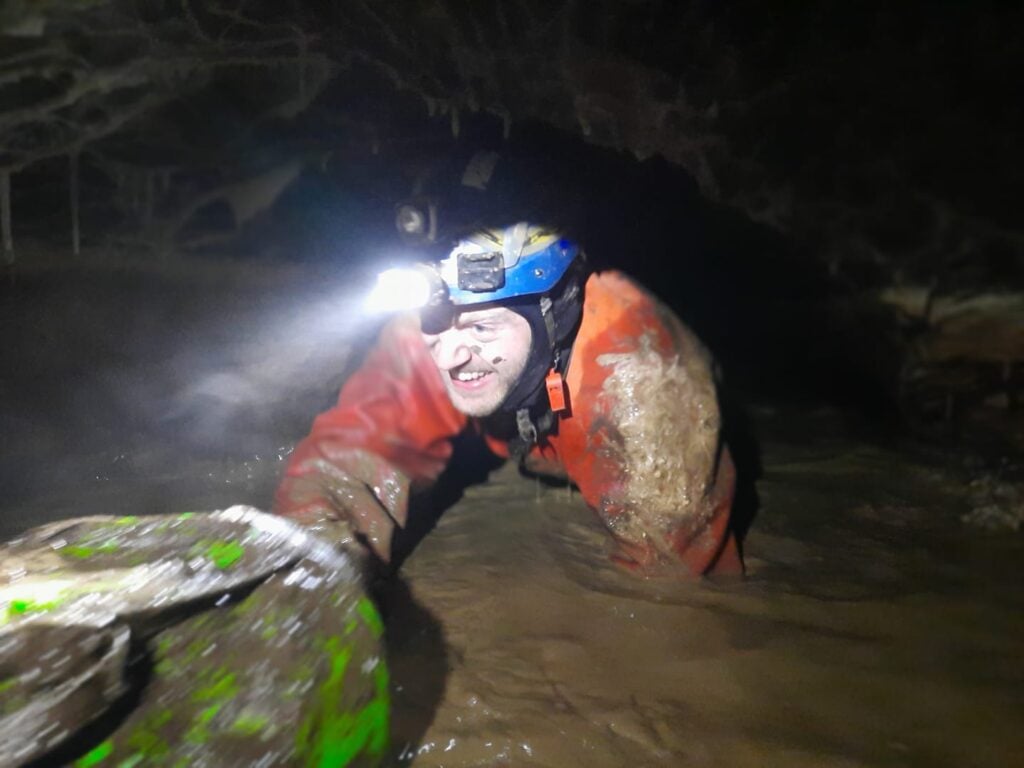
Bartlett spent around five years as a team member and eventually became the lead on the project as others moved on. It took time to train and build a team comfortable with the harder sections of the cave. “There was a year we did 152 trips into the cave,” said Bartlett. The drafting, twisting tunnel remained a mystery as the team picked away at other parts unexplored. “I had been thinking about it ever since,” says Bartlett “For three years, it was haunting my dreams.”
Finally, in June 2024, the cavers planned to tackle the lead. They would send two teams, one team into each cave, and plan to meet simultaneously on either side of the suspected connection. There, they would see if they could find each other through the labyrinth. Bartlett, Oscar Jacobsson and Kaisa Weins entered the first entrance, while Countess (drawn back in since his involvement in the 90s), Micheal Peterson and Myles Fullmer entered the other. Bartlett’s team had the short end of the stick; getting to the target and back would be an 18-hour round trip.
Armed with handheld radios, the team slithered through the passage Bartlett had left untouched, winding back and forth and making contact briefly. Radio signals do not penetrate through solid rock, so a radio connection is a sure sign that an open void is enabling the transmissions. Finally, through the static, a message from Fullmer came through loud and clear:
“Did I just hear you guys?!”
Before Bartlett could answer, she heard Fullmer’s voice booming through the passage ahead,
“HELLO!”
The twists in the passage that lay ahead would make progress challenging. Neither side could see the lights from the other team’s headlamps. In the direction of Bartlett, however, was an obstacle. An impassable hole in the floor, which they would need to traverse across. It would require placing bolts in the wall and connecting a safety rope. Peterson started the process but ran out of rope before completing the journey. They would have to come back.
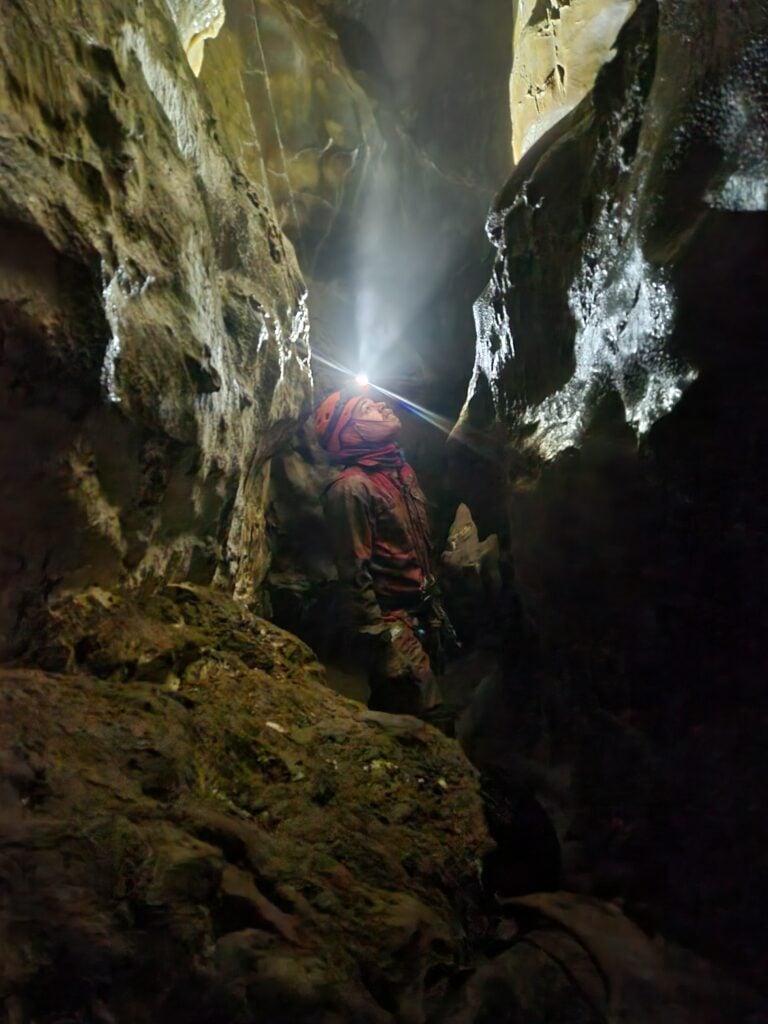
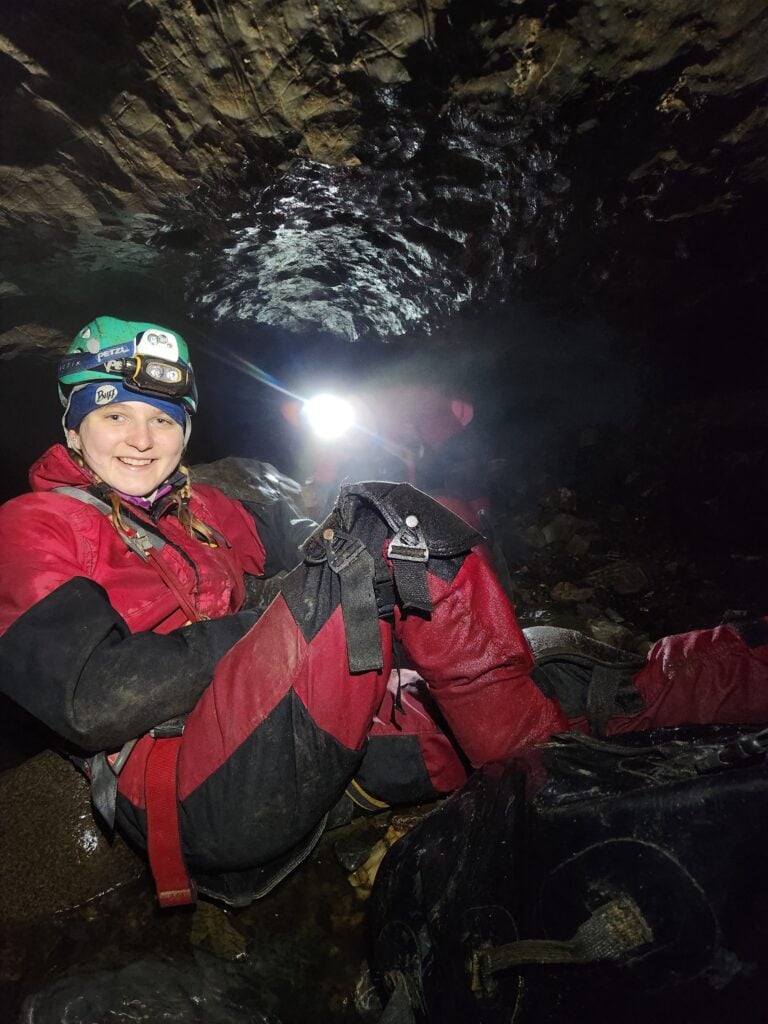
Bartlett, Peterson and Jacobsson returned on Aug. 10, 2024. Not only to complete the rope traverse but also to take the measurements required to prove the connection between the caves physically. Using a custom laser device to measure the extent of the twisted passages, they painstakingly surveyed the link between the two caves. Two caves were now one, and the ARGO system officially became Canada’s longest cave at 25,450 m in length. This podium was held by the world-renowned Castleguard Cave for 56 years, a testament to the challenge and potential of underground discovery.
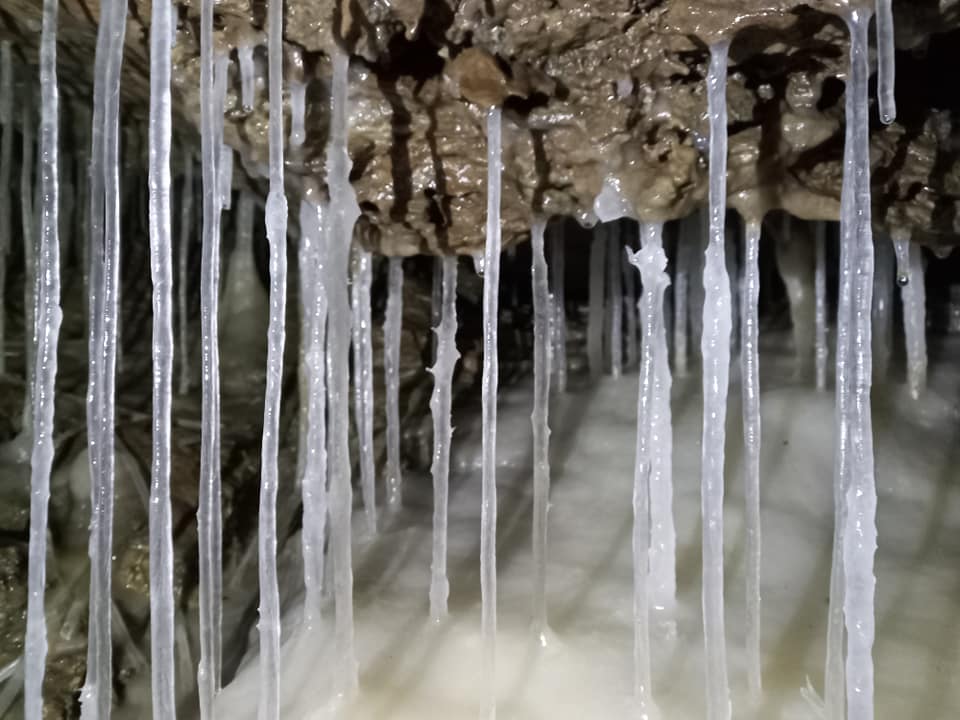
Now, Bartlett and the team are diligently trying to enhance the protection and conservation of this area of coastal rainforest, which has been impacted heavily by logging. Currently, nothing is preventing industrial activities in the area or even overtop of the cave itself. The cave exists within the traditional territories of the ʼNa̱mǥis First Nation, and the ʼNa̱mǥis and other stakeholders’ actions to preserve the immediate cave area and its watershed are one aspect. Another is the Cave Protection Act, a piece of legislation in B.C. that has been proposed, introduced, and died multiple times over the past 37 years. The act would protect cave and karst landscapes, recognizing their importance as unique ecosystems and as part of the irreplaceable groundwater systems feeding the lush landscape and the people. The discovery also marks the end of one chapter and the beginning of the next. Bartlett plans further exploration of the remaining leads, which will reveal more of the mysteries of this significant landmark in the coming years.
“It’s now part of the national Canadian heritage,” says Griffiths.
Exploration
Caving: The ultimate underground sport
Exploration
2022 is the International Year of Caves and Karst. Here’s why you should care about the hidden worlds beneath our feet.

Exploration
Something melted a hole through the glacier above the Mount Meager Volcano in 2016. A perilous expedition ventured deep inside the cave to find out, did the volcano wake up?
Exploration
Offering a unique mix of discovery and challenge, these caving destinations make exploration beneath the surface both accessible and exhilarating