Places

Over the line: How border politics are testing a shared U.S.-Canada landmark

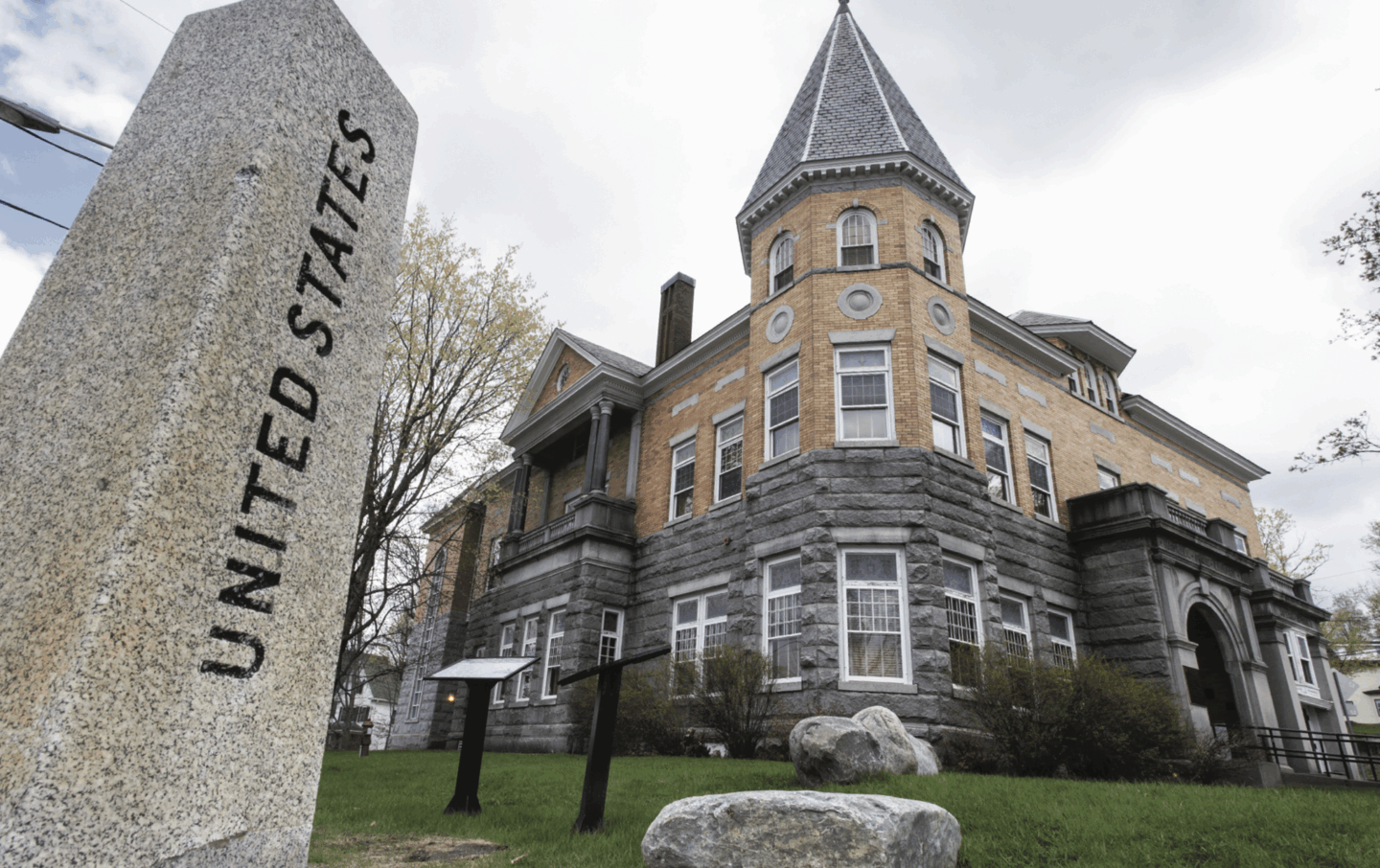
The Haskell Free Library and Opera House was built as a symbol of friendship between Canada and the U.S. Now, that friendship is being tested.

  • Jul 21, 2025
  • 797 words
  • 4 minutes
A view of the library's main entrance from the building's American side. (Photo: The Canadian Press/Paul Chiasson)
Expand Image
Advertisement
Advertisement

For more than a century, the Haskell Free Library and Opera House straddling the U.S.-Canada border at Stanstead, Que., and Derby Line, Vermont, has stood as a symbol of enduring goodwill and bilateral friendship.

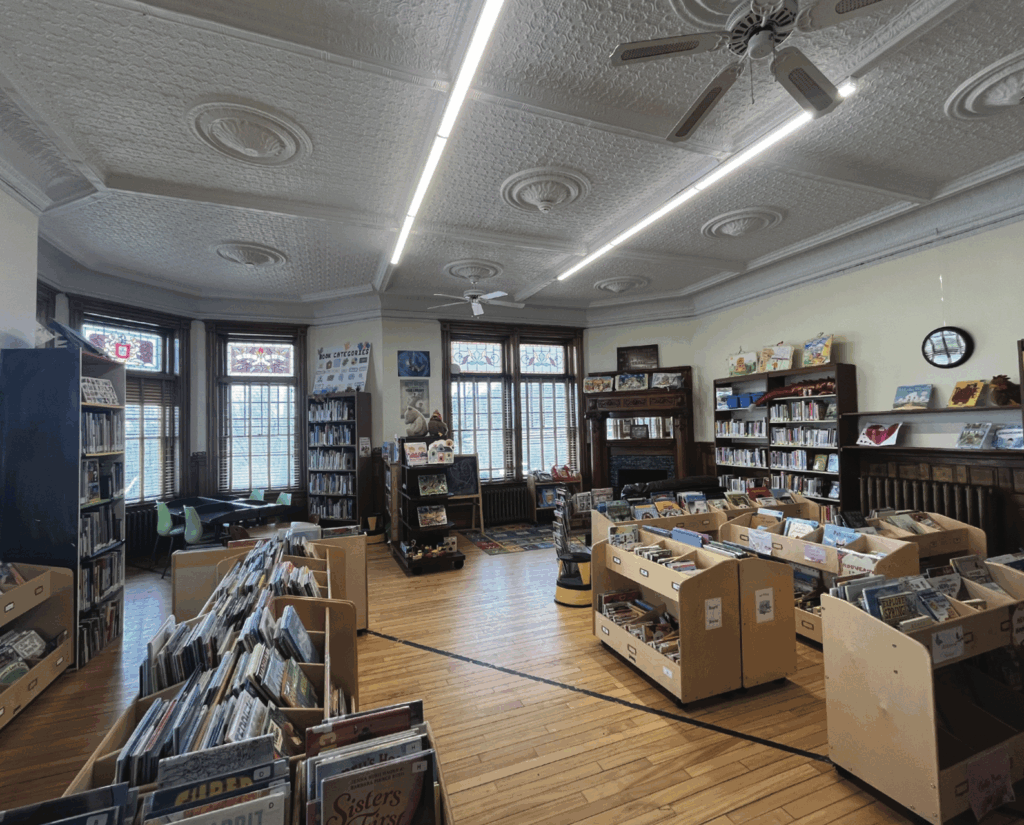
What makes this library so unique is its location. The main entrance is in the United States, while most of the building is in Canada. A line of thick electrical tape runs across the library floor, demarcating the international border. A sign outside neighbouring Stanstead South United Church reminds visitors that cross-border unity runs deep here. “Even during the War of 1812,” it reads, “the faithful from both sides of the border attended religious services performed by a Vermont pastor in the church.” 

For well over a century, an unwritten rule allowed Canadians to freely access the library using the front door without having to go through U.S. customs, even though they were entering another country. But all that changed earlier this year when the Trump administration unilaterally decided to bar Canadians’ access to the front door. Now, Canadians without a library card must enter via the back door or risk fines or arrest. The decision shocked and saddened residents of both communities who’ve long considered each other family. 

Black electrical tape runs through the library and theatre. (Photo: Toula Drimonis)
Expand Image

Gabriel Safdie, director of the Stanstead Arts Centre, says the library has always been an important symbol for both nations. “The latest developments are very upsetting,” he says. “Cross-border harmony survived 9/11 and the pandemic.”

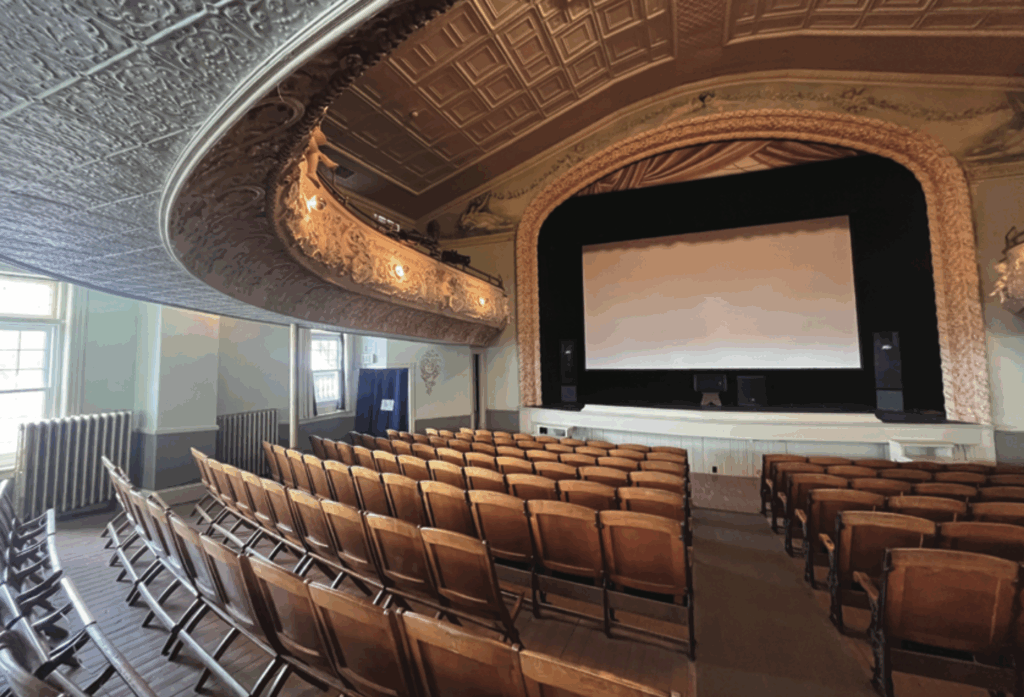
The library celebrates the union of American sawmill owner Carlos Haskell and his Canadian wife Martha Stewart Haskell, who wanted both countries to enjoy it. The ornate stone, two-storey Queen Anne Revival-style building houses 20,000 books on the main floor, with a 400-seat theatre upstairs. When the building was completed and donated to both towns in 1904, the Haskell family specified no taxes be paid to either side.

Kathy Converse, a 78-year-old Vermont resident and longtime volunteer, often acts as unofficial guide. “When I retired, I couldn’t stand it,” she says. “This is the perfect place to put an old English teacher.” She’s there every Thursday and Friday.

Converse points to the late Victorian architecture, rich woodwork, pressed steel ceilings and ornate fire places. Upstairs, the elegant theatre is accented in Martha Stewart Haskell’s favourite colours, peach and green. “The cheap mahogany seats cost around five cents at the time,” she says.

Black electrical tape also runs straight through the theatre, denoting the border. Most of the audience sits in the U.S., watching performers on a Canadian stage. This is the spot where U.S. Secretary of Homeland Security Kristi Noem stood in January, right at the boundary line, when she uttered “U.S.A. No. 1,” before stepping into Canada and referring to the country as “the 51st state.”

“Our elevator is also in the U.S.,” Converse explains. “During pandemic border closures, Canadian patrons with mobility issues had to go through customs to access it.”

She points to a house across the street. “Their front door is in the U.S., so they pay taxes to Vermont. They can exit their back door onto their lawn, but they can’t access the street because that’s Canada.”

The stage of the theatre is on the library's Canadian side while most of the audience sits in the U.S. (Photo: Toula Drimonis)
Expand Image

Border patrol cameras are visible in the trees around the library, and patrol cars routinely roam the premises but have no jurisdiction inside, unless they’re asked in. Permission is needed from both Quebec and Vermont historical societies for any visible repairs required in the building. Protocol stipulates who’s called.

“If a toilet malfunctions and it’s on the U.S. side,” says Converse, “we’re supposed to get a U.S. plumber. If it’s in Canada, we bring in a Canadian plumber. If it’s out of sight, anyone will do.”

It’s the type of routine upkeep Sylvie Boudreau, president of the Haskell board of directors, thought she would be tackling when she joined a board that always seats four Americans and three Canadians.“It’s a small town, so nothing really happens,” the Stanstead resident chuckles. “All of a sudden, we’re the news.”

When access was limited for Canadians, Boudreau sprang into action, immediately setting in motion a Go-FundMe to create a new Canadian entrance using the existing back door.

“Within 48 hours we had $100,000 donated from both sides of the border,” says Converse. So far, they’ve raised almost $200,000.

“It won’t be as grandiose as the main entrance because it’s a heritage building,” says Boudreau. “It will be a regular little door, but we’ll make it homey.”

Best-selling author Louise Penny also donated $50,000 to the library’s foundation, vowing to end her book tour here.

“Closing the main entrance to Canadians,” says Safdie, “runs against everything the building symbolizes.” But border politics haven’t affected long-enduring human connections.

“It’s made us even more united,” says Boudreau.
Advertisement

Help us tell Canada’s story

You can support Canadian Geographic in 3 ways:

This story is from the July/August 2025 Issue

Related Content

People & Culture

Catherine McKenna on diversity in politics, internet trolls, and cold-water swimming

Episode 28

A century after the first woman was elected to the Canadian Parliament, one of the most prominent figures in present-day politics shares her thoughts on how to amplify diverse voices in the Commons

  • 22 minutes

Places

Ultimate Canadian Geography Quiz: How well do you know the 49th parallel?

The 49th parallel forms a major part of Canada’s southern border with the United States. Test your geography smarts with our ultimate quiz!

  • 2769 words
  • 12 minutes

People & Culture

Elbows Up! Hockey, politics and patriotism with Roy MacGregor

Episode 101

The award-winning journalist explores the intersection of hockey, politics and patriotism, highlighting Canada’s 2025 4 Nations Face-Off victory over the U.S. amid tensions from Trump’s tariff war

  • 28 minutes

History

Celebrating the 100th anniversary of the election of Canada’s first female MP, Agnes Macphail

A century later, former federal politician Catherine McKenna reflects on what has changed — and how far we still need to go

  • 940 words
  • 4 minutes
Advertisement
Advertisement