When I think about all the love I’ve received in my life, from my youth in a tight-knit family, to discovering my passion for music, to meeting my husband and starting our own family of nine, it all started in Cape Breton.
There were weddings and funerals, celebrations and sorrows. We’d have house parties with an abundance of food and drink, where I got to spend time with my relatives and appreciate the grandness of my extended family. People were always in good cheer, and there would be a lot of laughter. It was an environment that was so harmonious. I didn’t realize it at the time, but it was profoundly beautiful.
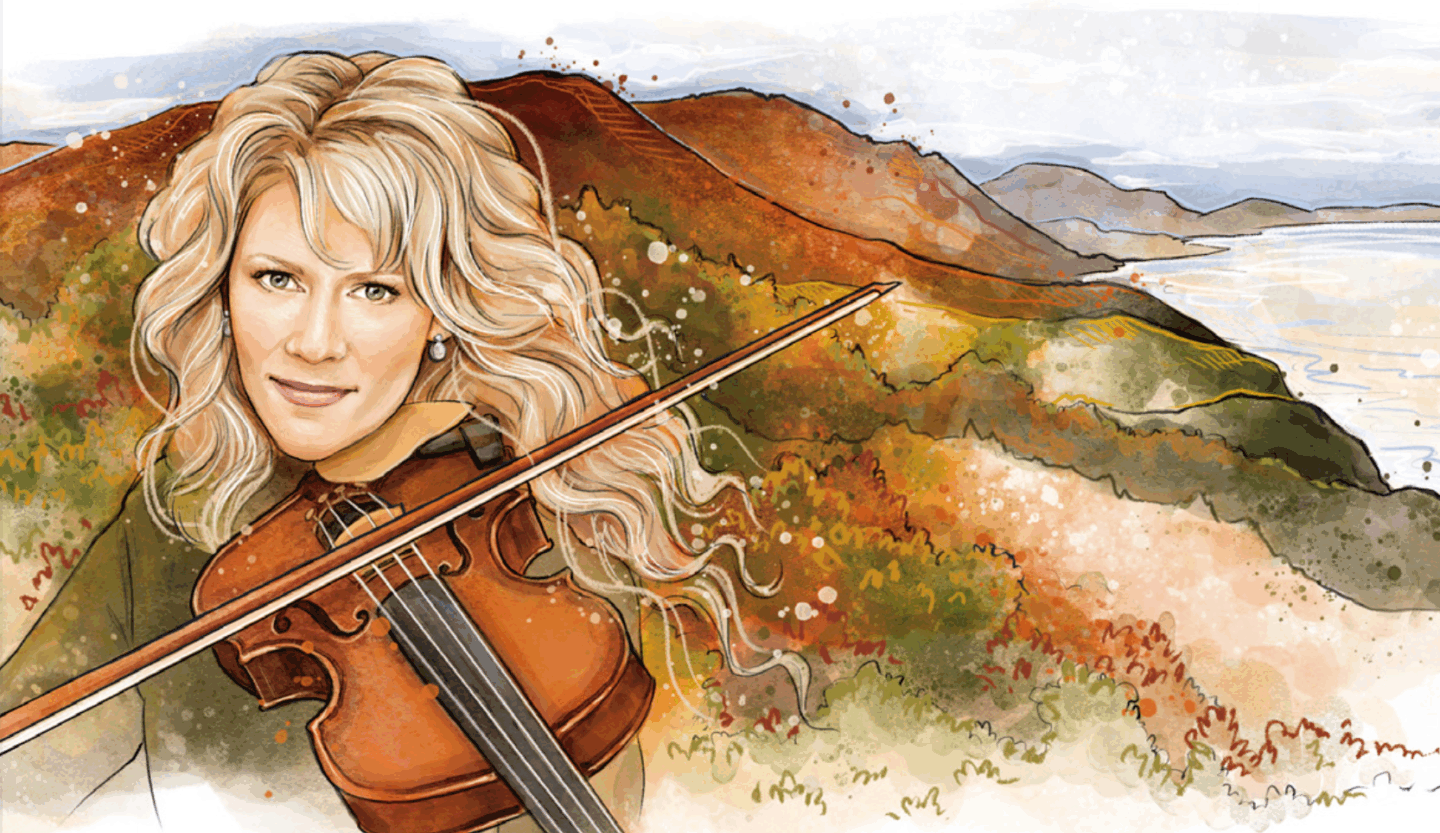
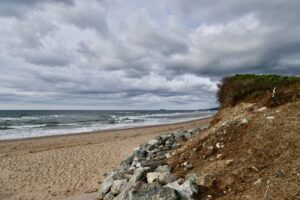
I grew up richly immersed in fiddle culture, square dances, the Gaelic language and gatherings. I have come to believe that the art reflects the artist, and when I look at Cape Breton Island, I believe it reflects the love of God. The rolling hills are sprinkled with pure, unmanicured vegetation. Wild roses line the roads. Alongside it, the ocean is so grand and life-giving, providing fish of the sea for the fisherman. It’s all-surrounding and all-encompassing. In a place with no coastline, I can begin to feel claustrophobic, but in Cape Breton, I have always felt I can get to the edge of the Earth.
When my husband and I got married, the bishop told us in his homily that two things in this world are eternal: music and love. When I return to Cape Breton, I am grateful for the fiddle culture that still exists and thrives there, knowing how deeply it shaped me.
– As told to Samantha Pope
Cape Breton, or Unama’ki, is the ancestral and unceded territory of the Mi’kmaq — and is covered by the Treaties of Peace and Friendship, which were signed by the Mi’kmaq and Wolastoqiyik with the British Crown.