Wildlife
Unpacking the mystery of grizzly bears in Wapusk National Park
In the Hudson Bay Lowlands, polar bears have reigned supreme. Increased sightings of a new predator have everyone on high alert.
- 5236 words
- 21 minutes
Wildlife
In British Columbia, iconic predators such as wolves, grizzly bears and cougars are being killed with alarming frequency, sometimes in the name of conservation. Why are we still shooting first and asking questions later?
This story has been fact checked
The brush is thicker than expected — and more aggressive.
In addition to tangles of ankle-lassoing salal, I suffer the fool’s pain of grasping at thorny devil’s club to steady myself as I fall in with a conga-line of biologists ascending a slope so steep we have to grab roots and kick steps into the duff. Being forced onto all fours here seems fitting, as this is the habitat of quadrupeds, evidence of whose passage we seek. Specifically, wolves.
Graham Nicholas, senior environmental specialist for the Tsleil-Waututh Nation, leads a group including coworkers Haley Crozier and Charlie George, along with Chelsea Greer, director of Raincoast Conservation Foundation’s wolf program. It’s mid-June 2026, day three of checking 37 motion-triggered wildlife cameras placed in southwestern British Columbia’s Indian River watershed the previous summer as part of a joint Tsleil-Waututh–Raincoast study of a local wolf pack.
The day’s first camera is anchored low on a large cedar; George makes notes, while Nicholas and Greer change batteries and fish out the memory card. Connecting the card to her phone, Crozier swipes through thousands of images; elk, bears, rabbits and swaying branches have all logged cameos over the past months. But no wolves.
Absence, of course, is still data. Thrilling as snapshots of these forest ghosts might be (several wolves were clocked on cameras lower down), their lack here tells the crew exactly what they want to know. “What we’re trying to understand is who these wolves are — where they’ve come from, their relationship to wolves in nearby watersheds, their family dynamics and preferred habitats,” says Greer.
If we can understand their optimal forest type and age, or whether they use wildlife trails or old logging roads, adds Nicholas, “we can better protect the wolves moving forward.”
Hillary Hyland, field programs manager for the Tsleil-Waututh, will later add a personal angle. “To be trained in Western science but also know our history and origin stories with wolves and be able to guide their recovery is a real joy of my career,” she says. “To see waves of excitement [ripple] through the community whenever we send out updates and trail-camera images is really just amazing.”
The Tsleil-Waututh’s desire to understand and share a territory with wolves may be historically grounded, culturally uplifting and biologically sound, yet it flies in the face of the animals’ treatment in a province where colonial sentiment lingers for any apex predator perceived to compete, threaten or interfere with human interests. We still tend to shoot first and ask conservation questions later.
For B.C.’s wolves, this means very liberal, and in some regions unlimited, hunting and trapping, as well as thousands killed since 2015 in a controversial “conservation” cull. The province’s mountain lions (cougars) are frequently killed after conflicts with people, occasionally culled for conservation and widely trophy-hunted. And though the grizzly bear hunt ended in 2017, community impatience over bear management has, in some cases, seen citizens take lethal action.
It all begs a simple question: is it ecologically, ethically or economically defensible to kill large numbers of predators for any reason?
Wildlife managers say expensive culls are still the cheapest way to buy time for even more expensive landscape restoration. Outfitters benefit from trophy hunting, but the province not so much. So why continue anachronistic practices overwhelmingly opposed by the public?
Perhaps because we lack empathy over how predator “control” impacts individuals, social structure and ecosystem function. And if this is indeed a gap that needs filling, learning more about these animals, as the Tsleil-Waututh are doing, seems like a good place to start.
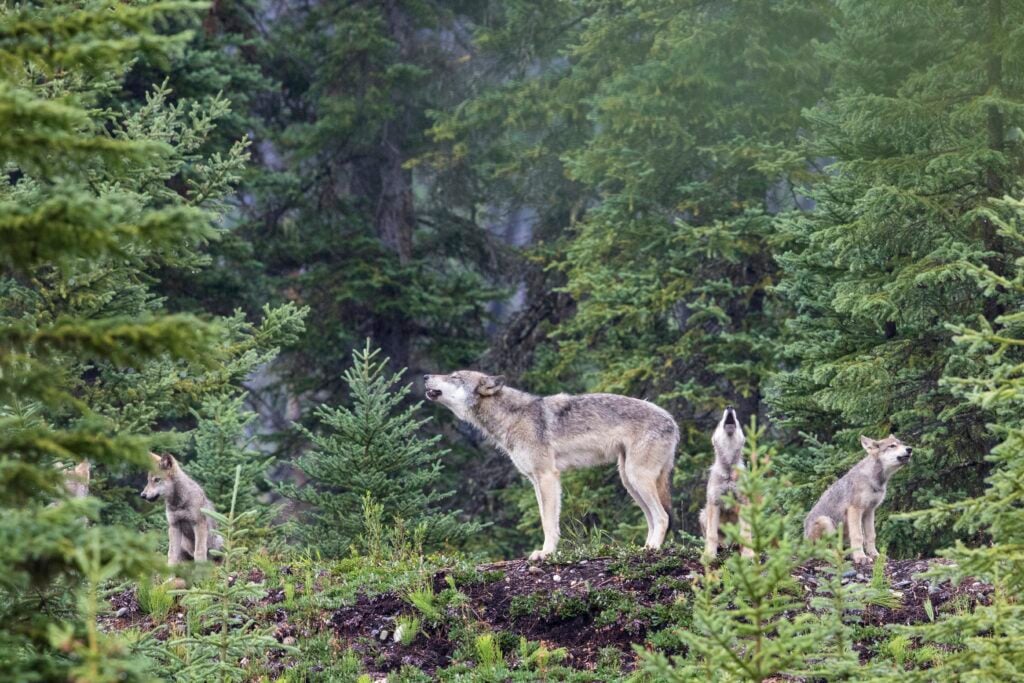
LONG SUSPECTED YET ODDLY IGNORED until the last half century, it turns out removing apex predators leads to a troubling trophic cascade. It begins with expanding populations of the prey these animals typically regulate, followed by knock-on effects to other wildlife, vegetation, hydrology, nutrient cycling, soil structure, even physical landscapes.
Much of this knowledge was gleaned through reverse ecological engineering: the famous 1995 reintroduction of wolves — after some 70 years’ absence — to Wyoming’s Yellowstone National Park. In a much-ballyhooed turnaround, large, stationary elk herds that had grazed willow and aspen to grassland were soon pared down and mobilized; riparian vegetation regenerated and riverbanks stabilized; beavers returned, birds sang and frogs croaked. Not quite Eden restored, but no longer paradise lost. Something resembling balance coalesced from an ecosystem tipped sideways.
Research on this comeback could fill a small library. And while recent data suggests that restoring apex predators is likely a more nuanced ecological long game than quick fix, the impact of wolves is inarguable: they are both a keystone species vital to ecosystem structure and an umbrella species whose very presence benefits a range of other organisms.
“Wolves are the perfect entry point to understand a broader ecosystem,” Greer explains. “Once established, they have a profound influence on those systems.”
And not just on the obvious factor of modulating ungulate prey numbers, but on those populations’ behaviour, habitat use and health. In addition, wolf kills support a range of other organisms from bears to buzzards to beetles, reflecting an influential role in nutrient cycling — particularly populations like the Indian River pack that also link oceanic and terrestrial ecosystems by feeding on spawning salmon.
Though we now embrace such holistic thinking, history continues to cast a shadow. Scapegoating for livestock and game predation, as well as institutionalized fear of these fable-and-cartoon villains, has made eradicating predators a long-running cultural story. Who’s afraid of the metaphorical big, bad wolf? We are.
Incentivized pursuit and habitat loss saw North America’s wolves, cougars and bears all experience profound range contractions after European settlement. Though each has rebounded, real and perceived conflicts of living with predators often supersede both rationality and biology (as omnivores, bears, for instance, are only occasionally predatory).
Historically, wolves, cougars, seals and sea lions have all been targeted in B.C. over conflicts with species valued commercially (livestock, salmon), for sustenance (moose, salmon) and for conservation (caribou, salmon again). Culls sell the public on government action while avoiding the political burden of tackling the real issue behind species declines, imbalances and extirpations: human destruction of the natural world. Killing one species to save another we have imperiled has always proved a short-term strategy that, when not an outright failure, can deliver additional malign effects to ecosystems at large.
And there is no better example of predator control in the name of conservation than B.C.’s decade-long wolf cull.
Culls sell the public on government action while avoiding the political burden of tackling the real issue behind species declines: human destruction of the natural world.
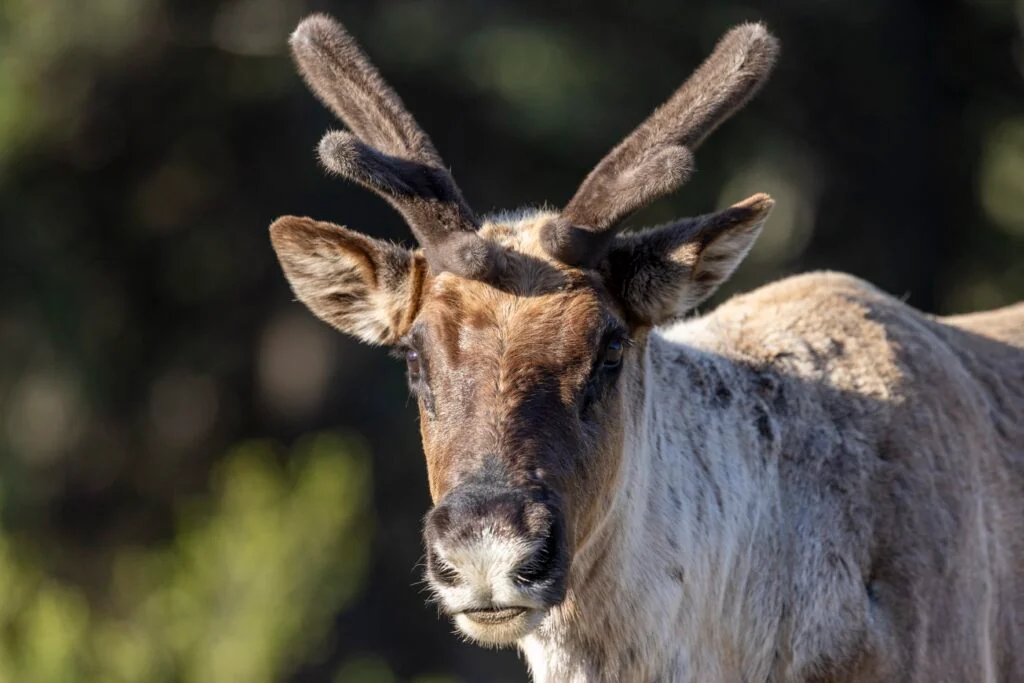
UNDERSTANDING WHAT’S HAPPENING to wolves in B.C. requires understanding what’s happening to woodland caribou. In 2015, the province instituted an official aerial wolf cull as part of a strategy to protect rapidly dwindling populations of southern mountain caribou in industry-fragmented habitats. Helicopters buzzed packs, hundreds of wolves died, and one caribou herd blinked out anyway. In 2021, the Ministry of Water, Land and Resource Stewardship asked for a five-year blank cheque to kill predators to save caribou; having cashed that cheque for some 2,800 wolves, it now wants to do it again.
Woodland caribou heavily rely on old-growth forests to survive. But human-made disturbances (clearcutting, mining, oil and gas extraction — all accelerating) and natural forest alteration across large areas (wildfires, floods, windstorms, disease — also accelerating due to climate change) increase the extent of young forests. These shrub-and-sapling ecosystems support larger moose and deer populations, attracting more wolves and cougars. The carnivores then incidentally prey on caribou, now uniquely susceptible due to habitat disruption and linear features like roads and pipelines that alter how they — and their predators — move through the landscape.
If you paused for breath, you probably already landed on the caribou-recovery prescription scientists universally agree on: protecting and restoring habitat. However, because this will take decades — with uncertain efficacy given climate change — shorter-term, population-level strategies have been implemented by wildlife managers: translocating caribou to increase numbers, moose reduction, predator culls, penning mothers-to-be to calve in safety and supplemental fall feeding, which may have value both nutritionally and in averting risky foraging behaviour.
This last is being conducted on a well-studied herd — with positive results — by Prince George-based Doug Heard, a retired government wildlife biologist. “If we want to learn more [about what can be done] for caribou, we should do more experiments,” he says. “One would be feeding without wolf removal.”
Heard’s work is included in a landmark 2024 meta-analysis of the effectiveness of all population-based recovery efforts for threatened southern mountain caribou. Over 30 authors found that combined recovery actions — especially wolf reductions and efforts that include them — resulted in 52 per cent more caribou than expected without interventions.
While the study underscores that halting habitat loss and instituting landscape-level recovery is the only long-term solution, results “reinforce the central paradigm of southern mountain caribou recovery: There is a need to curtail elevated mortality from predators resulting from human-caused habitat loss.”
No clarion call to killing, such dispassionate assessment nevertheless implicitly supports culling in the absence of meaningful habitat restoration. For her part, Greer feels the ethical considerations around animal culling shouldn’t begin and end with scientific justification. “Science doesn’t give us permission to do anything,” she says, citing a favoured axiom of Raincoast senior scientist Paul Paquet. “Science tells us what we can do, but deciding what we ought to do is a question of ethics and morality.”
For example, not all wolves shot from helicopters die immediately, succumbing slowly and painfully to their injuries. Contractors may kill an entire pack save one young wolf, fit it with a transmitter for use as a “Judas” animal to lead them to other wolves, then kill them all. Wolves are intelligent animals, with close bonds, complex social structures and, if your dog is any indication, susceptible to feelings of loss, abandonment and bewilderment. As studies show, the stress of pursuit can traumatize wolves before any actual killing takes place.
Wolves are protected from hunting and trapping in only a tiny fraction of their current Canadian range, almost all in national parks. Outside those boundaries, regulations are somewhat loose — in B.C., that means no bag limits in some places for wolves, the only “big-game” species that doesn’t require a specific tag for resident hunters, and no mandatory reporting of kills in most regions.
Provincial large-carnivore specialist Garth Mowat chalks this up to history. “Wolves always seemed like the bad guy, so there has never been a perception [in B.C.] that they can be overharvested through hunting,” he says, noting some regulations need changing.
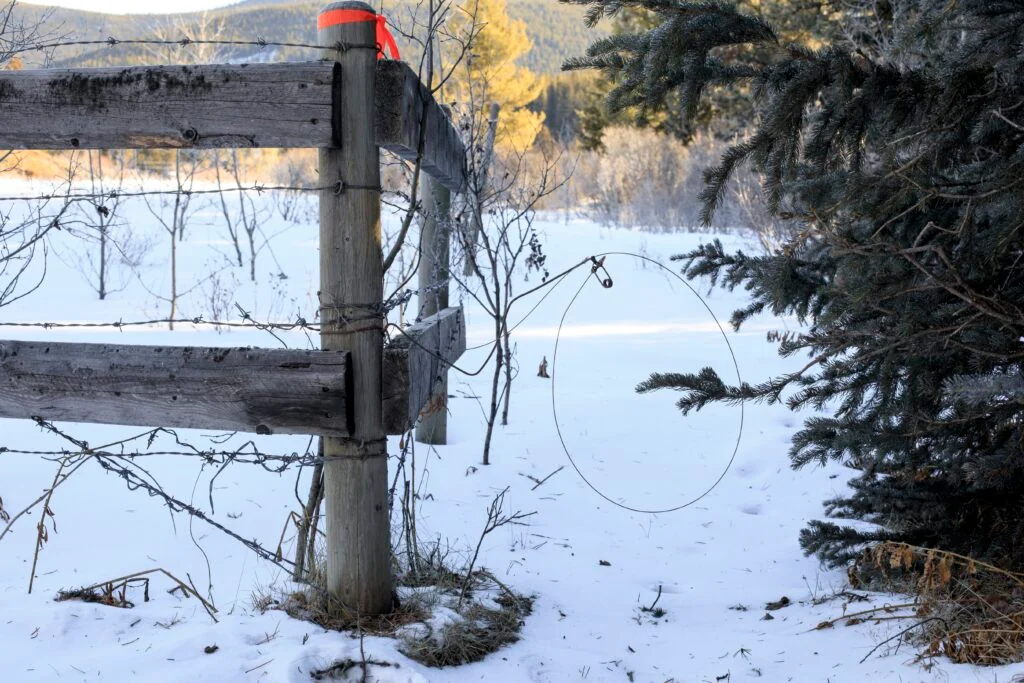
A pause for some good news: public attitudes toward wolves are shifting. A 2023 survey by The Fur-Bearers charity found 70 per cent of Canadians had favourable views of this iconic Canadian species and almost as many felt killing wolves was wrong — even when done to save another species. Which returns us to caribou.
“No one wants more herds to fall on their watch, so no government will likely change its mind on predator control,” says Chris Darimont, a University of Victoria professor and Raincoast advisor. However, with governments succumbing to “regulatory capture” by resource industries representing huge amounts of money, short-term successes from wolf culling may simply allow them to kick habitat restoration down the road and continue business as usual. This is summed up by Canadian researcher Mark Hebblewhite of the University of Montana in his widely cited 2017 “billion-dollar caribou” study, which suggests the reason for governments’ ineffective caribou-conservation planning is “the staggering cost of effective habitat protection that far exceeds $150 billion in Alberta alone.”
“Sad as it is,” says Darimont, “this is going to keep happening until all the caribou likely blink out — they’ll just disappear more slowly.”
If this is the assessment, why continue to impose death and suffering on wolves? In part because studying predator control is “where most of the research money is,” says Darimont, “more so than in the outcomes of anything radical to do with how oil and gas is extracted, or how restoration and rehabilitation of habitat occurs.”
And yet that missing link of eco-rehabilitation is having success.
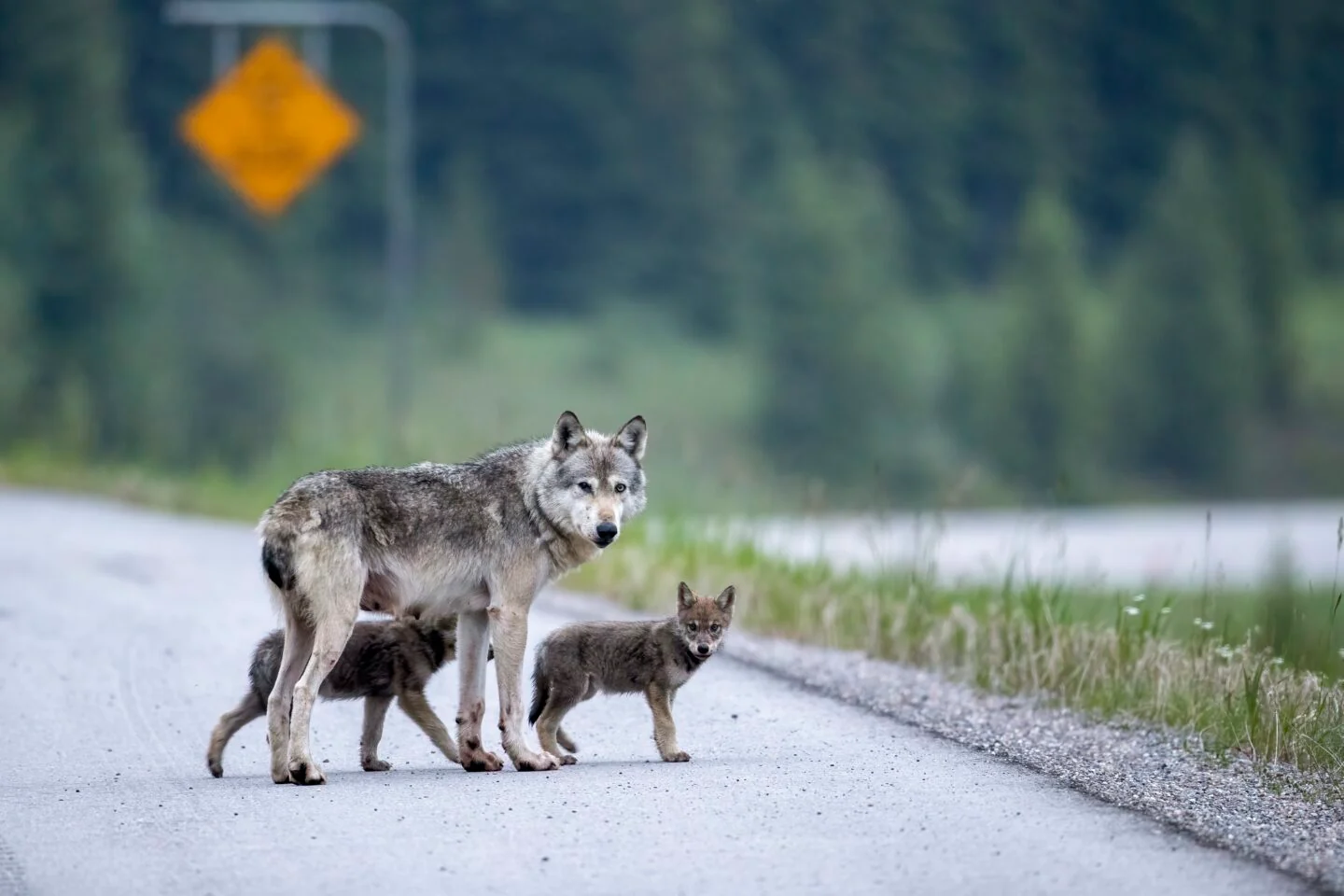
WITH ITS NOTABLE SALMON RUNS, the Indian River has always been important to the Tsleil-Waututh.
Like much of B.C.’s South Coast, significant logging here was thorough enough to extirpate elk from the watershed — a serious blow to the community larder. In 2006, the Nation reintroduced elk, and the population has done well. On Christmas Day 2019, the first wolf in the watershed in generations was detected on a trail camera. Soon, four wolves were regularly being recorded — a pack taking shape. Then, in 2023, a hunter in possession of a provincial lottery tag for elk shot and killed one of the wolves — a female who’d remained unmated until that year. The Tsleil-Waututh were devastated. “We knew we needed to understand these wolves better,” recalls Graham Nicholas. “It was very impactful to see how hurtful it was for Tsleil-Waututh people.”
Many coastal First Nations have wolf clans, which provided protection for wolves. “In our origin story, the creator transformed the wolf into our first grandfather,” Hillary Hyland tells me. “So our people had a special kinship with wolves, who are seen as an extension of family — we respected the pack, hunted alongside them, shared our harvest and other things that spoke to our deep ecological ties.”
With the loss driving the Nation’s desire to look closely at the pack, it reached out to Raincoast to help plan a study. Fortuitously, around the same time, another female entered the watershed, giving birth to the first pups here in 2024. Other individual wolves showed up to join the pack — how and from where?
As we checked cameras, Greer related the story of a radio-collared wolf named Dianne in Banff National Park that illustrates how little we know of animal senses and social structure. When her daughter, who had new pups, was killed on a highway, Dianne, last seen 200 kilometres away, beelined back, spontaneously lactating to keep the pups alive. Did some kind of long-distance communication take place? Greer also notes the importance of female wolves in pack hierarchy. “Men always assumed male wolves were the sole alpha in a pack, but females can be alpha, too, demanding respect for the things they do and the role they play.”
Such are the poorly understood pack dynamics impacted when wolves are randomly killed.
Though wolf reductions receive reluctant support as an interim measure in some communities (for example, the Lake Babine Nation’s project to enhance moose populations for food security), the government cull is strongly opposed by Indigenous leaders, who view it as an infringement on their territorial rights and stewardship responsibilities.
The Union of BC Indian Chiefs has labelled the wholesale slaughter unethical, writing in a letter to the government: “The endangered status of caribou herds in B.C. is a result of decades of mismanagement of their critical habitat that has forced many First Nations to shoulder the impacts of the government’s failure … and to choose between two wildlife species they value greatly.”
When I ask Hyland about the Tsleil-Waututh position on the wolf cull, she is measured. “We don’t speak about what’s going on in others’ territory. We’re doing the work we’re doing despite the history of wolf [persecution] in B.C.,” she says, pausing. “We’re definitely advocates that any sort of hunting be done in a sustainable way, but the cull — and trophy hunting — isn’t that.”
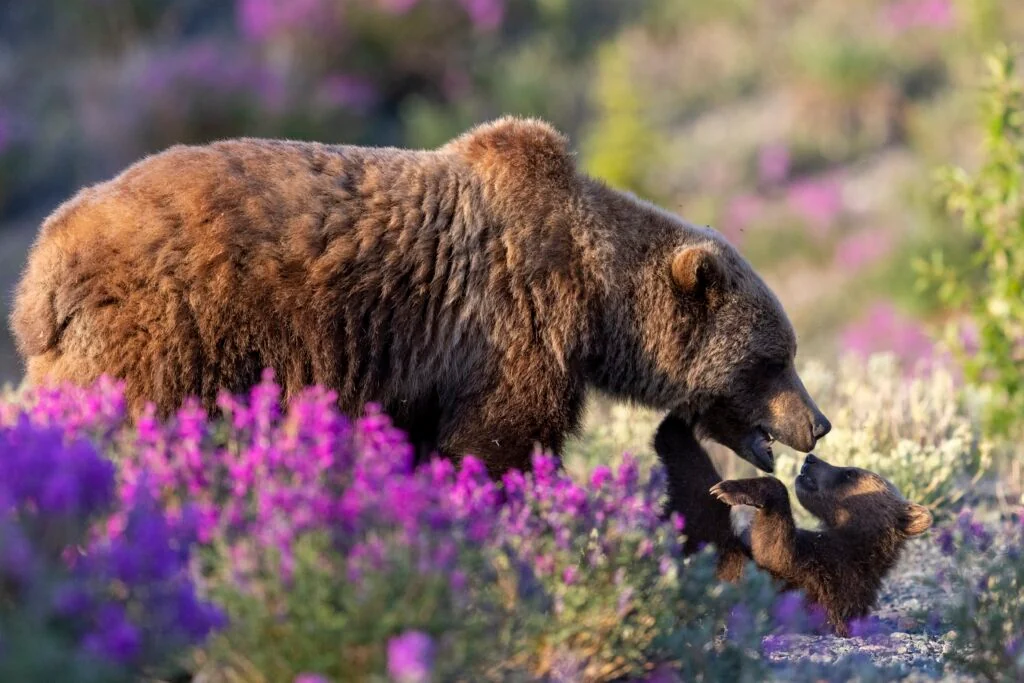
ETHICAL DILEMMAS are legion in conservation, where the welfare of one species often takes precedence over another. Trophy hunting, in which a portion of revenue ostensibly goes to conservation initiatives, makes that trade-off explicit. Though this long-running approach has increased numbers in some otherwise vulnerable (but somehow always huntable) species, critics label it an exercise in neocolonialism. They have a point: the game reserve–trophy hunting model of wildlife conservation was birthed at an international conference held in London in 1900, where late-Victorian European nobility and rich robber barons gathered to fret over the growing dearth of favoured African game. To ensure continued rifle fodder, they settled on the now deeply enshrined pay-to-play conservation model. A model built, as writer Cal Flyn notes in a Guardian article published in April, “on a central contradiction: that one might save wildlife by killing it.”
Chris Darimont’s academic interests include trophy hunting as a contemporary manifestation of lingering 19th-century chauvinism, colonialism and anthropocentrism. “There’s always a tendency for men to pursue large game that’s costly in terms of the danger it poses and the price to get it,” he says. “Displaying [a trophy] signifies to others you have the brain and brawn to both accept the costs and succeed.”
Scientific conservation literature has been at least sympathetic to trophy hunting as a revenue source, while allowing that the practice faces strong opposition from the public — a debate now largely carried out on social media. A recent study of a random sample of 500 posts on trophy hunting — which predictably evaluated the discourse as “hostile” — found only 22 in support, many of which leaned on scientific misrepresentations. Those opposed displayed a greater diversity of moral reasoning, archetypes identified as activism, scientific, condemning and objecting.
Wildlife photographer John Marriott uses his considerable online reach as a member of the International League of Conservation Photographers to joust with trophy hunters and policymakers. “As I became more prominent as a photographer, social media opened up my ability to have a voice,” he says. “And I was very aware that [recreationists] who don’t kill animals have no seat at the wildlife management table. That’s changing with Indigenous participation and the end of the grizzly hunt in B.C., but in Alberta there’s no seat for this group — which represents most people.”
And people can have an impact. In 1990, cougar hunting was outlawed by ballot in California when citizens decided it wasn’t the relationship they wanted with the animal. In 2017, B.C. cancelled its provincial grizzly bear hunt after abundant polling showed a large majority opposed. The minister’s announcement made no mention of grizzly populations doing poorly (some were) but acknowledged the hunt was out-of-step with public attitudes, a policy shift aided by solid information that grizzly-bear viewing in coastal B.C. brought in 10 times more revenue than hunting them.
“Hunters like to say licences fund conservation, but those cost a pittance and pay for nothing,” says Grizzly Bear Foundation director Nicholas Scapillati. “On the other hand, the Commercial Bear Viewing Association raised money on its own through a portion of their fees, [for] groups like ours. That played a big role in the economic argument.”
Darimont, himself a sustenance hunter, notes that because hunting of any kind can cause tremendous suffering to an animal, no human need satisfied by trophy hunting can justify it. At minimum you should feed yourself or your family with the life you’ve taken; to kill an animal for less basic and more frivolous needs, he believes, is indefensible. (Though online bandwidth dedicated to such defence is legion.)
“I call those who kill carnivores ‘fringe hunters,’” he says, “a vocal minority ostracized from larger groups because their activity erodes the social licence afforded to those who hunt for food.” Hunting associations and lobby groups would be better served to get in touch with the values of most British Columbians, who strongly support hunting for meat, yet equally strongly oppose trophy hunting, believes Darimont. “Instead, they fight tooth and nail against what they see as a slippery slope: carnivores today, all hunting tomorrow.”
Trophy hunting also has a range of negative impacts on animal populations. A 2009 study concluded that the catastrophic global decline of apex predators like sharks, lions, wolves and cougars has led to a huge increase in smaller “mesopredators” (coyotes, foxes) that cause major economic and ecological disruptions. Human predation might also affect morphology, says Darimont, who led a study showing how high levels of exploitation and targeting of age- and size-classes by human hunters far outpaces other agents of trait change in the wild.
Vulnerabilities caused by such targeting are glaringly apparent. A recent review showed how older, larger and wiser animals exert disproportionate influence on their populations and ecosystems, the latter exemplified in another study of how larger, older Alaskan grizzlies distribute more salmon carcasses into the forest than younger bears. “By taking care of themselves, they’re also taking care of the ecosystem,” says Darimont. “And yet trophy hunting for grizzlies is size-selective, and management models don’t account for this disproportionately negative influence.”
That is to say, individuals are not ecologically exchangeable units, and populations are highly variable with respect to the values certain individuals contribute to an ecosystem. Which brings us to cougars, B.C.’s number one trophy.
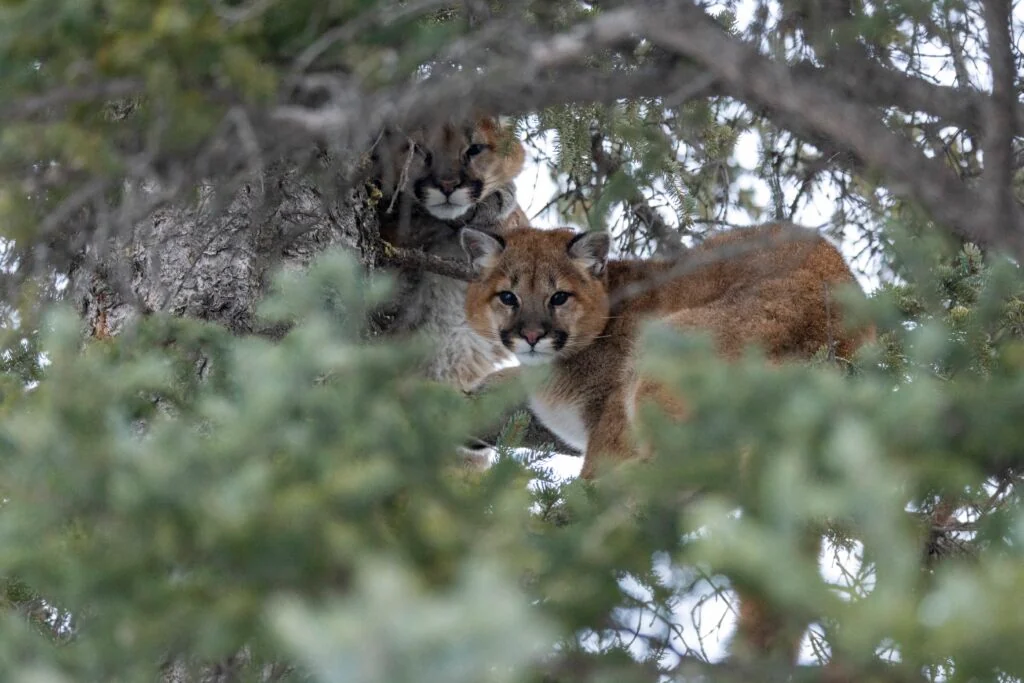
LIVING IN COUGAR COUNTRY, I frequently come across their prints and scat — often fresher than I would prefer. I’ve seen them flash across roads and ski trails and encountered a kitten on a logging road but have never seen one in the backcountry (though I’m sure they’ve seen me). Knowing they’re well fed on abundant deer, I respect their territory and don’t worry too much — though I’m prepared (with training and bear spray) to get worried if need be. Our relationship with cougars has always been similarly uneasy.
Vilified by settlers, cougars were considered problem wildlife through most of the first half of the 20th century, hunted to the verge of extinction across much of the U.S. and under heavy pressure in B.C. through widespread bounties and, later, government predator-control squads. Fallaciously, these removals constituted the only source of population-trend data for most of the 20th century.
With the aid of enlightened wildlife policies and legal protections, this keystone predator has made a remarkable comeback in the U.S., raising questions that resonate for B.C. populations that naturally fluctuate with prey availability cycles: do more cougars mean more threats to humans and domestic animals? In his 2020 book The Cougar Conundrum: Sharing the World with a Successful Predator, carnivore expert Mark Elbroch offers clear-eyed answers. Arguing that humans and cougars can peacefully coexist if we employ knowledge and common sense, Elbroch marshals a boatload of science that shows how the negative impacts of hunting on cougar population dynamics can actually increase conflict with livestock, pets and humans. He also asserts that since cougars self-regulate through territorial defence, the idea of exploding populations that wipe out ungulate game is a myth. Cougar hunting, he concludes, should be even more limited to ensure “populations function naturally in terms of their social interactions, dispersal patterns, and ecological contributions to ecosystems upon which we depend.”
Practically, this means reduced seasons and quotas that have less dramatic impacts on age classes, sex and social structure. Roughly 5,000 to 7,000 cougars call B.C. home, according to a 2023 government report led by Garth Mowat that also recommends lower harvest rates. The report notes cougar conflicts are common in B.C. and have been increasing over the last century — likely due to better recording and more wildland-urban interface; B.C.’s Conservation Officer Service receives some 3,000 cougar calls per year when populations are high, and an average of 100 cougars are killed in conflicts with people each year. Hunting — a significant source of mortality that occasionally exceeds 300 annually in B.C. — largely focuses on males. This ultimately leads to lower male abundance and average age in heavily hunted populations — with unclear effects.
“Cougar hunting is one of the most unethical, non-fair-chase types of hunting there is,” says John Marriott. “There are so many ethical [sustenance] hunters out there, and then we have cougar hunters chasing animals down with GPS-collared hounds, watching it all on their iPad, then hiking in and shooting the animal out of a tree.”
Most cougar encounters have nothing to do with hunting, but cougars just cougaring. In summer 2025, a pair of young, orphaned, adult-sized cougars had numerous encounters with backcountry users across a large area between the towns of Squamish and Whistler. “It was definitely unusual,” says Sgt. Chris Doyle, a 30-plus-year veteran of the Conservation Officer Service, “to see that many incidents over such a long period of time. And the behaviour the cougars exhibited — following, shadowing and [trail-blocking] — was definitely concerning.”
The encounters led to revolving trail closures and hiker evacuations but no real problems. Important to this outcome, ironically, was that the backcountry locations were relatively busy, and land managers like BC Parks and Whistler Blackcomb ski resort were happy to cooperate in successfully managing the situation — a model of coexistence where that often isn’t the case.
“What kind of world do you want to live in? One where there’s still room for wildlife — or one where we lose them to fear and inconvenience?”
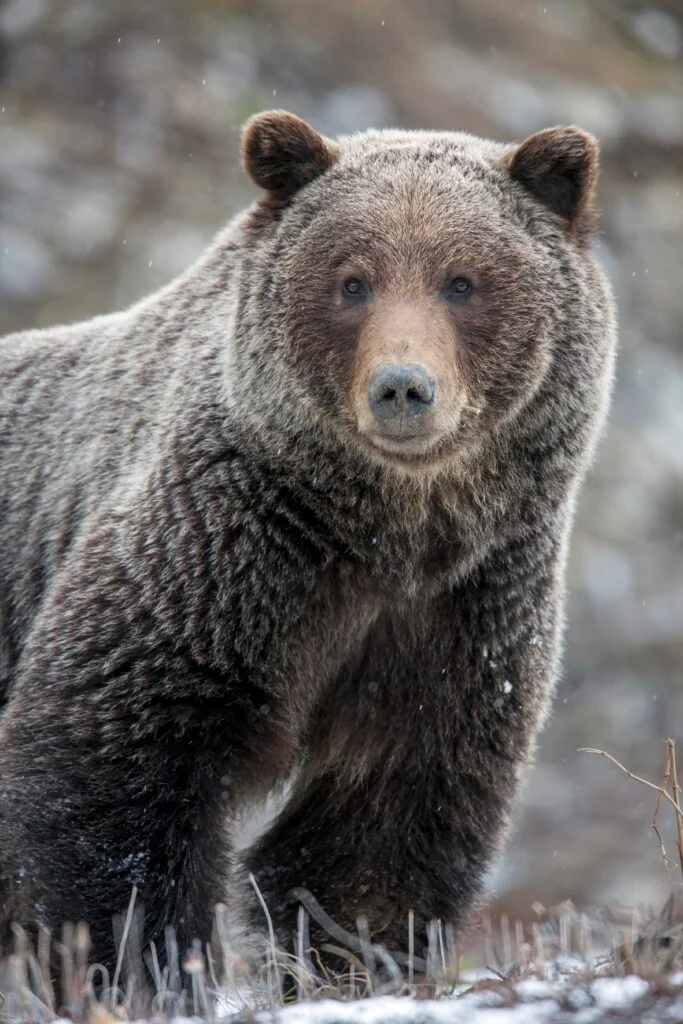
UNDER THREATENING SKIES on a summer day in 2025, I’m sitting outside a farmhouse in Pemberton Meadows with Coast to Cascades Grizzly Bear Initiative director Joe Scott, science advisor Lana Ciarniello and communications coordinator Erica Van Loon. The property, on which Van Loon grew up, sits at the end of the human-dominated Pemberton Valley, where the uninhabited Lillooet River watershed takes off into wilderness — an interface of coexistence with grizzly bears.
The area lies at the intersection of the threatened Squamish-Lillooet and South Chilcotin grizzly population units, an important landscape link that allows bears to move between units and maintain healthy levels of gene exchange. Supporting these populations’ recovery will hopefully promote spillover into the adjacent critically endangered Stein-Nahatlatch population, a genetically isolated group of about 20 grizzlies.
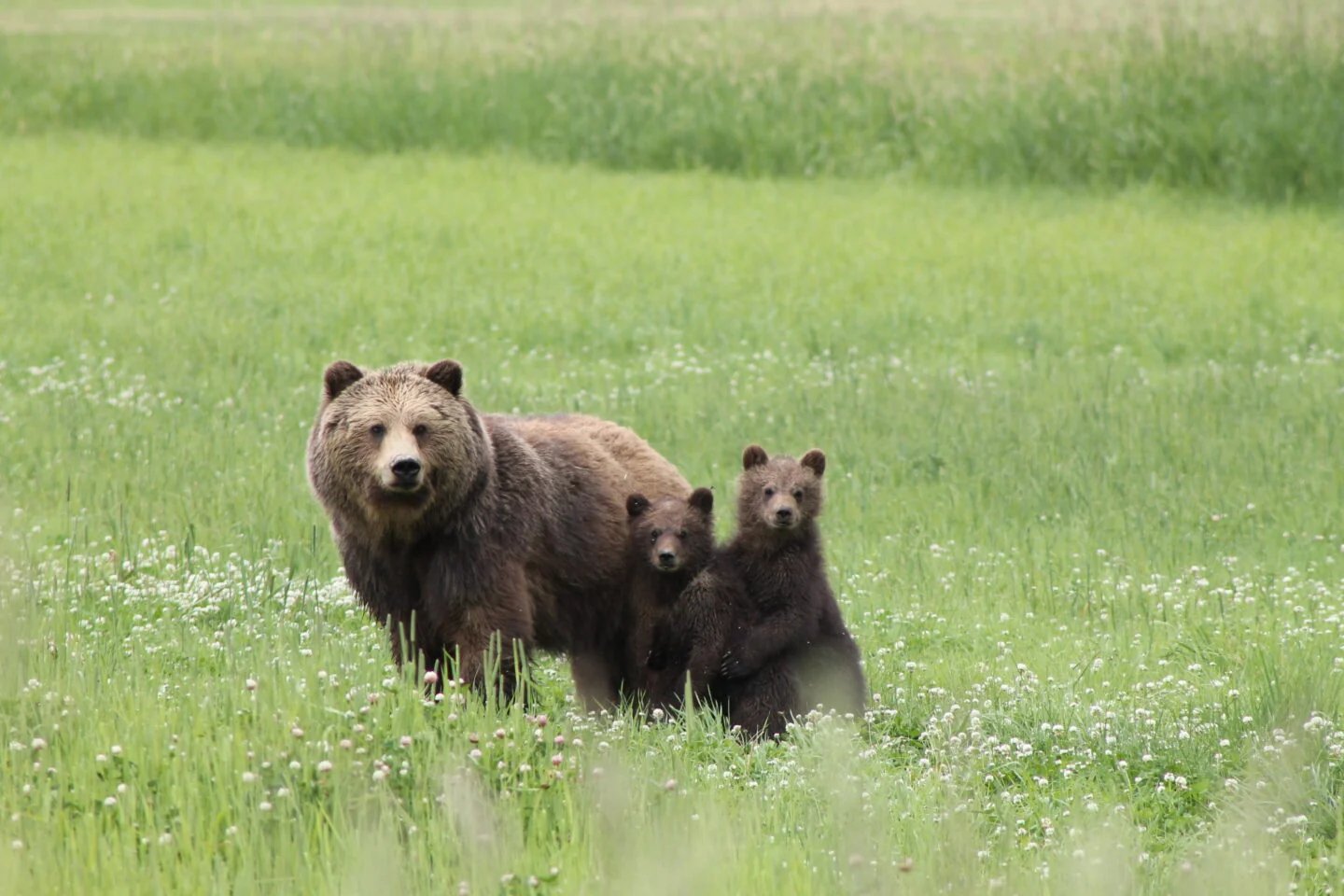
Though thankfully distant enough we can’t smell it, a nearby live trap has been baited with rotten beaver tails, cow blood and salmon in hopes of attracting a roughly 10-year-old female grizzly named Clover, who Ciarniello labels “a great coexister.” Though Van Loon watched itinerant grizzlies cross the family’s smallholding her entire life, Clover is largely responsible for the species becoming a permanent feature in the valley some five years ago, when she started having cubs and raising them here. Though she has but a single cub in tow this year, in spring 2024 Clover arrived in the valley with two yearlings, abandoning them within months so she could mate again.
The yearlings mostly used familiar areas of the Meadows but struggled to adapt without Clover’s direction; when autumn and the demands of heavy pre-hibernation feeding took hold, the bears moved closer to human habitation, getting into trouble with easy pickings like free-range chickens. Coast to Cascades warned government of an urgent need to move the bears. Though permitting for a move was underway, it proved too slow to prevent the (all too predictable, according to Scott) reckless actions of a single individual that saw the yearlings shot dead.
“Having dealt with people and bears for over 30 years, I see fear as the biggest hurdle to recovery,” he says. “Because it isn’t based on information or your own experience, but a narrative that’s always present around these animals — that they’re dangerous.”
Indeed, Scott notes, the odds of an attack in human interface zones is infinitesimally lower than in the backcountry, where bears are in their own element and unused to — or expecting — people around every corner.
“Habituated bears get to know what humans are and how to be around them on the landscape, and that’s passed on through generations,” says Nicholas Scapillati. “But food-conditioned is an entirely different thing; our garbage and other handouts are deadly for bears.”
Hence the trap for Clover. If they can fit her with a GPS collar that tracks location, not only will they know how she uses habitat, but they will be able to initiate aversive conditioning whenever she strays into potential conflict situations — learnings she will pass on to offspring to hopefully avoid a repeat of the yearlings’ fate. “Coexistence isn’t a lack of conflict,” says Ciarniello. “It’s conflict at an acceptable level for both parties — learning how to live together, how to compromise so bears have what they need and humans have the safety they want.”
Scott believes there’s a slow but definitive change in the general attitude toward predators, not only because people like seeing them, but because they’re starting to appreciate the value of those animals on the landscape.
“Twenty years ago, you would’ve been hard pressed to find a rancher willing to live with grizzly bears or wolves,” he says, “but [many] now realize there are options.”
The coda to Clover’s story was best summed by Van Loon, who, in a local letter to the editor reflecting community sadness over the yearlings, wrote: “What kind of world do you want to live in? One where there’s still room for wildlife — or one where we lose them to fear and inconvenience?”
BACK ON THE INDIAN RIVER, the last camera we check requires an even more difficult bushwhack and yields more elk, bears and deer — but no wolves. Yet their phantom presence is nevertheless revealed; driving a service road back down the watershed at day’s end, Charlie George spots a fresh pile of wolf scat. The biologists leap from the truck like they’ve spotted a $100 bill blowing across the gravel. The poop, packed with salmonberries (occasional omnivory in some wolf populations is just starting to be looked at) is closely examined by all, then bagged for genetic and chemical analysis by Haley Crozier — who’s careful to leave a small amount behind, knowing its importance to wolves for scenting.
A few weeks later, I ask Graham Nicholas how the rest of the camera checks went. “Wolves are really going everywhere in the watershed — as are elk and other animals,” he says. “We have shots of a very pregnant female wolf travelling with the pack to distant areas in search of food,” he says. “She seems to be the boss, and we believe she’s the matriarch. We also have photos of wolves carrying chunks of meat and even a shot of a wolverine — a completely unexpected holy crap moment — on a camera with lots of wolf activity.”
The Tsleil-Waututh crew are getting to know their wolf pack — and the ecosystem it’s part of. “We see ourselves as walking alongside the four-legged animals, the smaller creatures, even the roots of a cedar tree, and all being the same,” Hillary Hyland reminds me. “That hasn’t really translated into Western culture’s extractive view of the environment, so we speak not just about the salmon, but the trees on the banks, the small animals within them, all the way up to apex predators — to make sure the whole story is told.”
Wildlife
In the Hudson Bay Lowlands, polar bears have reigned supreme. Increased sightings of a new predator have everyone on high alert.
Wildlife
Humans and bears are sharing more landscapes now than ever before. As we continue to invade their world, will we be able to coexist?
People & Culture
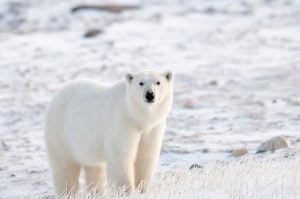
Depending on whom you ask, the North’s sentinel species is either on the edge of extinction or an environmental success story. An in-depth look at the complicated, contradictory and controversial science behind the sound bites

Wildlife
Why Canada’s cougars are on the rise — and what that means for us