People & Culture

I interviewed the surviving Dionne quintuplets in 1997. The exploitation they faced still shocks me.

Former CTV journalist, now with Royal Canadian Geographical Society, spearheaded an investigation into siblings’ trust fund

  • Feb 23, 2026
  • 1,078 words
  • 5 minutes
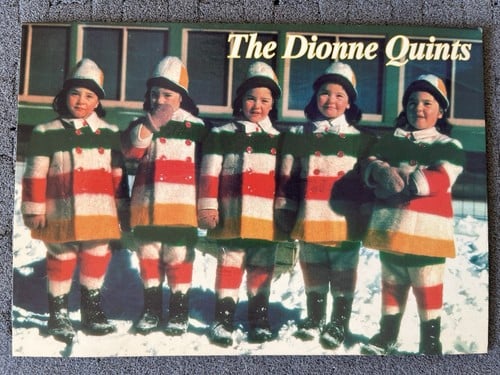
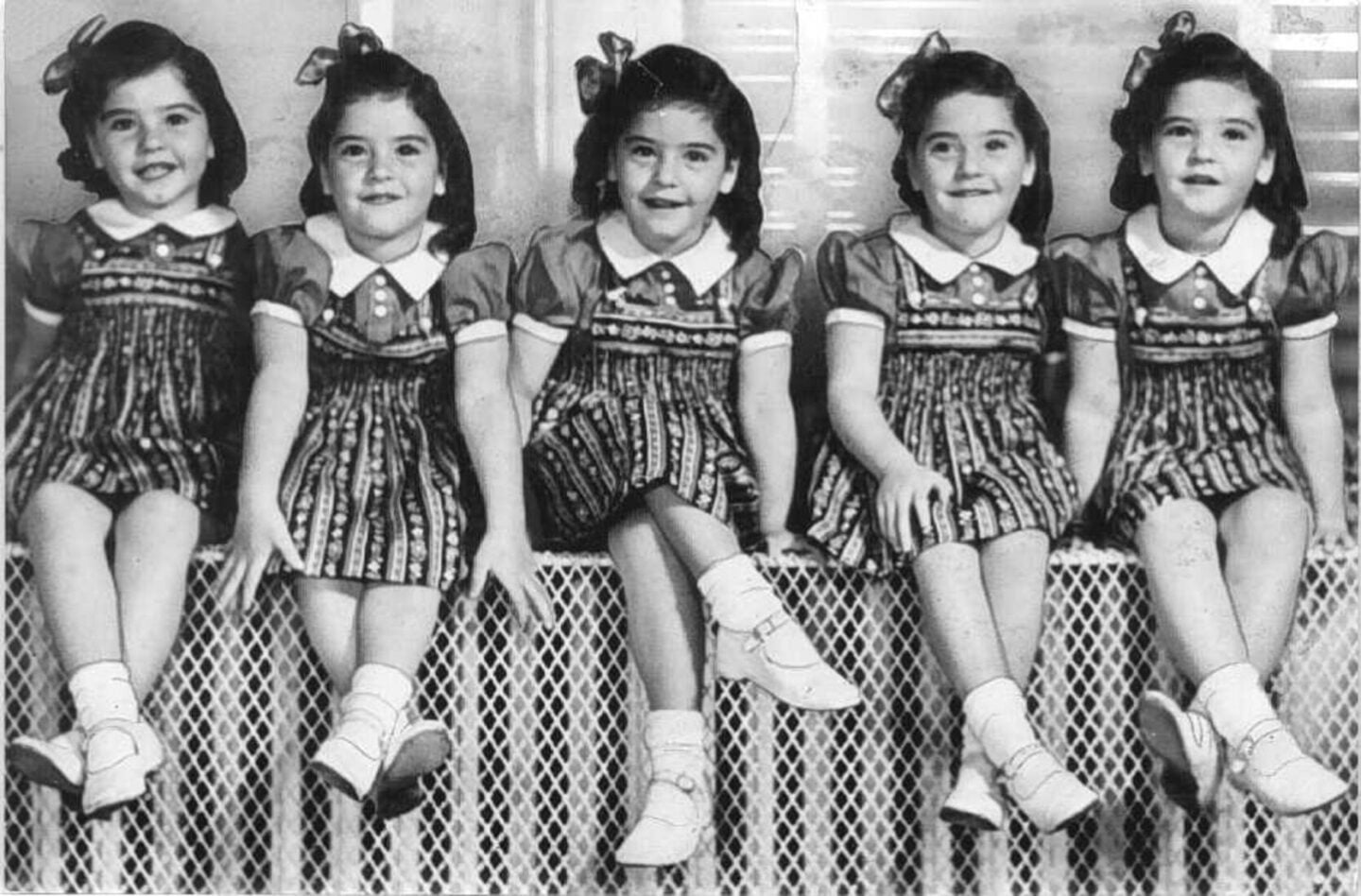
An estimated three million tourists visited the Quintland compound from 1934 to 1943. (Photo: Carlo Tarini Collection)
Expand Image
Advertisement
Advertisement

I met Annette, Cécile and Yvonne Dionne in 1997, three of the surviving Dionne quintuplets, living in a chilly home in St. Bruno, Que., on Montréal’s south shore. They steeped some tea and put out cookies for us to share, and were apologetic about the fading fabric on their living room furniture.

Over the next few hours together, they confided that they were having great difficulty in making ends meet on their combined pension of $700 a month. The house was cold, they said, because they couldn’t always afford to pay the heating bill.

“We need money to continue our life,” said Annette Dionne. “Also, we want justice.”

The Ontario government housed the Dionne quintuplets, born May 28, 1934, in a specially-built compound called “Quintland” from 1934 to 1943. (Photo: Carlo Tarini Collection)
Expand Image

Back in 1997, I was the bureau chief for CTV National News in Montréal. I wanted to understand how these three women, who had been known as Canada’s “million-dollar babies,” could have fallen on such tough times.

On Dec. 24, Annette, the last surviving sister of the world-famous Dionne quintuplets, died from complications related to Alzheimer’s disease. Her passing brought back a flood of memories of how hard it was for the sisters to reveal their financial struggles to a national audience. It also marked the closing chapter of one of the most extraordinary and troubling stories in Canadian history.

Born during the Great Depression on May 28, 1934, the Dionne quintuplets: Yvonne, Annette, Cécile, Émilie, and Marie, were considered a medical miracle. The fragile infants defied medical expectations simply by surviving and by the rarity of five identical girls being born through a natural pregnancy.

“The Dionne sisters were a global phenomenon in the 1930s,” said longtime family spokesman and close friend Carlo Tarini. “People today don’t really understand the scale of it. They were more famous than Niagara Falls, and certainly attracted more tourists.”

Born to a Franco-Ontarian family, the sisters’ birth was an international sensation. Newspapers covered every milestone: their first smiles, their first food. Readers were fascinated by their story and how the family was coping.

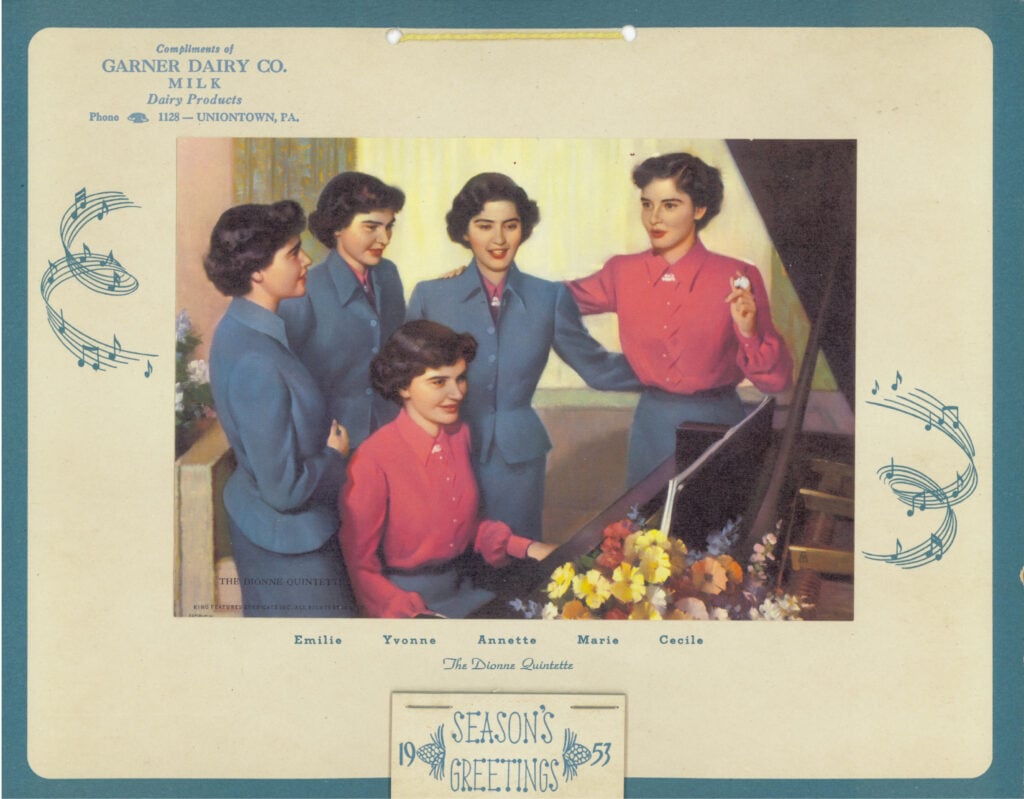
A Dionne quintuplets holiday greetings card from 1953. The siblings were big business in the 1930s and early ‘40s. (Photo: Carlo Tarini Collection)
Expand Image

Within months of their birth, the Ontario government took custody of the girls, citing their well-being and need for protection. What followed was the creation of “Quintland,” a specially-built compound across the road from their parents’ home. There, the sisters were raised under constant medical supervision, separated from their family, and subjected to relentless public scrutiny.

“Quintland was essentially a zoo,” said Tarini. “Twice a day, people lined up to watch these little girls play, eat, and sleep. They were children, but they were treated like exhibits.”

An estimated three million tourists visited Quintland between 1934 and 1943. The sisters’ popularity proved enormously profitable and were a $500 million asset to the province of Ontario, according to Pierre Berton’s book on the quintuplets. The Ontario government promoted the site aggressively, paving a multi-lane highway to the area, selling the destination, and souvenirs, while presenting the arrangement as enlightened child welfare.

For more than a decade, promotional rights, movies and sponsorships generated millions of dollars, much of it placed into a trust fund that was supposed to be reserved for the girls’ future. Administered by the Ontario government, the fund was often cited as proof that the sisters would one day be financially secure.

“But when they grew up, that promise didn’t match reality,” Tarini said. “The trust fund was built on their backs, and yet they were the last people to benefit from it.”

So, in 1997, within weeks of our sit down in the sisters’ living room, CTV’s investigative program W-Five hired a team of forensic accountants, led by Toronto accountants Al Rosen and Frank Vettese, to find out what happened to their trust fund. They were granted access to the Archives of Ontario, where more than 50 boxes of Quintland records had been stored for decades. After analyzing the mountain of yellowing paperwork, what had long been suspected — that the sisters’ trust fund had been systematically drained — was finally proven with documentary evidence.

What they uncovered was staggering.

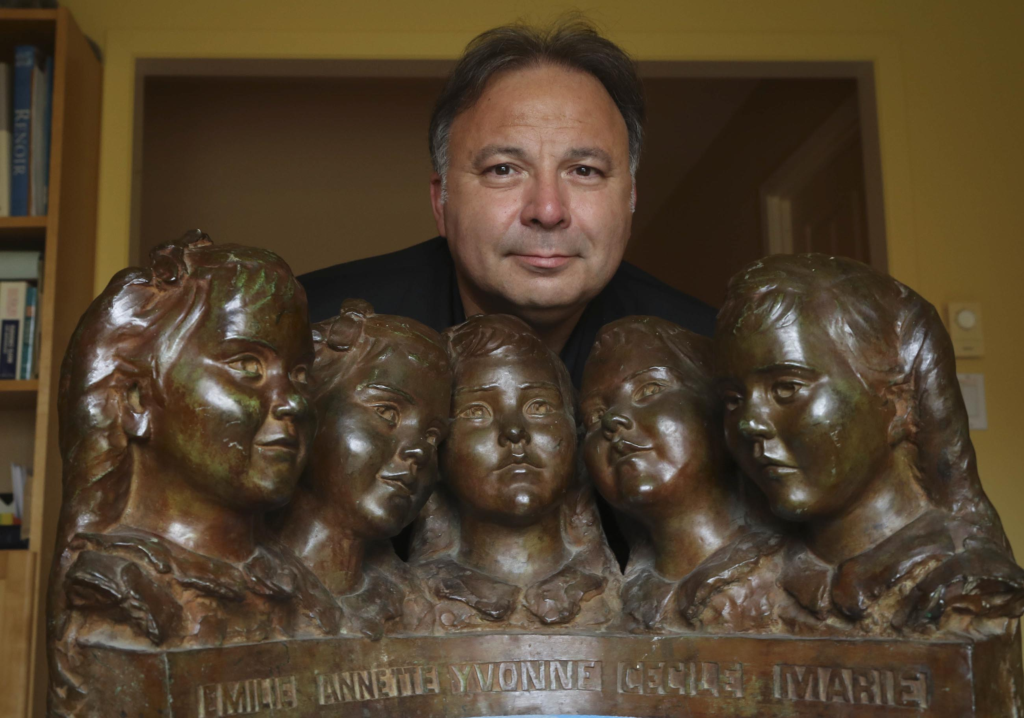
Dionne family spokesperson Carlo Tarini says the quintuplets eventually found peace after reaching a $4 million settlement with the Ontario provincial government in 1998 to compensate for their decade of exploitation. (Photo: Carlo Tarini Collection)
Expand Image

“Every conceivable expense was charged to the girls,” Tarini said. “Not just their care — but the entire tourist operation.”

The investigation revealed that the sisters’ trust fund paid for grandstands, landscaping, promotional materials, staffing costs, expense claims and even basic supplies used by tourists.

“Everything from the bleachers to the toilet paper was billed to the children,” Tarini said. “It was their money paying for the amusement park that exploited them.”

The trust fund, long portrayed as a safeguard for the sisters’ future, had been treated as a general operating account for Quintland. When the findings aired nationally, public outrage followed.

The pressure proved impossible for Queen’s Park to ignore. In 1998, the Progressive Conservative government of Premier Mike Harris reached a settlement with the surviving sisters, formally apologizing and acknowledging the province’s role in mismanaging their trust fund.

I remember standing in my kitchen on March 6, 1998, when my phone rang. I was at home in Montréal, on a day off, looking after my four-year-old son, when Tarini called me.

“Mike Harris flew to Montréal today,” Tarini told me. “He brought a President’s Choice coffee cake to share with the sisters — and handed them a $4 million cheque.”

That phone call took my breath away because after months of work, of digging into the archives, of mounting a talented team of experts, and reporting on all the twists and turns of the Dionne saga, the Ontario government acted.

CTV was not the only network that covered the story, but our coverage was part of a snowball effect of other media reporting on the story. Other reporters, including the Toronto Star’s Ellie Tesher, pursued the story in earnest.

When Annette Dionne died, I called Tarini to offer my condolences to him and the Dionne family. We reminisced about the era, about how hard he’d worked on behalf of the sisters, and about how journalism and the resulting public pressure led to a settlement from the Ontario government.

“Did they find peace, Carlo?” I asked him. “Yes, the settlement helped,” he replied.

Tarini said that the settlement did improve their lives. Each of the sisters bought a home of their own, they were able to live independently, their daily stress was eased. But he also said the damage created by being removed from their parents as infants, and the nine years they lived at Quintland, was a source of anguish that endured throughout their adult lives.

Advertisement

Help us tell Canada’s story

You can support Canadian Geographic in 3 ways:

Related Content

Science & Tech

Comment jouir des bienfaits de l’exploitation des ressources de l’Arctique

Comme une grande partie de l’Arctique canadien, la région du Nunavik au Québec recèle de vastes réserves énergétiques et minérales. De plus en plus, les Inuits…

  • 407 words
  • 2 minutes

People & Culture

Connie Walker – Surviving St Michael’s

Episode 41

Connie Walker discusses her late father’s experience of abuse as a First Nations child at St Michael’s Indian Residential School in Saskatchewan

  • 46 minutes

People & Culture

I interviewed The Beaverton’s Luke Gordon Field; he Replied with headlines

Episode 106

(Not true! This is a fun conversation!)

  • 44 minutes

Exploration

Surviving the Race to Alaska

This motor-free ocean race — with vessels ranging from paddleboards to pedal-assist sailboats — is less about how fast you can go and more about whether you get there at all

  • 3522 words
  • 15 minutes
Advertisement
Advertisement