People & Culture

Human rights champion Louise Arbour is Canada’s next Governor General  

The former Supreme Court justice has had an incredible career, from prosecuting war criminals to defending human rights on a national and international level

  • May 05, 2026
  • 755 words
  • 4 minutes
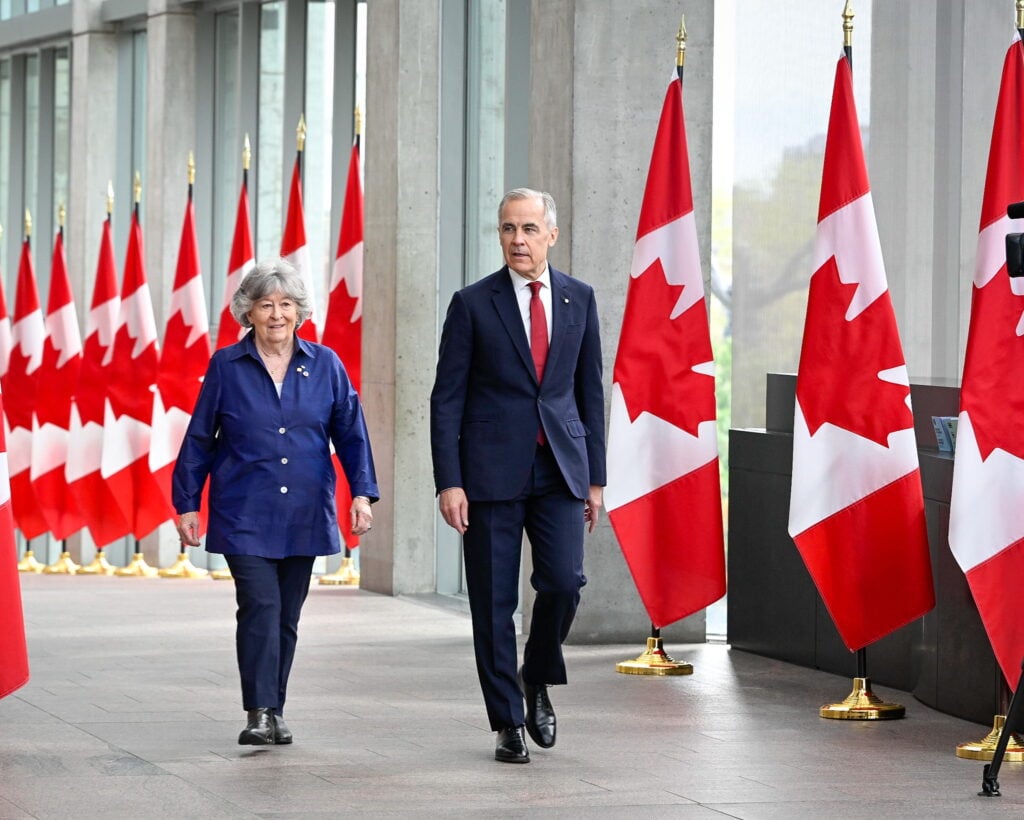
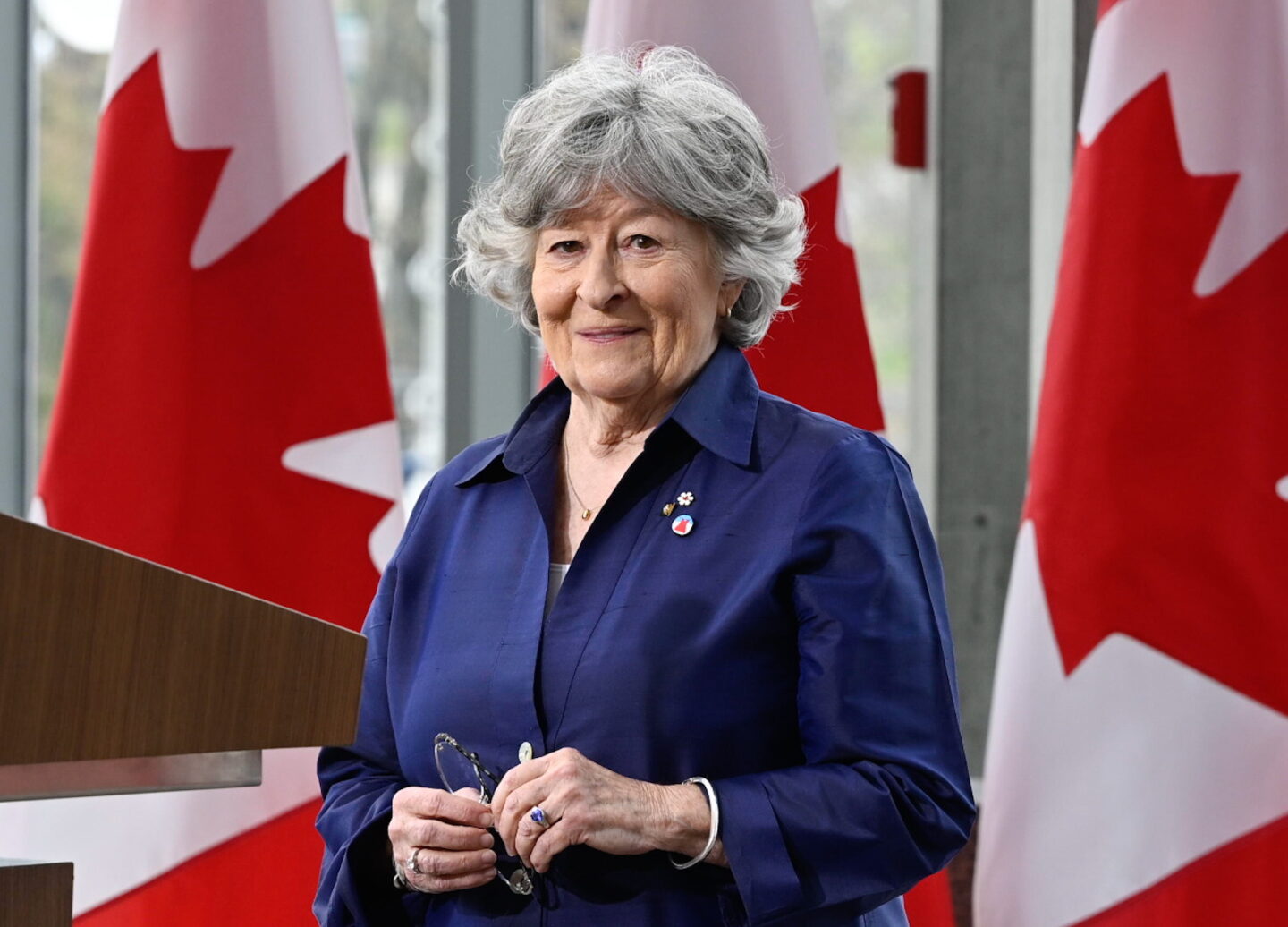
Former Supreme Court justice and war crimes prosecutor Louise Arbour was named Canada's next governor general on May 5. (Photo: MS Anne-Marie Brisson, Rideau Hall © OSGG, 2026, la matc Anne-Marie Brisson, Rideau Hall © BSGG, 2026)
Expand Image
Advertisement
Advertisement
Advertisement

One of Canada’s greatest legal minds will now serve as the King’s representative in Canada. Louise Arbour, a former justice with the Supreme Court of Canada and United Nations high commissioner for human rights, was named Canada’s next Governor General by Prime Minister Mark Carney on May 5.

The Montreal-born Francophone rose to fame in the late 1990s after she was appointed chief prosecutor of the International Criminal Tribunals for Rwanda and the former Yugoslavia. In a 2023 interview with journalist Valerie Pringle, Arbour said that protecting vulnerable people and defending human rights has long been a passion. Her tenure at the international court saw the first conviction for genocide since 1948 in Rwanda and the first-ever indictment for war crimes against a sitting European head of state, Serbian president Slobodan Milosevic.

“I never thought criminal law, which was my discipline, would have an international reach,” Arbour told Pringle about her time as chief prosecutor for the court. “It was not at all what I thought it would be — this had never been done since the Nuremberg trials.”

Louise Arbour, with Prime Minister Mark Carney, will officially assume the role of governor general in June. (Photo: MS Anne-Marie Brisson, Rideau Hall © OSGG, 2026; la matc Anne-Marie Brisson, Rideau Hall © BSGG, 2026)
Expand Image

Canada’s next governor general began her legal career in 1971, after earning a law degree from the Université de Montréal. Arbour took a job as a law clerk for former Supreme Court justice Louis-Philippe Pigeon. Because she had completed her studies exclusively in French, Arbour only learned English after moving to Ontario. But she quickly learned the language and became a professor at Osgoode Hall Law School at York University in Toronto, an institution where she would eventually serve as associate dean in 1987. She was also serving as vice-president of the Canadian Civil Liberties Association at the time. 

After Osgoode Hall, Arbour was appointed to the Supreme Court of Ontario, where she led an inquiry into complaints of neglect and abuse at the Kingston Prison for Women. The inquiry found the prison’s procedures, designed for men, “failed to produce the substantive equality to which women offenders are entitled.”

In 1999, while Arbour was still a chief prosecutor at the international court, former prime minister Jean Chrétien invited her to sit on the Supreme Court of Canada. It was the day before Milosevic’s indictment was published. After hearing questions from colleagues on the tribunal about why she would consider leaving such a role, Arbour said, “You don’t turn down an appointment to the highest court in your country — I had to go back.” 

Arbour served on Canada’s Supreme Court for five years, providing reasons for many majority decisions before resigning in 2004. That same year, Arbour was appointed as the United Nations High Commissioner for Human Rights. There, Arbour took on many major international players, including the United States, who she accused in 2008 of human rights violations at Guantanamo Bay, Cuba for the mistreatment of detainees captured following the terrorist attacks on 9/11.

In her interview with Pringle, Arbour wryly noted that throughout her four years with the High Commission, she was never invited for an official visit to the U.S. She nonetheless enjoyed a trip to meet with the U.S. Supreme Court, after calling fellow jurist at the time, the late Ruth Bader Ginsburg. 

Arbour continued on the international stage, serving as president and CEO of the International Crisis Group — a think tank dedicated to preventing and resolving deadly conflict — until 2014. Arbour was also appointed by UN Secretary-General António Guterres as his Special Representative for International Migration during this time.

In 2021, Arbour was appointed by former Minister of National Defence Harjit Sajjan to conduct an independent review of the Canadian Armed Forces’ handling of sexual misconduct and harassment allegations. Arbour released her report on the issue in May 2022, proposing 48 recommendations, including allowing any sexual harassment complaints to be managed by the Canadian Human Rights Commission.

After compiling a lengthy legal resume and receiving a plethora of awards, including the United Nations Human Rights Prize, more than 30 honorary degrees, and a companionship to the Order of Canada, Arbour will officially assume the title of Governor General in early June 2026.

Arbour replaces Mary Simon, whose priorities as Canada’s 30th Governor General included advocacy for Inuit rights and for the preservation of Indigenous culture and language. In addition to serving as the monarch’s representative and the commander-in-chief of the Canadian Armed Forces, the Governor General traditionally serves as the patron of various royal societies, including that of the Royal Canadian Geographical Society.
Advertisement

Help us tell Canada’s story

You can support Canadian Geographic in 3 ways:

Related Content

People & Culture

40th anniversary: The Canadian Charter of Rights and Freedoms

Proclaimed in 1982 by Her Majesty Queen Elizabeth II of Canada, the Canadian Charter of Rights and Freedoms is intended to ensure that all Canadians can live a life without discrimination of any kind. On the 40th anniversary of its proclamation, Mark Bourrie asks whether the goals of the Charter have been met when it comes to Indigenous people living in Canada.

  • 1330 words
  • 6 minutes

People & Culture

Rivers of resistance: A history of the Métis Nation of Ontario

“We were tired of hiding behind trees.” The ebb and flow of Métis history as it has unfolded on Ontario’s shores 

  • 4409 words
  • 18 minutes

History

In the name of humanity: Recognizing 75 years since the Universal Declaration of Human Rights

On Dec. 10, 1948, the United Nations adopted an aspirational document articulating the foundations for human rights and dignity, but who was the Canadian that helped make it possible?

  • 1116 words
  • 5 minutes

Environment

I am Mutehekau Shipu: A river’s journey to personhood in eastern Quebec

In February 2021, the world was introduced to Mutehekau Shipu — also known as the Magpie River — when the people of Ekuanitshit, Que. and the regional municipality made a joint declaration granting the river legal personhood and rights. The declaration carries broad implications for the fight to protect nature across Canada and around the world.

  • 3623 words
  • 15 minutes
Advertisement
Advertisement