Environment
Inside the fight to protect the Arctic’s “Water Heart”
How the Sahtuto’ine Dene of Délı̨nę created the Tsá Tué Biosphere Reserve, the world’s first such UNESCO site managed by an Indigenous community
- 1663 words
- 7 minutes
People & Culture
Arctic sports and Dene games test pain resistance, agility and strength

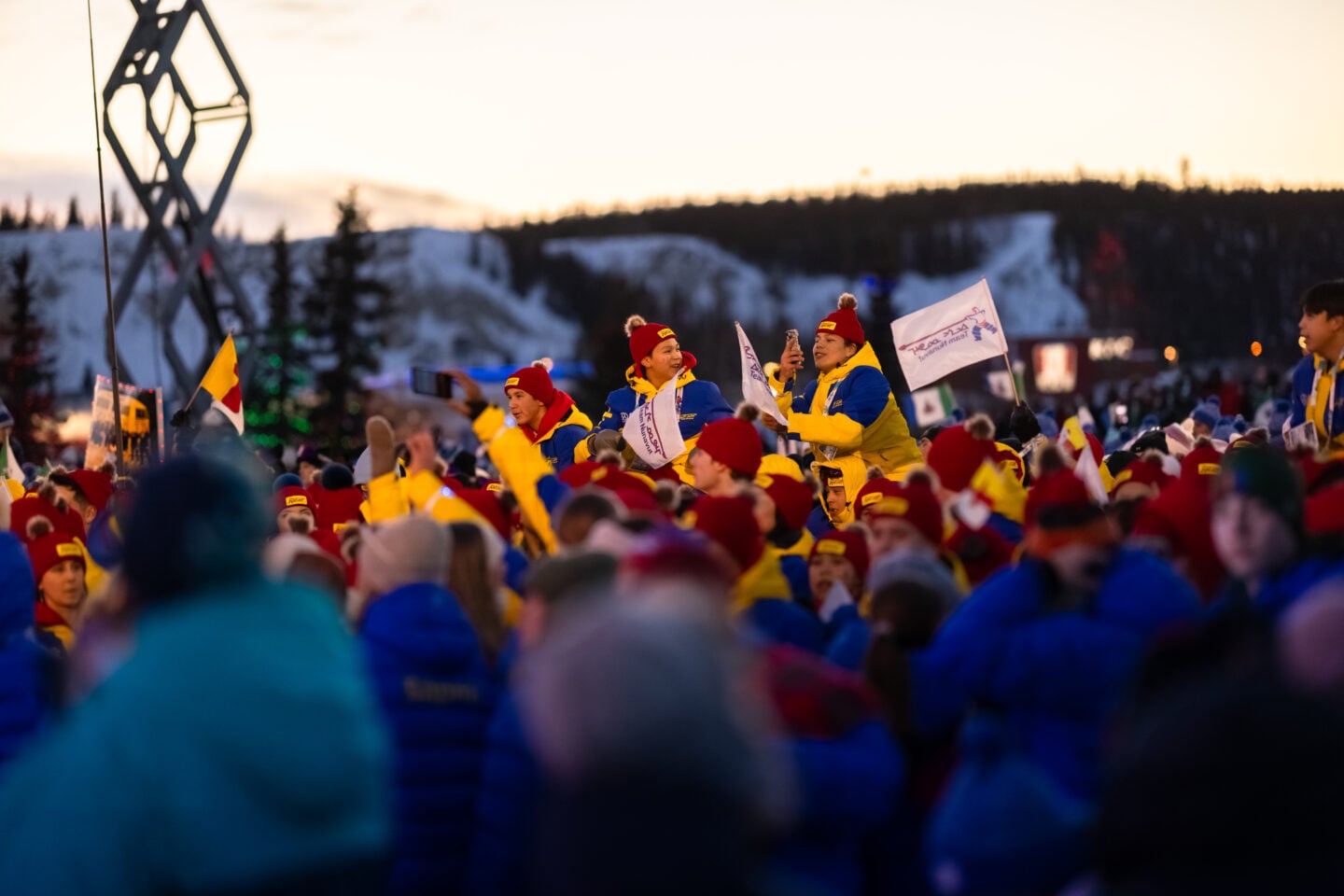
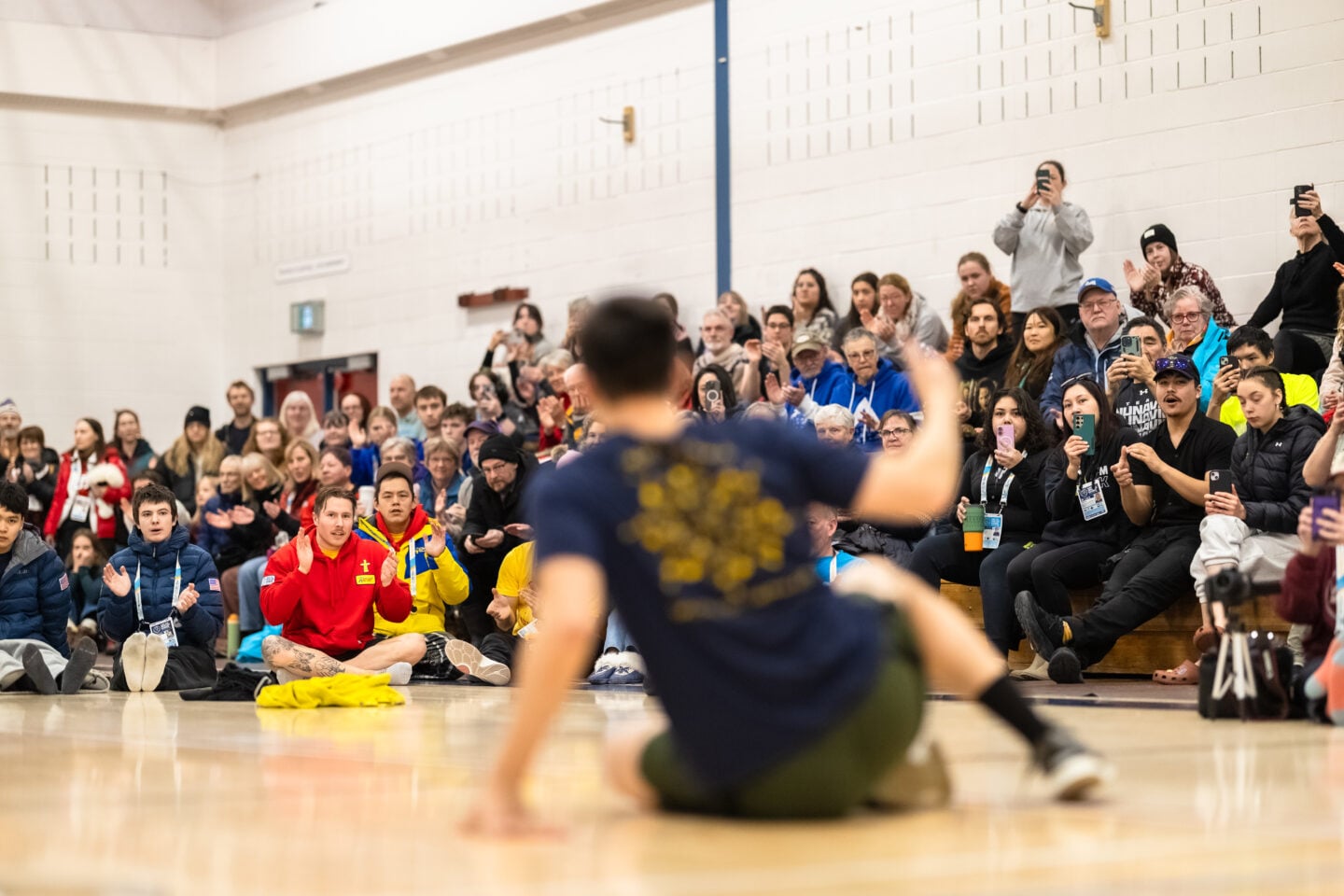
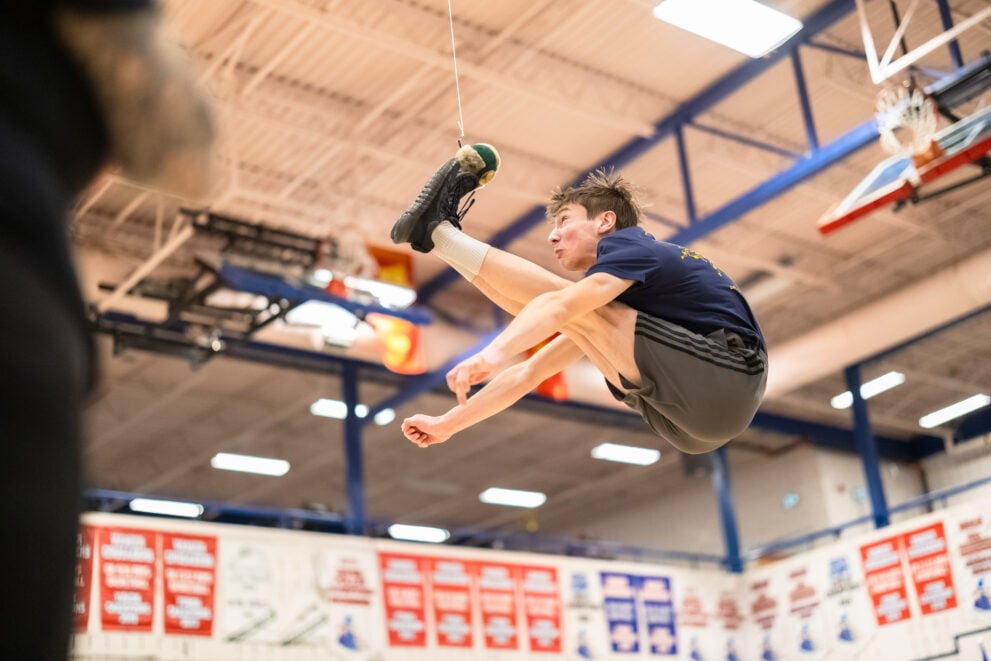
In a packed school gymnasium, northern athletes size up the suspended sealskin ball they travelled to Whitehorse to kick. Some athletes prefer silence, but Alaska’s high kicker Parker Kenick — a 21-year-old frequent medallist in the kicking events — signals to the crowd to hype up. With Arctic sports, that means clapping increasingly quickly, eventually drowning out the gym with a hooting and hollering tidal wave of support.
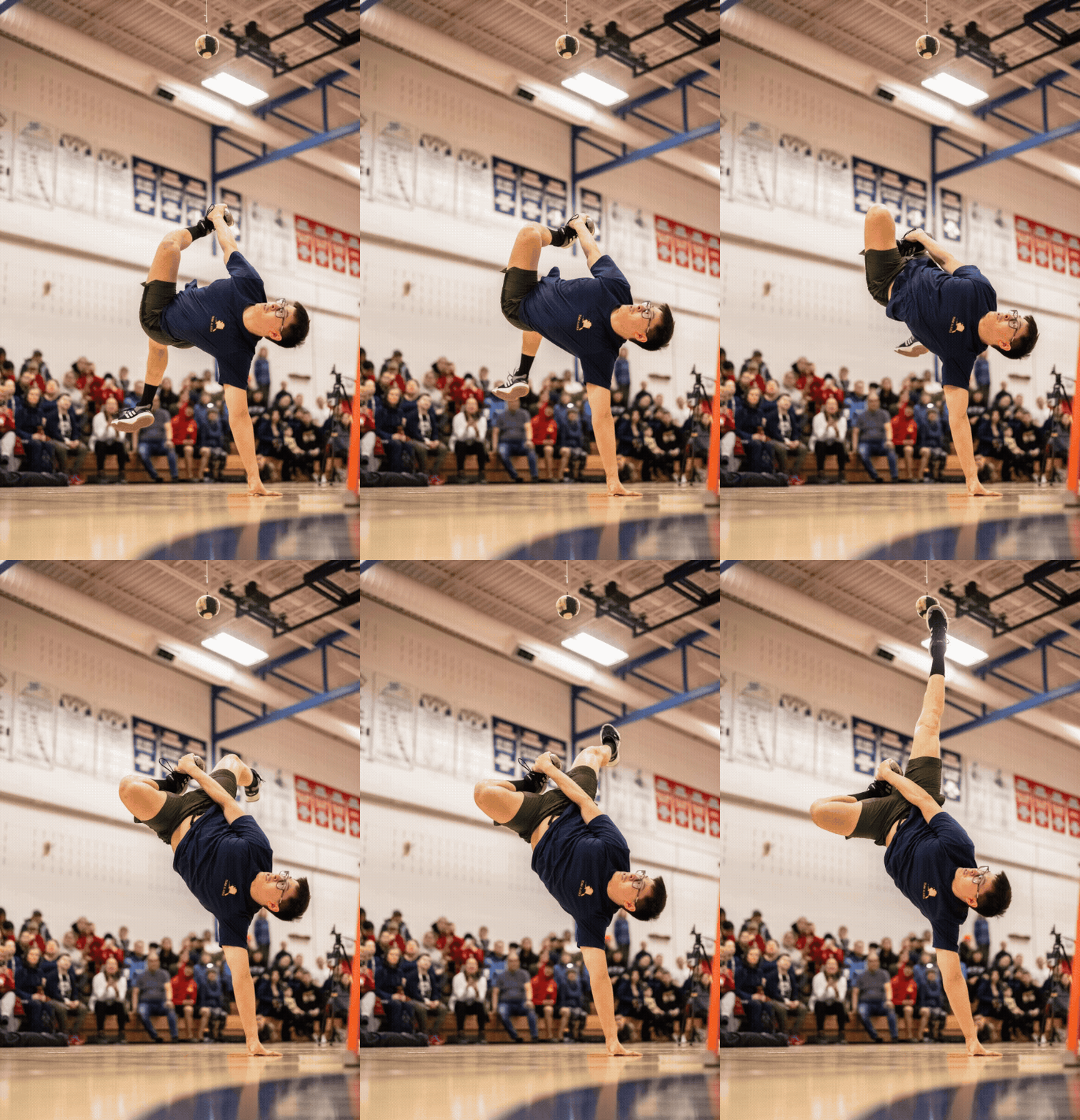
Holding one foot while balancing on the other hand, Kenick twists his hips and leg straight up toward the sealskin ball on his way to earning gold in the Alaskan high kick, a type of Arctic high kick.
Traditionally, this game was a way to keep warm and exercise when people lived in sod houses, he explains. Back then, the semi-subterranean homes weren’t tall enough to allow most to stand up. “They would put ash or soot from the fireplace on their foot, and then they would see who could get the highest footprint on the ceiling,” Kenick says.
It was also a way to stay fit while the winter wind kept them inside. Kenick ended the tournament with gold in the one-hand reach — where competitors balance on one hand and reach the sealskin ball with their other — gold in Alaskan high kick, gold in two-foot high kick, silver in one-foot high kick and bronze in kneel jump.
The Alaskan high kick is just one sport in the lineup for the Arctic Winter Games, a weeklong tournament that celebrates northern athletes and the cultural heritage of the circumpolar North.
When it comes to the Indigenous sports included in the games — split between the Inuit Arctic sports and Dene games — they all have a connection to daily needs: survival skills, pain resistance, agility and strength. That can take the form of seeing who can jump the farthest, reach the highest or even grip a slippery stick the hardest.
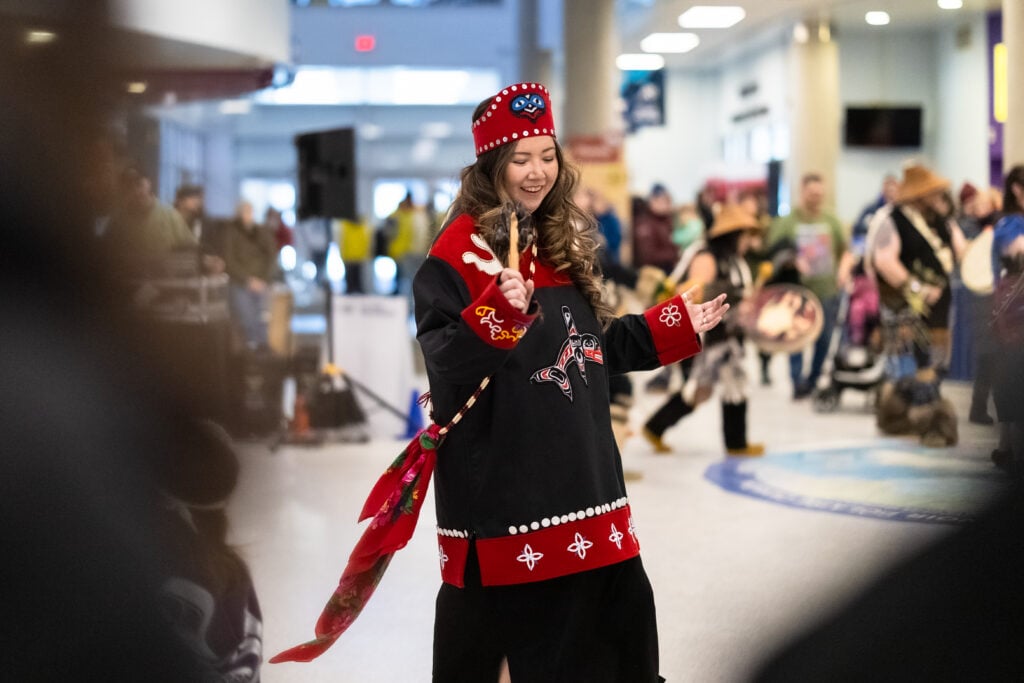
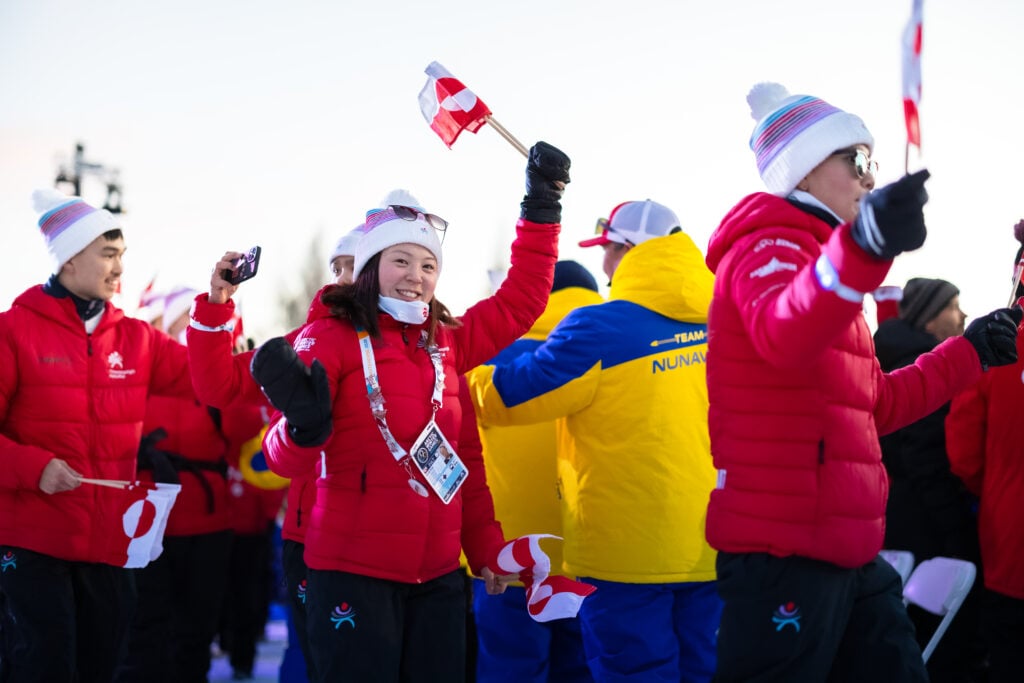
At the Arctic Winter Games, which this year took place March 8 to 15, Indigenous excellence, grit, success and culture immediately come to the forefront — from the sports to the events and participants themselves.
While the Alaskan high kick demands rhythmic focus, across the Yukon capital at the Kwanlin Dün Cultural Centre, the atmosphere sparks with roaring electricity at the hand games event — the premier event of Dene games. In this guessing game, the player or team of players hides objects in their hands, but deceives their opponent with the loudest and flashiest body movements, gestures and sounds.
When it comes to the energy of the crowd, Yukon’s Kara Skookum, a past Dene games athlete, says the spirit of the matches seem to flip a switch in some.
“My son is very introverted, but when he’s on that mat (for hand games), he’s a different kid,” she says. “You just see him electric, and then just seeing all these other kids that are so introverted, so shy, and then they just break out of their shell.”
The stick pull, another Dene game, simulates grabbing a slippery fish out of a net, Skookum explains. Athletes grip a grease-smothered stick and try to pull it from each other.
Matthew Brown, a Dene games coach with Team Yukon, likes the intensity of both the finger pull and snow snake. In the finger pull, opponents lock middle fingers in an effort to straighten out the other’s digit and break the hold, while the snow snake challenges competitors to throw a spear down an icy lane the farthest.
“The competition is always fun,” says Brown. “It’s going against people that might beat you, or going against people that are bigger than you, and seeing how far your strength and your skills go.”
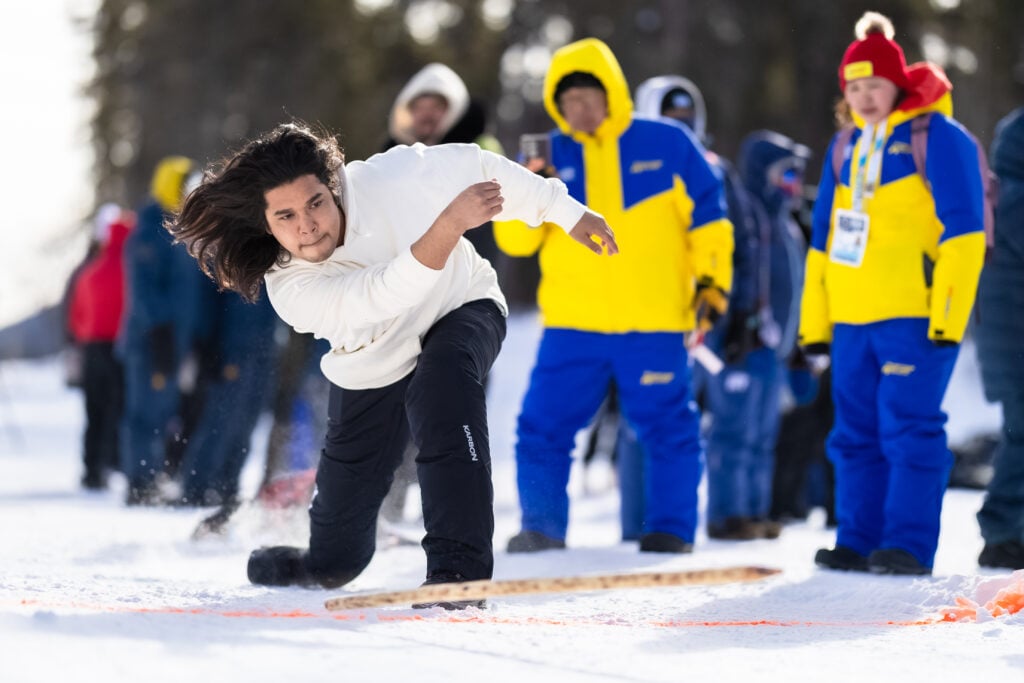
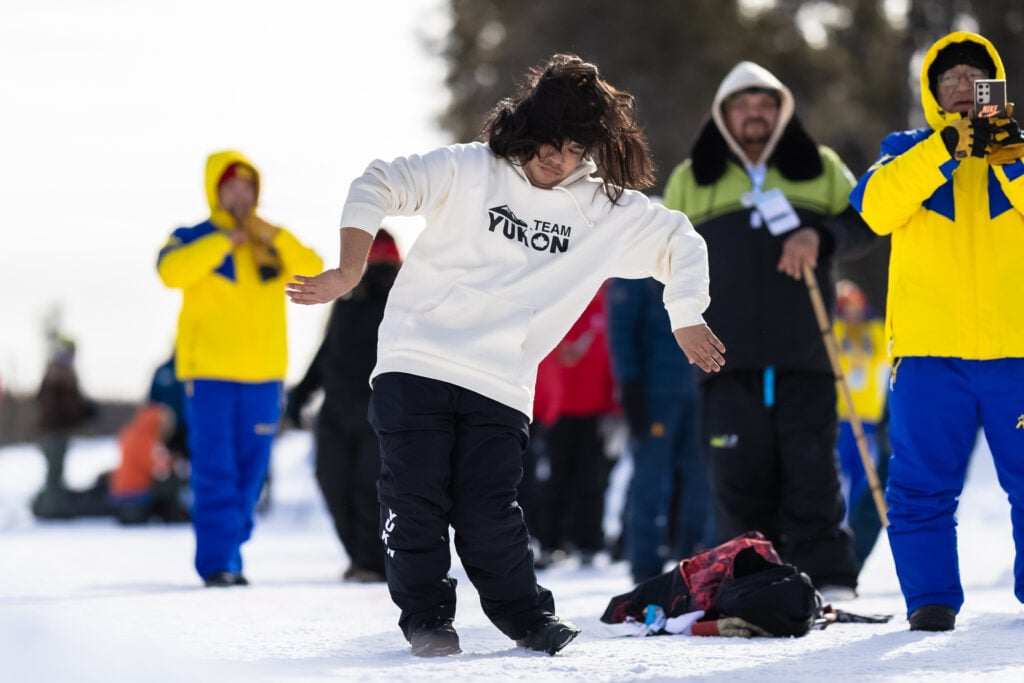
Yukon athlete Tyreke Scurvey flings his long hair side to side as he boogies for the crowd — a celebratory dance after throwing his spear in the snow snake. He went on to win gold in the event.
The Dene games “brings all the communities all around across Canada together,” Scurvey says after his event. “We compete against each other for fun. There’s no beef between anyone. It’s all fun and games and laughter.”
“It’s a cultural thing,” says the Northwest Territories’ Underwood Day, who competed in several sports at the games, as many athletes do. “It doesn’t mean it’s me versus you; it’s me versus me. I’m going to help you get better, and in turn, we’re all going to help each other.”
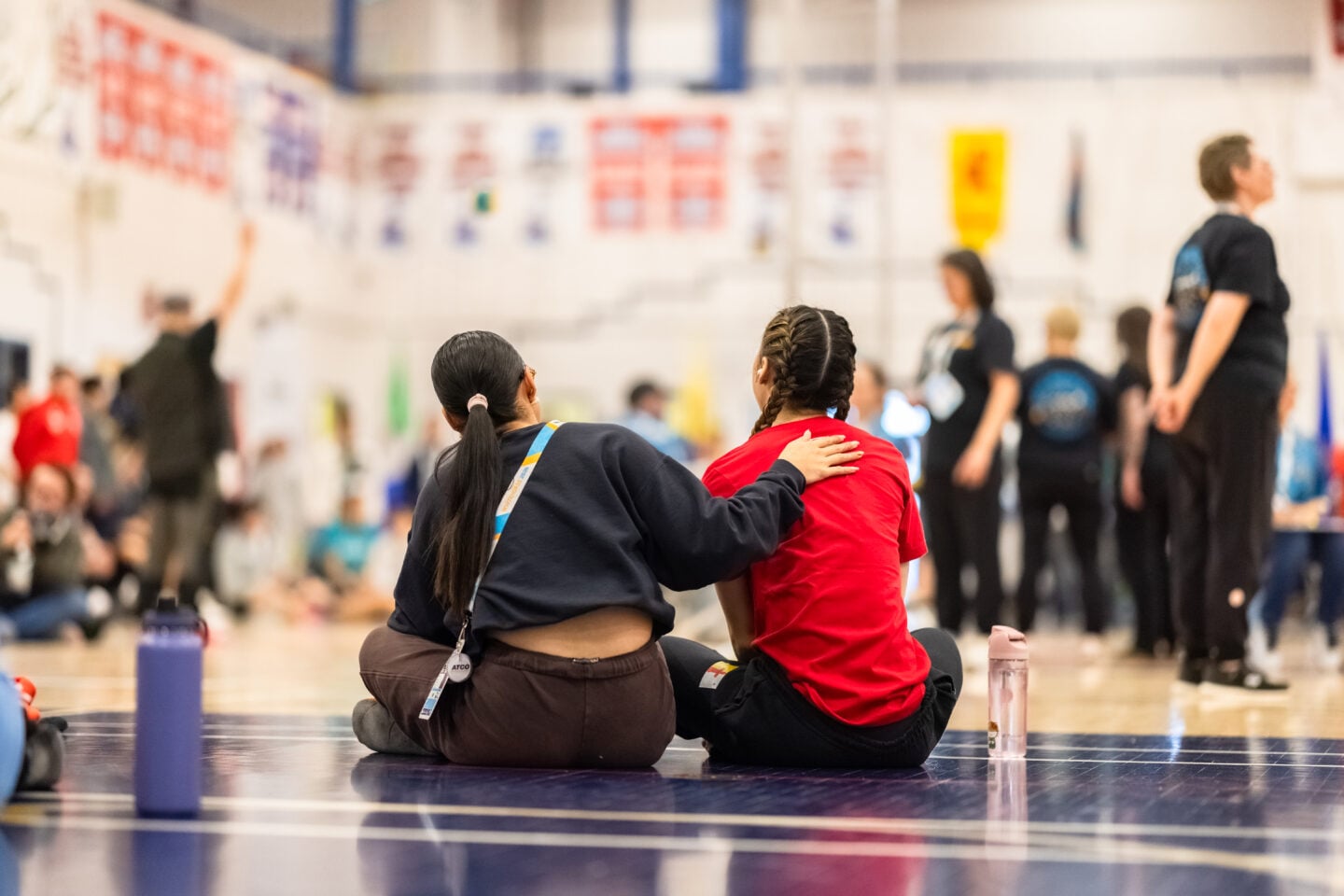
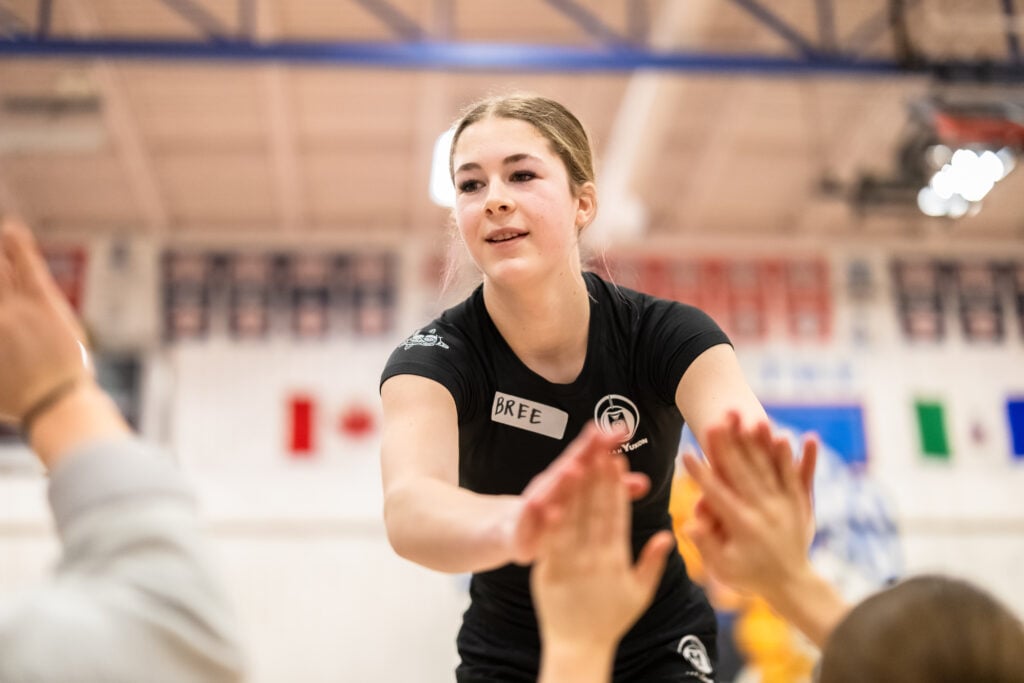
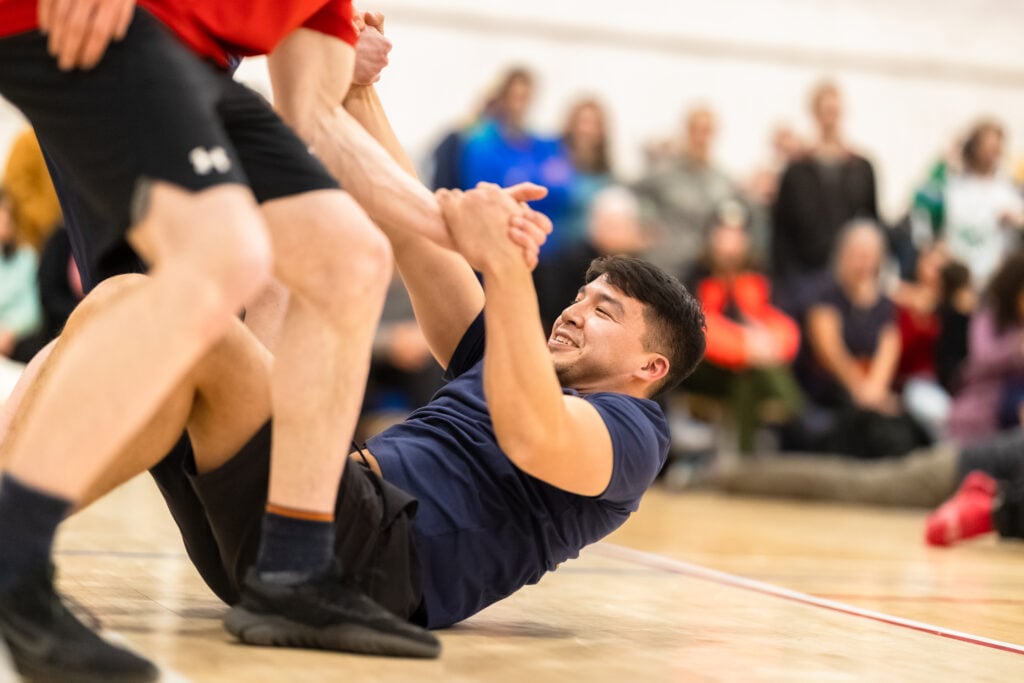
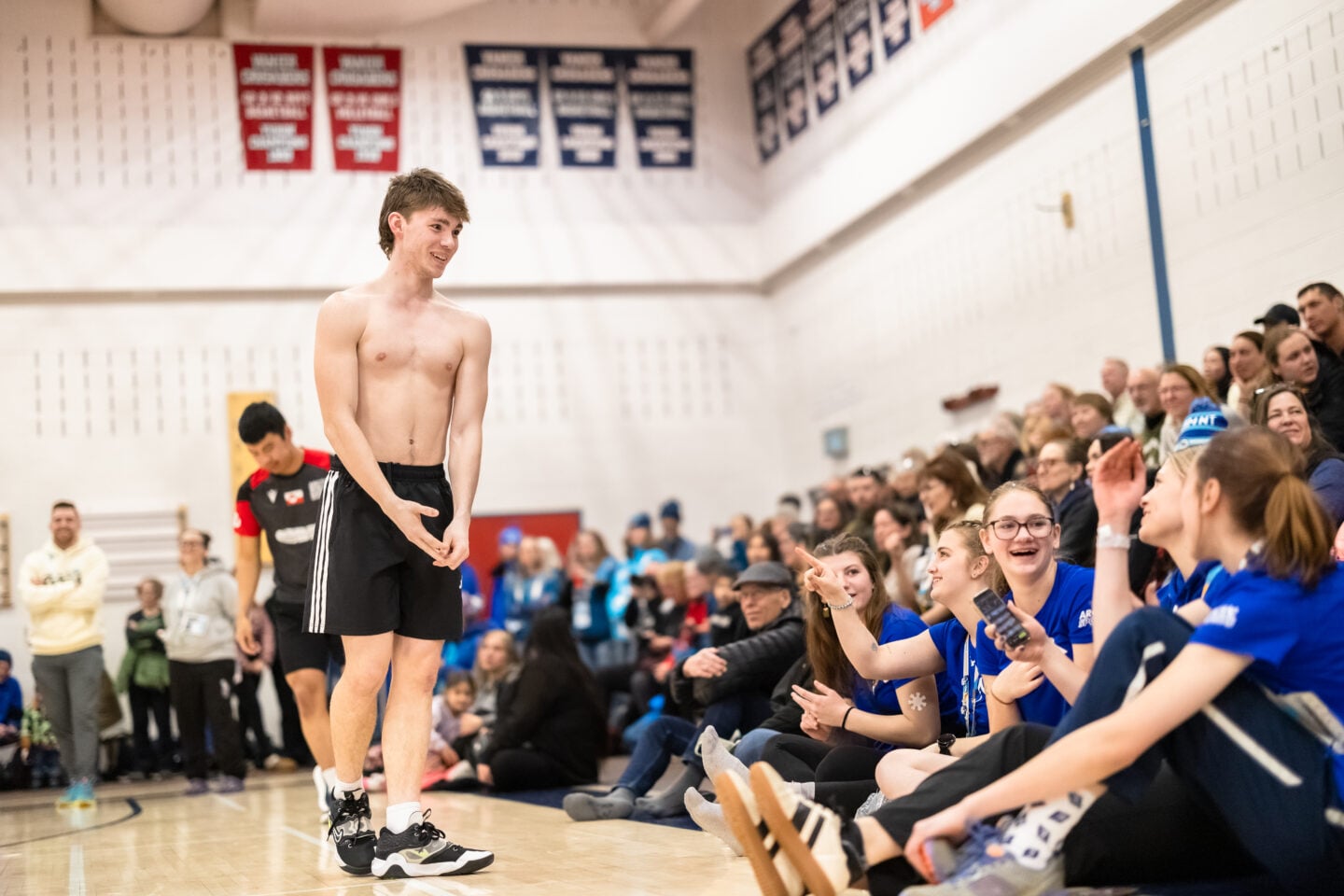
That collaborative spirit is evident as the games go on. Players, no matter the region they’re representing, unanimously support each other, encourage one another and help push for the best in everyone. Hitting the sealskin ball is a cause for celebration, no matter where the athlete who does it is from.
Day has been involved in Arctic sports for 15 years. “I couldn’t see it any other way,” he says. “These games have helped me so much in my life, showed me a lot about myself. I’ve been travelling all over with it, it’s introduced me to so many amazing people, and it showed me so many important life values and how to be a better person and continuing our tradition. That, to me, is so important.”
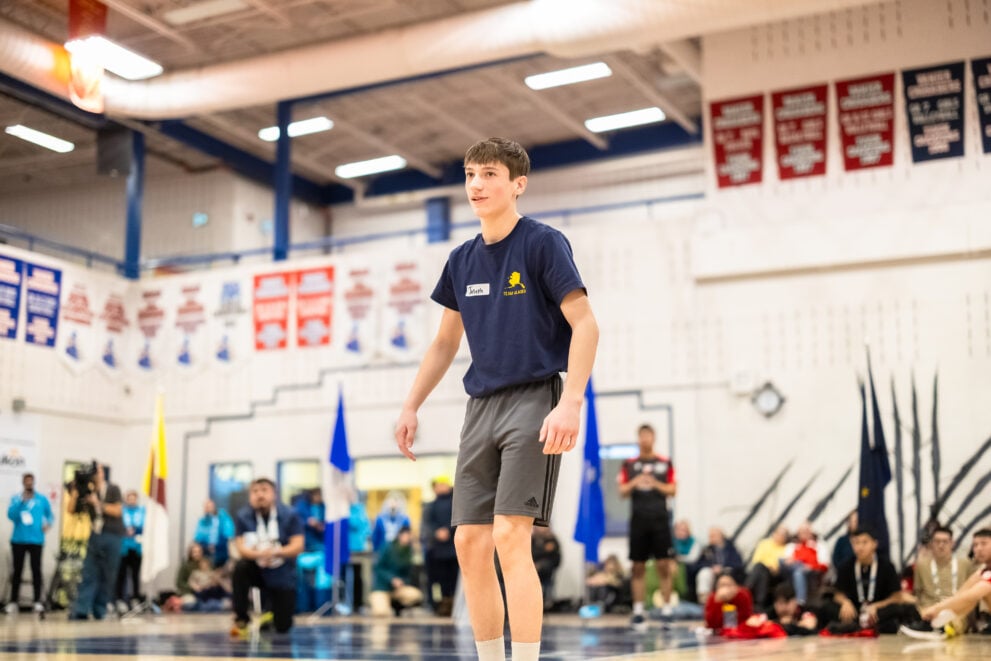
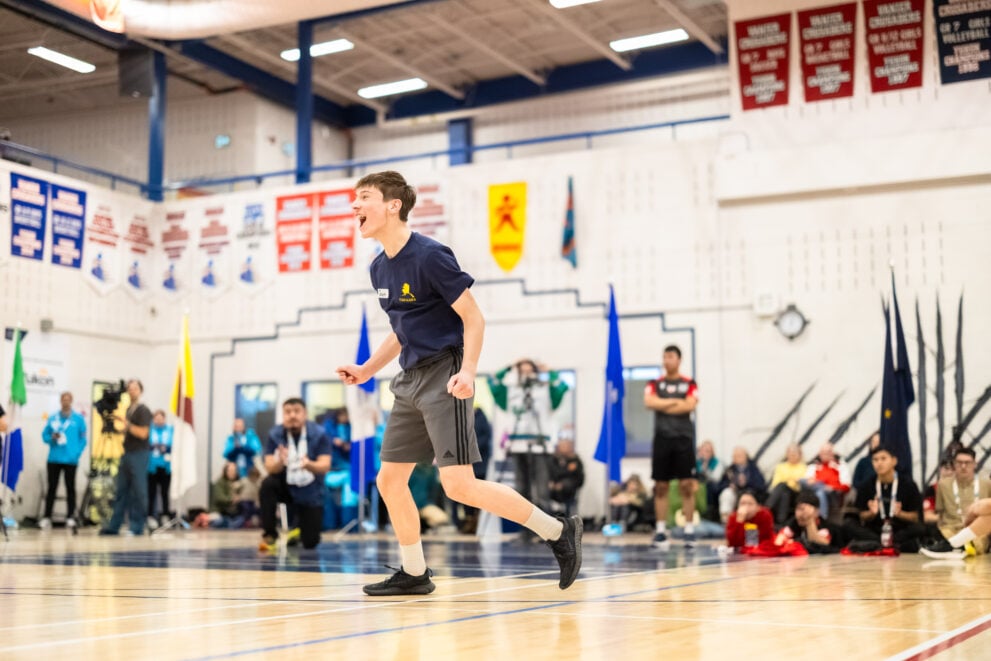
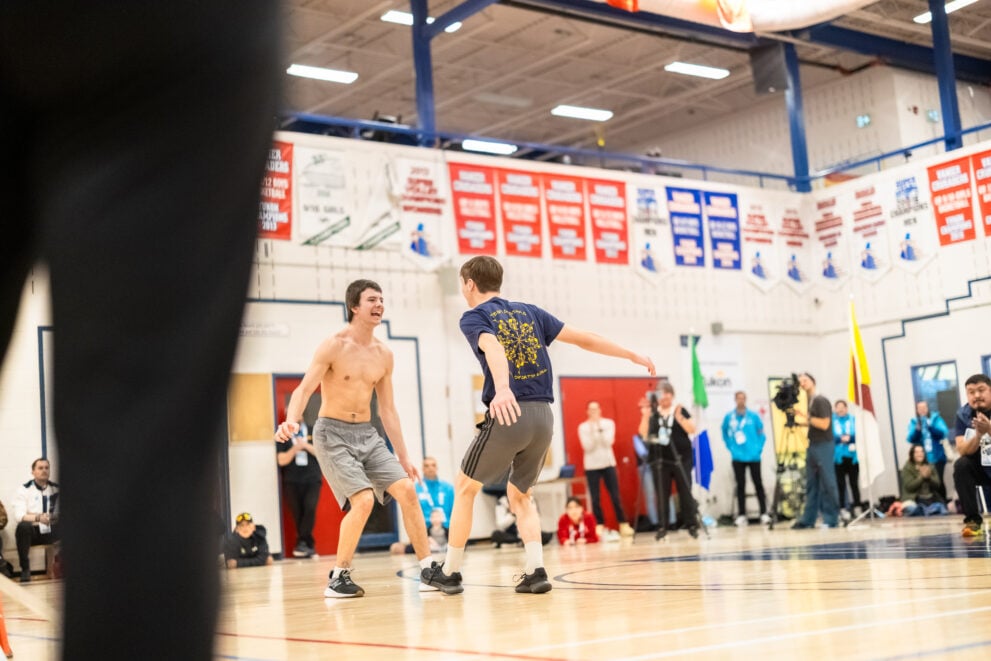
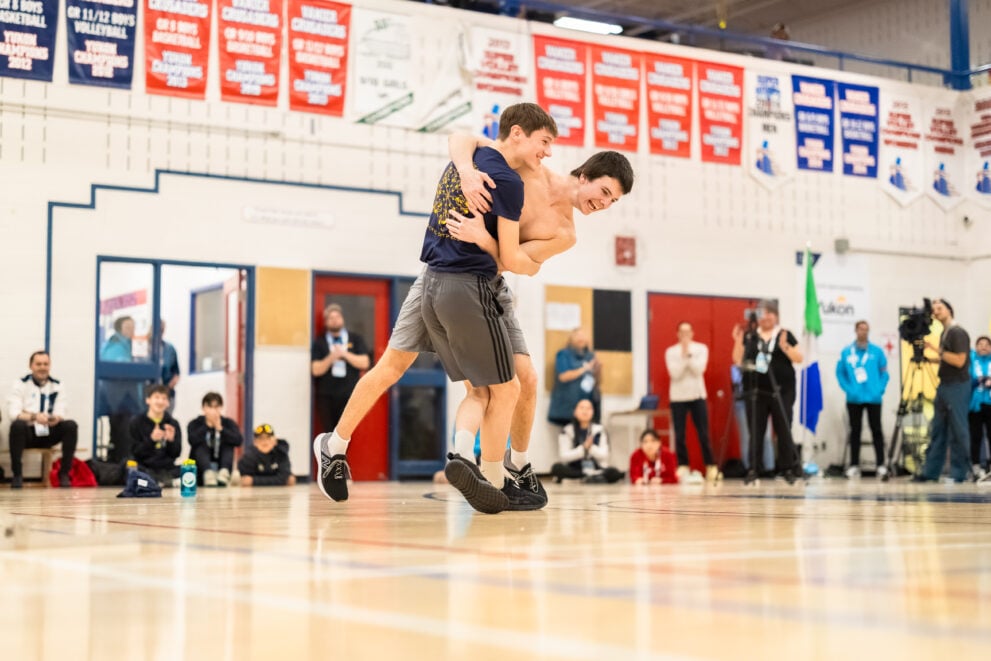
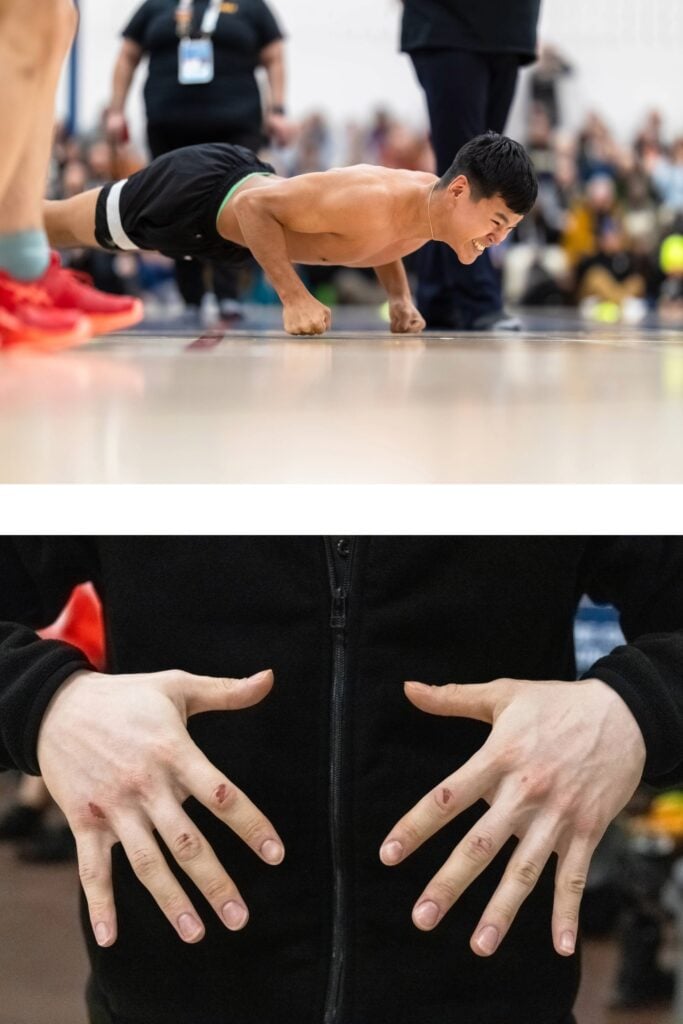
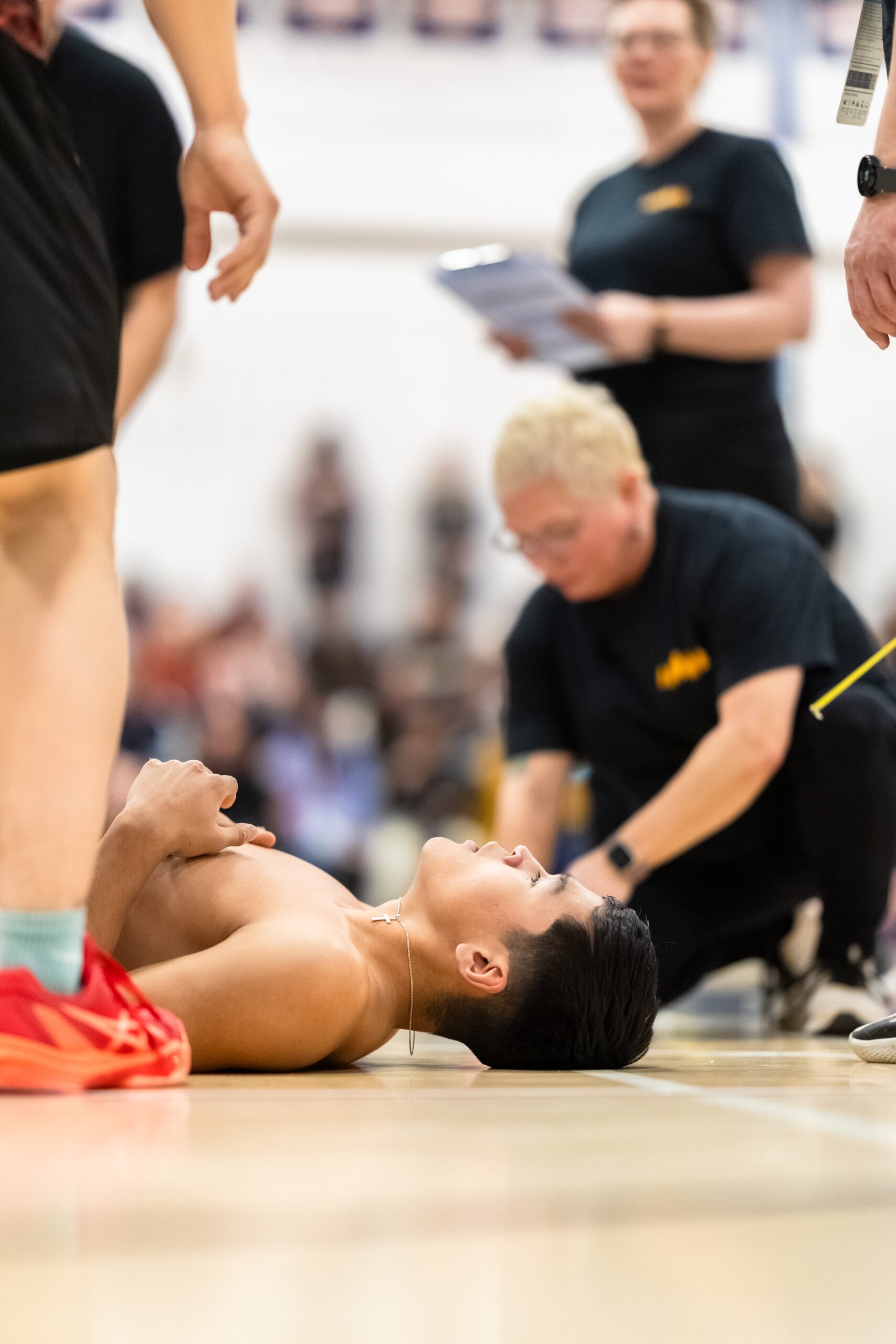
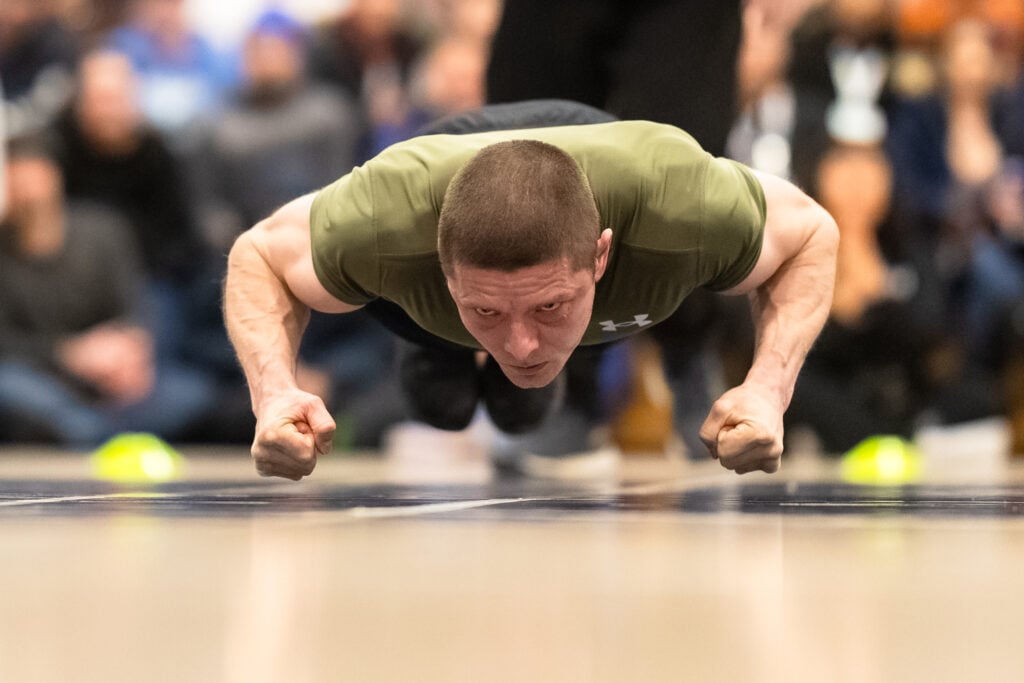
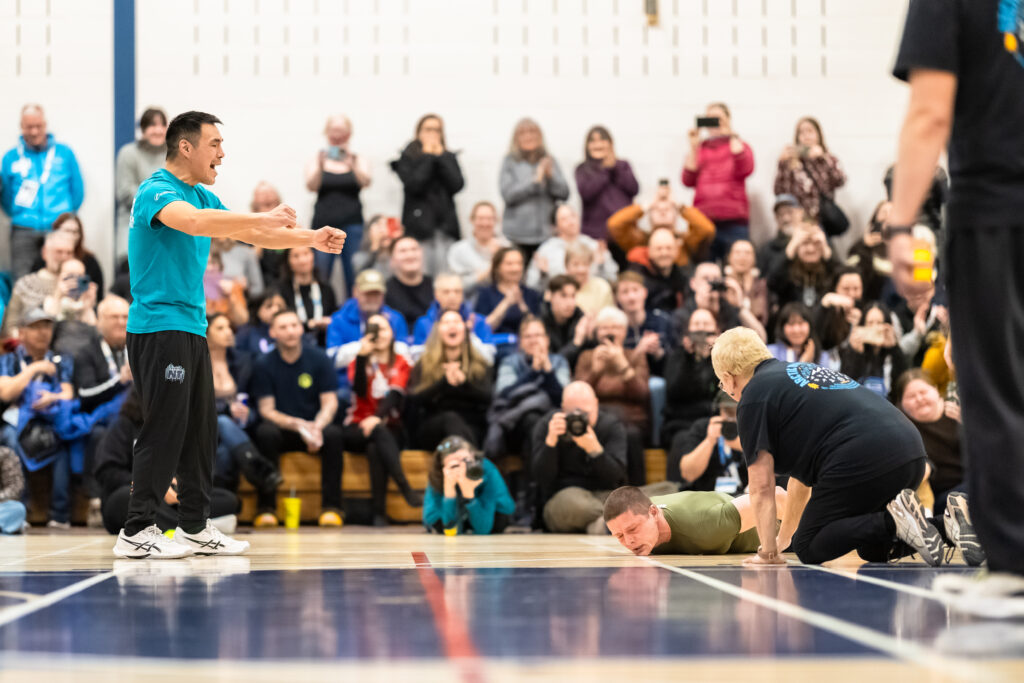
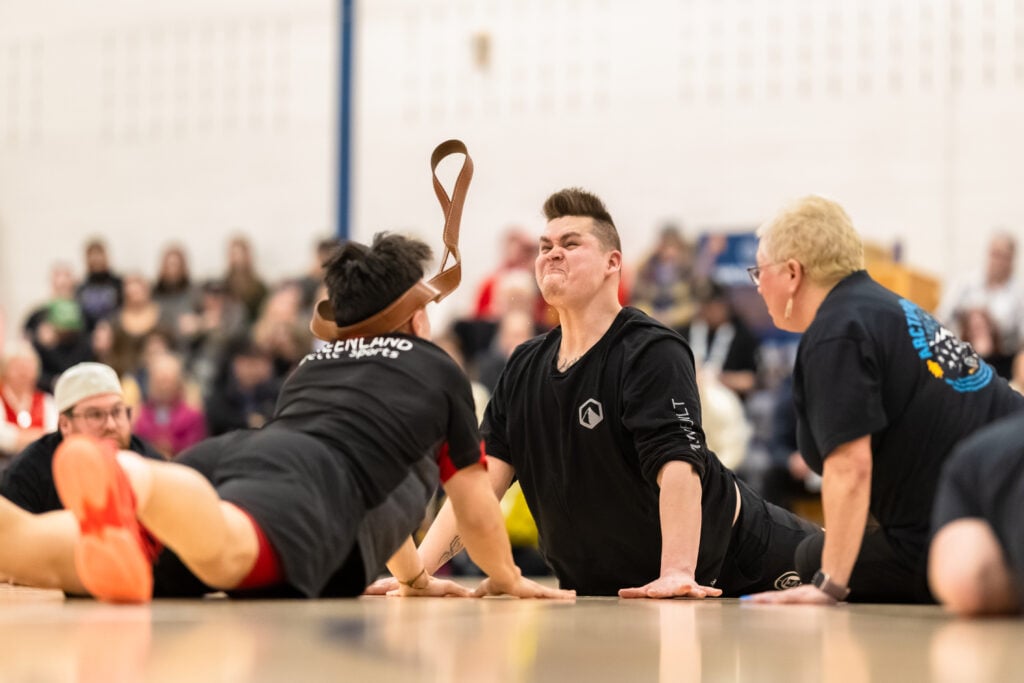
Day has just finished the knuckle hop, perhaps the most gruelling of the Arctic sports, where athletes must hop on their knuckles and toes in a push-up position around the gym as far as they can. It almost guarantees blood.
“Immediately after the knuckle hop, I still had that adrenaline pumping, and I felt good, but after it wore off, man, I gotta tell you, I was so lightheaded I was ready to pass out,” says Day. “It’s like a love-hate relationship. I love doing the game because it’s so much fun and it’s good to challenge myself. But man, does it sure hurt.”
There’s a certain rawness to some of the competitions in that way, including in the cultural history of them. Yukon Dene games athlete Justin Johnson says hand games, which was traditionally a gambling game, could even include trading “your house if you want, your family. It’s crazy.”
Back in the ’60s Gerry Kisoun, now commissioner of the Northwest Territories, was part of a group of teenagers in Inuvik inspired by a fellow named Edward Lennie, who “became Mr. Northern Games.” Lennie was the one who got the boys started playing northern games, also called Eskimo [sic] or Inuit games at the time, recalls Kisoun.
Lennie helped lobby for the inclusion of several northern games in the inaugural Arctic Winter Games in Yellowknife in 1970, where he took a group of young athletes to compete. The games had been established in large part to give opportunities to northern athletes beyond the Canada Winter Games. The momentum was immediate: the games moved to Whitehorse in 1972 and Anchorage in 1974. And when Kisoun transferred with the RCMP to Whitehorse in 1978, he proceeded to play a role in promoting Arctic sports in the Yukon and competition at the games. Today, what started as a grassroots effort by a group of teenagers in Inuvik is found in schools across the North and is only growing in popularity.
There are some 160 Arctic sports games, says Kisoun, all testing various survival skills. “We had to be thinking fast,” Kisoun, who is Inuvialuit and Gwich’in, says of his culture. “We had to be strong. We got to pull the animals out of the water sometimes.”
But more than survival, the games mean a lot to those that play them.
“Being a community kid is tough,” says Skookum. “I find that with Arctic Winter Games alone, it’s such an amazing way for these young kids to come out of their communities, meet new people, see new environments — and just getting them out and having these experiences that they may not ever get again.”
“When you come to the games, it’s about competing,” says Colby Courtoreille, an athlete in the Dene games with Team Alberta North. “But it’s all about meeting new people and the experience with the culture that people give you.”
Kenick hopes the games inspire a healthy mindset. “I joined the native games, and it works on pretty much everything,” he says. “Works on my physical health, my social health, spiritual health, and it brings a great sense of community. It doesn’t have to be the native games, but I would like to invite anybody to join something that works on all of their aspects of their health and to find great purpose for their body.”
Environment
How the Sahtuto’ine Dene of Délı̨nę created the Tsá Tué Biosphere Reserve, the world’s first such UNESCO site managed by an Indigenous community
History
Games were started in 1970 to give northern athletes more opportunities for training and competition

Mapping
Maps have long played a critical role in video games, whether as the main user interface, a reference guide, or both. As games become more sophisticated, so too does the cartography that underpins them.
Travel
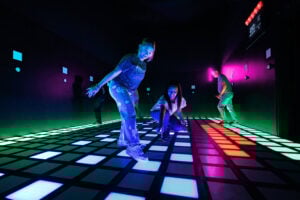
A Canadian success story on its way to a global phenomenon, Activate Games is a futuristic experience where you become the player