Travel
The great dinosaur road trip, Alberta
Exploring the staggering diversity and volume of the province’s Cretaceous sites
- 2267 words
- 10 minutes
Science & Tech
Technology is radically changing our understanding of how dinosaurs looked and behaved, revealing a far more dynamic prehistoric world than we ever imagined
About 252 million years ago, Earth experienced its worst-ever biological catastrophe. Aptly called the “Great Dying,” the end-Permian mass extinction saw about 90 per cent of lifeforms disappear due to rapid environmental change, likely driven by volcanic activity. Upon this virtually clean organic slate blossomed new ecosystems both oceanic and terrestrial, the latter dominated by odd, mammal-like reptiles and an even more diverse reptilian group called archosaurs. The archosaur family tree sprouted two main branches: one comprising crocodiles and their relatives; the second, critters more closely related to birds — including a group which would dominate the planet for some 165 million years. Yes, these are the dinosaurs, whose eventual recognition by preternaturally intelligent primates begets another story entirely.
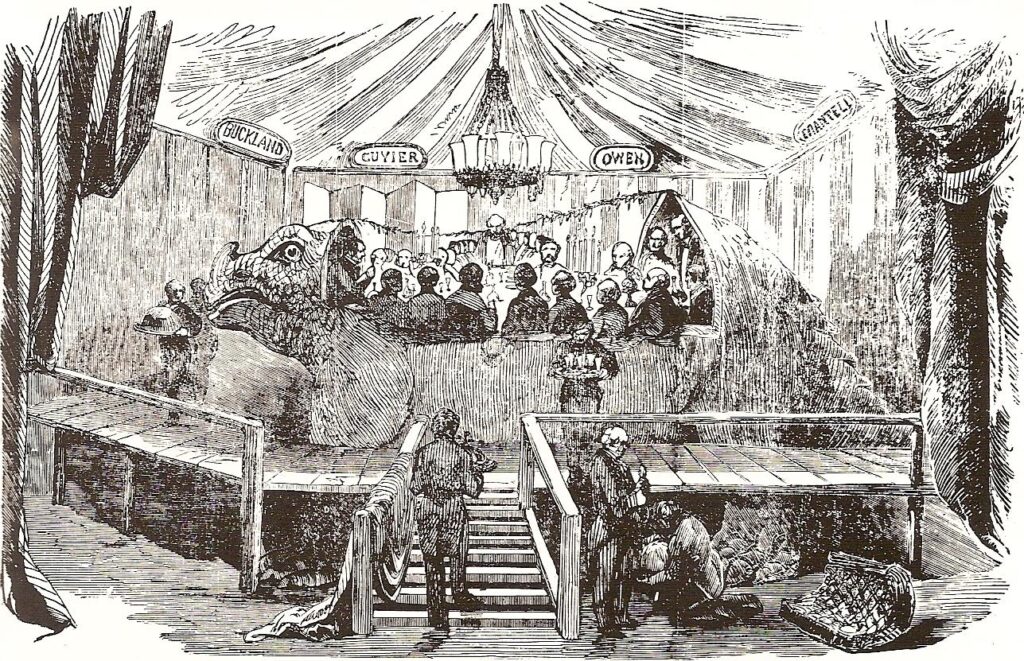
“Dinosauria” — terrible (as in fearfully great) lizards — is coined in an 1842 report on British fossils, when celebrated anatomist Richard Owen compounds two Greek words into a catch-all to describe three monsters latterly unearthed from the paradoxically peaceful English countryside: Iguanodon, Megalosaurus and Hylaeosaurus. Their ages and relatedness are elusive, but Owen recognizes certain structural affinities; given his status, the term sticks.
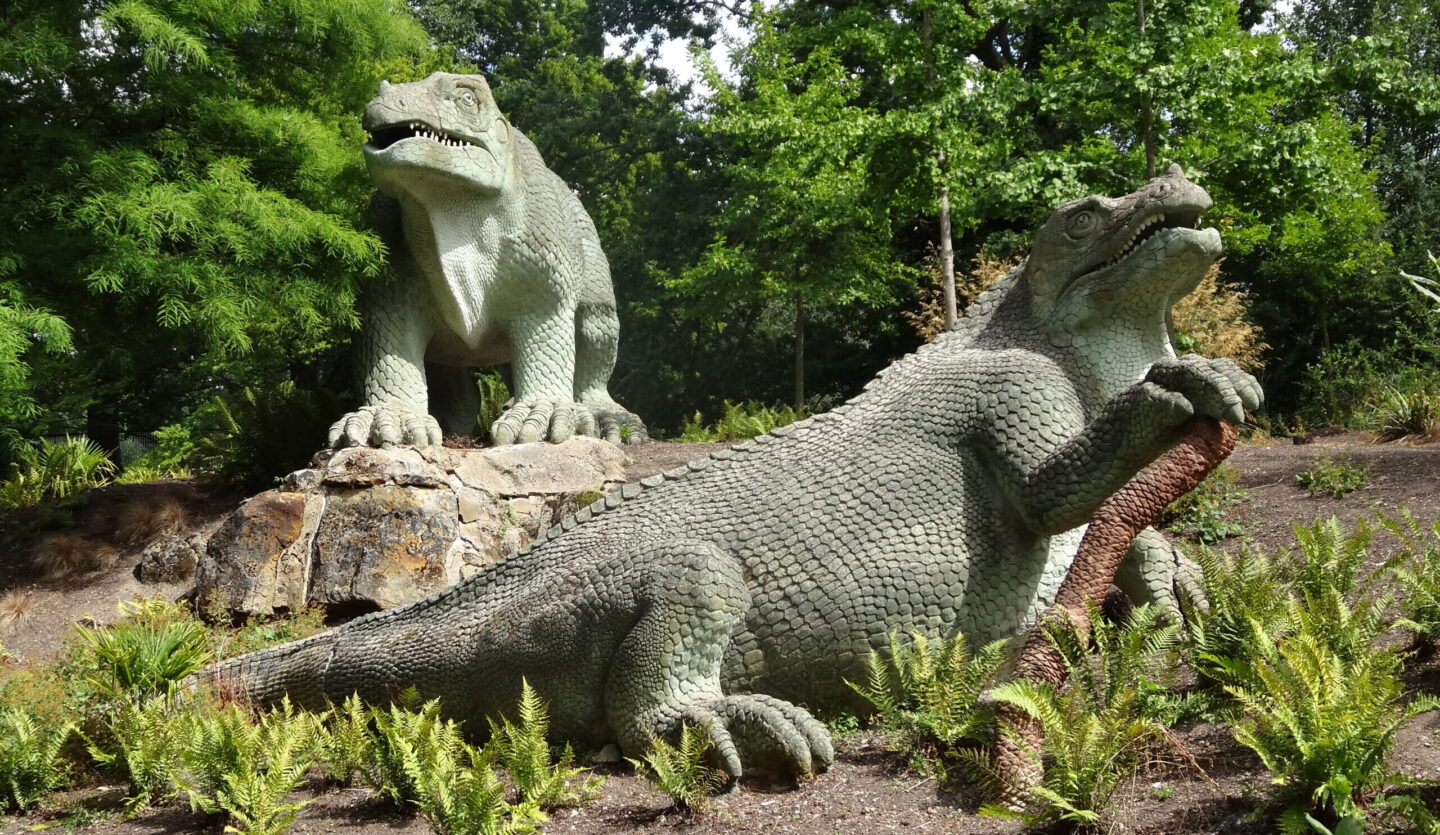
A dozen years on, London’s vaunted Crystal Palace provides an opportunity for the first public exhibition of dinosaurs. Recreated as life-sized sculptures under Owen’s direction, the display etches an essential duality into humanity’s relationship with these animals. First, insatiable public interest ensures dinosaurs are an instant commercial success, and organizers make bank hawking miniature versions. Second, the reconstructions prove almost comically inaccurate. Iguanodon, for example, an agile, sometimes bipedal herbivore with thumb-spikes, is infamously portrayed as a lumbering quadruped with those spikes affixed to its head like a rhino.
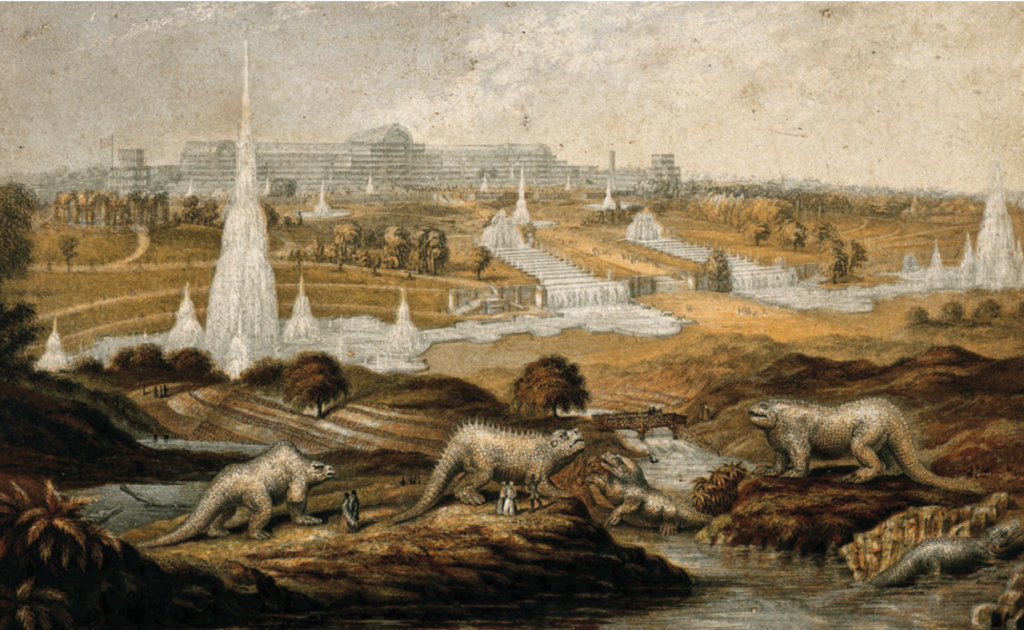
The Victorians can be forgiven for keening to beasts of familiarity. Not only were the dinosaur remains partial and piecemeal, but they were also enigmatic, the lack of any living counterpart a mystery. Even after Charles Darwin’s On the Origin of Species dropped in 1859, limits of human knowledge inevitably combined with imagination in a predictable sequence of misinterpretation, conjecture and correction when new dinosaurs came to light. Reflected in whimsical paleo-art and mutating skeletal mounts, getting it wrong became a necessary stop en route to understanding. Until then, dinosaurs would mostly be construed as large, dull-witted, monochromatic B-movie stars, their true majesty constrained only by our inability to account for their improbability.
While the tiniest glimpse of their unfathomable world kicked off our ever-expanding fascination with dinosaurs, it would require more than a century of obsessive pan-global collecting, key discoveries and a wealth of new technologies to shift paleontology into an empirical realm that would yield an explosion of insight.
With literally every branch of science contributing, we now know things about dinosaurs unimaginable a generation ago: not only how anatomies piece together, but how the animals moved, grazed, hunted and herded; not only that some species reached outrageous proportions, but how and why they grew so large; not only what they were eating, but where, as well as the mechanics of biting, chewing and digestion; not only that they laid eggs, but which types and how parents cared for them. We know some male dinosaurs fought each other, some suffered bone cancers, and many lineages were covered in feathers, whose colours and patterns we can also discern.
If you’re wondering how anything so detailed can be known of such a vanishingly distant past, welcome to the club. “Paleontology is this weird blend of old- and new-school. Finding, collecting and preparing bones hasn’t changed much, but the ways and means of looking at them have evolved in step with technology,” says Caleb Brown, curator of dinosaur systematics and evolution at Alberta’s Royal Tyrrell Museum. “When you put enough time, effort and knowledge into understanding something, it’s amazing the kinds of things you can find out.”
BY NOON ON A RAINY SUNDAY in March, the Sauriermuseum in Aathal, Switzerland, has seen a thousand visitors. Outside the one-time textile mill stands a colourful model of Spinosaurus, the bizarre, gigantic, amphibious predator first described in 1915. With a never-to-go-extinct movie franchise featuring the brute in its latest instalment, Jurassic World: Rebirth, it seems portentous — though the proprietor is merely happy to see his museum full. “Without days like this, we couldn’t fund the work of discovering and preparing new, scientifically significant fossils,” says Hans-Jakob Siber.
“Treasures nobody has seen before.” But Siber, a commercial collector, is no pirate of the past. His connection to deep time goes far beyond the thrill of the hunt to big-picture thinking on Earth history, from the planet’s accretion out of stardust 4.5 billion years ago to its eons of lifeless solitude, geologic upheaval and atmospheric makeover; from the appearance of life to subsequent evolutionary milestones and what each has meant.
Siber delivers me first to his current marquee, “T. rex Trinity,” a massive, shockingly toothy specimen before which children shriek and adults jaw-drop. Wow is clearly the same in any language. There’s a faint echo of my own first dinosaur encounters in the 1960s, when size and ferocity ruled, but the comparison ends there. In those days, bipedal skeletons were static and upright, tails to the ground, arms like a begging dog. Lit from below for effect, they loomed in dark rooms reverberating with eerie soundtracks like some carnival haunted house. Trinity, in contrast, is wholly animate, in horizontal full flight — and full light — like it’s just another day for one of the largest carnivores that ever lived. The deeper I head into Siber’s sanctum, the closer that world feels.
Other rooms focus on the diversity of plant-munching hadrosaurs (those crested, duck-billed guys), carnivorous feathered theropods (T. rex’s close cousins) and the earliest birds these gave rise to — including famous “missing-link” Archaeopteryx, accompanied by a hologram of its real-life self. There are giant sauropods like Diplodocus, a litany of skin and feather impressions, dinosaur eggs in nests and recently hatched youngsters, their rough lives revealed in rib bones damaged by sibling play bites. Side-by-side dinosaur tracks overlain by computer visualizations show how gait, speed and weight are determined — as well as whether the prints represent a family, a herd or a predator-prey pursuit. There’s also plenty to dine out on with respect to who was eating what: toothmarks on bone from both attacks and scavenging; dinos who died with full stomachs; and coprolites (fossilized poop), the end of any gastronomic tale.
Exquisitely prepared fossils and casts are not only paired with cutting-edge tech here, but punctuated by troves of dinosaur memorabilia ranging from T-shirts, posters and foodstuffs to a dinosaur-tipped condom mounted on a banana. Whether scientist or plain ol’ dinosaur nerd, this is your happy place. “Everyone has a different connection to dinosaurs,” says Siber. “So our intention is to be as broad as possible … visualizing the whole cycle of how they lived and died — and how we relate to them.”
David Evans, Temerty chair in vertebrate paleontology at the Royal Ontario Museum, is well acquainted with this colossal shift in dinosaur understanding. Evans first traces an emphatic line to the 1993 release of the original Jurassic Park. “Though we should have known better sooner based on [dinosaurs’] sheer longevity,” he says, “the movie jumped us way past the tradition of big, dumb lizards up to their armpits in a swamp.”
To create Jurassic Park, movie-makers worked with animators, paleontologists and biomechanics experts to show how these animals might have moved, sounded and otherwise behaved (Hollywood distortions not withstanding). As Evans adds, the science behind the film was inspired by the so-called “dinosaur renaissance.”
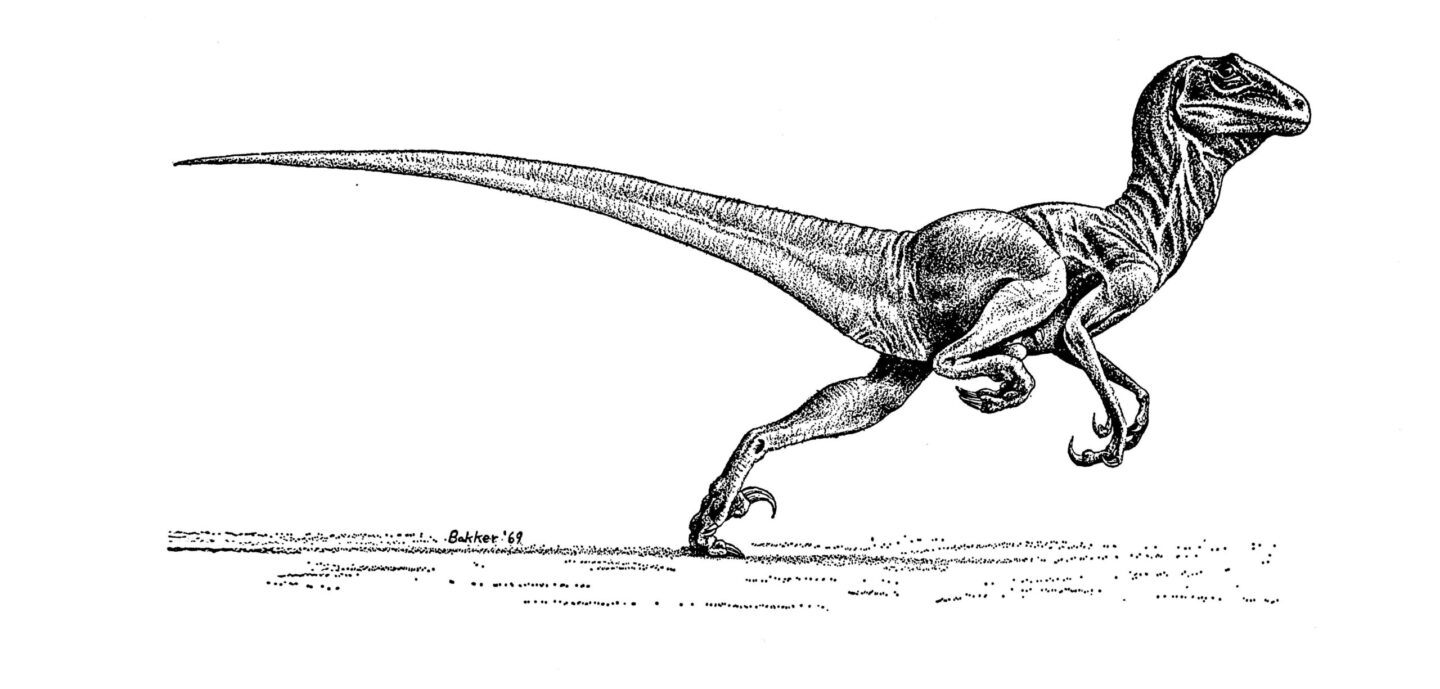
Working in Montana in 1964, American paleontologist John Ostrom unearthed a smallish, bird-like theropod with unusually hollow bones, sickle-shaped claws on its hind feet, and a sleek, horizontal posture. Ostrom’s 1969 description of this creature, Deinonychus (“terrible claw”), suggested an active, fleet-footed predator whose energetics demanded warm-bloodedness like modern birds and mammals. This renewed the idea of birds descending from dinosaurs, floated around 1868 by Darwin-defender T.H. Huxley based on the skeletal similarities of bird-like dinosaurs and dino-like birds from the same Bavarian limestone. Ostrom had his own defender in his outspoken student Robert Bakker, a real-life preacher who proselytized these new views in magazine articles and a 1986 book, The Dinosaur Heresies. Bakker helped sway public perception of dinosaurs from animated versions of plastic gift-shop models to warm-blooded, big-brained evolutionary success stories.
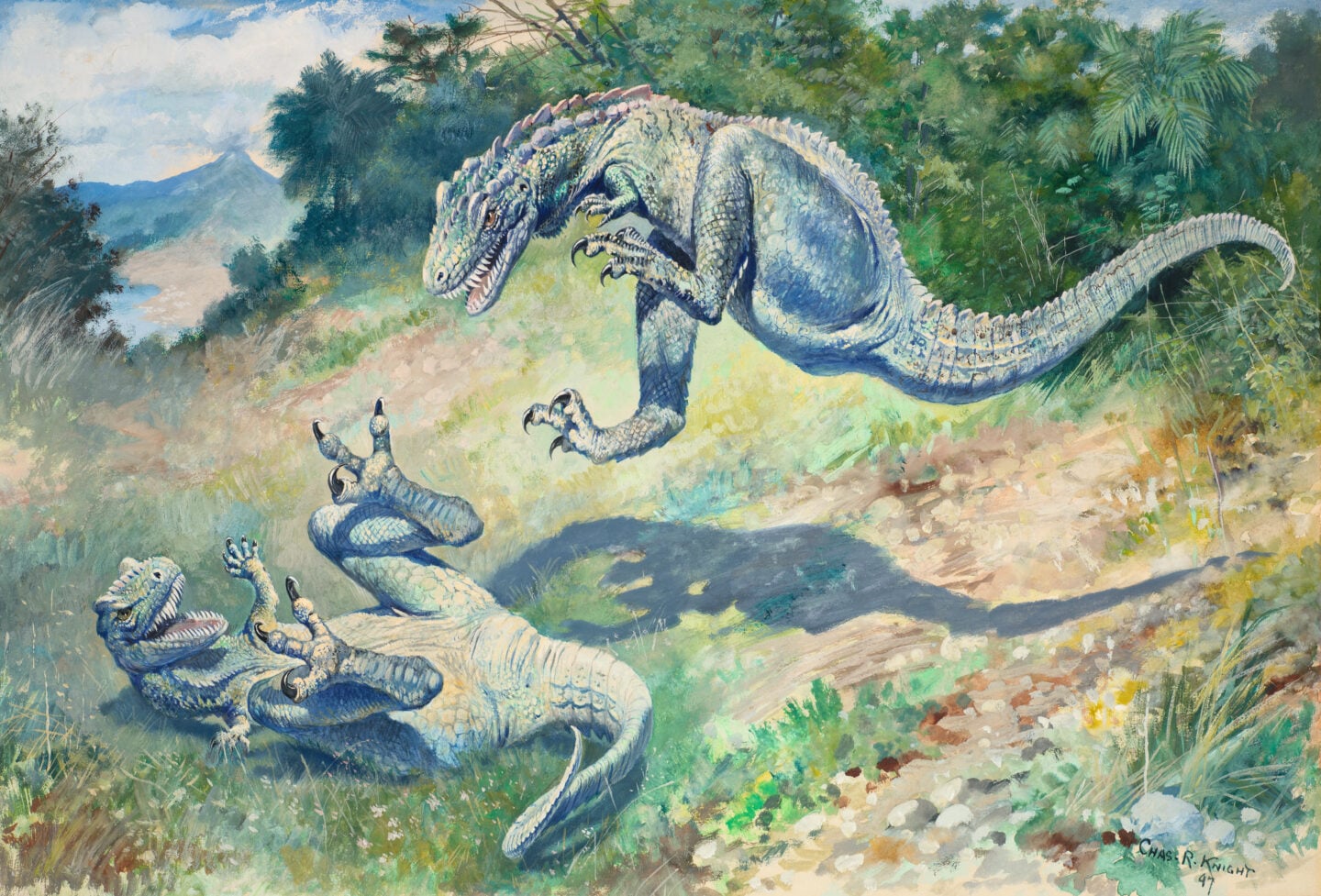
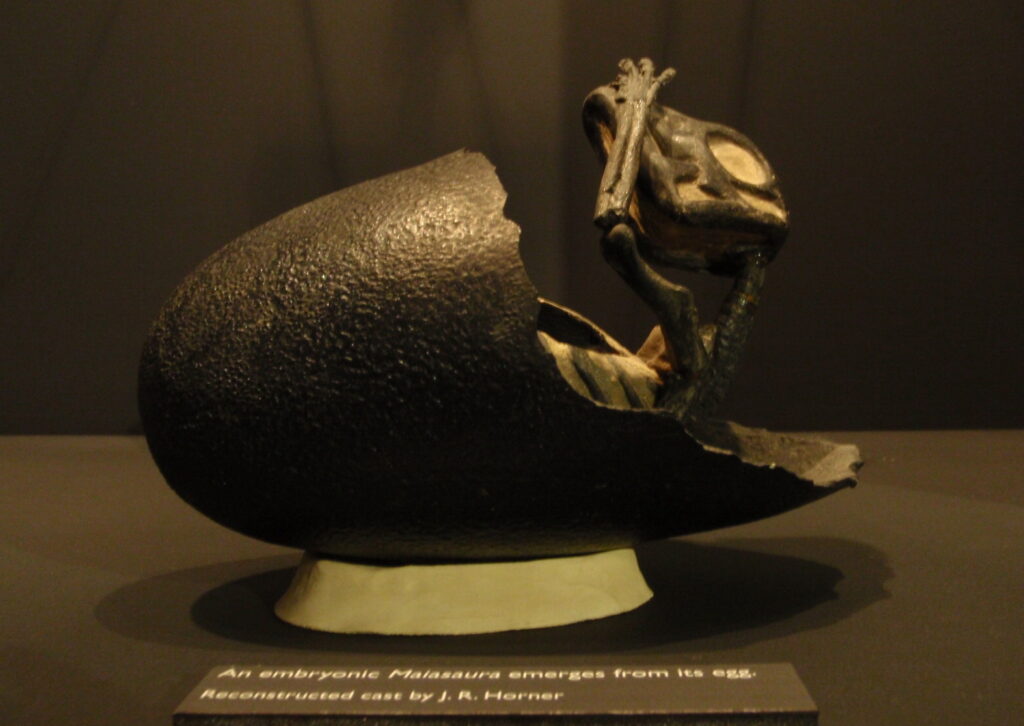
Bakker was joined in his crusade by another American paleontologist, Jack Horner, the first to uncover dinosaur eggs and nests in North America. From 1978 to 1983, in a small area of Montana, Horner and associates found 14 nests, 42 eggs and 31 babies — complete with a picture of what the ancient environment was like, and that it was used for generations. This formulated a previously unheralded vision of dinosaurs caring for their young in penguin-like colonies. They named the species Maiasaura — “good mother lizard.” This “snapshot of a fleeting moment” 80 million years ago bolstered an important hypothesis: metre-long baby dinosaurs would be unlikely to wander beyond the nest lest they be crushed by 10-metre adults; and if they stayed at home, they’d have to be fed and grow fast — like warm-blooded birds and quite unlike cold-blooded reptiles.
Unsurprisingly, this new paradigm ignited lively debate with those who clung to traditional dinosaur orthodoxy. Logic would soon settle some of the arguments, and technology would take care of the rest. In 1969, Bakker drew Deinonychus as a streamlined, horizontal sprinter. When British counterpart Peter Galton followed suit for the hadrosaur Anatosaurus, the “truth of their insight was grasped immediately,” writes paleontologist Michael J. Benton in Dinosaurs Rediscovered, “and the kangaroo-dinosaurs were never to be seen again.”
Almost overnight, the largely intuitive dinosaur stances that had undermined both science and art were traded for correctly balanced bodies that could not only sway and bob as the animals walked but also strike efficient running postures. The timing was fortuitous, coinciding with the rise of scanning electron microscopy (with 100 times the resolution of regular microscopy), CT scanning (short for computed tomography, a 3D X-ray that allowed researchers to see inside fossils) and powerful computers that could test evidence from footprints, skeletons, biomechanics and modern analogs for likely poses and gaits. One finding in particular explained earlier misunderstandings: some dinosaurs moved in ways no modern animal can.
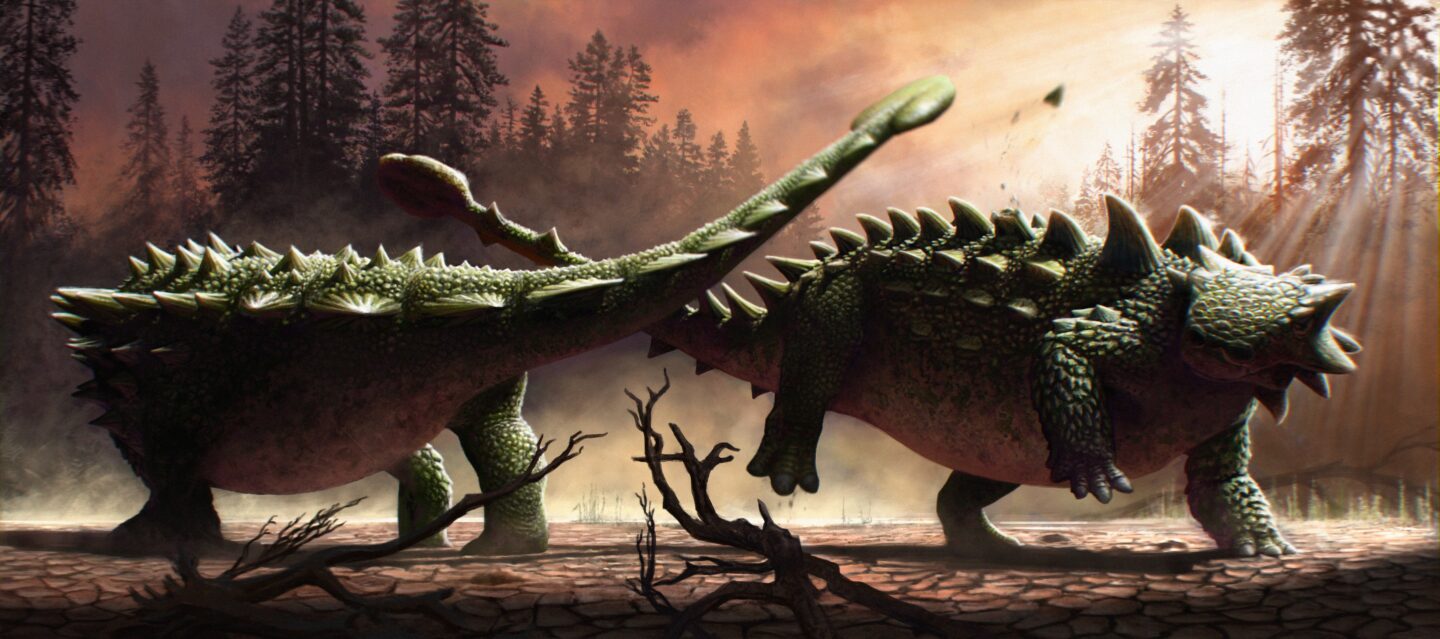
WITH SOMETHING approaching glee, Victoria Arbour, curator of paleontology at the Royal BC Museum, recounts using CT scanning to analyze tail-clubs in ankylosaurs, low-slung, tank-like herbivores covered in bony armour and spikes. When she was an MSc student at the University of Alberta, her husband had shown her an illustration of an ankylosaur “basically bopping a tyrannosaur in the face with its tail club. And I thought, ‘How do we know they could do that?’ So it became my thesis,” she recalls. “Back in 2007, we could only access hospital CT scanners — and they’d have to crank up the juice on them because fossils were so much denser than human bodies.”
Arbour took a two-part approach: first, could ankylosaurs move their tail clubs fast enough to cause injury? Second, if they smashed something hard, might they also break their own tails? Using finite element analysis — a method for solving engineering problems like stresses and strains on a bridge — Arbour used the CT data to build a digital ankylosaur model; when force was exerted on a single point, the computer calculated how well this was distributed. Under most scenarios, the tail absorbed the forces without breaking. “I concluded tail clubs were adapted to function as weapons,” she says. “But against whom?”
In modern mammals, horns and antlers for fighting among one’s own species are only secondarily employed for defence, something Arbour often contemplated. Then she met Zuul, a particularly well-preserved ankylosaur with intact skin, spikes and even soft tissue. Noting several broken and healed spikes along Zuul’s flanks, exactly where you’d expect if two ankylosaurs lined up to do battle, Arbour argued in a 2022 paper that, rather than defence, ankylosaur tail clubs evolved primarily to fight for social dominance, elevating them to behaviourally complex animals like today’s large herbivores.
Bakker helped sway public perception of dinosaurs from animated versions of gift shop models to warm-blooded, big-brained evolutionary success stories.
Arbour recently used another 3D modelling technique — photogrammetry — on ankylosaur footprints found in British Columbia. Requiring only a series of detailed, two-dimensional images easily acquired with a cellphone, “it’s a great way to share and study data,” she says. With photogrammetry, “you can have a 3D model of a track series hundreds of metres wide that could never fit in a museum.” Arbour created a digital version of a trackway found high on a rock wall that could then be analyzed and posted online for comparison with others.
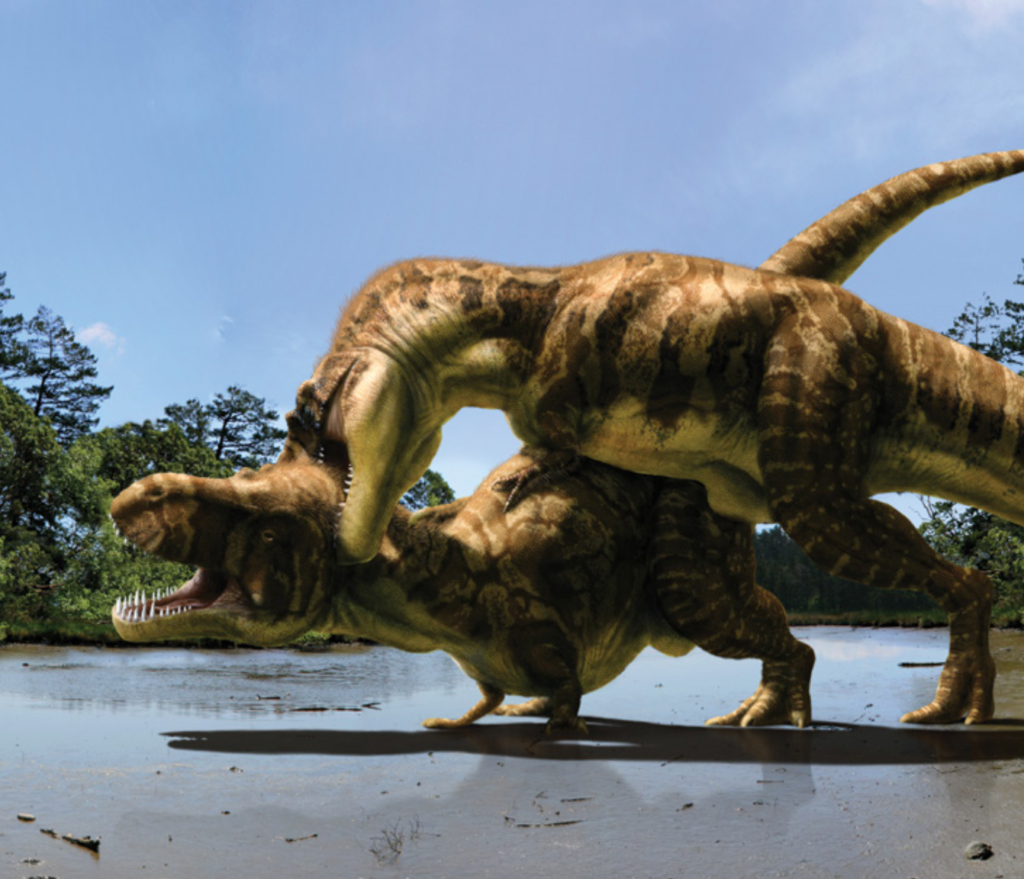
Nevertheless, bones themselves can still answer many questions — especially with a large enough sample size. The Tyrrell’s Caleb Brown used this approach to elucidate face-biting behaviour in tyrannosaurs after seeing an upper jaw from Alberta’s Dinosaur Provincial Park that bore intriguing scars. The biting idea already existed in the literature, launching Brown on a search for healed tooth marks in other specimens: 202 tyrannosaurid skulls yielded 324 bite marks and battle scars. “If you found these kinds of things on only two or three specimens you could make up any story you wanted,” he says of the study published in 2021. “But when this many show the same thing, you can decipher some definite trends.”
Tellingly, the bite marks began to appear in half-grown tyrannosaurs. “The teenage years,” quips Brown about the developmental stage in which adult cosplay first takes hold. Across several species, orientation and positioning of scars showed the consistency expected from repeated conflict. And since face-biting analogues exist among modern turtles, lizards and fellow archosaurs like crocodiles, researchers interpreted the tyrannosaurid version as wrangling for territory or mates — an example of modern biology informing paleontology.
Because of such cross-pollination, we know more about Cretaceous dinosaurs like T. rex than we do about many living animals, says Steve Brusatte, author of The Rise and Fall of the Dinosaurs, adding “we’ve thrown the whole toolbox at [it].” Detailed CT scans show T. rex possessed not only brute strength, keen smell, hearing and vision but also high intelligence based on brain-to-body-size ratios. “We can say that Rex was roughly as smart as a chimp and more intelligent than dogs or cats,” writes Brusatte. “That’s a whole lot smarter than the dinosaurs of stereotype.”
Bone scans also show that despite no tyrannosaurid living more than 30 years, these creatures grew from kitty-sized hatchlings to, in the case of T. rex, 13 metres in length and about seven to eight tonnes in weight in record time. From ages 10–20, T. rex added an astounding 760 kilos per year — over two kilos daily. Numbers, as Brusatte muses, “almost too big to comprehend.” Their skulls also changed as they grew, from long and low in fast-running youngsters, to the massive, heavily muscled configuration of adults — whose sinus expansions to lighten the load of a thickening skull often hide brain-surface details in preserved specimens. Referencing a CT study of braincases across developmental stages of the tyrannosaurid Gorgosaurus, associate professor Darla Zelenitsky of the University of Calgary notes how examining the right life stages can be key to understanding dinosaur evolution. “Brain details are much better preserved in juveniles … [so these] give a more accurate sense of brain evolution in what eventually became birds.”
Though this all sounds astounding, we can’t forget science’s inherently revisionist nature: we know what we know until we know different. Deep time is a slippery slope whose angle is often reset by new finds. For example, a recent description of a tyrannosaurid whose adults are about half the size of T. rex has called into question some fossils originally classed as juvenile tyrannosaurs, sending paleontologists worldwide scrambling to museum drawers to double-check their bone assignments.
If 3D-imaging helps visualize the internal structure of fossilized bone, paleohistology — which reveals microanatomy in ultra-thin bone slices — homes in on growth rates, metabolism and years lived. While most studies involving paleohistology point to warm-bloodedness in at least some dinosaurs, more powerful tech can give clearer answers: electron-microscopy allows researchers to look directly at cells and macromolecules, while mass spectrometry can sort through thousands of chemical signatures.
A 2022 study published in Nature used infrared spectroscopy to reveal molecules in fossil bone produced as waste during oxygen inhalation — definitive markers of the high-powered metabolism of a warm-blooded animal. And paleontology’s love affair with molecules is only just beginning.
THIS T. REX WAS FEMALE — and pregnant. Mary Schweitzer had deduced this, incredibly, from the thigh bone of a well-preserved 68-million-year-old. Because the internal structure of bone in modern birds changes as calcium is diverted to build eggshells, the molecular paleontologist at North Carolina State University was curious about how pregnancy affected bone in this early egg-laying relative.
While using mild acid to leach out minerals formed during fossilization, however, she discovered something else: what looked like clear, still-flexible blood vessels. After abundant experimentation suggested this was fossilized soft tissue, Schweitzer published the improbable find in a pair of 2005 papers in Science. Two years later, she was able to demonstrate that proteins extracted from the bone indeed originated from dinosaur soft tissue and represented collagen — a large, rope-like molecule ubiquitous in any tissue requiring both strength and flexibility. But how had it been preserved for so long? Iron-rich blood once coursing through the leg of this T. rex. Freed from compounds like hemoglobin that it’s bound up in during life, forms iron free radicals that have a preservation effect on some organic molecules. “The free radicals cause proteins and cell membranes to tie in knots,” Schweitzer told Live Science when her find was published in 2013. “They basically act like formaldehyde.”
Unlike most science, the vanished world of dinosaurs is something we desperately want to know about.
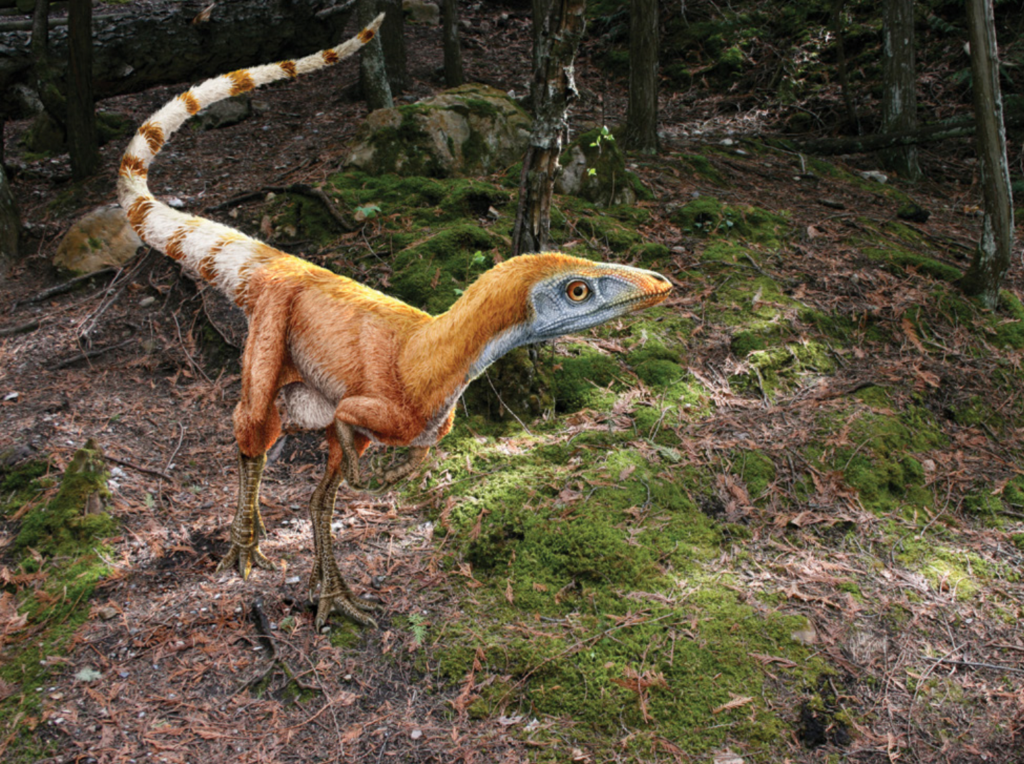
Meanwhile, another molecular epiphany was also underway. In 2008, Jakob Vinther, then a doctoral student at Yale, showed how “micro-balls” and “micro-sausages” observed under scanning electron microscopy in fossil bird feathers occurred only in dark-coloured areas. The balls and sausages were two types of melanosomes — tiny hollows inside hair and feathers containing the pigment melanin. And melanin, it turns out, is as tough as collagen when it comes to surviving fossilization. Charting the distribution of these structures in dinosaur skin and feathers brought their world into technicolour, swinging open a previously invisible door through which researchers quickly charged. Paddy Orr, then a member of Michael Benton’s lab at the University of Bristol, soon found the first objective evidence of dinosaur colour and pattern in Sinosauropteryx, a 125-million-year-old feathered theropod from China. The creature was ginger, with a ginger-and-white striped tail, like a roadrunner dressed as a lemur.
Still another form of molecular insight — stable isotope analysis — has turbo charged the field of paleoecology. Isotopes are slightly different versions of the same chemical element, and varying ratios of these incorporated into bone and teeth during an organism’s life can reflect its ecology, diet and movements. Unlocking such chemical knowledge can help solve mysteries like the puzzle of Spinosaurus. With its skeleton coming together in dribs and drabs over the decades, the notion of whether it was an aquatic or terrestrial animal is hotly debated every time a new bone is found. But isotope analysis of its teeth definitively shows Spinosaurus living near water and eating fish — a life history tied to an aquatic ecosystem that appears unique among dinosaurs.
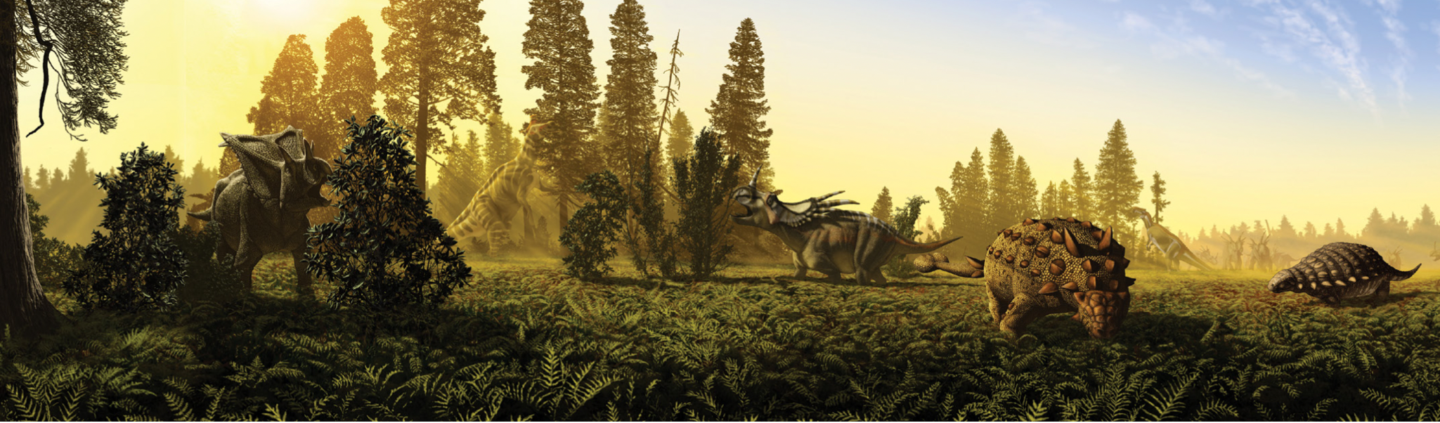
Isotopes have also opened a window on how different species of herbivorous dinosaurs lived alongside each other. “You don’t see this kind of standing diversity of megaherbivores today — double what you’d find even on the Serengeti,” says Canadian Museum of Nature research scientist Jordan Mallon of the herds of horned dinos, duckbills and ankylosaurs found in Dinosaur Provincial Park. He’s currently using the carbon, oxygen and strontium isotopes found in tooth enamel to examine how two major group of hadrosaurs are separated into ecological niches. Mallon’s previous work showed that, much as for modern megaherbivores, competition for different foods — as opposed to predation pressure — is what structured these dinosaur communities.
Leaning on the benefits of technology and abundant fossils unearthed over the past 200 years, research like Mallon’s paints pictures of ancient life that make the Crystal Palace recreations seem like children’s drawings. I find myself imagining these animals on the land together, as if observing from a Jurassic Park safari vehicle.
Such visualizations are possible not only because paleontologists continually strive to understand the past, but because society continues to exert considerable cultural encouragement to do so. Unlike most science, the vanished world of dinosaurs is something we desperately want to know about — and see.
BACK AT THE SAURIERMUSEUM, the crowds are winding down. Siber’s next exhibit revolves around an exquisite Triceratops specimen, and in an outdoor workshop I watch three technicians rejig a version he wasn’t keen on. Mounting a skeleton is no small feat; each bone must be removed from its rock matrix, individually restored from the deformation suffered after millions of years of burial, then painstakingly arranged in the desired posture with welds and braces. When Siber notes this requires 5,000 to 10,000 hours per skeleton, I’m more surprised than I should be. But then, these creatures deliver no end of surprises — and inspire no end of human effort and innovation.
Indeed, as I was wrapping this story, news hit the wires that a group of paleontologists, including Caleb Brown, had figured out how to hunt dinosaurs with drones, using them to scan for a bright-orange lichen that preferentially colonizes exposed bones. “The field of paleontology is evolving rapidly and it’s fun to be part of it,” Siber had told me. “Every animal we uncover is another part of the mosaic that helps to complete a bigger picture … and some of the best things are still out there to be discovered.”
This story is from the March/April 2026 Issue
Travel
Exploring the staggering diversity and volume of the province’s Cretaceous sites

Science & Tech
What dinosaurs lived in close proximity to each other — and why? New research uses dinosaur teeth to find the answers

Wildlife
Canadian researchers have found the first case of malignant bone cancer in a dinosaur

Science & Tech
Theories behind why dinosaur fossils are found in a strange position