Places

Deep, dark secrets

Pioneering cave diver Jill Heinerth sheds light on Canada’s longest underwater cave system beneath the Kichi Sibi Watershed

  • Published Apr 04, 2026
  • Updated May 04
  • 783 words
  • 4 minutes
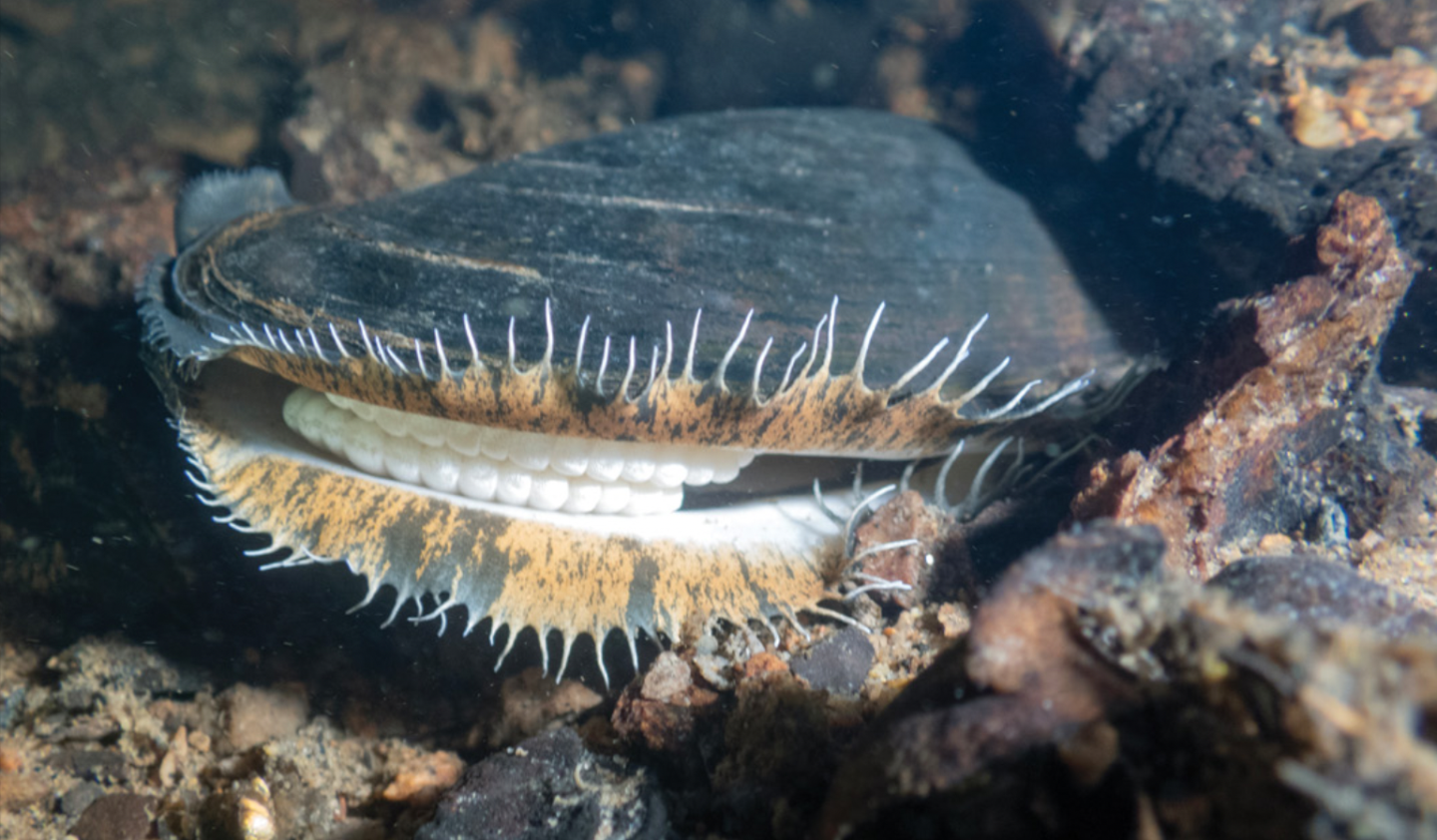
The “happy” black sandshell mussel reveals brood pouches filled with tiny mussels. Her “mustache” lures fish that eat crayfish. When a fish comes close, she expels her microscopic larvae. (Photo courtesy Jill Heinerth)
Expand Image
Advertisement
Advertisement
Live Net Zero Email Service

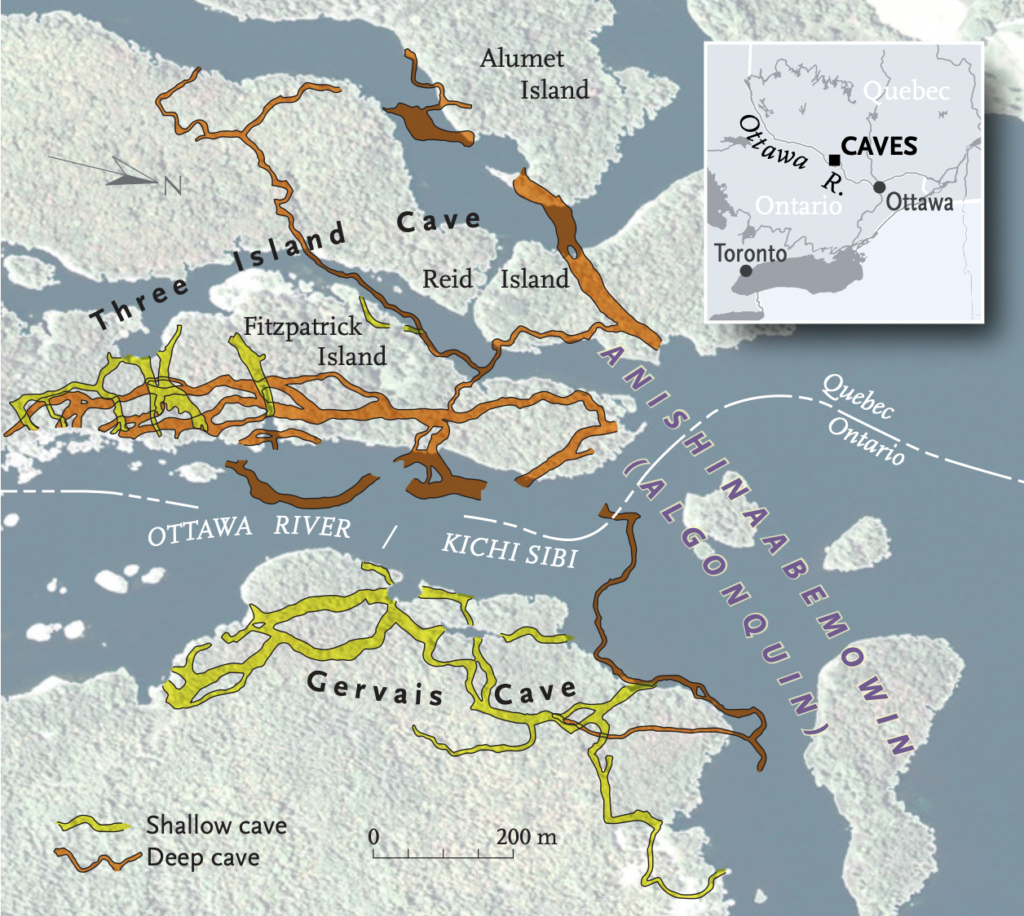
IT’S DARK AND DANGEROUS, murky and muddy. But Jill Heinerth is right at home in the labyrinths of caves beneath the surface of the Kichi Sibi watershed, also known as the Ottawa River watershed. The celebrated cave diver and researcher has made it her mission to explore Canada’s longest underwater cave system, which meanders beneath the river, its islands and its shoreline for a whopping 10.6 kilometres straddling Ontario and Quebec.

Heinerth likens freshwater cave diving to “swimming through the veins of Mother Earth.” Within this particular freshwater labyrinth, she has discovered a completely undocumented ecosystem filled with the greatest density of living organisms she has ever observed in an underwater cave.

The caves — now known as the Gervais and Three Island caves — were formed in the Ottawa River near Westmeath, Ont., over thousands of years as acidified river water gradually forced its way through joints and cracks in the limestone there. In the process, a series of sinkholes and passageways were formed. These passageways are quite shallow, usually just three to nine metres, branching out in multiple directions like a giant underground tree. Heinerth calls it “a remarkable environment — like a museum of natural history.” But the extensive network can also be treacherous for divers, with fast-moving water creating strong currents.

Map: Chris Brackley/Can Geo
Expand Image

The cave system doesn’t attract cave divers looking for something beautiful, but to Heinerth, this mysterious underworld is a paradise with much to discover. Fish such as sturgeon, perch, burbot, walleye and smallmouth bass can be found swimming about and hiding in crevasses, while the silty cave bed in some places boasts a whopping 100 or more mussels per square metre, along with myriad sponges and other benthic life. And given how few divers have the skills to navigate the caves, there may still be cave-adapted species awaiting discovery. Beyond the abundant underwater life, the cave walls provide a fascinating glimpse of the area’s ancient past — the rock is embedded in places with fossils that harken back to the last glacial period when the Champlain Sea covered much of eastern Ontario. 

What makes these caves even more special as a research location is that they remain free of the invasive zebra and quagga mussels that have devastated the Great Lakes (and beyond) by filtering out beneficial plankton and algae, outcompeting native species and disrupting the Great Lakes food chain. Heinerth calls the Gervais and Three Island caves “a place where we can see what the lakes were — and what they could be again — if we can control the invasive species.” The native freshwater mussels that live here in the caves play a crucial role in aquatic ecosystems in the Kichi Sibi watershed. Each mussel filters one to two litres of water per hour to obtain food. That works out to 10,000 litres per year per animal! It all adds up to a healthy ecosystem in the caves and supporting life for thousands of kilometres downstream — this fresh water flows east to the St. Lawrence River and, eventually, all the way to the Atlantic Ocean. 

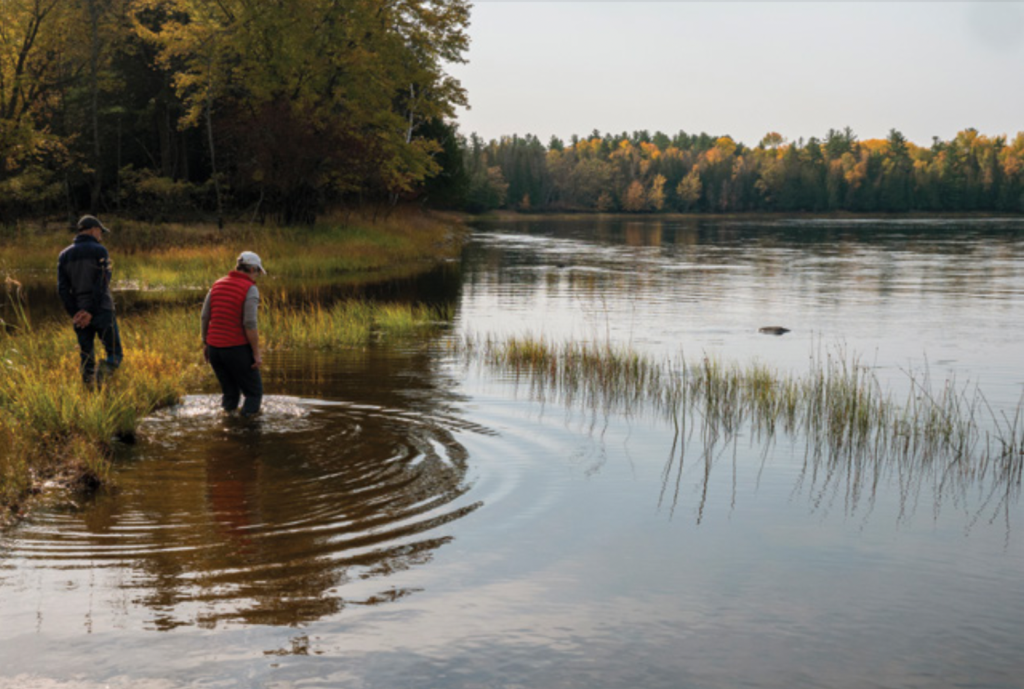
Researchers believe the thin papillae resemble crayfish legs. A calm surface above the mysterious world below. (Photo courtesy Jill Heinerth)
Expand Image

One of the intriguing symbiotic relationships Heinerth is studying in the caves involves their thriving native freshwater mussel population and resident fish. The mussels create a cleaner and healthier environment for the fish; the fish play a crucial role in the mussels’ reproductive life cycle.

Each mussel species has a slightly different strategy for obtaining support from a host fish. In the case of the female pocketbook mussel, it goes like this: Once a year, the mussel grows a lure that looks for all the world like a small fish. Attracted by the wiggling lure, a fish swims in for a closer look at its potential dinner and takes a nip. That’s when the mussel expels her microscopic larvae into its face. The parasitic mussel babies go into the fish’s mouth and latch onto its gills or fins, hitching a ride while being nourished by its blood serum. Once they reach a certain size, the fish’s immune system ejects the juvenile mussels, and they float down and burrow into the silty cave bottom, where they will grow into adults, spending the next decades — or even a century for some species — continuing the cycle of filtering the waters of the Ottawa River.

It all adds up to a whole lot going on beneath the surface in the Kichi Sibi watershed, which Jill Heinerth continues to explore, document and draw inspiration from as she works with scientists and Indigenous partners — and inspires the next generation of students, cave divers, citizen scientists and researchers — to study and protect this very special ecosystem.
Advertisement

Help us tell Canada’s story

You can support Canadian Geographic in 3 ways:

Live Net Zero Email Service

This story is from the Biinaagami Special Issue 2025 Issue

Related Content

Wildlife

Secrets of “Secrets of the Penguins:” Behind the scenes of the hit docuseries

Penguin expert Pablo García Borboroglu and wildlife filmmaker Bertie Gregory share insights into the latest installment of National Geographic’s hit “Secrets of” franchise 

  • 1305 words
  • 6 minutes

Wildlife

Unravelling the genetic secrets of an ice age relic

The deepwater sculpin thrives in deep lakes and cold temperatures. Researchers are now sequencing its genome to unravel the genetic secrets of this iconic Canadian fish

  • 869 words
  • 4 minutes

Travel

Secrets of the Nahanni

A timeless journey down a river that was here before the mountains

  • 2140 words
  • 9 minutes

Environment

Wonder and loss: the deep ocean and its future

Though it’s the largest ecosystem on Earth, we know less about the deep ocean than the surface of the moon. As the threat of mining looms, will its fate be decided before we know enough to make such a far-reaching choice?

  • 4191 words
  • 17 minutes
Advertisement
Advertisement