People & Culture
The biggest year in Canadian birds
A tale of joy and persistence: Logging Bruce Di Labio’s birding “big years” almost 50 years apart
- 4123 words
- 17 minutes
Travel
On this Eagle-Eye Tours adventure from Vancouver to Kelowna, rare birds and responsible travel go hand in hand

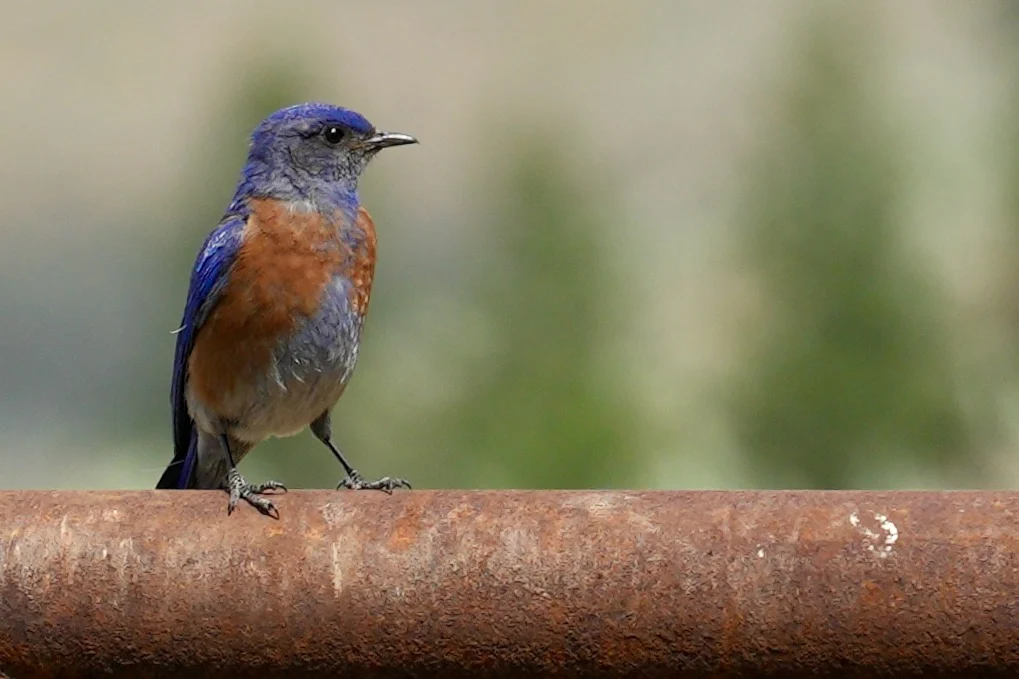
Mist clings to the mountain peaks surrounding B.C.’s Manning Park as our group steps quietly into the dawn. We scan the forest for grouse when an American three-toed woodpecker zips past. Binoculars lift in unison to spot the shy, black and white bird darting into a nest 10 metres above the forest trail. A sharp beak pops out of the tiny hole, followed by black eyes scanning for danger, and then the bird is gone, off to capture insects for the young growing bigger each day in the tree cavity. It is the kind of moment that reminds me why and how we need to travel more thoughtfully, pausing to admire the wildlife that shares our Earth while doing our best to minimize our presence.
In a world where headlines warn tourists about overwhelming the very places they have come to admire, I’m becoming more aware of how my travel choices affect the communities and destinations I visit. So, how can we explore new places without contributing to the problem?
As a travel writer who has taught courses in sustainability and adventure travel, and previously, helped nature tourism destinations develop their long-term growth plans, I have learned to deeply question each adventure I say yes to: How am I impacting the environment? Am I travelling as ethically as possible? Are the regulations surrounding wildlife encounters ethical and enforced?
So, when the opportunity to join a Canadian Geographic Adventure with Eagle-Eye Tours was brought to my attention, I reviewed the itinerary to make sure it wasn’t a big group and didn’t include stops to already busy areas, and quickly learned that saying yes to this six-day journey was a good choice.
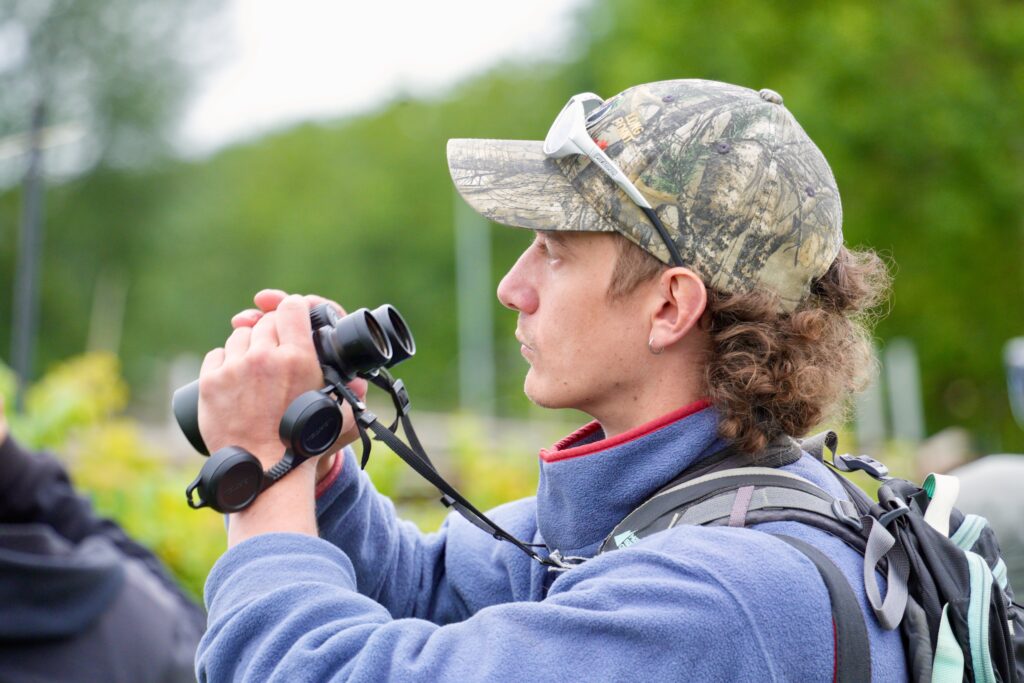
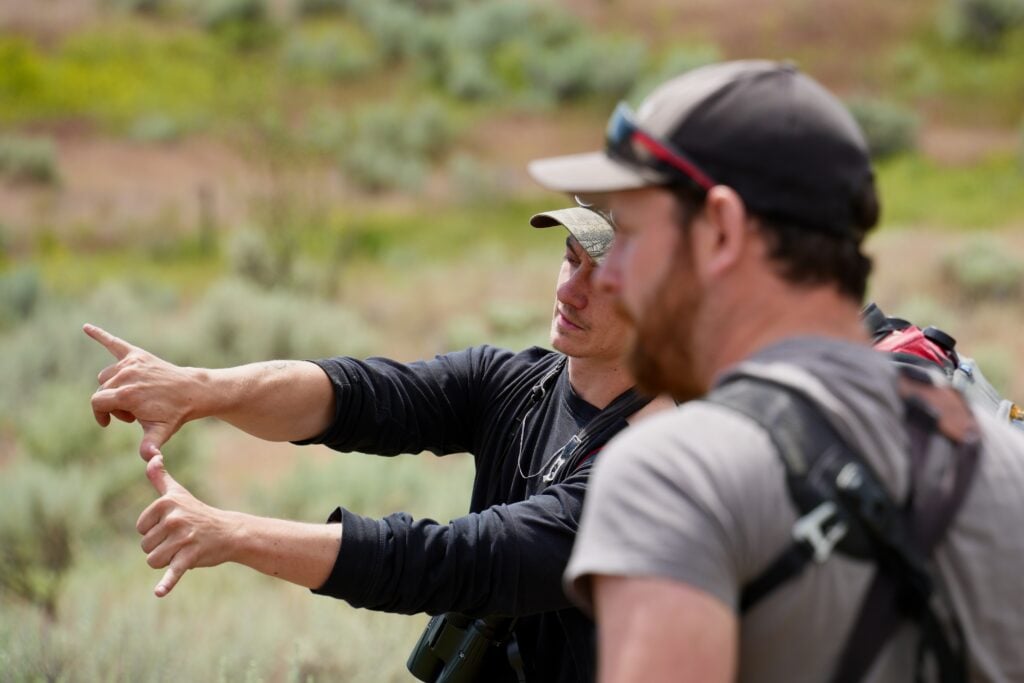
Beginning in Vancouver, B.C., on the Fraser River delta, this birding adventure took a small group of tourists and me through the province, ending in Kelowna. As a Canadian Geographic Ambassador on this trip, I shared my knowledge of the Royal Canadian Geographical Society, and the chance to follow two talented guides to seldom-visited places made the trip a double win.
I’ve often thought that travelling without a guide is like watching TV without sound. The viewer is captivated by the picturesque scenes, but learns nothing beyond the frame. With Eagle-Eye tour guides Blair Dudeck and Arnaud Valade, I received an intensive lesson on where to find wildlife without our presence adding to the crowds.
As we pulled up to Haynes’ Lease Ecological Reserve, one of B.C.’s most arid ecosystems and a protected piece of desert near Osoyoos on day five, the sun was still low in the morning sky, and the parking lot was empty. Dudeck suggested we hike here before the sun reached the desert trail. We set off in the cool air, walking single file and mindful of cactus waiting to spear wayward shoes.
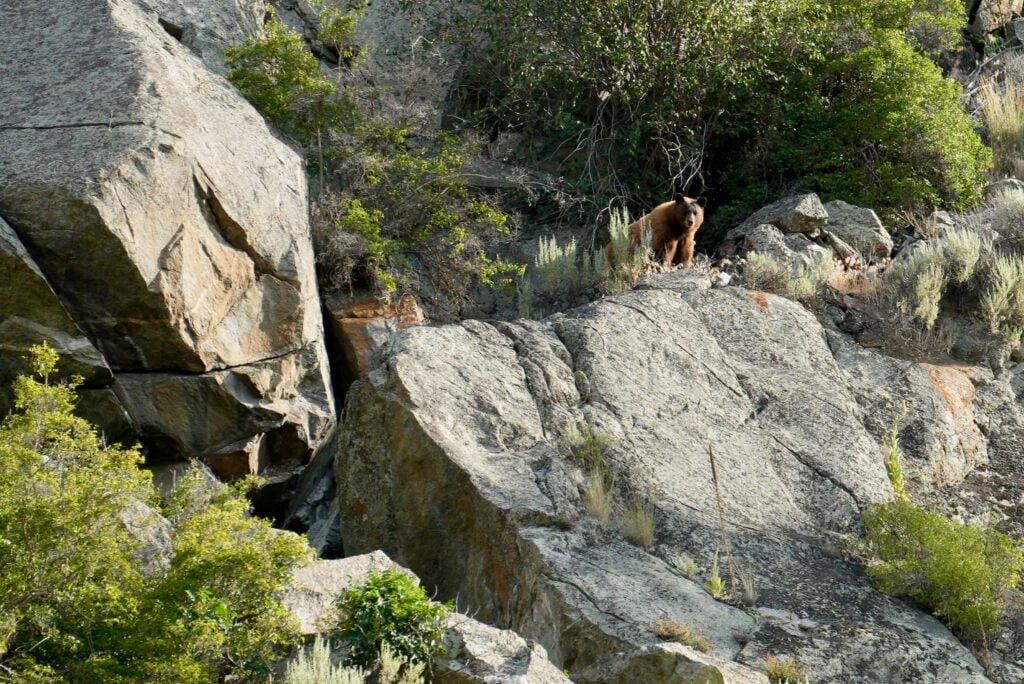
Our goal was to spot rock and cactus wrens, small, buff-coloured birds that blend into rocky outcrops and move around as often as someone with swimmer’s itch. We scanned the steep rocky cliffs looking for any movement, which is how I noticed one bush had ears. Big, furry, brown ears! It was a cinnamon-coloured black bear patrolling the cliffs and searching for breakfast.
We stared at the bruin, and it stared back. Sensing no threat, it shuffled along the ridge, turning over rocks and poking bushes as we kept searching for birds.
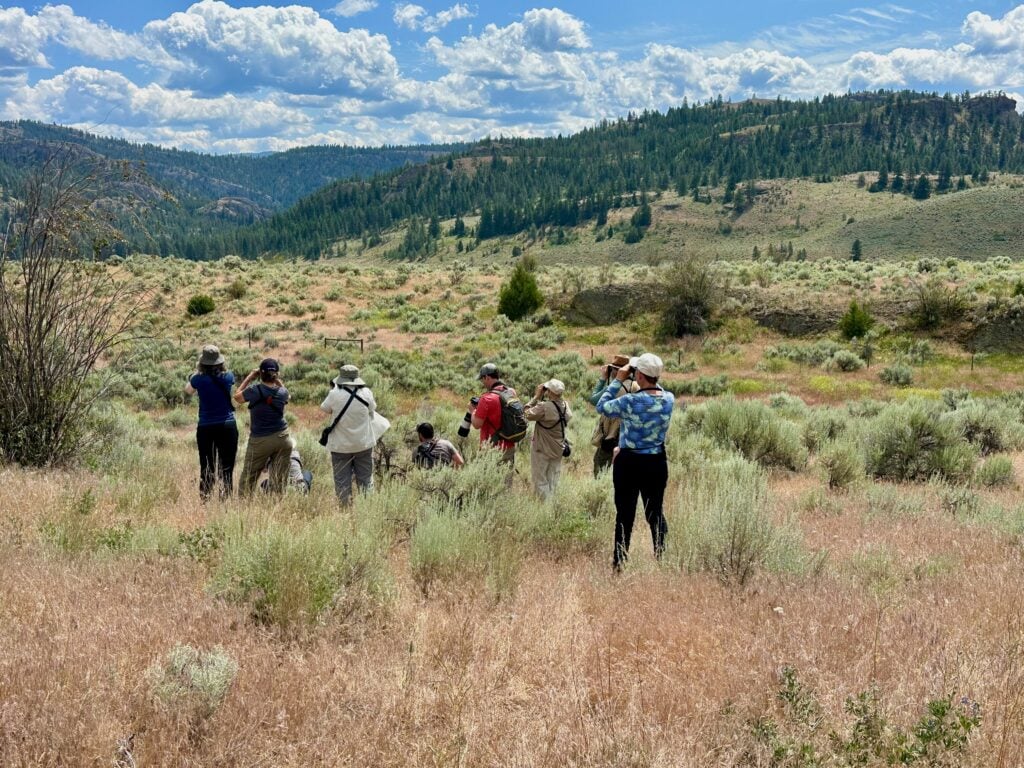
Suddenly, a flash of cerulean blue caught my eye, as Dudeck called, “Lazuli bunting! On that near bush.” For several minutes, we watched one of Canada’s showiest birds, its robin-egg-blue head a beacon against the dusty brown landscape.
Our group of 14 nature lovers weren’t the only ones enjoying avian spotting in this province. The BC Bird Trail, a cooperative marketing initiative led by Tourism Richmond, offers itineraries in several communities, listing places to bird, stay, and dine. Launched in the Vancouver area in 2020, the program has grown to include more communities, an accessibility audit, a BC Bird Trail App and scavenger hunts (to increase engagement).
A 2020 study by Grandview Research on the global birdwatching tourism market size forecasts a compound annual growth rate of 6.2 per cent from 2024 to 2030. The BC Bird Trail is aligned with this growth, seeing significant increases in website visits and app downloads.
Perhaps more importantly, this tourism growth is often seen in spring and fall.
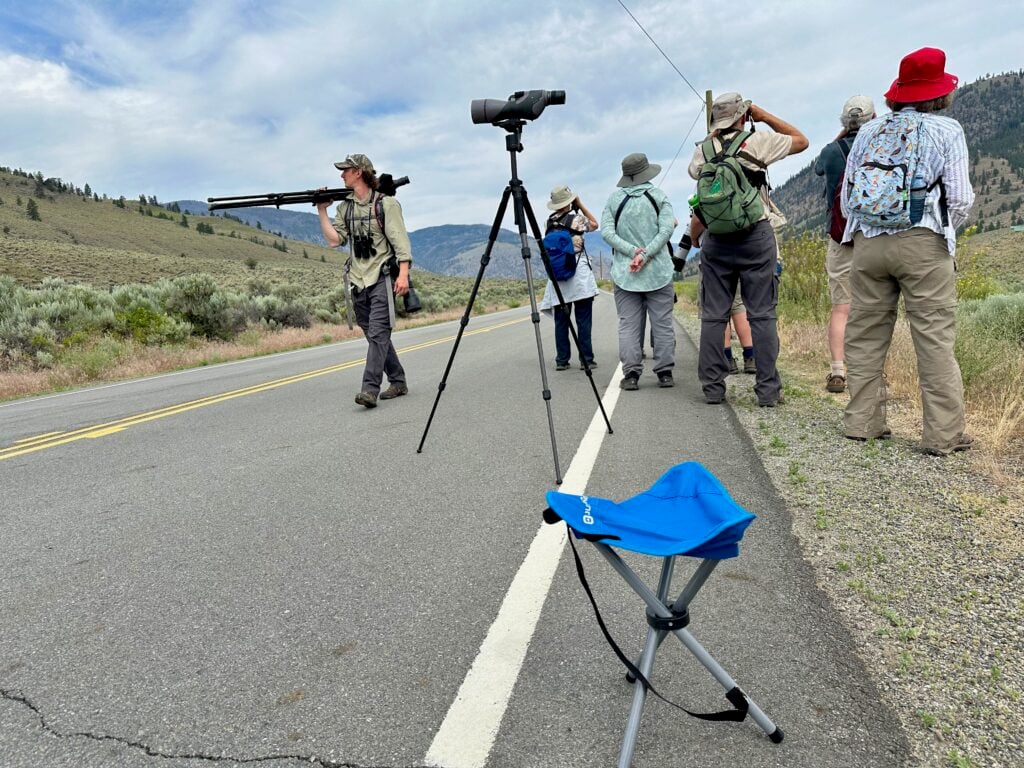
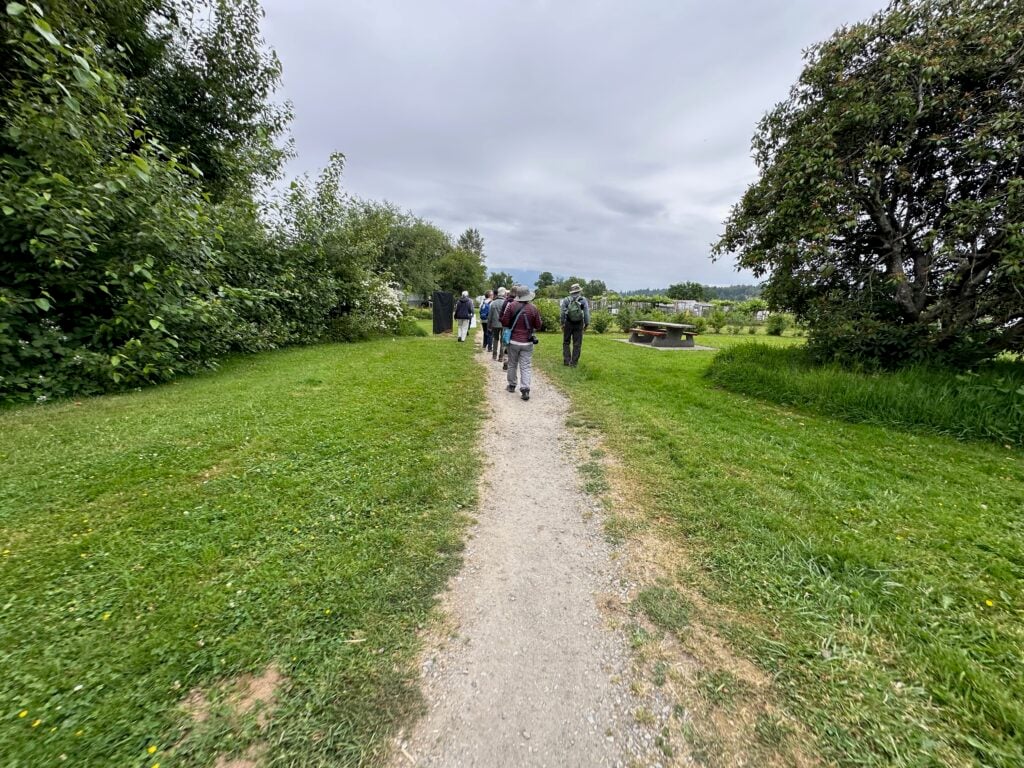
“I think one of the reasons the trail was so widely adopted by communities in South and Central British Columbia is because the migratory bird season is shoulder season from a visitor perspective,” says Elizabeth Clark, BC Bird Trail Program Manager “From a visitor dispersion perspective, it’s bringing visitors into communities when there is capacity for visitors,” Clark explains that many communities don’t require additional summer visitors as their natural attractions and accommodations are already at capacity.
As my group and I watched a peregrine falcon sail across the desert sky, I reflected on Clark’s statement. I could see down to Osoyoos Lake and the houses ringing the blue water, but our group remained the only humans in the Reserve as we put our gear back into the vans.
The next day, we drove further north in the Okanagan Valley. We stopped at seldom-used trails and roadside pull-offs that weren’t on any map, relying on the expertise of our guides to find places that sheltered wildlife. Rarely did we encounter people, except for the drivers slowing down to look at our binocular-wearing, scope-toting group as we scanned the sky. We found 142 species of birds. Some were rarities such as black swifts, American bitterns, pygmy nuthatches, and golden eagles.
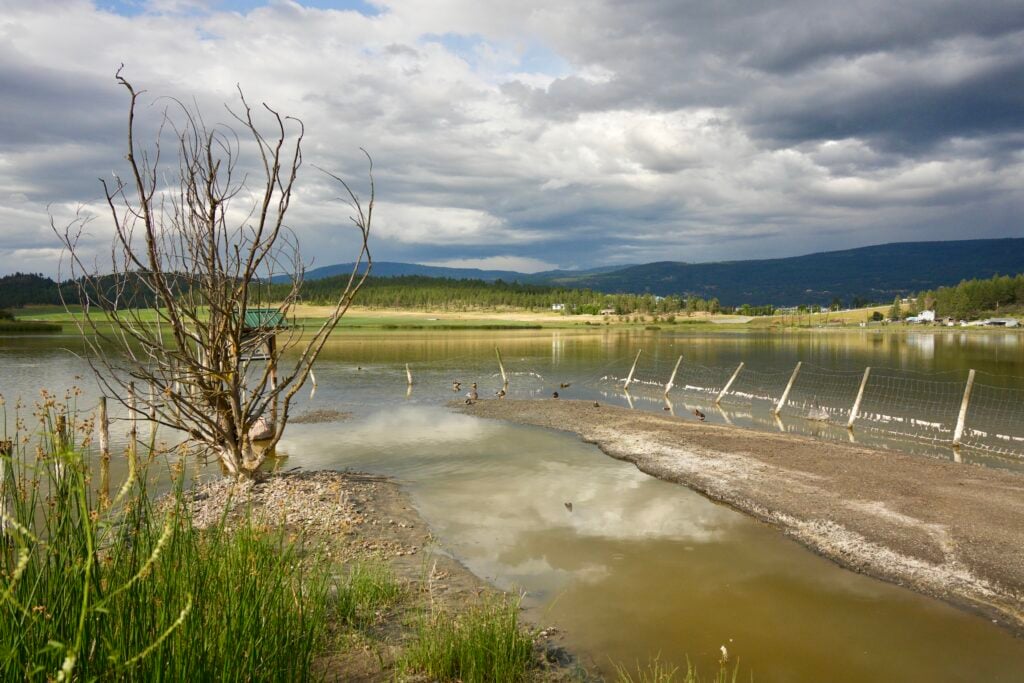
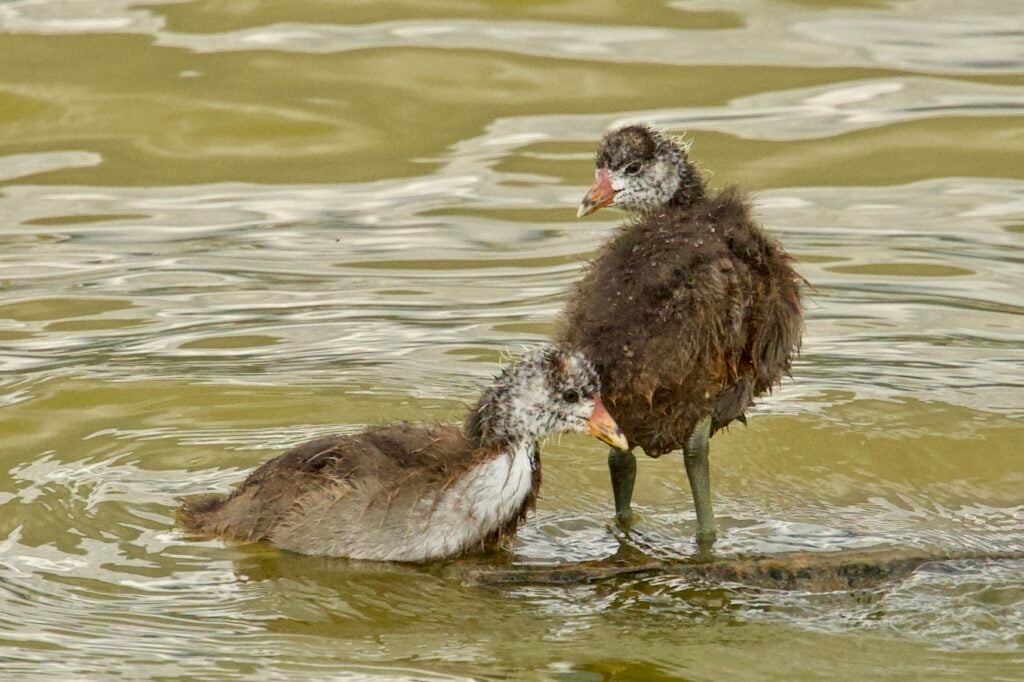
As our trip came to a close by the still waters of Robert Lake near Kelowna, the evening sun cast a soft glow on a family of tiny American coots. Their mother fed them tirelessly before gliding across the pond for a moment of rest. Watching the chicks preen their stubby wings in solitude, I realized I’d been given a similar gift: the space to slow down and immerse myself in some of Canada’s most remarkable natural experiences. As we drove away, I couldn’t shake the feeling that we’d witnessed this country at its quiet, untamed best.
People & Culture
A tale of joy and persistence: Logging Bruce Di Labio’s birding “big years” almost 50 years apart

Wildlife
No one knew golden eagles in the Yukon and Alaska migrated along the Rockies’ front ranges, until an avid birder noticed something strange
Travel
Spread your wings with birdwatching’s elite guard in south Texas
Wildlife
Jon Gerrard and Elston Dzus lead a now 50-year study of a thriving population of bald eagles in northern boreal Saskatchewan. Here they talk about the longevity of the research, key discoveries, the challenges of climbing trees and more.