
Environment
Inside the fight to protect the Arctic’s “Water Heart”
How the Sahtuto’ine Dene of Délı̨nę created the Tsá Tué Biosphere Reserve, the world’s first such UNESCO site managed by an Indigenous community
- 1663 words
- 7 minutes
People & Culture
While racing to protect cultural knowledge from extraction and misuse, Indigenous innovators are developing AI and virtual reality tools to teach, preserve and carry their languages into the future

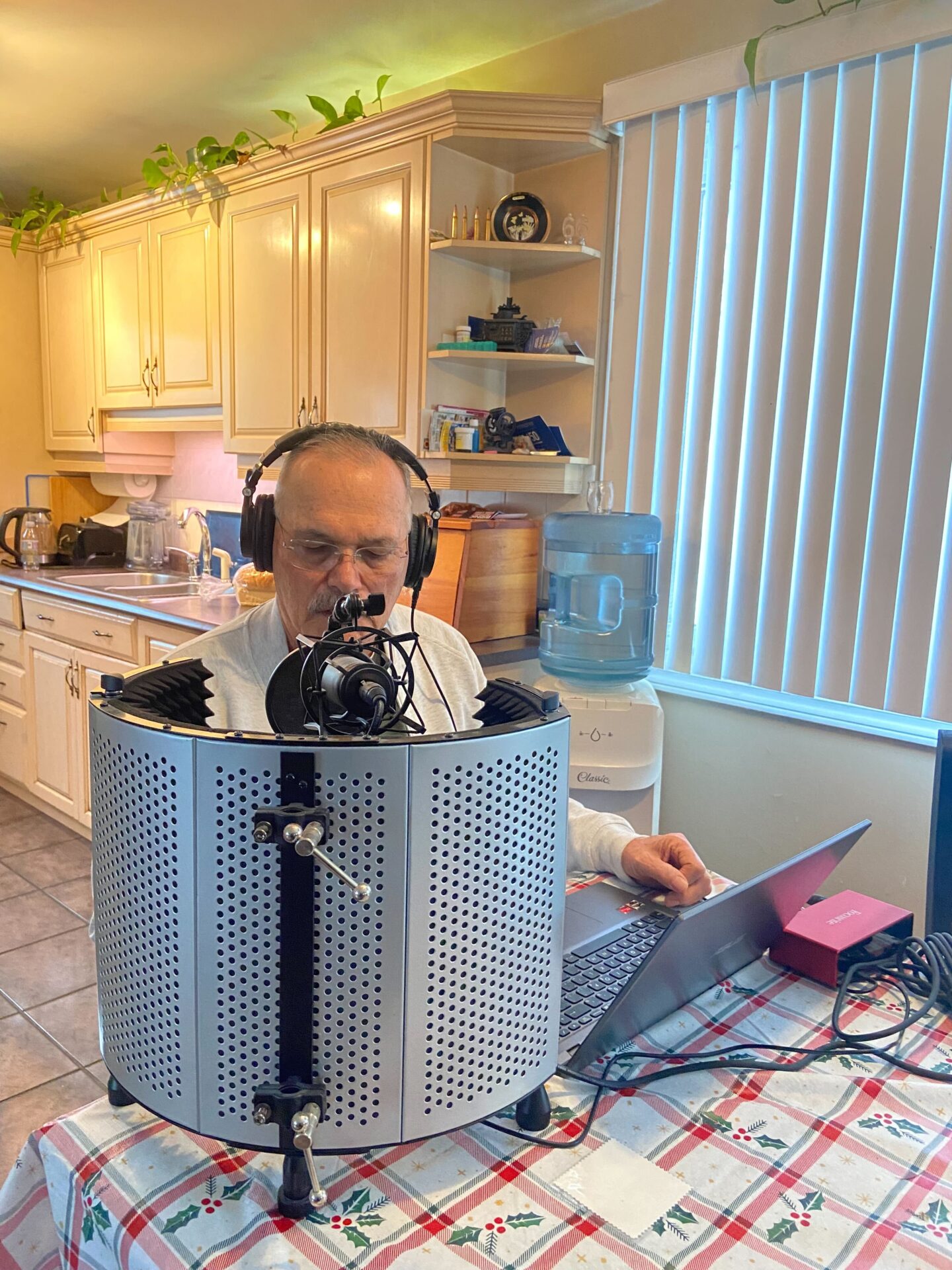
AN INDIGENOUS language holds community connection, generations of sacred knowledge, a unique worldview and cultural nuance. A language roots a speaker in the voice of their ancestors while giving strength to be a voice of the future. Yet, when it comes to our world of rapidly advancing technology and artificial intelligence, a language is also data. And Indigenous data, like land, must be fiercely protected.
“There’s a huge interest in getting access to our [Indigenous] data, our content, simply because it’s unpoisoned by those language models,” says Michael Running Wolf, a Northern Cheyenne and Lakota computer engineer and researcher who’s working to revitalize Indigenous languages using virtual reality and AI, all while prioritizing Indigenous sovereignty. (Running Wolf is referring to Large Language Models, AI systems that can process, generate and predict language after being trained on vast amounts of data.)
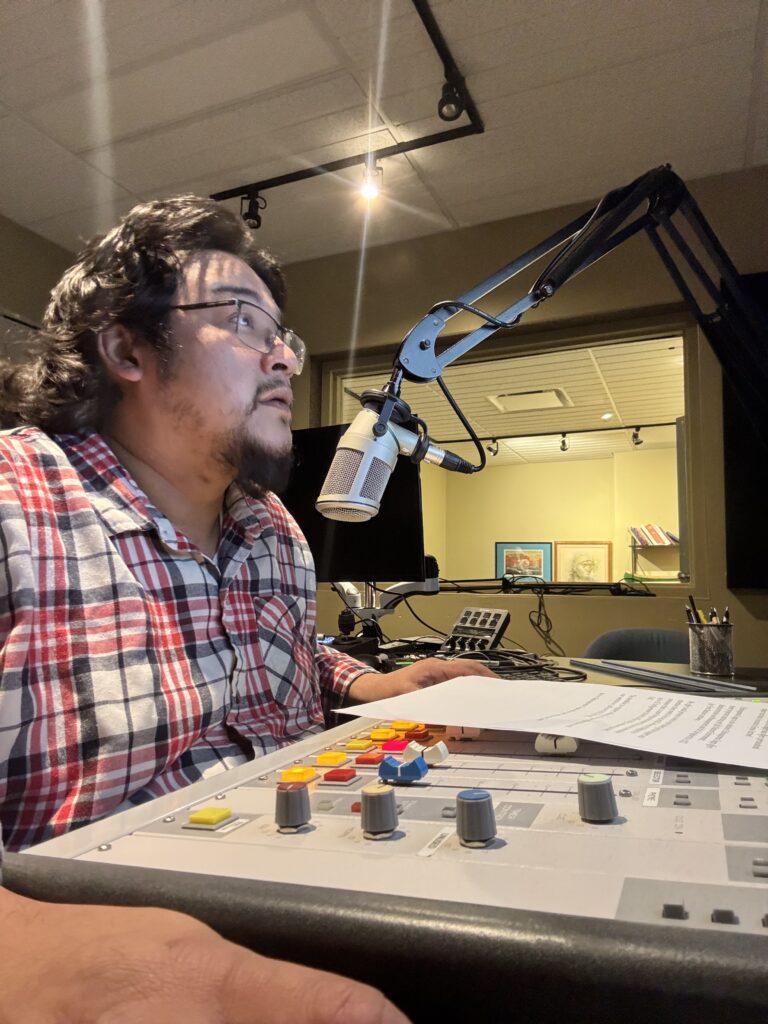
“It turns out that virtual reality is really good at teaching languages,” says Running Wolf. His team is working with four communities, in B.C., Northwest Territories, Washington state and Brazil, and was expecting to have their very first AI prototype ready for community evaluation by press time. Their long-term vision is to immerse users in their language alongside a corresponding cultural event, for instance a canoe trip. To progress in the experience, one must learn the phrases and proper grammar. The current prototype resembles an interactive language tutor.
There is an imperative to Running Wolf’s work. He explains that in order to train AI models that accurately reflect Indigenous languages, the data must come from offline sources, as much of the data online has already been compromised by or written by AI and can be used to exploit Indigenous languages for profit.
Chad Quinn believes now is a critical time for language technology — but ethics need to come first. He’s the founder of Language Foundry, an e-learning platform that works with Indigenous communities — by community request only — to help preserve their languages using gamified courses and digital avatars. The platform offers courses in Nu-wee-ya’, Mi’kmaw, Wolastoqey and Anishinaabemowin, with five dialects of Cree set to launch soon. Like Running Wolf, Quinn works with lawyers to create licences to ensure communities retain ownership of their language. He also advises all language revitalizers using AI tools to make sure they have a licence in place that protects their knowledge and grants them the ability to revoke their data if necessary. “My concern is that we have one of those large companies come in who don’t respect community, don’t respect the sacredness of language, and they just decide, ‘Let’s maximize profits and hoover it all up and start selling it,’” says Quinn. “Then it removes the community-led aspect of it and the community control.”
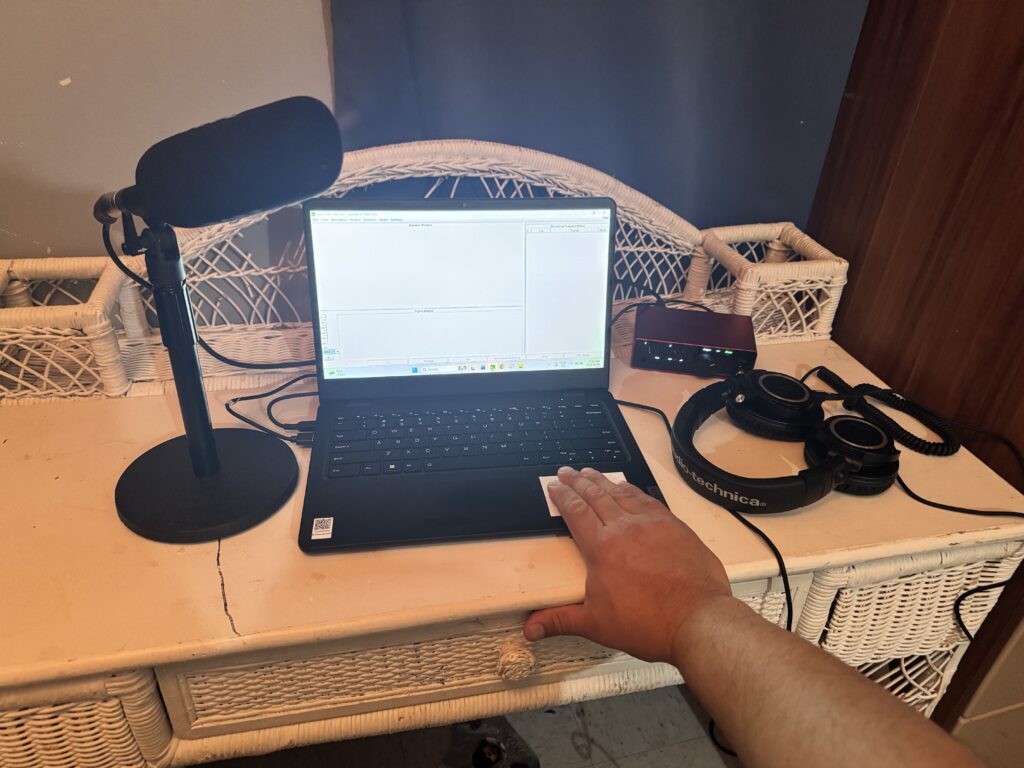
When working to revive language, learners can feel as if they’re in a race against time. The creation of digital avatars, like those Quinn develops, could preserve a speaker’s knowledge for generations to come. During the building of one course, Quinn recounts the emotional moment of hearing a speaker exult, “I am going to be speaking the language for 100 years after I pass away because it’s going to be here.”
Preserving language and generating tools to aid new learners is possible with mass-market AI platforms — but not without risks. “Be aware that if you’re uploading your tribal knowledge, or trying to teach AI your language, you know, by chatting with it, with these chatbots, you are just enriching these corporations — worse, American corporations — for free. You need to be careful about that,” adds Running Wolf.
“If you’re using a free platform, you are the product,” he says, something Quinn reiterates: “Anything that goes on any of the platforms — unless it’s very explicit — is going to be consumed. They do that intentionally. They make it very easy to give away data.”
If safeguards are put in place for Indigenous data to remain in the hands of the communities that provide it, Quinn believes AI could be a useful tool for learners to practise when they are outside their community. But it will never replace the experience of learning from an Elder and living with and speaking the language among peers. “It’s the Elders and the speakers and the communities that are doing the heavy lift,” says Quinn. “We get to create this tool, which is a lot of fun and hard work, but we are not the one revitalizing language.”
Still, Running Wolf believes it’s vital that Indigenous communities be part of the AI industry. “I think the perfect future is where we as Nations enact our own sovereignty — whatever is left — and are players in the industry of AI. Or just technology in general. We need to have our own infrastructure, we need to have intra-reserve, intra-First Nations commerce — an ecology of technology that represents the diversity of our cultures,” says Running Wolf. “We either participate and have the agency — or it’s used against us.”
Discovery Language is supported by the Office of the Commissioner of Indigenous Languages.

This story is from the March/April 2026 Issue
Environment
How the Sahtuto’ine Dene of Délı̨nę created the Tsá Tué Biosphere Reserve, the world’s first such UNESCO site managed by an Indigenous community
People & Culture
The story of how a critically endangered Indigenous language can be saved
People & Culture
Plains Indian Sign Language was used by generations of Indigenous Peoples to communicate across languages and landscapes. Now, it’s being reclaimed.
People & Culture
Languages represent entire worlds of knowledge and meaning. This Indigenous Languages Day, Chief Perry Bellegarde, Honorary President of the Royal Canadian Geographical Society, introduces a new CanGeo digital series celebrating Indigenous languages from across the lands and waters we call Canada.