People & Culture
Losing track: The importance of passenger rail corridors
What does it mean for Canada if we continue to pull up train tracks?
- 4438 words
- 18 minutes
Places
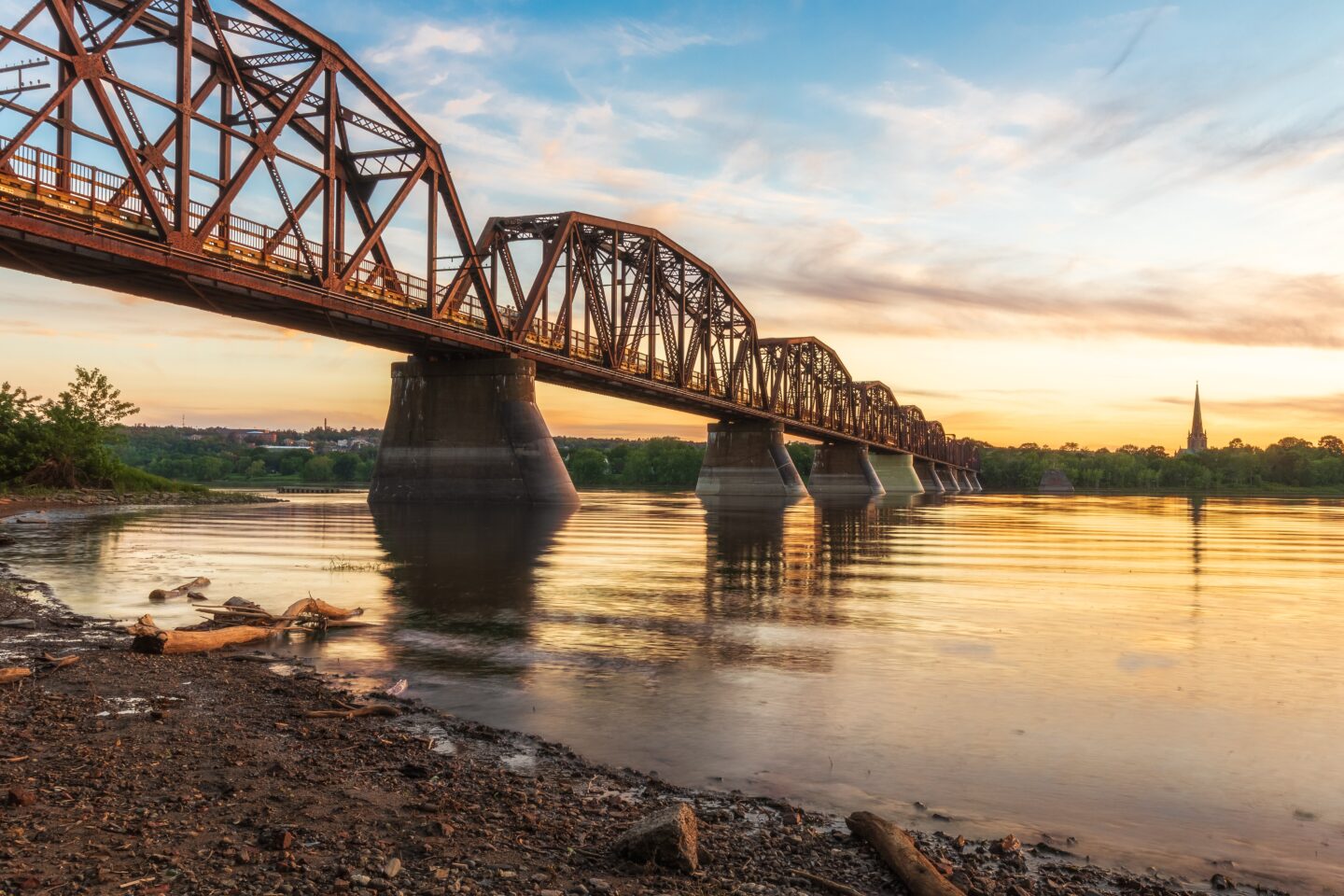
Canada’s railway bridges, like the Bill Thorpe Walking Bridge in Fredericton, N.B., continue to connect communities across rivers and valley
Nearly 20 years after flooding from New Brunswick’s Mactaquac Dam ended freight rail service between Fredericton and Woodstock in 1967, Patty Trail had some neighbours over for a chit-chat. “We were talking about my mother-in-law and another elderly lady who used to walk on the abandoned rail lines,” says Trail. “Our kids were at an age when they were biking on the streets, and I said, ‘It’s too bad those [rail lines] couldn’t be changed to walking trails.’”
Trail, then an avid cyclist, teamed up with like-minded residents who hoped to convert Fredericton’s old railway lines into a connected trail system. “I can just remember us going before the city,” Trail says. “They would be saying, ‘That Mrs. Trail, I don’t know what she thinks she is.’”
When the railway tracks going south from Fredericton were abandoned in 1995, a more expansive vision for a connected trail network emerged, with the old railway bridge across the Saint John River as the north-south connector.
Trail’s audaciousness paid off in 1997 when the refurbished bridge opened to pedestrians and cyclists. The Bill Thorpe Walking Bridge, as it’s now known, stretches nearly 600 metres across the river between downtown Fredericton and the community of Devon. From the middle of the bridge looking toward the city, the spire of the gothic-revival Christ Church Cathedral dominates the skyline, just as it did when the original rail bridge was constructed in 1888. In a real-world case of “build it and they will come,” the bridge now sees 600,000 crossings each year.
Across Canada, similarly determined community advocates have breathed new life into old railway bridges years after the last trains rolled along the tracks. Instead of providing safe passage for shipments destined for faraway buyers, the abandoned railbeds now connect neighbours and history. Just as Trail did in New Brunswick, Canadians from across the country have spoken up for historic pieces of Canada’s rail infrastructure that outlasted their original purpose.
In St. Thomas, Ont., “the railway city,” Matt Janes had little trouble convincing people that the Michigan Central Railroad Bridge over Kettle Creek was worth saving. Residents had already rallied to preserve the town’s Canadian Southern Railway station, which was restored as a space for events and offices starting in 2005.
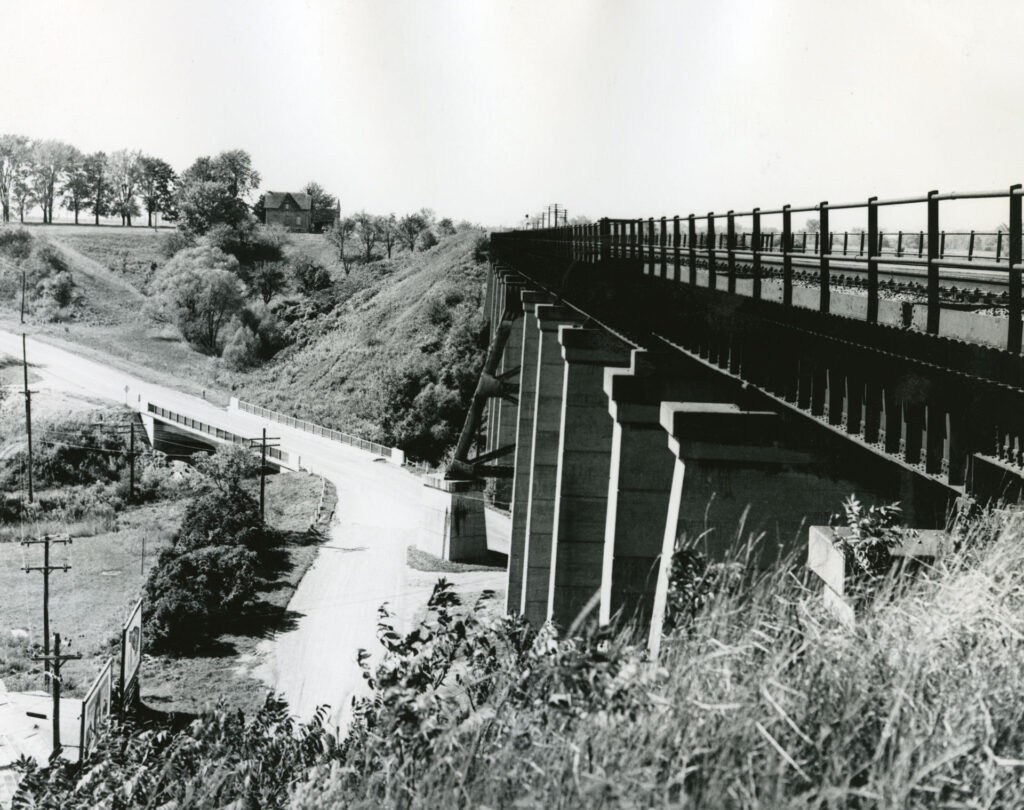
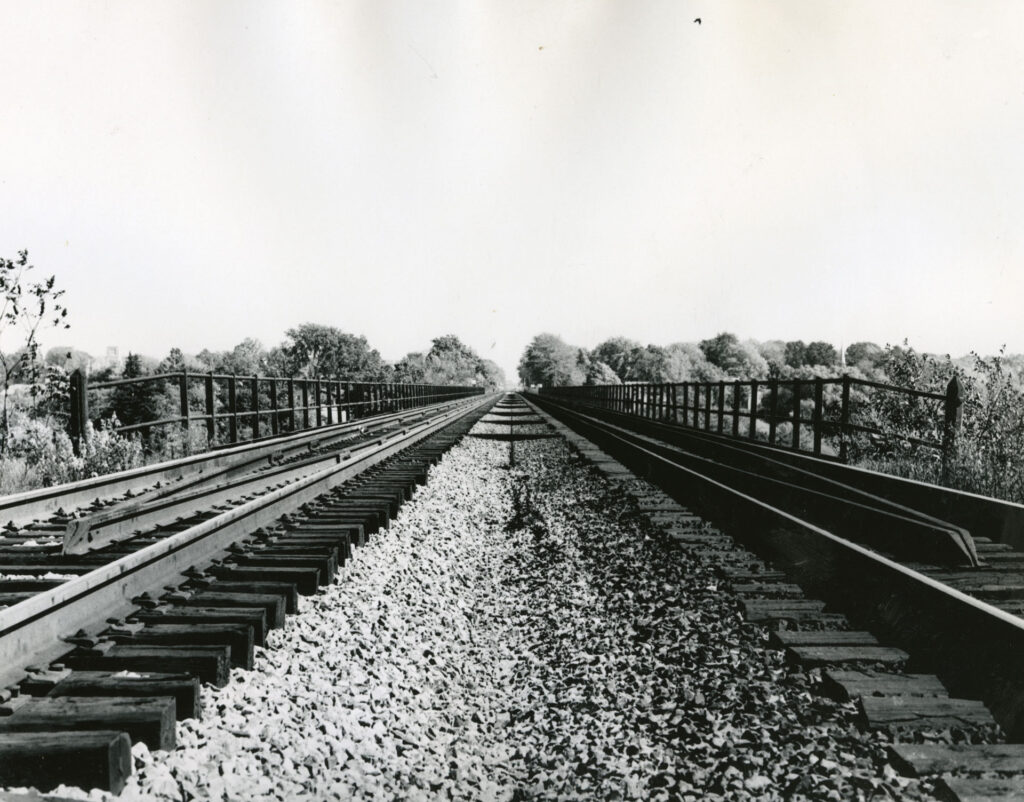
Beginning in the 1870s, the Canadian Southern Railway line — with St. Thomas at the centre — provided a Canadian shortcut between Michigan and New York. The current Kettle Creek bridge was built in 1929 to withstand heavy trains. To avoid disrupting rail traffic during construction, crews suspended a temporary railway line above the active tracks, earning the bridge recognition as an engineering marvel of its era.
It’s now a local landmark, towering nearly 30 metres above the steep, lush valley surrounding Kettle Creek. The bridge sat dormant for more than a decade after being taken out of service in 1996 — that is, until rumours surfaced that it would be torn down for scrap steel. “The bridge itself is iconic,” says Janes, director of the non-profit On Track St. Thomas. “We thought it would just be a real shame if that bridge was totally abandoned and demolished.”
Instead, the community group rallied support to turn the bridge into an elevated greenspace. After a fundraising campaign, they bought the bridge in 2013. Since 2017, the St. Thomas Elevated Park has provided a community gathering place with seating areas, public art and a panoramic view of the farms and forests of the Kettle Creek Valley.
Elsewhere in Canada, rail traffic through downtown Red Deer, Alta., between Calgary and Edmonton was so frequent in the 1980s that the city asked the Canadian Pacific Railway to relocate outside city limits. As the CPR began pulling up tracks, residents in the Riverside Meadows neighbourhood wanted the bridge across the Red Deer River to stay — people had gotten used to crossing the bridge on foot, despite the safety risk. “This is the only bridge on the Red Deer River that has never fallen prey to the ice in the spring and was part of what made Red Deer possible,” wrote resident Shirley Hocken in a letter to city council in 1991. “This bridge has always been an integral part of people’s lives that have lived on the north side of the river.” The CPR Pedestrian Bridge is now getting a $22-million refurbishment. Slated to be unveiled in fall 2026, it will include a plaza and two sites for public art.
Back in Fredericton, Patty Trail now lives beside the trail system she helped create. The bridge has become the hub she always imagined. “I’m older now, but everybody gathered on the bridge at night,” Trail says. “Everybody loves it.”

This story is from the November/December 2025 Issue
People & Culture
What does it mean for Canada if we continue to pull up train tracks?

Science & Tech
In a time where Canada is striving to close the gap between energy production and emissions, it seems fitting to explore how some of our country’s bridges improve urban…

Travel
Discovering boats, buoys and deep-fried clams on an epic family road trip in the 2022 Chevrolet Traverse RS
Mapping
Early maps of the railways that shaped our country