Places
Les rapides Remic : là où les galets de rivière deviennent art
Un parc autrefois oublié, devenu aujourd’hui un espace de loisirs important – même en hiver
- 977 words
- 4 minutes
Places
A once forgotten park is now an important recreation space — even in winter

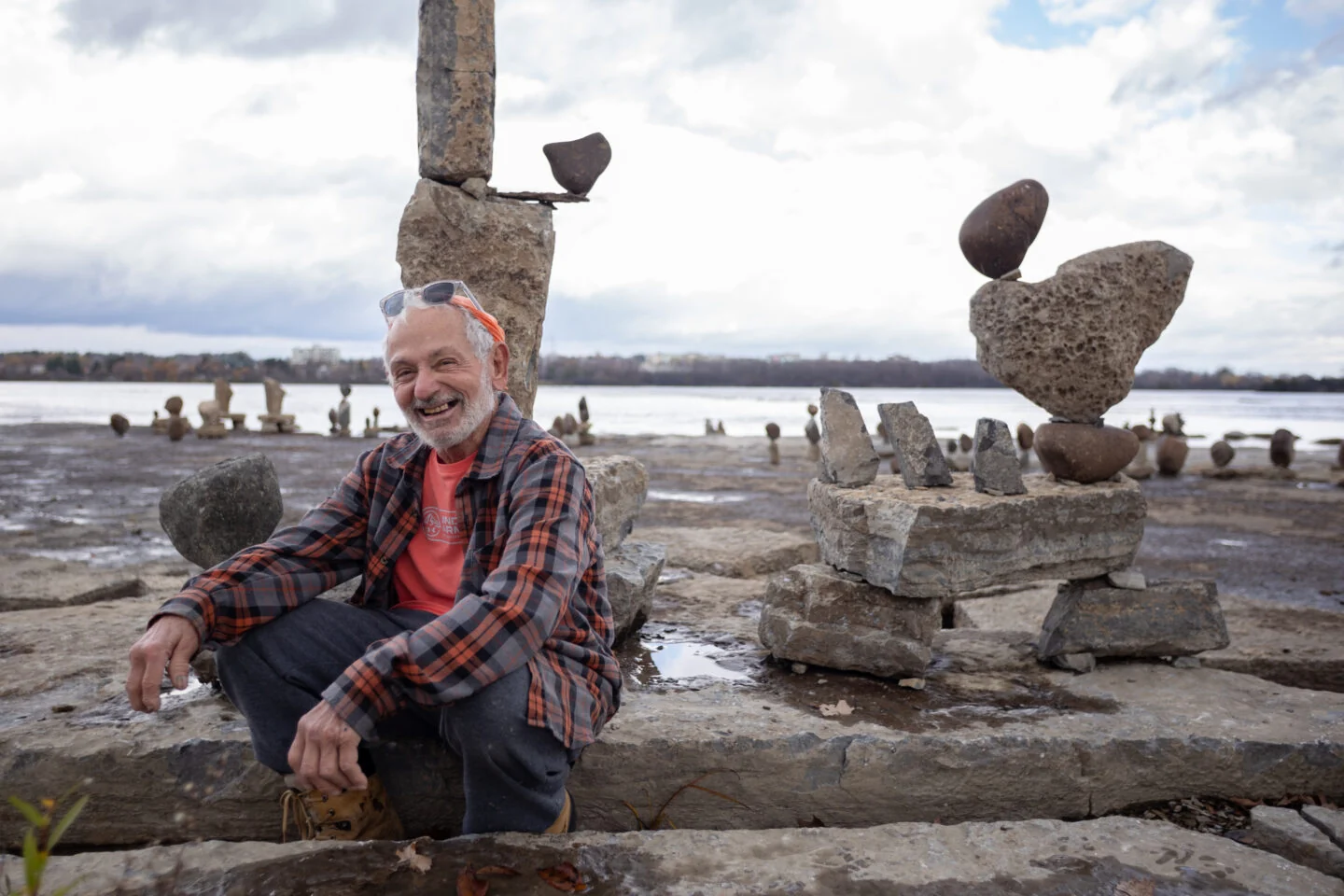
“I knew right away when I came here that I had come upon an energy site, an energy vortex.”
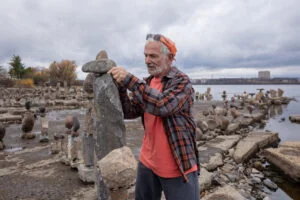
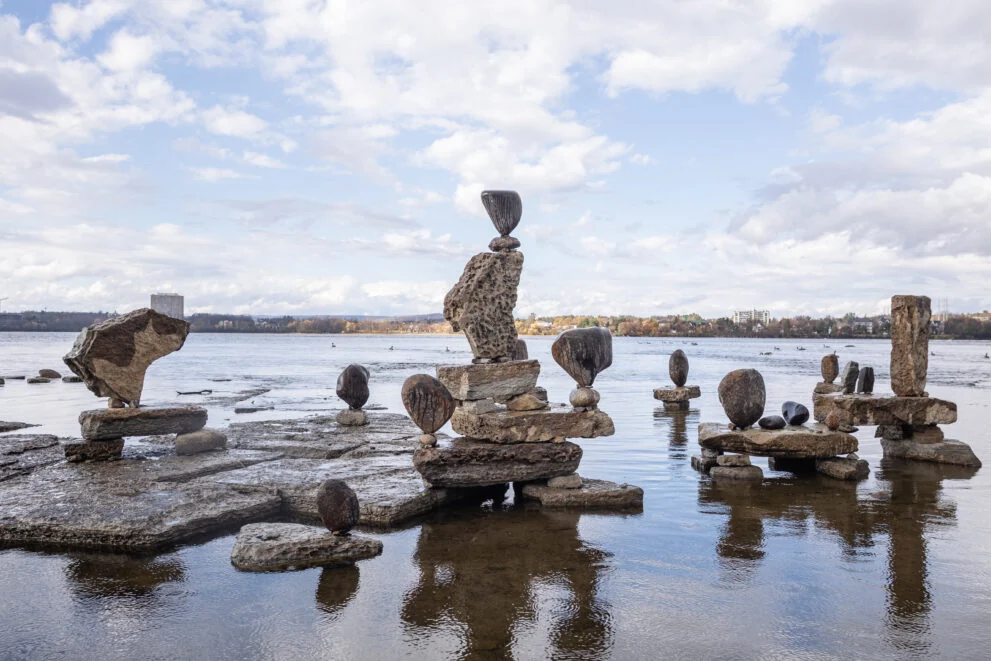
Ottawa artist John Felice Ceprano is recalling the first time he came across what was then a little-used park on the Ottawa River, about four kilometres west of Parliament Hill. It was 1986, and he was feeling homesick for the sound of the surf in his native Rhode Island. Walking along the river shore, he heard bubbling water rushing over flat, submerged expanses of limestone, sandstone, shale and dolostone. Peering through a tangled undergrowth of Manitoba maples, he saw the Little Chaudière Rapids, near Remic Rapids Park.
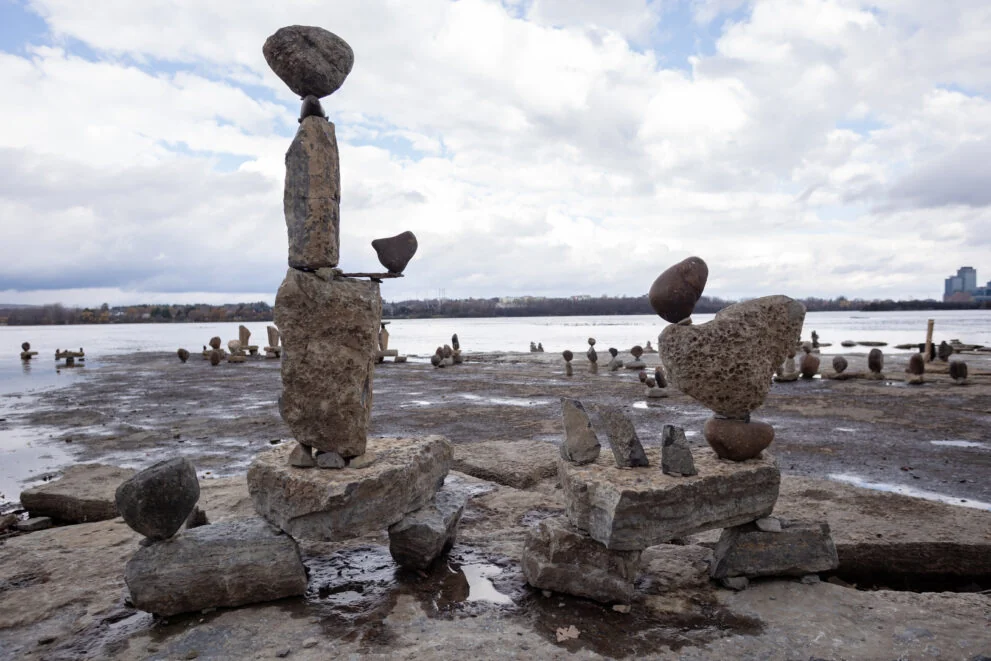
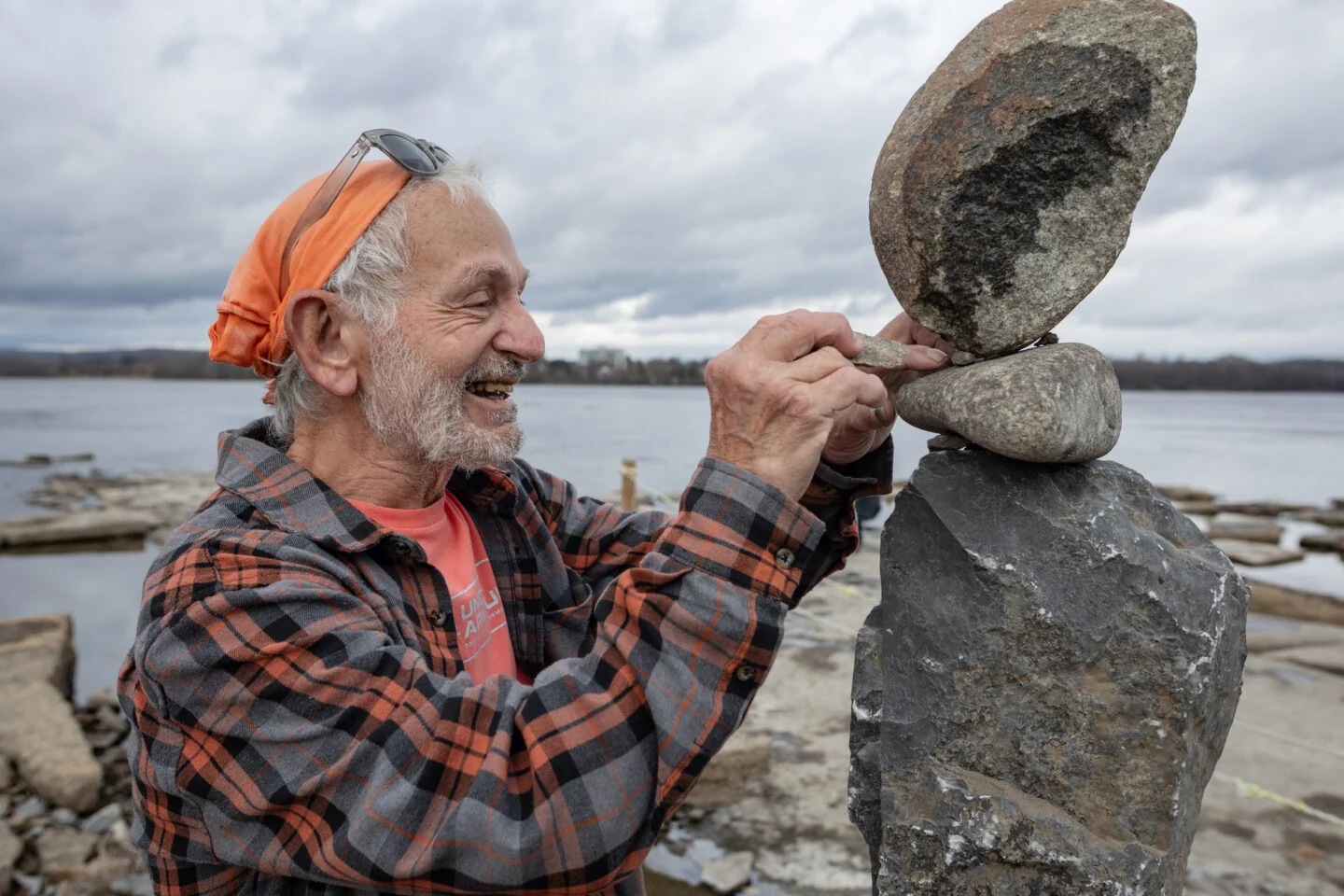
Drawn to the rippling water’s energy, he kept returning to create sculptures of balanced river rocks in the shallow water just offshore. “It’s very grounding,” he says of his process, which involves both intuition (sensing where a rock wants to go) and skill (wedging small stones beneath a large rock to keep it balanced).
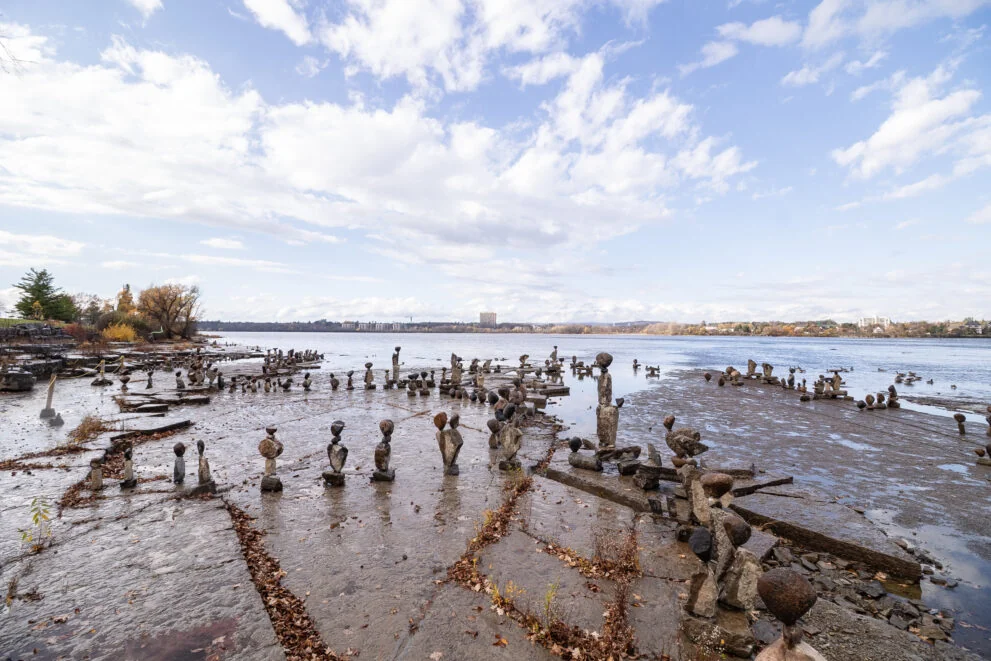
The following spring, runoff toppled many of the rocks. Undaunted, he started new artworks, which a CBC journalist soon noticed. “He saw what he thought were like a whole bunch of people in the Ottawa River having a party, so he came down here,” Ceprano says, smiling. That led to the first of many media interviews, which soon drew people to the park to see the art.
His work also caught the attention of the National Capital Commission (NCC), a Crown corporation that stewards many Ottawa–Gatineau sites, including the 1.6-hectare Remic Rapids Park. In 1998, the NCC awarded Ceprano a contract to keep producing the sculptures, and it began funding the project two years later. The partnership continues to this day.
“I don’t think either party just ever imagined that we’d still be here in 2026,” says Ceprano, now 79. “We both speak very different languages … but we learned from each other, I’m sure. And I’m very grateful that they offered the contract.”
Over centuries, Remic Rapids has evolved to serve diverse interests. Before the arrival of European settlers, it was a trading site for the Anishinaabe Algonquin people. In the early 1900s, proposals emerged to build a parkway along the Ottawa River west of downtown. When the NCC built the road, today called the Kichi Zībī Mīkan, in the 1960s, it also planned to build a beach near Remic Rapids Park. However, the focus shifted toward providing scenic views for parkway drivers, and the beach didn’t materialize.
In 1969–70, the federal government built a small pumping station in the park, bringing water from the river to cool government office buildings at nearby campus Tunney’s Pasture. Astonishingly, those buildings once included a small nuclear reactor, since removed.
As time went on, the NCC built recreational pathways for pedestrians and cyclists along the riverfront, bringing more people into Remic Rapids Park. Many visitors appreciated the site’s natural, unspoiled vibe, along with Ceprano’s sculptures.
In 2015, NCC also worked with the Rideau Valley Conservation Authority to rehabilitate a parcel of land next to the park, replacing invasive buckthorn with native plants. The restored habitat now supports turtles, birds and other wildlife.
Some 200 bird species have been spotted in Remic Rapids Park, ranging from mallards and sparrows to hawks, owls and sandpipers. The abundant Canada geese often come quite close to Ceprano as he works. “We’ve become great friends,” he says. “Some of them have very distinct personalities.”
In 2015, a group of volunteers began building and grooming what’s now known as the Kìchì Sìbì Winter Trail beside the river. Part of the 16-kilometre trail cuts through Remic Rapids Park, bringing cross-country skiers, snowshoers and fat bikers to the site during a season when it used to be almost deserted.
Among those visitors is Nathalie Roy-Patenaude, the NCC’s director of real estate management. She’s a big advocate for year-round use of spaces such as Remic Rapids Park. “I fat bike in the winter, and I find that the river is as stunning and impressive in the winter as it is in the summer.”
Another big change came to the park in 2019, when the NCC partnered with a local operator to open a waterfront bistro. Serving casual fare such as hot dogs and craft beers, it provides a shady respite from the summer heat and prime sunset views. “The bistro has these massive willow trees around that create a completely different setting than any other of our sites,” points out Roy-Patenaude.
In 2018, the NCC’s board of directors approved the Ottawa River South Shore Riverfront Park Plan, which would see a nine-kilometre stretch of riverfront—including Remic Rapids—connected and managed as one large park. So in the years to come, yet more changes will likely be afoot for this small but well-loved pocket of the Ottawa River shoreline.
Places
Un parc autrefois oublié, devenu aujourd’hui un espace de loisirs important – même en hiver

People & Culture
Great Slave Lake’s giant water spirit; fears over downstream contamination among topics explored by award-winning Dene author Katłı̨̀ą Lafferty in this excerpt from her latest book

Places
Celebrating urban agriculture in Canada’s national capital region

Places
Once considered too polluted for bathers, the capital’s River House and Dow’s Lake swimming areas give city swimmers new places to beat the heat