Exploration
Subterranean trailblazers
Caving: The ultimate underground sport
- 5055 words
- 21 minutes
Exploration
The Royal Canadian Geographical Society’s Expedition of the Year extends Bisaro Anima to 10.5 kilometres and links a new entrance
Twelve bags of diving equipment had to reach an underground lake before expedition leader and cave diver Katie Graham could explore what lay beyond it.
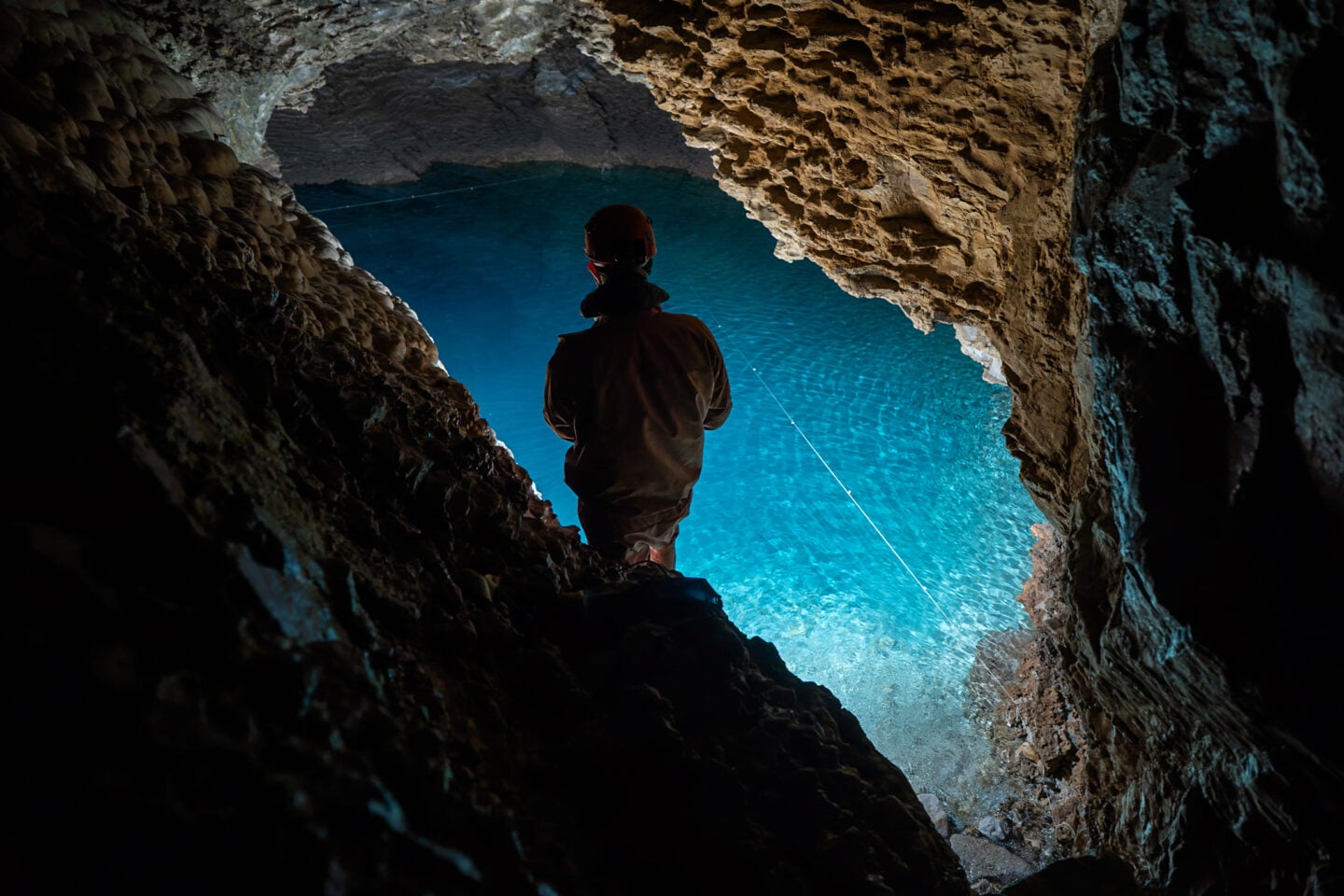
The lake, named Dieppe, was discovered in 2017 by members of the expedition team, and sits 667 meters below the entrance of Bisaro Anima, Canada’s deepest cave. Dozens of rappels, squeezes and muddy passages through the mountain limestone stood between the 24-member expedition crew and the clear blue water of the underground sump — the caving term for a flooded passage. Far within Canada’s deepest cave, inside a mountain plateau 12 kilometres north of Fernie, B.C., the sump was unfamiliar territory for many team members.
“Most of the crew had never seen the sump before,” says Graham, President of the Alberta Speleological Society and leader of 13 expeditions which extended the cave since its discovery in 2012. “Their faces were lit up by the beauty and intimidation of the vibrant, teal water.”
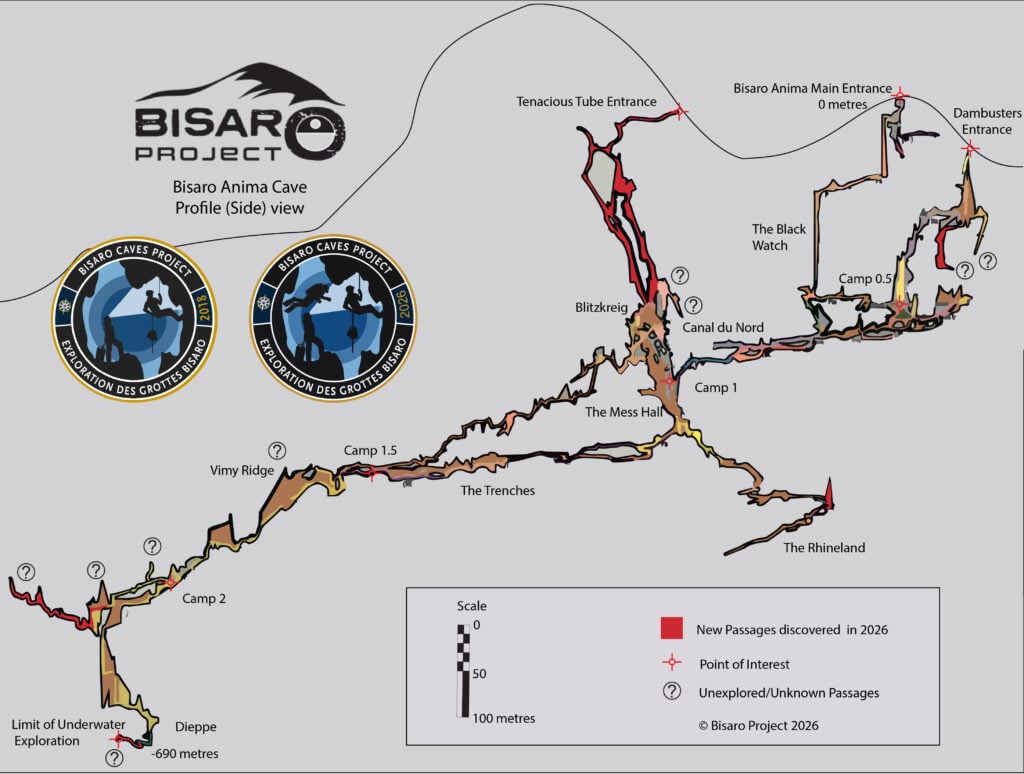
The two-week expedition, which began on September 19, lengthened Canada’s deepest known cave by 1.1 kilometres, and extended its depth to 690 metres, beyond its previously surveyed depth of 682 metres — and there are still more leads to explore.
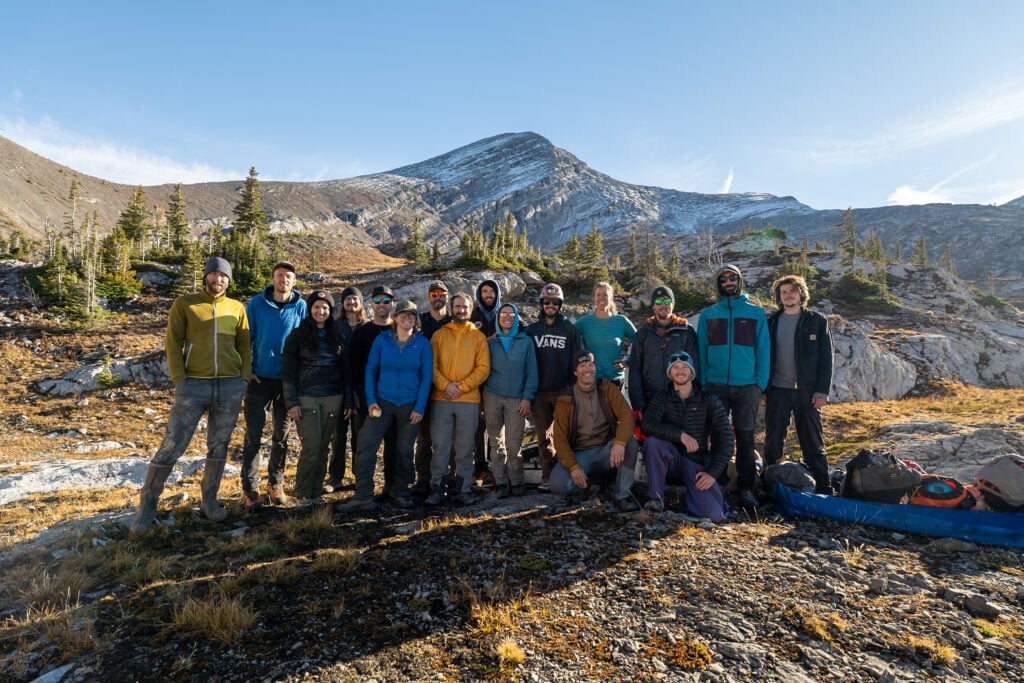
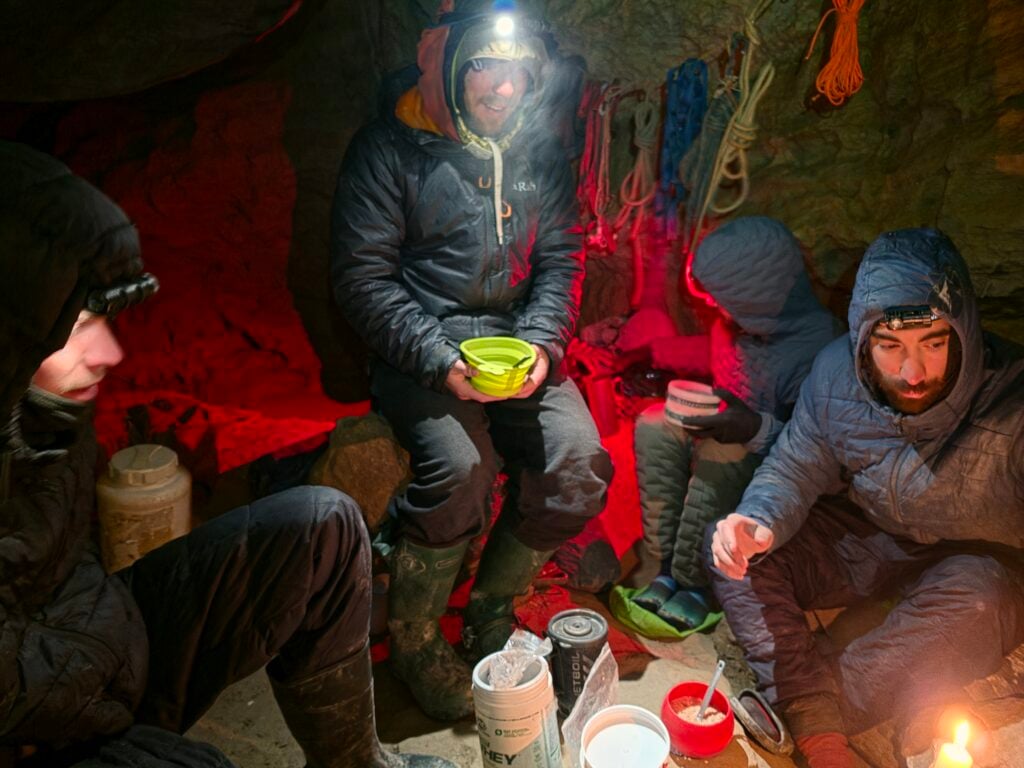
After setting up a base camp, including a large canvas wall tent on the surface, the team spent days hauling gear to two underground camps below. Then the group split and explored many new passage networks throughout the expedition. The cave became a temporary home, and team members arrived with an appetite for discovery, wrapped in the reality of hopelessly damp sleeping bags, mud, and mushy, rehydrated meals.
Working in groups, the team discovered a new entrance and connected it to Blitzkrieg, explored and surveyed a maze-like section of passages above Camp 1, climbed through waterfalls, stemmed canyons, dug mud, and brought the cave’s known length to 10.5 kilometres.
Graham, a Golden, B.C. resident, is an indomitable spirit and a source of motivation for the team, returning year after year to push the cave’s limits, even when it pushes back. In 2019, Graham broke her ankle 400 metres below the surface after a fall at a steep underground scree slope, but she views the risks as offset by the potential. “Caving comes with risk, and in these complex environments a lot could go wrong,” she says, “but we mitigate risk, and how else do you discover something new? The cave doesn’t owe us anything, but it continues to show us these incredible new spaces.”
To support the expedition, Graham secured funding from the Royal Canadian Geographical Society, which named the expedition 2026 Expedition of the Year, and received support from the National Speleological Society.
Underground expeditions depend on strong teammates and dialled-in logistics. This year, specialized radios let the team exchange messages through rock between underground camps for the first time, sharing progress reports and coordinating tasks while helping teams feel less isolated.
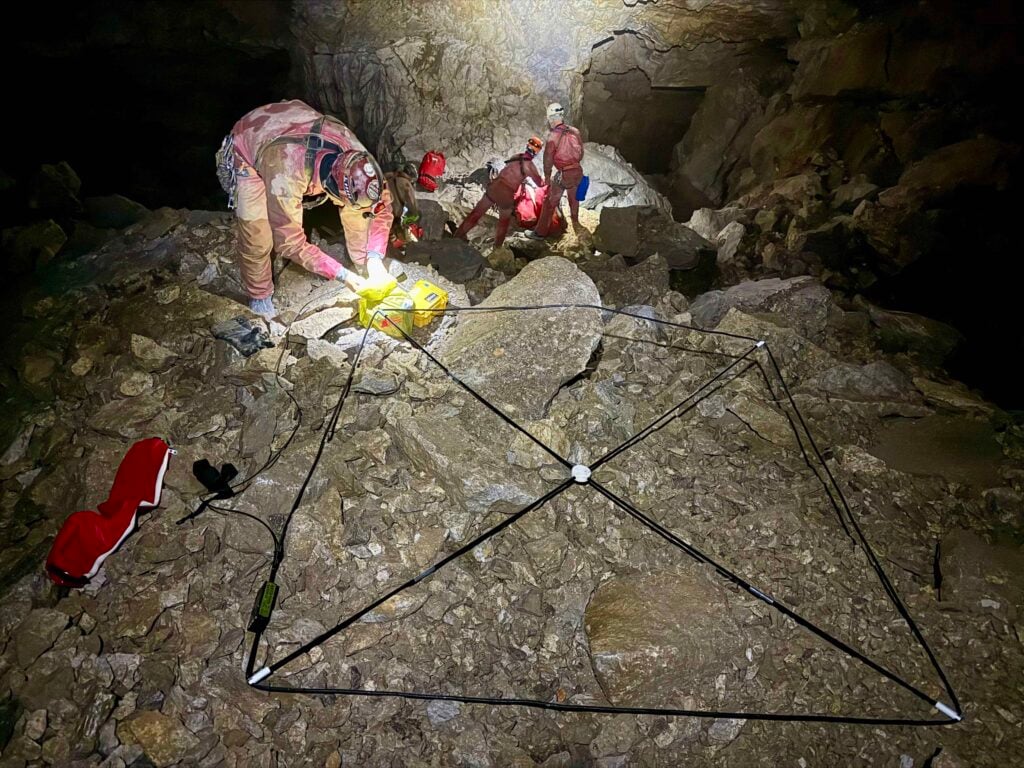
“The radios are a fantastic upgrade,” says project co-lead and cave expedition expert Christian Stenner. “We take for granted the ability to just call or message others on an above-ground expedition with satellites or radios. Those technologies cannot send signals underground.” The cave radio system known as CTX (Canadian Through-the-Earth Transceiver) can communicate through more than 500 metres of solid rock. Operating on ultra-low frequencies and paired with magnetic loop antennas, they can send text messages. In addition to coordinating logistics between camps and the surface, the radios reduce communication delays if an incident were to arise.
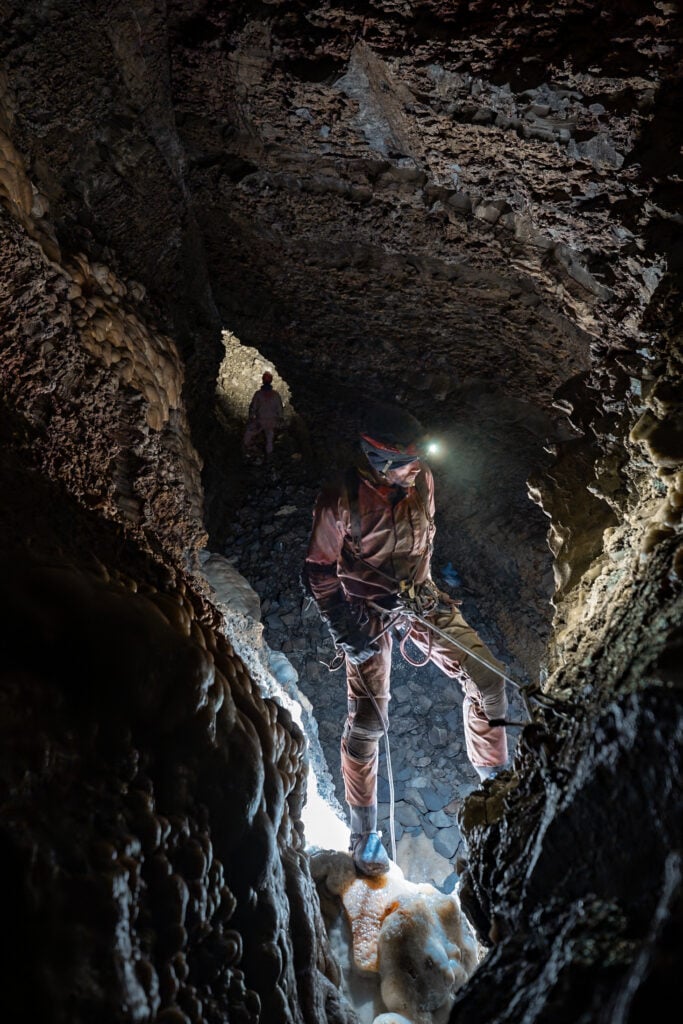
“The task of exploring is daunting but exhilarating,” says Graham. “Unravelling the mystery of what is around the corner. Why is the rock like that? It’s a combination of time travel, a geology field trip, climbing a mountain peak, and camping in the rain, all so we can dive and uncover the secrets the mountain is holding.”
And the mystery remains: after reaching the deepest point ever attained by cavers in Canada, the underwater passage went deeper, beyond the team’s reach. Divers Graham and teammate Matteo Bucalossi reached the limit of the six air cylinders that were hauled down to the sump, and going deeper will require a new plan to support longer dives and deeper exploration.
The expedition’s questions also extend beyond the next unexplored passage. University of Toronto researchers will analyze mineral samples to investigate the age of the deepest known passages, and water samples destined for the University of Montreal will support research into cave microbes and the communities they form. Hundreds of thousands of years of Earth’s climate history are locked into cave mineral formations, while the extreme microorganisms have potential for medical breakthroughs, biomaterials, and astrobiology.
This year’s journey builds on past trips to the karst environment which were featured in the award-winning documentary Subterranean, adding another chapter to the already record-breaking cave. However, neither the map nor the science is complete. Samples still need analysis, and newly documented passages leave further routes to investigate.
As Stenner puts it, “The results are a record of what we’ve learned so far, not the limit of what is there. There’s so much more to discover.”
Exploration
Caving: The ultimate underground sport

Exploration
The Royal Canadian Geographical Society’s 2018 Expedition of the Year returns to the Bisaro Anima Cave near Fernie, B.C.

Exploration
Taking a cue from nearby Mount Bisaro, the cave and its passages pay tribute to Canada’s fallen soldiers
Exploration
2022 is the International Year of Caves and Karst. Here’s why you should care about the hidden worlds beneath our feet.