
Places
Our Country: Sanoa Olin on surfing the waves of Tofino, B.C.
Before heading to Paris 2024 with Team Canada, Canada’s first-ever surfer in the Olympic Games chatted coldwater surfing in her hometown with Can Geo
- 587 words
- 3 minutes
People & Culture
The writer, professor and publisher discusses surfing in cold water, the ocean as muse and more
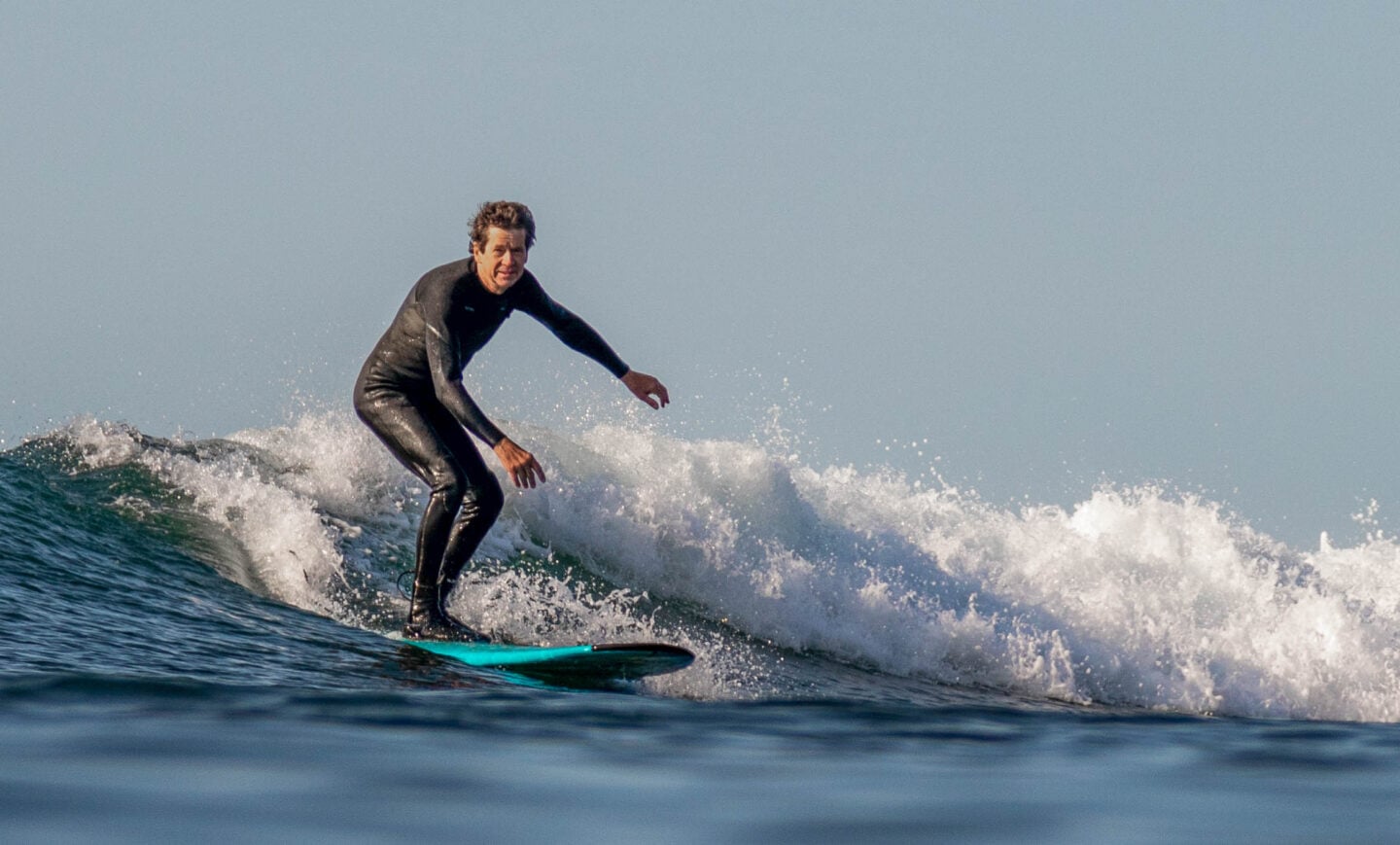
Before the 1960s, nobody thought of Nova Scotia as surf country. Lesley Choyce has spent more than five decades proving them wrong. One of the province’s pioneer wave riders, Choyce came north from New Jersey in the early 1970s and never really left. Drawn by the province’s endless coastline and the cold swells of the Atlantic, Choyce discovered something magical in Nova Scotia that he’s spent a literary career trying to articulate as a writer and publisher. Choyce, who turned 75 in March, is considering retirement — but he still surfs almost every day, even during the freezing Maritime winter.
On finding Nova Scotia
In 1969, there was a surf film shown in a church basement in New Jersey that showed this beautiful point break somewhere north of Maine. That just stuck in my head; it’s got to be Nova Scotia, just look at the map. I came up with a buddy in an old Volkswagen van around 1972. The waves were fantastic. I didn’t see any other surfers.
Through graduate school into the mid-’70s, I was coming up every summer, living in old shacks that people would let me live in and eventually bought a house for $1,500 near the waves in West Chezzetcook. By then, there were a few other people. It was like we’d all been called to Nova Scotia because of surf.
The first time I stepped onto the shoreline here, I just knew: this is it. This is where I want to be.
On cold water
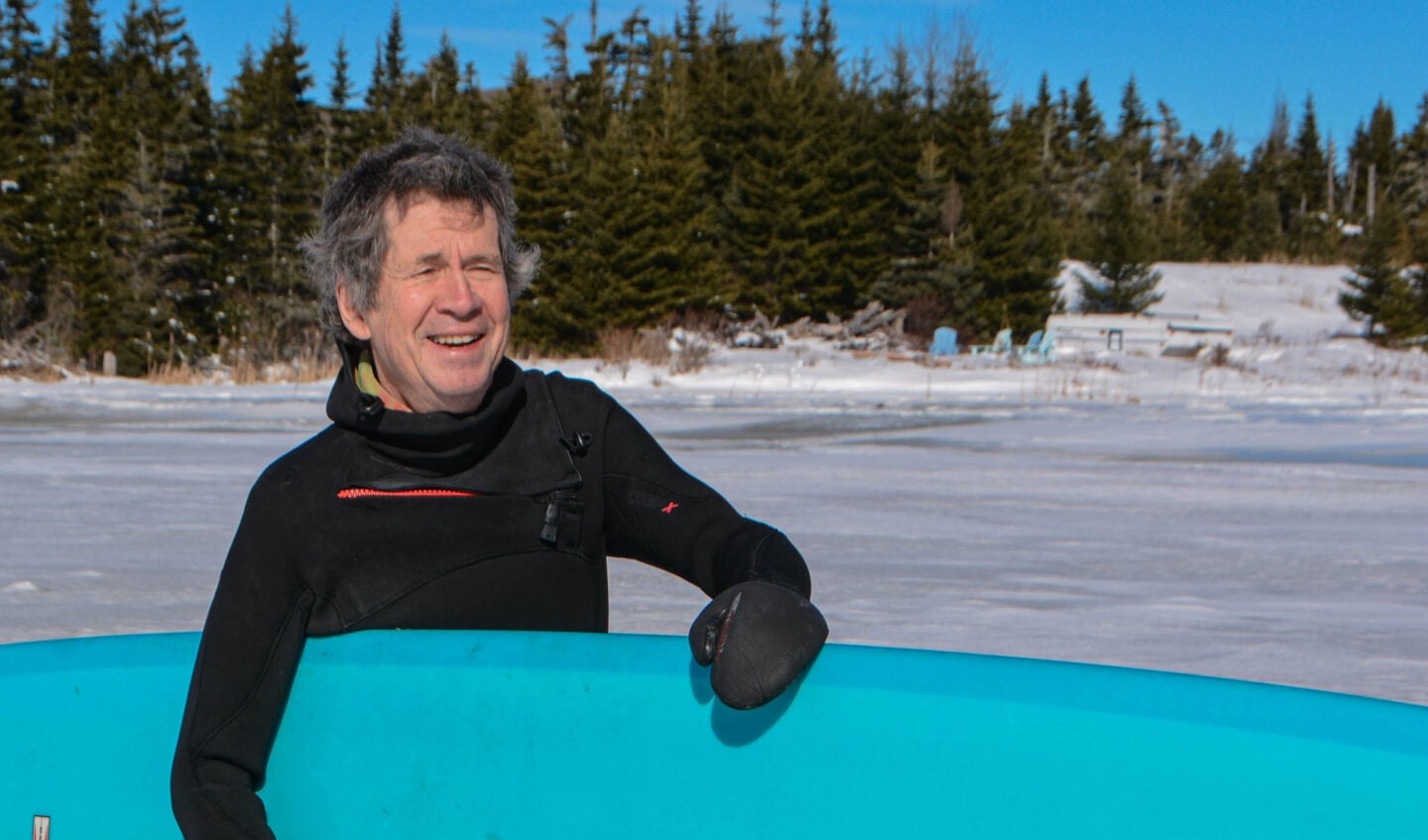
The only people who are going to be surfing in the winter in Nova Scotia are people who really love surfing and feel driven to be there. I had one experience wearing a drysuit that showed me exactly what I was willing to put up with. I wiped out, and the thing filled up with cold water. A drysuit is just a big rubber bag, and now it was 200 pounds heavier. I could hardly move. I had to get to shore, lie with my feet up the headland so the water would drain out through the back zipper, then walk a very long distance to get to my car. It was -15 C, maybe -20 C with the wind chill. Fingers completely numb. Everything totally frozen. I had to take my key and start the car using two hands. I’m sure I was crying as the feeling came back. Then I went back surfing the next day.
Now, I get the wetsuit on, haul my surfboard out of the snowdrift, pile into the car, get to the beach. The instant I get myself in the water and I’m paddling out, the bells are going off. I’m happy just paddling out toward the waves. I limit myself to a good solid hour in the winter. Anybody watching me isn’t seeing anything particularly grand. It’s sort of a slow grace — catching the wave, going up and down the wave. That’s my style now.
On the ocean as muse
There’s this thing that happens when I paddle out into the ocean and sit there. It’s not necessarily the wave; it’s sitting in the ocean. Between the waves, there’s this long period that’s very meditative. If you’re there by yourself, your brain has this buzz from catching a couple of good waves, and you’re looking up at the seagulls and the seals sitting there.
The most creative moments we have are when we’re doing nothing, but in a really good place and in a really fantastic positive mindset. For me, the chemistry was just right sitting in the ocean. Ideas for books, things I want to write about, poetry — all of it was popping into my head while I was surfing. I just had to try to hang on to it long enough to get it ashore.
On surfing and activism
Surfing has always carried a bit of counterculture with it. There’s a kind of coolness to it, but it’s not about style as much as a way of seeing the world. There’s also an understanding that the ocean is powerful and potentially dangerous. You have to respect that. Surfers tend to be aware of what’s happening in the ocean. You don’t want to see it change. The water used to be colder. You notice things like that. You see different species that didn’t used to be here. I remember once helping push a mola mola, a giant sunfish, back out to sea. You don’t expect to see something like that here.
After 9/11, when George Bush came to Nova Scotia, I organized a Surfers for Peace paddle-out at Lawrencetown Beach. The next day, I stood along the motorcade route with a surfboard that read “Surfers for Peace” and held it up as his limousine passed. The image was picked up by wire services and circulated around the world. I’m not going to change the world, but I had my moment

This story is from the September/October 2026 Issue
Places
Before heading to Paris 2024 with Team Canada, Canada’s first-ever surfer in the Olympic Games chatted coldwater surfing in her hometown with Can Geo

Travel
World-class waves and a growing community are quickly making Canada a top surfing destination

Wildlife
As white sharks make their presence known off the coast of Atlantic Canada, researchers and locals want to know: should people be worried?
Travel
A pilgrimage to Kejimkujik reveals centuries-old connections between descendants of Nova Scotia’s first Scottish settlers and the Mi’kmaq who saved them