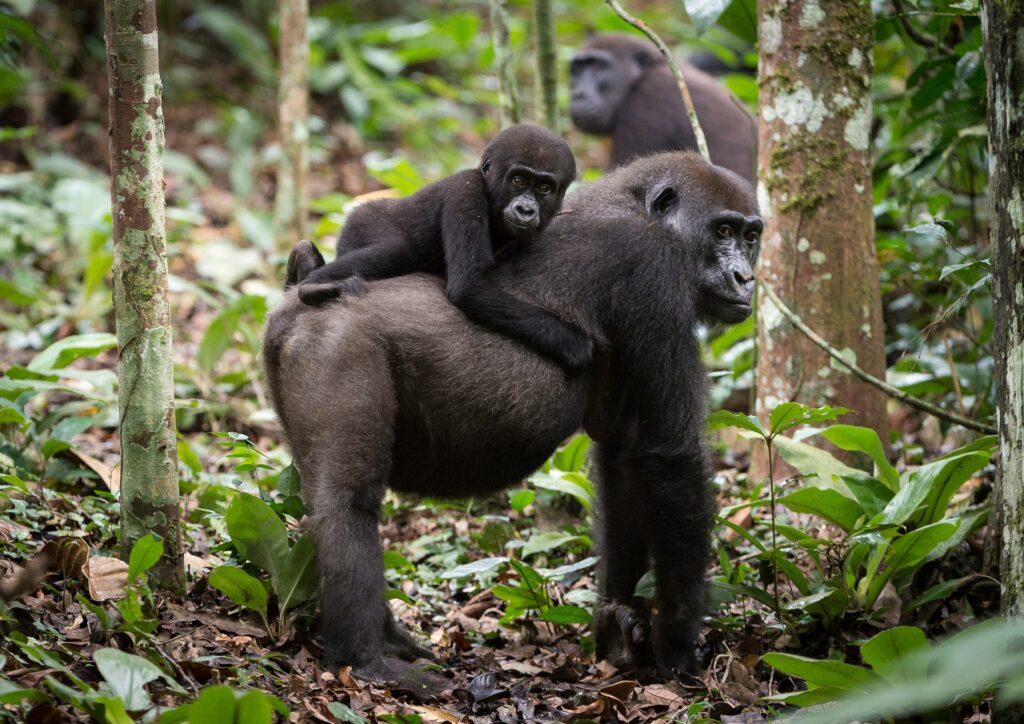
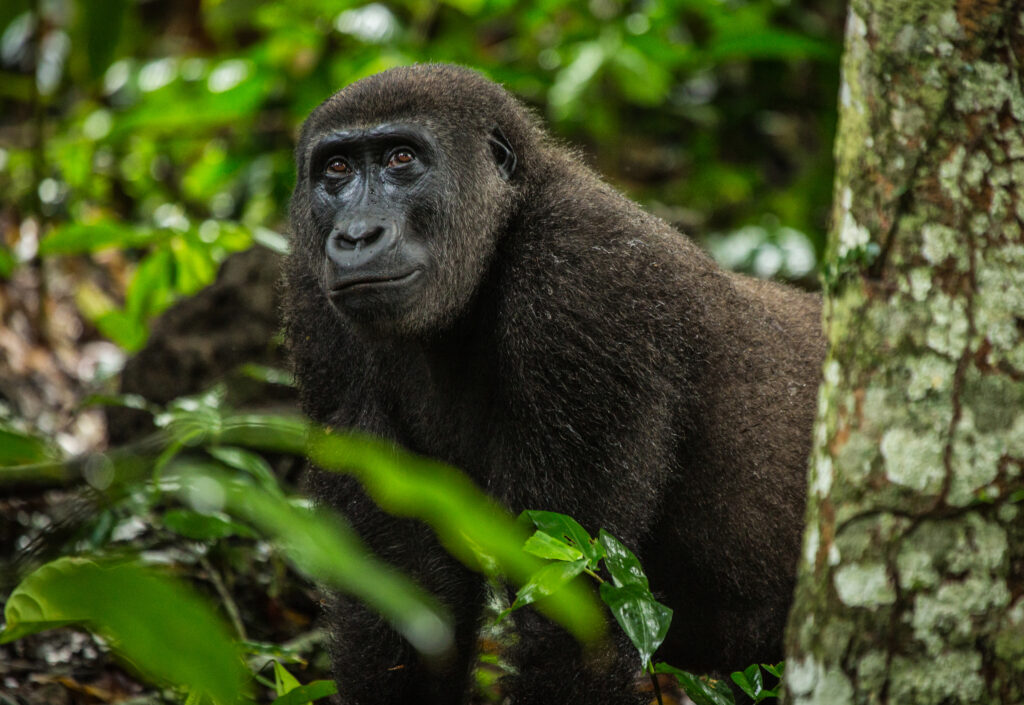
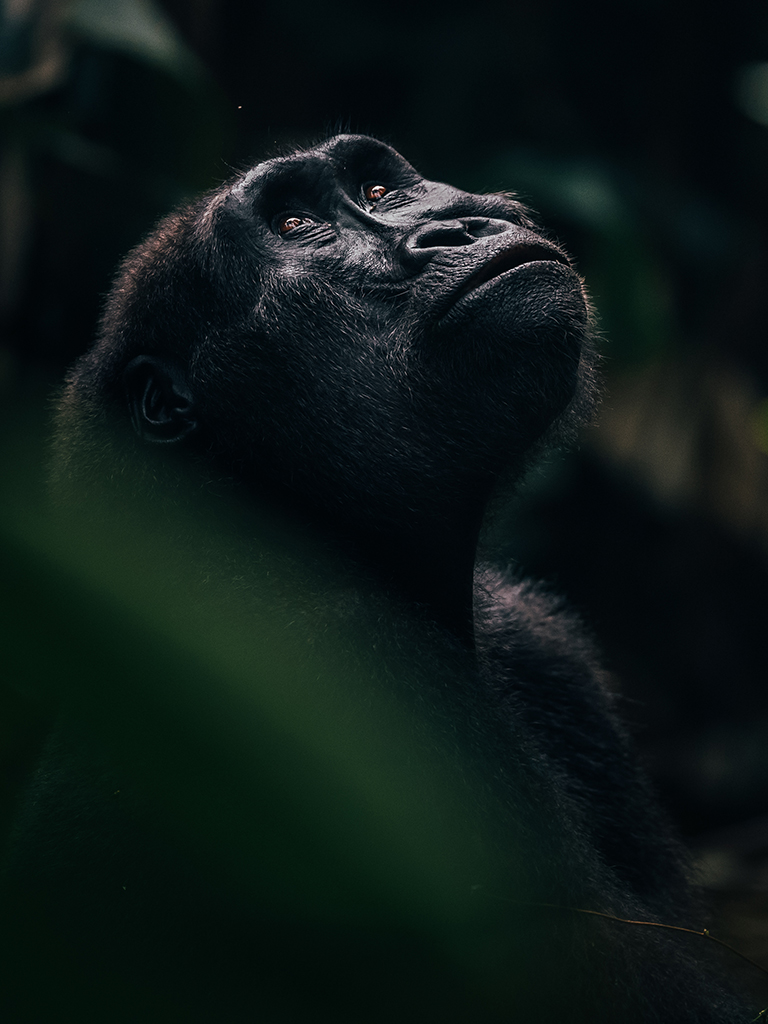
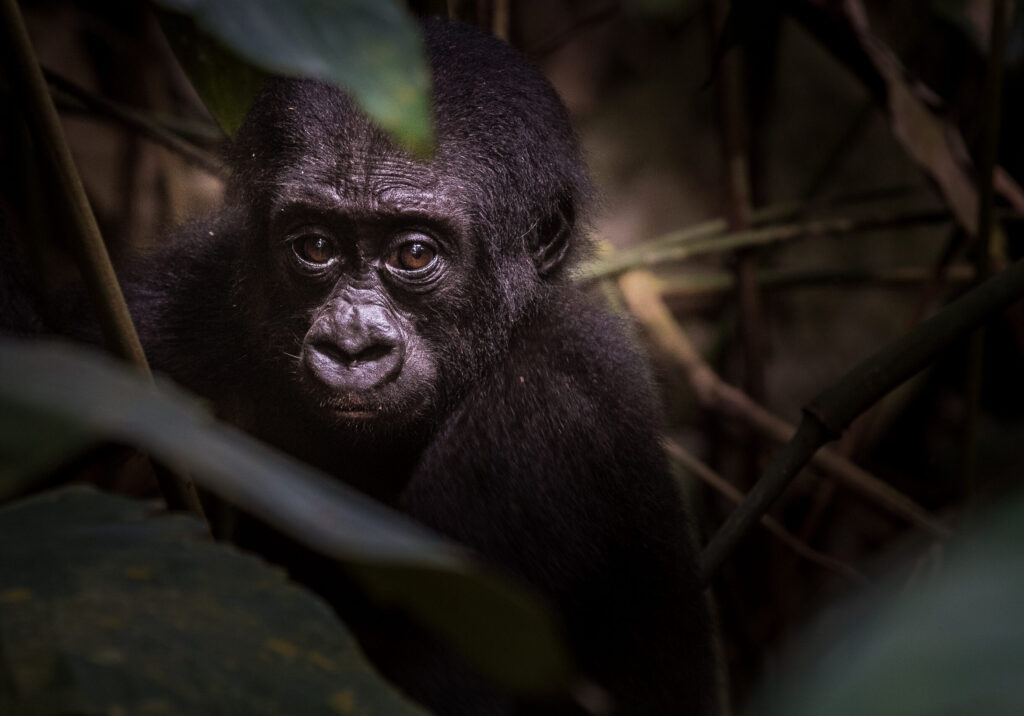
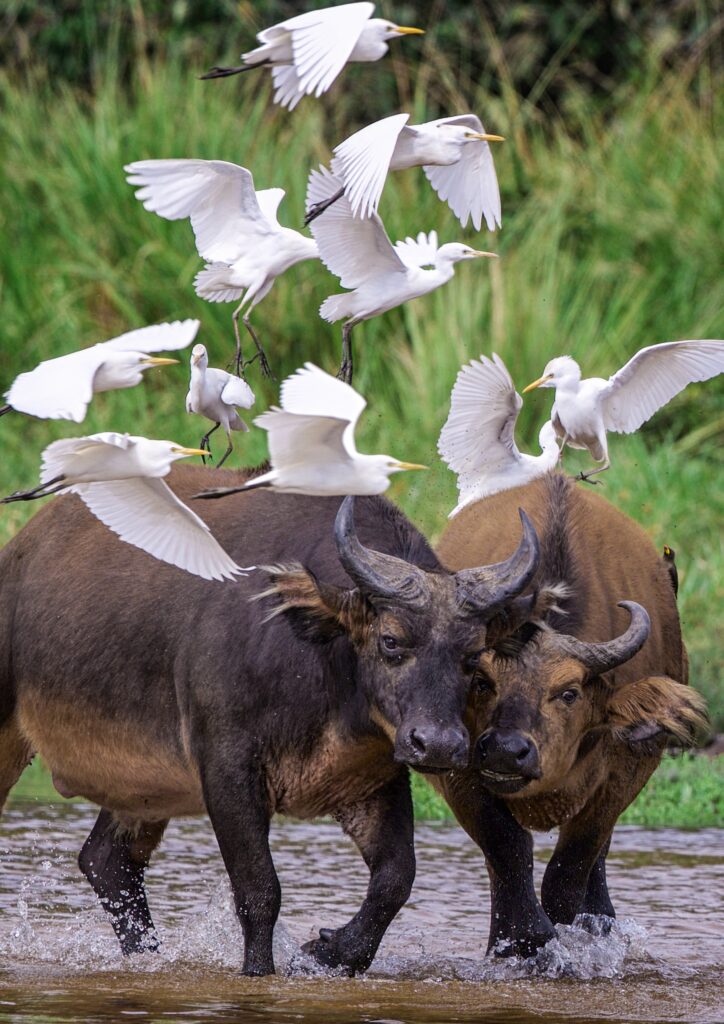
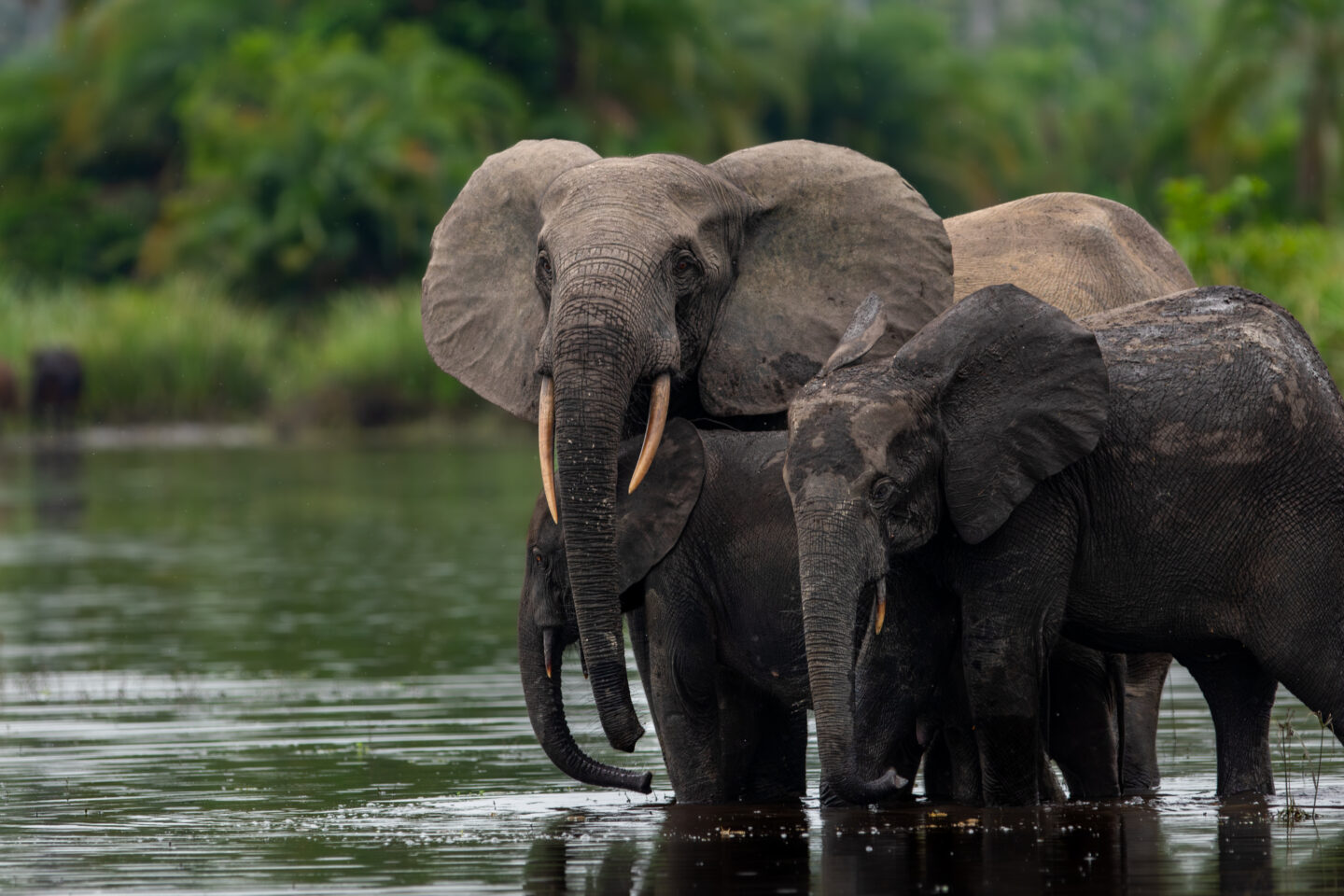
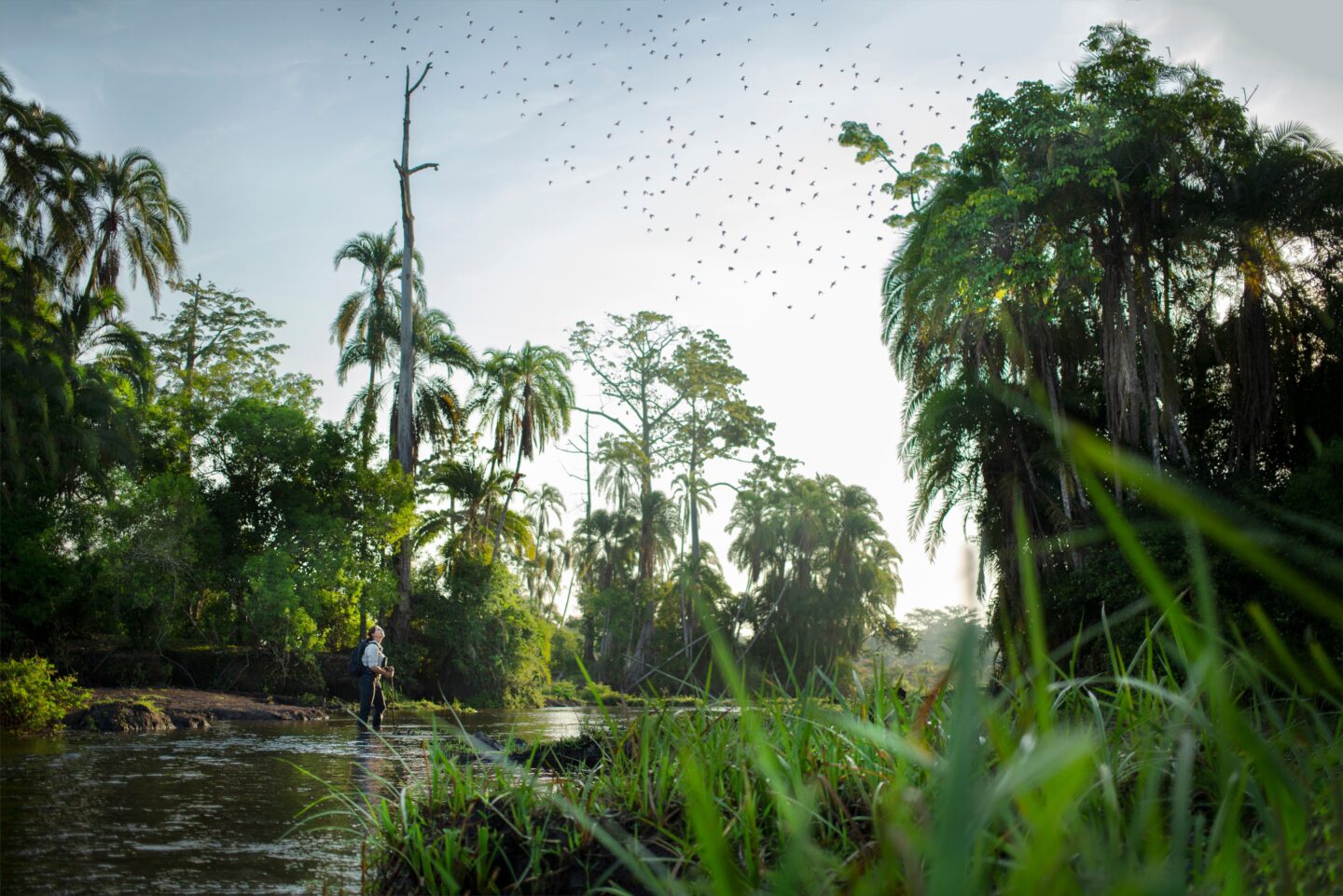
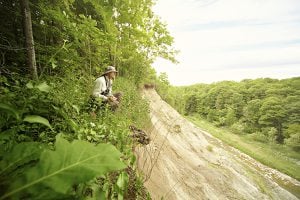
There remains no shortage of wildlife at Odzala-Kokoua. Within its 13,546 square kilometres are some 1,150 (identified) species of plants, 463 of birds, at least 120 of mammals. One does not go long without seeing something: elephants, forest buffalo, gorilla and hyena (the region’s dominant predator since the last lions were hunted out in 1994). Yet one gets the feeling that, no matter how long you stayed, you would always be surprised. On a walk through the forest one day, Eloye-Nzoutani and I came across a bevy of chimpanzee nests — thick matting of leaves wadded into the crotches of trees. “The first time I’ve seen one,” he said. “You’re very lucky!” It was the same with the chameleon we spotted, after the three pottos (a sloth-like primate) we saw on a night drive, and the troop of unhabituated chimpanzees swinging on vines over the Lekoli River. “You’re a lucky, lucky fellow,” Eloye-Nzoutani said, after the last chimp had cleared the water. “You’re living the good life.”
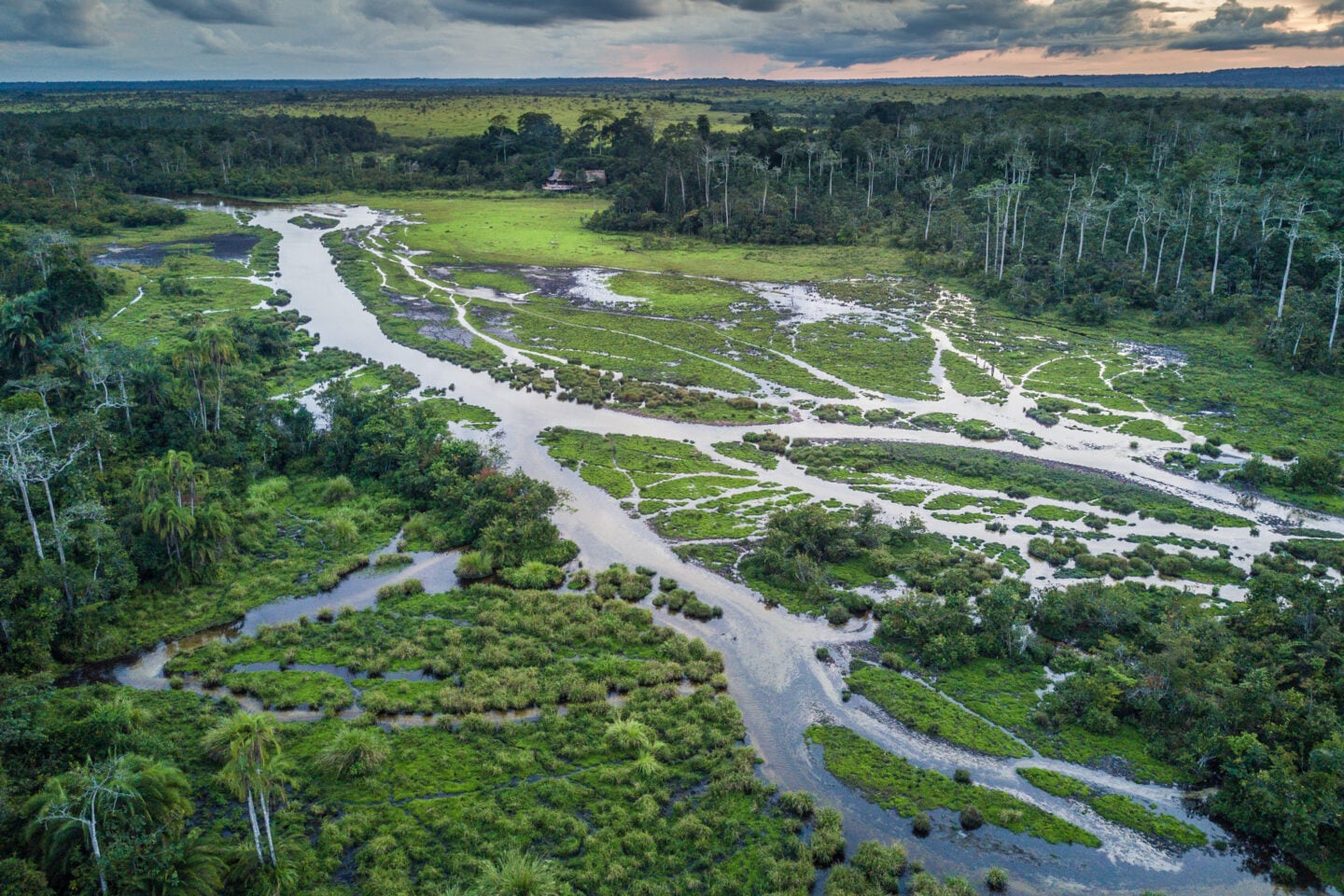
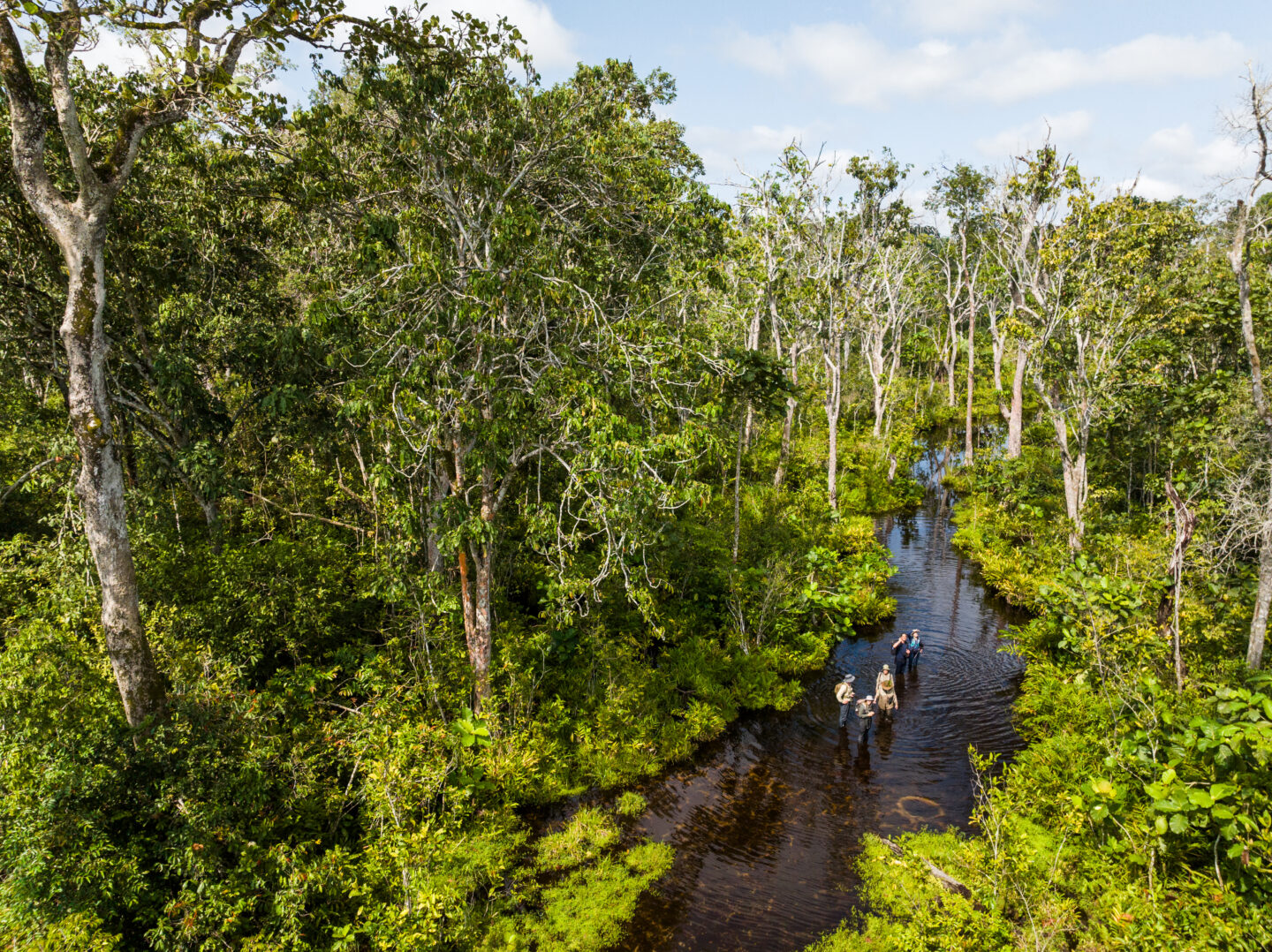
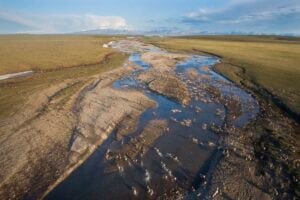
We were on kayaks at the time, paddling with the current, keeping watch for hippo. Eloye-Nzoutani was telling me a story — how the tonguefish, a large, carp-like thing known locally as congoya sika, had become an invasive species after the actions of some experimenting Russians — when we heard a tell-tale chuckling. “Ngubu,” Eloye-Nzoutani said, using the Lingala word for hippo. It was only the one, a big male often found in the vicinity. We watched him flip his ears and disappear beneath the water before carrying on into a corona of swamp, where Eloye-Nzoutani grounded his kayak on a muddy island. “From here, we walk,” he said, returning to the water on foot. It was a piece of drama, but also for our safety. We would be entering a baï, a salt pan that splits the forest like a bare eyeball, and a habitual congregation point for elephants. The presence of elephant, buffalo, and hippo meant that, on kayaks we would be, as Eloye-Nzoutani said, “up the creek like a sitting duck.” Instead, we shlucked slowly through the warm water, rich with mud and elephant dung. Each step was a tentative gamble, our feet sinking through the substrate or finding purchase on a log; at one moment, the water was at my knees, at another my waist. At the deepest, my chest was inundated, and when I lifted with the rising swampbed, water leaked from my breast pockets.